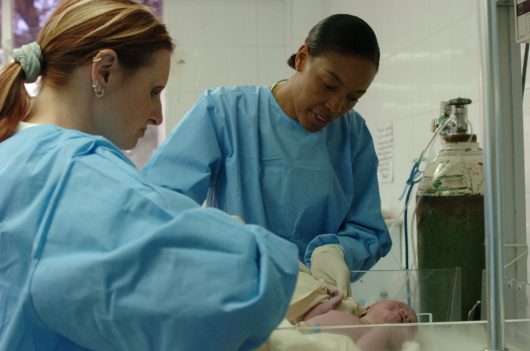
Poor health is not only an effect of poverty but also is one of its root causes. This is particularly true for Central America’s second poorest country, Honduras, where 62.8% of the population lives in poverty. Many of the top diseases in Honduras are preventable; however, the fact that Honduras is not a first-world country with good access to health care makes illness more severe.
Without access to affordable health care, a lack of clean water and sanitation methods and a shortage of health centers, the poor are most susceptible to becoming ill from diseases in Honduras.
But what are the top diseases in Honduras?
Diabetes
Diabetes is the second-leading cause of death amongst Hondurans and occurs when a person’s pancreas fails to make enough insulin or does not use insulin correctly. As a result, people who suffer from diabetes often experience an increase in exhaustion, hunger, thirst, urination and weight loss.
For the 3.6 million people who live in rural areas, diabetes is a severe problem and one of the more menacing top diseases in Honduras. While it is an arguably treatable disease in first-world countries, diabetes can be fatal for those who do not live near clinics with adequate testing methods, or for those who do not live near clinics at all. The National Institutes of Health (NIH) reveals that Latin American clinics rarely have the tools to diagnose diabetes early.
Cerebrovascular and Ischemic Diseases
Cerebrovascular disease causes 6.1% of mortalities in Honduras and refers to any condition that restricts blood flow to the brain, such as stroke, embolism or aneurysm. Ischemia includes coronary heart or artery diseases that usually result in heart attack.
Those who smoke, have high blood pressure, have diabetes, have high cholesterol or are obese are at higher risk of developing a cerebrovascular or ischemic disorder. This is especially concerning for Honduras, where the World Bank reports seeing a rise in overweight individuals eating high-fat diets with decreased levels of physical activity.
Lower Respiratory Diseases and Influenza
According to an NIH study, respiratory illnesses, such as pneumonia, are the primary cause of death among children five years old or younger living in rural regions.
Tropical regions often see a higher frequency and hospitalization rate for the flu than more northern areas of the world. The study also showed that parainfluenza and influenza were the most prevalent viral agents amid the children surveyed. While the flu is a common and treatable occurrence in the developed world, that is not the case for resource-poor Honduras.
HIV/AIDS
In 2015, there were 20,000 Hondurans living with HIV, 1,000 died due to AIDS and 18,000 children became orphans. Honduras’ most at-risk citizens include sex workers, men who have sex with men, inmates and the ethnic group known as the Garifuna.
An Afro-Caribbean community whose descendants were West African slaves, the Garifuna are not only marginalized from the rest of society but also more likely to live in poverty, experience gender discrimination and lack access to health care or education. These are all contributing factors as to why the Garifuna’s HIV prevalence rate is 4.5% — five times Honduras’ national rate.
Malaria, Dengue Fever and Zika
Some of the top diseases in Honduras are transmitted via mosquitos. Mosquito-born diseases are extremely common in most Latin American countries, including Honduras. Luckily, cases of malaria in Honduras decreased by 78% between 2000 and 2011 due to community awareness education. The government aims to eliminate malaria’s deadliest strain by next year.
In 2013, Honduras experienced a widespread outbreak of Dengue fever which resulted in death in five percent of all cases due to hemorrhage. Although Dengue is typical in urban environments, it is a real concern for Honduras’ rural regions riddled with trash sites and where water is not regularly delivered. With piles of trash and pools of stagnant water, rural Hondurans are at severe risk of being infected.
Currently, there is an outbreak of Zika in Honduras. While many people infected with the Zika virus do not show any symptoms, it can lead to neurological difficulties such as Guillan-Barré syndrome, which causes temporary paralysis, and microcephaly in babies with Zika-infected mothers. Honduras recently declared a state of emergency over Zika after noticing a spike in the infection rate.
– Kristina Evans
Photo: Flickr

Top Diseases in Honduras
Poor health is not only an effect of poverty but also is one of its root causes. This is particularly true for Central America’s second poorest country, Honduras, where 62.8% of the population lives in poverty. Many of the top diseases in Honduras are preventable; however, the fact that Honduras is not a first-world country with good access to health care makes illness more severe.
Without access to affordable health care, a lack of clean water and sanitation methods and a shortage of health centers, the poor are most susceptible to becoming ill from diseases in Honduras.
But what are the top diseases in Honduras?
Diabetes
Diabetes is the second-leading cause of death amongst Hondurans and occurs when a person’s pancreas fails to make enough insulin or does not use insulin correctly. As a result, people who suffer from diabetes often experience an increase in exhaustion, hunger, thirst, urination and weight loss.
For the 3.6 million people who live in rural areas, diabetes is a severe problem and one of the more menacing top diseases in Honduras. While it is an arguably treatable disease in first-world countries, diabetes can be fatal for those who do not live near clinics with adequate testing methods, or for those who do not live near clinics at all. The National Institutes of Health (NIH) reveals that Latin American clinics rarely have the tools to diagnose diabetes early.
Cerebrovascular and Ischemic Diseases
Cerebrovascular disease causes 6.1% of mortalities in Honduras and refers to any condition that restricts blood flow to the brain, such as stroke, embolism or aneurysm. Ischemia includes coronary heart or artery diseases that usually result in heart attack.
Those who smoke, have high blood pressure, have diabetes, have high cholesterol or are obese are at higher risk of developing a cerebrovascular or ischemic disorder. This is especially concerning for Honduras, where the World Bank reports seeing a rise in overweight individuals eating high-fat diets with decreased levels of physical activity.
Lower Respiratory Diseases and Influenza
According to an NIH study, respiratory illnesses, such as pneumonia, are the primary cause of death among children five years old or younger living in rural regions.
Tropical regions often see a higher frequency and hospitalization rate for the flu than more northern areas of the world. The study also showed that parainfluenza and influenza were the most prevalent viral agents amid the children surveyed. While the flu is a common and treatable occurrence in the developed world, that is not the case for resource-poor Honduras.
HIV/AIDS
In 2015, there were 20,000 Hondurans living with HIV, 1,000 died due to AIDS and 18,000 children became orphans. Honduras’ most at-risk citizens include sex workers, men who have sex with men, inmates and the ethnic group known as the Garifuna.
An Afro-Caribbean community whose descendants were West African slaves, the Garifuna are not only marginalized from the rest of society but also more likely to live in poverty, experience gender discrimination and lack access to health care or education. These are all contributing factors as to why the Garifuna’s HIV prevalence rate is 4.5% — five times Honduras’ national rate.
Malaria, Dengue Fever and Zika
Some of the top diseases in Honduras are transmitted via mosquitos. Mosquito-born diseases are extremely common in most Latin American countries, including Honduras. Luckily, cases of malaria in Honduras decreased by 78% between 2000 and 2011 due to community awareness education. The government aims to eliminate malaria’s deadliest strain by next year.
In 2013, Honduras experienced a widespread outbreak of Dengue fever which resulted in death in five percent of all cases due to hemorrhage. Although Dengue is typical in urban environments, it is a real concern for Honduras’ rural regions riddled with trash sites and where water is not regularly delivered. With piles of trash and pools of stagnant water, rural Hondurans are at severe risk of being infected.
Currently, there is an outbreak of Zika in Honduras. While many people infected with the Zika virus do not show any symptoms, it can lead to neurological difficulties such as Guillan-Barré syndrome, which causes temporary paralysis, and microcephaly in babies with Zika-infected mothers. Honduras recently declared a state of emergency over Zika after noticing a spike in the infection rate.
– Kristina Evans
Photo: Flickr
Climate Smart Crops: Helping Farmers in Asia and Africa
Addressing Submergence in South Asia
In South Asia — where the majority of the wold’s rice is grown — submergence stress causes $1 billion in annual losses. However, breeders have developed a new form of rice, known as Sub-1 or “scuba rice” which is capable of surviving underwater. This innovative breed of rice aids smallholding farmers in their fight against flooding.
“Scuba rice” possesses the ability to lay dormant in floods. Normal rice will wear out or develop root rot, which significantly lowers crop yields.
In addition, the Stress Tolerant Rice for Africa and South Asia (STRASA) project, coordinated by the International Rice Research Institute (IRRI), has distributed “scuba rice” to 5 million farmers in South Asia within five years.
Overcoming Drought in Southern Africa
Conversely, Southern Africa is undergoing one of its worst droughts in nearly three decades.
Farmers have implemented climate smart crops, including drought resistant maize and beans, across sub-Saharan Africa.
Plant breeders have designed these new varieties deliberately depending on the climate change and growing conditions of the area. Farmers using climate smart crops produce crop yields of equal or greater value in comparison to commercial crop varieties.
The Drought-Tolerant Maize for Africa (DTMA) project has released nearly 200 unique drought resistant maize varieties since 2007. Similarly, the Pan-African Bean Research Alliance has released more than 450 new bean varieties within the past two decades.
Farmers in Rwanda who are using the improved bean varieties have seen their yields increase by more than 50 percent.
Edward Mabaya is an agricultural economist and the Associate Director of the Cornell International Institute for Food, Agriculture & Development. Mabaya grew up on a small rural farm in Zimbabwe and understands the impact that agricultural development can have on developing nations.
In his article for Al Jazeera, Mabaya said, “I owe my education, and my consequent escape from poverty, to improved seed varieties.”
Climate Smart Crops and Poverty Alleviation
Agricultural research and development allow for the creation of products like climate crops. Countries in need of innovative solutions to poverty and hunger benefit greatly from their distribution.
“When the Gates Foundation started focusing on poverty alleviation in the developing world, the co-chairs realized that agricultural productivity was going to be a very important part of the process of getting people out of absolute poverty,” stated Gary Atlin, Senior Program Officer of the Bill and Melinda Gates Foundation, in an article for Devex International Development.
The Bill & Melinda Gates Foundation, along with other non-profit organizations, have invested in STRASA and other projects helping to make agricultural innovation a priority in the fight against poverty and hunger.
– Kristyn Rohrer
Photo: Pixabay
Sign Language Education in Developing Countries
Humanitarian organizations are finally taking the time to address the unique challenges of providing accessible education for the deaf and hard of hearing.
Education in developing countries, in general, is relatively underfunded, with less than two percent of humanitarian aid being direct towards the sector. This problem is compounded when dealing with education, like sign language education, for children and adults who require special accommodations.
In the case of hearing loss, according to the World Health Organization (WHO), over 360 million people suffer from hearing loss severe enough to affect their everyday lives, with the majority of them living in low to middle-income countries.
In a statement, the WHO noted, “In developing countries, children with hearing loss and deafness rarely receive any schooling. Adults with hearing loss also have a much higher unemployment rate. Among those who are employed, a higher percentage of people with hearing loss are in the lower grades of employment compared with the general workforce.”
Recently, more organizations have made an effort to address these problems with education for the deaf through humanitarian aid. For example, Discovering Deaf Worlds partners with deaf advocates in developing countries to help provide access to sign language and education for those in need.
Among other core values, Discovering Deaf Worlds emphasizes allowing the deaf and hard of hearing to choose their preferred communication method, but posits that accessibility is a basic human right. They hope to allow for deaf and hard of hearing communities to more readily engage with the hearing world at large and collaborate with both to try and make that goal a reality.
The USAID EXPAND program is an extension of the 2012 EMPOWER program funded by the U.S. Department of State. The original program focused on giving deaf Filipinos the opportunity for training in advocacy, policy and outreach. EXPAND aims to further those goals and allow for higher participation from deaf individuals in their culture and society.
By providing resources such as sign language education, Discovering Deaf Worlds and (other organizations like it) can create a pool of deaf leaders that can best advocate for education for themselves and the rest of the deaf and hard of hearing communities. Such a focus on increasing diversity in the workforce is a key step in fighting to end poverty and discrimination in developing countries.
– Sabrina Santos
Photo: Flickr
What Everyone Should Know About Poverty in Egypt
For years, poverty in Egypt has been no anomaly. Over a quarter of the population lives below the national poverty line, and many have found it difficult to secure work in a turbulent economy.
From 1995 to 2000, poverty in Egypt began to recede. The percentage of the population living under the national poverty line decreased from 23% to under 17%. However, progress began to reverse itself. In 2010, over 25% of the population was living under the national poverty line.
This rate has failed to drop since the Arab spring in 2011.
However, the Egyptian government and various international organizations have not been idle in addressing this problem. In recent years, millions of dollars have been donated to instill sustainable growth and development and to chip away at the current percentage of those living in poverty.
The United Nations Development Programme (UNDP) is at the forefront of international organizations helping Egypt achieve economic stability and poverty reduction. It has created a plan called the UNDP Strategic Plan 2014–2017 for Egypt. The plan prioritizes the elimination of poverty in Egypt.
UNDP’s strategies are wide-ranging and beginning to gain a great deal of traction due to Egypt’s recent governmental transition.
Human development, gender equality, environmental development, transparency and sustainable development are some of the many focuses that the UNDP has for the Egyptian people in an effort to make them self-sufficient in the long term.
The Egypt Network for Integrated Development (ENID) is a pilot program the UNDP is testing in Egypt. The premise of the program is to empower individuals in rural areas by upgrading public services and providing more efficient agricultural and off-farm occupations.
Through these efforts, people can build and grow their own businesses. This will promote sustainable economic growth and development in these areas long after ENID discontinues aid.
ENID has given a special focus to women through the course of its debut. Seventy percent of the 573 individuals employed by ENID’s activities between 2012 and 2014 were women.
Outside rural areas, the UNDP is also creating jobs in the most impoverished govern-orates for young men and women. The majority of these new jobs are for women.
These programs are working wonders among the Egyptian people, but unfortunately they are not free to operate. The Egyptian Government foots the bill of the majority of these programs, followed by Japan and a collection of European states and organizations. The total amount of contributions from these organizations is just over $280 million USD. In a country of nearly 90 million residents, this amounts to roughly $3 per person.
Tackling Poverty in Egypt
Despite great progress towards poverty reduction in Egypt, there must be bigger changes. Just recently, Egyptian President Abdel Fattah El Sisi emphasized the need for foreign investment in large and small Egyptian enterprises. President Sisi pointed out that the government has made stellar improvements to the national infrastructure, but it still needs aid in developing businesses to use these new resources effectively.
By 2030, Egypt hopes to be well on its way toward sustainable development and a transparent governmental system. Though the country still needs help to develop its domestic affairs, many are optimistic that Egypt will be able to stand on its own within a decade.
– Preston Rust
Photo: Flickr
Scholarships Provide Education for Syrian Refugees
Jusoor is an organization dedicated to addressing the educational needs of those affected by the civil war in Syria. To date, the organization offers over 390 scholarships and has funded 74 students. The majority of scholarships they offer are university partnerships, such as with the University of Cambridge, Oxford, and the London School of Economics.
The organization itself is comprised of Syrian expatriates who believe in the importance of offering opportunities for the youth in their native country. They hope this initiative will help support the country’s development and help it overcome its unique challenges.
According to their website, the volunteers at Jusoor “hope for a nation that embraces democracy, respects human rights and rule of law and encourages free speech and the exchange of ideas.”
Education for refugees is important not just in Syria, but around the world. According to the U.N. Refugee agency, education is a basic human right, defined in the 1989 Convention on the Rights of the Child and the 1951 Refugee Convention.
However, of the 10 million refugees under the age of 18, less than half have access to the education they need. Often, education can provide a safe and stable environment where none else is offered, fostering healthy relationships and teaching life-saving information.
Most recently, Jusoor partnered with universities in Canada for their 100 Syrian Women program, which focuses particularly on offering scholarships to Syrian women. This gives them the opportunity to study abroad when they would not have otherwise had it. So far, out of 900 applicants, 26 women have received scholarships, and the organization hopes to go much further than that.
In an interview with The Star, Leen Al Zaibak, co-director and co-founder of Jusoor, said “we feel if we invest in women, it is a huge investment in the community. The 100 women who benefit from this opportunity are going to affect the lives of 10,000 other Syrians.”
In addition to their scholarship programs, Jusoor runs three primary and middle schools for Syrian children in Lebanon to provide further education for Syrian refugees.
– Sabrina Santos
Photo: Student World Online
Education in India: Coursera Provides Online Courses
Currently, only 12% of students in India are able to secure spots in Indian universities. This leaves out a large pool of talented students who could benefit from a university-level education. Coursera, the online Californian company, currently has 17 million registered students and is looking to expand in India.
Coursera provides free online courses from 140 to non-degree-seeking students from such widely-known universities as Stanford, Yale or Columbia. These “Moocs” (or massive open online courses) allow students to study at home. Coursera looks to benefit from the Indian population by providing online education to those who are unable to attend a regular university. They have already partnered with many of the Indian universities, such as Udacity.
Coursera does not provide exams or degrees, but it does give certificates after a course has been completed. While Coursera provides their online courses without payment, the certificates that require completion exams can cost between $30 and $100. This allows students in low economic standing to continue their education and find additional job opportunities based on their skills.
There are currently 1.3 million Indian students using Coursera, making India the largest concentration of online students outside of China or the U.S. Employers are also using Coursera to provide further education for their employees, such as online stock brokerage firm Zerodha.
CEO Nithin Kamath of Zerodha intends to further the education and credibility of Zerodha’s employees in any way possible. He says, “When we come across courses that we think is something our employees need to know, we encourage them to take it up.”
Courses related to data science and information technology are the most popular for Indian students using Coursera. Consequently, this indicates that there is a growing demand for skilled workers in India’s software industry. Coursera seeks to increase its own impact on education in India by providing general courses in Hindi or other local languages.
Catering to the concerns of many students, Coursera is also focusing on providing learning opportunities that are more job-relevant. Similar Indian programs, such as Edureka or Simplilearn, have already begun to do so. The emergence of online education in India provides opportunities for students who would otherwise have none.
– Amanda Panella
Photo: Flickr
World Humanitarian Summit Commits to Shared Responsibility
The world’s first-ever World Humanitarian Summit took place May 23–24, 2016 in Istanbul. U.N. Secretary-General Ban Ki-moon called for the summit in 2012 after recognizing the need to reaffirm global responsibility of our shared humanity.
Since the original announcement, the need for the summit has become increasingly urgent. 125 million people around the world are currently in need of humanitarian assistance, according to Ban Ki-moon’s report for the World Humanitarian Summit last year.
The World Humanitarian Summit included over 9,000 people–a mix of world leaders, non-governmental organizations, people affected by crises and partners in the private sector and civil society.
Packed with roundtable discussions and events, the aim of The World Humanitarian Summit is to change the way the world responds to global issues by committing to a unified goal to end suffering.
The Agenda for Humanity outlines the five core responsibilities that the summit centered on:
In his WHS Report, Ki-Moon deliberately references The Declaration of St. James’s Palace in London in 1941, the first act toward the formation of the United Nations. At St. James’s Palace in London, governments came together to pledge a unified commitment to work toward peace. Ban acknowledges that 75 years later, it is time to renew that commitment to humanity.
– Erica Rawles
Photo: Flickr
8 Things You Should Know About Education in Niger
8 Things You Should Know About Education in Niger
Other organizations such as UNESCO, PLAN International, Aid for Africa and Remember Niger Coalition also provide funding for improved education and help build schools.
Nigerian education needs substantial help. Unfortunately, many of the issues stem from financial instability as well as an enduring belief that women should stay at home, marry and care for children.
Though the problem with education in Niger is complex, mentoring and guidance services by influential organizations can be part of the solution. Through these programs, Nigerian men and women can learn the value of education and benefit the country as a whole.
– Weston Northrop
Photo: Flickr
Global Poverty Bills You Should Know About
The Borgen Project advocates for global poverty bills to be passed in the House and the Senate of Congress. The Borgen Project is currently fighting for three bills that could have a massive impact on global poverty.
First, the Electrify Africa Act, introduced in 2015, seeks to provide sub-Saharan African countries access to affordable and reliable power through a plan spanning several years.
The bill has two main goals: create a group comprised of several organizations–including the Overseas Private Investment Corporation (OPIC), U.S. Agency for International Development, the Trade and Development Agency and the Millennium Challenge Corporation–which will help coordinate the U.S. government regarding creating reliable sustainable energy on the African continent, and effectively utilize the United States’ influence as a world power to build international support for African energy programs.
Next, the Reach Every Mother and Child Act, also introduced in 2015, seeks to end preventable maternal and newborn deaths around the world.
According to WHO, around 830 women around the world die every day from preventable causes related to pregnancy and childbirth, such as severe bleeding, infections, eclampsia/pre-eclampsia (high blood pressure that develops during pregnancy) and unsafe abortions. That adds up to over 300,000 women dying every year, of which 99 percent of those deaths occur in developing countries.
The Reach Every Mother and Child Act would allow the United States to create an interagency group dedicated to ending maternal and child deaths in developing countries, including overseeing maternal and child health and nutrition funding.
Finally, The Borgen Project supports the Food for Peace Reform Act of 2015, which would overhaul the current U.S. programs for providing emergency food aid around the world, involving:
· improving product packaging and storage
· adjusting products to cost-effectively meet nutrient needs of target populations
· adopting new, or improving existing, specifications for micronutrient fortified food aid products to meet a population’s nutrient needs
· evaluating performance and cost-effectiveness of food products and programs for vulnerable groups, such as pregnant mothers and young children
Visit borgenproject.org/legislation for more information on global poverty bills and how you can help end global poverty by contacting your government representatives in the House and Senate.
– Bayley McComb
Photo: ABC News
Postal Initiative: Helping Rural Africans Receive Remittances
Many post offices in sub-Saharan Africa lack computers, Internet access and other modern technologies necessary to provide financial services. The World Bank has reported that postal employees also often have little to no experience in handling transfers.
In an effort to improve access to remittance payments, the International Federation of Agricultural Development (IFAD) is implementing the African Postal Financial Services Initiative. According to IFAD, the initiative which is being implemented in 10 African countries will provide post offices with the technology, business model and expertise necessary to process remittance payments and offer other services in an efficient and safe manner.
Africa is among the world’s leaders in receiving money from remittances—of the $431.6 billion transferred to and within developing countries from abroad in 2015, Africa received $65 billion. Remittances also make up at least five percent of GDP in 14 African states, including Liberia and Mali.
However, high transaction fees have reduced the value of remittances for many Africans. According to the World Bank, sub-Saharan Africa is the most expensive region in the world to send remittances with an average cost of 9.5 percent in 2015. In Western Africa, the cost of collecting remittances can exceed 10 percent.
The high fees are set by money-transfer operators and are in part a result of a lack of competition in the remittance market. Two of the largest money transmitters, Western Union and MoneyGram, have relied on exclusivity agreements that prevent competitors from partnering with banks and other remittance payout agents.
The overall cost of collecting remittances is higher for rural Africans who must sacrifice time at work and risk their safety to travel long distances to and from financial service providers.
The IFAD and World Bank believe that remittance services would become more efficient and less costly once more postal offices in remote sub-Saharan areas are able to process money transfers.
Unlike commercial banks, which are mainly concentrated in sub-Saharan Africa’s largest cities, 80 percent of post offices operate in sparsely-populated areas where they are more accessible for rural Africans. Post offices also enjoy high levels of trust by people who would rather avoid banks, the World Bank has reported.
Postal systems that process remittances transfers and offer financial services are common and have been beneficial in other developing countries around the world. In India, the India Post has nearly 139,000 post offices in rural areas that offer savings accounts and act as an agent for partner institutions. Brazil’s postal operator, Correios, also has a financial operations branch that process remittances and provides basic banking services.
– Sam Turken
Photo: DAWN