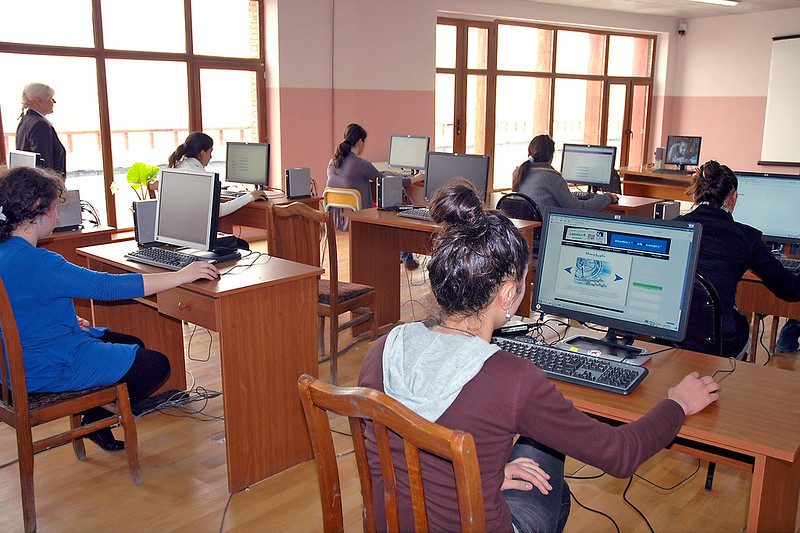
 Millions are being left behind in the digital age, as digital poverty in the least developed countries becomes ever more entrenched in global society. As the world sees its’ fourth industrial revolution, the United Nations’ list of the 46 Least Developed Countries (LDCs) is seeing a growing digital divide. Just under a fifth of the world’s population lives in the least developed countries, and yet almost 70% of the collective LDC population still does not have access to the internet.
Background
Digital poverty in the least developed countries could deepen global socio-economic inequalities and exclude those living in LDCs from fully participating in the global economy. Digital poverty is also holding the growth of business back; in Senegal, 80% of people cannot use the internet for work, and in Rwanda this jumps to 99%. Elsewhere, in the LDCs of Mozambique, Tanzania and Uganda, only 10% of businesses have a computer.
As new technologies develop at an exponential rate in more developed countries, LDCs are left outpaced. For example, 5G mobile networks are becoming commonplace in more developed countries, whilst LDCs are still only able to work with 2G and 3G networks, according to the U.N. This digital gap reinforces disparities in education, employment, and economic growth. However, efforts are underway to understand the facts that contribute to digital poverty in least developed countries and to bridge the digital divide.
About Digital Poverty
Digital poverty refers to restricted or no access to digital resources such as the internet, computers and mobile phones. It also encompasses digital illiteracy, where individuals lack the skills or education necessary to utilize online tools effectively. Digital poverty exists on a spectrum—while some individuals may have limited access, others do not have access to technological advancements at all.
Globally, 3.7 billion people lack access to or do not use the internet, with sub-Saharan Africa particularly affected. Digital poverty disproportionately affects vulnerable populations, including women, the elderly, and those with lower education levels.
Key contributing factors to digital poverty include:
- High Costs: Internet services and devices remain unaffordable for many in LDCs.
- Infrastructure Gaps: Unreliable electricity and insufficient ICT infrastructure hinder internet expansion.
- Limited Education: Many individuals lack the skills to navigate digital technologies or do not recognize the benefits of being online, according to Telecommunications Policy.
- Content Accessibility: Many LDCs lack sufficient digital content available in local languages.
The Impact
The impacts of digital poverty can limit other aspects of a person’s life, including their earning potential. More than 80% of jobs that are middle-skilled, and therefore higher earning, rely on individuals having skills in technology and access to digital platforms and technology, according to the Institute of Electrical and Electronics Engineers (IEEE). Lower-skilled jobs, which do not have these requirements, tend to be lower paid. This results in a cycle of individuals in digital poverty taking on lower-income jobs, which further limits possible education, meaning that people cannot gain the digital skills they need to secure the higher-earning, digitally focused jobs.
In LDCs, this cycle could limit a nation’s economic progress, both in terms of its citizens’ economic opportunities and mobility, and in limiting an LDCs ability to partake as effectively in online trade, both nationally and globally.
Digital Poverty: Solutions
Amazon’s Project Kuiper is a low-cost satellite internet initiative that provides broadband access to underserved regions. Whilst precise costs are still not public, the project promises that its 3,232 satellite constellation will provide speeds comparable to 4G internet, addressing infrastructure limitations faced by LDCs.)
The UNDP commenced its Doha Program of Action (DPoA) in 2022, set to run through to 2031. The DPoA is a framework strategy which aims to accelerate digital accessibility in LDCs through five key steps, including early engagements with governments, tailoring digital solutions that “work for everyone,” creating result-driven roadmaps, improving technical capacities and sharing skills and expertise through archives and assemblies.
Whilst the DPoA is still in its’ formative years, initiatives like this, which focus on policy development, equitable digital solutions, and infrastructure expansion, in collaboration with governments, NGOs, academia, and private companies, have previously been successful.
Digital Literacy Workshops
In Bangladesh, the UNDP facilitated digital literacy workshops for female entrepreneurs, boosting their ability to generate income. Similarly, in Nepal, the UNDP collaborated with a local bank firm to equip women from rural areas with the knowledge of how to partake in online transactions.
UNDP reports on its website that an initiative in Afghanistan improved and expanded a digital payment system, which resulted in a growth in financial inclusion and the synchronization of financial services. These success stories demonstrate how global collaboration can boost access to the digital age and enhance local economies.
The Future
Bridging the digital divide extends beyond simple internet access—it directly impacts global poverty reduction. Improved internet access enables entrepreneurship and job creation while allowing individuals to access essential financial services. More than 25% of the global population lacks access to banking, restricting economic mobility, but with the right initiatives, this can change.
Expanding digital access could improve economies by enhancing trade, education and health care. Closing the digital divide could foster international economic growth, benefiting both developing and developed nations.
Closing the digital divide is not a challenge that any single country can solve alone—it requires global collaboration and, when used the right way, technology can even be a part of the solution. While recent technological initiatives provide hope, sustained investment in digital infrastructure, policy reform, and education will be necessary to ensure long-term success.
– Amber Lennox
Amber is based in Suffolk, UK and focuses on Technology and Solutions for The Borgen Project.
Photo: Flickr

Digital Poverty in the Least Developed Countries
Background
Digital poverty in the least developed countries could deepen global socio-economic inequalities and exclude those living in LDCs from fully participating in the global economy. Digital poverty is also holding the growth of business back; in Senegal, 80% of people cannot use the internet for work, and in Rwanda this jumps to 99%. Elsewhere, in the LDCs of Mozambique, Tanzania and Uganda, only 10% of businesses have a computer.
As new technologies develop at an exponential rate in more developed countries, LDCs are left outpaced. For example, 5G mobile networks are becoming commonplace in more developed countries, whilst LDCs are still only able to work with 2G and 3G networks, according to the U.N. This digital gap reinforces disparities in education, employment, and economic growth. However, efforts are underway to understand the facts that contribute to digital poverty in least developed countries and to bridge the digital divide.
About Digital Poverty
Digital poverty refers to restricted or no access to digital resources such as the internet, computers and mobile phones. It also encompasses digital illiteracy, where individuals lack the skills or education necessary to utilize online tools effectively. Digital poverty exists on a spectrum—while some individuals may have limited access, others do not have access to technological advancements at all.
Globally, 3.7 billion people lack access to or do not use the internet, with sub-Saharan Africa particularly affected. Digital poverty disproportionately affects vulnerable populations, including women, the elderly, and those with lower education levels.
Key contributing factors to digital poverty include:
The Impact
The impacts of digital poverty can limit other aspects of a person’s life, including their earning potential. More than 80% of jobs that are middle-skilled, and therefore higher earning, rely on individuals having skills in technology and access to digital platforms and technology, according to the Institute of Electrical and Electronics Engineers (IEEE). Lower-skilled jobs, which do not have these requirements, tend to be lower paid. This results in a cycle of individuals in digital poverty taking on lower-income jobs, which further limits possible education, meaning that people cannot gain the digital skills they need to secure the higher-earning, digitally focused jobs.
In LDCs, this cycle could limit a nation’s economic progress, both in terms of its citizens’ economic opportunities and mobility, and in limiting an LDCs ability to partake as effectively in online trade, both nationally and globally.
Digital Poverty: Solutions
Amazon’s Project Kuiper is a low-cost satellite internet initiative that provides broadband access to underserved regions. Whilst precise costs are still not public, the project promises that its 3,232 satellite constellation will provide speeds comparable to 4G internet, addressing infrastructure limitations faced by LDCs.)
The UNDP commenced its Doha Program of Action (DPoA) in 2022, set to run through to 2031. The DPoA is a framework strategy which aims to accelerate digital accessibility in LDCs through five key steps, including early engagements with governments, tailoring digital solutions that “work for everyone,” creating result-driven roadmaps, improving technical capacities and sharing skills and expertise through archives and assemblies.
Whilst the DPoA is still in its’ formative years, initiatives like this, which focus on policy development, equitable digital solutions, and infrastructure expansion, in collaboration with governments, NGOs, academia, and private companies, have previously been successful.
Digital Literacy Workshops
In Bangladesh, the UNDP facilitated digital literacy workshops for female entrepreneurs, boosting their ability to generate income. Similarly, in Nepal, the UNDP collaborated with a local bank firm to equip women from rural areas with the knowledge of how to partake in online transactions.
UNDP reports on its website that an initiative in Afghanistan improved and expanded a digital payment system, which resulted in a growth in financial inclusion and the synchronization of financial services. These success stories demonstrate how global collaboration can boost access to the digital age and enhance local economies.
The Future
Bridging the digital divide extends beyond simple internet access—it directly impacts global poverty reduction. Improved internet access enables entrepreneurship and job creation while allowing individuals to access essential financial services. More than 25% of the global population lacks access to banking, restricting economic mobility, but with the right initiatives, this can change.
Expanding digital access could improve economies by enhancing trade, education and health care. Closing the digital divide could foster international economic growth, benefiting both developing and developed nations.
Closing the digital divide is not a challenge that any single country can solve alone—it requires global collaboration and, when used the right way, technology can even be a part of the solution. While recent technological initiatives provide hope, sustained investment in digital infrastructure, policy reform, and education will be necessary to ensure long-term success.
– Amber Lennox
Photo: Flickr
The Realities of Child Poverty in the Philippines
Root Causes and Response Initiatives
Causes, familiarity and socio-economic conditions contribute to the rising number of children living below the poverty line. Advocacy organizations and programs like the Pantawid Pamilyang Pilipino Program (4Ps) and Childhope Philippines Foundation work to ensure that children living on less than $2.15 per day can access education, health care, housing and other resources needed to break the poverty cycle. The Philippines continues to pursue its goal of becoming an upper-middle-income country. However, poverty in the country stems from multiple interconnected issues. The long-term effects of child poverty extend beyond the affected children to wider society.
Several factors, including limited employment, inadequate access to quality education and health care and regional conflict, contribute to the persistence of poverty among children.
Child Labor
Low household income remains a key driver of child labor. To support their families, many children either drop out of school or divide their time between work and school. According to the Philippine Statistics Authority (PSA), in 2023, around 1.09 million children aged 5 to 17 were working and 678,000 of them were not eligible to work legally. Although the number of working children has decreased from previous years—935,000 in 2021 and 828,000 in 2022—child labor remains a significant concern. Many children leave school due to financial hardship, creating a cycle of poverty that could persist across generations.
Education
Education plays a vital role in national development. The Philippine government mandates a 13-year basic education system from kindergarten through 12th grade, known as the K–12 program. Despite this, many Filipino children face a learning crisis marked by poor performance in international assessments and high levels of learning poverty. According to UNICEF, children in the Philippines lag five to six years behind students in countries with similar economic profiles.
The education system is governed by three agencies: the Department of Education (DepEd), which manages the K–12 public school system; the Commission on Higher Education (CHED), which oversees universities; and the Technical Education and Skills Development Authority (TESDA), which supervises vocational training programs. While enrollment has increased, access to quality education remains uneven, especially in rural areas. Addressing inaccessibility through advocacy and investment could help children build a better educational foundation.
Child Poverty Reduction Solutions
Governmental and nongovernmental organizations (NGOs) programs, such as the Conditional Cash Transfer (CCT) programs and Childhope Philippines Foundation, work to combat child poverty in the Philippines. Government programs provide financial support to low-income families, help ensure that every child can attend school and receive necessary health care, while NGOs offer educational solutions, food assistance and community development projects. Expanding and implementing these solutions can potentially get every individual to work together to fight against child poverty effectively, for an increase in opportunities for children as they grow older.
Pantawid Pamilyang Pilipino Program (4Ps)
The Pantawid Pamilyang Pilipino Program (4Ps) serves as the country’s flagship poverty reduction strategy. Implemented by the Department of Social Welfare and Development (DSWD), the program provides financial aid to poor households for up to seven years. Conditions include children’s school attendance, regular health visits and participation in family development sessions.
The 4Ps is the fourth-largest CCT program globally and funds 4,177,476 loan recipients, with 870,865 newly registered households. The strategy covered 75% of the country’s population alongside the Philippine government and the Millennium Development Goals (MDGs), eradicating extreme poverty and hunger, achieving quality education, advancing gender equality, decreasing child mortality and upgrading maternal health care. The 4Ps’ accomplishments have resulted in a poverty reduction of 1.4 percentage points per year or 1.5 million fewer poor Filipinos. In the end, more than 600,000 Filipino families accomplished self-sufficiency with help from the 4Ps.
Childhope Philippines Foundation
Childhope Philippines is a renowned NGO that aims to promote the welfare, uphold and protect the rights of street children in the Philippines. The organization provides education, health services and livelihood opportunities for the impoverished youth. Established in 1995, Childhope empowers children with skills and resources to achieve a brighter future. It encourages everyone to become a united community where individuals play a role in raising awareness of child poverty in the country.
Nationally and internationally, the foundation encourages people to send donations and participate in volunteer work to become a beacon of hope for 50,000 to 70,000 Filipino children who live and work on the streets of Metro Manila, Philippines. Throughout the years, Childhope transformed the lives of approximately 10,500 street children with long-lasting impacts through its partnerships and projects.
Looking Ahead
Every child deserves access to basic rights and opportunities for a better future. Child poverty in the Philippines requires comprehensive strategies that address economic hardship, improve education and expand social welfare. Efforts by both the government and NGOs play a crucial role in reducing hardship and supporting children’s development. Ongoing commitment from all sectors could help build a society where every child can thrive and contribute meaningfully to national growth.
– Makayla Johnson
Photo: Flickr
How USAID Programs in Russia Have Addressed HIV/AIDS and TB
Starting in 1992, after the end of the Cold War and the fall of the Soviet Union, the United States began a robust program of assistance to the new Russian Federation starting with the Freedom Support Act authorizing USAID to begin work in Russia. USAID programs in Russia included initiatives to assist with democratic reform, market assistance, anti-corruption programs, but mostly important disease eradication.
USAID’s Fight Against TB and HIV/AIDS in Russia
USAID programs in Russia fought both tuberculosis and HIV/AIDS. Starting in 1999, USAID began to focus specifically on drug-resistant tuberculosis (TB), which had become a major issue in the former Soviet Union, especially in Russia. According to William B. Taylor, coordinator of U.S. assistance to Newly Independent States, in 1999, USAID was critical to coordinating between Russian authorities, the World Health Organization (WHO) and the Red Cross to combat TB, starting in three provinces and then the rest of Russia. Additionally, USAID also helped provide more than $200 million in critical medical supplies.
By 1999, the spike of TB incidence finally ended and began to decline through the early 2010s. TB mortality rates also declined and experts attributed much of this progress to early detection and prevention programs in Russia.
Additionally, USAID was instrumental in fighting HIV/AIDS in Russia on several levels; increasing coordination between Russian and American biomedical researchers, assisting with vaccine development, infection prevention, treatment and increasing awareness among Russian business and civic leaders. In 2010, USAID funded the HIV Prevention for At-Risk Populations in Russia program, which treated thousands in the city of Kazan alone.
The Current Situation
According to former U.S. ambassador to Russia, Michael McFaul, “Over the last twenty years, the USAID Mission in Russia has worked with Russian government officials and Russian non-governmental organizations to achieve a remarkable record of success.” However, in 2012, due to rising tensions between the Russian and U.S. governments, Vladimir Putin ordered USAID to cease its operations in Russia.
The Russian government argued that Russian society had moved past the need for external aid. In reality, living conditions in Russia have continued to be extremely difficult. By 2018, Russia became the third-highest country for TB infection, largely due to its inability to follow WHO guidelines.
The Russian Red Cross had to end five different programs dedicated to fighting TB since it received funding from USAID. That being said, thanks to continued funding and cooperation with other international organizations, TB mortality and incidence rate continues to modestly decline, despite setbacks. However, much of the progress in fighting HIV/AIDS in Russia has suffered major reversals. By 2017, Russia had the largest number of HIV-positive individuals in Europe. As of 2024, 30,000 Russians annually are estimated to have died from HIV/AIDS.
Looking Ahead
The history of USAID programs in Russia highlights the danger of suddenly turning off humanitarian aid. In 2025, freezes of USAID funding in places like Ukraine have threatened HIV treatment, endangering more than 116,000 people. However, that history also serves as an encouragement of what is possible with U.S. support.
– Joseph Laughon
Photo: Wikipedia Commons
Clinton Foundation Aids Myanmar and Thailand Earthquake Victims
Seismic Risk and Regional Vulnerability
Experts attribute the quake to tectonic activity along the Sagaing Fault, a major boundary between the India and Eurasia plates that cuts through densely populated areas like Mandalay. According to geologist Dr. Rebecca Bell of Imperial College London, the fault’s linear structure allows for wide ruptures, contributing to the scale of destruction.
Impact on an Ongoing Humanitarian Crisis
The earthquake added pressure to Myanmar’s existing humanitarian emergency. Since 2023, escalating conflict has led to widespread displacement and many of those affected by the earthquake were already living in fragile conditions. The disaster intensified the need for shelter, clean water, food and health care. According to Health Poverty Action, thousands of people have been injured or displaced, while hospitals face critical supply shortages. The International Rescue Committee (IRC) reported urgent needs for tents, medical services and clean drinking water
Economic Toll
The quake caused an estimated $36 billion in damage, roughly 70% of Myanmar’s GDP. This widespread destruction further weakens a national economy already strained by conflict and poverty. Beyond the immediate destruction, the earthquake severely disrupted Myanmar’s agricultural sector, particularly in the Dry Zone, which is the country’s primary region for pulses, oilseeds and cereals.
Damage to infrastructure, such as roads and bridges, has hindered farmers’ access to markets and essential inputs, threatening upcoming planting seasons and potentially leading to reduced harvests and incomes. Furthermore, the destruction of key government facilities in Naypyidaw, including ministries responsible for trade and commerce, has impeded administrative functions critical for economic recovery and export activities. These compounded effects are expected to exacerbate inflation, increase poverty rates and strain Myanmar’s limited foreign exchange reserves, posing long-term challenges to the nation’s economic stability.
Coordinated Aid Through the Clinton Global Initiative
The Clinton Foundation’s Clinton Global Initiative (CGI) quickly mobilized its members to respond to the crisis. These partners worked alongside local and international groups to support communities affected by the disaster.
Looking Ahead
As relief efforts continue to aid those affected by the earthquake in Thailand and Myanmar, international organizations and local partners remain focused on recovery, emphasizing the importance of collaboration during disasters. The coordinated response through the Clinton Foundation’s network reflects the growing role of philanthropic and nonprofit actors in delivering rapid humanitarian assistance, especially in regions already experiencing poverty and instability.
– Abirame Shanthakumar
Photo: Flickr
Indigenous Poverty in Colombia
Armed Conflict and Displacement
Colombia has endured decades of armed conflict, beginning in 1964 with the emergence of guerrilla groups such as the Revolutionary Armed Forces of Colombia (FARC) and the National Liberation Army (ELN). Though a peace agreement was signed with the FARC in 2016, violence and displacement remain ongoing challenges.
Indigenous communities are particularly vulnerable in this context. Due to their geographic isolation and limited political representation, many Indigenous families live in conflict zones and face territorial disputes involving armed actors. ABColombia reports that more than 300 Indigenous people have been forcibly displaced in recent years. Children from these communities also face heightened risk: since 2016, more than 8,000 Indigenous children have been forcibly recruited by armed groups.
Systemic Discrimination and Rights Violations
Historical discrimination continues to affect Indigenous people in Colombia. Though the 1991 Constitution officially recognized their rights, enforcement remains inconsistent. Many Indigenous groups still face exclusion from decision-making and public services.
Land dispossession, threats and attacks against community leaders persist. Advocacy for Indigenous rights can be dangerous: in 2023, Colombia recorded 142 killings of human rights defenders, nearly half the global total. Indigenous advocates are among those most frequently targeted. The violence impedes community organizing, weakens support networks and perpetuates cycles of poverty.
Pathways to Support and Development
Despite the challenges, organizations across Colombia are working to support Indigenous communities and reduce poverty. Targeted assistance and advocacy are essential to improve living conditions and ensure access to education, health care and legal protection.
Looking Ahead
Efforts to reduce Indigenous poverty in Colombia increasingly involve strengthening local governance, education access and legal land rights. According to the International Fund for Agricultural Development (IFAD), land tenure security is a key catalyst for multiple benefits in poverty eradication, food security and nutrition. Expanding such measures in Colombia offers a pathway for enhancing economic stability while protecting cultural heritage. National and international programs continue to support civil society participation, territorial autonomy and rural development. Long-term improvements in these areas remain tied to sustained investment, enforcement of existing protections and collaboration with Indigenous-led organizations.
– Jose Gabriel Lopez
Photo: Flickr
Shifting Focus on Mental Health in Saint Kitts and Nevis
Global Trends in Mental Illness
Mental illness is a growing concern globally, particularly in the developing world, including Saint Kitts and Nevis. According to the World Health Organization (WHO), in 2019, approximately 970 million people had some form of mental disorder. While still a global minority, this accounts for more than 10% of the population who had to deal with additional barriers in their day-to-day lives.
It is also important to note that mental illness does not affect all equally. Other negative situations in life, such as poverty or violence, can cause or worsen mental illness. This makes developing nations particularly vulnerable as they have larger impoverished populations. On top of that, many nations have limited support systems and cultural stigmas on the topic, which prevent many of their citizens from getting the care they need.
Challenges to Mental Health in Saint Kitts and Nevis
The Islands of Saint Kitts and Nevis have historically struggled with limited funding for mental health services. In 2007, the Federation raised its spending on mental health services to just 1%. While this was still an increase from even lower rates, which had not been adjusted since 1956, the country still lacked major infrastructure to offer help. Limited resources, including needed medicine and trained staff, mean that only the most severe cases in patients receive treatments. Approximately 1% of the population of Saint Kitts and Nevis has been diagnosed with some form of mental illness.
Poverty has also been a significant barrier to accessing mental health care in Saint Kitts and Nevis. In 2008, about 21.8% of the population was below the poverty line. However, due to increased government response, this percentage began to decline slowly but surely. The government sped this up by simultaneously funding public health, so potential patients did not have to pay out of pocket.
Not only can poverty lead to or worsen mental illness, it can also impact a patient’s ability to get care. Research shows that those living in impoverished conditions are less likely to seek help and less likely to receive it if they do.
Mental Health Initiatives in Saint Kitts and Nevis
On November 27, 2024, the Ministry of Health in St. Kitts and Nevis launched its Mental Health Service Systems Enhancement Project. The project, supported by the government and funded in part by Taiwan, aims to expand access to mental health services by increasing funding and strengthening mental health infrastructure. The nation’s Prime Minister and head of the health Ministry, Terrance Drew, also emphasized the importance of this initiative and the nation’s renewed focus on improving the mental health of Saint Kitts and Nevis.
The most prominent counseling center, known as the Dr. Arthur W. L. Lake Mental Health Day Treatment Centre, offers high-quality mental health services and follows a patient-centered approach. For instance, it aims to fight the stigma around mental illness in Saint Kitts and Nevis by providing home-like and comfortable conditions, and some patients even shared their stories and how the center helped them.
The Future of Mental Health Care in the Developing World
While Saint Kitts and Nevis still have a long way to go, its new focus on mental health care is a refreshing step in the right direction. Despite limited infrastructure and combating a cultural stigma, the islands have been making positive steps towards better care. In particular, increases in government funding and foreign aid have given the country more resources in its fight. If the country sees positive results with this project could serve as a blueprint for effective strategies to address and improve mental health in other developing nations.
– Jesse Correll
Photo: Unsplash
Gelephu Mindfulness City: Bhutan’s Model for Poverty Reduction
Renowned Danish sustainable architect Bjarke Ingels will design Gelephu Mindfulness City, which will span more than 2,000 square kilometers near Bhutan’s southern border with India. The project aims to transform the underdeveloped Gelephu region into a thriving center of sustainable commerce, cultural exchange and holistic living.
A Philosophy of Happiness Over Pure Growth
The project’s foundation lies in Bhutan’s GNH framework, which prioritizes psychological well-being, cultural preservation and environmental sustainability alongside traditional economic development. Rather than focusing solely on financial metrics like GDP, Bhutan uses GNH to measure societal success and quality of life.
“Happiness and well-being of people must be the purpose of capitalism,” said Bhutan Prime Minister Tshering Tobgay in conversation with TIME Magazine. “We are talking about creating a new paradigm, an entirely new system of urban development.” Gelephu Mindfulness City plans to advance all four pillars of GNH: sustainable development, environmental conservation, cultural preservation and good governance.
The project will employ green infrastructure, Buddhist architectural motifs, wellness centers and organic agriculture in all construction and community planning. This is part of a broader strategy to boost quality of life and address the root causes of poverty.
Job Creation Through Holistic Infrastructure
More young people are entering the workforce in Bhutan than the economy can absorb. Gelephu Mindfulness City aims to address this problem by creating thousands of jobs across construction, education, hospitality, agriculture and the wellness sector. The city will include schools and universities focused on sustainability, health and traditional knowledge. The plan aims to create short-term employment and long-term professional pathways for Bhutanese citizens.
The project also hopes to attract foreign direct investment through its designation as a Special Administrative Region. This status allows Gelephu to adopt more flexible policies and business regulations than the rest of Bhutan, to encourage ethical investment aligned with Bhutan’s values. The region will screen potential businesses and investors based on their respect for Bhutanese culture and commitment to sustainable and equitable development before extending an invitation to do business in the city.
Sustainability as an Economic Engine
Gelephu Mindfulness City plans to become a global blueprint for mindful urbanism, leveraging ecological integrity to increase economic inclusion. The city will feature renewable energy sources, pedestrian-first planning and strict limits on pollution. Organic markets and traditional healing centers will support local farmers and artisans, further stimulating small business development. These plans aim to attract climate-conscious businesses and tourists while preserving Bhutan’s pristine environment.
The emphasis on sustainability is particularly well-suited for the Gelephu region, a large flatland situated among the Himalayan foothills. Bhutan’s famously rugged terrain and limited industrial capacity render sustainable development the most viable long-term growth strategy. Sustainable transportation also plays a central role in the plans, with neighboring India committed to connecting border towns to the region via railway and improving roads in and out of Bhutan.
A Strong Likelihood of Success
Bhutan’s credibility in launching the Mindfulness City stems from its long-standing success in aligning development with environmental goals and overall well-being. The country is one of the few in the world that is carbon negative. Thanks to its vast forest cover, reliance on hydropower and constitutional mandate to maintain at least 60% forestation.
Past infrastructure projects have effectively incorporated eco-friendliness and community well-being principles, such as green schools and health initiatives emphasizing holistic care. These past successful initiatives demonstrate Bhutan’s capacity to balance modern development with its commitment to Gross National Happiness and provide a strong foundation for the ambitious goals set forth for Gelephu Mindfulness City.
A Blueprint for the Global South
Gelephu Mindfulness City provides a bold example of how low- and middle-income countries might reimagine development. Rather than regarding happiness and prosperity as unrelated metrics, Gelephu Mindfulness City treats them as inextricably intertwined. By reimagining capitalism and aligning economic goals with human well-being, Bhutan proposes a revolutionary mindset shift that could improve the lives of the 99% around the globe.
If successful, this model could inspire similar initiatives across the Global South, particularly in regions where conventional economic growth has failed to address deep-rooted inequalities. As Bhutan pushes forward with this ambitious project, it offers a fresh perspective on the fight against poverty: one that values sustainability, community and joy as invaluable elements of prosperity.
– Kelsey Eisen
Photo: Flickr
Hunger in Taiwan
Taiwan’s estimated 2024 population was almost 23.6 million, over 80% urbanized. It is a high-income economy, one of East Asia’s economic “Tigers.” Despite the political ambiguity, Taiwan manages to maintain economic ties to mainland China. Indeed, China has been a “major investor” there for the past two decades.
Hunger, Food Sufficiency and Dependence on Imports
The annual global hunger and nutrition indices do not provide comparative hunger and nutrition data for Taiwan. Often referred to as the Taiwan Province of China, statistics for Taiwan are likely incorporated into references to mainland China.
However, there are some internal measures related to hunger. In October 2024, Taiwan’s Ministry of Agriculture reported that the country’s 2023 food self-sufficiency rate had dropped to just over 30%, reportedly the lowest in 18 years.
Several factors have an impact on Taiwan’s food self-sufficiency, not the least of which is the “westernization” of the Taiwanese diet. As the economy and incomes have improved, the demand for a more diversified daily diet has grown. This has led to greater reliance on imports as unpredictable weather and limited arable land constrain domestic production. Taiwan imported $18.9 billion of agricultural and related products in 2023, as compared to exports of $5.4 billion. Imports included beef, soybeans, dairy, fresh fruits, processed vegetables and a variety of bulk commodities. The largest supplier is the U.S. (21%), with mainland China the third largest at 7%.
To address logistical disruptions such as occurred during the COVID-19 pandemic, as well as climate challenges, in June 2024 Taiwan and the U.S. signed a Memorandum of Cooperation on food security and established a bilateral mechanism to facilitate the exchange of information and discussion of strategies to improve trade practices and increase the country’s food security.
Planning for Import Disruption
One aspect of Taiwan’s complicated relationship with China is China’s daily military activities that include “practice” blockades and attacks on Taiwan’s ports. Consequently, in October 2024, Taiwan detailed a “wartime” food plan, monitoring monthly inventories of critical food supplies such as rice to assure sufficient stored supplies (higher than the legally required three-month supply) in the event of a Chinese blockade. Rice would be rationed if that became necessary. Additionally, the country might have to increase the land designated to grow rice and other products. A significant amount of arable land was taken over for factories with the transition to industrialization in the 1960s.
Tackling Hunger in Taiwan and Beyond
The Taiwan People’s Food Bank Association was established in 2011 to address hunger and reduce food waste. By 2013, their network included over 50 social welfare organizations and NGOs. They joined the Global Foodbanking Network in 2016 and initiated a program to deliver meals to rural children in schools in 2017. By 2020, they had distributed over a million meals. In the last few years, attention has expanded to education and environmental sustainability. Furthermore, they have incorporated a digital platform and communicate through social media and community events. Beneficiaries are the most vulnerable populations, including collaboration with indigenous communities.
Taiwan AID (Taiwan Alliance in International Development), initiated in 2013, is an NGO focused on international development and relief. Its many humanitarian projects include a nutrition program in Cambodia, a community kitchen and Happy Farm Project in rural Swaziland (2015). Over 4,500 rural children in Swaziland have been supported, and the farm project focused on local food production. A children’s malnutrition improvement project was implemented in Vietnam (2012-2014). Recent activities will include the 2025 Asian Girls in Action Project for girls ages 15-19. Additionally, there is the 2025 NGO Fellowship Program for NGO professionals from South Asia, Southeast Asia and the Pacific Islands. The program includes a workshop, site visits and a field placement.
In January 2024, the Nutrition and Healthy Diet Promotion Act was published. This legislation provides for research, including nutrition surveys, standards and recommendations, and social assistance subsidy plans that require the incorporation of nutritional issues. Guidance is to be provided on the research and development of healthy foods incorporating local agricultural products. Nutrition and healthy diets education is to be included in on-the-job training or continuing education for relevant personnel; spreading false nutrition news is prohibited.
A Multifaceted Approach
The approach to hunger and food insecurity in Taiwan has both domestic and global aspects, private and governmental. It is less about food distribution and funding than it is about planning, policy, education and development.
– Staff Reports
Photo: Flickr
Friendship: Support To Remote Communities in Bangladesh
An estimated 3.5 million people in the low-lying delta region face increasing threats from rising sea levels and more intense monsoon seasons. Indeed, in 2022 alone, historic floods devastated northern regions like Sylhet and Sunamganj, displacing millions and severely disrupting transportation, electricity, health care and access to education.
Despite the risks, many of Bangladesh’s neediest communities live in low-lying coastal and riverine areas, lacking sufficient income to live in lower-risk regions. These zones are fertile and agriculturally productive. However, when floods occur, it is children and low-income families who suffer most, facing destroyed homes, lost livelihoods and health crises with little support.
From One Floating Hospital to a National Lifeline
In 2002, Runa Khan founded Friendship, a nongovernmental organization (NGO) with a radical yet simple mission: delivering support to remote communities in Bangladesh with reduced access. The initiative launched a floating hospital on the Jamuna River in northern Bangladesh. This aims to provide essential health services to isolated communities living on “chars”― sandbar islands that vanish and reappear with the tides.
Since then, Friendship has evolved into a wide-reaching, holistic organization. Today, its 5,000 employees ― more than 70% of whom come from local communities ― work to break cycles of poverty and increase resilience to the regional climate crisis. Its integrated approach includes health care, education, disaster preparedness, economic development and clean energy and water access.
Health Care and Remote Communities in Bangladesh
Friendship operates a unique three-tier health care system:
Powering Livelihoods and Clean Futures
Friendship’s Sustainable Economic Development program supports long-term resilience. In its innovative solar villages, 291 households, 62 shops, four schools and two mosques are now powered by 24-hour solar energy. This has enabled families to extend working hours, refrigerate food and medicines and improve safety and security at night. Clean water access is another priority. Friendship has also supplied more than 700,000 liters of clean drinking water to hundreds of families, drastically reducing disease.
Meanwhile, the organization’s farmers’ club provides sustainable farming training. It empowers more than 1,400 farmers to grow climate-resilient crops like sweet potatoes and mustard. Romesa Khatun, a club member, began using earthworms to make fertilizer in 2022, selling the product and using it in her vegetable garden. She says that the support of the club and Sherazul Islam, project officer at Friendship’s Sustainable Economic Development Sector, empowered her to embrace innovative farming techniques to support her family, especially when her husband is away for work.
These programs boost food security and provide more adaptive livelihoods to environmental challenges.
Hope from Within
In Bangladesh’s flood-prone coastal and riverine communities, poverty and climate vulnerability often go hand in hand. But through Friendship’s work with remote communities in Bangladesh, hope is taking root. What began as a floating hospital has become a nationwide lifeline. It delivers support to remote communities and uplifts them with health care, education, economic opportunity and climate resilience.
Rather than relying on top-down aid, Friendship invests in people ― training local women as community health workers, equipping youth with education and leadership skills and helping farmers adapt to a changing climate. Indeed, Friendship’s impact shows that locally led, community-focused development can help vulnerable populations chart a path toward safety, dignity and lasting change even in the face of rising waters.
– Holly McArthur
Photo: Pexels
USAID Programs in Thailand and Myanmar After Earthquake
USAID Cuts Coincide With Devastation in Asia
Myanmar state media reported that, as of April 19, the earthquake killed more than 3,700 people and injured 5,100 in the country, with 114 residents still missing. Thai newspaper Khaosod reported that, as of April 29, 66 people had died, 28 people were missing and nine people were injured.
Refugees from the ongoing civil war in Myanmar have relied on humanitarian assistance and medical care in neighboring Thailand for decades. USAID programs in Thailand bolstered the assistance Thai hospitals could provide those in need. Before the earthquake in Myanmar occurred, the Border Consortium aid group reported that many Thai hospitals helping around 100,000 refugees from Myanmar had to close following cuts to USAID in late February.
On March 28, the region experienced “a level of devastation that has not been seen in over a century in Asia,” according to Marie Manrique, the acting head of the International Federation of Red Cross and Red Crescent Societies in Myanmar. The same day, The U.S. State Department formally notified Congress that it was moving to dissolve USAID.
The Results of USAID Cuts
The earthquake’s epicenter was in Myanmar’s second-largest city, Mandalay; however, 600 miles away, in the Thai capital city of Bangkok, residents felt widespread shaking and saw significant damage to infrastructure, including a skyscraper that collapsed when it was under construction.
While USAID cuts have backtracked in recent weeks due to pushback from Americans and the country’s federal agencies, aid workers report that, with thousands of residents remaining homeless in Mandalay after the destruction, U.S. assistance is lacking.
“The United States only sent a paltry amount of assistance…it sent only three workers, which then, subsequently, were fired,” Francisco Bencosome, a former USAID worker, said. Some workers were notified of their termination while in the earthquake’s disaster zone.
The ongoing poverty crisis in Myanmar, escalating in recent years due to ongoing civil conflict, saw almost doubled rates from 24.8% in 2017 to 49.7% in 2023. In the beginning of 2025, around 19.9 million people, or about 35% of the country’s population, were in dire need of humanitarian assistance; this included 6.4 million children.
The destruction due to the earthquake in Myanmar has exacerbated existing pervasive poverty conditions, resulting in 4.3 million people lacking basic needs such as shelter, nutrition and clean water.
Solutions
After the reduction of USAID programs in Thailand and Myanmar, NGOs have stepped in to address the earthquake in Myanmar. Here are some examples of NGO efforts in Thailand and Myanmar:
Looking Ahead
Though USAID downsizes have immobilized necessary American federal assistance in Myanmar and Thailand following the historic earthquake in Myanmar, other aid organizations are using donor funding to make effective strides in alleviating poverty conditions and the ongoing refugee crisis.
– Erin Hellhake
Photo: Unsplash