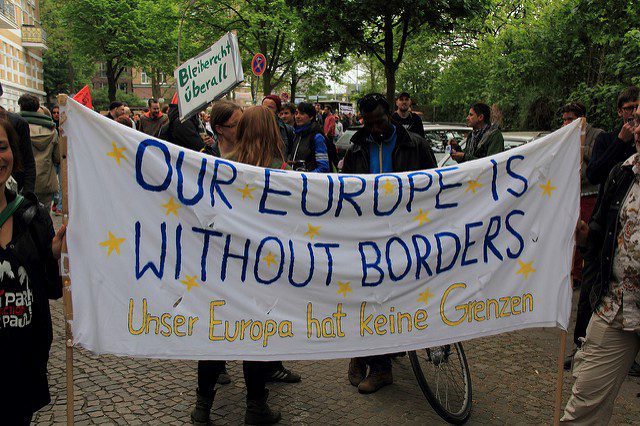
On October 2, Viktor Orban, prime minister of Hungary, held a nationwide referendum to address growing anti-refugee sentiment. Orban asked the question, “Do you want the European Union, even without the approval of the Hungarian parliament, to be able to prescribe the mandatory resettlement of non-Hungarian citizens in Hungary?”
Resoundingly, 98 percent of voters backed the government’s opposition to the EU refugee acceptance quotas, even though Hungary would only have to accept 1,300 of the 160,000 refugees taken into consideration by the distribution plan. Although voter turnout was only around 43 percent, the rejection of refugees and belief in their inherent dangers is no anomaly.
Anti-refugee and anti-Muslim sentiment is spreading across Europe, especially in the wake of major terrorist attacks in Brussels, Paris, Nice and the everyday acts of violence consistently occurring throughout Europe. Opposition to refugees also heavily fueled the Brexit vote.
Within the Visegrád Group, an alliance of the Czech Republic, Hungary, Slovakia and Poland, refusal to accept refugees is at its peak. The Czech Republic and Hungary have only accepted 520 and 146 refugees respectively in the last year, a drop in the ocean of millions needing asylum.
In 2015, Hungary also built a heavily guarded, razor wired fence along its southern border to control the flood of migrants into Hungary. Many have criticized the country for treating refugees “worse than wild animals;” some have even called for Hungary to be temporarily or permanently expelled from the EU for its behavior.
Even in more accepting countries like France and Germany, growing fear and misunderstanding have lead to more anti-refugee and anti-Muslim policies. More than 20 French mayors have refused to lift their bans on the “burkini,” a full body swimsuit worn mainly by Muslim women, even though the national court system has deemed the ban unconstitutional.
Even in Germany, the biggest proponent of refugee acceptance, anti-refugee sentiment has spread. After several regional elections went to the far-right, Angela Merkel, Chancellor of Germany, plans to take a step back from her heavily controversial open-door refugee policy.
Although the current situation for many refugees may seem bleak, the future may well be brighter. Even after several devastating attacks in France, French president Francois Hollande is still holding firmly to his open refugee acceptance policy. In Syria and Iraq, as well, the end seems to be near. After capturing Fallujah, allied forces have now moved on -to Raqqa, the ISIS capital, and Mosul. The U.S. and EU can now begin to rebuild infrastructure and resettle the remaining refugees.
– Henry Gao
Photo: Flickr

Poverty and Sickness in Nigeria’s Borno State
A whole generation is missing in Nigeria‘s Borno State. There are no toddlers clinging to their siblings’ hips or babies wailing for their mothers. This is because, in Borno State, there are hardly any children under 5 years of age. This is largely due to displacement compounded with a severe lack of nutrition.
In 2013 and 2014, those from northeast Nigeria fled their homes and livelihoods to escape attacks by the Boko Haram, an Islamist terrorist group. By the thousands, they escaped to Maiduguri, the capital of Nigeria’s Borno State. As the fighting continued and spread, farmers were barred from working their land and trade routes were sealed off. Markets emptied. Imports into areas held by the Boko Haram were entirely cut off, leading to widespread starvation. Nearly 500,000 people are living in unacceptable conditions.
This severe deficit of food and essential nutrients has led to unprecedented rates of malnutrition among the population, which in turn, led to high rates of disease in the very young and very old. Measles, malaria and diarrheal diseases run rampant through the population. Acute respiratory infection claims young lives by the dozens.
Those most affected are those under 5 years of age, who die at intolerable rates from malnutrition, infection and typically preventable diseases. They are the victims of acute political unrest and, more immediately, they are the victims of hunger. Nutritional screenings taken throughout the state show that 50 percent of children in the Borno State are severely malnourished. Even in areas where food is available, prices have increased tremendously in just a matter of months. With each spike in the price of food, more households find themselves unable to eat.
These circumstances led the Nigerian government to announce a nutritional emergency in Nigeria’s Borno State in June of 2016. The people in Borno State are in dire need of help and, while Nigeria’s government has recognized the magnitude of this epidemic, the crisis must be acknowledged worldwide for maximum impact. There must be measures implemented to make sure that people can reach food and humanitarian aid in protected locations. Massive global aid is crucial to the survival of these people.
Doctors Without Borders is calling for a major humanitarian response to the crisis, even as teams are reaching affected areas. It is not enough. U.N. agencies, particularly the World Food Programme, should scale up interventions. In America, the Food for Peace Reform Act, which proposes to help end global hunger using the most efficient and cost effective means possible, must be supported and passed in congress.
Aid needs to be scaled up now, today and every day following until the needs of the Nigerian people are met— until we are able to replenish an entire lost generation.
– Kayla Provencher
Photo: Flickr
Fight for Clean Water in Sudan
Getting safe and clean water in Sudan continues to be an ongoing struggle that the Sudanese people have endured for decades. Plagued by war, poverty and disease, the ongoing water stress in Sudan has created a strain on political and economic situations and taken a toll on infrastructure and agricultural systems.
Given that the livelihood of Sudan is reliant on the agricultural industry, which requires 97 percent of the country’s water usage, the lack of rainfall and desertification has contributed to a prevalent impoverished state. Family displacement is a continuous problem as families seek out potentially prosperous land elsewhere.
To put into perspective, the U.S. domestic water use “accounts for 13 percent of total supply,” whereas availability for the domestic use of clean water in Sudan is two percent. Adding to this insufficient supply of water, issues such as a rapidly increasing population, drought and the unregulated disbursement of large water sources, such as the Nile River Basin, are being ignored.
While economic and political strife remains, family life is also at stake. Each day a mother or child must walk far distances in order to gather the necessary amount of water needed to cook and clean. Oftentimes, an individual can travel up to four hours to locate a safe water source, while risking their safety due to prevalent gender violence. Such demands cause children to forego education in order to help contribute to family needs. Every day an individual is faced with the possibility of running out of the clean water gathered that day and deciding whether or not to risk their health by drinking from a risky water source.
Lastly, the most important consideration in the face of Sudan’s water crisis is protecting and sustaining the health of the population. Misuse of water sources, pollution and fecal contamination are key contributors to the waterborne diseases that spread throughout Sudan. In 2004, 3,753 cases of Hepatitis E were contracted within four months and in 2006, 476 deaths in just five months occurred as a result of contaminated water. Other common waterborne diseases include Guinea Worm Disease from which three out of five cases originate in Sudan.
Fortunately, many organizations and nonprofits have aided in the redevelopment of the water quality in Sudan. Water is Basic was formed in 2006 following the Comprehensive Peace Agreement, which set out to end the civil war in Sudan. Since 2008, the organization has installed and restored over 500 clean water wells and “to date, [has] brought clean water to 10 percent of the total population of South Sudan.” Their Carry the Jerry annual race has brought awareness to the hardships Sudanese people endure as participants complete the race by carrying the Jerry cans used to transport fresh water to and from non-local sources.
Similarly, a 2012 pledge from Japan, promising $50 million in infrastructural aid is projected to be completed in 2017. This will provide clean and convenient water access to 400,000 residents of Juba, Sudan. Other ongoing effort initiatives exist from numerous organizations such as Water For South Sudan, the Water Project and Africa Heartwood Project.
The current global efforts to provide clean water in Sudan has introduced a new hope for the Sudanese by empowering them to establish community and leadership with the ultimate hope that Sudan will one day be a self-sustaining country. With the help of various organizations, jobs have been established for Sudanese individuals providing them with income to send their children to school, preserve their households, and to “dream of a future.”
– Amy Williams
Photo: Flickr
UN Protects Education in the Central African Republic
In 2016, militiamen in the Central African Republic began setting up base at schools and preventing students from attending classes. In September, the U.N. responded by ordering the militia groups to vacate the schools, threatening to send in forces if they didn’t comply. The U.N.’s goal was to enable children to resume their education in the Central African Republic.
The Central African Republic, a land-locked nation of 5 million people, was thrown into a brutal civil war when its government was forced out in 2013 by Muslim Seleka rebels. According to the national post, the civil war has led to the country being ranked 187 out of 188 countries on the human development index.
According to the U.N., 10,000 children in the Central African Republic were kept from school due to the presence of militiamen. About a third of all schools in the country were either set on fire, shot by bullets, pillaged or occupied by armed groups. As a result, approximately 400 primary schools were shut down.
The U.N. took a firm stand against the militia and issued a statement known as “Minusca,” which mandated that no armed forces go within 1,650 feet of schools and warned against further interference in education in the Central African Republic.
UNICEF also denounced the militia groups’ behavior. UNICEF’s Chief of Communications in the Central African Republic, Donaig Le Du, issued a firm statement that despite the conflict and civil war occurring, education in the Central African Republic should be spared. School is not politically affiliated or party to the conflict, she said, and children should not be prevented from attending.
Despite disruption in areas near Bangui, the capital of the Central African Republic, children across the country returned back to school to resume their educations at the end of September as a result of the U.N.’s warning.
The U.N. recently reported that since the civil war broke out in the Central African Republic, “considerable progress” has been made. Ten thousand U.N. troops and 1,700 police are keeping peace as well between armed groups, and an additional 12,000 peacekeepers are stationed in the country. Although the state of the nation remains fragile, it is in a better place overall than it was in 2013.
– Alex Fidler
Anti-Refugee Sentiment Grows Throughout Europe
On October 2, Viktor Orban, prime minister of Hungary, held a nationwide referendum to address growing anti-refugee sentiment. Orban asked the question, “Do you want the European Union, even without the approval of the Hungarian parliament, to be able to prescribe the mandatory resettlement of non-Hungarian citizens in Hungary?”
Resoundingly, 98 percent of voters backed the government’s opposition to the EU refugee acceptance quotas, even though Hungary would only have to accept 1,300 of the 160,000 refugees taken into consideration by the distribution plan. Although voter turnout was only around 43 percent, the rejection of refugees and belief in their inherent dangers is no anomaly.
Anti-refugee and anti-Muslim sentiment is spreading across Europe, especially in the wake of major terrorist attacks in Brussels, Paris, Nice and the everyday acts of violence consistently occurring throughout Europe. Opposition to refugees also heavily fueled the Brexit vote.
Within the Visegrád Group, an alliance of the Czech Republic, Hungary, Slovakia and Poland, refusal to accept refugees is at its peak. The Czech Republic and Hungary have only accepted 520 and 146 refugees respectively in the last year, a drop in the ocean of millions needing asylum.
In 2015, Hungary also built a heavily guarded, razor wired fence along its southern border to control the flood of migrants into Hungary. Many have criticized the country for treating refugees “worse than wild animals;” some have even called for Hungary to be temporarily or permanently expelled from the EU for its behavior.
Even in more accepting countries like France and Germany, growing fear and misunderstanding have lead to more anti-refugee and anti-Muslim policies. More than 20 French mayors have refused to lift their bans on the “burkini,” a full body swimsuit worn mainly by Muslim women, even though the national court system has deemed the ban unconstitutional.
Even in Germany, the biggest proponent of refugee acceptance, anti-refugee sentiment has spread. After several regional elections went to the far-right, Angela Merkel, Chancellor of Germany, plans to take a step back from her heavily controversial open-door refugee policy.
Although the current situation for many refugees may seem bleak, the future may well be brighter. Even after several devastating attacks in France, French president Francois Hollande is still holding firmly to his open refugee acceptance policy. In Syria and Iraq, as well, the end seems to be near. After capturing Fallujah, allied forces have now moved on -to Raqqa, the ISIS capital, and Mosul. The U.S. and EU can now begin to rebuild infrastructure and resettle the remaining refugees.
– Henry Gao
Photo: Flickr
Avant Garde Innovations Creates Wind Energy in India
Based on the most recent data available by the World Bank, wind energy in India only comprises 0.4 percent of the total final energy consumption for the nation. Renewable energy calculates higher at approximately 39 percent, but there is still room for improvement for the entire clean energy sector. Hoping to fill some of the voids, Avant Garde Innovations will soon test the market with a newly developed wind turbine.
Avant Garde Innovations (AGI) was founded in January 2015 by two brothers, Arun and Anoop George. Based out of Thiruvananthapuram on the southern tip of the subcontinent, the mission of the organization is “to eliminate energy poverty, reduce dependence on struggling state power grids, and create energy self-sufficiency.” They also place emphasis on affordable, locally operated products. As such, the first move toward this goal was the construction of a windmill prototype intended to eventually replace nonrenewable energy sources throughout India, particularly in households.
AGI’s turbine is unique in its smaller size, producing slightly less energy but at a dramatically lower cost. Right now, competitors offer windmills to develop wind energy in India for about 200,000 rupees per kilowatt, but AGI’s model is only expected to cost 50,000 rupees per kilowatt – a 75 percent reduction in price! Some media sources are even boasting comparisons that a typical Indian family will now be able to install windmills to power their entire homes for less than the price of an iPhone. In terms of power, AGI expects 20 percent capacity utilization in contrast to the 25 percent capacity utilization of larger mills. However, even at this rate, their turbines can produce five units of power every day, which is plenty for the average-sized household.
For the moment, the first AGI turbine has been constructed outside of the Madre De Deus Church in Vettucaud, India where it will undergo its pilot testing phase this January. Once the trial is complete, AGI intends a full launch in the international market during the first quarter of 2017, and investors are already showing interest. The Indian government also aims to formally introduce the design by 2022.
Their updated windmill is not the only reason to find promise in AGI, however. Arun believes the patent-pending design is transferable, which could form the foundation of future projects such as hydro- and tidal turbines, and potentially even an automobile motor. The basic blueprint is also said to require little maintenance, and will still be able to generate power at lower wind speeds than competitors’ offerings.
As a result of their startup success, the organization has already been honored with numerous accolades. To name a few, AGI has been invited to attend exclusive conferences hosted by the U.N. as well as a major energy forum in Silicon Valley, California. Drawing further attention is their commitment to operating on 100 percent clean energy themselves. For the future of wind energy in India, AGI’s business model is a major step on the path toward sustainability.
– Zack Machuga
Photo: Flickr
Jim Yong Kim Re-elected as World Bank Group President
On September 24, 2016, it was announced that World Bank Group’s President Jim Yong Kim had been selected for a second term. Starting July 2017, Kim will continue leading The World Bank’s ongoing efforts to alleviate global poverty.
Founded in 1944, The World Bank began as an institution facilitating post-war reconstruction and development. At that time, The World Bank took on infrastructure projects to physically rebuild communities. Today, however, the organization has expanded its work to include myriad social projects.
Now, the multifaceted institution is comprised of economists, experts in public policy, social scientists and sector experts and has a portfolio of projects in agriculture, health, education and other areas of the social sector. Although reconstruction is still a focus, the group’s overlying goal is to reduce global poverty through sustainable and inclusive global prosperity.
When Jim Yong Kim, a South Korean-American physician and anthropologist, was originally elected to the presidency in 2012, The World Bank had set two bold goals: to eradicate global poverty by 2030 and to promote shared prosperity by boosting the income growth of the bottom 40 percent of the population in every developing country.
During his first term, Kim brought more structure, accountability and focus to The World Bank with clearer policies and targets, and efforts to meet those targets have been successful. Some of his greatest accomplishments came from dispersing the bank’s power and reallocating large amounts of its resources to combating climate change, addressing the Syrian refugee crisis and undertaking other initiatives that have not traditionally been within The World Bank’s scope.
He also gained much praise for his leadership in the Ebola outbreak, during which he allocated $400 million to combat the deadly virus in West Africa. Additionally, he implored the rest of the international community to invest in containing Ebola, even criticizing the World Health Organization (WHO) for its lax response.
The World Bank Group president also made a number of allies during his term, according to Africa News. When he voiced his intention to run for a second term, he gained endorsements from many countries, including South Korea, the Netherlands, Kenya, Rwanda, Togo and others.
Recognized worldwide for his invaluable experience and accomplishments prior to his election in 2012, Kim worked as an advisor to the director-general of WHO. He later rose to the position of director in WHO’s renowned HIV/AIDS department.
As he finishes his first term and looks forward to his second, one of Kim’s main focuses is making more progress toward the goal of eradicating global poverty by 2030.
-Alex Fidler
Photo: Flickr
Five Companies Investing in Developing Countries
While some view developing countries as hopeless, others see in them the potential for investment. Despite their struggles, many developing countries are growing at faster rates than wealthy and middle-income countries as their working age populations increase and larger shares of people gain access to education. Below are five American companies that are investing in developing countries.
In June 2016, Amazon’s CEO Jeff Bezos pledged that Amazon would up its planned direct investment in India from $3 billion to $5 billion. Amazon has already built 21 fulfillment centers and has employed large numbers of Indians in positions ranging from courier to researcher and developer. According to Bezos, India is Amazon’s fastest growing market.
Enviro Board is a New Jersey-based company that specializes in producing cheap and environmentally friendly panels, “e-boards,” that can be used to construct houses. In 2014, Enviro Board agreed to launch a joint venture with a local Zambian corporation, Africapaciti Investment Group. The agreement involved building over 6,000 houses a year and re-investing a significant portion of the profits into worthy causes.
Cummins is an American manufacturer of power generation equipment. Since 1962, it has been present in India via a joint venture, and today it employs almost 10,000 workers there. It also has a broad footprint in Africa, with representation in 51 out of 54 African countries. It has supported technical education and gender equality in Africa as well.
In 2012, IBM set up a global research lab in Nairobi, Kenya. The lab’s researchers focus on finding solutions to the challenges Africa faces, particularly those relating to education, human capital development and sanitation. In 2015, IBM Research Africa added a South African branch through collaboration with a local university. The researchers there are making use of Watson, IBM’s signature cognitive computing system, as they address the continent’s major issues.
Reduced to being one of the poorest countries in Asia by decades of autarkic military rule, Myanmar has courted foreign aid aggressively since it began to open up to the outside world in 2011. In 2012, Coca-Cola entered Myanmar after a 60-year hiatus by opening a new bottling plant there. The plant put the cap on an ambitious plan for $200 million in direct investment in the country over five years.
Whether it be through research and development, direct investment in production facilities or support for training programs, American companies investing in developing countries can help improve people’s lives. As potential consumers, people living in developing countries may also become major assets to the American economy in the future.
– Jonathan Hall-Eastman
Photo: Flickr
Current Education in Kyrgyzstan
Many formerly Soviet-controlled nations struggled to bolster their education systems following the collapse of the USSR. Kyrgyzstan is one such country, having faced significant challenges in its education system after independence while also making steady efforts to improve it.
Kyrgyzstan’s Economy
Before the dissolution of the Soviet Union in 1991, Kyrgyzstan’s economy and industry were regulated by Moscow. Since the Soviet disbandment, the nation has transitioned toward a free market economy, one of the first formerly Soviet countries to do so. However, the economy has slowed down a bit in recent years, and many Kyrgyzstanis are suffering as a result. Although only 1.3% of the country’s population lived below the global extreme poverty line as of 2020, exactly one-third of the country’s population lived below the nationality line as of 2021.
Economy’s Effects on Education
Immediately following Kyrgyzstan’s independence, funding for education nosedived due to the break with the USSR. Therefore, the transition to independence caused a significant shock to Kyrgyzstan’s education system.
Furthermore, as of 2020, one out of three children in Kyrgyzstan lived below the poverty line (it should be noted that the pandemic severely exacerbated the issue of poverty). Children often have to sacrifice their schooling to work instead. About 27% of children in Kyrgyzstan have to work, and 14% miss class to work. Poverty in Kyrgyzstan is therefore impeding children’s ability to receive an education, since they often have to worry about providing for their families.
Learning Resources Lacking
Kyrgyzstan does not have enough qualified teachers to adequately educate children on important subjects. In 2025, Kyrgyzstan lacked 947 teachers that were needed by the education system. Many of these vacancies were in the subjects of math and Russian language, two vital subjects that children suffered in due to this shortage.
Furthermore, in 2025, there was a massive shortage in textbooks: schools in Kyrgyzstan only had 50% of the textbooks that they should have had. In lieu of school-provided textbooks, some students had to rent their own.
Solutions to Kyrgyzstan’s Problems
Kyrgyzstan is taking measures to combat the problems it faces in education.
Kyrgyzstan has a program called Programme to Support Families and to Protect Children, which began in 2018 and will continue through 2028. This program provides benefits to children or families in many cases: for example, a benefit is given to any newborn child, and a monthly benefit is given to families whose earnings are below a certain threshold and who have children under the age of 16.
Furthermore, Kyrgyzstan is trying to bolster the learning resources available to children. In 2025, the Kyrgyzstan government put $8.5 million into printing new textbooks to combat the shortage. Furthermore, the Ministry of Education created an online textbook platform (the “Okuu Kitebi” platform) to allow for easier access to textbooks. Through this platform, the ministry hopes to not only match but actually exceed textbook demand by 2030.
Kyrgyzstan’s education system does face problems, such as students needing to miss school to work and a lack of teachers and textbooks. However, Kyrgyzstan’s government is working to address these issues in order to improve education for children nationwide.
– Robin Lee, Jackson Meyer
Photo: Flickr
USAID Leads the National Fight on Global Poverty
As of 2013, 767 million men and women worldwide live under the global poverty line. Nearly 11 percent of the world’s population still struggle to make ends meet with less than $1.90 per person per day. According to recent World Bank statistics, much of this community is densely populated in sub-Saharan Africa. This region touts over half of the global impoverished community.
The U.S. Agency for International Development is one of the many organizations looking to make strides with this epidemic. Launched by the Foreign Assistance Act of 1961, USAID aims to lead the U.S. national effort to abolish socioeconomic inequality.
This agency has instituted multiple initiatives geared towards combating widespread global poverty. Most notably, the U.S. Global Initiative Lab, instituted in 2014, works in conjunction with prominent businesses and academic institutions to address preeminent wealth disparity issues through a wide network of pooled resources.
These cornerstone partnerships offer advanced research and development capabilities which would otherwise be unavailable to one single entity. The U.S. Global Initiative Lab has also recently sought to implement technological advances in these poverty-stricken communities. The Lab has labored to effectively reallocate funds to provide the necessary groundwork for these actions to take place.
One USAID administrator, Rajiv Shah, expresses optimism when discussing these changes in a 2014 interview with Time Magazine. “[…] if we could get and invent new seeds, new mobile technology, and open new data centers to help farmers connect their crop prices and understand weather variability, we can do something transformational […].”
In 2016, USAID requested a budget of $50.1 billion to carry out development activities. This lump sum included a $35.2 billion base request to directly support people and global health programs while bolstering American U.N. leadership.
In its Congressional budget justification, USAID recognized the need for “accountability, efficiency, and effectiveness in the use of taxpayer dollars.” Additionally, the agency directly pointed out the need for budget allocation to African programs.
This request specifically outlines the need to secure policies concerning democracy, education and economic growth. USAID points to democratic gains in Nigeria as well as political transitions throughout the continent as vital measures towards infrastructural improvement.
These initiatives illustrate a refreshing sense of awareness on the part of USAID. Blindly throwing money at an issue yields ineffective and temporary solutions. Dire situations require resilience and thoughtful action.
USAID’s mission statement calls for “democratic societies to realize their potential.” The organization does not look for immediate solutions to complicated problems. More accurately, USAID works to promote a stable environment which can cultivate economic prosperity for years to come.
USAID believes actions like theirs may go to “define the majority of the history written about our era.” Time will show the scope of the impact USAID can have in the fight against global poverty.
– Brady Rippon
Photo: Flickr
Islamic State’s Use of Mustard Gas: Human Rights Abuses
The Islamic State has been using chemical weapons including the poison known as mustard gas on Iraqi and coalition forces, as well as on civilian targets. Human Rights Watch has called on the Iraqi government to respond by warning civilians in conflict zones about the use of chemical agents, isolating contaminated areas and providing treatment for victims of chemical weapon attacks. If the Iraqi government cannot do this, it should seek assistance from other Chemical Weapons Convention member countries.
According to the Pentagon, mustard gas has been stockpiled and used by the Islamic State in the past, and as the battle for Mosul continues, U.S. forces say that they expect to see it used again. The head of the Islamic State’s chemical weapons program has confirmed that the Islamic State has been stockpiling these weapons with the intention of using them in the battle for Mosul. In recent weeks, there have been several reports of chemical attacks in the areas surrounding Mosul.
Mustard gas was first and most famously used as a chemical warfare agent during World War I, and it has been used as a method of psychological warfare as well. Although exposure to mustard gas is rarely fatal, the chemical remains infamous for its invisibility, odorlessness and lack of immediate symptoms.
According to the Center for Disease Control, the effects of mustard gas depend on how much people are exposed to, the length of their exposure and the method of exposure. Exposure can occur through contact with the skin or eyes or by drinking contaminated water or eating the gas in liquid form.
Once exposed, it can take up to 24 hours for symptoms to appear. These symptoms usually include redness and itching of the skin, irritation of the eyes, respiratory tract problems such as shortness of breath, sneezing, a bloody nose, abdominal pain, fever, anemia and bone weakness.
The long-term effects of mustard gas can include second- and third-degree burns, chronic respiratory disease, blindness and cancer. Due to the severity of these symptoms, the use of mustard gas by the Islamic State is extremely concerning.
The World Post reported the story of a 4-year-old girl who was killed by mustard gas deployed by the Islamic State in Taza, Iraq. Her mother was standing beside her when she was killed and suffered severe burns from the gas.
Human Rights Watch has documented several other chemical weapon attacks in late September and early October. These attacks constitute war crimes under the Rome Statute of the International Criminal Court. For the safety of civilians and soldiers in Iraq, it is imperative that the government follow the guidelines set by Human Rights Watch and prevent chemical attacks by the Islamic State.
– Eva Kennedy
Photo: Flickr