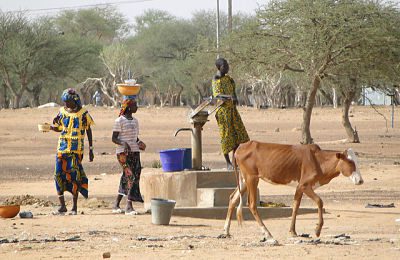
The Sahel region is a large transition zone in Africa between the Sahara and Southern Africa. The countries surrounding this belt include Sudan, Niger, Nigeria, Mali and Chad. According to the Permanent Interstate Committee for Drought Control in the Sahel (CILSS), more than 100 million people will inhabit the region by the year 2020, and 200 million will live there by 2050. With such a huge influx of people in this land, the poverty-related problems and instability in the Sahel region need to be addressed.
News outlet Africa Renewal reported that in 2012, 18 million people suffered during a major food crisis in the Sahel region. Just the next year, 11 million were experiencing hunger, more than 10 percent of them being children.
In a press release published by the U.N. in June, U.N. Deputy Secretary-General Amina Mohammed spoke to the joint Economic and Social Council-Peacebuilding Commission on the instability in the Sahel region. He claims that the Sahel region continues to deteriorate due to lack of government and harsh climate conditions; these countries sit right above the equator.
Currently, more than 30 million people in the Sahel region struggle with food insecurity. Terrorism affects many more citizens, driving out law enforcement and government forces. “Efforts to address [this] should be closely coordinated with the work of the United Nations Development Group and the Resident Coordinators of Sahel countries,” stated Mohammed. Not only is he calling for action, but Mohammed explains that action is already being taken.
The U.N. Security Council is deploying a G5 Sahel joint force of 5,000 military and police personnel to collaborate with another military in the area, such as the United Nations Multidimensional Integrated Stabilization Mission in Mali (MINUSMA). Together, they will continue to protect citizens and suppress terrorist violence.
Mohammed closed his address by stating, “the Secretary-General, his senior management and I, myself, are committed to improving the efficiency and effectiveness of the United Nations response to crises around the world.”
However, the U.N. isn’t the only organization committed to helping the Sahel region. The United States Agency for International Development (USAID) funds CILSS with around $3.4 million annually. Their mission, as stated on the USAID website, is “to devote efforts towards the search for food security and combating the effects of drought and desertification for a new ecological balance in the Sahel.”
The 2030 Sustainable Development Goals and many organizations are working to end instability in the Sahel region. With the objective of government reform, we will hopefully see goals reached before the end of 2030.
– Vicente Vera
Photo: Flickr

Eight Facts About Water Quality in Panama
As one of the most prosperous and developed countries in Central America, Panama is a leader in the area regarding sanitation and water quality. Current estimates say that 93% of Panamanians have access to an improved water source, while 69% have access to improved sanitation. Despite these numbers, there have been many challenges in recent years pertaining to water quality in Panama, especially in rural areas.
While the country has made tremendous progress in the last few decades, water quality in Panama remains an issue due to poor response to problems such as drought and runoff. In the near future, Panama will have to respond to changes brought about by climate change and other factors to ensure the continued health and prosperity of their nation.
– Nick Dugan
Photo: Flickr
Human Rights in the Congo: A War Against Women
While guerrilla warfare in the Congo is oft-reported, the veritable war waged against women in the country is much less known. Problems concerning human rights in the Congo span the gamut from corruption to exploitation to sheer brutal violence. Among the most heinous infractions is the tolerance of systemic rape. Below are nine facts about human rights in the Congo:
While the statistics paint an exceedingly grim picture, organizations such as Women for Women are working relentlessly to improve human rights in the Congo and improve the living conditions of assault victims and at-risk women. Women in the Democratic Republic of the Congo who participate in the Women for Women program report higher confidence in their ability to make decisions about their bodies and families, earn a higher living wage and are more likely to report their assaults to an appropriate body of authority.
However, the real issue here is not that women do not know how to handle sexual assault, it is that men–especially those in positions of relative power–systemically carry out sexual assaults. It is paramount that the Democratic Republic of the Congo, the U.N. and every other organization and government body working to improve human rights in the Congo, gets one fact straight: women do not need to be taught how to live in fear, men need to be taught that sexual assault is abhorrent and those who choose to commit such unspeakable acts will be held accountable and punished accordingly.
– Spencer Linford
Photo: Flickr
What Is a Unilateral Trade Agreement?
What is a unilateral trade agreement? It is a treaty that benefits only one state, imposed on one nation by another, that has the potential to aid developing nations’ economies.
Through the Trade Act of 1974, the United States established the Generalized System of Preferences (GSP), which instituted unilateral trade policies that benefit the world’s poorest nations. The GSP gives developing nations the opportunity to grow their economies through trade and ultimately lift themselves out of poverty.
The GSP eliminates duties on over 5,000 import products from more than 120 designated beneficiary states and territories. Out of the 122 beneficiary developing countries (BDCs), 43 are categorized as least-developed beneficiary developing countries (LDBDCs). LDBDCs reserve 1,500 of the import products in the program that receive duty-free status. These LDBDCs include Yemen, Ethiopia, Haiti, Afghanistan and Cambodia.
The GSP helps developing nations by lowering the cost of their products in the U.S., which in turn stimulates demand and helps the BDC’s economy grow. Furthermore, the GSP not only helps the U.S. accomplish its foreign policy goals but also benefits American consumers. The GSP helps keep prices low for Americans and is integral to the success of small business owners who rely on savings from duty-free products to stay competitive.
The value of imports that entered the U.S. duty-free under the GSP in 2015 totaled $17.4 billion.
While the GSP demonstrates how unilateral trade agreements can be fruitful, unilateral trade policies have downsides as well. Tariffs, for example, can be circumstantially advantageous or disadvantageous.
Initially, tariffs raise the cost of imports and make local products more competitive, boosting the economy and creating jobs. However, when tariff prices are universally high, local exports drop and soon after global trade drops — this hurts everyone. This sequence of events occurred during the Great Depression in the 1930s and, in consequence, global trade dropped 65 percent.
So: what is a unilateral trade agreement? It’s simply a treaty that only requires the action or initiative of one state. Unilateral trade policies can be tariffs, or they can be trade preference programs, such as the United States’ GSP, and can be used as a strategy to promote economic growth in developing countries.
– Catherine Fredette
Photo: Flickr
What Is Smallholder Market Support?
What is smallholder market support? Through the continued and increased bolstering of small-scale producers, it may be the best way to achieve Zero Hunger.
The Zero Hunger Challenge, launched in 2012, combines all five elements of the United Nations Sustainable Development Goals (SDGs) in an effort to “end hunger, eliminate all forms of malnutrition, and build inclusive and sustainable food systems.”
One of the U.N.’s SDGs is to bring an end to rural poverty by increasing the incomes of small-scale producers and thus increasing their productivity. The success of small-scale farmers is essential to the success of the Zero Hunger Challenge and feeding the growing population. Increasing smallholders’ productivity starts with improving their livelihoods, and this is where smallholder market support comes in.
Smallholder farmers make up the majority of the world’s impoverished people, despite the fact they produce most of the world’s food. Smallholder farmers face many challenges that hinder their capacities. These challenges include a lack of post-harvest management, suitable storage and productive markets or financing. This is not to mention the challenge farmers face in producing enough to make it through the season and generating a small surplus, a goal not easily achieved.
The World Food Programme has developed innovative solutions that has aided two million smallholder farmers in 60 countries in their agricultural development. Two of the most profound solutions include Purchase for Progress (P4P) and Home-Grown School Feeding.
P4P aids in connecting smallholders to larger markets and, in turn, widening their range of crops and broadening business opportunities. Home-Grown School Feeding links domestic smallholders with national schools to supplement their meal systems. Both of these programs, among many other effective agendas implemented, utilize private-sector and government systems to support smallholders.
These efforts are not only humane and ethical–they are sustainable. The question remains for many: what is smallholder market support and why should it be encouraged and funded? Smallholder market support has the long-term ability to turn current recipients of agricultural assistance into our future global food producers. Smallholder market support can eliminate world hunger within our lifetimes.
– Catherine Fredette
Photo: Flickr
How Foreign Aid Can Solve Instability in the Sahel Region
The Sahel region is a large transition zone in Africa between the Sahara and Southern Africa. The countries surrounding this belt include Sudan, Niger, Nigeria, Mali and Chad. According to the Permanent Interstate Committee for Drought Control in the Sahel (CILSS), more than 100 million people will inhabit the region by the year 2020, and 200 million will live there by 2050. With such a huge influx of people in this land, the poverty-related problems and instability in the Sahel region need to be addressed.
News outlet Africa Renewal reported that in 2012, 18 million people suffered during a major food crisis in the Sahel region. Just the next year, 11 million were experiencing hunger, more than 10 percent of them being children.
In a press release published by the U.N. in June, U.N. Deputy Secretary-General Amina Mohammed spoke to the joint Economic and Social Council-Peacebuilding Commission on the instability in the Sahel region. He claims that the Sahel region continues to deteriorate due to lack of government and harsh climate conditions; these countries sit right above the equator.
Currently, more than 30 million people in the Sahel region struggle with food insecurity. Terrorism affects many more citizens, driving out law enforcement and government forces. “Efforts to address [this] should be closely coordinated with the work of the United Nations Development Group and the Resident Coordinators of Sahel countries,” stated Mohammed. Not only is he calling for action, but Mohammed explains that action is already being taken.
The U.N. Security Council is deploying a G5 Sahel joint force of 5,000 military and police personnel to collaborate with another military in the area, such as the United Nations Multidimensional Integrated Stabilization Mission in Mali (MINUSMA). Together, they will continue to protect citizens and suppress terrorist violence.
Mohammed closed his address by stating, “the Secretary-General, his senior management and I, myself, are committed to improving the efficiency and effectiveness of the United Nations response to crises around the world.”
However, the U.N. isn’t the only organization committed to helping the Sahel region. The United States Agency for International Development (USAID) funds CILSS with around $3.4 million annually. Their mission, as stated on the USAID website, is “to devote efforts towards the search for food security and combating the effects of drought and desertification for a new ecological balance in the Sahel.”
The 2030 Sustainable Development Goals and many organizations are working to end instability in the Sahel region. With the objective of government reform, we will hopefully see goals reached before the end of 2030.
– Vicente Vera
Photo: Flickr
The Cost of Living in Brazil
The cost of living in any country is a direct result of inflation and the economy. As of June 2017, $1 is equivalent to 3.31 Brazilian real. The cost of living in Brazil does not seem to be high for everyday products such as fruit, bread and eggs when compared to prices in the United States. The costs tend to differ more when it comes to mortgage rates, and gasoline and other imports.
Brazilian cities were more expensive in 2011 than cities such as Los Angeles, New York City, Berlin, Miami, Abu Dhabi and Luxembourg. The inflation rate was 6.5%, while the rate in the U.S. was 3%. The real should have become cheaper, not more expensive. This caused the cost of living in Brazil to rise.
By 2016, the economic situation had not changed much. Brazil, which had been the fifth-largest world economy when it won the Olympics, dropped to the ninth-largest economy after a significant decline in its gross domestic project. It went into its worst recession since the 1930s.
High taxes, poor infrastructure and low labor productivity have contributed to what is known as “Custo Brasil” (“Brazil cost” in English)– which refers to the increased costs associated with doing business in Brazil. It is likely that these costs directly impact the cost of living in Brazil.
The 2016 Olympic Games in Rio de Janeiro was expected to add to the economy while bringing Brazil out of the recession. With an influx of tourists’ spending money, the demand and supply for products should have increased.
More than 400,000 tourists came in for the Olympics and spent about 425 real per day; those 760,000 Brazilians who attended spent an average of 310 real per day. In total, the Olympics generated over $100 million in tourism revenue alone, based on the exchange rate as of August 2016.
Although the total amount of revenue generated remains unknown, companies spent more for the 2016 Rio Olympics than they did in Beijing in 2008 and in London in 2012. Between the revenue from tourism and sponsors, Brazil’s official inflation rate ended 2016 at its lowest level since 2013.
The central bank expects the cost of living to decelerate, with significant decreases having already occurred in the past few months. Brazil is expected to end 2017 with inflation below its target for the first time since 2009.
– Stefanie Podosek
Photo: Flickr
The Current Cost of Living in Panama
Known for its 48-mile canal connecting the Pacific Ocean with the Atlantic Ocean, Panama receives over a million visitors each year. Panama’s beautiful beaches, ecotourism and international festivals can seduce many tourists into making Panama their home rather than a vacation spot. For those who entertain the thought of Panama as their permanent home, it is important to know the cost of living in Panama as well as what it’s like to live there.
Panama has a relatively low cost of living, which can range from $1,120 to $8,000 per month for two people, while the average middle-class salary in Panama is estimated at $1,200 per month. These costs fluctuate depending on what region or city you are going to be living in Panama.
The unemployment rate in Panama is 4.5%. The labor force in Panama is made up of 1.78 million people; a large majority of the population works in services while the rest works in agriculture and industry. The standard workweek in Panama is 48 hours, which is 8 hours more than a full-time work week here in the United States.
While the cost of living in Panama is low, migrants should know much more about Panama before making the decision to move there. For example, while Panama’s crime rate compared to other Central American countries is relatively low; however, it is still high compared to most of the United States. Panama, Colon, Herrera and Chiriqui are among the provinces with the largest cities which had the highest overall crime rate. There has been a pattern of decreasing crime in Panama. Homicide, armed robberies and petty theft rates have all continuously fallen.
Moving from the United States to Panama may come as a huge shock when you realize that Panama’s population is only four million. Approximately one-third of Panama’s population lives in Panama City or the immediate area around it. Panama City is packed with nightlife, shopping areas. The rest of the areas in Panama provide a quiet and relaxed life which provides quicker access to Panama’s nature.
There are many things to consider and know about Panama before turning your yearly vacation into a forever home. While Panama may be very appealing to the eye and its beautiful attractions may coerce someone into a quick move, the cost of living in Panama may be a deciding factor.
– Danyel Harrigan
Photo: Flickr
Eight Facts About Chattel Slavery
The definition of chattel slavery is a “civil relationship in which one person has absolute power over the life, fortune, and liberty of another.” According to a report issued by the Australia-based Walk Free Foundation, 29.8 million people still exist as slaves in the modern world. Among the enslaved, there are forced laborers, forced prostitutes, child soldiers, child brides in forced marriages and those in the servitude of absolute ownership (chattel slaves). Below are eight facts to illustrate the current state of chattel slavery around the world.
Top Chattel Slavery Facts to Know
While slavery continues throughout many developing nations, the need for strengthening those weakened by poverty is undeniable. As trends have shown, investing in the stability of poorer nations and their people will help enable citizens to stand up against the corruption in their own countries, as well as major human rights violations like chattel slavery.
– Kendra Richardson
Photo: Flickr
What Can Be Learned from Finland’s Education System
The best way to educate students is something that most countries strive to discover. While most are still searching for answers, Finland has seen dramatic progress in its education system within the recent years. The first realization came in 2000 when Finland’s school system was revealed to have the best readers in the world.
Then again in 2009, Finnish students ranked second in science, third in reading, and sixth in math, among a sample of about 500,000 students worldwide. Ever since these rankings were released, countries around the world have been trying to understand what it is that Finland does so well. Here are some of the unique traits of the Finnish education system:
Finland’s education system is very different from those around the world, and yet it is arguably the most successful. The country stresses the importance of play and teaching students to learn not only for the sake of a test but to be more knowledgeable people. Additionally, the teachers themselves know how important their jobs are and therefore dedicate many years of their lives to learning how to be the best educators they can be. For these reasons and more, Finland’s education system is one of the best in the world.
– Olivia Hayes
Photo: Flickr
What is Food Assistance for Assets and How Does it Work?
More than 10% of the world’s population does not have regular access to food and 50% of these families are farmers. The majority of hungry people live in Asian and African countries. Countries with higher natural disaster rates are not able to access food regularly, due to the destruction of their communities and farmlands. The World Food Programme began the Food Assistance for Assets (FFA) program and other programs like it to help combat this issue. FFA focuses on restoring land and rebuilding communities while assisting people in need, but many people have never heard of it.
Food Assistance for Assets is a program that feeds people and works through them to rehabilitate suffering communities. Through this program, people are given work, such as building and repairing bridges and roads. In return, they gain two things. First, they are paid so that they can buy food for themselves and their families. In addition, the work that they have done helps strengthen and develop their communities, many of which have fallen victim to natural disasters.
While this program may seem to only benefit individuals, it has helped larger communities as well. FFA programs exist in 52 countries, where 10.1 million people have received help from the program. Rehabilitation programs include building water wells and planting trees to restore forests.
These facts help shed light on the impact of the Food Assistance for Assets programs and emphasizes the work that this program does to provide food to people around the world. There is enough food produced in the world to feed everyone, but without programs like FFA, many people are unable to access or pay for enough food to feed their families. Several organizations, including the U.N., hope that through assistance programs such as the FFA and through the increased sustainability of food, world hunger will be eradicated by 2030.
– Helen Barker
Photo: Flickr