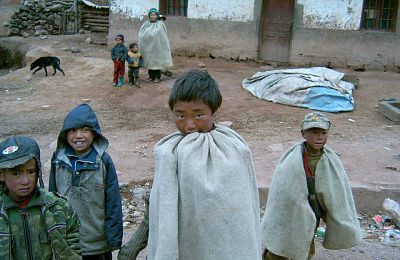
Despite the rapid economic growth that China has experienced in the last few decades, 400 million Chinese people still suffer from poverty, especially in rural areas. The following paragraphs provide detailed information on how to help people in China:
1. Teach for China
Formerly known as the China Education Initiative, Teach for China is a program founded in 2008. Teach for China works to reduce the gap in education level between rural and urban China. To deal with the shortage of teachers in rural areas, Teach for China hires top university graduates from both the United States and China for two years to work as teachers in primary and secondary schools in Yunnan and Guangdong provinces. The American volunteers are responsible for teaching English, while the Chinese volunteers focus on other core subjects, including math, science and Chinese literature. As of today, approximately two-thirds of the volunteers are Chinese, while the remaining one-third are from the U.S.
2. UNDP’s programs
Another example of how to help people in China is through the United Nations Development Programme’s various programs aimed at mitigating poverty and inequality in China. The organization focus on tackling the root causes of poverty in China. Additionally, the UNDP emphasizes sustainability and ensures that its actions are in line with China’s values and cultural identity. The specific programs include partnering with leading national institutions in China to support their policy research and provide policy recommendations, and an initiative that focuses on inclusive development for ethnic minorities.
3. Donations to NGOs
Another way to reduce poverty in China is to donate to NGOs dedicated to helping the rural poor in China.
Save the Children, one of the world’s largest NGOs focuses on raising the quality of educating Chinese children in impoverished communities. Since 1992, it has established child-friendly spaces in rural communities and schools where children can safely learn, play and socialize. Immediately after the Sichuan earthquake in 2008, it established a permanent office in Chengdu and has helped millions of homeless children and families affected by the earthquake ever since.
Another nonprofit organization that aims at ending the poverty crisis in rural China is Project Partner. Its uniqueness lies in the fact that while even the largest charities operating in other developing countries cannot work in China, it can, because of close relationships it has established with its partners since 1982. The organization accepts donations to various projects it carries out, as identified by its Chinese partners.
To provide clean water, for example, Project Partner digs wells and builds water storage systems. To improve health care, it builds clinics and trains doctors. Project Partner also offers scholarships and trains teachers in order to bring education toq rural areas. Project Partner also organizes regular trips to China to work directly with the people it supports through donations and fundraising. The participants can either help facilitate medical clinics, teach English, join youth soccer camps or visit rural Chinese villages.
These are the most typical examples of how to help people in China. Through these direct channels, it will be easier to alleviate poverty in rural China. This will help the nation achieve the Sustainable Development Goals.
– Minh Joo Yi
Photo: Flickr

How to Score a Ticket to the Global Citizen Festival
The Global Citizen Festival launched in 2012 as part of the Global Poverty Project, founded by Hugh Evans and Simon Moss. The movement is based on an online platform and mobile application that utilizes the power of education, communications, advocacy, campaigning and the media to take action against extreme poverty. The Global Poverty Project partners with other organizations such as UNICEF, OXFAM, ONE, Save the Children, The Global Fund and more.
The result of last year’s festival was 1.3 million online actions taken, leading to 44 commitments and announcements. Combined, these announcements are worth $1.9 billion and could impact 199 million people, just from the Global Citizen Festival of 2016 campaign. Commitments have not only been made by U.S. companies such as Walmart, UPS and Johnson & Johnson but also by nations such as the Netherlands and Canada.
With more than 60,000 participants attending the first festival on the Great Lawn in Central Park, the event quickly became popular. In 2016, the performance lineup included Rihanna, Demi Lovato, Kendrick Lamar and Metallica. There were also special guests like Coldplay’s Chris Martin. The band headlined the previous year and Martin is the current Global Citizen Festival curator.
The festival is free, but spectators cannot just attend. Instead, fans must engage with campaigns in order to win Global Citizen Festival spots. Activists can accumulate points that act as currency to bid on tickets to the Global Citizen Festival and other live events. The restriction is that only current campaign points can be used during each campaign.
For the upcoming July Global Citizen Festival in Hamburg, Germany, the organizers plan on handing out 9,000 free tickets to the show to people who sign up and pledge action.
“In bringing the Global Citizen Festival to Germany for the first time, we are calling on the G20 to take action and responsibility for moving forward on the Global Goals,” Global Citizen CEO Hugh Evans said.
– Stefanie Podosek
Photo: Flickr
Common Diseases in The Democratic Republic of the Congo
The Democratic Republic of the Congo (DRC) is a country located in Central Africa and has a population of 69.6 million people. With a GDP per capita of $753, the DRC is one of the poorest countries in the world. Half the country’s population lives below the poverty line, and most of the nation’s poor lives in rural areas, working as farmers and fishers. Common diseases in the Democratic Republic of the Congo are also a major plight.
From 1997 to 2003, the country was engulfed in a civil war, and other African countries also became involved. The war’s central cause was a desire for possession over the DRC’s mineral wealth, water and food. It also gravely damaged the DRC’s infrastructure. Today, there is still violence due to political instability, which makes it difficult for aid workers to access the area.
Additionally, a multitude of diseases devastates the nation. Common diseases in the Democratic Republic of the Congo include malaria, diarrheal diseases from lack of clean water, measles and cholera.
Both diarrhea and cholera in the DRC stem from a lack of adequate sanitation and safe water. In the DRC, less than 25% of people have access to clean water. Cholera outbreaks occur frequently.
The country has seen an epidemic of measles, as well, and NGOs like Médecins Sans Frontières, or Doctors Without Borders (MSF), have vaccinated millions of children. Malaria is yet another major problem and is the leading cause of death in the DRC.
Many NGOs have stepped in to help the Congolese. The area also suffers from a lack of hospital equipment and a shortage of staff. MSF has built treatment centers for cholera, and UNICEF has created the Healthy Villages program. This program aims to bring better sanitation and safe water to villages. Currently, 3,275 villages in the DRC are taking part in the Healthy Villages program.
MSF has addressed the problem of malaria by offering support to seven health centers with the aim of treating common diseases in the Democratic Republic of the Congo. The Center for Disease and Control (CDC) actively fights against malaria in the DRC under the U.S. President’s Malaria Initiative (PMI). It provides the Congolese people with long-lasting mosquito nets, prevents women from developing malaria while pregnant and improves the care of infected patients.
– Anna Gargiulo
Photo: Flickr
How to Help People in China
Despite the rapid economic growth that China has experienced in the last few decades, 400 million Chinese people still suffer from poverty, especially in rural areas. The following paragraphs provide detailed information on how to help people in China:
1. Teach for China
Formerly known as the China Education Initiative, Teach for China is a program founded in 2008. Teach for China works to reduce the gap in education level between rural and urban China. To deal with the shortage of teachers in rural areas, Teach for China hires top university graduates from both the United States and China for two years to work as teachers in primary and secondary schools in Yunnan and Guangdong provinces. The American volunteers are responsible for teaching English, while the Chinese volunteers focus on other core subjects, including math, science and Chinese literature. As of today, approximately two-thirds of the volunteers are Chinese, while the remaining one-third are from the U.S.
2. UNDP’s programs
Another example of how to help people in China is through the United Nations Development Programme’s various programs aimed at mitigating poverty and inequality in China. The organization focus on tackling the root causes of poverty in China. Additionally, the UNDP emphasizes sustainability and ensures that its actions are in line with China’s values and cultural identity. The specific programs include partnering with leading national institutions in China to support their policy research and provide policy recommendations, and an initiative that focuses on inclusive development for ethnic minorities.
3. Donations to NGOs
Another way to reduce poverty in China is to donate to NGOs dedicated to helping the rural poor in China.
Save the Children, one of the world’s largest NGOs focuses on raising the quality of educating Chinese children in impoverished communities. Since 1992, it has established child-friendly spaces in rural communities and schools where children can safely learn, play and socialize. Immediately after the Sichuan earthquake in 2008, it established a permanent office in Chengdu and has helped millions of homeless children and families affected by the earthquake ever since.
Another nonprofit organization that aims at ending the poverty crisis in rural China is Project Partner. Its uniqueness lies in the fact that while even the largest charities operating in other developing countries cannot work in China, it can, because of close relationships it has established with its partners since 1982. The organization accepts donations to various projects it carries out, as identified by its Chinese partners.
To provide clean water, for example, Project Partner digs wells and builds water storage systems. To improve health care, it builds clinics and trains doctors. Project Partner also offers scholarships and trains teachers in order to bring education toq rural areas. Project Partner also organizes regular trips to China to work directly with the people it supports through donations and fundraising. The participants can either help facilitate medical clinics, teach English, join youth soccer camps or visit rural Chinese villages.
These are the most typical examples of how to help people in China. Through these direct channels, it will be easier to alleviate poverty in rural China. This will help the nation achieve the Sustainable Development Goals.
– Minh Joo Yi
Photo: Flickr
How Many People Die from Hunger Each Year
Hunger continues to be the world’s biggest health problem. Hunger is one of the most emblematic images of poverty: the picture of stunted, malnourished children tends to resonate empathetical feelings in almost anyone. Just thinking of an image like this shows how, in one way or another, society knows how much suffering world hunger causes. With this information, the real question is how many people die from hunger each year.
This year, 36 million people will die from starvation. Essentially, that equates to a person dying of hunger every second of the year. Of these 36 million inhabitants, children are especially vulnerable. Every minute, 12 children under the age of five will die of hunger. This fact represents a death every five seconds.
The question itself of hunger, not just hunger-related deaths, is just as equally an important issue. The Oxford English Dictionary defines hunger as the want or scarcity of food in a country. The current world population is more than seven billion, and 795 million people, or one in every nine people, suffer from hunger. Almost all of these people are living in developing countries. Countries in Asia suffer from this problem more than any other region, with 525 million people suffering. Sub-Saharan African countries follow with a combined 214 million.
These regions are the most susceptible to conflict and drought, and usually, these tragedies end in famine. All of these factors are a direct relation to hunger. Consequently, 50 percent of all hungry people are families that depend on agriculture.
While there may have been an extreme spike in cases of hunger from 1995 to 2009 (an increase from sub-800 million hungry citizens to more than one billion in 2009), there has been a stark and continual decrease from 2009 to 2017. Currently, the world is seeing the lowest number of hungry people since 1995. There are 200 million fewer people suffering from hunger than there were 25 years ago.
With the understanding of how many people die from hunger each year and how many people still suffer from it, the question is how can this issue be addressed? One method to fight against global hunger is by supporting The Borgen Project. The Borgen Project places its focus on alleviating global poverty. By ridding the world of poverty, there will directly influence those who are also suffering from hunger.
– James Hardison
Photo: Flickr
What Is a Fireless Cooker?
In many developing countries, a lack of resources is the main reason why families struggle to survive. In Kenya, firewood for fuel is a huge burden to find and cut every day. Thus, the international NGO Practical Action created a solution to fight the issue of fuel: the fireless cooker.
A fireless cooker is an electricity-free and fuel-free device that helps families save time so they don’t have to sacrifice work to collect firewood.
Practical Action describes the purpose of the cooker as using “stored heat to cook food over a long period.” In a way, a fireless cooker is a simpler version of a crock-pot. It continues to cook the food after it is taken off of a heat source and keeps it warm for a long time, without wasting fuel.
To make one of these ingenious fuel-saving cookers is quite simple. Materials needed to operate the device include old clothing or banana leaves for insulation, rough cloth, heat-resistant polythene, two cushions (made from cloth stuffed with old clothes) and a basket big enough for cooking. Practical Action wanted to make it easy for families to use, so they chose materials that should be readily available in the communities in Kenya.
The first step in the creation process is to line the desired basket with old clothes or banana leaves. Then, a rough cloth is placed on top of the insulation materials to keep them in place. Next, the polythene is laid on top of the rough fabric to cover it like a bowl. The homemade cushions are then attached to both ends of the basket to store the heat inside.
The impact of this fireless cooker on the families and communities that use it are immense. Practical Action stated that it can reduce fuel use by 40 percent, “preserving scarce food and saving people hours of precious time.” One local of Kenya who is reaping the benefits of Practical Action’s invention said, “I am glad to know how to make a fireless cooker. It is going to be of great help to me since I’ll be preparing enough food before going to work on the farm.”
Not only is the fireless cooker environmentally friendly, but also it saves the stay-at-home mothers the tedious and arduous work of cutting and picking firewood every day. Now, the mothers in these households can focus on their children’s education and wellbeing of the family.
– Sydney Missigman
Photo: Flickr
Six Important Facts About Human Rights in Afghanistan
Armed conflict continues between Taliban and government forces, leaving human rights in Afghanistan a ravaged victim to the ongoing violence. The crisis has escalated and become a significant recipient of foreign aid. From displacement, abuse and harsh punishments to humanitarian assistance and defenders of human rights, here are six important facts to know about human rights in Afghanistan.
Programs are in place to provide as many Afghan people as possible with the aid they require. However, while such foreign aid response systems are incredibly beneficial, the next crucial step is to take preventative measures against the recurring violations of human rights in Afghanistan.
– Sophie Nunnally
Photo: Flickr
10 Facts About Trade in Iraq
Present-day Iraq is located between the Persian Gulf and Iran in the Middle East. Its population of over 38 million is extremely involved in global trade, as a large portion of its GDP relies on imports and exports. Below are 10 facts about trade in Iraq.
These 10 facts about trade in Iraq show that trade is an incredibly large aspect of the country’s economy that continues to grow and holds an international presence. While its outlook in the oil market seems bright, the economic fallout from the creation of ISIS is a cause of uncertainty for the nation’s economic future.
– Emily Trosclair
Photo: Flickr
The Most Common Diseases in Cuba
Cuba, the largest country in the Caribbean, has had a tumultuous relationship with the United States for the past few decades. While the country has an exceptionally high literacy rate and health care program, Cuba struggles with patterns of disease. Those traveling to Cuba are warned to be extremely careful, and many vaccines are recommended for visitors. Some of the common diseases in Cuba are typhoid fever, hepatitis A and the Zika virus.
Typhoid fever occurs with a lack of sanitation and results from contaminated water or food. The disease usually manifests as fever and an upset stomach. There is no entirely effective vaccine, so it is crucial to avoid any food or water that could potentially carry the disease. If contracted, antibiotics will fix the symptoms within a few days as long as it is caught in time. Since 1990, Cuba’s mortality rate from typhoid fever has increased by almost 47.7%.
Another of the most common diseases in Cuba is hepatitis A, a liver disease. Its symptoms are usually fever, stomach pain, loss of appetite and yellowing skin. It typically spreads through water sources and can be contracted through the consumption of food or drink that has come into contact with these sources. While most people fully recover from hepatitis A, it is still important to be vaccinated against the disease before traveling to Cuba. Symptoms can last for almost nine months.
The Zika virus also poses a threat to the health of those living in and visiting Cuba. As of this year, nearly 2,000 people have contracted the disease in Cuba. Spread through mosquito bites, Zika is so feared because neither vaccine nor medicine has been developed to fight its spread. It can also be spread through sexual contact and is especially dangerous for expectant mothers due to its link to birth defects.
Thankfully, the Cuban government is taking great pains to fight against the spread of Zika. Their fumigation and hospitalization policies with communities struggling with Zika have proven effective but highly intrusive. With the continuation of this approach and an increase in the prevalence and access to vaccines, citizens should see a decrease in the prevalence of common diseases in Cuba.
– Julia McCartney
Photo: Flickr
Facts and Figures in Kenya
Located on the coast of the Indian Ocean in East Africa, Kenya has a population of 46 million. The country is home to Nairobi, the safari capital of the world. Here are some important facts and figures in Kenya that can help governments and organizations to eradicate poverty:
Kenya has made incredible gains toward human prosperity over the years and has continued to strive to reach United Nations development goals. Like other countries, its goals include eradicating extreme poverty and hunger, achieving universal primary education, promoting gender equality. The country also has the goals of empowering women, reducing child mortality, improving maternal health, combatting HIV/AIDS, malaria and other diseases.
On top of this, the country wants to ensure environmental stability and establish global partnerships for development. Analyzing and monitoring these facts and figures in Kenya can help the country to continue to improve lives.
– Francesca Montalto
Photo: Flickr
Water Quality in Kosovo an International Concern
Heightened pollution in rivers, as well as a lack of wastewater treatment and disposal, is having drastic adverse effects on the water quality in Kosovo.
Located in southeast Europe, between Serbia and Macedonia, Kosovo is a small country with a population of fewer than two million. The armed conflict that took place during 1998 and 1999 has had lasting effects on the country’s economy and general welfare, leaving its citizens with the lowest per capita GDP in Europe.
Although there has been much progress, the war’s devastation remains visible in the country. Only 44% of the country’s population has access to drinking water, and in rural areas, that number drops to 8.4%. Water quality in Kosovo is almost solely reliant on the country’s many rivers, but as pollution increases in the nation, the water quality plummets.
In bacteria and chemical testing of the water, the Water and Waste Regulatory Office reports a 90% rate of purity, while the international standard is above 99%.
Although frequently used interchangeably, sewage and wastewater are not the same things. Thus, it is important when looking at the issues Kosovo has to understand their differences. Sewage is simply a category of the broader term, wastewater. This category includes all excess water from domestic and non-residential establishments. The non-residential waste requires lengthy procedures to purify properly, and in Kosovo, there is no established system.
Kosovans who regularly drink tap water become sick, as there is no wastewater treatment system. The largest threat to water quality in Kosovo, however, lies in the nation’s lack of a sewage system. Beyond urban lines, only 28% of homes are connected to any type of sewage system. The rest is disposed into downstream rivers which then contaminates the groundwater as well. Kosovo’s government has recognized these threats and is working to improve protection standards for the country’s rivers.
In September 2016, the World Bank’s Executive Board of Directors agreed to allocate $24.5 million to restore Kosovo’s main water source, the Ibër Canal. The project is scheduled to be completed in 2022 and will restore water access to 500,000 people who live in proximity to the canal.
– Emily Trosclair
Photo: Google