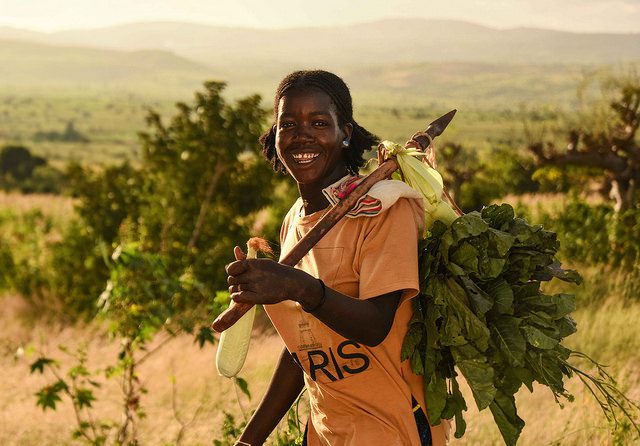
 Dr. Martin Luther King Jr. once said, “Injustice anywhere is a threat to justice everywhere.” But the inverse can also be true. When a socially marginalized group gains access to rights and opportunities, it can benefit everyone around them. This statement holds true for women’s rights. History has proven that easy access to women’s education leads to less poverty. Here are four examples that support this claim.
Women’s education results in better family planning
Niger is not only one of the world’s poorest countries, but it boasts one of the world’s highest birth rates. Women from Niger each give birth to an average of 7.6 children. The country sees large families as a sign of power and wealth. But “it’s impossible to feed, educate and care for all these children in the short term,” according to the nation’s family planning division.
Niger developed Project Sawki to teach women about birth control, family planning and forced marriages. Their goal is to encourage smaller family sizes. Aid workers created this project to let women speak freely about their marriages and future. “Husband schools” also exist in Niger to teach men the benefits of family planning through educated women.
The BBC, reporting on Niger, concludes that, “Education appears to be the key to reducing the number of babies born.”
Countries that invest in schooling become richer and healthier
Women’s education leads to less poverty, but also to several other benefits. UNICEF studied how countries in Southeast Asia and Latin America changed by investing in women’s advancement. The investing countries found an increase in economic development, income per family and health. Human trafficking and child mortality rates for those same nations declined. By contrast, the countries in the study who did not invest in educating women were met with reduced income and slowed growth.
Female empowerment comes from female choices
The ultimate obstacle to women’s empowerment, according to The Guardian, is the culture they live in. Women not only contribute 70 percent of the world’s working hours, they also make up 70 percent of the world’s poor. The most limiting factor to a girl’s future can be the people closest to her. These limitations take the form of a neighbor shaming a school-attending girl, or a parent arranging a girl’s marriage. If women’s economic choices are tied to their families then they will have few tools in escaping poverty.
The World Bank supports gender equality in addition to poverty elimination. It does so by providing resources to impoverished women while promoting gender equality in the household. The result is large development payoffs in society.
Education, in general, leads to less poverty
The American Prospect (TAP) looks into the complications of integrating education into an anti-poverty initiative. It is certain that both men and women’s education leads to less poverty. However, TAP notes how education only fights poverty in places where economic returns are viable and achievable for those with higher learning. Workers require a context wherein they can be rewarded for their skills and can see the benefits of the growth they help create.
Job training improves the quality of workers for a global market, which allows poorer nations to benefit from their wealthy peers. Supporting women’s education will create the context where girls can improve their lives and improve the world at the same time.
In 2017, Congress introduced the Protecting Girls’ Access to Education in Vulnerable Settings act. Through providing women’s education, the United States can bring about the positive changes recorded, and predicted, by the BBC, UNICEF, The Guardian and The American Prospect. If you are an American citizen, you can support this bill at The Borgen Project’s website.
– Nick Edinger
Photo: Flickr

Development in Somaliland Despite Lack of Recognition
Somaliland held presidential elections on Nov. 13, a vote delayed two years due to a crippling drought made worse by the absence of international aid. Unlike the restricted elections held in neighboring Somalia earlier this year, Somaliland has held fully democratic elections since the early 2000s. Development in Somaliland extends to the electoral system: this year the country unveiled the world’s first-ever biometric voting system, using iris scanning technology to identify voters and avoid duplicate ballots.
Hargeisa, Somaliland’s bustling capital, is attracting small businesses from the diaspora as well as large corporations to spur development in the country. Companies including Coca-Cola and Dubai-based DP World are spurring development in Somaliland, announcing deals worth a combined $460 million to build a port in the coastal city of Berbera and a bottling plant outside the capital.
“It is clear that investors will play a critical part in the next chapter of Somaliland’s story, helping this dynamic economy to thrive and prosper and bolstering our bid for recognition,” wrote Somaliland’s Foreign Minister Dr. Saad Ali Shire in the Financial Times.
The East African country’s international status remains a significant hurdle to further economic development in Somaliland, home to a young and fast-growing population. While international partners still do not recognize Somaliland’s independence, organizations including the World Bank are investing in development projects in the country. The World Bank’s Somaliland Business Fund has provided over $20 million in grants and matching funds to private businesses, supporting development in Somaliland and its agriculture, manufacturing and renewable energy industries.
Still unrecognized and facing delays in its elections, Somaliland is by no means perfect. But its ongoing political stability and efforts to attract domestic and foreign investment are putting it on a path of steady economic development.
– Giacomo Tognini
Photo: Flickr
Five Important Development Projects in Algeria
Since gaining independence from France in 1962, Algeria has been arduously attempting to gain some headway on the international stage. Following a 20-year engagement with the socialist model, Algeria shifted its approach to development in the early 80s, and has been actively engaged in the precepts of globalization ever since.
Yet, the road towards development has yet to reach its end. The following are five development projects in Algeria that aim to settle the country in a place of prosperity and hope, once and for all.
IFAD has spent $65.6 million on a series of agricultural development projects in Algeria. First, they aim to strengthen the capacity of rural communities to operate independently. Second, they work to improve irrigation infrastructure, soil and water conservation, management of silo-pastoral ecosystems, livestock husbandry and rural tracks. Lastly, they continue to push for the progression of women’s place in society through the development of rural microenterprises. They have focused assistance on three communities whose economic capabilities are all but limited to agriculture. Currently, their five programs operate in the mountainous areas in the north of the country, the Saharan areas in the south and the coast, where poor fishing communities make up the majority of the population.
After the uprisings in 2011, commonly referred to as the Arab Spring, the fervor slowed as national governments cramped down on protestors. The aim of IDRC funding is to ensure that ideals of democracy and progress are maintained and cultivated in the youth of Algeria. The project, lasting for two years, is managed by the Arab Reform Initiative, and aims to develop the youth as political actors and active citizens engaged in their country’s political, social, economic and cultural spheres.
The development of the trans-Saharan highway has been years in the making. The route from Algiers, running through Niger and down through Nigeria, is about 5,000 km. The route itself has been used for trade since the eighth century, but, until recently, has been a road of sand. Paving the road is meant to increase the trade profit between the three nations it runs through. The Algerian government has opted to pay for its portion of the construction from its national budget, a reflection of a trend in their more recent national policy.
The WFP has operated in Algeria since the late 80s. They work to provide basic food and nutrition needs to the populations of Sahrawi refugees on the country’s Western border. Algeria has hosted Sahrawi refugees from Western Sahara since 1975. The program’s main focus is decreasing a debilitating rate of iron deficiency found in Sahrawi women and children.
Transparency International is an organization whose aim is to evaluate the transparency of governments. In Algeria, it has determined that transparency is sorely lacking. The country has been scored 34 out of 100, and comes in 108 out of 176 countries. The organization’s tactics are simple. By shining a light on issues of corruption within the government and private sector, Transparency International is able to create accountability in situations where it is sometimes nonexistent. In this way, ideals of transparency have begun to permeate governance, as seen in the 2006 creation of the Central Office for the Suppression of Corruption, an agency tasked with the investigation and prosecution of all forms of bribery in the country.
These five development projects in Algeria are just a small indication of the state of Algerian society today. Ultimately, what these projects exemplify is the potential for further improvement in the North African nation.
– Katarina Schrag
Photo: Flickr
Women’s Empowerment in Eritrea
Women’s empowerment in Eritrea is a major goal of the U.N. Development Programme (UNDP) Eritrea. Since women’s independence was gained in 1991, the UNDP has been making meaningful strides in increasing the status of women in Eritrea.
The National Union of Eritrean Women (NUEW) is heavily responsible for empowering women in the country. As a result, the UNDP worked closely with the NUEW to launch the “Joint Programme on Gender Equality in Eritrea.” The program hoped to extend the reach of organizations like NUEW to further promote women’s empowerment in Eritrea. It was largely successful as it “addressed the gaps that existed at the national level in gender-related issues,” according to UNDP. The project also ensures that the rights of women are protected.
There is proof that women’s independence in Eritrea, which was recognized by the country’s government, is making a difference. Women have taken over various powerful roles in Eritrea—currently, there stand three female ministers in the government. Fozia Hashim is the Minister of Justice, Askalu Menkerios is the Minister of Tourism and the Minister of Health is Amina Nurhussein.
Women in Eritrea appear to have better circumstances than most, according to Hashim. “Without women, we would not have done anything and especially not get our independence. Eritrea is unjustly attacked because if there’s one country that actually protects the rights of women, this is it. We are far more advanced on human rights than in many other African countries. Everything is written in the laws and the laws are strictly enforced here,” she said.
It appears that the change in mindset is successful—women are making meaningful attempts to be involved with their government and to overturn the traditional, male-dominant mindset of the country. UNDP believes that women’s empowerment is key to attaining sustainable human development. Women’s empowerment in Eritrea could lead to reduced poverty and so much more.
– Dezanii Lewis
Photo: Flickr
The Success of Australia’s Humanitarian Aid to Fiji
The Australian government enacted an aid program to provide assistance to Fiji. Australia’s Department of Foreign Affair and Trade’s aid program focuses heavily on creating a prosperous Fiji through development assistance for the rural poor. The focus is on aspects of education and economic opportunity. The program includes three objectives to be addressed and resolved. The three components are increased private sector development, improved human development and Tropical Cyclone Winston recovery. A total of $65.6 million in the 2017-18 years will be contributed to the resolution of Fiji’s most important issues.
The third objective in Australia’s aid program is of utmost importance as recovery processes are still being made post-cyclone. Altogether, Australia has contributed $35 million in assistance services. Five million dollars was used for lifesaving supplies and support, $10 million was used to send children back to school and provide health services to residents and $20 million was leftover for Fiji’s long-term recovery.
The $20 million is to be used primarily for reconstruction of hospitals and schools, replacing damaged medical equipment and restoring water and sanitation systems back to their original state. The rebuilding of communities is allowing individuals to return to work, whether that be to their farms or to the markets.
Australian non-profit CARE was among the many emergency responders after Cyclone Winston. Their humanitarian aid to Fiji was able to bring relief to more than 25,000 residents across 231 communities.
CARE distributed emergency shelter kits to 2,500 families, hygiene kits to 4,196 families, constructed 17 community water supply systems and 253 toilets, distributed seed kits to 4,290 families and conducted agricultural training for 231 communities.
The Australian Red Cross has also been a large contributor to the recovery efforts. The Red Cross has successfully provided supplies to more than 50,600 families to assist in the repair of their houses and with medical issues. After the cyclone, the Australian Red Cross managed to raise a total of $4.2 million, in just three months, to use towards humanitarian aid.
Every contributor to Fiji after Cyclone Winston helped the country to work towards rehabilitation at a more successful pace. With the year-plus humanitarian efforts, Fijians were able to begin recovery. Australia’s contribution of humanitarian aid to Fiji gave the country the opportunity to find itself again.
– Brianna Summ
Photo: Flickr
Five Development Projects in Benin
Agricultural Productivity and Diversification Additional Financing
One of the ways for a country to reduce poverty is to invest in agricultural programs. This project allows Benin to invest more heavily in its agriculture, as it will restore and improve productivity. It will also support the promotion of improved technologies and the development of production via water management.
Public Investment Management and Governance Support Project
This project will help reduce poverty and increase shared prosperity. The World Bank has issued a $30 million credit to Benin that will better facilitate the efficiency and management of this project. Their aim is to enhance good governance, accountability and promote more transparent management of public funds.
Small Town Water Supply and Urban Septage Management Project
About 22 percent of the country does not have access to adequate drinking water. The Small Town Water Supply and Urban Septage Management Project will increase access to water supply and sanitation. It will also strengthen the service delivery capacity of water supply and sanitation as well as prepare an effective response to potential emergencies.
Energy Service Improvement Project
This project will improve utility power performance and expand access to electricity to various areas across the country. It also aims to promote community-based management of forest resources. Investing in infrastructure is important to build up an economy, so this project, among other development projects in Benin, is extremely important.
National Community Driven Development (CDD) Project
The CDD project has provided grassroots management training. This has helped contribute to the decentralization process and strengthening of both local government and community capacities to better plan and implement development projects. Under the project, 81,000 children have enrolled in school and 10,000 people have gained access to a clean water supply.
These development projects in Benin have the capability of reducing poverty in the country and improving the lives of the individuals who reside there.
– Dezanii Lewis
Photo: Flickr
Apps That Help Impoverished Countries: iCow
As technology improves around the world, more apps have been developed that aim to help impoverished countries. An example of one of the apps that help impoverished countries is called iCow. iCow is an app that aims to reduce cow mortality rates and educate farmers on proper agricultural practices.
In many African countries, farmers have no formal training. As a result of a lack of formal training in agriculture, farmers do not know how to properly raise farm animals. This is problematic because these farmers are the foundation for growing crops that feed the nation. In an effort to combat this problem, the iCow app was made to help these farmers.
The app in itself is easy to use. After the initial registration, farmers type in information about their cows, such as their weight and calving dates. Once the farmers key in this information, the iCow app can give tailored advice about how to take care of their cows.
Not only does it give tailored information, but the iCow app also gives tips on breeding, animal nutrition and milk production. Farmers will benefit from the specific advice given to care for their cows as well as general advice that will assist them in the future.
The app also works like a calendar for cows. It keeps records about milking schedules and immunization dates. The app provides farmers with good veterinarians in the area for their cows.
Even though the app is called the iCow, this app is not exclusive to Apple products or smartphones. The iCow app is made to work for all mobile devices, so any farmer with a phone can use it.
As a result of its universality and wide availability, nearly 60,000 farmers in Tanzania and Ethiopia have registered to use the iCow app. These farmers are able to breed healthier animals that can be sold and produce food for the nation. These healthier animals are not only better for consumption, but they bring in more money for the farmers.
The iCow app is not only one of the many apps that help impoverished countries, it is an app that helps maintain healthier food security.
Food security is an issue that many impoverished countries face. Finding solutions to these problems is the key to helping raise countries out of poverty. Apps that help impoverished countries, like the iCow app, can change millions of lives. The iCow app aims to ensure that the citizens of impoverished countries are well fed.
– Daniel Borjas
Photo: Flickr
Five Active Development Projects in Afghanistan
Development projects in Afghanistan such as these are radically improving the quality of life in Afghanistan, however, they only begin to scratch the surface of the larger web of issues preventing Afghanistan from becoming a fully developed country. Cooperation between the World Bank Group and the Afghan government has set the stage for Afghanistan to move closer and closer to development as time moves on.
– Tyler Troped
Photo: Flickr
4 Reasons Why Women’s Education Leads To Less Poverty
Women’s education results in better family planning
Niger is not only one of the world’s poorest countries, but it boasts one of the world’s highest birth rates. Women from Niger each give birth to an average of 7.6 children. The country sees large families as a sign of power and wealth. But “it’s impossible to feed, educate and care for all these children in the short term,” according to the nation’s family planning division.
Niger developed Project Sawki to teach women about birth control, family planning and forced marriages. Their goal is to encourage smaller family sizes. Aid workers created this project to let women speak freely about their marriages and future. “Husband schools” also exist in Niger to teach men the benefits of family planning through educated women.
The BBC, reporting on Niger, concludes that, “Education appears to be the key to reducing the number of babies born.”
Countries that invest in schooling become richer and healthier
Women’s education leads to less poverty, but also to several other benefits. UNICEF studied how countries in Southeast Asia and Latin America changed by investing in women’s advancement. The investing countries found an increase in economic development, income per family and health. Human trafficking and child mortality rates for those same nations declined. By contrast, the countries in the study who did not invest in educating women were met with reduced income and slowed growth.
Female empowerment comes from female choices
The ultimate obstacle to women’s empowerment, according to The Guardian, is the culture they live in. Women not only contribute 70 percent of the world’s working hours, they also make up 70 percent of the world’s poor. The most limiting factor to a girl’s future can be the people closest to her. These limitations take the form of a neighbor shaming a school-attending girl, or a parent arranging a girl’s marriage. If women’s economic choices are tied to their families then they will have few tools in escaping poverty.
The World Bank supports gender equality in addition to poverty elimination. It does so by providing resources to impoverished women while promoting gender equality in the household. The result is large development payoffs in society.
Education, in general, leads to less poverty
The American Prospect (TAP) looks into the complications of integrating education into an anti-poverty initiative. It is certain that both men and women’s education leads to less poverty. However, TAP notes how education only fights poverty in places where economic returns are viable and achievable for those with higher learning. Workers require a context wherein they can be rewarded for their skills and can see the benefits of the growth they help create.
Job training improves the quality of workers for a global market, which allows poorer nations to benefit from their wealthy peers. Supporting women’s education will create the context where girls can improve their lives and improve the world at the same time.
In 2017, Congress introduced the Protecting Girls’ Access to Education in Vulnerable Settings act. Through providing women’s education, the United States can bring about the positive changes recorded, and predicted, by the BBC, UNICEF, The Guardian and The American Prospect. If you are an American citizen, you can support this bill at The Borgen Project’s website.
– Nick Edinger
Photo: Flickr
Five Development Projects in Bangladesh
Developing a country is an on-going process. Bangladesh is trying to continue its growth in ways that will ensure the success of the country. Here are five development projects in Bangladesh that will help the country reduce its level of poverty.
Increasing water supply and sanitation, innovative technology and improving access to healthcare are significant ways to reduce poverty. With these development projects in Bangladesh, the country is well on its way to implementing practices that will reduce poverty in the country for the long term.
– Dezanii Lewis
Photo: Flickr
Green Belt Movement: Empowering Women
The Green Belt Movement was started by the late professor, Doctor Wangari Maathai, who founded the organization in 1977 in Kenya. Dr. Maathai is a recipient of the Nobel Peace Prize, the first African woman to receive such an honor. She is also the first woman to receive a doctorate degree in East and Central Africa. Dr. Maathai witnessed the struggles of rural Kenyan women with finding drinking water, food and firewood, saw the connection between deforestation, scarcity of rainfall and food insecurity and wanted to address the problem as a whole. She encouraged men and women to practice reforestation, binding soil to prevent soil erosion, food processing, beekeeping and many more sustainable values.
The Green Belt Movement has also dealt with larger issues in the daily lives of Kenyans. It has protected public lands from private landowners, known as “land grabbing.” It has trained farmers with simple techniques to grow indigenous vegetables and fruits that are sustainable in harsh environments. It also uses a water-shed based approach to harvesting. Furthermore, the Green Belt Movement launched the Community Empowerment and Education program, which helped to educate common people on the environment, natural resources and civics.
Since its foundation in 1977, over 51 million trees have been planted across Kenya. The movement also invented a method of spreading ideas among the community through “trainers of trainers.” In 2015 alone, over 200 women who participated in training from the Green Belt Movement have gone on to train over 20,000 members of their communities, thus assisting in the spreading of the Movement’s ideas. The Green Belt Movement has addressed important issues such as deforestation, climate change and women’s empowerment, gaining international status in the process.
– Mahua Mitra
Photo: Flickr