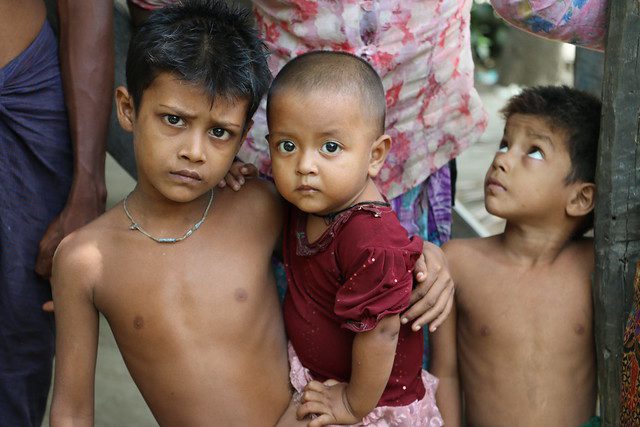
Providing necessary medical care is essential to any humanitarian response. For the approximately 745,000 Rohingya refugees in Cox’s Bazar, Bangladesh, home to the largest refugee camp in the world, accessing high-quality medical care is often difficult. Palliative care, which is medical treatment for those with chronic or life-threatening illnesses, is often overlooked in humanitarian crises. Two organizations, PalCHASE (Palliative Care in Humanitarian Aid Situations and Emergencies) and the Fasiuddin Khan Research Foundation, are pioneering this treatment for Rohingya refugees.
The purpose of humanitarian health work is to relieve suffering and save lives; however, those who are chronically and perhaps terminally ill are often given less attention than those with more easily treatable ailments.
Who Needs Palliative Care?
Palliative care improves the quality of life for children and adults who have chronic or life-threatening illnesses. Treatment focuses on physical, emotional, social and/or spiritual symptoms, and requires ongoing interaction between the patient and health provider. This care is sometimes provided alongside other therapies and treatments, including chemotherapy for cancer patients.
A 2018 study in the Journal of Pain and Symptom Management on life-threatening illness in Cox’s Bazar found that the most common life-threatening illnesses were tuberculosis, cancer and HIV/AIDS.
They also estimated that 73 percent of those with life-threatening illness experience pain. Approximately half received no pain relief and a majority receive very little pain relief. Other common symptoms include insomnia, cough, anorexia and dyspnea.
The Challenges
While medical supplies are generally available to treat these symptoms, they are often unaffordable, particularly for refugees, and more than 60 percent of patients had to stop taking medications because they were no longer able to afford them.
In addition to medication, palliative care requires a caregiver, and caregivers in Cox’s Bazar are normally family members. Approximately 94 percent of caregivers have no training, and providing hours of daily assistance bathing, feeding, giving medications, etc. is a physically and financially demanding role. Providing this treatment for Rohingya refugees, therefore, is often a significant burden on families, particularly if they have to do a lot of the work themselves.
Moreover, unique challenges arise when children need extensive treatment, as they need extra support and often spend more time in the hospital, separated from family and friends. This increases psychological stress and caregivers are in need of even more training to know how to properly care for children with chronic or life-threatening illnesses.
A Need that Should not be Overlooked
In spite of this need, palliative care for Rohingya refugees is not a priority in the aid sector’s response plan. PalCHASE (Palliative Care in Humanitarian Aid Situations and Emergencies), an organization based in the UK, was created in response to the general lack of palliative care in disaster and conflict responses.
Co-founder Joan Marston stated that palliative care is “really about the dignity of the individual,” noting that already “there’s enough indignity within these humanitarian situations.” The goal of PalCHASE is to get more emergency response plans to incorporate palliative care, hoping that the treatment will cease being an afterthought in the humanitarian response.
The Fasiuddin Khan Research Foundation
The Fasiuddin Khan Research Foundation is Bangladesh-based and is working directly on providing palliative care for Rohingya refugees. It is the first concrete palliative care program with a humanitarian response.
Founder Farzana Khan, despite being unable to secure long-term funding, is on the ground with a team of three addressing the distinct needs in the Rohingya refugee camps. Khan spent 20 years providing palliative care in Bangladesh prior to focusing on the Rohingya refugees, noting that her “core approach” is “dignity and respect.”
Early in their response, Khan’s researchers estimated that thousands of people in the refugee camps may be in need of palliative care and were not currently getting help. To remedy this, it is essential to make this treatment more easily accessible and ensure that refugees know when to seek medical treatment and care.
Changed Lives
Sanjida, a 16-year-old refugee living with untreated meningitis, which is causing increased paralysis, has received palliative care, thanks to Khan and her team. Her sister and caregiver, Khaleda, noted that she can now do more by herself, can call for assistance more easily and just generally seems happier.
Another patient, 10-year-old Mujibur Rahman, who suffers from bone cancer, was struggling to walk and ended up confined to a wheelchair. Dedicated treatment helped manage his pain and within two months helped him walk again.
Since the Rohingya crisis began in 2017, Khan’s team has reached approximately 1,000 patients, including Sanjida and Mujibur. While funding continues to be a problem, Khan hopes that organizations’ successes will help secure more financial support so that they can continue to provide support for Rohingya refugees.
Looking Forward
Regardless, the Fasiuddin Khan Research Foundation should become a model for other humanitarian response teams looking to focus on palliative care. In addition to the Rohingya, other refugees around the world, as well as those who are impoverished, are in need of better treatment in the case of life-threatening or chronic illness. The work of PalCHASE will hopefully increase knowledge about the need for palliative care and encourage humanitarian leaders to consider it more seriously.
– Sara Olk
Photo: Flickr


Sanitizing Wastewater in India
India is not only one of the most populated countries in the world, but it is also one of the poorest. In addition to poverty, India is grappling with a lack of access to clean water and increasing pollution. This not only takes a toll on households but also affects industrial and agricultural demands. Urban runoff is an issue when domestic waste and untreated water go into storm drains, polluting lakes and rivers. Approximately only 30 percent of the wastewater in India is cleaned and filtered.
The U.S. Agency for International Development teamed up with a nongovernmental organization, Agra Municipal Corporation, to formulate a treatment plan to clean the wastewater in India.
What is Being Done?
North of the Taj Mahal runs the Yamuna River, one of the most polluted waterways in India. Agra, the city through which the river runs, is a slum community. As of 2009, this community has had no access to sanitation facilities, disposal systems or waste collection. At least 85 percent of the residents in Agra have resorted to open defecation that ultimately pollutes the Yamuna River, where residents collect drinking water. This lack of sanitation has left the community vulnerable to diseases such as cholera, dysentery, typhoid and polio.
USAID-supported NGO Center for Urban and Regional Excellence decided to reverse the state of Agra and come up with a treatment plan. In 2011, they built a wastewater treatment plant to clean the water, leading to healthier community members. Instead of chemicals, the treatment plant uses natural methods to sanitize the water. Moreover, they designed the plant to be low-maintenance, thus keeping it cost-efficient. After filtering and sanitizing the water, it flows back into the community for residents to collect.
As of 2017, the Agra Municipal Corporation, who initially teamed up with USAID, took over operating the plant. And they made it their mission to continue working to improve the lives of the residents.
The Progress
The Center for Urban and Regional Excellence’s transformation of Agra influenced the government to also act. As a result, the government planned to cleanse the entire country by the end of 2019. On Oct. 2, 2014, the Prime Minister of India declared the Swachh Bharat Mission. At the time, only 38.7 percent of the country was clean—less than half. As of 2019, India’s government reported 98.9 percent of the country is now clean. Since the mission began, they built 9,023,034,753 household toilets and established
Less than 2 percent away from meeting their goal, India has made big improvements to better the lives of its citizens by providing clean water for domestic and industrial purposes.
– Lari’onna Green
Photo: Flickr
Economy and Political Unrest in Sri Lanka
Sri Lanka is a teardrop-shaped island off the southern coast of India. It is home to more than 21 million people, despite consisting of only 25,332 square miles. Its largest city, Colombo, has a millennia-long history as a prominent trading port and is currently a popular tourist destination.
The Democratic Socialist Republic of Sri Lanka was previously a British colony called Ceylon and kept that name until 1972. It is governed by an elected president and unicameral parliament with a prime minister, as well as a judicial branch. The most popular languages are Sinhala, Tamil and English with several other indigenous dialects. The country is overwhelmingly Buddhist with significant Hindu and Muslim minorities and a small number of Christians (primarily Roman Catholic). Religion plays a significant role in the lives of Sri Lankans.
Sri Lankan Civil War
Similar to British rule in Rwanda, the British colonial government favored the Tamil people, an ethnic minority concentrated in the northern and eastern regions. The British gave the Tamil people a position in the colonial government and Sinhalese land. After Sri Lanka gained independence in 1948, the government deported many Tamil people and greatly reduced its power in favor of the Sinhalese majority. Ethnic tensions rose in the following years, exacerbated by differences in religion, income and development. This tension gave birth to the Liberation Tigers of Tamil Eelam or the Tamil Tigers which advocated for an independent Tamil state. In 1983, the Tamil Tigers attacked Sri Lanka government troops, starting a 26-year civil war.
It is estimated that 100,000 people died in the conflict, with atrocities and human rights abuses committed on both sides. The Tamil Tigers are notorious for its use of child soldiers and suicide bombers, forcibly recruiting Sri Lankan civilians or using them as human shields. Accusations have pointed to the Sri Lanka government shelling their own designated safe zones, food distribution lines and hospitals. People have also accused the government of mass rape and ethnic cleansing. Attempts to bring perpetrators to justice have been slow-moving.
A New Economy
Since the end of the war in 2009, Sri Lanka’s economy has grown by 5.8 percent every year. The economy is transitioning from a rural base to an urban manufacturing base, especially in the garment industry. This increasing wealth has expanded the middle class and reduced the poverty rate from 15.3 percent in 2006 to 4.1 percent in 2016. There have also been significant improvements in public health which have paved the way to some of the highest life expectancies in Asia; 72 for men and 78 for women. In less than a decade of peace, Sri Lanka became a development success story.
Political Unrest
Despite the unprecedented economic success, Sri Lanka is not immune to political extremism and unrest. In 2018, president Maithripala Sirisensa fired the prime minister, Ranil Wickremesinghe. The country installed Mahinda Rajapaksa, a former president accused of serious human rights abuses, in his place. Wickremesinghe refused to accept his replacement, effectively giving Sri Lanka two competing prime ministers for several months before being re-appointed. With such recent political unrest in Sri Lanka, it is unlikely that it will reach nonviolent political stability in the near future.
– Jackie Mead
Photo: Flickr
Top 10 Facts About Teachers in Brazil
In recent years, the challenges of teachers in Brazil have become a focus of the Brazilian government. With the introduction of a new Plan for Education, issues such as a shortage of teachers, inadequate pay and teacher training and unequal access to education in the country are now receiving greater attention.
Yet, a recent outbreak of violence in the form of a school shooting, controversy on the teaching of particular subjects, and widespread teacher dissatisfaction continue to make the profession an unappealing one. The following are the top 10 facts about teachers in Brazil.
Top 10 Facts About Teachers in Brazil
The top 10 facts about teachers in Brazil indicate obstacles to improvement, but a growing effort. Reforms are being put in place to fund schools and increase the number and quality of teachers. These improvements show promise to both Brazilian educators and students.
– Marissa Field
Photo: Agustin Diaz
Corruption in Afghanistan is Contributing to Poverty
Afghanistan is currently one of the poorest countries in the world with nearly 40 percent of the Afghan population living in poverty. Afghanistan is also one of the most politically corrupt countries in the world. In 2018, The anti-corruption organization Transparency International ranked Afghanistan an index score of 16/100 for its high levels of corruption. Over the past several decades, political corruption in Afghanistan has destabilized the country and contributed to its poverty problem.
USAID has always believed that political corruption and poverty are an interlinked problem because political corruption has a tendency to aggravate the symptoms of poverty in countries with struggling economic growth and political transition. Conversely, the social and economic inequalities that are found in impoverished countries are known to create systemic corruption.
The Scope of Contemporary Corruption in Afghanistan
The destabilizing effects of political corruption on Afghanistan cannot be underestimated. According to Special Inspector General for Afghanistan Reconstruction (SIGAR), a U.S. government agency tasked with the reconstruction of Afghanistan, corruption has been a major obstacle in the political, economic and cultural reconstruction of Afghanistan. The Asia Foundation has identified more than 70 forms of corruption currently within Afghanistan that cross a wide range of institutions, including international aid and public administration.
Two of the most common forms of corruption in Afghanistan are nepotism and bribery. Many of the basic public services provided by the government are only obtainable through the payment of bribes, which has caused severe distress to Afghan citizens. Afghanistan’s economic growth has been severely damaged by the reliance on bribes to pay for public services. Nepotism and patronage have made it difficult for honest people without connections to rise within the political system and have given impunity to corrupt officials.
Afghan Awareness and Perceptions of Corruption
Unfortunately, many Afghans believe certain forms of corruption are inevitable and, in certain cases, a legitimate form of political life. When surveyed in 2012, at least 30 percent believed that most forms of bribery were acceptable. This type of attitude towards political corruption can make efforts to reduce or eradicate corruption more difficult.
Nevertheless, the Afghan people have not been completely culturally ingrained with political corruption, and there are many who still criticize corruption in Afghanistan. Most Afghans have consistently stated in several polls that corruption is a serious problem that their country is facing. A study from the Asia Foundation has shown that most Afghans believe that political corruption was more severe during and after Karzai then it had been under several past regimes.
Anti-Corruption Efforts
In 2014, President Ashraf Ghani was elected into executive office in Afghanistan. He has shown a remarkable commitment to developing and implementing strategies to decrease corruption and stabilize the country. Following his election in 2014, his first course of action was to not only dismiss several corrupt heads and directors of certain departments but also charge them with corruption, marking a major change from his predecessor Karzai.
In 2017, Afghanistan’s National Strategy for Combating Corruption (Anti-Corruption Strategy) was adopted by Afghanistan’s High Council and was developed under the supervision of President Ghani. The Strategy consists of 6 pillars outlining the course of action to be taken against corruption. This strategy was based on a comprehensive analysis of the causes and drivers of corruption and provides realistic goals that make it relatively easy to implement. Some of the pillars are designed to address nepotism (pillar 3) and money tracking (pillar 5).
The Ghani administration introduced new legislation in 2017 and 2018 to reduce and prevent corruption. The laws have been limited to a certain extent due to extenuating circumstances; however, they have had a certain level of success. The most notable success in the prosecution of corruption with this new legislation has been the adoption of a new Penal Code. This new Penal Code was the first to incorporate financial and corruption laws into its criminal provisions, making it a major achievement for the Afghanistan legal system.
Corruption Is Declining
While corruption is still pervasive in Afghanistan, these efforts have demonstrated some progress. Within the Transparency International Index, Afghanistan’s CPI score has steadily grown from 11 in 2015 to 16 in 2018, which is one of the largest increases any country has experienced in this amount of time. The introduction of new legislation and the adoption of the Anti-Corruption Strategy can provide a solid foundation to stabilize Afghanistan and reform its political system from corruption.
The government, under Ghani, has already taken the first steps in decreasing the significant level of corruption in Afghanistan throughout the country by implementing these strategies and laws. While progress may be slow, it appears that under President Ghani, Afghanistan may be on its way to political stabilization, allowing it to provide better public services and alleviate poverty within the country.
– Randall Costa
Photo: Flickr
What is the bloodiest war in history?
What is the bloodiest war in history? To determine which wars or battles would qualify for the bloodiest or the deadliest can be tricky. Which war wins in meeting the criteria for this evaluation?
World War II
The global war between Axis, Allied and Neutral Powers that led to approximately 50,000,000 deaths, World War II. All of the chaos and controversy that created the First World War laid the foundation for the next global playing field of conflict that came to be The Second World War. This came about 20 years later after World War One.
During a financially and politically challenging time period for Germany, Adolf Hitler and his National Socialist or Nazi party rose to German rule. Hitler began making tactical treaties with Italy and Japan. Hitler, in violation of the Treaty of Versailles, began rearming German military in pursuit for more Lebensraum, or living space, for Germany. Once Hitler invaded Poland in September 1939, France and Great Britain declared war on Germany. As a result, World War II began.
What Happened During World War II
After invading Poland, Germany attacked Denmark and Norway. After that, the country went on to attack Belgium, The Netherlands and France. In the summer of 1940, Germany lost in its air attack attempt with its Air Force, the Luftwaffe. The Luftwaffe couldn’t defeat Britain’s Royal Air Force. Germany’s ally, Italy, experienced failure as well in attempts to expand the war. This was attempted by invading Greece and North Africa. In early 1941, Germany came to the rescue of its ally.
Later in 1941, Germany experienced a turning point of failure in its war efforts through attempting to invade Russia. Russia was too big, even with the inefficiencies of Russia’s counteraction. Its muscle and tenacity, paired with its harsh winter, sustained them at the expense of Germany’s army.
In 1943, Germany was backed into a corner to retreat after the end of the battles of Stalingrad and Kursk. During 1944, the Germans were gradually backed out of USSR territory and the Russians continued to seek them out across eastern Europe and even back into their country in 1945.
On the coast of Normandy, in France that was currently occupied by Germany, is where the D-Day invasion took place. This was between Great Britain and the United States in June 1944. Germany’s army was being sandwiched in by Allied forces coming from the east and the west. The Soviet Union touched down in Berlin first which transpired into Germany’s surrender in May 1945 after Adolf Hitler’s suicide.
Some of the most renown relationships and battles of the war occurred in the Pacific beginning on December 7, 1941. This was when Japan attacked the U.S. Navy base in Pearl Harbor, Hawaii. Japan was also fighting with China and developing expansion in the Southeast Asia-Pacific Region. The attack on Pearl Harbor led to the U.S. declaration of war on Japan. But their battles didn’t begin until the spring of 1942. These battles built up to the Battle of Midway where Japan suffered a massive loss.
In 1943, the struggle continued between the United States and Japan over the Solomon Islands and the Guadalcanal. The fighting in the Pacific continued in 1944 and 1945. Then, in early August, the United States dropped two atomic bombs in two Japanese cities, Hiroshima and Nagasaki. This resulted in the surrender of Japan.
Global Progress Since World War II
What is the bloodiest war in history? The answer points to World War II, having caused estimates of over 40 million deaths. The war also caused massive amounts of destruction in land and property.
Globally, the majority of the world was living in poverty 110 years before this Second World War. What progress has been made between then and now? After the Second World War, the United Nations Charter was signed by 50 countries to stand on valuing peace which is found in favor of social justice, development and eliminating poverty.
In 1964, President Lyndon Johnson set forth War on Poverty in the United States. The World Bank began developing studies on global poverty and creating a definitive system for the global poverty line. Ultimately, these efforts have led to overachieving successes such as the Millennium Development Goal of reducing extreme poverty rates and the development of Sustainable Development Goals to eradicate all forms of poverty. So, the bloodiest war in history? The bloodiest war in history, World War Two, resulted in tremendous losses globally but the goals of international leaders won’t let them be in vain.
–Janiya Winchester
Photo: Flickr
Good News About HIV/AIDS in South Africa
South Africa has the largest number of people living with HIV of any country in the world. South Africa comprises of approximately one-fifth of the 37 million people in the world living with HIV, with an estimated 7.2 million people living with HIV in 2017. This translates to a general population in which an estimated 18.8 percent of South Africans are HIV positive.
And yet, the country is making progress in reducing HIV and AIDS. In recent years, efforts to combat HIV and AIDS in South Africa have been ramped up. According to a study by the Human Sciences Research Council (HSRC), the statutory research agency of South Africa, there were 231,000 new HIV infections in 2017, representing a 44 percent decrease since the last major study in 2012.
Largest Antiretroviral Drug Campaign in the World
South Africa has the largest antiretroviral drug campaign in the world, which its own domestic resources largely fund. In 2015, South Africa was investing more than 1.34 billion (US dollars) towards its efforts to combat HIV and AIDS. And yet, it was not always like this; the South African government regarding and treating HIV and AIDS as a major and important public health issue and one to which it allocates resources to is a fairly recent phenomenon.
The government spearheaded this change, at least in part, by the exit of former South African President, Thabo Mbeki, who headed the government between June 14, 1999, and September 24, 2008. He had a track record of aversion to the combating of HIV as a public health issue and largely turned a blind eye to the issue. ‘“Many people do not remember that in 2000 there were only 90 people in South Africa on treatment,” said Michel Sidibé, executive director of UNAIDS.” When Mbeki left office in 2008, a tide turned and HIV and AIDS became to be regarded in the milieu and in public policy as a major and important public health issue, and now approximately four million people are receiving antiretroviral drug treatment in South Africa.
The 90 90 90 Plan
The 90 90 90 Plan summarizes some of the efforts to combat HIV and AIDS in South Africa. This plan aimed to test 90 percent of people so they would know their HIV status, followed by 90 percent of those diagnosed receiving sustained antiretroviral therapy and 90 percent of those receiving antiretroviral therapy to have viral suppression.
South Africa reached the first of the 90-90-90 targets, with 90 percent of people aware of their status, jumping up from only 66.2 percent in 2014. Of the affected, presently 61 percent of adults (people between ages 15-49) and 58 percent of children are on antiretroviral treatment, and so these current numbers are not at target though they are continuing to trend upwards. Life expectancy has seen a significant increase over the past several years, largely due to the efforts launched with antiretroviral therapy. There has been an improvement in life expectancy from 61.2 years in 2010 to 67.7 years in 2015. With an increase of nearly 10 percent in just five years, one cannot overstate South Africa’s success in reducing HIV and AIDS within the country.
– Lacy Rab
Photo: Flickr
World Vision’s Aid to Indonesia
Indonesia is no stranger to natural disasters; it has experienced a lot of destruction throughout the years. A major natural disaster occurs in Indonesia almost every year in the form of tsunamis, earthquakes and volcanic eruptions. Christian organizations are planted internationally in order to minister and bring aid to those in need. World Vision Ministry is one such organization that has been in Indonesia since 1960. Here is a look at World Vision’s aid to Indonesia.
World Vision’s Foundation
World Vision in Indonesia is based on a vision of a world that is committed to the well-being of children. The organization strives to build thriving communities where peace and justice can prevail with security, opportunity and contentment. This is accomplished through its relief, development and advocacy work. World Vision has become one of the world’s largest charities with annual revenue reaching more than $1 billion. It has ministries in 90 countries, focusing on children.
In the 1970s, World Vision Indonesia initiated a community development approach that provides more integrated support toward the empowerment of the poor communities and their children. Its involvement improved basic education, health, income generation and basic infrastructure for Indonesia. In 1998, World Vision raised 14 million to aid the poor in Jakarta, Indonesia. As a global humanitarian organization, World Vision’s ministry is dedicated to continuous aid to Indonesia whether it be a food crisis or assistance to victims of natural disasters.
Programs to Empower
According to the ministry, World Vision introduced the Area Development Program (ADP) approach in the 1990s to create an effective and lasting transformation in the lives of people in poor communities. The organization describes the ADPs as nurturing an inclusive approach to tackle poverty across extensive areas, normally involving several villages and communities. World Vision’s aid to Indonesia through the ADP approach has led to more sustainable developments and impacts through longer intervention and lifetime concentrated programs.
Today, World Vision has a partnership with Wahana Visi Indonesia, which supports around 50 ADPs in aid to Indonesia’s North Sumatra, Jakarta, East Java, West Kalimantan, Central Sulawesi, East Nusa Tenggara, North Maluku and Papua. World Vision in Indonesia has helped to save lives in many ways, but it is most effective in its emergency response.
Emergency Relief and Support
World Vision has administered emergency relief support to those affected by natural disasters or communal conflicts for many years. In 1963, World Vision supported the victims of Mount Agung eruption in Bali and then provided aid to Indonesia in the resettlement of displaced people in West Kalimantan, Maluku among other sites in the 1970-80s. The ministry remained Indonesia in 1997 and 2009 following the drought from the El Nino weather phenomenon, severe economic crises, earthquakes and the major tsunami in Aceh province.
In December 2018, World Vision provided aid to Indonesia when the Sunda Strait tsunami struck Java and Sumatra, resulting in more than 300 deaths. The ministry distributed hygiene and household items to families who lost their homes and provided safe places for mothers to feed their young children.
Margie Siregar, Humanitarian Emergency Affairs Director with World Vision, spoke with NPR’s Ari Shapiro while she was in Jakarta, Indonesia. “We had 30 aid staff already in the place before the earthquake happened and now we are providing some public kitchen and children feeding,” Siregar told NPR. The workers of World Vision also provided the children with a child-friendly space where they could play and recover from the trauma. In Central Sulawesi, an estimated 460,000 children in four districts were affected according to World Vision Indonesia.
Combatting Poverty
Each fiscal year, World Vision raises around $20 million from donors and sponsors in various countries to combat poverty and bring lasting transformation in the lives of the children to facilitate their communities. In 2018, 86 percent of World Vision’s total operating expenses went to aid Indonesia by establishing programs that benefited children, families and communities in poverty.
Parents in Indonesia are being empowered to care for their children through education on child protection and disaster risk reduction thanks to World Vision’s aid to Indonesia. Those who are interested in aiding the families affected by the recent tsunami may donate to World Vision’s Indonesia tsunami relief fund.
– Carolina Chaves
Photo: Flickr
Trevor Noah Foundation Aids Youth in South Africa
Trevor Noah’s childhood in late-state apartheid South Africa color his perception of the world. His recent memoir, “Born A Crime,“ gives insight into his life experiences. The host of the Daily Show is more than just a comedian. He has taken his success back to his homeland to build a new generation of inspired individuals.
The Trevor Noah Foundation
According to UNICEF, there are about 3.7 million orphaned children in South Africa. The youth make up around 60 percent of the unemployed population. Behind the Trevor Noah Foundation is the vision of a South Africa that improves itself through each new generation. In reference to his program, Noah stated, “the higher the level of education, the higher [the] chance the youth have of creating a future for themselves and collectively, a better South Africa.”
So, with this belief, Trevor Noah’s non-profit has established itself as an organization that supplies troubled youth with the education, life skills, and social capital essential for the pursuit of opportunities beyond high school. The Trevor Noah Foundation strategically launched to an audience of education professionals in order to find partnerships with government schools, mobilize philanthropic capital and, most importantly, to research innovative approaches. Not only does the organization offer skill development and career guidance, but it also provides psycho-social support.
Rooted in South Africa
The initiative is being piloted at a government school in Johannesburg, South Africa. On March 7th, 2019, Trevor Noah and executive director of the program Shalane Yuen, met with South Africa’s president, Cyril Ramaphosa. After sharing about the Foundation’s influence on education, the team was invited to the National Assembly as special guests to the president. Impressed by Trevor’s efforts, President Ramaphosa welcomed the South African native back home.
In “Born A Crime”, Trevor talks about the leverage he received from a privileged friend. It was in a CD writer gifted to him, that Trevor began to generate money from his DJ skills. This evolved into his appreciation for opportunities that are opened by technology. For the 500 orphans at the New Nation school, Trevor Noah hopes to open similar doors.
Computer Labs for the New Nation School
With Microsoft as the technology partner for the Foundation, the New nation School opened a new computer lab. The lab is equipped with Windows 10 laptops for students and teachers to allow for computer literacy skills courses. Workshops introducing basic coding has students practicing problem-solving skills.
When given the tools to offer Computer Application Technology courses, some institutions forget the value their equipment has on other subjects. Fortunately for the New Nation School, there are scheduled times students can utilize their tech resources for other subjects. Teachers are also able to use their timeslots to show subject related videos.
New Tech Opens New Doors
The biggest influence actually reflects upon the improved teaching practices. Instructors have been trained to maximize their services with Office 360 which allows for access to their work on multiple devices. In addition to Excel, Word and Powerpoint, teachers now have the opportunity to create online presentations and Socrative interactive quizzes.
Educators at the New Nation School are given new teaching opportunities with a plethora of innovative programs their computer labs offer. As they become comfortable in this new field of tech-based instruction, they are able to give students the tools to hone in on their own skills. These students exhibit the ability to surpass their predecessors adding a layer of growth to yet another generation.
A Vision for the Future
This is in large thanks to the Trevor Noah Foundation. It is no surprise that the symbol for the organization puts Africa at its center, being that the founder is South African. However, the rippled rings surrounding the imprint is symbolic of how a single footprint has an effect. Like a growing tree, generations add to that impact and make up an ever-changing world.
– Crystal Tabares
Photo: Flickr
Overlooked: Palliative Care for Rohingya Refugees
Providing necessary medical care is essential to any humanitarian response. For the approximately 745,000 Rohingya refugees in Cox’s Bazar, Bangladesh, home to the largest refugee camp in the world, accessing high-quality medical care is often difficult. Palliative care, which is medical treatment for those with chronic or life-threatening illnesses, is often overlooked in humanitarian crises. Two organizations, PalCHASE (Palliative Care in Humanitarian Aid Situations and Emergencies) and the Fasiuddin Khan Research Foundation, are pioneering this treatment for Rohingya refugees.
The purpose of humanitarian health work is to relieve suffering and save lives; however, those who are chronically and perhaps terminally ill are often given less attention than those with more easily treatable ailments.
Who Needs Palliative Care?
Palliative care improves the quality of life for children and adults who have chronic or life-threatening illnesses. Treatment focuses on physical, emotional, social and/or spiritual symptoms, and requires ongoing interaction between the patient and health provider. This care is sometimes provided alongside other therapies and treatments, including chemotherapy for cancer patients.
A 2018 study in the Journal of Pain and Symptom Management on life-threatening illness in Cox’s Bazar found that the most common life-threatening illnesses were tuberculosis, cancer and HIV/AIDS.
They also estimated that 73 percent of those with life-threatening illness experience pain. Approximately half received no pain relief and a majority receive very little pain relief. Other common symptoms include insomnia, cough, anorexia and dyspnea.
The Challenges
While medical supplies are generally available to treat these symptoms, they are often unaffordable, particularly for refugees, and more than 60 percent of patients had to stop taking medications because they were no longer able to afford them.
In addition to medication, palliative care requires a caregiver, and caregivers in Cox’s Bazar are normally family members. Approximately 94 percent of caregivers have no training, and providing hours of daily assistance bathing, feeding, giving medications, etc. is a physically and financially demanding role. Providing this treatment for Rohingya refugees, therefore, is often a significant burden on families, particularly if they have to do a lot of the work themselves.
Moreover, unique challenges arise when children need extensive treatment, as they need extra support and often spend more time in the hospital, separated from family and friends. This increases psychological stress and caregivers are in need of even more training to know how to properly care for children with chronic or life-threatening illnesses.
A Need that Should not be Overlooked
In spite of this need, palliative care for Rohingya refugees is not a priority in the aid sector’s response plan. PalCHASE (Palliative Care in Humanitarian Aid Situations and Emergencies), an organization based in the UK, was created in response to the general lack of palliative care in disaster and conflict responses.
Co-founder Joan Marston stated that palliative care is “really about the dignity of the individual,” noting that already “there’s enough indignity within these humanitarian situations.” The goal of PalCHASE is to get more emergency response plans to incorporate palliative care, hoping that the treatment will cease being an afterthought in the humanitarian response.
The Fasiuddin Khan Research Foundation
The Fasiuddin Khan Research Foundation is Bangladesh-based and is working directly on providing palliative care for Rohingya refugees. It is the first concrete palliative care program with a humanitarian response.
Founder Farzana Khan, despite being unable to secure long-term funding, is on the ground with a team of three addressing the distinct needs in the Rohingya refugee camps. Khan spent 20 years providing palliative care in Bangladesh prior to focusing on the Rohingya refugees, noting that her “core approach” is “dignity and respect.”
Early in their response, Khan’s researchers estimated that thousands of people in the refugee camps may be in need of palliative care and were not currently getting help. To remedy this, it is essential to make this treatment more easily accessible and ensure that refugees know when to seek medical treatment and care.
Changed Lives
Sanjida, a 16-year-old refugee living with untreated meningitis, which is causing increased paralysis, has received palliative care, thanks to Khan and her team. Her sister and caregiver, Khaleda, noted that she can now do more by herself, can call for assistance more easily and just generally seems happier.
Another patient, 10-year-old Mujibur Rahman, who suffers from bone cancer, was struggling to walk and ended up confined to a wheelchair. Dedicated treatment helped manage his pain and within two months helped him walk again.
Since the Rohingya crisis began in 2017, Khan’s team has reached approximately 1,000 patients, including Sanjida and Mujibur. While funding continues to be a problem, Khan hopes that organizations’ successes will help secure more financial support so that they can continue to provide support for Rohingya refugees.
Looking Forward
Regardless, the Fasiuddin Khan Research Foundation should become a model for other humanitarian response teams looking to focus on palliative care. In addition to the Rohingya, other refugees around the world, as well as those who are impoverished, are in need of better treatment in the case of life-threatening or chronic illness. The work of PalCHASE will hopefully increase knowledge about the need for palliative care and encourage humanitarian leaders to consider it more seriously.
– Sara Olk
Photo: Flickr
Five Improvements for Health Care in India
Technical advancements are revolutionizing the health care industry in India. The country is now experiencing a rise of entrepreneurs and start-up culture, with a promising GDP that is expected to expand to 7.5 percent by 2020. In return, the health care industry of India can expect to see more personalized and accessible health options as well as better infrastructure. Below are five recent improvements for health care in India worth noting.
Five Improvements for Health Care in India
Such innovative solutions provide hope for reducing health risks and increasing access to health care in India.
– Isadora Savage
Photo: Flickr