• Link to X
  • Link to Facebook
  • Link to Instagram
  • Link to TikTok
  • Link to Youtube
  • About
    • About Us
      • President
      • Board of Directors
      • Board of Advisors
      • Financials
      • Our Methodology
      • Success Tracker
      • Contact
  • Act Now
    • 30 Ways to Help
      • Email Congress
      • Call Congress
      • Volunteer
      • Courses & Certificates
      • Be a Donor
    • Internships
      • In-Office Internships
      • Remote Internships
    • Legislation
      • Politics 101
  • The Blog
  • The Podcast
  • Magazine
  • Donate
  • Click to open the search input field Click to open the search input field Search
  • Menu Menu

Tag Archive for: Venezuela

Posts

Global Poverty

Causes of Poverty in Venezuela, Once Latin America’s Richest Nation

Causes of Poverty in Venezuela
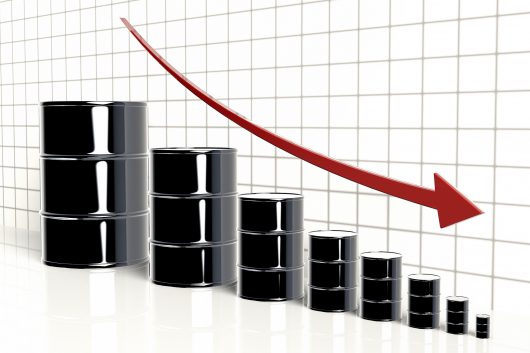
Despite housing the largest oil reserves in the world, Venezuela is experiencing crippling and widespread poverty. The causes of poverty in Venezuela are atypical from other developing countries. The nation has an abundance of natural resources, and, in the 1950s, it had the fourth-highest GDP per capita in the world. For much of its history, the country has occupied a coveted position as the strongest economy in Latin America. Despite frequent political instability–as recently as 2007 poverty was in decline, with the economy riding high off oil profits where the price of a barrel was in the triple digits.

Fast-forward to 2017: 81% of Venezuelans live below the poverty line, largely as a result of the economic collapse.

The most severe symptoms of the new Venezuelan economy are ones that make it difficult for the average citizen to simply exist, let alone thrive. Food is either scarce or astronomically expensive, and hospitals are chronically understaffed and have to endure subpar equipment. Schools are increasingly characterized by the need to feed children who arrive hungry and have brought nothing to eat.

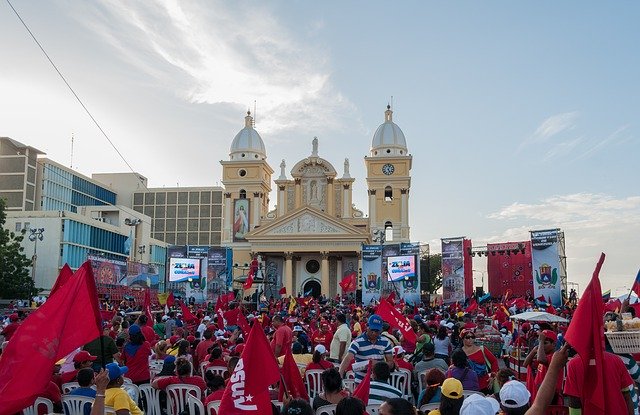
The Washington Post describes the situation as an “entirely man-made disaster,” identifying Nicolás Maduro’s government as one of the primary causes of poverty in Venezuela. Corruption is endemic in Venezuelan politics and enormous oil profits are often siphoned off into private hands. Transparency International identifies Venezuela as the ninth most corrupt country in the world, by far the highest in the Latin America region.

Government intervention to address the crisis has also often backfired. An attempt to introduce price controls on foodstuffs led to imports disappearing almost entirely, and for months most Venezuelans were unable to acquire basic items such as milk, eggs and flour. Inflation is expected to rise to 475% in 2017. Over the course of the past year, the average Venezuelan has dropped 19 pounds in weight.

The spike in oil prices during better times allowed Maduro’s predecessor, Hugo Chavez, to implement an economic populist agenda. A combination of infrastructure investment and expansion of social services allowed millions of Venezuelans to be lifted above the poverty line. However, this model of poverty alleviation was flawed due to its dependence on a single resource. Following a decline in oil prices, the country now faces even greater challenges than before.

A major fiscal overhaul is the best bet for the millions of Venezuelans who urgently need access to food and medicine. A food-stamp style system for vital goods is currently only a proposal, but the enormity of Venezuela’s government and its subsidiaries means it could be distributed relatively easily across the country.

In the long term, a redirection of the economy away from oil towards privately owned farms could stimulate a self-sufficient food market. If this was achieved, the kind of shortages that plague Venezuela in 2017 would be unlikely to occur again.

Perhaps then, some of the current causes of poverty in Venezuela can be overcome and the nation can begin to rebuild towards its former status as one of the wealthiest in the world.

– Jonathan Riddick

Photo: Flickr
July 23, 2017
https://borgenproject.org/wp-content/uploads/borgen-project-logo.svg 0 0 Borgen Project https://borgenproject.org/wp-content/uploads/borgen-project-logo.svg Borgen Project2017-07-23 07:30:062024-12-13 17:58:21Causes of Poverty in Venezuela, Once Latin America’s Richest Nation
Aid, Global Poverty

6 Ways to Help People in Venezuela

The South American nation of Venezuela is suffering one of the worst humanitarian crises, not only in its own history, but in the entire continent. There is a severe shortage of medicine, medical supplies, food, and several other goods. Consequently, this has caused families to suffer from hunger, disease and a lack of essential care. However, citizens around the world have started to help people in Venezuela. There is a variety of ways to provide aid.
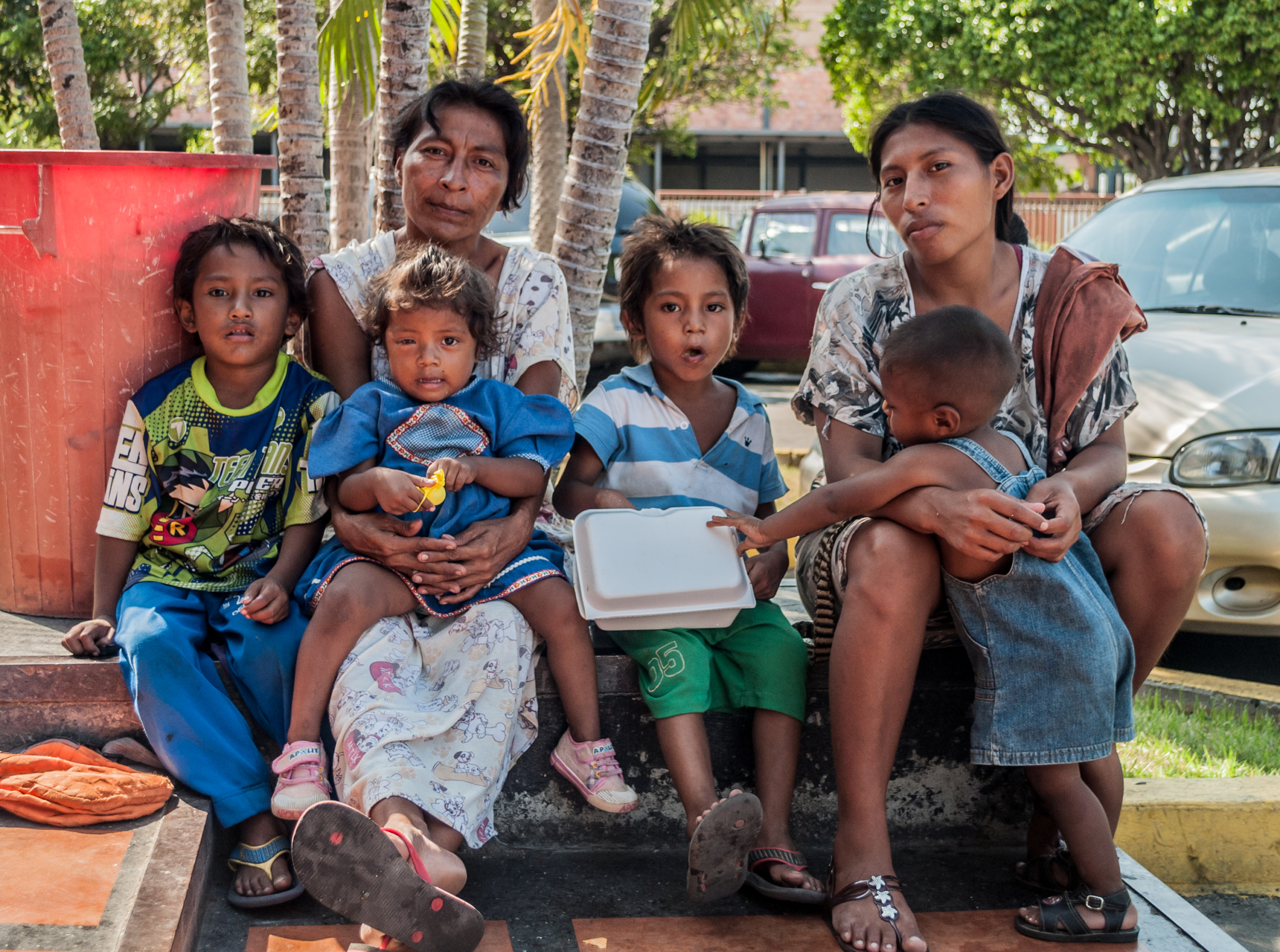
First of all, it is worthwhile to get perspective on the magnitude of the situation. The figures coming out of the country are dire. Recent surveys found that 76 percent of public hospitals and 85 percent of private pharmacies lack basic medicines. The 2016 maternal mortality rate has increased to 79 percent since 2009. The infant mortality rate is up 21 percent since 2015.

A 2015 survey conducted by leading Venezuelan universities and civil groups in over 20 cities found that 87 percent of interviewees had difficulty purchasing food. Additionally, 11.4 percent of children in vulnerable areas experience acute malnutrition (humanitarian agencies usually declare 10% a food crisis). A more recent study found that 75 percent of the country’s people lost an average of 19 pounds.

In spite of the terrible crisis, the state is doing little to aid its citizens. Since March 2017, the deterioration of the political, economic and social situations have led to the outbreak of intense protests against the government. Several international organizations such as the Human Rights Watch, have criticized the current Venezuelan government for continually downplaying the presence of a humanitarian crisis and doing little to seek international assistance. The lack of government action means that the help of the international community is necessary now more than ever. Below are six different ways to help people in Venezuela at this critical time.


Ways to Help Venezuela


  1. Read about Cuatro Por Venezuela. This organization seeks to provide medicine, medical supplies and food to those in need. Additionally, if you are shopping on Amazon, shop through smile.amazon.com and list Cuatro Por Venezuela as your charity of choice. A percentage of all your purchases will go to that cause.
  2. You can help raise funds for ‘Alimenta La Protesta’ (Feed the Protests). This group gathers food and water for the protesters who are risking their lives to help better conditions in the country.
  3. Read, learn about and consider helping the Chamos organization. Chamos seeks to improve the living standards of the most deprived children in the country.
  4. Purchase basic medical supplies through this Amazon link and choose the option to send them to a center in Miami. Without additional cost, they will go to Caracas and the ‘Cruz Verde’ at the Central University of Venezuela, which is giving first-aid to injured protesters.
  5. Call your representatives and express your concern regarding the crisis in Venezuela. Demand a stronger response to the humanitarian crisis and the abuses perpetrated by the Venezuelan government. If you live in the United States, ask for representatives to support legislation such as this one.
  6. Raise awareness by sharing links and information through social media or any other outlet available to you.

Government negligence and the continual refusal to ask for international assistance means that helping people in Venezuela may not be easy. Because of political hurdles, large international NGOs have very small or nonexistent operations in the country. Thus, raising awareness and calling for a stronger response from the world’s governments is a crucial key in how to help people in Venezuela.

– Alan Garcia-Ramos

Photo: Pixabay

July 17, 2017
https://borgenproject.org/wp-content/uploads/borgen-project-logo.svg 0 0 Borgen Project https://borgenproject.org/wp-content/uploads/borgen-project-logo.svg Borgen Project2017-07-17 01:30:132020-06-03 09:04:096 Ways to Help People in Venezuela
Global Poverty

Why is Venezuela Poor?

Venezuela is a country in South America with a population of over 31 million. With such a large population, it may come as a surprise that 82 percent of its citizens live in poverty. Why is Venezuela poor? There are many reasons, and following are a few of them.

  1. Economic crisis: Venezuela is in its third year of recession, which is the main answer to the question ‘why is Venezuela poor?’ Its economy is expected to contract by 10 percent this year according to the International Monetary Fund. Consequently, while the economy shrinks, the prices of goods are skyrocketing. This year, inflation is expected to rise 475 percent, and Venezuela’s currency has plummeted in value. Consider this: one dollar equaled 100 bolivars exactly two years ago. Today, one dollar is equivalent to 1,262 bolivars.
  2. Venezuela’s broken engine: Oil prices began to plunge in 2014. The oil prices contribute to Venezuela’s list of reasons for being poor. Venezuela has the world’s largest oil reserves, but the problem is that oil is the only game in town. It makes up more than 95 percent of Venezuela’s revenue from its exports. If it doesn’t sell oil, the country doesn’t have money to spend. Oil prices were over $100 per barrel in 2014. Today, they hover around $50 per barrel, after dropping as low as $26 earlier this year.
  3. Soaring food prices and broken hospitals. The food shortages became extremely severe this year, contributing to Venezuela’s poverty. Venezuelans went weeks, in some cases months, without basics like milk, eggs, flour, soap and toilet paper. Despite a crashing currency and dropping oil revenue, the government continued enforcing strict price controls on goods sold in the supermarkets. Only recently has the government stopped enforcing price controls, and food has returned to supermarket shelves. However, prices are so high that few Venezuelans can afford the food.

These points scratch the surface of the question ‘why is Venezuela poor?’ Venezuela is poor and running out of cash quickly. In the near future, it won’t have the money to pay its bills. Venezuela will owe $15 billion by the end of 2017, while the nation’s central bank only has $11.8 billion in reserves. The state-owned oil company is pumping less oil and risking default. Most of its reserves are in the form of gold. So, to make debt payments this year, Venezuela has shipped gold bars to Switzerland. China used to bail out Venezuela and loan it billions of dollars. However, even China has stopped giving its Latin American ally more cash.

– Paige Wilson

Photo: Google

July 15, 2017
https://borgenproject.org/wp-content/uploads/borgen-project-logo.svg 0 0 Borgen Project https://borgenproject.org/wp-content/uploads/borgen-project-logo.svg Borgen Project2017-07-15 01:30:582024-12-13 17:58:21Why is Venezuela Poor?
Education, Global Poverty

Teachers Help Improve Education in Venezuela

After years of fighting to reform education in Venezuela at the primary and secondary levels, teachers in Venezuela finally received the pay they deserved.

This month, the government gave Venezuelan teachers  a 15 percent increase to their salaries, totaling a 345 percent increase since the start of 2017.

Following several negotiations between the Venezuelan president and the Venezuelan Teachers’ Federation (FMV), public school teachers were given proper wages for their work. The FMV leader stated that the wage increases acted as a “call for the defense of the right to education, from those who want to sabotage it for political reasons.”

In addition to the wage increase, the government set aside funds that would go toward paying pension benefits for 15,000 teachers.

The wage increase was intended to not only be an investment in the teachers but the education system itself. With these improved wages, now 96 percent of the Venezuelan population can read and write, making Venezuela one of the most literate countries in the world.

However, education in Venezuela didn’t always prosper. The country was previously overextended and underfunded, with about 20 percent of children lacking a formal education. The Ministry of Education of Venezuela and Venezuelan government collaborated to adapt the curriculum, expand compulsory education and upgrade teacher qualifications in order to address the problem of low enrollment.

As a result, the government established the Bolivarian University system in 2003, whose design encompassed democratizing access to higher education and creating the Bolivarian Missions Social Outreach program. The program focuses on literacy programs and university preparation programs.

Later in 2008, five years after President Chavez launched his outreach program that enrolled nearly 2.5 million children, education in Venezuela came to be considered among the highest in the region. The literacy rate rested around 93.8 percent for males and 93.1 percent for females.

Although the total literacy rate increased only by three percent since the initial wage increases, those increases have helped reform curriculum, teacher training and increased enrollment. These changes helped to significantly improve education in Venezuela overall.

– Amira Wynn

Photo: Flickr

July 5, 2017
https://borgenproject.org/wp-content/uploads/borgen-project-logo.svg 0 0 Borgen Project https://borgenproject.org/wp-content/uploads/borgen-project-logo.svg Borgen Project2017-07-05 01:30:122019-08-15 10:37:12Teachers Help Improve Education in Venezuela
Disease, Global Poverty

Economic Turmoil Brings Back Common Diseases in Venezuela


As Venezuela’s street crime rates rose throughout the Chávez presidency — and as they have continued to do so under President Maduro — its citizens began to fall prey to disease. The spread of common diseases in Venezuela such as hepatitis A and B, typhoid, malaria, rabies and yellow fever echo the rise of corruption in the nation. These diseases are the new normal alongside Venezuela’s crumbling economy.

Over the years, these diseases have waxed and waned in Venezuela. As new vaccinations came out, smaller outbreaks would occur.

Under the Chávez regime — February 2, 1999 to March 5, 2013 — Venezuela suffered a degrading economic collapse. As a result, President Maduro’s administration inherited the damage alongside the leadership.

Venezuela is home to one of the largest oil reserves in the world, and its primary source of export revenue is oil. During Chávez’s presidency, his goal was to use oil revenues to finance a social revolution that would benefit low-income families in Venezuela.

Nevertheless, the country’s corrupt leaders shifted the oil revenue into their personal coffers rather than investing in the poor. Economic chaos rules today’s Venezuela, and a product of this 10-year disarray is the world’s highest rate of inflation. Citizens must line up every morning to obtain such basic goods as rice, beans, cooking oil, toilet paper and toothpaste. These lines mark the streets of Caracas and are known to be the focus of international media.

As of late, the flow of imports has all but stopped. The government, struggling with corruption, cannot pay for imports due to their extreme debt. Venezuela imported everything but oil; now, the country lacks everyday products, including medicines and vaccinations. Consequently, common diseases in Venezuela have returned.

According to the New York Times, the prevalence of malaria in the country is at its highest level in 75 years. Venezuela’s child mortality rate is increasing, presenting a physical manifestation of the nation’s lack of resources.

Diseases once thought to be eliminated (and entirely preventable), such as malaria and diphtheria, are reappearing at alarming rates. These rises in prevalence particularly threaten the health of mothers and newborns during delivery and post-natal care.

There are individuals willing to make a difference in the fight against common diseases in Venezuela. Humanitarian activist Lilian Tintori, for example, has dedicated her life to a revolt against the Chávez regime. She wants to establish a humanitarian channel between the world’s nations and Venezuela to help deliver food, medicine and other necessary products.

Unfortunately, President Nicolas Maduro refuses to address the issue of scarcity and the preventable tropical diseases making a comeback in Venezuela. More emphasis needs to be placed on the government’s assistance in reducing the harm done by the most common diseases in Venezuela.

– Francis Hurtado

Photo: Flickr

July 2, 2017
https://borgenproject.org/wp-content/uploads/borgen-project-logo.svg 0 0 Borgen Project https://borgenproject.org/wp-content/uploads/borgen-project-logo.svg Borgen Project2017-07-02 07:30:072024-12-13 17:58:11Economic Turmoil Brings Back Common Diseases in Venezuela
Global Poverty, Water

Health Concerns Over Water Quality in Venezuela


The poor water quality in Venezuela has caused health concerns throughout the country.

Venezuela’s water has, in recent years, been very poor quality, even coming out of faucets with a yellow color, reports Ana Carvajal, a worker at the Universitario Hospital in Caracas specializing in infectious diseases. Venezuelans are seeing a spike in a variety of illnesses, especially diarrhea. The lack of clean water is also bringing about skin issues such as scabies and folliculitis. Stomach illnesses have also spread due to the water quality.

Beyond water pollution, the country is also facing a severe water shortage. The 2016 drought brought on by El Niño put major limits on water consumption, resulting in today’s current use of water trucks. However, as water official Tatiana Noguera accounts, these trucks are often robbed by gangs.

Unfortunately, it comes with little surprise that Venezuelans must resort to desperate measures in order to maintain water. Residents often purify water with vinegar, and carefully ‘recycle’ it from the kitchen to toilet. Some collect and recycle rainwater, as well.

Other consequences come in the form of limited electricity. Because 65 percent of Venezuela’s electricity relies on the Guri Dam, which has maintained low water levels, the country has undergone severe power shortages. Even Venezuela’s time zone has been altered in order to increase the amount of sunlight during the day by an extra 30 minutes.

Just like his predecessor Hugo Chavez, President Nicolas Maduro has not taken substantive action in order to counter this water pollution or shortage. Taxi driver Luis Felipe Pedroso comments on the lack of water: “On the days when it comes, it’s only for a few hours and it’s very dirty. This is unbelievable. The government hasn’t taken any measures to solve these problems.”

If the poor water quality in Venezuela is not addressed soon, diseases are likely to spread further. Given citizens’ limited access to medicine, this has seriously negative implications, especially considering the issue is one that is easily preventable. Therefore, the country’s leaders must take immediate action in order to secure the health of their citizens.

– Gigi DeLorenzo

Photo: Flickr

June 9, 2017
https://borgenproject.org/wp-content/uploads/borgen-project-logo.svg 0 0 Borgen Project https://borgenproject.org/wp-content/uploads/borgen-project-logo.svg Borgen Project2017-06-09 01:30:442024-12-13 17:57:57Health Concerns Over Water Quality in Venezuela
Aid, Global Poverty, Politics

Humanitarian Assistance in Venezuela: Efforts of US Leaders


Over the past few years, Venezuelan citizens have suffered at the hands of oppressive government leaders, leading to an overall failing economy. Necessities such as food and medicine have become hard to obtain for lower and middle-class citizens. As a result, there has been a growing need for humanitarian assistance in Venezuela.

According to findings by the International Monetary Fund, Venezuela’s inflation rate reached an alarming 720 percent in 2016. This substantial rise in inflation subsequently led to an even higher rate of poverty among citizens, and an even greater need for humanitarian assistance in Venezuela.

Recent statistics from the National Survey of Living Conditions showed that the average number of Venezuelans who reported eating two or fewer meals per day increased from 11.3 percent in 2015 to 32.5 percent in 2016. Likewise, the average population reported an average increase in weight loss by more than 15 pounds due to the inability to afford adequate meals each day.

In response to this prevalent issue, U.S. Senator Ben Cardin (D-MD) and Senator Marco Rubio (R-FL) recently initiated a bill known as the “Venezuelan Humanitarian Assistance and Defense of Governance Act of 2017.” As its title suggests, one of the main goals of this bill is to provide humanitarian assistance in Venezuela. Within the bill, U.S. leaders cited that Venezuelan president Nicolas Maduro “rejected repeated requests from the Venezuelan National Assembly and civil society organizations to bring humanitarian aid into the country.” The bill also aims to protect the citizens’ human rights and the concept of democracy.

A total of $10 million has been set aside for the U.S. Committee on Appropriations to effectively carry out measures proposed in the humanitarian assistance bill. Some of these measures include providing a way to ensure that food, medicine and nutritional supplements are transported and distributed to citizens in need. Funds will further be used to improve “transparency and accountability” within Venezuelan government institutions.

– Lael Pierce

Photo: Flickr

May 21, 2017
https://borgenproject.org/wp-content/uploads/borgen-project-logo.svg 0 0 Borgen Project https://borgenproject.org/wp-content/uploads/borgen-project-logo.svg Borgen Project2017-05-21 01:30:162020-05-03 14:11:06Humanitarian Assistance in Venezuela: Efforts of US Leaders
Global Poverty

Poverty in Latin America

Poverty in Latin America
Hunger and poverty in Latin America, including Mexico, Central and South America, have decreased since the 1990s and early 2000s. However, hunger and malnourishment continue to be ongoing issues as a result of poverty.

In 2015, 28 percent of Latin Americans suffered from impoverished conditions, as compared to 44 percent in 2002. Although the numbers had improved since 2002, there was a stall in improvements in 2013.

As of 2017, studies show that 130 million people in South America are currently living in a state of poverty across various countries. These countries include Honduras, Venezuela, Guatemala, Nicaragua, Uruguay, Argentina, Bolivia and Chile.

Contributing Factors of Poverty

One major cause of the poverty and instability suffered among individuals living in these countries is the disparity between socioeconomic classes. According to the Huffington Post, some things that can be done to decrease the rate of poverty and increase the well-being of persons living in Latin America include “comprehensive poverty reduction programs” specifically directed at increasing labor incomes, improving social programs and configuring ways to “integrate early childhood development into the social development.”

Additionally, while Latin America was once a large producer of commodities, this changed after the recession in 2008. Countries such as Brazil, Argentina and Venezuela have faced greater economic losses over the past year. For example, Brazil faced severe economic hardship in 2016 due to failed policy-making strategies and an overall inadequate political environment, which led to higher inflation and a lower income for businesses and families.

The economy in Venezuela has also left much to be desired. Last year, the country faced a free fall in oil production, which led to heightened inflation and negative economic effects on the overall quality of life for Venezuelans.

Argentinian economist Raul Benitez-Manaut told Inter Press News Agency that the real problem surrounding hunger and poverty in Latin America is a “problem of access, not production.” Likewise, he has vocalized the importance of wealthier countries taking the initiative to reach out and help countries whose citizens are suffering from hunger and malnourishment.

Ideas for Improvements Moving Forward

In 2013, Harvard University conducted a study and offered some useful solutions that can help reduce poverty in Latin America. One solution offered by the university addressed the issue of low productivity in Latin countries and the need for the public and private sectors to work together to resolve this issue. For example, a project known as “Mundo Vex Tenda” was created in Brazil in 2010 and funded by the United States Inter-American Development Bank. The project focuses on providing individuals running small businesses in Brazil with the opportunity to learn effective business-related skills in areas such as financial literacy, marketing and food safety practices.

Additionally, Harvard researchers stated that “governments must root out violence and invest in specialized infrastructure; create transparent, accountable mechanisms that decentralize decision-making; and direct resources to reinvigorating the private sector, short of protecting it from competition.”

– Lael Pierce

Photo: Flickr

March 29, 2017
https://borgenproject.org/wp-content/uploads/borgen-project-logo.svg 0 0 Borgen Project https://borgenproject.org/wp-content/uploads/borgen-project-logo.svg Borgen Project2017-03-29 01:30:152024-12-13 17:57:38Poverty in Latin America
Global Poverty, Technology

China Boosts Pakistan, Venezuela with Remote Sensing Satellite

China Boosts Pakistan
Recently, nearly 200 scientists, researchers and officials from the space industry participated in the Symposium on Space International Cooperation, promoting the economic and social development of the developing world. The symposium, held in November, in Beijing, was a joint effort put together by the International Academy of Astronautics and the China International Exchange Center for Astronautical Science and Technology.

During the symposium, Hiroki Matsuo, Vice-President of the International Academy of Astronautics confirmed China’s commitment to collaborating with developing countries in the areas of space-based navigation, manned and robotic space flights and data applications—namely with Pakistan and Venezuela. Matsuo declared, “Preparation work for the Venezuela Remote Sensing Satellite II project is proceeding according to schedule.” He also verified that a similar remote sensing satellite, to be used by Pakistan, would be finished in 2018.

Remote sensing satellites are dedicated to accumulating data about the earth’s surface and can help survey resources on land, monitor nearby oceans and forecast weather — something essential to crop planning and resiliency in the aftermath of natural disasters.

Both the Venezuelan and Pakistani remote sensing satellites are being developed by the China Academy of Space Technology. The company is also dedicated to expanding its services to other countries in the developing world, especially to countries in the Middle East that are new to the space market. To date, 11 satellites, developed in China, have been completed and exported to nine different countries, including Laos, Nigeria and Bolivia. The successes of the China Academy of Space Technology in working with the developing world can be attributed to their commitment to providing more than just the design and manufacturing of remote sensing satellites. They also incorporated launch, operations and training services into their business model.

Hu Zhongmin, the Director of the International Cooperation Department at the China Aerospace Science and Technology Corp, the parent company of the China Academy of Space Technology, is excited about further collaborations between China and other countries. Zhongmin and his company understand that multi-national exchanges of space technology can greatly benefit the developing world.

When it comes to manufacturing and launching satellites, China has had a long-running relationship with Venezuela. In fact, the Venezuelan Remote Sensing Satellite II, to be completed later this year, is the third collaborative effort between the two countries. The first was a communication satellite, launched in 2008 and the second was the Venezuelan Remote Sensing Satellite I, which was launched in 2012.

Pakistan is also a veteran to the world of space technology, establishing the Space Sciences Research Wing to the Pakistan Atomic Energy Commission in 1961. The original project from the program, Rehbar-I, was launched in 1962 and became only the tenth of its kind in the world. Data from this original Pakistan Space Sciences Research project helped officials study weather, cyclones and cloud formations above the Arabian Sea.

– Ashley Henyan

Photo: Flickr

January 14, 2017
https://borgenproject.org/wp-content/uploads/borgen-project-logo.svg 0 0 Borgen Project https://borgenproject.org/wp-content/uploads/borgen-project-logo.svg Borgen Project2017-01-14 01:30:472024-12-13 17:56:29China Boosts Pakistan, Venezuela with Remote Sensing Satellite
Food & Hunger, Global Poverty, Hunger

Hunger in Venezuela: Solving the Country’s Food Crisis

Venezuela_Food crisis
Venezuela, a country on the northern coast of South America, is well known for its lush forests and beautiful coastal view. Unfortunately, the breathtaking scenery does little for combating the growing concern of hunger in Venezuela.

Since Nicolás Maduro’s assumption of the Venezuelan presidency in 2013 after Hugo Chávez’s death, polls have found that 87 percent of citizens do not have enough income to provide food for their families.

Of their measly income, 72 percent is spent on food alone. To afford enough food to feed a family, the Center for Documentation and Social Analysis estimated a family would need the equivalent of 16 minimum-wage job salaries.

Inflation has also risen to over 180 percent since December 2015. This is partly because of a drop in oil prices that reduced Venezuelan foreign earnings by two-thirds. However, it also caused in part by the formation of Local Committees of Supplies and Protection (known locally as CLAP).

CLAP regulates when people can go shopping at the supermarket and even what they are allowed to buy based on the last digit of their identity card. For instance, if the identity card ends in a zero or one, a citizen might be able to buy groceries on Monday. They receive staples such as flour, pasta, and soap at a controlled price; the government controls even hunger in Venezuela.

These regulated shopping trips are not enough for struggling Venezuelans; lately, protests have become more widespread and even physically violent. In Cumaná, protestors marched on a supermarket, defying the grocery-shopping schedule implemented by the government, to empty the entire supermarket of food.

Riots like the one in Cumaná have occurred across Venezuela, with as many as 50 riots in the span of two weeks.

In addition to growing participation in supermarket riots, citizens have been calling for President Maduro’s resignation, blaming his socialist policies and exploitation of farmers for the current food crisis. Maduro’s response has been to blame bordering countries for hoarding food and bombing Venezuelan power plants.

Keep an eye on the Borgen Project for more information on hunger in Venezuela and developments in the Venezuelan food crisis.

– Bayley McComb

Photo: Flickr

September 28, 2016
https://borgenproject.org/wp-content/uploads/borgen-project-logo.svg 0 0 Borgen Project https://borgenproject.org/wp-content/uploads/borgen-project-logo.svg Borgen Project2016-09-28 01:30:532024-12-13 17:55:38Hunger in Venezuela: Solving the Country’s Food Crisis
Page 3 of 512345

Get Smarter

  • Global Poverty 101
  • Global Poverty… The Good News
  • Global Poverty & U.S. Jobs
  • Global Poverty and National Security
  • Innovative Solutions to Poverty
  • Global Poverty & Aid FAQ’s
Search Search

Take Action

  • Call Congress
  • Email Congress
  • Donate
  • 30 Ways to Help
  • Volunteer Ops
  • Internships
  • Courses & Certificates
  • The Podcast
Borgen Project

“The Borgen Project is an incredible nonprofit organization that is addressing poverty and hunger and working towards ending them.”

-The Huffington Post

Inside The Borgen Project

  • Contact
  • About
  • Financials
  • President
  • Board of Directors
  • Board of Advisors

International Links

  • UK Email Parliament
  • UK Donate
  • Canada Email Parliament

Get Smarter

  • Global Poverty 101
  • Global Poverty… The Good News
  • Global Poverty & U.S. Jobs
  • Global Poverty and National Security
  • Innovative Solutions to Poverty
  • Global Poverty & Aid FAQ’s

Ways to Help

  • Call Congress
  • Email Congress
  • Donate
  • 30 Ways to Help
  • Volunteer Ops
  • Internships
  • Courses & Certificates
  • The Podcast
Scroll to top Scroll to top Scroll to top