• Link to X
  • Link to Facebook
  • Link to Instagram
  • Link to TikTok
  • Link to Youtube
  • About
    • About Us
      • President
      • Board of Directors
      • Board of Advisors
      • Financials
      • Our Methodology
      • Success Tracker
      • Contact
  • Act Now
    • 30 Ways to Help
      • Email Congress
      • Call Congress
      • Volunteer
      • Courses & Certificates
      • Be a Donor
    • Internships
      • In-Office Internships
      • Remote Internships
    • Legislation
      • Politics 101
  • The Blog
  • The Podcast
  • Magazine
  • Donate
  • Click to open the search input field Click to open the search input field Search
  • Menu Menu

Tag Archive for: Venezuela

Posts

Food & Hunger, Global Poverty

CEO Fights to End Food Shortages in Venezuela

Food shortages in VenezuelaBeginning in 2014, oil prices around the world began to plummet. This sparked an extreme financial crisis in Venezuela, whose economy is based solely on its immense reserves of the fossil fuel. This evolving crisis has contributed to dire food shortages in Venezuela. The CEO of Empresas Polar, Lorenzo Mendoza, is working to aid fellow Venezuelans in need. Oil became a source of vast political influence in Venezuela once the industry became nationalized in 1975. The Washington Post reports that oil currently makes up about 95 percent of the region’s revenue from exports.

Oil Profits Plummet

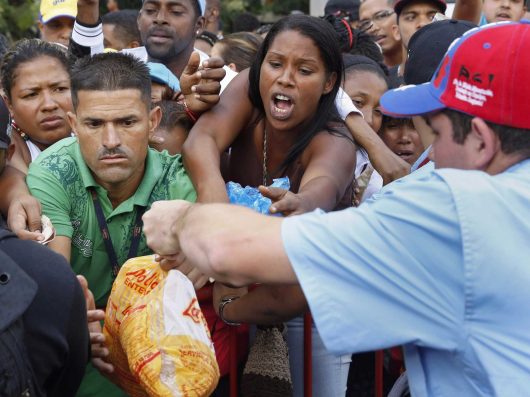
In 2013, following the death of Hugo Chávez, former Vice President and current Head of the United Socialist Party of Venezuela Nicolas Maduro was elected president and promised to continue the policies of his predecessor. According to The Washington Post, Maduro is “discouraging private industry that could have diversified the nation’s economic base” and using revenues from PDVSA, the state oil company, to “pay for generous social welfare benefits that won votes.” This lack of diversification and unruly spending, combined with the harsh drop in oil prices, has left the economy and citizens of Venezuela in turmoil. The International Monetary Fund’s figures show that Venezuela “went from earning $80 billion from oil in 2013 to a projected $20-25 billion in 2016.” This discrepancy of billions of dollars has created food shortages in Venezuela, resulting in riots and violence. Numerous looters have been shot and killed, hundreds have been arrested and lines of hungry families continue to grow.

Uncooperative Government

Political and economic instability has allowed crime to prosper. According to the Los Angeles Times, “gangs on motorcycles have fought over the right to control and distribute food.” Instead of taking responsibility for the lack of revenue, mounting inflation and food shortages, President Maduro has shifted blame onto the U.S. government, as well as Mendoza. Mendoza’s business, a large-scale food processing and brewery corporation, is a unique entity within Venezuela’s socialist society. Empresas Polar is the largest privately owned enterprise in a country whose government controls a substantial portion of businesses.

President Maduro accused Mendoza of withholding goods and slowing production during the crisis. The Wall Street Journal reports that the government views Mendoza as “a traitor responsible for the scarcities.” Mendoza denies all accusations and believes that it is the government’s control of prices, lack of imports and halts in production forced by a lack of federal funds that is fueling the food shortages. In fact, Mendoza is actively fighting to end the overwhelming food shortages in Venezuela. The CEO is urging his government to cooperate with organizations that can offer aid.

Venezuela Refusing Help

In February, The Wall Street Journal reported that Mendoza contacted Harvard economics professor Ricardo Hausmann to speak of “Venezuela’s need for up to $60 billion of loans from the International Monetary Fund and World Bank to avoid economic meltdown.” This cry for help will most likely go unheard, as Venezuela’s government has denied foreign aid from most countries, especially the U.S., since the time of Hugo Chávez.

While President Obama and President Maduro did meet for a few moments at the Summit of the Americas in April, Maduro spent most of his time lambasting Obama for his sanctions, which are based on human rights violations by a handful of Venezuelan officials.

Moving Forward

In this time of crisis, Empresas Polar and its charismatic CEO Lorenzo Mendoza are bringing hope to Venezuela. Empresas Polar represents a bright future for Venezuelan business, as it is responsible for the employment of thousands, offers price-conscious products, a provides a profitable business plan and diversification of the Venezuelan market. Moreover, despite attacks on his character and livelihood made by the government, Mendoza will continue to fight for foreign aid to end the food shortages in Venezuela.

– Liam Travers

Photo: Business Insider
August 12, 2016
https://borgenproject.org/wp-content/uploads/borgen-project-logo.svg 0 0 Borgen Project https://borgenproject.org/wp-content/uploads/borgen-project-logo.svg Borgen Project2016-08-12 01:30:062024-05-27 09:34:07CEO Fights to End Food Shortages in Venezuela
Global Poverty

Three Reasons for the Economic Crisis in Venezuela

Economic Crisis in VenezuelaOn Saturday, May 14, Venezuela’s president, Nicolas Maduro, issued a state of emergency in response to widespread discontent that had risen throughout the country. Protests and calls for a reform in the government came about because of the historic economic crisis in Venezuela.
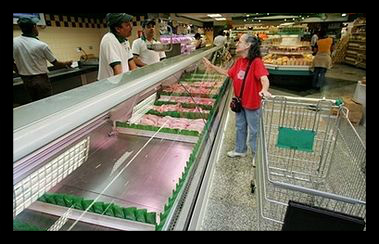
Since the beginning of 2015, inflation within the country has been on a steady increase. During the months of June and July, it began to accelerate upward. By the close of the year, Venezuela was left with an inflation rate of 180 percent, the highest in the world. This has led to deficiencies in food, medicine and hygiene products.

However, the recent explosion of economic inflation is only a symptom of deeper troubles within the economy that have been building for the past years. Many are criticizing Venezuela for failing to diversify in products and services. Gretchen Bakke of the New Yorker summarized the economic crisis in Venezuela using the adage, “putting all its eggs in one basket.”

Various occurrences have led Venezuela to the brink of economic collapse, but three in particular bear mentioning:

1. Venezuela’s Dependence on Oil as a Profitable Export

Petroleum products made up roughly 93 percent of the $63 billion in exports that Venezuela made in 2014. This is not surprising, since Venezuela is sitting on the largest proven oil reserves in the world. Historically, various Venezuelan presidents have used petroleum production and exports to increase development, yet they failed to diversify their economic productions. In the 1920s Venezuela registered a third of its GDP as agricultural products, but almost a century later, these products make up six percent of GDP and less than one percent of the country’s exports.

Its identity as an oil-producing state has served Venezuela well in the past, but the tide is turning. With lifted sanctions on Iranian petroleum and increased oil production in the United States, Canada and Iraq, petroleum prices have been driven down by a saturated global market. The New York Times reported a barrel of oil to be 70 percent cheaper now than it was two years ago.

2. Venezuela’s Dependence on Water as its Primary Electricity Source

Almost 80 percent of Venezuela’s electricity comes from hydroelectric power. The international community has recently been pushing for cleaner energy (that which does not rely on fossil fuels) and hydroelectricity is one way to achieve these goals. However, hydro-power can be problematic when water turns into a limited resource.

Venezuela has currently been suffering through a three-year drought which many are attributing to El Niño, an intermittent weather pattern that has been accentuated by the recent rise in global temperature. In addition to the normal problems that are generated by water shortages, Venezuela is now facing a shortened work week due to the rationing of electricity for the many shortages.

These newly-prescribed measures are criticized for accelerating the process of economic collapse, since workers now have a shortened period in which they can earn money to pay for the necessities of life.

3. Venezuela’s Unipolar Political System

For years, the socialist party has dominated the branches of the central government, and in the recent escalations of the economic crisis in Venezuela have caused the government to “become more authoritarian,” as the Council on Foreign Relations wrote.

In December of last year, the opposing party finally took control of one part of the government, The National Assembly. Though a referendum is being constructed to oust Maduro from his seat, very few immediate solutions are being proposed to relieve the collapsing economy.

The economic crisis in Venezuela is provoking protests throughout the country. Various citizens of the country told the Wall Street Journal that they have to stand for hours in line to receive a small portion of food for the day. These individuals have hopes to change the trajectory of their nation, and with the majority of the people on their side, they may still have time to do so.

– Preston Rust

Photo: Flickr

June 23, 2016
https://borgenproject.org/wp-content/uploads/borgen-project-logo.svg 0 0 Borgen Project https://borgenproject.org/wp-content/uploads/borgen-project-logo.svg Borgen Project2016-06-23 01:30:322024-12-13 17:54:33Three Reasons for the Economic Crisis in Venezuela
Global Poverty

Food Shortages and Smuggling in Venezuela

smuggling in Venezuela
Venezuela’s government continues to battle a food hoarding and smuggling epidemic. It accuses food smugglers of causing national food shortages in the country. The government states that food smugglers hoard goods to resell for profit and smuggle such items into Venezuela’s neighboring countries.

Due to currency controls and a lack of U.S. dollars, Venezuela has found it to be increasingly difficult to import foreign food products from other countries. One of the most popular countries for food smuggling is Colombia, which borders Venezuela. Venezuelan president Nicolas Maduro and Colombian president Juan Manuel Santos have both acknowledged the problem.

Earlier this month, Maduro stated that smuggling seizure efforts in Colombia have recovered close to $400 million U.S. dollars worth of goods. Due to these smuggling incidents, the Venezuelan government intends to introduce a biometric tracking system that will limit citizens’ food purchases via a fingerprint scanning.

A military spokesperson for the government told El Universal newspaper that the quantity of goods smuggled to Colombia “would be enough to load the shelves of our supermarkets.”

This July, the government seized more than 11 tons worth of fish, chicken and beef.

Last month, Venezuela began to close its border to Colombia at night and deploy thousands of troops in an effort to stop the smuggling in Venezuela from taking place. However, opposition to the plan suggests that the policy will treat Venezuelan citizens as criminals and even breach individual privacy. Many have suggested that the policy leans toward food rationing.

Some watchdog groups have even predicted that those without the biometric cards may not be able to shop at state supermarkets. The Venezuelan government believes up to 40 percent of items purchased within the country are smuggled out of the country. This includes medicines and basic foodstuff.

Even though the government has stated that those who make use of the biometric cards may receive various discounts and other benefits, those against the plan suggest otherwise. Nevertheless, the country has seen inflation rates top 60 percent this year due to food smuggling, which indicates that something must be done.

– Ethan Safran

Sources: The Guardian, BBC, Latin Post, The Guardian
Photo: The London Fog

September 7, 2014
https://borgenproject.org/wp-content/uploads/borgen-project-logo.svg 0 0 Borgen Project https://borgenproject.org/wp-content/uploads/borgen-project-logo.svg Borgen Project2014-09-07 12:00:412020-07-16 21:56:38Food Shortages and Smuggling in Venezuela
Global Poverty

Slum Destruction in Venezuela

slum_destruction
After a long-standing 20 years, a would-be abandoned bank in Caracas, Venezuela will be demolished. In most cases, the destruction of an abandoned building is hardly notable. However, this abandoned building, commonly called the Tower of David, is home to 1,145 families.

This unfinished building has become a home to hundreds of homeless people and families, creating a community that fully depends on the existence of this empty 45 story tower.

In Venezuela, few squatters find safety in the slums within the city borders. The Tower of David is a vertical beacon, offering refuge to those seeking a long term way of living in the streets.

The future of the bank tower is unclear, with Venezuelan president Nicolas Maduro telling media, “Some are proposing its demolition. Others are proposing turning it into an economic center. Some are proposing building homes there.” Maduro acknowledges the purpose it serves to many, while still acknowledging that this building represents the failed hopes of deceased dictator Hugo Chavez, whose goal was to create a dominant economy within Venezuela.

The building now holds social significance, appearing in multiple films and television shows as the Tower of David, the symbolic slum of Venezuela. Yet this has not coerced leaders into leaving the structure as is; the evacuation of residents has already begun.

The demolition project was suggested after several children were killed falling out of the building, proving it as a safety hazard to Venezuelans. With evacuations beginning on July 22, occupants have agreed to peacefully leave with the promise of homes and aid.

The refuge sought by the inhabitants will not be forgotten, as many reminisce on the solace the tower offered them. One resident, Yuraima Perra, 27, tells NPR, “Necessity brought me here, and the tower gave me a good home,” as the soldiers removed her valuables and belongings from her makeshift apartment.

Parra is one of what many Venezuelans call “invaders” that staked claim in the tower. These “invaders” rigged up electricity and controlled the elevators, essentially turning the abandoned building into subsidized housing for those in need. Due to the fact that there was little internal violence within the tower, civilians respected it, and  thus families were allowed to safely flourish in a protected area.

President Maduro recognizes the tower as, “a symbol of a strange situation, a vertical ‘barrio’.” With regrets of allowing its continuation for so long with little monitoring and even less consideration, Maduro looks to the people for suggestions as to what should happen to this symbolic tower. One thing is clear: the end of the era may have come for the Tower of David, but those who called it home will forge on in search of another safe refuge in the dangerous streets of Caracas.

– Elena Lopez

Sources: Reuters, NPR
Photo: Flickr

July 29, 2014
https://borgenproject.org/wp-content/uploads/borgen-project-logo.svg 0 0 Borgen Project https://borgenproject.org/wp-content/uploads/borgen-project-logo.svg Borgen Project2014-07-29 15:39:272020-07-28 07:18:50Slum Destruction in Venezuela
Development, Global Poverty

Venezuela’s Black Market

In the last few years, the economic wellbeing of Venezuelans has become highly dependent on their ability to obtain dollars. In a crumbling economy, people’s socioeconomic standing depends not on the job they have or their level of education, but their ability to trade currency.

In no other place is this so evident as in the country’s ports. In the crumbling city of Puerto Cabello, women from all over the country anxiously await freighters carrying sailors who bring dollars into the country. Elena, a 32-year-old prostitute from the western state of Zulia, has taken the 280 miles journey from her hometown to the port city of Puerto Cabello after hearing about the arrival of a Liberian-flagged freighter manned with Ukrainian, Arab and Filipino soldiers.

For prostitutes and many others in Venezuela, the practice of trading dollars in the black market has translated into the doubling of their earnings.

Since President Maduro took office in 2013, after the late Hugo Chavez, the value of the bolivar in the black market has dropped to from 23 to 71 against the dollar. Until recently, the official exchange rate was 6.3 bolivares to the dollar. And as far as basic foods, medicine and other necessities it remains pegged at this rate.

While this practice keeps basic consumer goods at reasonable price, their scarcity makes for a whole different outcome in practice. For over a year now, Venezuelans have had to stand in line for hours to have a access to limited quantities of basic products such as rice, flour or even toilet paper.

However, this is only the case for those who do not have access to foreign currency. For those able to get paid in dollars, such as prostitutes, travel agents and taxi drivers, the dollar shortage holds the key to their ability to overcome shortages and inflation. This gives them the choice of skipping the lines and buying these regulated products at a cost several times (sometimes 9 times) over the regulated price.

This has made Venezuela one of the most expensive countries in the world or expensive; it all depends where do one gets your money. If a citizen is able to tap into the highly demanded illegal and secretive black-market system, his or her odds at succeeding are much higher. Ironically, this has turned Venezuela into a two-tiered society composed of those who can get dollar and sell them in the black market and those who cannot and have to manage with what little comes their way.

– Sahar Abi Hassan

Sources: Bloomberg, NPR
Photo: Quartz

July 28, 2014
https://borgenproject.org/wp-content/uploads/borgen-project-logo.svg 0 0 Borgen Project https://borgenproject.org/wp-content/uploads/borgen-project-logo.svg Borgen Project2014-07-28 13:52:082024-05-27 09:19:00Venezuela’s Black Market
Global Poverty

Venezuela Evicts Residents of the Tower of David

Slum. Shantytown. Gang haven. Shelter for squatters. Whatever you want to call it, the Tower of David in Caracas, Venezuela, will no longer offer a roof to the poor families that currently call it home. On June 22, Venezuelan soldiers, officials and authorities began removing families from a 45-story building notorious for offering shelter to poverty-stricken families and gang members.

The Tower of David got its name from the original owner and investor of the building, David Brillembourg. The building is currently the third highest skyscraper in the country and was initially designed to be a banking center that would signify the new and prosperous future for Venezuela.

However, the building stopped construction in 1993 after Brillembourg’s death and was quickly abandoned. It wasn’t until a housing crisis in 2007 that homeless people and gangs moved in, which quickly led to the building gaining a reputation as the world’s tallest slum. But this new effort from the Venezuelan government looks to change that.

This recent move is designed to give those who live in the building better accommodations and to help clear the longtime symbol of poverty and lack of law. Those who currently live in the building, numbering around 3,000 residents, are being given new homes in the town of Cua, south of the capital city of Caracas. More than 100 families have already been relocated, and it is estimated that more than 1,150 families will leave the tower by the end of the process. As of this writing, there is no timetable for removing all of the residents from the tower.

Ernesto Villegas, the minister for the revolutionary transformation, made it clear during an official statement that this move is “…a coordinated operation, in harmony with the community in the tower.” This attitude is reflected by many of those who were relocated, who recognized that as residents of the building, which had erratic water and power supplies and was a consistent target of police raids, they needed a more stable and all-around better living environment. Hopefully this symbolic act of clearing the Tower of David will help spark further reforms to help increase the standard of living for many Venezuelans who find themselves in poverty.

– Andre Gobbo

Sources: BBC, Al Jazeera, The Atlantic
Photo: National Post

July 28, 2014
https://borgenproject.org/wp-content/uploads/borgen-project-logo.svg 0 0 Borgen Project https://borgenproject.org/wp-content/uploads/borgen-project-logo.svg Borgen Project2014-07-28 11:13:392024-12-13 17:51:01Venezuela Evicts Residents of the Tower of David
Politics and Political Attention

Wives of Jailed Venezuelan Politicians Win Big

Since February 2014, Venezuelan protests against the government have been flaring throughout the country. Two Venezuelan politicians, Daniel Ceballos of San Cristobal and Enzo Scarano of San Diego, were placed in jail due to these protests and their clear defiance of President Nicolas Maduro. A State Department official stated that the arrests of these men solely based on their opposition exemplifies that Maduro’s government “continues to persecute political opponents.”

Maduro won the Presidential election in April 2013, but by a very narrow marigin, seeing as Venezuela is notoriously divided into those in favor of the late Hugo Chavez, whose policies are closely followed by Maduro, and those who strongly oppose him.

The new president has been running the country with the same socialist style that Chavez did, but with an increasingly high inflation rate, power cuts and lack of certain staple foods. As a result, defiance against Maduro and his government have been increasing.

Although the President is attempting to keep the opposition down, the wives of the imprisoned mayors continued the fight by running as mayors in their husbands’ places. On May 25, they both won in a landslide, making their constituents’ support clear.

Daniel Ceballos, former mayor of San Cristobal where the protests began, was given a 12-month sentence for civil rebellion and conspiracy after he did not follow an order to halt the protests going on in the city. His wife, Patricia Gutierrez de Ceballos, won the election for mayor with 73 percent of the votes. About the election, the newly elected mayor states:

“They have converted me into mayor and ratified Daniel Ceballos as mayor. And today, San Cristobal has the privilege of having two mayors governing its city.”

She also said that each ballot cast for her represented a sentence of justice and freedom, as well as a blow against “the dictatorship” of Venezuela.

The other imprisoned politician, Enzo Scarano, was placed in jail for a 10-month sentence for his failure to comply with a previous order from the Supreme Tribunal of Justice to take down the barricades in San Diego, in the state Carabobo. Rosa Brandonisio de Scarano, wife of Scarano and former City Council Member of San Diego, won about 88 percent of the votes on May 25.

“The people will remain peacefully in the streets, making people listen, so that it echoes throughout the world that Venezuela right now is going through a very difficult time, economically, socially, morally and politically,” she stated after the election.

On the bright side, the fact that these women were clearly a part of the opposition and won with an overwhelming majority of the votes shows that the elections can be impartial and fair.

The concerning portion of all of this is President Maduro’s possible reaction if the protests continue. He has described the protesters as “fascists and extreme-right thugs” who are attempting to destabilize the government for a coup. As far as future action, he states, “If they go crazy and start burning the municipality again, the authorities will act … and elections will be called every three months, until there is peace.”

– Courtney Prentice

Sources: CNN, Huffington Post, BBC
Photo: Panorama

June 9, 2014
https://borgenproject.org/wp-content/uploads/borgen-project-logo.svg 0 0 Borgen Project https://borgenproject.org/wp-content/uploads/borgen-project-logo.svg Borgen Project2014-06-09 08:00:092019-10-30 09:59:14Wives of Jailed Venezuelan Politicians Win Big
Water

Water Rationing in Venezuela Begins

“We are facing the worst drought Venezuela has had in almost 100 years,” said Hugo Chávez, the late Venezuelan President in 2010. The drought problems have not improved, and as the country faces issues from an incredibly dry season, officials on May 6 have implemented water rationing in the capital Caracas and nearby regions. This will leave some six million people without water three days a week.

Venezuela’s dry season has, moreover, extended longer than normal, adding to the drought the country has been facing. There are three water reservoirs surrounding the capital city, and one of them has already reached record lows, falling below minimum capacity. The rationing plan is set to last for four months, lasting until August or September.

Critics are blaming the current president Nicolás Maduro and the socialist government for the severity of the problem though, rather than the weather.

“Instead of waiting for storage ponds to dry, the government should have implemented a less burdensome, water-saving plan months ago,” said Carlos Ocariz, mayor of the capital’s Sucre district. He went on to say that no new reservoirs had been built during the last 15 years, possibly leading to the severity of the problem today.

Other reservoirs, though, still contain enough water for the moment. The Camatagua reservoir can continue providing water for 820 more days, according to the country’s environment minister, Miguel Rodríguez. But even when fully operating, the water supply in the capital is below international standards, only providing enough water for household use and not enough to meet commercial and industrial needs.

The drought has caused other problems for Venezuela. Hydropower provides up to two-thirds of the produced electricity, and with the lack of rainfall, power shortages are a constant worry for citizens in rural areas. According to critics, management and underinvestment are also to blame for the shortages.

Neighboring country Colombia is also suffering from the drought, prompting the country to reduce gas exports to Venezuela. This is to ensure that Colombia has enough fuel to run its own power plants, putting further pressure and reliance onto Venezuelan hydropower.

Furthermore, protests occurring in Venezuela have been occurring for more than two months, fueled by resource shortages, crime and inflation. With a lack of constant access to water and related services, the protests could continue to get worse. Already, the unrest has seen 41 deaths as well as over 700 injured.

As the El Nino weather continues in the region, the country faces a water shortage that could cause many problems across the board for Venezuela. The choice by the government to start rationing the water should help ensure a continued supply for the citizens for now, however. With any luck, and with officials hoping the rationing program will only be needed until August, Venezuelans won’t have to suffer long until the rainy season returns to abate the country’s water shortage.

– Matthew Erickson

Sources: ABC News, BN Americas, New York Times: Venezuela looks to Wind and Nuclear Power, New York Times: Electricity Emergency, Raw Story, Reuters
Photo: Construction Week Online

May 11, 2014
https://borgenproject.org/wp-content/uploads/borgen-project-logo.svg 0 0 Borgen Project https://borgenproject.org/wp-content/uploads/borgen-project-logo.svg Borgen Project2014-05-11 04:00:262024-05-26 23:35:35Water Rationing in Venezuela Begins
Economy, Politics and Political Attention

Venezuela Raises Its Minimum Wage


Venezuelan President Nicolas Maduro raised the country’s minimum wage by 30 percent in May 2014. This marks the second time the standard has been raised this year, which, in total, accumulates to a 43 percent increase since the end of 2013.

These measures were implemented to help citizens overcome the country’s crippling inflation. Over the past twelve months inflation has risen by 59 percent, a staggering rate that exceeds any other country in 2014.

The new minimum wage is expected to provide the equivalent of 657 U.S. dollars a month for the citizens of Venezuela.

Aside from porous economic fundamentals, mass popular unrest may have influenced the President’s willingness to take action. Violent protests have pervaded the the country for the past two months, leaving 41 Venezuelans dead. Demonstrators are demanding greater government intervention to improve the prospects of middle class families.

The escalating situation has pressured Maduro to remain proactive. The President recently issued a statement promising that he will take the necessary steps to ensure inflation is conquered within the next year.

“If another increase is needed, the working class can rest assured that I will do it,” Maduro told laborers in the nation’s capital.

Although inflation has plagued the nation’s current financial woes, economists blame past government policies for the recent recession. Hugo Chavez’s rule oversaw decades of price controls and currency manipulation, inefficiencies that have stymied growth and facilitated an unhealthy dependence on imports.

Economists are also pessimistic about Venezuela’s future. Many see the recent minimum wage adjustments as purely reactionary responses that will further accelerate inflation and exacerbate the government deficit.

On the other side of the spectrum, the Venezuelan opposition party has criticized Maduro for not doing enough. Henrique Capriles, Maduro’s opponent in the last election, maintains that the minimum wage raise should have kept pace with inflation.

Although protesters continue to call for Maduro’s resignation, the President remains steadfast in his commitment to help Venezuelans through this difficult time as he claims, “I am a worker president committed to the class that works and struggles.”

Unfortunate for his re-election prospects, many citizens remain unconvinced.

— Sam Preston

Sources: BBC News, Bloomberg
Photo: TT News Flash

May 9, 2014
https://borgenproject.org/wp-content/uploads/borgen-project-logo.svg 0 0 Borgen Project https://borgenproject.org/wp-content/uploads/borgen-project-logo.svg Borgen Project2014-05-09 04:00:482024-05-26 23:30:07Venezuela Raises Its Minimum Wage
Economy

The Ills of Governmental Control in Venezuela

With an inflation rate at 56% and a scarcity index (percentage of goods available) of 28% over the last year the Venezuelan economy has been suffering the effects of policies implemented in the last decade. Starting in 2003, president Hugo Chavez put in place stringent currency controls. Originally, this was intended to address the severe crisis brought by a major strike of the oil industry. However, after a decade, this control remains in place, pegging the country’s exchange rate to the U.S. dollar and limiting the amount of local currency, the Bolivar, that Venezuelans are allowed to exchange.

Coupled with currency controls, governmental control in Venezuela has included imposing strict price controls for the products within the basic foods basket. Instead of making basic products more accessible, this has actually distorted prices. Hence, this has translated into widespread scarcity and an underground parallel market where basic foods are sold at prices much higher than the government established price.

Both of these policies have not produced the intended results. In the last decade, economic controls have profoundly curtailed the incentives necessary for businesses to produce and import goods. This has crippled the economy in severe ways. While the economy has become highly dependent on imports to supply almost 80% of consumer products, lack of hard currency makes this very complicated to achieve.

These policies are the culprits of the Venezuelan economy being rated as “repressed” by the Index of Economic Freedom. This rating has remained unchanged since 2004. What does this mean? Well, falling within this rating means that corruption is high, and that business, labor and fiscal freedoms are severely curtailed by an interventionist and centralized government. While Venezuela holds the biggest oil reserves in the world, out of all South and Central American countries, it ranks second to last in economic freedom.

These dire economic circumstances have forced many producers to close shop or move their operations to neighboring countries. The difficulty of operating is primarily caused by their inability to access hard currency. Since the only entity allowed to sell USD is the government, businesses are at the mercy of lengthy bureaucratic processes, unless they are willing to pay up to ten times the price of the local currency. But they would not be able to sell their product at a competitive market price due to price controls. Catch 22.

In addition to currency issues, the countless expropriations of private property and interventionist practices by the national government substantially elevate the risk of investing or running a business.

For instance, in November 2013, the government undertook several electronic stores (one of them a national chain equivalent to Best Buy) and forced them to charge what is deemed by the government as fair prices. This eventually was extended to other rubrics, forcing many to close down shop, or simply remain open until their current inventory ran out. Moreover, in January, the government passed the Fair Price Law, which sets a maximum percentage of profit that businesses are allowed to add to their prices.

The picture remains grim as protests that started in February to denounce shortages, among other things, continue unabated. The government has promised to ease some of these controls to allow shelves to be restocked and businesses to reopen their doors. However, as of today no substantial changes in economic policy have been put in place.

– Sahar Abi Hassan

Sources:  The Heritage Foundation, The New Yorker
Photo: What’s Next Venezuela?

April 12, 2014
https://borgenproject.org/wp-content/uploads/borgen-project-logo.svg 0 0 Borgen Project https://borgenproject.org/wp-content/uploads/borgen-project-logo.svg Borgen Project2014-04-12 13:50:062024-06-05 01:57:23The Ills of Governmental Control in Venezuela
Page 4 of 512345

Get Smarter

  • Global Poverty 101
  • Global Poverty… The Good News
  • Global Poverty & U.S. Jobs
  • Global Poverty and National Security
  • Innovative Solutions to Poverty
  • Global Poverty & Aid FAQ’s
Search Search

Take Action

  • Call Congress
  • Email Congress
  • Donate
  • 30 Ways to Help
  • Volunteer Ops
  • Internships
  • Courses & Certificates
  • The Podcast
Borgen Project

“The Borgen Project is an incredible nonprofit organization that is addressing poverty and hunger and working towards ending them.”

-The Huffington Post

Inside The Borgen Project

  • Contact
  • About
  • Financials
  • President
  • Board of Directors
  • Board of Advisors

International Links

  • UK Email Parliament
  • UK Donate
  • Canada Email Parliament

Get Smarter

  • Global Poverty 101
  • Global Poverty… The Good News
  • Global Poverty & U.S. Jobs
  • Global Poverty and National Security
  • Innovative Solutions to Poverty
  • Global Poverty & Aid FAQ’s

Ways to Help

  • Call Congress
  • Email Congress
  • Donate
  • 30 Ways to Help
  • Volunteer Ops
  • Internships
  • Courses & Certificates
  • The Podcast
Scroll to top Scroll to top Scroll to top