• Link to X
  • Link to Facebook
  • Link to Instagram
  • Link to TikTok
  • Link to Youtube
  • About
    • About Us
      • President
      • Board of Directors
      • Board of Advisors
      • Financials
      • Our Methodology
      • Success Tracker
      • Contact
  • Act Now
    • 30 Ways to Help
      • Email Congress
      • Call Congress
      • Volunteer
      • Courses & Certificates
      • Be a Donor
    • Internships
      • In-Office Internships
      • Remote Internships
    • Legislation
      • Politics 101
  • The Blog
  • The Podcast
  • Magazine
  • Donate
  • Click to open the search input field Click to open the search input field Search
  • Menu Menu

Tag Archive for: United States

Posts

Global Poverty, Hunger

5 Facts About the State of Hunger in Guam


Guam is a U.S. island territory in Micronesia, with a small population of 162,742 as of 2016. Issues such as unemployment and the high cost of living contribute to hunger in Guam. However, with the aid of organizations like The Salvation Army in Guam and the U.S. Department of Agriculture’s distribution of food stamps, conditions are beginning to look up for citizens. The following are five facts on the state of hunger in Guam.

5 Facts About the State of Hunger in Guam

  1. As of 2013, the unemployment rate sits at 8.4 percent. The deep drop only contributes to the issue of hunger in Guam, making it difficult for individuals to work well-paying jobs and earn enough money to provide for their families.
  2. In 2015, the number of Guam residents on food stamp assistance rose 3.7 percent, with a total of 15,779 island households receiving food subsidies, according to the U.S. Department of Agriculture, which funds the national Supplemental Nutrition Assistance Program (SNAP).
  3. In 1994, one in every 8.4 Guam residents received food stamps. Today that number has dropped to one in every 3.4 residents.
  4. The Guam Department of Education wishes to expand the program to give more students free meals in Guam’s 41 public schools. This will cost the government of Guam an additional $3 million to $5 million a year to fund.
  5. The Salvation Army focuses efforts in Guam, providing millions of meals to face the threat of food security, cure hunger and overcome poverty. Donations and various means of volunteering through this outlet help kids in low-income communities thrive.

Ending hunger in Guam, particularly child hunger, is a high priority for Guam. Communities and schools have joined together in fighting the widespread problem. By ensuring that food programs extend to greater groups of people, hunger can hopefully be eliminated as a whole in the near future.

– Mikaela Frigillana

Photo: Flickr

June 6, 2017
https://borgenproject.org/wp-content/uploads/borgen-project-logo.svg 0 0 Borgen Project https://borgenproject.org/wp-content/uploads/borgen-project-logo.svg Borgen Project2017-06-06 07:30:322024-05-28 00:02:095 Facts About the State of Hunger in Guam
Global Poverty

No Population, No Problem: Poverty in Wake Island

Wake Island is a small, remote atoll in the North Pacific Ocean that serves as one of the United States (U.S.) military bases and scientific research centers. The inaccessible island is under the jurisdiction of the Department of the Interior and the U.S. Air Force. Discovered by the Spanish in 1568, it was eventually named after British Captain William Wake, who visited it in 1796.

Poverty in Wake Island

How does a small, remote island with no indigenous population have poverty? Well, it doesn’t. Poverty in Wake Island is nonexistent because it has no indigenous people. In 1898, the island was annexed by the U.S., which would utilize its strategic position as a commercial air station en route to Asia. Wake Island was later seized by the Japanese in 1941, leading U.S. forces to bomb the island until Japan’s surrender in 1945.

In later years, the island became a refueling site for military and commercial aircraft traveling through the Pacific. Since 1974, the island has been used by the U.S. military and serves fundamentally for emergency landings. The U.S. Air Force has fully renovated the island’s airfield and facilities, thus maintaining its strategic passageway in the Pacific region.

Wake Island’s Population

Approximately 100 military personnel and civilian contractors live on the island to maintain and operate the airfield and facilities, serving as the island’s only population. This tropical island extends 6.5 square kilometers, providing a strategic location in the North Pacific Ocean. As an unorganized, unincorporated territory of the U.S., all activities on the island are conducted by the U.S. Air Force.

Economic Activity

The U.S. regulates Wake Island’s economic activity and provides the necessary services to military personnel and contractors living on the atoll. Importing food and manufactured goods eliminates the possibility of poverty on Wake Island.

Final Remark

Located about 2,000 miles west of Hawaii and 600 miles north of the Marshall Islands, Wake Island has served as an ideal location for this U.S. defensive base. The U.S.’s financial and economic support has guaranteed a lack of poverty on Wake Island. These attributes have demonstrated the island’s importance for the U.S. Air Force and Pacific travel for military personnel.

– Brandon Johnson

Photo: Flickr
Updated: June 11, 2024

June 1, 2017
https://borgenproject.org/wp-content/uploads/borgen-project-logo.svg 0 0 Borgen Project https://borgenproject.org/wp-content/uploads/borgen-project-logo.svg Borgen Project2017-06-01 07:30:082024-06-11 01:47:19No Population, No Problem: Poverty in Wake Island
Foreign Aid, Global Poverty, Politics

5 Quotes From Former Presidents on Foreign Aid

Foreign Aid Quotes
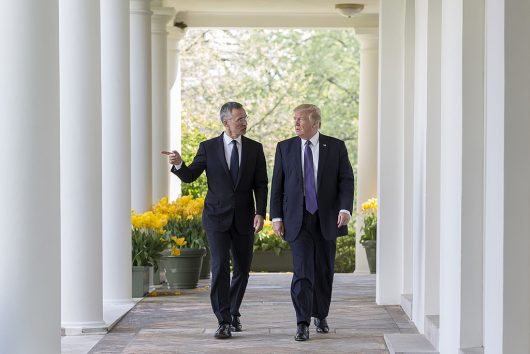
The Trump administration’s proposed cuts to the International Affairs Budget would slash U.S. foreign aid to levels not seen since the ’70s and ’90s. Foreshadowing these proposed cuts, President Trump remarked during his campaign that America should “stop sending foreign aid to countries that hate us.”

In a March 2016 interview, Trump also commented on the purported futility of foreign aid as he spoke about building schools in Iraq: “I watched as we built schools in Iraq, and they’d be blown up. And we’d build another one, and it would get blown up… And yet we can’t build a school in Brooklyn… at what point do you say, hey, we have to take care of ourselves.”

How does President Trump’s position on overseas assistance compare with other U.S. presidents? Here are five quotes from former presidents on foreign aid:

  1. George W. Bush, NPR interview, April 2017 — “When you have an entire generation of people being wiped out, and the free world turns its back, it provides a convenient opportunity for people to spread extremism.”
  2. Barack Obama, Vox interview, Feb. 2015 — “If you look at our foreign assistance as a tool in our national security portfolio as opposed to charity, and you combined our defense budget overall with our diplomatic budget and our foreign assistance budget, then in that mix, there is a lot more we should be doing.”
  3. Ronald Reagan, White House remarks, Oct. 1987 –“You know the excuses: We can’t afford foreign aid anymore, or we’re wasting money pouring it into these poor countries, or we can’t buy friends—other countries just take the money and dislike us for giving it. Well, all these excuses are just that, excuses—and they’re dead wrong.”
  4. John F. Kennedy, Remarks upon signing the Foreign Assistance Act of 1962, Aug. 1962 –“The amount of money that is involved in the nonmilitary areas are a fraction of what we spend on our national defense every year, and yet this is very much related to our national security and is as important dollar for dollar as any expenditure for national defense itself.”
  5. Harry S. Truman, Statement upon signing the Foreign Assistance Act of 1948, Apr. 1948 — “Our program of foreign aid is perhaps the greatest venture in constructive statesmanship that any nation has undertaken. It is an outstanding example of cooperative endeavor for the common good.”

These quotes from former presidents on foreign aid highlight the longstanding history of American engagement overseas. Here are two examples of these sentiments in action: firstly, the Foreign Assistance Act of 1948, otherwise known as the Marshall Plan, played a vital role in helping to rebuild Europe after WWII. Consequently, the European Union is now the largest trading partner of the U.S. Secondly, George W. Bush’s investment in the PEPFAR initiative continues to save countless lives from the scourge of HIV/AIDS in sub-Saharan Africa and is widely acknowledged as a remarkable success.

Foreign aid serves many purposes: ensuring national security, promoting humanitarian values and advancing U.S. economic interests overseas. Disengaging and ceding our leadership in this regard is not in our nation’s best interest. The above quotes from former presidents on foreign aid present a different vision for U.S. leadership overseas than from the isolationist approach outlined by President Trump.

Thankfully, with Trump’s proposal “dead on arrival,” it appears many members of Congress concur with these former presidents on the value of foreign aid and the vital role it plays in pursuit of the national interest.

– Michael Farquharson

Photo: Flickr

May 26, 2017
https://borgenproject.org/wp-content/uploads/borgen-project-logo.svg 0 0 Borgen Project https://borgenproject.org/wp-content/uploads/borgen-project-logo.svg Borgen Project2017-05-26 01:30:012024-12-13 17:58:015 Quotes From Former Presidents on Foreign Aid
Global Poverty, Refugees

10 Facts About Nicaraguan Refugees


Nicaragua is a Central American nation with a population of more than six million people. While Latin America is not the center of the current refugee crisis, there is a long history of asylum seekers in the region. Here are 10 facts about Nicaraguan refugees.

  1. Many who decide to flee one of Latin America’s many countries attempt to head north to the United States. However, most Nicaraguans who leave their home country head south instead because visas are often cheaper, there’s more work and the pay is good.
  2. The United States has a long history of involvement in the politics of Central and Latin America. Nicaragua is no exception. Because of civil war and a U.S. trade embargo in the 1980s, many Nicaraguans sought refuge at that time.
  3. In 1983, more than 2,400 Nicaraguans were in refugee camps in Costa Rica, and around 1,750 more followed in 1984.
  4. In addition, more than 100,000 undocumented Nicaraguan refugees were likely to have crossed the border into Costa Rica in the 1980s because of the military draft, economic reasons or other dangers.
  5. Today, not many Nicaraguan migrants live in the U.S. compared to migrants of other Central American nationalities. The majority of Nicaraguans in the United States live in Miami and northern California.
  6. Nicaragua is one of the poorest countries in Latin America, and almost half the population lives on less than two dollars a day. However, Nicaragua has a low rate of crime and violence, two large factors in migration.
  7. According to the Huffington Post, polls indicate that more than half of Nicaraguans would prefer to migrate.
  8. Costa Rica is the place to go for Nicaraguan refugees. Costa Rica is close, has no language barrier and the education system is good.
  9. Many Nicaraguans who flee to Costa Rica face discrimination, exclusion and tough legal processes once they arrive.
  10. Nicaraguan refugees make up most of Costa Rica’s immigrants–around 75 percent of Costa Rica’s immigrants are Nicaraguan.

The refugee crisis is not limited to any one region in the world. These 10 facts about Nicaraguan refugees illustrate the need to think about the refugee crisis on a global scale.

– Shannon Elder

Photo: Flickr

May 24, 2017
https://borgenproject.org/wp-content/uploads/borgen-project-logo.svg 0 0 Borgen Project https://borgenproject.org/wp-content/uploads/borgen-project-logo.svg Borgen Project2017-05-24 01:30:572024-12-13 17:57:5310 Facts About Nicaraguan Refugees
Aid, Global Poverty, Politics

Humanitarian Assistance in Venezuela: Efforts of US Leaders


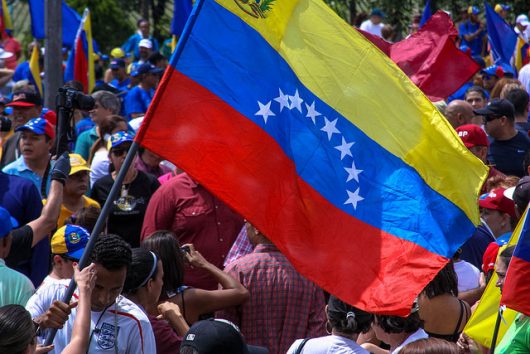
Over the past few years, Venezuelan citizens have suffered at the hands of oppressive government leaders, leading to an overall failing economy. Necessities such as food and medicine have become hard to obtain for lower and middle-class citizens. As a result, there has been a growing need for humanitarian assistance in Venezuela.

According to findings by the International Monetary Fund, Venezuela’s inflation rate reached an alarming 720 percent in 2016. This substantial rise in inflation subsequently led to an even higher rate of poverty among citizens, and an even greater need for humanitarian assistance in Venezuela.

Recent statistics from the National Survey of Living Conditions showed that the average number of Venezuelans who reported eating two or fewer meals per day increased from 11.3 percent in 2015 to 32.5 percent in 2016. Likewise, the average population reported an average increase in weight loss by more than 15 pounds due to the inability to afford adequate meals each day.

In response to this prevalent issue, U.S. Senator Ben Cardin (D-MD) and Senator Marco Rubio (R-FL) recently initiated a bill known as the “Venezuelan Humanitarian Assistance and Defense of Governance Act of 2017.” As its title suggests, one of the main goals of this bill is to provide humanitarian assistance in Venezuela. Within the bill, U.S. leaders cited that Venezuelan president Nicolas Maduro “rejected repeated requests from the Venezuelan National Assembly and civil society organizations to bring humanitarian aid into the country.” The bill also aims to protect the citizens’ human rights and the concept of democracy.

A total of $10 million has been set aside for the U.S. Committee on Appropriations to effectively carry out measures proposed in the humanitarian assistance bill. Some of these measures include providing a way to ensure that food, medicine and nutritional supplements are transported and distributed to citizens in need. Funds will further be used to improve “transparency and accountability” within Venezuelan government institutions.

– Lael Pierce

Photo: Flickr

May 21, 2017
https://borgenproject.org/wp-content/uploads/borgen-project-logo.svg 0 0 Borgen Project https://borgenproject.org/wp-content/uploads/borgen-project-logo.svg Borgen Project2017-05-21 01:30:162020-05-03 14:11:06Humanitarian Assistance in Venezuela: Efforts of US Leaders
Foreign Aid, Global Poverty

The Battle to Alleviate Global Poverty

The Battle to Alleviate Global Poverty
The Trump Administration has recently proposed severe budget cuts that will drastically reduce U.S. foreign aid in the developing world. In response to this potential risk, it is essential to identify the various developing countries that receive financial assistance that is necessary for developing the economic, political and social structures. Being able to differentiate between varying forms of foreign assistance is necessary in fully understanding what the U.S. can do to develop these struggling countries around the world.

Although foreign aid is extremely beneficial in efforts to alleviate global poverty, it is temporarily effective when compared to the long-term sustainability that is achieved through foreign investments. Nonetheless, foreign aid is extremely vital in potentially liberating a developing country from the negative consequences of recession, malnourishment and poverty. In distinguishing between foreign aid and foreign investments, it is crucial to understand how both efforts fundamentally affect the world’s poor.

Foreign aid is simply the donation of goods and services to developing countries, which generally is represented by a “cash value” articulated through the goods and services. However, alongside this aid derives contingencies for the recipient. For example, the goods and services heavily influence economic, political and ideological deviations that ultimately benefit the progression of the donor’s advancements in their worldly position.

Although this foreign aid is very resourceful during struggling times, citizens of developing countries seek more than just donations from countries around the world. The citizens strive for opportunities from development organizations to train them in various life skills that will help them lead healthy and successful lives. These developments will aim to improve their social and economic situations, giving them the tools and opportunities to raise themselves out of poverty, thus furthering the efforts to alleviate global poverty.

On the other hand, foreign investment is preferred to aid due to the long-term sustainability that accompanies the ventures made in developing countries. By investing in the encouragement of entrepreneurship, the development of small businesses and growth of financial investments, it benefits both the donors and the recipients. These investments generate economic activity and employment for not only the developing countries, but it produces additional consumer markets to boost trade within the host countries.

Nonetheless, foreign aid is an effective form of assistance for a developing country that needs immediate relief before devastating living conditions become destructive to the country’s well-being. By only lending goods and services to these developing countries instead of implementing teaching techniques, it could potentially hurt the development of encouragement and self-sufficiency overseas.

However, without foreign aid, these crisis-stricken nations would not be able to save the structural components of the countries. In order to alleviate global poverty and produce long-lasting effects on many struggling countries across the developing world, philanthropic nations need to understand that strongly investing in developing countries creates bigger impacts on furthering the world’s poor.

– Brandon Johnson

Photo: Flickr

May 20, 2017
https://borgenproject.org/wp-content/uploads/borgen-project-logo.svg 0 0 Borgen Project https://borgenproject.org/wp-content/uploads/borgen-project-logo.svg Borgen Project2017-05-20 01:30:002024-06-04 01:08:20The Battle to Alleviate Global Poverty
Aid, Foreign Aid, Global Poverty

Why Foreign Aid Budget Cuts Don’t Save Money


Among the many controversial changes to the U.S. federal budget proposed by President Trump, reductions in spending on health in foreign countries may prove the most costly. Contrary to popular opinion, the amount of money spent by the U.S. on assisting foreign countries to stay healthy is extremely small, and foreign aid budget cuts will not save the country any significant amount of money.

“It is very troubling,” said Georgetown University global health expert Lawrence Gostin. “Especially when you think of the pivotal role the U.S. has played over the years in global health. The world is lost without U.S. leadership.”

For reasons unknown, one of the most persistent myths Americans believe about the federal budget is that the government spends nearly 20 percent of it on foreign aid. In reality, even before Trump’s proposal can take effect in 2018, less than one penny of every dollar goes to foreign assistance of all types. When factoring in the gross national income, the U.S. spends a shockingly low 0.16 percent of its budget on helping improve the lives of those in developing countries.

Cutting back on foreign aid spending may actually end up costing the U.S. The outbreak of the deadly Ebola virus, which occurred between 2014 and 2016, proved that there is no such thing as an isolated national health crisis in the current global economy. In order to protect American citizens from infection, the U.S. government had to spend $2.3 billion to help contain the spread of the epidemic.

Spending on foreign aid helps to prevent catastrophic outbreaks like Ebola from happening, which consequently results in financial savings. Perhaps most importantly, foreign aid budget cuts may not save money because foreign assistance spending is not so much a charitable donation as it is an investment in the future. According to the Lancet Commission, spending on global health can provide returns of a whopping nine times the initial investment.

The good news is the proposed budget cuts remain just that: a proposal. Congress must approve the full budget before the changes take place, and representatives rely on feedback from their constituents when making decisions on important matters such as these. Securing the future of foreign aid investment may be a phone call away, and our guide to contacting local representatives is a great place to start.

– Dan Krajewski

Photo: Flickr

May 4, 2017
https://borgenproject.org/wp-content/uploads/borgen-project-logo.svg 0 0 Borgen Project https://borgenproject.org/wp-content/uploads/borgen-project-logo.svg Borgen Project2017-05-04 01:30:512024-05-28 00:00:07Why Foreign Aid Budget Cuts Don’t Save Money
Politics, Refugees and Displaced Persons

What Does the US Refugee Vetting Process Look Like?


The U.S. refugee vetting process is long and challenging. The vetting process refers to the steps a refugee follows after fleeing from his or her home country and resettling in the United States.

The process begins when a refugee flees his or her home country. Refugees flee their country of origin for various reasons.

After fleeing, a refugee usually registers with the United Nations High Commissioner for Refugees (UNHCR). The UNHCR verifies that under international law, this particular person qualifies for refugee status.

Next, the UNHCR refers the individual to a U.S. Embassy with a Refugee Processing Post. The Department of State then steps in. Many different security checks take place through different federal security agencies. A refugee undergoes more screening than any other type of traveler coming into the country.

The Department of State also has a Bureau of Population, Refugees and Migration that partners with different agencies. One of the agencies that the bureau partners with will create a document called an Overseas Processing Entity. This document is given to an officer within the United States Citizenship and Immigration Services of the United States Department of Homeland Security. The officer then interviews the refugee to determine whether or not the person legally qualifies as a refugee and can be admitted for resettlement within the U.S.

Once it is determined whether or not the individual qualifies as a refugee under U.S. law, the case returns to the Department of State’s Bureau of Population, Refugees and Migration for the final stage of approval. The refugee’s information is then forwarded to the Refugee Processing Center.

The Refugee Processing Center requests “sponsorship assurance” from one of the many refugee resettlement agencies across the country. While these last steps of the U.S. refugee vetting process take place, the refugee will be given a medical exam. He or she also receives a cultural orientation to life in the United States. Upon medical clearance,the International Organization for Migration will book a flight for the refugee.

The refugee will be met at the airport upon arrival in the United States. Now, everything becomes the responsibility of refugee resettlement agencies. A resettlement agency will have already arranged accommodation for the refugee. A staff member of a local resettlement agency will meet the refugee at the airport and take them to the accommodations. Once in the United States, refugees can take classes to learn English and find work.

The U.S. refugee vetting process is slow. Depending on the situation, the process can take anywhere between a year and a half to two years. In 2016, however, 84,995 refugees were resettled in the United States. The vetting process may be long and complicated, but the ability to resettle in the United States has changed the lives of thousands.

– Shannon Elder

Photo: Flickr

May 3, 2017
https://borgenproject.org/wp-content/uploads/borgen-project-logo.svg 0 0 Borgen Project https://borgenproject.org/wp-content/uploads/borgen-project-logo.svg Borgen Project2017-05-03 01:30:052024-12-13 17:56:45What Does the US Refugee Vetting Process Look Like?
Global Poverty

Poverty in America

Poverty in America Causes
Poverty in America is not as easily understood as it is in other parts of the world. Most Americans do not identify with what is defined as poverty and consider being poor as lacking nutritious food, housing and clothing.

According to the U.S. Census Bureau, the typical poor American has access to basic needs and wants including a car, air conditioning, cable television and other amenities.

The overall poverty rate in the U.S. is 13.5 percent — 43.1 million people. The demographics for poverty in the U.S. are measured by the federal government’s poverty threshold. Many Americans working several jobs are considered to be in poverty as well as senior citizens with fixed incomes.

Leading Causes of Poverty in America

One of the main causes of poverty in America is the shrinking of the middle class. High-paying factory jobs are leaving the U.S. and the country’s growing population cannot be supported.

Americans are also falling into poverty due to debt and the fact that they owe more than they own. They continue to take out loans at high interest rates while in low income brackets.

The National Poverty Centre has found that poverty rates are higher for families headed by single women, particularly women who are black or Hispanic. The statistics also show that 14.8 percent of women are living in poverty overall. Additionally, 24.1 percent are African-Americans, 21.4 percent are Hispanics and 9.1 percent are Caucasians.

Since the economic downturn, poverty in America had not risen until 2015, when it increased by one percent more than it was in 2007, the year before the most recent recession. Poverty in America has seen an increase as a result of the 2008 economic downturn.

– Rochelle R. Dean

Photo: Flickr

April 27, 2017
https://borgenproject.org/wp-content/uploads/borgen-project-logo.svg 0 0 Borgen Project https://borgenproject.org/wp-content/uploads/borgen-project-logo.svg Borgen Project2017-04-27 01:30:282020-05-07 17:07:07Poverty in America
Foreign Aid, Global Poverty

America’s Foreign Aid Spending


Foreign aid has been a part of American culture ever since the end of World War II. Under this modern international order, the U.S. has been able to successfully flourish and spread its message of democracy. Former Secretary of State John Kerry said, “The money we devote to international programs … amounts to just one percent of the total federal budget.”

The main piece of legislation that authorizes the use of foreign aid is the Foreign Assistance Act (FAA) of 1960. While this act provides an outline and structure for dealing with foreign aid, Congress decides on most budget decisions and distribution of funds through various bills. This year’s proposals for specific financing have already been laid out in the FAA.

In order to properly finance obligations made in the 1960 legislation pursuant to section 476, more than $1 billion is to remain available until the fall of 2018. This specific bill makes $1.7 billion accessible for assistance to foreign countries. Although this seems like a lot of money, this is an $877 million cut in aid compared to the 2016 foreign aid budget. However, aid to Eurasia will remain the same at $930 million in order to combat Russian aggression in countries like Ukraine.

Congress sets the standard and fosters the responsibility of stabilizing funds responsibly. By enforcing specific conditions on the distribution of foreign aid, international goals can be successful. This affords leverage in critical situations of destabilization, like negotiating democracy with countries that erupt into a military coup.

Destabilization of a nation can reduce access to basic health services. Through the effort of international funding, governments can “control pandemics before they reach our shores.” The current budget that the U.S. Congress has agreed on includes $8 billion toward funding worldwide healthcare initiatives. A portion of this money was used to successfully implement the President’s Emergency Plan for Aids Relief (PEPFAR), ultimately ending child and maternal deaths that previously had been unavoidable.

In addition, supporting the international community allows for the stabilization of nations and prevents the spread of terrorist activity. In the current 2017 budget, $71.1 billion is to be distributed in order to combat terrorist networks like the Islamic State of Iraq and the Levant (ISIL) and Al Qaeda.

Through international efforts, nations have been assisted from destabilization and diseases have been contained. The budget plan for foreign assistance this year will be distributed appropriately once budget decisions are finalized and approved.

– Nick Katsos

Photo: Flickr

April 23, 2017
https://borgenproject.org/wp-content/uploads/borgen-project-logo.svg 0 0 Borgen Project https://borgenproject.org/wp-content/uploads/borgen-project-logo.svg Borgen Project2017-04-23 01:30:542024-12-13 17:57:52America’s Foreign Aid Spending
Page 8 of 17«‹678910›»

Get Smarter

  • Global Poverty 101
  • Global Poverty… The Good News
  • Global Poverty & U.S. Jobs
  • Global Poverty and National Security
  • Innovative Solutions to Poverty
  • Global Poverty & Aid FAQ’s
Search Search

Take Action

  • Call Congress
  • Email Congress
  • Donate
  • 30 Ways to Help
  • Volunteer Ops
  • Internships
  • Courses & Certificates
  • The Podcast
Borgen Project

“The Borgen Project is an incredible nonprofit organization that is addressing poverty and hunger and working towards ending them.”

-The Huffington Post

Inside The Borgen Project

  • Contact
  • About
  • Financials
  • President
  • Board of Directors
  • Board of Advisors

International Links

  • UK Email Parliament
  • UK Donate
  • Canada Email Parliament

Get Smarter

  • Global Poverty 101
  • Global Poverty… The Good News
  • Global Poverty & U.S. Jobs
  • Global Poverty and National Security
  • Innovative Solutions to Poverty
  • Global Poverty & Aid FAQ’s

Ways to Help

  • Call Congress
  • Email Congress
  • Donate
  • 30 Ways to Help
  • Volunteer Ops
  • Internships
  • Courses & Certificates
  • The Podcast
Scroll to top Scroll to top Scroll to top