• Link to X
  • Link to Facebook
  • Link to Instagram
  • Link to TikTok
  • Link to Youtube
  • About
    • About Us
      • President
      • Board of Directors
      • Board of Advisors
      • Financials
      • Our Methodology
      • Success Tracker
      • Contact
  • Act Now
    • 30 Ways to Help
      • Email Congress
      • Call Congress
      • Volunteer
      • Courses & Certificates
      • Be a Donor
    • Internships
      • In-Office Internships
      • Remote Internships
    • Legislation
      • Politics 101
  • The Blog
  • The Podcast
  • Magazine
  • Donate
  • Click to open the search input field Click to open the search input field Search
  • Menu Menu

Tag Archive for: United States

Posts

Global Poverty, USAID

Working to End Neglected Tropical Diseases

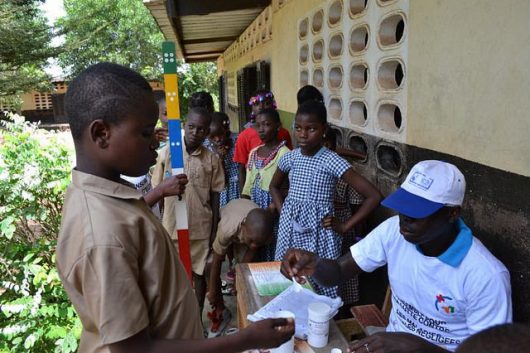
End Neglected Tropical DiseasesPrevalent in more than 149 countries, Neglected Tropical Diseases (NTDs) are a range of parasitic and bacterial diseases that affect more than a billion people across the world. Neglected Tropical Diseases disproportionately target poor and vulnerable populations in tropical areas, and if not treated, can often lead to physical and intellectual impairments. Fortunately, humanitarian organizations such as USAID are working alongside U.S. Congress in order to end Neglected Tropical Diseases.

Typically caused by inadequate sanitation and lack of clean drinking water, NTDs vary in their effect but can prove detrimental, especially in children. These diseases can impair intellectual development in children as well as cause blindness and other physical disabilities. The health costs are not the problem caused by NTDs, as they also reduce school enrollment and prevent economic progress because infected individuals are limited in ability. This is why it is critical to end Neglected Tropical Diseases.

USAID is leading the global fight against NTDs. It implemented large-scale treatment programs and research for the affected countries. In the past 10 years, the U.S. made great progress in this fight, giving more than $11.1 billion in donated medicines. This contribution provided more than 1.6 billion treatments to approximately 743 million individuals.

The U.S. impact does not end there. In addition to the treatment programs and research implemented by USAID, Congress also prioritized this issue by introducing the End Neglected Tropical Diseases Act (H.R. 1415).

H.R. 1415, sponsored by Representative Christopher Smith (D-NJ), advances the current program working against NTDs. This act prioritizes improving the current program by monitoring funding, including morbidity management in treatment plans and expanding research development. So far, this act has five cosponsors and was referred to three House sub-committees.

Although USAID led a strong battle against NTDs, there is still much work to be done for the one billion people affected by this problem. As NTDs are slowly eradicated, the livelihoods of the world’s poor will begin to improve as children can return to school and adults are able to achieve financial stability.

– Kelly Hayes

Photo: Flickr
August 13, 2017
https://borgenproject.org/wp-content/uploads/borgen-project-logo.svg 0 0 Borgen Project https://borgenproject.org/wp-content/uploads/borgen-project-logo.svg Borgen Project2017-08-13 01:30:382024-05-28 00:15:24Working to End Neglected Tropical Diseases
Global Poverty, Politics

President Trump’s Buy American Laws

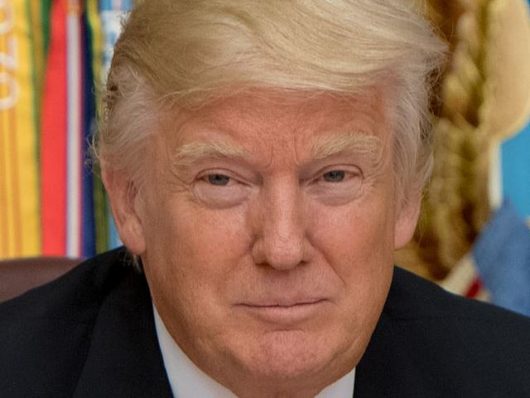
Buy American LawsThe Trump administration is dusting off Depression-era laws to advance its “America First” agenda. The aptly-named “Buy American” laws require firms to buy U.S. materials when manufacturing military equipment.
In 2013, $20 billion went to foreign entities, roughly 6.4 percent of military spending. That money is spent largely on raw materials like lumber, fuel and construction materials from Canada and other allies. The enforcement of these 80-year-old laws would force the government to spend that money within the states.

While 6.4 percent isn’t a large chunk of total expenditures, the concern is the message it could send to U.S. allies when they are cut out. Bill Greenwalt, a former Defense Department procurement secretary believes that by cutting out allies, the U.S. will spark retaliation legislation. Many nations depend on the U.S. for military goods. Buy American laws could kick off many global domestic purchasing regimes and ultimately hurt U.S. sales abroad.

Furthermore, those regimes could end up not being specifically military equipment. An domestic purchasing agenda could instigate allies and developing markets to look inward or to each other for goods and put up trading barriers to the U.S. such as quotas and tariffs.

If the U.S. positioned itself to try its hand at grand-scale manufacturing and set up the tariffs favorable to domestic manufacturers, U.S. consumers and developing nations could suffer. For the U.S. consumer, prices of normally imported goods such as clothing, pharmaceuticals and cell phones could increase. Many middle and lower class citizens would feel the strain of these price increases and the overall standard of living would see a decline.

Developing nations could suffer as manufacturing and exporting goods to developed neighbors are one of the biggest staples of economic activity. Favoring domestic production to the purchase of fair trade goods from these nations could stunt their economies and put their citizens at higher risk of falling into poverty.

For both the U.S. and our trading partners, Buy American laws could be a game of mutually assured economic stagnation. Manufacturers and consumers everywhere could feel the burden.

– Thomas Anania

Photo: Google

August 12, 2017
https://borgenproject.org/wp-content/uploads/borgen-project-logo.svg 0 0 Borgen Project https://borgenproject.org/wp-content/uploads/borgen-project-logo.svg Borgen Project2017-08-12 01:30:532020-07-17 15:08:12President Trump’s Buy American Laws
Education, Human Rights, Technology

Closing the Gap in Global Education

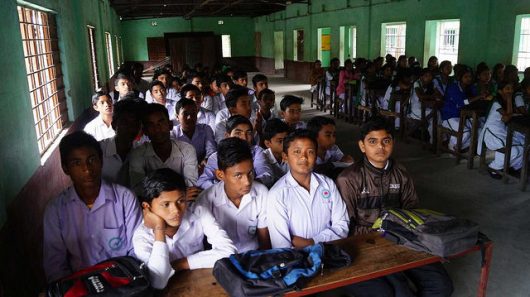
Closing the Gap in Global EducationDebates about education often center on the quality of public schools, diminishing budgets, scarce resources and technological provisions in the United States. While a focus on domestic educational issues is commendable and necessary, there is a grimmer picture across the world. According to the World Inequality Database on Education, fewer than 50 percent of the poorest children have completed primary school in 39 out of 88 countries. The economic productivity and social quality of life of any country depends on its educated population, and closing the gap in global education is the key to global prosperity, safety and stability.

Indeed, education can eliminate bigger problems such as poverty, inequality, insecurity and disease. Equal access to a quality education, including access to content and means of delivering instruction and following a set curriculum, remains an unrealized dream and a struggle for many.

The last two centuries have seen an exponential increase in the number of children attending primary school globally, from 2.3 million to 700 million today. What is troubling is that children in the poorest households of developing nations, those arguably most in need of educational opportunities, are four times as likely to be out of school as those in the wealthiest households.

It is going to take another 100 years for children in developing countries to reach the education level of their counterparts in developed countries.

Access to a quality education remains a basic building block to success. Current approaches to educational equity necessitate a fundamental rethinking in that they must take into account that many children are unable to go to school because schools simply do not exist in parts of developing countries.

If schools do exist, teachers may lack proper training and simply be incapable of handling the demands of a classroom setting. Furthermore, barriers inherent in certain areas, such as societal demands and expectations, can hamper learning outside the classroom.

Technological tools and resources ignite curiosity and promote more efficient, up-to-date learning. A huge growth in social media platforms can certainly be aligned with classroom activity and curriculum, establishing more innovative ways for students and teachers to learn about global issues.

Though technology makes learning opportunities more widely accessible by decreasing the significance of geographical boundaries, a lack of technological infrastructure means that many children are deprived of the digital educational resources taken for granted in developed nations. For these students, the difficulty of closing the gap in global education comes with an additional cost: loss of productivity.

In 2015, the United Nations heavily promoted the Millennium Development Goals to achieve free universal primary education for all children by the year’s end.

Although it was unfortunate that the pace of improvement by countries could not keep up with the desire to have universal primary education, the primary school net enrollment rate did reach over 90 percent, and the number of out-of-school children fell from 100 million in 2000 to 57 million in 2015 . Movement toward closing the gap in global education is signified by the fact that not a single country in the world today is completely without a schooling system.

Today’s economy is knowledge-based and highly competitive. Schools in developed nations are entrusted with students who lack neither skills nor talents, but educational opportunities.

Some factors are beyond students’ control, such as where they were born and what their financial means are. But with the recent advancements in educational models, global education disparity can meaningfully be addressed and mitigated.

– Mohammed Khalid

Photo: Flickr

August 6, 2017
https://borgenproject.org/wp-content/uploads/borgen-project-logo.svg 0 0 Kim Thelwell https://borgenproject.org/wp-content/uploads/borgen-project-logo.svg Kim Thelwell2017-08-06 07:30:192024-05-28 00:15:12Closing the Gap in Global Education
Aid, Global Poverty

The 2018 Federal Budget Threatens the Peace Corps

2018 Federal Budget Threatens the Peace Corps
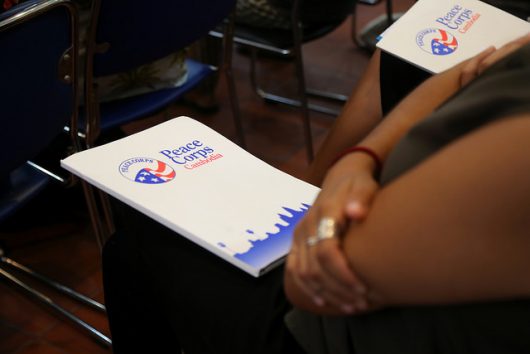
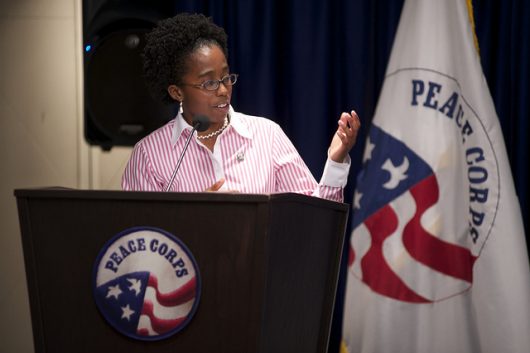
Most of the coverage of President Trump’s “America First” foreign policy has focused on budget cuts to foreign aid and drastic changes to USAID. Often overlooked among the alarming changes proposed by the president are the potential cuts to national service programs such as the Peace Corps. Since the 1960s, the Peace Corps has served as an important service that the United States offers to developing nations. The proposed 2018 federal budget threatens the Peace Corps with a 15% funding cut.

President John F. Kennedy founded the Peace Corps in 1961. The Peace Corps Mission has three goals: to help people in other countries; to encourage a better understanding of Americans; and for Americans to better understand others. The programs consist of three months of training and two years of service in an assigned country. Since its inception, almost 220,000 volunteers have served in 141 developing countries.

In the past half-century, the Peace Corps has run a variety of initiatives to meet the specific needs of developing countries. Peace Corps volunteers currently serve in over 60 countries, mostly in Latin America, Africa, Eastern Europe and Southeast Asia.

Ongoing initiatives include fighting HIV/AIDS; combatting hunger; protecting the environment and improving access to technology. One of the newest Peace Corps programs is Let Girls Learn. Led by former first lady Michelle Obama, this initiative aims to help girls around the world gain better access to education and prevent pregnancy at a young age.

The benefits of the Peace Corps go both ways. More than just providing foreign financial aid, the Peace Corps helps and instructs local populations to be healthier, more equitable and more sustainable. In turn, the volunteers that provide these services receive job and language skills in addition to an important cultural and learning experience.

President Trump cited balancing the national budget and emphasizing national security as reasons for the funding cuts. However, foreign aid funding currently takes up less than one percent of the national budget. This move is as unlikely to balance the budget as it is to strengthen national security. Goodwill missions like the Peace Corps improve U.S. relations with developing countries. And efforts that help stabilize these areas preempt extremism and other national security threats.

Assisting the Peace Corps is hardly most Americans’ top priority, but it is an effective government agency that benefits developing nations, young Americans and U.S. interests. Since the 2018 federal budget threatens the Peace Corps, U.S. citizens would do well to highlight the importance of the Peace Corps to their elected officials and urge them to secure Peace Corps funding in 2018.

– Bret Anne Serbin

Photo: Flickr/span>

August 3, 2017
https://borgenproject.org/wp-content/uploads/borgen-project-logo.svg 0 0 Borgen Project https://borgenproject.org/wp-content/uploads/borgen-project-logo.svg Borgen Project2017-08-03 01:30:102024-06-05 04:10:46The 2018 Federal Budget Threatens the Peace Corps
Aid, Global Poverty

US Donates $60 Million to Syria Recovery Trust Fund

Syria Recovery Trust Fund
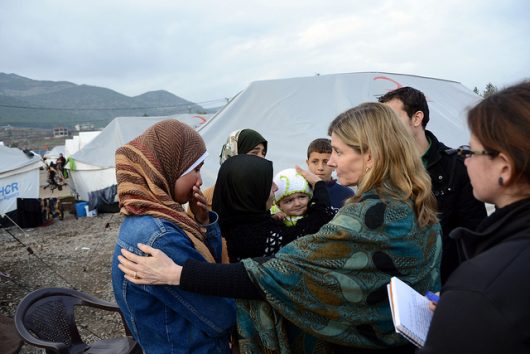
As the death toll and damage continues to rise in Syria, nations rush to take action, whether military or monetary. In this effort, the United States Agency for International Development (USAID) has approved $20 million of further funding towards the Syria Recovery Trust Fund (SRTF) at a recent SRTF board meeting in Washington, DC. This brings the U.S. total contribution up to $60 million, whereby the U.S. donated $15 million initially, $15 million more in 2015, and $10 million in 2016. The organization is heavily reliant on its international donors and has up to date received $215 million in funds. Germany, Japan, Kuwait and France are some of the next biggest contributors after the U.S.

The Syria Recovery Trust Fund works with the current interim government and local groups to create transparent projects in Syria. This includes recovery initiatives and working with resident service providers to restore essential services such as electricity, water and sanitation, food security and waste removal in opposition-controlled territories. Hence, the SRTF focuses in these divisions alongside health and education and under particular circumstances agriculture, transportation and housing. Already looking to the future, they hope to shift their attention to rebuilding Syria’s infrastructure once fighting ceases.

Created by the Group of Friends of the Syrian People and its Working Group on Economic Recovery and Development and signed into practice in 2013, the Syria Recovery Trust Fund has already played a valuable role in the region. The group has successfully contracted engineers and equipment to expand electrical grids and water pipelines, restored medical clinics, supplied medical tools, and provided materials to improve production and storage of wheat harvests. Subsequently, they have helped more than two million Syrians progress and recover.

The newest contribution from the USAID will go to Syria Recovery Trust Fund interventions in newly liberated areas. The aid has paved a way for Syria and its people to rise from the rubble shortly again.

– Zar-Tashiya Khan

Photo: Flickr

August 2, 2017
https://borgenproject.org/wp-content/uploads/borgen-project-logo.svg 0 0 Borgen Project https://borgenproject.org/wp-content/uploads/borgen-project-logo.svg Borgen Project2017-08-02 07:30:082024-05-28 00:03:32US Donates $60 Million to Syria Recovery Trust Fund
Global Poverty

The Cost of Living in Peru Versus the United States


In the United States, the first image of Peru that might come to mind is Machu Picchu or an equally stunning mountainous view. Stereotypes aside, those sorts of natural monuments mask the growing economy and standard of living in Peru.

Peru was listed as the 20th most free economy in the world as of 2015, progressing slightly slower than Chile, its southern neighbor. This is due to the decreasing value of copper, gold, silver and other major exports in Peru.

One characteristic of economic growth in poorer countries is that eventually places of historical and cultural values will begin to be preserved even at the expense of population growth or economic growth. For example, a new highway project in Lima was altered in order to prevent the destruction of a historical site.

Due to this growth, Peru is now in a sweet spot where the standard of living is decently high and the cost of living is low. Outside of Lima, $2,000 per month would cover one’s basic expenses. While living in Peru, international supermarkets cost more than grocery shopping at a local market. Interestingly enough, going out to eat at local restaurants often costs even less than shopping and cooking for oneself. You can get a three-course meal for three dollars at a local Picanteria.

One source puts costs of Peru and the United States against each other, and overall, consumer prices in Peru are 45.61% lower than in the United States. Paying rent is 60.37% lower than in the U.S. and paying for groceries is 50.71% lower than in the U.S. Living in Peru makes it easy to stick to a budget.

For anyone looking to retire in Peru, it’s possible to do so at $500 per month, though this makes extremely frugal living necessary. However, Peru is still one of the least expensive places to live in South America and one of the nicest.

– Ellen Ray

Photo: Flickr

July 26, 2017
https://borgenproject.org/wp-content/uploads/borgen-project-logo.svg 0 0 Borgen Project https://borgenproject.org/wp-content/uploads/borgen-project-logo.svg Borgen Project2017-07-26 07:30:442020-06-25 06:48:07The Cost of Living in Peru Versus the United States
Aid, Global Poverty

All About the Peace Corps

Peace Corps
President John F. Kennedy established the Peace Corps in 1961. The group is a government program that Americans are encouraged to participate in if they are passionate about seeing a change in the world.

The Peace Corps’ “work at the forefront of change is turning the world’s challenges into shared triumphs.” Their mission is twofold: to make lasting relationships with countries abroad and to serve the international communities that need it the most.

This government agency would not be where it is today without its team of volunteers. Since the beginning, the Peace Corps received over 220,000 volunteers.

Serving as a volunteer in the Peace Corps, one embarks on a two-year journey to a foreign country in need of help. The program makes sure that each volunteer can contribute something special by utilizing his or her specific skills.

Not only do volunteers make a difference in the lives of the community members they are serving, but they also acquire self-knowledge and perspective that cannot be taught.

In the words of a Corps volunteer, “the cultural humility and wide-lens perspective I gained in Uganda will echo through everything I do in my own country.”

Each volunteer can recall different aspects of serving in the Peace Corps that were fundamental to forming their being: strength, dedication, hard work or communication.

With their team of dedicated volunteers, the Peace Corps has helped over 60 countries in many different fields. Examples include agriculture, the environment, economic development, health, education and youth development.

So, is the Peace Corps truly making a difference? Yes, on many levels. There are daily success stories, small and big, from volunteers and workers in the Peace Corps. Whether this is educating a mother about proper nutrition for her baby or eliminating malaria in African communities, each success is worthy of celebration.

– Sydney Missigman

Photo: Flickr

July 24, 2017
https://borgenproject.org/wp-content/uploads/borgen-project-logo.svg 0 0 Borgen Project https://borgenproject.org/wp-content/uploads/borgen-project-logo.svg Borgen Project2017-07-24 07:30:282020-06-18 08:24:57All About the Peace Corps
Global Poverty, Politics, Sustainable Development Goals

Progress Thus Far on the Sustainable Development Goals of 2030

Sustainable Development Goals of 2030
When it comes to reaching the Sustainable Development Goals of 2030 that would eradicate extreme global poverty, rich countries are lagging behind.

Scandinavian countries are leading the way among 157 nations ranked by the Sustainable Development Solutions Network (SDSN). The United States is ranked 42 in the list while Russia was ranked 62 and China 71. The Bertelsmann Foundation, which looks at global challenges to recommend solutions for pressing political, economic and social issues, says that the most developed countries need to speed up to complete their end on the Sustainable Development Goals of 2030.

“A rising ‘my country first’ approach by many heads of government threatens the realization of the SDGs,” according to the SDSN. As reported by Reuters, the countries that are most on track with meeting the Sustainable Development Goals of 2030 are Sweden, Denmark, Finland and Norway.

“Leaders at the G20 summit in Hamburg must strengthen the commitment towards these historic global goals,” reads the headline posted by the Bertelsmann Foundation. It released a story on countries not in line with meeting their Sustainable Development Goals right before the G20 Summit in Germany. The foundation’s goal is to have this dilemma addressed by the major world leaders at the G20 Summit.

The problem is that the Sustainable Development Goals of 2030 are just goals that aren’t mandatory. Therefore, countries may not have this as a priority, or might not even plan on fulfilling them at all. This is why it is so important to lobby policymakers and contact representatives to let them know where about important issues such as these.

– Vicente Vera

Photo: Flickr

July 24, 2017
https://borgenproject.org/wp-content/uploads/borgen-project-logo.svg 0 0 Borgen Project https://borgenproject.org/wp-content/uploads/borgen-project-logo.svg Borgen Project2017-07-24 01:30:212024-05-28 00:03:09Progress Thus Far on the Sustainable Development Goals of 2030
Aid, Global Poverty

World Reaches Out and Provides Aid to Marawi


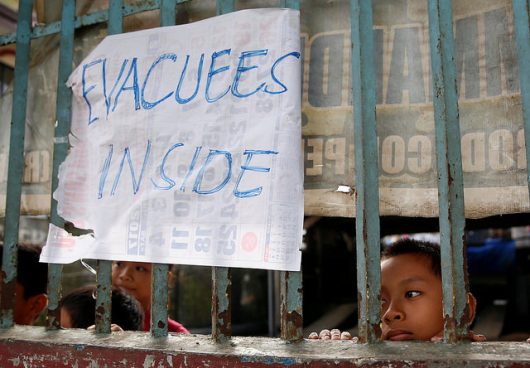
Nearly two months have passed since the conflict with Islamic State terrorist groups began in the Philippines city of Marawi, but its government has hope for a conclusion soon. In the last month, major nations, including Australia, China and South Korea have made large contributions of aid to Marawi aimed to assist the civilians affected by the violence.

South Korea announced on July 5 that it would be giving aid in the form of $1 million to the victims in Marawi City. In a statement regarding the donation, Korean Ambassador Kim Jae-shin stated, “On behalf of the Korean government, I would like to extend my sympathy to all evacuees of Marawi City. Our donation, even if it’s not big…is a token of our friendship with the Philippines.”

With a death toll that recently topped 500 and over 183,500 individuals forced from their homes, the crisis is far from over.

On June 27, China donated $3 million in relief funds to the besieged city. The money was directed to the city’s health and social development department in hopes of helping those who have been displaced or whose homes have been destroyed.

Australia also made contributions totaling approximately $7 million. In a statement on June 20, Foreign Minister Julie Bishop firmly stated that the Australian government will stand strong beside the Philippines to fight terrorism. The donated aid packages included items such as food, sleeping mats, mosquito nets and sanitary supplies.

The conflict began on May 23, after government troops found the hideout of an ISIS leader, Isnilon Hapalon, in the city. When his men called for backup from the Maute, another radical Islamist group, a gunfight began.

The United States became involved in the conflict at the beginning of June as well, providing technical assistance and military aid to Marawi. According to a recent report, American forces are not currently engaged in combat in the city.

– Emily Trosclair

Photo: Flickr

July 23, 2017
https://borgenproject.org/wp-content/uploads/borgen-project-logo.svg 0 0 Borgen Project https://borgenproject.org/wp-content/uploads/borgen-project-logo.svg Borgen Project2017-07-23 07:30:412024-12-13 17:58:22World Reaches Out and Provides Aid to Marawi
Global Poverty, Refugees

Room for Hope Amid the Refugee Ban Rollout

Good News Amid the Refugee Ban Rollout
The number of refugees around the world is at an all-time high. There are currently 22.5 million people seeking refuge from their home countries. Fifty-five percent of these refugees hail from only three countries: Syria, Afghanistan and South Sudan. Most of these refugees are women and children. Children alone make up about half of all the world’s refugees. The Supreme Court’s approval of the refugee ban is bad news for these millions of people, but there is still good news in the way the ban is being rolled out.

Since his days on the campaign trail, President Trump has promised to make entry into the United States difficult for refugees. However, the road to a total blockade of all refugees has been a rocky one. President Trump originally signed Executive Order 13769 on January 27. The order initially intended to reduce the number of annual refugees from 100,000 to 50,000, suspend the U.S Refugee Admissions Program for 120 days and temporarily ban all Syrian refugees. The travel ban was met with mass protests at airports across the country and challenges from numerous judges. Amid this backlash, the Trump administration eased and then suspended the ban in March. It was not until June 26 that the Supreme Court finally approved Executive Order 13780, a revised version of the ban.

The revised travel ban is not as stringent as its predecessor, but it still suspends all refugee resettlement in the U.S. for 120 days. The good news amid the refugee ban is that only a week after it was approved, it already faces obstacles. The cut-off date for all refugee entry into the United States may be pushed back. Estimates project that it could take at least an extra week before the ban actually goes into effect.

The same legal challenges that initially plagued the first executive order persist in the face of the refugee ban. Immigrant, refugee and human rights groups are all pushing back against the ban. Federal judges have also issued challenges to the legality of the ban and the ambiguity of its interpretation. The guidelines allow for the entry of refugees with a “bona fide relationship” to “close family” in the U.S. The blurry lines of “close family” ties and “bona fide relationships” have complicated the implementation of the ban in U.S. embassies. All of these challenges offer points of hope for refugees.

The worldwide refugee crisis is dire and the refugee ban only threatens to worsen the situation. However, even as the order goes into effect, there is still hope for the many refugees who wish to resettle in the United States.

– Bret Anne Serbin

Photo: Flickr

July 21, 2017
https://borgenproject.org/wp-content/uploads/borgen-project-logo.svg 0 0 Borgen Project https://borgenproject.org/wp-content/uploads/borgen-project-logo.svg Borgen Project2017-07-21 07:30:252024-05-28 00:03:01Room for Hope Amid the Refugee Ban Rollout
Page 6 of 17«‹45678›»

Get Smarter

  • Global Poverty 101
  • Global Poverty… The Good News
  • Global Poverty & U.S. Jobs
  • Global Poverty and National Security
  • Innovative Solutions to Poverty
  • Global Poverty & Aid FAQ’s
Search Search

Take Action

  • Call Congress
  • Email Congress
  • Donate
  • 30 Ways to Help
  • Volunteer Ops
  • Internships
  • Courses & Certificates
  • The Podcast
Borgen Project

“The Borgen Project is an incredible nonprofit organization that is addressing poverty and hunger and working towards ending them.”

-The Huffington Post

Inside The Borgen Project

  • Contact
  • About
  • Financials
  • President
  • Board of Directors
  • Board of Advisors

International Links

  • UK Email Parliament
  • UK Donate
  • Canada Email Parliament

Get Smarter

  • Global Poverty 101
  • Global Poverty… The Good News
  • Global Poverty & U.S. Jobs
  • Global Poverty and National Security
  • Innovative Solutions to Poverty
  • Global Poverty & Aid FAQ’s

Ways to Help

  • Call Congress
  • Email Congress
  • Donate
  • 30 Ways to Help
  • Volunteer Ops
  • Internships
  • Courses & Certificates
  • The Podcast
Scroll to top Scroll to top Scroll to top