• Link to X
  • Link to Facebook
  • Link to Instagram
  • Link to TikTok
  • Link to Youtube
  • About
    • About Us
      • President
      • Board of Directors
      • Board of Advisors
      • Financials
      • Our Methodology
      • Success Tracker
      • Contact
  • Act Now
    • 30 Ways to Help
      • Email Congress
      • Call Congress
      • Volunteer
      • Courses & Certificates
      • Be a Donor
    • Internships
      • In-Office Internships
      • Remote Internships
    • Legislation
      • Politics 101
  • The Blog
  • The Podcast
  • Magazine
  • Donate
  • Click to open the search input field Click to open the search input field Search
  • Menu Menu

Tag Archive for: United States

Posts

Global Poverty

US and Denmark Team Up to Fund African Renewable Energy Projects


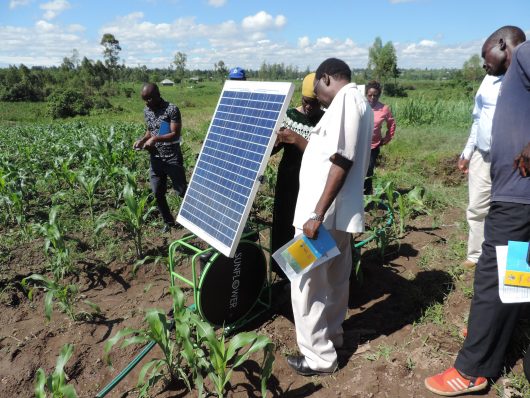
The African Renewable Energy Fund (AREF) was created in March 2014. The US and Denmark committed $100 million dollars to the fund, which was created to diversify Africa’s energy portfolio through funding and providing technical support for renewable energy projects.

The fund invests in hydro, wind, geothermal, solar, biomass and waste gas projects that connect to the greater African energy grid or local energy grids. Berkeley Energy manages AREF and has successfully doubled the initial investment, reaching an operational budget of $200 million. This was made possible through multi-lateral partnerships and investments from the African Development Bank (AfDB), African Biofuel and Renewable Energy Company (ABREC), Nederlandse Financierings-Maatschappij voor Ontwikkelingslanden N.V. (FMO), the Calvert Foundation and many others.

In the past few years, the Sustainable Energy Fund for Africa, (SEFA) has committed one million dollars to Green Mini-Grids in Gambia, one million dollars to a community-owned hydropower project in Kenya and $870,000 to Tanzania’s Renewable Energy Investment Facility. In addition, they funded the first-ever Biomass Gasification Project in Uganda.

Access to energy is arguably the only true equalizing catalyst for development. According to the Food and Agriculture Organization of the United Nations (FAO), there is a direct correlation between the amount of energy used per capita and the average life expectancy in a country. As energy consumption increases, life expectancy rates increase in turn.

There is currently a race to implement clean energy in Africa among development contractors and development banks. This is in order to raise the quality of life without adding greenhouse gases into the atmosphere. Every year, 5.5 million people die prematurely from air pollution-related illnesses. If Africa diversifies its energy portfolio at this early stage of energy infrastructure development by installing renewable energy technologies instead of traditional coal-fired power plants, it could save millions of lives on the continent from pollution-related deaths, and continue to benefit economically from its carbon credit cap and trade practices.

– Josh Ward

Photo: Flickr

March 16, 2017
https://borgenproject.org/wp-content/uploads/borgen-project-logo.svg 0 0 Borgen Project https://borgenproject.org/wp-content/uploads/borgen-project-logo.svg Borgen Project2017-03-16 01:30:102024-12-13 17:57:37US and Denmark Team Up to Fund African Renewable Energy Projects
Development, Global Health

US Benefits of Global Health Initiatives


Healing the sick and preventing disease worldwide are more than merely altruistic goals: they contribute directly to the economic and physical prosperity of the U.S. as a whole. Here are three U.S. benefits of global health initiatives:

1. Prevention is cheap, while intervention is expensive. The Ebola crisis in West Africa between 2014 and 2016 incurred enormous costs worldwide to contain the spread of the virus. According to the Centers for Disease Control and Prevention (CDC), the U.S. alone spent a whopping $2.37 billion responding to the epidemic. By contrast, the U.S. spends no money at all treating smallpox, because preventative measures such as vaccines and education have eradicated the disease entirely. Moreover, the cost of effective aid is surprisingly low. The less than one percent of the U.S. federal budget that goes to foreign aid has resulted in a 60% reduction in reported deaths from malaria.

2. Healthy populations overseas keep Americans healthy. The modern highly globalized environment, which includes growth in short term travel and international transport of goods, makes communicable diseases likelier than ever before to become cross-continent pandemics. Investing in global health helps to ensure U.S. citizens are kept safe from exposure to diseases with the potential to become epidemics. This is a well-known fact in the medical world, as the concept of community immunity, more commonly known as herd immunity, prevents infectious diseases from reaching those even with the most vulnerable immune systems. Each case of Ebola, SARS (severe acute respiratory syndrome), influenza or any other similar virulent infection prevented in Africa is one less threat to an American citizen at risk. The physical health of the American people is one more of many U.S. benefits of global health initiatives.

3. Healthy people make good consumers of American products. Every person living in extreme poverty can result in an opportunity to create a productive member of economic society. As people emerge from struggling with subsistence living and gain access to more money, they create demand for products and services that can be created in America. This directly results in a financial boon to the local U.S. economy. Foreign aid is not just charity; it is an investment in the expansion of the free market. In fact, global health experts estimate that for every one dollar invested in global health, the U.S. is repaid 20 dollars.

Recent political shifts in the U.S. and England have caused concern among philanthropists that the issue of foreign aid, which has long been bipartisan, is at risk of being politicized. Bill Gates told USA Today on February 14: “If you interpret America First (the campaign tagline of President Trump) in certain ways, it would suggest not prioritizing the stability of Africa and American leadership.” Despite these fears, hope remains among experienced proponents of global health initiatives that these new administrations will view global health initiatives as long term investments in their home countries.

– Dan Krajewski

Photo: Flickr

March 4, 2017
https://borgenproject.org/wp-content/uploads/borgen-project-logo.svg 0 0 Borgen Project https://borgenproject.org/wp-content/uploads/borgen-project-logo.svg Borgen Project2017-03-04 01:30:292024-12-13 17:56:44US Benefits of Global Health Initiatives
Global Poverty

How to Remove a US President from Office

How to Remove a U.S. President from Office
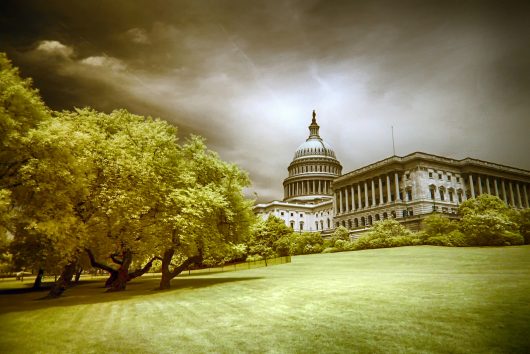
The American government provides avenues on how to remove a U.S. president from office. These are the three primary reasons: criminal activity, inability to perform presidential duties and lack of party and public popularity.

Criminal Activity

One way to remove a U.S. president from office is through impeachment and consecutive conviction. This method is intended to be implemented should the president commit a crime. The president has the same rights of due process as any other legal defendant, and therefore must be indicted of an actual crime, which involves violating a law that was passed prior to him committing the crime.

The impeachment process requires agreement between both legislative bodies. The House of Representatives requires a simple majority, more than 50% of the vote, to impeach. The Senate requires a two-thirds majority.

Congress has impeached two presidents in the nation’s history. Congress impeached the 17th president, Andrew Johnson, after he replaced Secretary of War Edwin M. Stanton with General Ulysses S. Grant because this violated the Tenure of Office Act.

Congress impeached the 42nd president Bill Clinton on charges of perjury and obstruction of justice following Clinton’s testimony of his extramarital affair during a sexual harassment lawsuit filed against him by Arkansas state employee Paula Jones.

Congress did not convict Johnson nor Clinton, however, and they remained in office.

Inability to Perform Presidential Duties

Another enumerated power which facilitates the removal of a U.S. president is the 25th Amendment to the Constitution. This amendment allows the president to voluntarily step aside if he feels he may be physically or emotionally unable to perform presidential duties.

The amendment states the president’s cabinet may transfer the powers of the president to the vice president as determined by a majority vote. If the president challenges this decision, Congress determines whether to restore the president to power. In the absence of a two-thirds vote in both houses, the president returns to power. Congress has never fully implemented this method of removal.

This provision of the 25th Amendment, implemented as a safeguard should the president become unable to fulfill his duties, works as a contingency if the president becomes incapacitated or unable to resign. This provision also applies if the president is captured or kidnapped and unable to act or if concerns arise that the president may not be mentally able to continue his term.

Lack of Party and Public Popularity

Last but not least, the president could be denied a second term in one of two ways: by the president’s own party, should it choose to nominate someone else in the next presidential election, or by voters who contribute to the president’s loss in the next election.

Since World War II, three U.S. presidents have lost the election for their second term: presidents Gerald Ford, Jimmy Carter and George H. W. Bush.

The government provides multiple avenues on how to remove a U.S. president from office. These account for the variety of circumstances which may warrant a removal.

– Casie Wilson

Photo: Flickr

February 26, 2017
https://borgenproject.org/wp-content/uploads/borgen-project-logo.svg 0 0 Borgen Project https://borgenproject.org/wp-content/uploads/borgen-project-logo.svg Borgen Project2017-02-26 01:30:422020-05-27 13:02:44How to Remove a US President from Office
Global Poverty

What Are the Criteria for Impeaching a President?

 Impeaching a President
Article two, section four of the U.S. Constitution states that a president may be removed from office through the process of impeachment “for, and conviction of, treason, bribery, or other high crimes and misdemeanors.”

Formal criteria for impeaching a president begins in the House of Representatives and is delegated among the House Judiciary Committee. If the House Judiciary Committee finds an appropriate reason for bringing formal charges against the president, a vote is taken within the House requiring a single vote for approval.

Once approved, the House Judiciary Committee gathers all evidence and witness testimony necessary for an inquiry. The Committee Counsel, the Minority Committee and the House Judiciary Committee carry out witness interrogations, then prepare articles of impeachment detailing the offenses. Committees then cast a final vote and deliver results to the House for deliberation. If the articles of impeachment reach approval, the president is indicted and a motion for trial goes to the Senate.

During an impeachment trial, the Senate serves as the jury, with the U.S. Supreme Court Chief Justice presiding. Members of Congress are appointed as managers, or prosecutors. Successful impeachment is decided by a two-thirds majority vote from the Senate, thus removing the sitting president from office and replacing him with the vice president.

Impeaching a president requires thorough deliberation by Congress, though what definitively constitutes an impeachable offense is questionable. Congressman Gerald Ford (1970) described an impeachable offense as “whatever a majority of the House of Representatives considers it to be at a given moment in history.” The complexity of impeachment explains why only three presidents — Johnson (1868), Nixon (1974) and Clinton (1998) — have gone through impeachment proceedings.

Congress structured the criteria for impeaching a president so that a sitting president can be held accountable for their actions. Following the election season and recent presidential inauguration, President Trump is facing extensive scrutiny regarding looming lawsuits, foreign business deals and the withholding of federal tax returns. However, to date, there is no evidence that impeachment proceedings will be pursued.

– Amy Williams

Photo: Flickr

February 24, 2017
https://borgenproject.org/wp-content/uploads/borgen-project-logo.svg 0 0 Borgen Project https://borgenproject.org/wp-content/uploads/borgen-project-logo.svg Borgen Project2017-02-24 01:30:292020-05-28 11:49:25What Are the Criteria for Impeaching a President?
Activism, Foreign Policy, Refugees, Refugees and Displaced Persons

U.S. Must Reverse President Trump’s Refugee Ban

U.S. Must Reverse President Trump's Refugee BanIn the continuing fight for the rights of refugees, The Borgen Project is committed to working to reverse President Trump’s refugee ban. The executive order signed on Friday afternoon barred all refugees from entering the U.S. for 120 days, barred nationals from Iran, Iraq, Libya, Somalia, Sudan, Syria and Yemen for 90 days, and put a permanent ban on Syrian refugees.

President Trump’s refugee ban came as a surprise to diplomatic and airport staff in the U.S. and overseas, and many scrambled to respond with various interpretations. The executive order has caused protests and lawsuits and has drawn condemnation from dozens of diplomats and former President Barack Obama.

The current refugee crisis is unprecedented. The number of people displaced by conflict in 2016 was the highest since the end of the Second World War, at almost 60 million. Only joint solutions will credibly and effectively lessen the increasing suffering and social and political turmoil.

Therefore, labeling refugees fleeing conflict zones like Syria and other countries as terrorists has only made matters worse for these vulnerable individuals. A refugee is a person seeking shelter, a life of dignity, freedom and safety for themselves and their families. There is no excuse for treating other human beings who have come to the U.S. seeking these things with hostility, suspicion and intolerance.

About 30,000 Syrians have been evacuated from Aleppo, and 100,000 more are still fleeing violence in the area. Children continue to be massacred every day while the U.S., under this executive ban, is slamming its doors.

For all of the world’s refugees, do not look away. You can help change lives, not just for people in Syria, but for those in more than 90 countries who are fighting to overcome hunger, poverty and violence.

It is un-American to turn away those seeking safety and to discriminate against groups of people because of nationality and religion. Let us stand with refugees and not against them, in their hour of need. Remember that every refugee is someone’s mother, father, son, daughter, sister, brother or newborn baby.

You can call Congress and take action on this serious issue. Please stand with leaders from both parties to reverse President Trump’s refugee ban and welcome those in need of our help.


Photo: Geoff Livingston via photopin (license).

February 1, 2017
https://borgenproject.org/wp-content/uploads/borgen-project-logo.svg 0 0 Borgen Project https://borgenproject.org/wp-content/uploads/borgen-project-logo.svg Borgen Project2017-02-01 08:56:522020-05-28 09:00:05U.S. Must Reverse President Trump’s Refugee Ban
Global Poverty

Poverty in the Marshall Islands

Poverty in Marshall Islands
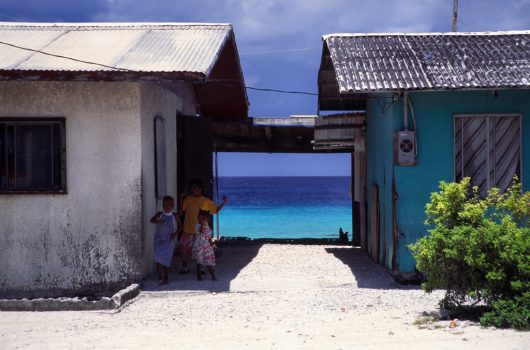
The Marshall Islands are an island country in the Pacific Ocean consisting of 29 atolls and five islands. The atolls and islands form two approximately parallel chains: the Ratak (sunrise) and the Ralik (sunset). Majuro, the capital of the Marshall Islands lies in the Ratak Chain in the East. The population of the Marshall Islands was 52,993 in 2015.

Before its independence in 1986, the Marshall Islands had been under the governance by Spain, Germany, Japan and the United States. The agreement that granted the Republic of the Marshall Islands its sovereignty — the Compact of Free Association (COFA) — allows Marshallese individuals to easily relocate to the United States and obtain work there. About one-third of the population has relocated to the United States, and more than 120,000 Marshallese live in northwest Arkansas and nearby places.

Poverty in the Marshall Islands

Poverty in the Marshall Islands is an urgent concern because of scarce natural resources, high unemployment rates and wealth inequality.

In the Marshall Islands, only 39.3% of the population aged 15 years and above is employed. For every one thousand babies born, 30 die before their birthday — the fourth highest in the Pacific region.

Wealth inequality and poverty in the Marshall Islands are also significant. The Ebeye city, the second-largest city in the Marshall Islands, is also known as the “Slum of the Pacific.” With a land area of 0.14 square miles, it has a population of about 12,000. This city is extremely overpopulated, outranking New York in the number of people living per square mile.

The Marshall Islands comprise about 750,000 square miles of ocean but only about 70 square miles of landmass. Even though people in Ebeye are surrounded by nothing but water, one of their major daily tasks is to search for clean water. Ebeye is badly polluted, and family members take turns sleeping because of the lack of land and money for housing. Constant floods threaten people’s homes and their possessions. However, a mere 30-minute boat ride away lies the Kwajalein atoll, which the U.S. army rents for the Ronald Reagan Ballistic Missile Defense Test Site. In this American middle-class neighborhood, scenes usually include people drinking cocktails and dancing in the warm Pacific breeze, while many of the neighboring islanders live on less than $1 a day.

Massive Nuclear Testing

The Marshall Islands were the testing site for the U.S. of their nuclear bombs during the Cold War. From 1946 to 1958, a series of 23 nuclear devices were tested in these islands. One of the bombs, Castle Bravo, which was a newly designed dry fuel thermonuclear hydrogen bomb, was denoted on an early morning in March 1954. It was a thousand times more powerful than the atomic bomb dropped on Hiroshima during World War II.

Two atolls were destroyed because of the series of nuclear testing. In 1956, the United States Atomic Energy Commission regarded the Marshall Islands as “by far the most contaminated place in the world.” Before the United States conducted its first test in the Marshall Islands in 1946, there were 167 people living on Bikini Atoll, and thousands living on nearby atolls. The Marshallese living on Bikini Atoll were displaced twice because of the testing, but the ongoing nuclear radiation has been causing long-lasting health problems for both the people and the environment — 40 years after the testing, studies still showed that “eating locally grown produce, such as fruit, could add significant radioactivity to the body.”

Climate Change

Floods and droughts are destroying the “islander lives” of the Marshallese. States of Emergency were declared when waves as high as three feet hit the cities and for droughts leaving six thousand people surviving on less than one liter of water per day in 2008 and 2013. If global temperatures rise by more than 1.5 degrees Celsius, the Marshall Islands may disappear. The Marshall Islands are some of the most vulnerable islands to the effects of climate change.

US Foreign Aid & Military Agreement

Direct U.S. aid accounts for 61.3% of the Marshall Islands’ $137.4 million budget for the fiscal year 2010. Under terms of the Amended Compact of Free Association, the U.S. is committed to providing approximately $70 million through 2023, including contributions to a jointly managed trust fund by the U.S. and the Marshall Islands. The Marshall Islands are renting the Kwajalein Atoll to the US Army, and their national defense is largely dependent on the U.S. On the flip side, the U.S. is benefiting from its unique and strategically important position in the Pacific Ocean.

Reducing Poverty

Forty percent of the total population in the Marshall Islands were under 15 years old in 2011 census, and 14% were under 5 years old. These young people can be great assets if provided good education and development, and they are the primary focus when fighting to reduce poverty in the Marshall Islands.

– Helen Yu Tang

Photo: Flickr
January 31, 2017
https://borgenproject.org/wp-content/uploads/borgen-project-logo.svg 0 0 Borgen Project https://borgenproject.org/wp-content/uploads/borgen-project-logo.svg Borgen Project2017-01-31 01:30:032024-12-13 17:56:35Poverty in the Marshall Islands
Global Poverty, Poverty Reduction

US House of Reps Passes Digital GAP Act

US House of Reps Passes Digital GAP Act
The U.S. House of Representatives passed the Digital Global Access Policy Act or the Digital GAP Act (H.R. 600) on January 24, just a day after the bill was reintroduced by House Foreign Affairs Chairman Ed Royce (R-CA-39). The legislation is aimed at promoting internet access in developing countries to spur economic growth and job creation, reduce poverty and improve health while advancing U.S. interests.

In today’s technology-driven world, internet access is a major driver of economic and social improvement. However, 4.2 billion people remain offline — about 60 percent of the world’s population, most of whom are in developing countries. In these areas, internet access is hindered by inadequate infrastructure and a poor regulatory environment, stifling the potential for sustainable growth and development.

The Digital Global Access Policy (GAP) Act seeks to promote first-time access to mobile or broadband internet for at least 1.5 billion people in both urban and rural areas of developing countries by 2020. It aims to do this is a variety of ways, including:
  • Removing tax and regulatory barriers to internet access.
  • Promoting internet deployment and related coordination, capacity building, and build-once policies and approaches in developing countries.
  • Promoting the use of the internet to increase economic growth and trade, along with democracy, government accountability, transparency and human rights.
  • Promoting inclusive internet policymaking for women, people with disabilities, minorities, low-income and marginalized groups and underserved populations.

On the House floor prior to the vote, Chairman Royce noted that women and girls are disproportionately affected by this digital gap. He said that “bringing 500 million women online could contribute up to $18 billion in GDP growth across 144 countries. That is how you reduce poverty; that is how you advance U.S. interests.”

In addition to Rep. Royce, Representatives Cathy McMorris Rogers (R-WA-5), Grace Meng (D-NY-6) and Eliot Engel (D-NY-16) were also listed as original cosponsors of the bill.

The Borgen Project commends the House for making this legislation a priority in the new year and urges the Senate to move swiftly to get this bill to the President’s desk.

– Kim Thelwell

January 25, 2017
https://borgenproject.org/wp-content/uploads/borgen-project-logo.svg 0 0 Borgen Project https://borgenproject.org/wp-content/uploads/borgen-project-logo.svg Borgen Project2017-01-25 22:01:532020-05-28 09:04:34US House of Reps Passes Digital GAP Act
Global Poverty

What is the House of Representatives?

What is the House of Representatives?
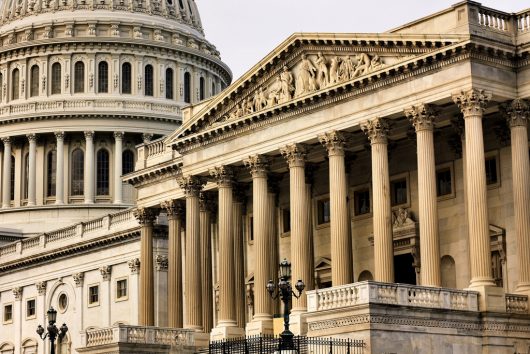
What is the House of Representatives? The House of Representatives is one of two chambers that make up the United States Congress (the other is the Senate). The House consists of 435 representatives who serve the people of all 50 states. Five delegates represent the District of Columbia and four of the U.S. territories (American Samoa, Guam, Northern Mariana Islands and the Virgin Islands), and a resident commissioner represents Puerto Rico. The number of representatives per state depends on the state’s population size, allowing each state to be proportionately represented in Congress. Alaska, for example, has only one state representative, while California has 53. This is because California’s population is close to 53 times that of Alaska. This population-to-representative ratio does not apply to the District of Columbia or the five U.S. territories; rather, they are allowed one delegate each.

To find out how many representatives there are in any state, visit the United States House of Representatives directory. The United States House of Representatives website assists citizens in finding their district and representative.

Representatives are referred to as congressmen, congresswomen or simply representatives. Constituents, often divided by district, elect representatives to two-year terms. Districts are used to allow the state’s population to be more accurately represented in Congress. The state of Alaska is not split into different congressional districts; therefore, the state only has one representative. California’s 53 representatives each represent one district within the state.

So what exactly does the House of Representatives do? Powers exclusive to the House of Representatives include initiating tax bills, impeaching federal officials and choosing the President in the case of a tie in the electoral college. The House has several other powers; however, these can only be carried out with the inclusion of the Senate. Congress introduces or passes new laws and changes existing laws. Congress can also override a president’s veto under specific conditions.

The House of Representatives is a chamber of Congress made up of representatives who act on behalf of their constituents. Remember that these representatives are in place to serve the people. Asking a member of Congress to support bills that fight global poverty or fund the international affairs budget is as easy as sending an email or making a phone call.

– Catherine Ticzon

Photo: Flickr

January 9, 2017
https://borgenproject.org/wp-content/uploads/borgen-project-logo.svg 0 0 Borgen Project https://borgenproject.org/wp-content/uploads/borgen-project-logo.svg Borgen Project2017-01-09 01:30:242024-12-13 17:54:14What is the House of Representatives?
Global Poverty

How Many Representatives Are There in Each State?

How Many Representatives Are There in Each State?
The United States Congress is divided into two chambers: the House of Representatives and the Senate. The House of Representatives allows for no more than 435 officials to be divided among the 50 states, the District of Columbia and the five U.S. territories (American Samoa, Guam, Northern Marina Islands, Puerto Rico and the U.S. Virgin Islands). Each of the 50 states is guaranteed two senators regardless of population size. However, neither Washington, D.C. nor the U.S. territories have representation in the Senate.

Officials from the House are commonly referred to as congressmen, congresswomen or representatives. How the 435 seats are split is contingent on the population size of the states, and D.C. and the U.S. territories are allowed one seat apiece.

To illustrate how representation is divided, consider New York: The geographical size of New York is hardly a third of the size of Montana, but New York’s population is 19 times greater than Montana’s. This explains why New York (27 representatives) has far more representatives than does Montana (one representative).

Does it matter how many representatives a state has? Yes, for a few important reasons. The first reason is that if a state has a large population and few representatives, then it is likely that not all constituents are being represented fairly. Similarly, if a state with a small population has a disproportionately large number of representatives, then the state will be overrepresented in Congress. The second reason is that the number of representatives plus the two senators in each state is equal to the number of electoral votes the state has in elections. That is to say, the more representatives a state has, the more influence the state can have on the election outcomes. The U.S. House of Representatives website lists the number of officials in each state.

Depending on a state’s population, officials may be assigned congressional districts. For example, Alaska has only one representative for the entire state, while California is split into 53 congressional districts with one representative speaking on behalf of each district. Officials for specific congressional districts can be found here.

The public elects members of Congress to two-year terms to serve in the House of Representatives. It is important to remember that these elected officials are in place to serve their constituents. Asking government officials to support global poverty reduction bills and other important issues is as simple as emailing or calling Congress. It is a representative’s job to listen, so constituents should make their voices heard.

– Catherine Ticzon

Photo: Flickr

December 24, 2016
https://borgenproject.org/wp-content/uploads/borgen-project-logo.svg 0 0 Borgen Project https://borgenproject.org/wp-content/uploads/borgen-project-logo.svg Borgen Project2016-12-24 01:30:322024-12-13 17:54:14How Many Representatives Are There in Each State?
Global Poverty

American Car Sales, The Roads of India

American Car Sales, The Roads of India
American cars have populated roads from Texas to Vermont to Oregon for decades, yet domestic sales growth is not what it once was. India is the next emerging market with vast potential for American car sales, and companies are vying for dominance.

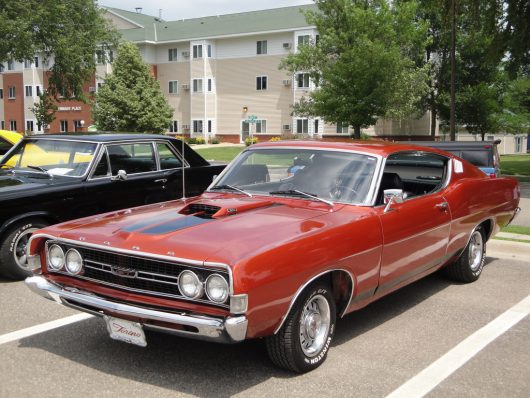
General Motors (G.M.) and Ford are two of the biggest auto companies that export American cars around the world. In recent years, this model made by the U.S. has shifted to opening new manufacturing and distribution systems across the world.

India is an emerging market in the global auto sales industry and G.M. and Ford have both invested early, resulting in competition for popularity, market share and profit. Based on the current circumstances, it appears that Ford has the advantage. Ford has made large investments in production plants, including the Sanand and Chennai Vehicle Assembly and Engine Plants, each with a price tag of $1 billion. Together, the combined production capacity of these plants is 440 thousand vehicles per year. Ford has seen steady increases in production from just over 14 thousand to 26.4 thousand cars sold in August of 2014, and 2016, respectively.

In contrast, G.M. has just halted a planned $1 billion investment which was aiming to double G.M.’s market share by 2020. Unpredictable consumer patterns and possible new environmental regulations may play a part in this development. Monthly sales are declining over time for G.M, with sales struggling to rise above 4,000 units in early 2015.

In India, only 18 per 1,000 individuals own a car, compared to the 800 per 1,000 in the U.S. India also saw the largest percentage increase in sales from January to November of 2015. The lack of saturation in the Indian market presents a huge potential for growth in American car sales, yet what remains to be seen is how American companies will re-invent themselves to be desirable in the eyes of the people of India.

In the past, U.S. companies brought models of the European theater to developing countries with reliable success, expanding American car sales into new markets. However, this tactic has proven ineffective in India where customers will not jump to a higher price bracket. These companies are attempting to figure out ways to follow the market much more closely than they have before, and it is proving more difficult than anticipated.

India is on the edge of an explosion in car sales as a result of the growing middle class that will disseminate out of the cities and into more rural areas. As this inevitable future approaches, the possibility of capitalizing on this growth becomes less and less certain for new companies that wish to enter this market. Will Ford and G.M. be flexible enough to attract the people of India to companies rooted in decades of American success?

– Patrick Tolosky

Photo: Flickr

December 17, 2016
https://borgenproject.org/wp-content/uploads/borgen-project-logo.svg 0 0 Borgen Project https://borgenproject.org/wp-content/uploads/borgen-project-logo.svg Borgen Project2016-12-17 01:30:082024-12-13 17:56:20American Car Sales, The Roads of India
Page 10 of 17«‹89101112›»

Get Smarter

  • Global Poverty 101
  • Global Poverty… The Good News
  • Global Poverty & U.S. Jobs
  • Global Poverty and National Security
  • Innovative Solutions to Poverty
  • Global Poverty & Aid FAQ’s
Search Search

Take Action

  • Call Congress
  • Email Congress
  • Donate
  • 30 Ways to Help
  • Volunteer Ops
  • Internships
  • Courses & Certificates
  • The Podcast
Borgen Project

“The Borgen Project is an incredible nonprofit organization that is addressing poverty and hunger and working towards ending them.”

-The Huffington Post

Inside The Borgen Project

  • Contact
  • About
  • Financials
  • President
  • Board of Directors
  • Board of Advisors

International Links

  • UK Email Parliament
  • UK Donate
  • Canada Email Parliament

Get Smarter

  • Global Poverty 101
  • Global Poverty… The Good News
  • Global Poverty & U.S. Jobs
  • Global Poverty and National Security
  • Innovative Solutions to Poverty
  • Global Poverty & Aid FAQ’s

Ways to Help

  • Call Congress
  • Email Congress
  • Donate
  • 30 Ways to Help
  • Volunteer Ops
  • Internships
  • Courses & Certificates
  • The Podcast
Scroll to top Scroll to top Scroll to top