• Link to X
  • Link to Facebook
  • Link to Instagram
  • Link to TikTok
  • Link to Youtube
  • About
    • About Us
      • President
      • Board of Directors
      • Board of Advisors
      • Financials
      • Our Methodology
      • Success Tracker
      • Contact
  • Act Now
    • 30 Ways to Help
      • Email Congress
      • Call Congress
      • Volunteer
      • Courses & Certificates
      • Be a Donor
    • Internships
      • In-Office Internships
      • Remote Internships
    • Legislation
      • Politics 101
  • The Blog
  • The Podcast
  • Magazine
  • Donate
  • Click to open the search input field Click to open the search input field Search
  • Menu Menu

Tag Archive for: United Nations

Posts

Activism, Children, United Nations

Celebrating World Youth Skills Day

world_youth_skills_day
On July 15, 2015, the world celebrated the first annual World Youth Skills Day. Founded by the United Nations General Assembly this past winter, the goal of this day is to raise awareness of the need for training youth in the development of general life and work skills. It is also a part of the Sustainable Development Goals for the United Nations, which emphasizes the importance of education and skills training. In June 2014, following a meeting with John W. Ashe, the President of the UN General Assembly, the Sri Lankan Minister for Youth Affairs and Skills Development during the World Conference on Youth in May 2014, a draft resolution for World Skills Day was put forth for the 68th session of the General Assembly, according to a United Nations press release.

The day included a number of panels and presentations across the globe. One such event was titled “Investing in Youth and Ensuring Decent Jobs to Harness the Demographic Dividend” at the Financing for Development Conference in Addis Ababa, Ethiopia, which was attended by Ahmad Alhendawi, the U.N. Secretary General’s Envoy on Youth.

This day also reinforces the need for education in order to further economic development in the country. By educating the youth, they are more prepared for jobs, and by getting a more skilled labor force, the country may provide for greater economic opportunities individually and for the country.

According to the U.N. Secretary-General, Ban Ki-moon, “Skills development reduces poverty and better equips young people to find decent jobs. It triggers a process of empowerment and self-esteem that benefits everyone.”

– Rachelle Kredentser

Sources: UN 1, UN 2, UN 3, UN 4, UNESCOV, World Skills Day
Photo: Save the Children

July 31, 2015
https://borgenproject.org/wp-content/uploads/borgen-project-logo.svg 0 0 Borgen Project https://borgenproject.org/wp-content/uploads/borgen-project-logo.svg Borgen Project2015-07-31 01:30:322024-06-11 02:48:12Celebrating World Youth Skills Day
Global Poverty, Refugees and Displaced Persons, War and Violence

South Sudanese Refugees Warmly Welcomed by Uganda

Sudanese_RefugeesSince the onset of ethnically-motivated conflict within South Sudan in December 2013, an estimated 150,000 South Sudanese civilians have fled the violence to neighboring Uganda. Government officials and civilians alike have cited the remarkably accepting refugee policies exercised by Uganda as catalysts for these migrations.

Refugees who travel to Uganda for asylum are met with an abundance of economic and social opportunities upon their arrival. Unlike many other nations currently experiencing heightened influxes of refugees due to the persistence of several regional conflicts, Uganda does not place newly arrived migrants into refugee camps operated by the United Nations and other foreign aid organizations.

Instead, refugees who successfully escape their conflict-ravaged homelands for the peace and security of Uganda are presented with the opportunity to move into permanent settlements where they are provided with their own plot of land. Additionally, various U.N. agencies provide access to food, water and home construction resources for newly arrived refugees. Localized primary schools and health clinics are commonly accessible in these areas of Uganda and are responsible for providing valuable resources to newly settled migrant populations.

Titus Jogo, refugee desk officer for the Adjumani District in Northern Uganda, stated in a recent interview regarding the legal statuses of South Sudanese refugees seeking asylum that “They have all the rights that are attributed to any human being, irrespective of their status as refugees.”

The conflict within South Sudan, the newest nation in the world after its founding in 2012, was initially caused by political disputes between President Salva Kiir and his former Deputy Minister, Riek Machar. The conflict has largely consisted of multiple tribal factions, including the Neur Tribe (loyal to Machar), and the Dinka group (loyal to President Kiir); both of these tribal groups have been accused by international monitoring groups of committing war crimes and human rights violations, including ethnically-targeted massacres and sexual assaults.

The most recent report provided by the UNHCR estimates that more than 730,000 people have fled the conflict in South Sudan to neighboring nations such as Uganda, Sudan, Ethiopia and Kenya. This report also estimates that an additional 1.5 million South Sudanese civilians are currently suffering from internal displacement due to the escalation in ethnic violence. Many of these displaced civilians experience frequent relocations to areas known as “protection-of-civilians” sites. These sites are coordinated by the U.N. Mission in South Sudan and provide secure refugee camps for civilians who have fled their homes.

Secretary General of the United Nations Ban Ki-moon recently explained in a statement regarding conditions within South Sudan, “The violence that has ravaged South Sudan over the past 18 months proves that there can never be a military solution to this conflict. I therefore call on all leaders of South Sudan – particularly President Kiir and former Vice-President Riek Machar–to prove their leadership by investing in a political solution and immediately concluding a comprehensive peace agreement. At the same time, the international community must take decisive steps to help end the fighting.”

The UNHCR recently released an international appeal for increased foreign aid designated for the current mission within South Sudan, noting the mounting number of refugees traveling to neighboring countries has depleted financial resources. While the organization estimates that $99 million is necessary to continue funding this operation, only nine percent of this goal has been raised to date.

The report explained that “Current resources remain insufficient to provide vital life-saving assistance and services, particularly in the areas of health, education and livelihoods and environment. Many South Sudanese refugee children, their country’s hope for the future, face key barriers to education including overcrowding in classrooms, a lack of teachers, and a lack of recreational activities to support constructive social engagement.”

– James Miller Thornton

Sources: The Guardian, Shanghai Daily, UN
Photo: Flickr

July 27, 2015
https://borgenproject.org/wp-content/uploads/borgen-project-logo.svg 0 0 Borgen Project https://borgenproject.org/wp-content/uploads/borgen-project-logo.svg Borgen Project2015-07-27 07:58:142024-06-11 02:48:09South Sudanese Refugees Warmly Welcomed by Uganda
Development, Global Poverty, Sustainable Development Goals, United Nations

Sustainable Development Goals: Why They Matter

Sustainable_Development_Goals

In 2000, the United Nations set the Millennial Development Goals. Ambitious proposals that sought to improve the lives for the billions of impoverished around the world. Fifteen years later, many of those goals have been accomplished.

Globally, 700 million people were lifted out of extreme poverty. Millions were saved due to vaccinations for malaria, tuberculosis and other non-communicable diseases. The number of people who didn’t have access to freshwater dropped significantly and the disparity of boys to girls enrolled in school dropped in every region on earth.

This was all accomplished before 2015.

Some goals are still in progress. For example, efforts to lift people out of poverty can result in environmental degradation. The rate of hunger, while dropping, is not falling quickly enough to meet the goal set in 2000.

Despite this, the United Nations is now going even bolder. Set to be adopted by world leaders in September, the new Sustainable Development Goals seek to finish what the Millennial Development Goals started, while adding their own components.

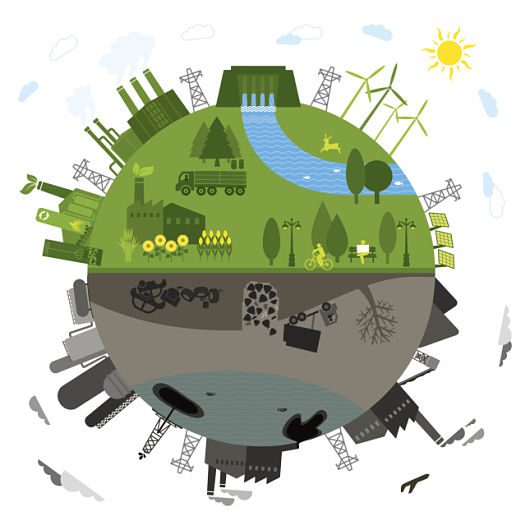
The seventeen goals are comprehensive, and apply to individuals as well as countries. Despite their broadness in scope, these goals demonstrate that poverty, climate change, health and economic wellbeing are all interconnected issues.

These are the seventeen Sustainable Development Goals:

1. End Poverty in all its forms everywhere

2. End hunger, achieve food security and improved nutrition and promote sustainable agriculture

3. Ensure healthy lives and promote well-being for all at all ages

4. Ensure inclusive and equitable quality education and promote lifelong learning opportunities for all

5. Achieve gender quality and empower all women and girls

6. Ensure availability and sustainable management of water and sanitation for all

7. Ensure access to affordable, reliable, sustainable and modern energy for all

8. Promote sustained, inclusive and sustainable economic growth, full and productive employment and decent work for all

9. Build resilient infrastructure, promote inclusive and sustainable industrialization and foster innovation

10. Reduce inequality within and among countries

11. Make cities and human settlements inclusive, safe, resilient and sustainable

12. Ensure sustainable consumption and production patterns

13. Take urgent action to combat climate change and its impacts

14. Conserve and sustainable use the oceans, seas and marine resources for sustainable development

15. Protect, restore and promote sustainable use of terrestrial ecosystems, sustainably manage forests, combat desertification, and halt and reverse land degradation and halt biodiversity loss

16. Promote peaceful and inclusive societies for sustainable development, provide access to justice for all and build effective, accountable and inclusive institutions at all levels

17. Strengthen the means of implementation and revitalize the global partnership for sustainable development

Indeed, ambitious.

The United Nation website has a more comprehensive explanation of how each of these goals are to be accomplished by 2030.

It is estimated that these goals will cost roughly one trillion dollars a year. However with international tax reform, developing countries will generate more domestic tax revenue and be able to meet their own development agendas with less foreign aid. Members of the United Nations believe this will allow international aid to become a thing of the past.

In an interview with the BBC, International Development Secretary Justine Greening said the Sustainable Development Goals are different from other United Nation initiatives because it harnesses the private sector investment, in addition to developing country’s domestic resources.

She believes this will “turbo charge” development.

The ambitiousness of the Sustainable Development Goals is daunting. However the past fifteen years saw so much progress that the world can be cautiously optimistic.

– Kevin Meyers

Sources: BBC, Post2015.org, UN Department of Economic and Social Affairs
Photo: Fiinovation

July 23, 2015
https://borgenproject.org/wp-content/uploads/borgen-project-logo.svg 0 0 Borgen Project https://borgenproject.org/wp-content/uploads/borgen-project-logo.svg Borgen Project2015-07-23 08:49:412020-07-07 14:41:23Sustainable Development Goals: Why They Matter
Development

UN Report Shows Progress on Poverty

Progress_on_Poverty
This past week, the U.N. released a report on the successes and failures of the Millennium Development Goals (MDGs). The report revealed that more than one billion people have successfully broken out of poverty since 1990. It showed China and India playing key roles in this significant reduction of and progress on poverty.

The report also showed that in addition to a sharp drop in extreme poverty, the MDGs have facilitated other major successes. Presently, just as many girls as boys are enrolled in primary schools around the globe. Simple steps like installing bed nets in parts of the developed world have prevented approximately six billion deaths from malaria.

Experts say that the most important MDG contribution has been the creation of a measuring system that depicts what countries have done for their people, and what issues they have neglected. Concrete measurements of well-being—like how many children are clinically malnourished—provide the most helpful insight on the most pressing needs.

The report stated that the world’s most populous countries, China and India, played a central role in global poverty reduction. Economic progress in China helped the extreme poverty rate in Eastern Asia fall from 61 percent in 1990 to a mere four percent in 2015.

By the same token, development in India helped extreme poverty in Southern Asia decline from 52 percent to 17 percent over the same time period. Additionally, Southern Asia’s rate of poverty reduction has accelerated over the past seven years.

While these remarkable gains should not be understated, there is still much more to be done. In India, an estimated 600 million people still defecate out in the open, which dramatically heightens risk of serious disease, especially for children. Additionally, jobs are still not keeping pace with the country’s population growth.

Despite much progress, certain MDG targets were still missed, including a two-thirds reduction of child mortality and women’s deaths in childbirth. Persisting gender inequality was acknowledged as “one of the starkest failures” in the report, as women are still more likely to be poor than men.

This is not to say that progress has not been made on both fronts, but to encourage an even greater collaborative effort in the future. The MDG target of halving the proportion of people living in extreme poverty was achieved ahead of the 2015 deadline five years ago. This is the kind of efficiency we must continually strive for.

The most recent estimates show that the proportion of people living on less than $1.25 per day fell globally from 36 percent in 1990, to just 15 percent in 2011. As of 2015, projections indicate that the global extreme poverty rate has fallen even further, to 12 percent.

At the launch of the report in Oslo, Secretary-General Ban Ki-moon proudly stated, “The report confirms the global efforts to achieve the goals have saved millions of lives and improved conditions for millions more around the world.” He encouraged the celebration of MDG successes across the global community.

Indeed, the report’s findings most certainly call for worldwide celebration. So too, however, they paint a picture of certain key areas in need of improvement. Looking ahead, findings such as these should help to pave the path for the post-2015 development goals agenda.

– Sarah Bernard

Sources: NY Times, Economic Times
Photo: NY Times

July 21, 2015
https://borgenproject.org/wp-content/uploads/borgen-project-logo.svg 0 0 Borgen Project https://borgenproject.org/wp-content/uploads/borgen-project-logo.svg Borgen Project2015-07-21 15:45:262020-07-08 14:43:10UN Report Shows Progress on Poverty
Aid, Global Poverty, Humanitarian Aid, United Nations

UN introduces ‘Humanitarian Data Exchange’ Platform

UN introduces 'Humanitarian Data Exchange' Platform
United Nations Office for the Coordination of Humanitarian Affairs, or OCHA, has developed an open digital platform for data sharing, called the Humanitarian Data Exchange, or HDX. In collaboration with Frog Design, the new system combines state of the art data collection with data dispersal to provide current data access to crisis zones.

In rapid response to any humanitarian crisis, whether it is violence or a natural disaster, it is imperative to have instant availability to any relevant data sets. Frog Design created the technology with the intention of universal usage. Optimal viewing capabilities and premium user interface technology are also key components for rapid mass data absorption. Everyone from ordinary public citizens to data scientists to relief workers in the field are able to gather and analyze the HDX’s information.

The HDX provides easy access to a profile breakdown of almost every country in the world. Important information such as population density, total land area and GDP is provided. There are three key components that enable this data platform, data standardization, analytics and repository.

Revolutionizing data access provides an invaluable resource for relief and aid efforts to handle any disaster or crisis. Relief workers are able to make informed decisions instantly thanks to the new platform. The new technology also helps NGOs and governments to adapt to any evolving requirements or necessities that may occur.

The HDX was first utilized during the apex of the West African Ebola epidemic. The World Health Organization was able to share crucial information. Data sets, such as the total number of West African cases, cumulative deaths, treatment centers and countries experiencing outbreaks were quickly made available. The World Food Programme was able to share its data of food market prices in West African countries as well. This data helped the people properly predict their rations and assess their finances to cope during the crisis.

“It is of paramount importance that food security and food assistance information is regularly collected and widely disseminated..this partnership with OCHA on HDX is an important aspect of WFP’s broader initiative on Open Data and transparency,” says Arif Husain the Chief Economist of the WFP and the Head of Food Security Analysis Service.

Husain goes on to say, “We believe that our partnership with OCHA HDX is a major milestone in improving peoples’ access to credible and timely information for the design and implementation of national food security programs, policies and projects.”

Such a monumental breakthrough in technological usability and exchange has already proven effective through the health crisis in West Africa. It appears HDX is set to revolutionize data sharing and humanitarian relief efforts worldwide.

– The Borgen Project

Sources: World Food Programme, Frog Design

July 21, 2015
https://borgenproject.org/wp-content/uploads/borgen-project-logo.svg 0 0 Borgen Project https://borgenproject.org/wp-content/uploads/borgen-project-logo.svg Borgen Project2015-07-21 08:00:482022-01-19 00:41:17UN introduces ‘Humanitarian Data Exchange’ Platform
Activism, Global Poverty, United Nations

How You Can Celebrate International Youth Day 2015

International-Youth-Day

August 12, 2015 marks the fifteenth commemoration of the United Nations International Youth Day. The annual celebration draws together young people from around the world to work as agents of change.

Each year, the U.N. highlights a particular issue that affects the world’s young people. This year’s recently announced theme, “Youth Civic Engagement,” will draw international attention to the importance of youth involvement in political, economic and social affairs. The U.N. asserts that youth participation in public life is necessary to achieve global sustainable development.

This August 12, young people around the world will join the U.N.’s movement to get involved in civic activities. Here is how you can be a part of the International Youth Day 2015 celebrations:

Use Social media

The U.N.’s Inter-Agency Network on Youth Development wants to hear from you! Use social media platforms like Twitter, Facebook and Instagram to spread the word about the importance of civic engagement. Use the hashtag #YouthDay to connect with young people across the globe.

Advocate

While youth advocacy is always an important part of International Youth Day celebrations, this year’s theme emphasizes youth involvement in public life more strongly than ever. Civic engagement means taking action, so choose a cause that means something to you and get started!

You can raise awareness by creating info sheets or flyers and placing them at local schools, libraries and community centers. You can also contact local media outlets and ask them to run a feature on your issue. The more publicity your issue gets, the better.

Call or email your congressional leaders and ask them to support your cause. Gather a group of friends to lobby your local officials on or around August 12.

With all the work you put into your specific cause, do not forget to call attention to the limited opportunities for youth engagement in many areas of society. Talk with leaders in your school, faith community and local organizations, and ask them to strengthen programs that promote involving youth in civic activities.

Plan an event

Organizing a community event to promote International Youth Day is a great way to raise awareness and funds for a cause of your choice. You can host a concert and invite local musicians to play, or plan a festival or block party and invite a distinguished individual to speak. You can even organize an exhibit featuring art from young people in your community.

Share your engagement

If you decide to plan an event for International Youth Day 2015, do not forget to document it and share photos with youth@un.org. If you share your event with youth@un.org, the organization will post the information to its global map of International Youth Day activities. Your events could inspire others to advocate for youth civic engagement.

The most creative photo submissions will be displayed at the U.N. Headquarters, shared online via official U.N. social media and used in the World Youth Report 2015. Be sure to include this copyright release form so the U.N. can share your photo. The deadline for submissions is July 23.

– Caitlin Harrison

Sources: UN 1, Department of Economical and Social Affairs 1, Department of Economical and Social Affairs 2, UN 2
Photo: Nam News Network

July 12, 2015
https://borgenproject.org/wp-content/uploads/borgen-project-logo.svg 0 0 Borgen Project https://borgenproject.org/wp-content/uploads/borgen-project-logo.svg Borgen Project2015-07-12 11:19:202024-05-27 09:25:41How You Can Celebrate International Youth Day 2015
Global Poverty, Sustainable Development Goals, United Nations

United Nations Sets Sustainable Development Goals to End Global Poverty

sustainable_development_goals
The United Nations released the first draft of their Sustainable Development Goals this month in preparation for the expiration of the Millennium Development Goals, which were established in 2000.

In 17 simple steps, the Sustainable Development Goals (SDGs) aim to eliminate poverty, grow economies, increase equality and promote sustainable industry.

The overall goals, as defined in the official draft of the United Nations Development Agenda, are:

1) End poverty and hunger

This specifically aims to “end poverty in all forms everywhere.” According to an article published by The Guardian, Goal 1 seeks to reduce global poverty by at least half by 2030. The drafted plan calls for establishing equal access to economic resources, equal rights of ownership, and the creation of a firm policy framework at all levels in order to promote sustainable and accelerated economic growth.

2) Secure education, health and basic services for all

Goal 2 seeks to eliminate global food insecurity and promote sustainable agriculture. Again by 2030, the United Nations hopes to establish sustainable and year-round access to nutritious food, especially for the most poor and vulnerable. The goal is to establish sustainable agriculture and encourage investment in rural areas. The details of Goal 2 also include measures to address inequality among markets and trade restrictions, and to ensure the proper operation of food markets.

3) Achieve gender equality and empower all women and girls

This goal is to “ensure healthy lives and promote well-being for all at all ages.” This goal broadly encompasses many aspects of health and well-being across society. These aspects include reducing maternal mortality and the preventable deaths of newborns and infants, ending epidemics caused by communicable diseases, achieving universal healthcare coverage and more.

4) Combat inequalities within and between countries

5) Foster inclusive economic growth, shared prosperity and sustainable lifestyles for all

Goal 4 and 5 address access to education and gender equality. These goals include guaranteeing free and quality primary and secondary education for all children, providing equal educational opportunities to both boys and girls, eliminating violence against women and undertaking reform to ensure equal economic opportunity for women. The fifth goal goes further and calls for the creation of enforceable policies to protect the rights of women.

6) Promote safe and inclusive cities and human settlements

7) Protect the planet, fight climate change, use natural resources sustainably and safeguard our ocean

The remaining goals outline plans to create and maintain sustainability in multiple sectors. These goals include sustainable energy, sustainable agriculture and industry, sustainable use of the environment and sustainable economic structures. Some of the goals also specifically address the idea of “sustainable societies” and outline measures to reduce violence, increase equality between nations and promote global connections.

Although the initial response to the United Nations’ plan has been mixed, and some, according to another article by The Guardian, have warned that the plan has some serious holes, the ambitious set of goals sets a precedent for efforts to end global poverty and will serve as a benchmark for future endeavors.

– Gina Lecher

Sources: Sustainable Development, The Guardian 1, The Guardian 2
Photo: Flickr

July 10, 2015
https://borgenproject.org/wp-content/uploads/borgen-project-logo.svg 0 0 Borgen Project https://borgenproject.org/wp-content/uploads/borgen-project-logo.svg Borgen Project2015-07-10 09:00:082024-05-27 09:25:31United Nations Sets Sustainable Development Goals to End Global Poverty
Aid Effectiveness & Reform, Children, Development, Education, Global Health, Global Poverty, United Nations

What Have the Millennium Development Goals Achieved?

What Have the Millennium Development Goals Achieved?

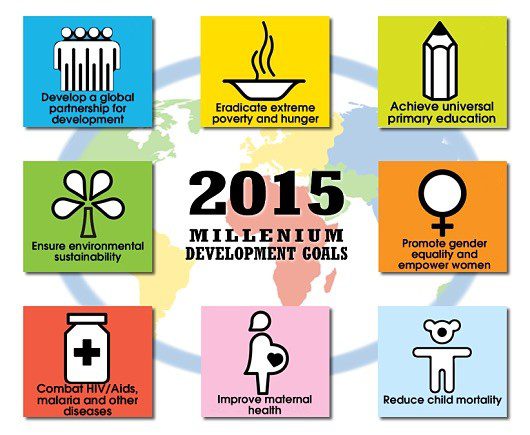
What Have the Millennium Development Goals Achieved? In 2000, the United Nations set out on a clearly defined mission to end global poverty by means of tackling eight core areas of need. Now we are looking back, 15 years later, and seeing how successful the UN was in meeting their goals-and where the new Sustainability Goals will need to take up the slack.

The Millennium Development Goals were designed as a framework for developing impoverished nations by addressing the most critical needs of the society, like reliable food sources, access to education, and adequate health care.
Each goal had specific targets which the United Nations hoped they would meet by 2015. Some goals had more success than others.

The UN’s goal of halving global poverty was met with resounding success, as the number of people living on less than one dollar and 25 cents a day dropped from one point nine billion in 1990, to 836 million in 2015. An estimated 14 percent of the global population are living in extreme poverty today, down from nearly half in 1990.

The reduction in the proportion of undernourished people globally narrowly missed its target, coming within two percent of the 50 percent reduction goal. Though narrowly missing their target, given the exponential human population growth over the last three two decades, it is still a considerable success.

The goals suffered two more near misses in their attempts to increase educational opportunities for all, including establishing gender equality in schools. An estimated 10 percent of children are not receiving any formal education, and only about two -thirds of developing countries have achieved gender equality in the classroom.

Goals four and five of the Millennium Goals, which addressed child and maternal mortality, respectively, both failed to meet their targets. While both the mortality rate of children under five and maternal deaths were reduced by over half, both failed to reach the two-thirds reduction target.

Goal six, stop and reverse the spread of HIV/AIDs, malaria, and other diseases was similarly not met in the given 15 year time frame. Although the rate of new HIV/AIDS infections has fallen by around 40 percent, an estimated two point one million people are still being infected annually. The fight against malaria and other diseases prevalent in developing areas has seen more success however, with an estimated six point two million malaria deaths averted between 2000 and 2015.

The final two goals of the 2000 Millennium Development Goals tackled strengthening infrastructure, sustainable development, and international partnership. While both goals are still on-going endeavors, over the last decade, two point six billion people have gained access to improved drinking water and official development assistance to developing nations has risen by nearly seven percent.

Overall, the United Nations has experienced great success in their struggle to address the needs of the poor around the world, but they are the first to admit that more work is needed. In the official Millennium Development Goals report, released earlier this month, Wu Hongbo Under-Secretary-General for Economic and Social Affairs admitted that success has been uneven across developing nations. “Millions of people are being left behind, especially the poorest and those disadvantaged because of their sex, age, disability, ethnicity or geographic location. Targeted efforts will be needed to reach the most vulnerable people,” said Hongbo.

The Quick and Dirty of Hits and Misses:
Goal #1: Target goal met and exceeded
Goal #2: Target goal nearly achieved
Goal #3: Not met
Goal #4: Not met
Goal #5: Not met
Goal #6: Not met
Goal #7: Target achieved ahead of schedule
Goal #8: No target specified, on-going action

The Sustainable Development Goals of 2015 will pick up where the Millennium Goals left off and continue to guide the United Nations as they work to eradicate global poverty.

– Gina Lehner

Sources: The Guardian, UN
Photo: Global Classrooms

July 9, 2015
https://borgenproject.org/wp-content/uploads/borgen-project-logo.svg 0 0 Borgen Project https://borgenproject.org/wp-content/uploads/borgen-project-logo.svg Borgen Project2015-07-09 15:02:462020-07-10 12:53:34What Have the Millennium Development Goals Achieved?
Aid, Development, Global Poverty

How Foreign Aid Wins Hearts, Reduces Extremism

foreign_aid

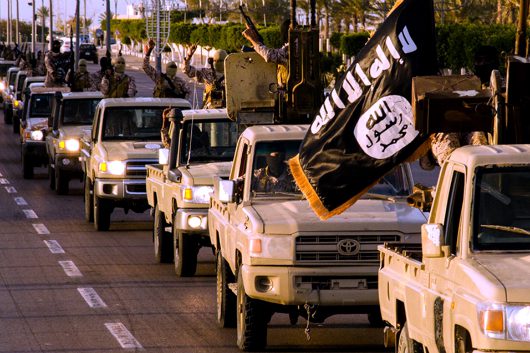
On June 2, 2015, Iraqi Prime Minister Heider Al-Abadi spoke to an international coalition of over 20 countries in Paris in a bid to refresh the coalition’s strategy on combating violent extremists such as the self-proclaimed Islamic State, or ISIS.

The Iraqi leader requested more foreign aid, specifically intelligence and weapons, and blamed Western nations for not doing enough to stop foreign fighters from joining ISIS.

The next day, at a United Nations forum discussing the role of the media in combating terrorism, U.N. Under-Secretary-General for Political Affairs, Jeffrey Feltman said, “Groups like ISIS succeed because they offer young people opportunities to engage with their peers and provide a space where they can bond over their grievances, hopes and deeply held desire for a world that is just and fair.”

The fighting that has raged throughout Iraq has left many families desolute and has taken a tremendous toll on children. According to the UNICEF, violations against children has increased by 75% over the last year. This includes abduction and the recruitment of child soldiers.

Missing amidst the talks of military and media foreign aid strategies to combat ISIS is the lack of humanitarian aid investments for displaced Iraqis. U.N. officials warn that millions of Iraqis caught between ISIS and the Iraqi Army could be without food or shelter over the next six months unless $497 million is raised in emergency funds.

As if the current demands are not hard-pressing, on June 23, the World Health Organization has asked for an additional $60 million to prevent 77 healthcare clinics from shutting down. The lack of water and soaring temperatures have led to a rise in dehydration among displaced Iraqis. With desperation mounting, Iraqis are looking for alternatives to extremist groups to find support. However, these alternatives often do not exist.

The National Bureau of Economic Research (NBER) has shown that when the Iraqi government provides service provisions across the socioeconomic spectrum, there is a reduction in violent insurgency. According to the NBER, a 10% increase in labor-related spending generated a 15% to 20% decline in labor-intensive violence in Iraq. As the violence decreases, social and economic stability ensues.

Unfortunately, according to the Organization for Economic Co-operation and Development, official development assistance to the poorest countries fell by 8% between 2013 and 2014, excluding debt relief nations where the figures are higher at 16%. Iraq oversaw a spike in violence over that same period of time.

Providing intelligence and weapons may help to slow down ISIS. However, continued foreign aid investments into social and economic programs in Iraq and Syria are needed to ultimately reduce global threats.

If the international community does not supply the necessary foreign aid to Iraq, if people are not fed and do not have their basic health needs met, they will have no choice but to turn to ISIS, a group ready to supply them with work and food. This outcome would be catastrophic for the Iraqi government as well as the United States and our allies.

– Adnan Khalid

Sources: National Bureau of Economic Research 1, National Bureau of Economic Research 2, The Guardian, The Organization for Economic Co-operation and Development, UN 1, UN 2, UNICEF, Wall Street Journal
Photo: NY Post

July 9, 2015
https://borgenproject.org/wp-content/uploads/borgen-project-logo.svg 0 0 Borgen Project https://borgenproject.org/wp-content/uploads/borgen-project-logo.svg Borgen Project2015-07-09 08:03:522024-12-13 17:51:44How Foreign Aid Wins Hearts, Reduces Extremism
Global Poverty

Peace in Mali Between Government and Northern Factions

Peace in Mali
The Agreement for Peace and Reconciliation between Malian parties and Algeria-led Mediation Team was signed in early May 2015 in Mali’s capital city Bamako. The spokesperson for the United Nations, the Secretary-General Ban Ki-moon, implored Malians to reinstitute peace in Mali and anticipate a long-lasting ceasefire. On 20 June 2015, a member of the Arab Movement of Azawad, Sidi Ibrahim Ould Sidati, signed his name to the amended version of the Algerian Accord on behalf of the Coordination of Azawad Movements (CMA) in the presence of northern Mali’s community leaders and international sponsors.

According to Ban Ki-moon, the official signing of the Agreement for Peace and Reconciliation was 15 May 2015. The Agreement received a signature from the CMA on 20 June. Pleased with the addition and recognition from CMA, a coalition of armed groups, Ki-moon wants to remind participants that Mali and Malians must adhere to reconciliation efforts and ensure accountability to maintain promising endeavors toward peace.

The Secretary-General’s statement in Bamako reassures Mali that the United Nations supports both parties under the enactment of the Agreement. Ki-moon congratulates the parties and their momentous achievement toward securing peace. He also recognizes the neutral amity expressed by the text of the document.

Conflict has stirred unrest since the 1960s as Tuareg rebel forces fought with the Malian government over discourses relating to ethic discrimination and misrepresentation. The modified Algerian Accord has aligned Mali’s President Ibrahim Boubacar Keita with Mahamadou Djeri Maiga, vice-president and spokesperson of the Transitional Council of the State of Azawad.

Mahamadou Djeri Maiga, a senior member of CMA, feels mediation tactics are close to resolving divisional conflicts between northern and southern Mali. The nation wants peace for each side of the conflict. The purpose of the Algerian Accord is to revitalize the country’s north, which stationed Tuareg revolts against governmental forces.

The Accord’s connections aim to mend national struggles with diversity and radical Islamist movements. Both aspire to end turbulence altogether with the Accord standing in good-conscience with the Agreement for Peace and Reconciliation.

CMA was waiting for amendments to the Accord until 5 June. Marking their commitment to the Accord required provisions that will allow Tuareg armed groups to create partnerships with security in the north and grant representation for northern inhabitants in governmental institutions. As of 19 June, unity in Mali provokes members of the coalition to withdrawal from the town Menaka.

The mistrust began in 2012 when censure formed against southern sub-Saharan groups for not upholding the interest of northern factions. Tuareg separatists confiscated several northern towns and cities before Al-Qaeda radicals further exploited hostility. The Islamist radicals were overthrown by French military efforts.

The gap between the north and south deepened with nearly five hundred thousand seeking refuge in other countries according to UN Office for the Coordination of Humanitarian Affairs (OCHA) monitored by Jens Laerke. The ceasefire, known as the Ouagadougou Preliminary Agreement, was reinstated on 23 May 2014 to end hostilities in Kidal. Rebelling armed groups break the original contract by carrying out militaristic and administrative positions of power in several towns.

Albert Gerard Koenders, Special Representative of the Secretary-General for Mali, and Abel Aziz, Mauritania’s President and current Chairman of the African Union, pledge to end the hostility. Armed groups who originally applied their signatures to the document agree again to a ceasefire as humanitarian conditions worsen when attacks against UN Multidimensional Integrated Stabilization (MINUSMA), the Malian government forces and France’s Operation Serval amplify.

Nearly 400,000 original inhabitants returned to the north since the signing of the Ouagadougou Preliminary Agreement. The will for peace is evident with miles still to trek. Mahamadou Djeri Maiga will continue to scan for evidence of positive results on the ground after the signing. In the meantime, Ki-moon hopes the Agreement for Peace and Reconciliation is an inspiration to others in the political process.

– Katie Groe

Sources: UN 1, UN 2, GN Network, UN 3,

Photo: Wikimedia Commons

July 7, 2015
https://borgenproject.org/wp-content/uploads/borgen-project-logo.svg 0 0 Borgen Project https://borgenproject.org/wp-content/uploads/borgen-project-logo.svg Borgen Project2015-07-07 08:59:412024-06-11 02:48:07Peace in Mali Between Government and Northern Factions
Page 33 of 44«‹3132333435›»

Get Smarter

  • Global Poverty 101
  • Global Poverty… The Good News
  • Global Poverty & U.S. Jobs
  • Global Poverty and National Security
  • Innovative Solutions to Poverty
  • Global Poverty & Aid FAQ’s
Search Search

Take Action

  • Call Congress
  • Email Congress
  • Donate
  • 30 Ways to Help
  • Volunteer Ops
  • Internships
  • Courses & Certificates
  • The Podcast
Borgen Project

“The Borgen Project is an incredible nonprofit organization that is addressing poverty and hunger and working towards ending them.”

-The Huffington Post

Inside The Borgen Project

  • Contact
  • About
  • Financials
  • President
  • Board of Directors
  • Board of Advisors

International Links

  • UK Email Parliament
  • UK Donate
  • Canada Email Parliament

Get Smarter

  • Global Poverty 101
  • Global Poverty… The Good News
  • Global Poverty & U.S. Jobs
  • Global Poverty and National Security
  • Innovative Solutions to Poverty
  • Global Poverty & Aid FAQ’s

Ways to Help

  • Call Congress
  • Email Congress
  • Donate
  • 30 Ways to Help
  • Volunteer Ops
  • Internships
  • Courses & Certificates
  • The Podcast
Scroll to top Scroll to top Scroll to top