• Link to X
  • Link to Facebook
  • Link to Instagram
  • Link to TikTok
  • Link to Youtube
  • About
    • About Us
      • President
      • Board of Directors
      • Board of Advisors
      • Financials
      • Our Methodology
      • Success Tracker
      • Contact
  • Act Now
    • 30 Ways to Help
      • Email Congress
      • Call Congress
      • Volunteer
      • Courses & Certificates
      • Be a Donor
    • Internships
      • In-Office Internships
      • Remote Internships
    • Legislation
      • Politics 101
  • The Blog
  • The Podcast
  • Magazine
  • Donate
  • Click to open the search input field Click to open the search input field Search
  • Menu Menu

Tag Archive for: Poverty In Yemen

Posts

Disease, Global Poverty, Health

5 Nonprofits Working to End Polio in Yemen

Polio in YemenIn recent decades, Yemen has faced crisis after crisis, with war, drought, disease and famine simultaneously affecting a vulnerable population. The presence of polio in Yemen is another challenge to an already struggling population. Several nonprofits are working toward its eradication. Below are insights into five of the most important.

The Impact of COVID-19

When the COVID-19 pandemic arrived and the health care efforts of many of the world’s largest nongovernmental organizations (NGOs) were disrupted, the people of many developing nations suffered, including those of Yemen.

Roughly 25 million infants worldwide did not receive potentially lifesaving vaccinations, the largest regression in vaccination data in more than 30 years. In Yemen, the combined effects of the COVID-19 pandemic and protracted conflict resulted in national vaccination rates falling sharply, with declines of 25% in certain months of 2020. In 2024, 580,000 children in Yemen were recorded as zero-dose, a crisis demanding a multilateral response.

Beginning in 2023, several major global partners in public health, including the United Nations Children’s Fund (UNICEF), the World Health Organization (WHO) and Gavi, the Vaccine Alliance, formed The Big Catch-up, a program working to reverse the damage to immunization progress caused by the pandemic. The project is making progress in eradicating poliovirus worldwide. With around 85% of all children affected by polio living in the most volatile states, this effort is significant. The following five organizations are at the forefront of the fight against polio in Yemen.

5 Nonprofits Working to End Polio in Yemen

  1. The Global Polio Eradication Initiative. At the center of global efforts for complete immunization against poliovirus, the Global Polio Eradication Initiative (GPEI), in collaboration with the federal government, is making considerable progress in early detection and surveillance of outbreaks. With an over 80% early detection rate for key symptoms, its work is an important stage in the immunization process and gives patients essential time for treatment and recovery. This progress has been made despite the adverse conditions in Yemen, which the GPEI categorizes as one of several “consequential geographies” that complicate eradication efforts. Its work in collaboration with global partners reflects continued developments being made in a post-pandemic world.
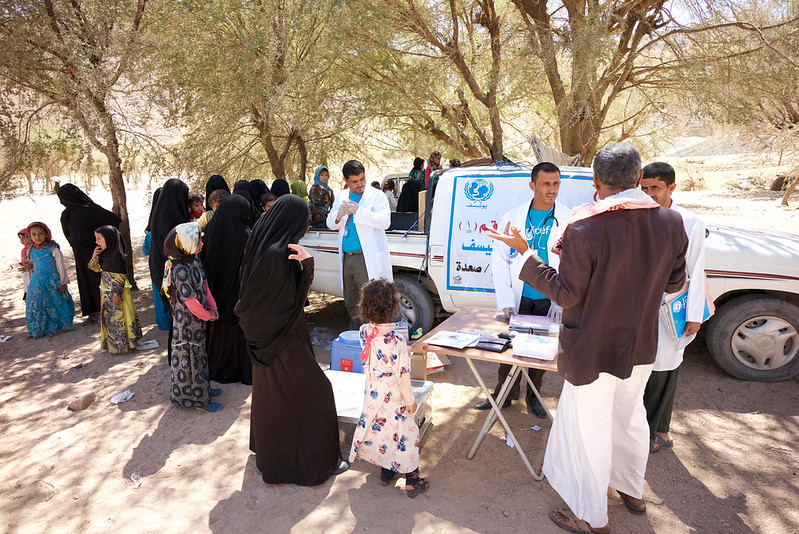
  2. UNICEF. In the summer of 2025, UNICEF and the WHO began a vaccination campaign against polio in Yemen, aiming to reach more than 1.3 million children in the nation’s most stable regions. Working with the Ministry of Public Health and Population, UNICEF provided and supported almost 7,000 vaccination teams, including 6,000 mobile units, to deliver intervention before the outbreak that began in 2021 grew further. With 98% of the 282 cases recorded between 2021 and July 2025 occurring in children under 5, the focus of UNICEF’s actions is on early-life immunization. Peter Hawkins, the UNICEF Representative to Yemen, said that vaccination is the way to keep children safe.
  3. The International Organization for Migration. While not a health care-focused nonprofit, the International Organization for Migration (IOM) is an ally in organizing and delivering immunization programs. In the absence of a reliable national infrastructure, on-the-ground specialists support health care workers in accessing and administering vaccines. Working in both permanent communities and large populations now living in internal displacement camps, the IOM’s insights into the requirements and challenges in these areas have supported operatives with specialist advice. The IOM also continues to engage in awareness initiatives aimed at reducing vaccine hesitancy and misinformation. Reaching 31,000 people in 2024 alone, the campaign has helped address a significant obstacle to a successful polio vaccine rollout.
  4. Islamic Relief U.K. A major provider of health care and hospital aid across Yemen and the wider region, Islamic Relief U.K. has a track record of supporting Yemen’s under-resourced health care facilities. By providing otherwise inaccessible technology and provisions to health care centers facing extreme budgetary limitations and violent attacks, the organization enables them to continue their work. The functionality of these centers is essential to the operations of a campaign against poliovirus and to support the health care needs of a country facing significant challenges.
  5. The Yemen Relief and Reconstruction Foundation. As one of the leading nonprofits operating in Yemen, the Yemen Relief and Reconstruction Foundation (YRRF) is engaged in efforts across the spectrum of national issues. With a diverse portfolio of funding, its efforts are focused on the most pressing crises and preventative measures. The support offered to medical centers and laboratories represents a key approach to long-term eradication of poliovirus. A 2025 investment by the foundation into the National Central Public Health Laboratories in Sana’a supports the laboratory’s work in serving patients from numerous governorates and its capacity to perform diagnostic tests that can detect polio at an early, non-critical stage. This funding and specialist support offer Yemen a domestic, sustainable means to address the threat of poliovirus to its child population through the collaboration of all five nonprofits listed here.

Looking Ahead

The work of each of these nonprofits is bringing Yemen closer to eradicating polio, but continued public and government support is needed. Increased funding and sustained international attention can help complete this work, securing the future health of children in Yemen and beyond.

– Evan Meikle

Evan is based in Kingston upon Hull, UK and focuses on Global Health and Politics for The Borgen Project.

Photo: Flickr

April 17, 2026
https://borgenproject.org/wp-content/uploads/borgen-project-logo.svg 0 0 Precious Sheidu https://borgenproject.org/wp-content/uploads/borgen-project-logo.svg Precious Sheidu2026-04-17 03:00:232026-04-16 11:46:585 Nonprofits Working to End Polio in Yemen
Global Poverty, Health

Yemen’s Health Care Amid Conflict

yemen's health careThe Republic of Yemen has been in civil war since 2014, pitting the Iran-backed Houthi movement against a Saudi-led coalition supporting the internationally recognized government. This has led to the systematic collapse of formal health care. The Houthis are running a quasi-state in the north that exploits aid as a tool of political control. With hospitals destroyed and clinics inaccessible, Yemen’s private pharmacists diagnose conditions, dispense prescription medications without oversight and provide basic medical advice. Yemen could formalize pharmacists’ expanded role through tiered licensing, basic diagnostic training and integration with telemedicine networks.

Conflict, Funding Collapse and Deliberate Obstruction

The Trump administration labeled the Houthis as a terrorist organization in 2025, causing U.S. funding to decrease. This was meant to pressure the Houthis, but it punished ordinary Yemenis instead, scaring away donors and giving NGOs legal exposure for any activity that could be construed as materially supporting the Houthis.

Human Rights Watch documented how the Houthis’ systematic detention of aid workers is deepening Yemen’s humanitarian catastrophe. As of early January 2026, at least 69 U.N. staff (all Yemeni nationals) and dozens of staff from international and local NGOs have been arbitrarily detained since mid-2024, with arrests occurring in several waves. The arrests, combined with office raids and the seizure of equipment have effectively paralysed aid operations in Houthi-controlled areas. The U.N. suspended operations in Saada entirely – the majority of Saada’s population has moved from crisis level to emergency level food insecurity in that period.

The World Food Program (WFP) announced in January 2026 that it is shutting down its operations in Houthi-controlled northern Yemen entirely. All 365 WFP staff in the region will have their contracts terminated by the end of March. Northern Yemen accounts for around 70% of the country’s humanitarian requirements, and more than 18 million people were already at risk of acute food insecurity, with tens of thousands facing famine-like conditions. An estimated 4.8 million people remain internally displaced across Yemen as a whole.

A Broken System Looking for a Fix

Yemen’s health care operates in a legal and institutional vacuum. The government, currently based in Aden under the Presidential Leadership Council, nominally controls the Ministry of Public Health and Population (MoPHP), which retains legal authority over health care. Any formal tiered licensing system would need MoPHP sign-off to have legal standing. The practical problem is that MoPHP’s writ does not run in Houthi-controlled areas (most of the north, including Sana’a), where a parallel health bureaucracy has operated since around 2016.

Launched in September 2024 in Aden, Yemen’s National Quality of Health Care Strategy 2025–2030 is a joint initiative between WHO and Yemen’s Ministry of Public Health and Population. It aims to improve the quality, safety and equity of health services across the country despite the ongoing challenges of conflict, poverty and weak infrastructure. Furthermore, it has the support of seven years of collaboration between WHO, MoPHP and the World Bank’s International Development Association, with current implementation supported through the Emergency Human Capital Project, which could be a major funding vessel. WHO and MoPHP should co-develop a short-form pharmacist diagnostic certificate and acknowledge honestly that MoPHP cannot certify in Houthi territory, so NGOs operating there would need to serve as the de facto credentialing body on a provisional basis.

Medicine Availability: The Data

A peer-reviewed academic study involved researchers who surveyed 30 health care facilities across 13 districts in three southern Yemeni governorates (Aden, Lahij, and Abyan) between November 2017 and February 2018. On average, only 52.8% of essential medicines were available across all facilities – well below the WHO’s voluntary target of 80%.

  • Private pharmacies had the best availability at nearly 80%;
  • Private hospitals around 73%, because they are commercially supplied;
  • Public hospitals came in at 53%;
  • Public health care centres involved availability at just 19% – ⅘ essential medicines were not on the shelves.

Yemen imports 80-90% of its medicines, and the conflict has severely disrupted supply chains, destroyed infrastructure, and caused economic collapse.

With the WFP’s withdrawal from the north, Houthi detention of aid workers continuing and the conflict destroying health infrastructure, the formal system is contracting further while need accelerates. Yemen’s southern governorates, more accessible and more stable than the north, offer a viable starting point. A tiered licensing framework, negotiated between the internationally recognized government and established NGO networks, could begin there. Understanding Yemen’s health care means understanding what happens when a health system disappears entirely.

– Anisa Begum

Anisa is based in Birmingham, UK and focuses on Business and Global Health for The Borgen Project.

Photo: Flickr

April 15, 2026
https://borgenproject.org/wp-content/uploads/borgen-project-logo.svg 0 0 Naida Jahic https://borgenproject.org/wp-content/uploads/borgen-project-logo.svg Naida Jahic2026-04-15 03:00:202026-04-14 13:31:45Yemen’s Health Care Amid Conflict
Education, Employment, Global Poverty

Vocational Education Training Centers in Yemen

Education Training Centers in YemenVocational education training centers in Yemen are giving young people the tools to rebuild their futures. From classroom learning to community rebuilding, these centers are helping reduce unemployment and foster economic resilience in one of the world’s most vulnerable nations. 

About Vocational Education Training Centers in Yemen

Vocational education training centers in Yemen have faced immense challenges since Houthi rebels seized the capital city of Sanaa in 2014. The prolonged civil war has devastated Yemen’s social and economic structures, making it difficult for educational and training institutions to operate effectively. Regional intervention and years of political instability have fueled the conflict, driving millions of elders, women, children and innocent lives into poverty. Experts consider the conflict in Yemen one of the worst humanitarian crises in modern history, following the 2025 Gaza genocide, including widespread famine and disease outbreaks.

After nearly a decade of war, Yemen continues to face extreme economic, social and health challenges that will affect Yemenis’ lives in the long run. With collapsing infrastructure, limited job opportunities and severe disruptions to education, young people are among the most affected. According to the World Bank, the country’s real GDP per capita has dropped by nearly 60% since 2015, and more than half of Yemeni’s population now faces food insecurity. Poverty and war have forced many families to withdraw children from school or depend on unsatisfactory, informal labor just to survive.

In Yemen, where some children search for a loaf of bread to ease their hunger and families struggle to meet even their most basic needs, vocational education and training centers have emerged as a vital solution. By equipping youth and adults with practical skills in fields such as construction, agriculture and technology, these programs provide pathways to employment, support local economies and help restore a sense of stability and hope for a long-term recovery.

Skills for Stability

Vocational education training centers in Yemen are offering practical, life-changing skills to communities in crisis. These centers teach trades such as plumbing, solar installation, tailoring and information technology. Teachers at vocational centers teach skills that directly meet the needs of local markets in Yemen. According to UNICEF, programs supporting technical and vocational education in Yemen have helped thousands of youth, particularly women and displaced people, gain the expertise needed to secure jobs and rebuild their communities. 

In a country where years of conflict have left many without traditional schooling, these centers serve as safe havens for learning and empowerment. Students often share classrooms powered by solar panels they install themselves, blending education with action. Each new skill learned represents a step away from dependency and closer to resilience for individuals and communities in Yemen.

Amina’s Story

Despite the challenges, Amina, a young woman from Yemen, refused to give up hope. Her school principal nominated Amina to join a UNICEF-supported like-skills and vocational training program, and she eagerly embraced the opportunity. After more than two months, she learned sewing and business management and upon completing the training, Amina received a sewing machine and materials to start her own small business.

“My life has changed. I was afraid of meeting people before, but now I am more confident and independent. I can now provide all my needs without depending on others,” said Amina.

In a modest room made of stone and clay, Amina set up her own small workspace, where she now tailors vibrant dresses for women and girls in her neighborhood. What began as a simple effort to practice her new sewing skills quickly turned into a thriving business as word spread throughout her community. Today, she earns roughly 20,000 Yemeni riyals each month (about $84 USD), which is enough to support her parents and ten siblings. Amina’s journey shows how access to vocational education can transform lives, turning hardship into independence and hope into opportunity.

Economic Ripple Effects

Vocational education in Yemen does more than create jobs; it lays the foundation for long-term economic development. By equipping people with practical skills, training programs help reduce unemployment, boost productivity and encourage small business creation. According to the World Bank, Yemen’s economy had contracted by nearly 60% since 2015, making the rebuilding of human capital crucial for its recovery.

As trained workers begin to rebuild infrastructure and launch microenterprises, they stimulate local markets and attract investment opportunities. Indeed, international partners, including the World Bank and UNDP note that investing in job training in Yemen can also open new avenues for economic cooperation and trade, creating pathways for growth that extend beyond national borders. This progress highlights the importance of vocational education in Yemen as a driver of job training and economic development.

The Good News

Despite the challenges, success stories are emerging across Yemen. In Taiz, a women’s sewing collective launched in 2022 with support from UNICEF has trained more than 200 women in tailoring and business management. Many of these women now run small businesses that provide clothing for their communities and income for their families. In Sana’a, a solar training program that the Social Fund for Development created in partnership with local schools has equipped young people with the skills to install and maintain solar panels, helping restore electricity to schools and homes in areas that power shortages affect.

These programs restore livelihoods and strengthen hope, showing that even amid a crisis, education can rebuild lives and communities. Yemen’s vocational training centers demonstrate that opportunity can flourish in conflict. Supporting these initiatives helps transform crises into capacity, giving young people tools to rebuild their country. 

Advocating for policies and funding that expand the vocational education training center in Yemen remains essential to promoting long-term stability and economic recovery. Strengthening these centers helps create employment opportunities. Supporting local economies and empowering communities to rebuild their future through education and skill development.

– Furdeuce Mused

Furdeuce is based in Oakland, CA, USA and focuses on Good News and Technology for The Borgen Project.

Photo: Flickr
October 26, 2025
https://borgenproject.org/wp-content/uploads/borgen-project-logo.svg 0 0 Jennifer Philipp https://borgenproject.org/wp-content/uploads/borgen-project-logo.svg Jennifer Philipp2025-10-26 01:30:472025-10-26 01:09:22Vocational Education Training Centers in Yemen
Global Poverty, Health, Technology

Telemedicine in Yemen: Health Care Amid War

Telemedicine in YemenYemen is one of the world’s vulnerable countries, with a GDP per capita of just $433. Decades of conflict, including a civil war that has killed more than 300,000 since 2014, have left millions of Yemenis without necessities. Health care in particular is lacking all over Yemen. The country has a mere 0.3 physicians per capita, below the global average.

Rates of vaccination against communicable diseases hover between 40% and 50%, compared to more than 90% in Western countries. Only 50% of the country’s medical facilities are functional. It comes as no surprise, then, that 80% of Yemenis face “significant challenges” in accessing health care.

The problem is even more dire in rural areas. The scarcity of health care in Yemen has fueled major outbreaks of preventable diseases such as cholera, diphtheria and polio. These outbreaks have caused thousands of deaths and cost the Yemeni economy millions of dollars.

A Modern Solution

The enormous toll of treatable diseases in Yemen has given rise to a novel solution: telemedicine. Telemedicine is a form of low-cost health care in which physicians remotely diagnose and administer medical treatment to faraway patients. Physicians specifically utilize phone calls, text messages, online video-conferencing and other telecommunications technology to ensure their patients receive high-quality care.

Since its inception in the mid-1900s, telemedicine has proliferated—reaching millions of needy patients all over the world. In war-torn Yemen, several institutions have been using telemedicine since 1997. Leading the way are international companies, NGOs and medical associations. One example is SmartHealthTec, a Dubai-based medical equipment company that opened a branch in Yemen. The branch has recently inaugurated telemedicine platforms in the country to ensure the effective operation of its equipment “even in crisis conditions.”

Meanwhile, the international NGO Swinfen Charitable Trust has connected Yemeni doctors with medical consultants to address 85 complex cases across the country. This telemedicine approach enabled specialists to provide feedback to patients who otherwise had no access to such expertise. A 2020 study of a group of Yemeni patients and clinicians found general satisfaction with the Swinfen Charitable Trust’s telemedical consultations.

Similarly, the Eradication of Leishmaniasis [skin disease] from Yemen Project has successfully used telemedicine to reach vulnerable patients since 2013. Through WhatsApp and phone calls, Yemeni dermatologists have provided free medical recommendations to patients in different, often unreachable parts of the country. This has likely saved the lives of many patients who would have perished from skin-related conditions in a war-torn context without medical facilities.

Challenges Remain

Despite its success in reaching patients, telemedicine in Yemen still faces major limitations. Only 18% of Yemenis consistently use the Internet and just 55% have phone service. Reliable wi-fi infrastructure is also severely lacking. These barriers restrict who can access telemedicine in the first place.

Even with expanded Internet and wi-fi access, telemedicine will remain limited in scope. Severe medical conditions almost always require in-person treatment, such as surgery. Telemedicine cannot solve everything.

Telemedicine’s Potential

Regardless of its limitations, telemedicine can still strengthen health care in Yemen. Years of conflict have severely damaged the country’s physical health facilities. Yet international companies, NGOs and collaborative projects have successfully used telemedicine to reach patients in need. Its low-cost, remote nature, combined with advances in telecommunications, ensures that telemedicine will remain a vital part of Yemen’s health care system for decades to come.

– Pranav Kanmadikar

Pranav is based in Louisville, KY, USA and focuses on Technology and Global Health for The Borgen Project.

Photo: Freepik

September 14, 2025
https://borgenproject.org/wp-content/uploads/borgen-project-logo.svg 0 0 Lynsey 2 https://borgenproject.org/wp-content/uploads/borgen-project-logo.svg Lynsey 22025-09-14 03:00:122025-09-14 01:43:34Telemedicine in Yemen: Health Care Amid War
Conflict, Employment, Global Poverty

Preserving Yemen’s Cultural Pride

Yemen's Cultural PrideSince 2015, the civil war in Yemen has remained one of the largest humanitarian crises in the world. Widespread poverty, displacement, famine and diseases have dismantled the country. More than 80% of Yemenis struggle to access food, safe drinking water and adequate health services. The ongoing conflict and oppressive system continue to limit and deny Yemenis their fundamental human rights and freedoms.

However, Yemen’s cultural heritage fosters a profound sense of belonging, identity and resilience amidst the ongoing humanitarian crisis and conflict. Several initiatives are preserving and restoring historical archives, while instilling Yemen’s cultural pride and opportunities in the young generation. The Yemeni House of Music, Takween Cultural Club and the UNESCO Cash for Cash project are initiatives promoting artistic and creative industries, increasing employment and creating social cohesion among the Yemeni population.

Yameni House of Music and Art

Yemeni House of Music and Art (YHMA) is dedicated to preserving Yemen’s rich musical and artistic heritage. By digitizing 10,000 recordings, the lyric and audio heritage has been safeguarded. This has encouraged new research, helping to revive Yemen’s cultural heritage efforts. Additionally, there is a push to instill cultural pride in the younger generation by getting them involved in crafting and playing the Yemeni lute, Al Quanbus.

This endangered traditional musical instrument has been revived and honoured by Yemeni youth. YHMA promotes artistic expression through performances and exhibitions celebrating the richness of Yemeni culture. Likewise, The Heritage Symphony echoes a similar message and recently hosted composer Mohammad Alghoon, who plays a significant role in preserving Yemen’s musical legacy.

Alghoon’s ability to blend authenticity with modernity creates a distinct image of contemporary Yemeni cultural pride. Both celebrate Yemeni musical heritage, creating spaces of love, connection and identity, while promoting cultural pride.

Takween Cultural Club

The Takween Cultural Club ensures safe and expanded access to cultural artefacts and experiences. In particular, the restoration of the Alsutania Library has transformed the oldest library in Hadramout, becoming one of the first modern libraries in the Arabian Peninsula. The Writing Foundation supported the restoration project by reviving 3,000 manuscripts through basic repair strategies. During this process, damaged texts were digitized by newly trained library staff and volunteers.

More than 800 people participated, especially young men and women who gained practical IT and library management training. Both bookbinding and digital archiving formed the basis for ensuring the library’s longevity. After six months of conservation work, the library saw a 600% increase in visitors. Researchers, writers and university students can work safely and contribute to the archives. The library became a symbol of Yemeni cultural pride and community. It also became a hub for education and discussion through seminars and events, enriching public engagement.

UNESCO Cash for Cash Project

UNESCO Cash for Work supports Yemen’s disadvantaged youth by promoting social welfare opportunities. Launched in 2018, Cash for Work creates jobs related to cultural preservation for Yemen’s urban youth. The project seeks to develop sustainable short- and long-term employment opportunities since young people comprise 70% of the Yemeni population. These are focused on regeneration activities and the restoration of historic buildings.

This provides economic benefits and fosters a sense of cultural pride, social cohesion and peace-building through these restorative efforts. Additionally, Cash for Work addresses urban youth well-being and livelihood as it gives young people a purpose and skill set, preventing them from being influenced by radicalization movements.

Going Forward

Yemen’s cultural pride is at the nation’s heart, destabilized by the ongoing conflict. For many Yameni, these three initiatives have provided a sense of belonging, identity and community spirit. They have also successfully instilled a strong sense of cultural pride and purpose in the young generation of Yemenis to continue preserving, celebrating and restoring their rich and profound heritage into the future.

– Jule Riemenschneider

Jule is based in Oxford, UK and focuses on Good News for The Borgen Project.

Photo: Flickr

September 2, 2025
https://borgenproject.org/wp-content/uploads/borgen-project-logo.svg 0 0 Lynsey 2 https://borgenproject.org/wp-content/uploads/borgen-project-logo.svg Lynsey 22025-09-02 07:30:482025-09-01 13:32:10Preserving Yemen’s Cultural Pride
Education, Gender Wage Inequality, Global Poverty

Strides to Lower The Gender Wage Gap in Yemen

Gender Wage Gap in YemenThe gender wage gap is a global problem. Women earn less money than their male counterparts in the same position. All because they are women and are deemed lesser than men, even if they go above and beyond. However, women can still earn enough in most countries to make a living. In Yemen, though, the majority of women are not even working due to traditional gender roles. Men are usually the breadwinners, while women stay at home to help with children.

Gender Wage Gap in Yemen

The World Bank data for Yemen shows that only 4.9% of women are in the labor force. Only 54% of women are literate, which indicates that women are not receiving proper education. To go along with this, 41.9% of girls complete lower secondary school compared to 55.7% of boys. Even if women can participate in the workforce, more than half of them are in a vulnerable employment position. This means that they do not have protection against any economic shocks, making them more likely to fall into poverty. Because of this, only 4.5% of women hold senior and middle management positions, the lowest amount in all economies.

The UNDP’s Efforts to Promote Gender Equality in Yemen

Yemen has launched the Strengthening Institutions and Economic Resilience in Yemen (SIERY) project to not only promote gender inclusivity but also help educate women and teach them the necessary skills to enter the labor force. With economic resilience, they can create more jobs and provide a stable economy, leaving women less vulnerable to market crashes.

In its efforts to support women and youth, UNDP helped build schools along with maternity and children’s hospitals. The organization has also installed solar power systems so young women can receive a proper education, leading to more women being educated in a safe environment. To help women in the workforce, the UNDP has helped more than 80 women build businesses via grants and loans, allowing them to be self-sustaining for their families, leading to a better quality of life. The business these women have created for themselves: Sesame products.

Sesame Processing Changed Women’s Lives

Among the UNDP’s interventions was giving women the opportunity to learn how to process sesame and create products from it. The UNDP states that “The curriculum included modules on food processing, sesame oil extraction, soap and scrub making, sesame paste (tahini) production, branding, packaging, and foundational business skills,” giving them the tools to not only make a living, but to boost the economy as well.

Sara, a woman who was displaced because of conflict in Yemen, has become the breadwinner for her family. She said, “The course also gave me confidence to start my own small business to support my family and offer high-quality local products to the community.” This gave her the ability to support her family and community at the same time.

Fatima, a mother of three, stated: “…we are using locally grown sesame, rather than relying on imported raw materials. I have already started making soaps and creams at home, and the response has been very positive.” This shows how this program has created a long-term business for women to stay in the workforce.

Shaimaa shared, “My business is allowing me to earn an income, support my family and meet market demand for quality sesame products.” This supports the UNDP’s mission to create a more stable economy along with meeting supply and demand. The sesame is also local, ensuring that the women do not have to rely on imports. The UNDP’s SIFEY project has given countless women and children education, jobs, and safety, leading them to live better and more fulfilling lives.

Next Steps: A Conflicted Future

Humanitarian aid is still crucial in Yemen due to its civil war. The Human Rights Watch states how “only 21 of 88 wells linked with Taizz’s public water supply network are operational,” which has led citizens to pay enormous fees for clean water access, or try to harvest rain water that could be riddled with diseases.

The war has led women and men alike to be unemployed and displaced. However, women are continuing to receive education, which has helped reduce the gender wage gap in Yemen, giving them have a stable source of income for their families. For Yemeni women, the future is clouded, but having resources for education and employment can help them wade through rough waters.

– Alexis Thomas

Alexis is based in Raleigh, NC, USA and focuses on Technology and Global Health for The Borgen Project.

Photo: Flickr

August 18, 2025
https://borgenproject.org/wp-content/uploads/borgen-project-logo.svg 0 0 Naida Jahic https://borgenproject.org/wp-content/uploads/borgen-project-logo.svg Naida Jahic2025-08-18 07:30:122025-08-17 13:18:29Strides to Lower The Gender Wage Gap in Yemen
Education, Global Poverty, Technology

Digital Libraries In Yemen Are Rebuilding Education

digital libraries in YemenKnown for conflict and war, Yemen is a country whose children are facing the education crisis perpetuated by guns. In some regions, economic issues and poverty prevent children from receiving education.. Yemen faces denial in education because of war and conflict, which in turn leads to poverty and infrastructure issues.

However, alongside massive initiatives, there is a smaller yet effective solution that is arising from the rubble. Digital libraries, libraries that offer educational resources from the cloud, in Yemen, are slowly giving education back to Yemeni children, a right that has been denied for so long.

The Crisis

Ever since conflicts started in the Yemen region, more than 2 million Yemeni children do not have access to education and have had to leave school. Education in Yemen faces both infrastructure issues due to the destruction of buildings and economic issues, as the economy of Yemen grapples with war.

The situation was dire as teachers were seen displaced from their classrooms, and the lack of supplies made the learning process nearly impossible. Additionally, a crucial piece of education infrastructure, electricity, is scarce, leaving even more educational initiatives out of reach for students.

However, digital libraries in Yemen offer a unique solution that provides a step towards the right direction.

A Solution

Digital libraries in Yemen offer a gold mine of offline and rewarding educational content. Initiatives like Rumie and Worldreader preload these digital libraries onto low-cost tablets or mobile phones that provide language books, STEM lessons and more.

These apps all run on affordable mobile devices, which students can update via Bluetooth or micro-SD card transfer, without requiring internet or electricity. Through these devices, students in Yemen are able to gain access to crucial pieces of literature or educational materials that they would have not been able to without digital libraries in Yemen.

The Impact

Long-term solutions are difficult, yet smaller solutions, such as digital libraries, provide a step in the right direction. By restoring access to education, these digital libraries can give opportunities to children to regain daily reading practice. This reduces dropout rates in a time of conflict, and digital libraries in Yemen serve as a temporary solution in an ongoing issue.

With that in mind, more initiatives just like digital libraries in Yemen not only provide a face-value impact to students in Yemen but a further motive for other organizations to put their part within the region.

While a single tablet may be able to serve a couple of children, a single tablet also encourages other organizations to provide more tablets. Through these impacts, digital libraries provide an exponential step towards restoring the educational rights of Yemen.

Restoring education in Yemen could have broader impacts on the economic crisis, conflict crisis, and general wellbeing of the Yemeni population. With the time being, digital libraries in Yemen and other initiatives will continue to serve children and Yemen as a whole.

– Kallen Zhou

Kallen is based in Hattiesburg, MS, USA and focuses on Business and Global Health for The Borgen Project.

Photo: Flickr

August 15, 2025
https://borgenproject.org/wp-content/uploads/borgen-project-logo.svg 0 0 Naida Jahic https://borgenproject.org/wp-content/uploads/borgen-project-logo.svg Naida Jahic2025-08-15 07:30:122025-08-14 07:56:15Digital Libraries In Yemen Are Rebuilding Education
Clean Water Access, Electricity and Power, Global Poverty

Solar Power in Yemen Eases Energy Crisis

Solar Power in YemenIn many ways, the civil war has plunged Yemen into darkness. Over a decade of conflict has resulted in approximately 400,000 deaths, severe economic downturn and one of the world’s worst humanitarian crises. As of 2021, 82.7% of Yemenis were living in multidimensional poverty. Yet the country’s future is not entirely dark. Here are three ways solar power in Yemen is bringing literal and figurative light to communities nationwide.

Clean Water in Al Maqatirah

Finding clean water has been a challenge for many Al Maqatirah District residents. An outdated system lacking functionality and the high cost of diesel fuel created a difficult choice: pay for expensive and potentially unsafe local water or travel long distances to buy it from somewhere else.

Thanks to a 2025 project sponsored by the United Nations Development Programme (UNDP) and several partners, 5,827 Yemenis no longer face this dilemma. The old pipelines have been replaced by a solar-powered water system that provides immediate access to reliable drinking water and sets Al Maqatirah toward long-term sustainability. This project is a clear example of the humanitarian potential of solar power in Yemen.

Powering Livelihoods in Al-Ghaydah

Meanwhile, the city of Al-Ghaydah struggled with an entirely different problem. Climate instability, rising fuel prices and energy shortages threatened the Bawazier Ice and Fish Preservation Factory operations. The facility is a critical part of the coastal community, which relies heavily on fresh fish for sustenance and employment. Without a way to preserve their catch, fishermen risked losing their livelihoods and families their dinners.

Recognizing the urgency, the World Bank, UNDP and Yemen’s Small and Micro Enterprises Promotion Service stepped in with a solution. In 2023, they gave the factory a grant, allowing it to transition 25% of its energy to solar power. This reduced reliance on diesel has enhanced efficiency, lowered monthly energy costs by $875 and created new job opportunities. As a result of this successful model of solar power in Yemen, higher-quality fish is now sold at lower prices and a community vulnerable to changing climatic conditions has become more sustainable.

Keeping the Lights on in Hospitals

Ensuring hospitals remain operational is essential, particularly in a country where 21.6 million desperately need humanitarian aid. However, 46% of Yemen’s health care facilities are either partially operational or completely out of service. A driving force behind this number is a long-standing energy crisis, which has significantly inhibited hospitals from giving patients the care they desperately need.

Once again, solar power in Yemen provides a source of hope. Through a partnership between the UNDP and the Kuwait Fund for Arab Economic Development, four hospitals have been provided with renewable energy systems. This project hopes to see Yemeni patients receive high-quality health care by installing solar panels that keep the lights on. Enabling their communities to become cleaner and more environmentally friendly.

A Brighter Future for Yemen

As these examples show, solar power in Yemen has the potential to make a substantial difference in the lives of some of the world’s most impoverished citizens. It could help provide clean drinking water to the 18 million people without access. It could put food on the table for the 17 million suffering from severe malnutrition. Furthermore, it could also curb outbreaks of preventable infectious diseases that fuel the humanitarian crisis. In a country plagued with hardship, renewable energy illuminates a path forward.

– Caroline Clark

Caroline is based in Needham, MA, USA and focuses on Global Health and Politics for The Borgen Project.

Photo: Flickr

August 8, 2025
https://borgenproject.org/wp-content/uploads/borgen-project-logo.svg 0 0 Lynsey 2 https://borgenproject.org/wp-content/uploads/borgen-project-logo.svg Lynsey 22025-08-08 01:30:382025-08-07 10:33:29Solar Power in Yemen Eases Energy Crisis
Disease, Global Poverty, Health

Yemen’s Pervasive Health Care Crisis: Diseases Impacting Yemen

Yemen’s Pervasive Health Care Crisis: Diseases Impacting Yemen It has been more than a decade since the Yemeni civil war has thrust Yemen into one of the most dire humanitarian crises in modern history. Many of Yemen’s hospitals have collapsed or are now severely damaged by the prolonged political crisis, plunging Yemen’s health care system into a complete state of distress. As a result of its current state of political, economic and overall societal turmoil, 15.3 million Yemenis have no access to clean water, sanitation systems or hygiene supplies, leaving the majority of citizens at risk of exposure to diseases like cholera, diphtheria and measles. With a decline in feasible hospital facilities, sanitation systems and hygiene supplies, the risk of disease exposure has become even more probable in Yemen. Below are statistics highlighting diseases currently impacting Yemen and efforts that can potentially alleviate its current health care crisis.

Neglected Tropical Diseases (NTDs)

Neglected tropical diseases are diseases that stem from a combination of environmental conditions, poor sanitation infrastructure and poor health care conditions. Malaria, dengue fever, cholera and schistosomiasis are among only some of the most common NTDs. In 2022, an estimated 110,000 cases of malaria were reported in Yemen; there were more than 2.5 million suspected cases of cholera, accounting for the largest case of cholera ever reported. There have been annual reports of thousands of cases of dengue fever. These statistics cover only a fraction of NTD cases that currently taint Yemen’s health care system and are a product of its state of political strife, while simultaneously compounding Yemen’s current humanitarian crisis. 

Malnutrition

Malnutrition is one of the current prime causes of disease risk in Yemen. More than 18 million Yemenis currently struggle with food insecurity and at least 80% of its civilians currently live below the poverty line. More than 45% of children in Yemen suffer from malnutrition and the poverty crisis has left millions of Yemenis at risk of neurological, chronic and other long-term diseases like cystic fibrosis, renal failure, congenital heart disease and neuromuscular diseases.

The Impact of the COVID-19 Pandemic

The outbreak of COVID-19 completely exacerbated Yemen’s already severe health care and economic crisis. Due to Yemen’s severed health care system, there were only six COVID-19 testing sites available, a fairly limited amount of available protective equipment and a lack of health care professionals equipped to handle the consequences of the pandemic. The disruption of COVID-19 also caused a 19.6% decline in the influx of remittances, sequentially leading to an average 20% household income reduction. While the COVID-19 crisis has since smoothed over, the economic disruption has continued to pervade civilian life, as the percentage of Yemeni civilians susceptible to acute malnutrition and long-term chronic illnesses has increased since the start of the pandemic.

Looking Forward

While tragedy still persists in Yemen, there have been many initiatives dedicated to halting its humanitarian emergency. The World Health Organization (WHO) is currently providing medical aid to around 12.6 million people in Yemen, with an emphasis on alleviating acute malnutrition, improving maternal health care and improving disease surveillance, amongst many other focuses. 

UNICEF has also contributed to efforts in increasing health care services by providing primary medical care as well as vaccines, medical equipment and training. Doctors Without Borders has brought medical professionals to Yemen to support hospitals, health facilities and governorates throughout the country as well. The organization’s doctors have also been focusing on “maternal and child health, specialist and emergency care and responding to malnutrition and outbreaks of preventable diseases such as cholera, diphtheria and measles”. Through the efforts of Doctors Without Borders, medical teams in Yemen have admitted 165,200 people to hospitals, conducted 26,900 surgical interventions, enrolled 11,900 children in feeding programs and treated 12,800 patients for measles.

While many humanitarian organizations and nonprofits have contributed to alleviating diseases currently impacting Yemen, issues persist. Sustained humanitarian aid to countries like Yemen depends on continued advocacy to keep the issue a priority for lawmakers. This support is essential for achieving long-term, measurable change.

– Ava Lachini

Ava is based in Los Angeles, CA, USA and focuses on Global Health for The Borgen Project.

Photo: Flickr

July 21, 2025
https://borgenproject.org/wp-content/uploads/borgen-project-logo.svg 0 0 Precious Sheidu https://borgenproject.org/wp-content/uploads/borgen-project-logo.svg Precious Sheidu2025-07-21 07:30:202025-07-21 02:05:59Yemen’s Pervasive Health Care Crisis: Diseases Impacting Yemen
disability and poverty, Global Poverty

Disability and Poverty in Yemen: What NGOs Are Doing Right Now

Disability and Poverty in YemenBombing, blockades and economic collapse have pushed Yemen into one of the world’s most severe humanitarian crises. Disability and poverty in Yemen are deeply intertwined with 82.7% of Yemenis now living in multidimensional poverty as of 2023. Amid this emergency, at least 4.5 million people (about 15% of the population) live with a disability, the World Health Organization (WHO) estimates. Poverty and disability interact in a vicious cycle: conflict injuries and chronic conditions raise household expenses while stigma and inaccessible services block income opportunities.

Intersecting Barriers

Destroyed roads, damaged bridges and collapsing health facilities isolate rural districts. Families often travel for hours to reach the nearest functioning clinic, only to discover medicine shortages or unaffordable fees. Children with disabilities rarely enter classrooms because buildings lack ramps, teachers lack training and transport costs exceed family budgets. A 2023 policy study found that the Ministry of Education and the Social Fund for Development must still reach 70% of rural areas with inclusive services. Exclusion starts early and lasts a lifetime, trapping entire households in chronic poverty.

Poverty and Disability by the Numbers

  • About 82.7% of Yemenis experience multidimensional poverty (2023 UNDP survey).
  • According to the World Bank, 4.5 million Yemenis live with a disability.
  • Households that include a person with a disability are 20% more likely to fall below the poverty line,

War continues to expand these figures. Landmines, air-delivered munitions and improvised explosives have caused thousands of amputations since 2015, swelling rehabilitation queues and deepening poverty gaps. Disability and poverty in Yemen continues to reinforce each other with every passing year of conflict.

NGO Response: Humanity & Inclusion

Humanity & Inclusion (HI) returned to Yemen in 2014 and built a nationwide rehabilitation network. Between 2015 and 2024, HI:

  • Delivered rehabilitation sessions to 42,500 people injured or disabled by the conflict
  • Fitted 660 people with prosthetic or orthotic devices
  • Supplied 43,200 mobility aids such as crutches and wheelchairs
  • Trained 820 Yemeni health workers in disability-inclusive care
  • Provided psychosocial support to 29,800 survivors of violence and displacement

HI teams operate inside hospitals in Sana’a, Hajjah, Aden, Lajih and Taizz. Mobile outreach units extend care to frontline villages where no other provider can travel safely. By pairing physical rehabilitation with mental-health counselling, HI helps survivors regain mobility, return to school or work and reduce their dependence on cash assistance.

Government and Donor Action

While NGOs rebuild individual lives, large-scale income support remains critical. The Emergency Cash Transfer Project, which Yemen’s Social Welfare Fund launched with support from UNICEF and the World Bank’s International Development Association in August 2017, channels quarterly payments to every district in the country. By May 2018, the program had reached 1.5 million of the poorest families—about 9 million people or one-third of the population.

Each household receives the local-currency equivalent of $30 USD, a sum that covers staple foods and basic medicines and keeps children in school. Because registration lists include people with disabilities, the project injects direct purchasing power into some of the most excluded households.

Inclusive Education

The Social Fund for Development works with the Ministry of Education to expand inclusive schooling. By late 2024, the partnership had integrated children with disabilities into 400 public schools through teacher training, resource rooms and small-scale infrastructure upgrades.

Although coverage remains uneven, the initiative demonstrates how low-cost adaptations—braille textbooks, sign-language modules and community-based rehabilitation volunteers—can open classrooms and reduce long-term dependency.

Toward an Inclusive Recovery

Conflict still blocks Yemen’s path to stability, yet targeted interventions prove that progress is possible. Humanity & Inclusion restores mobility and dignity one patient at a time. The Emergency Cash Transfer Project prevents destitution for millions and keeps the economy alive at neighborhood level. Government-supported inclusive education starts to break the link between disability and illiteracy. Donors and policymakers can scale these models by:

  • Funding additional rehabilitation centers and prosthetic workshops in underserved governorates
  • Increasing cash-transfer amounts to match inflation and prioritizing recipients with disabilities
  • Embedding accessibility standards in every reconstruction contract

Yemen cannot afford to rebuild without its most vulnerable citizens. A recovery strategy that places people with disabilities at its center will not only cut poverty but also strengthen social cohesion and economic resilience. The numbers show that inclusive solutions already work; sustained investment will multiply those gains and move Yemen closer to a future where disability and poverty in Yemen no longer dictate a person’s fate.

– Nafeesah Rahman

Nafeesah is based in London, UK and focuses on Global Health for The Borgen Project.

Photo: Unsplash

July 14, 2025
https://borgenproject.org/wp-content/uploads/borgen-project-logo.svg 0 0 Jennifer Philipp https://borgenproject.org/wp-content/uploads/borgen-project-logo.svg Jennifer Philipp2025-07-14 07:30:532025-07-14 01:11:56Disability and Poverty in Yemen: What NGOs Are Doing Right Now
Page 1 of 41234

Get Smarter

  • Global Poverty 101
  • Global Poverty… The Good News
  • Global Poverty & U.S. Jobs
  • Global Poverty and National Security
  • Innovative Solutions to Poverty
  • Global Poverty & Aid FAQ’s
Search Search

Take Action

  • Call Congress
  • Email Congress
  • Donate
  • 30 Ways to Help
  • Volunteer Ops
  • Internships
  • Courses & Certificates
  • The Podcast
Borgen Project

“The Borgen Project is an incredible nonprofit organization that is addressing poverty and hunger and working towards ending them.”

-The Huffington Post

Inside The Borgen Project

  • Contact
  • About
  • Financials
  • President
  • Board of Directors
  • Board of Advisors

International Links

  • UK Email Parliament
  • UK Donate
  • Canada Email Parliament

Get Smarter

  • Global Poverty 101
  • Global Poverty… The Good News
  • Global Poverty & U.S. Jobs
  • Global Poverty and National Security
  • Innovative Solutions to Poverty
  • Global Poverty & Aid FAQ’s

Ways to Help

  • Call Congress
  • Email Congress
  • Donate
  • 30 Ways to Help
  • Volunteer Ops
  • Internships
  • Courses & Certificates
  • The Podcast
Scroll to top Scroll to top Scroll to top