Digital Libraries In Yemen Are Rebuilding Education
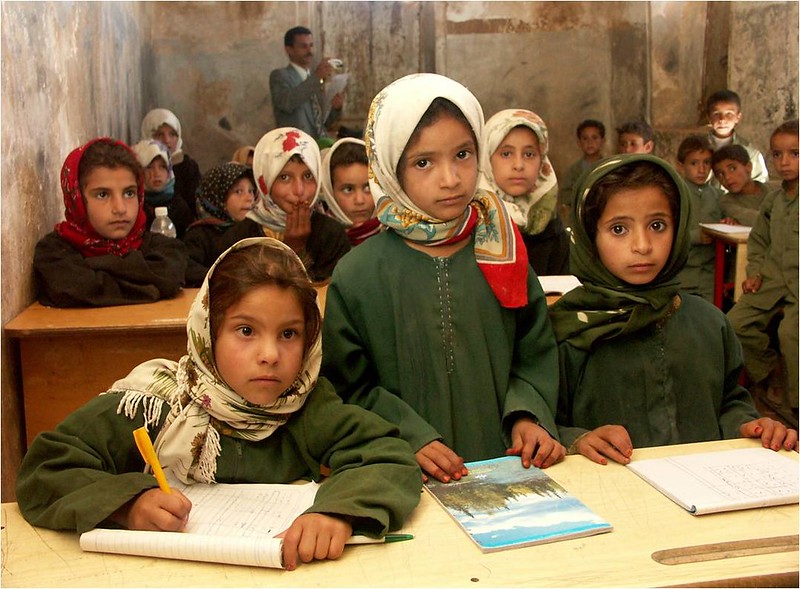 Known for conflict and war, Yemen is a country whose children are facing the education crisis perpetuated by guns. In some regions, economic issues and poverty prevent children from receiving education.. Yemen faces denial in education because of war and conflict, which in turn leads to poverty and infrastructure issues.
However, alongside massive initiatives, there is a smaller yet effective solution that is arising from the rubble. Digital libraries, libraries that offer educational resources from the cloud, in Yemen, are slowly giving education back to Yemeni children, a right that has been denied for so long.
The Crisis
Ever since conflicts started in the Yemen region, more than 2 million Yemeni children do not have access to education and have had to leave school. Education in Yemen faces both infrastructure issues due to the destruction of buildings and economic issues, as the economy of Yemen grapples with war.
The situation was dire as teachers were seen displaced from their classrooms, and the lack of supplies made the learning process nearly impossible. Additionally, a crucial piece of education infrastructure, electricity, is scarce, leaving even more educational initiatives out of reach for students.
However, digital libraries in Yemen offer a unique solution that provides a step towards the right direction.
A Solution
Digital libraries in Yemen offer a gold mine of offline and rewarding educational content. Initiatives like Rumie and Worldreader preload these digital libraries onto low-cost tablets or mobile phones that provide language books, STEM lessons and more.
These apps all run on affordable mobile devices, which students can update via Bluetooth or micro-SD card transfer, without requiring internet or electricity. Through these devices, students in Yemen are able to gain access to crucial pieces of literature or educational materials that they would have not been able to without digital libraries in Yemen.
The Impact
Long-term solutions are difficult, yet smaller solutions, such as digital libraries, provide a step in the right direction. By restoring access to education, these digital libraries can give opportunities to children to regain daily reading practice. This reduces dropout rates in a time of conflict, and digital libraries in Yemen serve as a temporary solution in an ongoing issue.
With that in mind, more initiatives just like digital libraries in Yemen not only provide a face-value impact to students in Yemen but a further motive for other organizations to put their part within the region.
While a single tablet may be able to serve a couple of children, a single tablet also encourages other organizations to provide more tablets. Through these impacts, digital libraries provide an exponential step towards restoring the educational rights of Yemen.
Restoring education in Yemen could have broader impacts on the economic crisis, conflict crisis, and general wellbeing of the Yemeni population. With the time being, digital libraries in Yemen and other initiatives will continue to serve children and Yemen as a whole.
– Kallen Zhou
Kallen is based in Hattiesburg, MS, USA and focuses on Business and Global Health for The Borgen Project.
Photo: Flickr
