Disability and Poverty in Yemen: What NGOs Are Doing Right Now
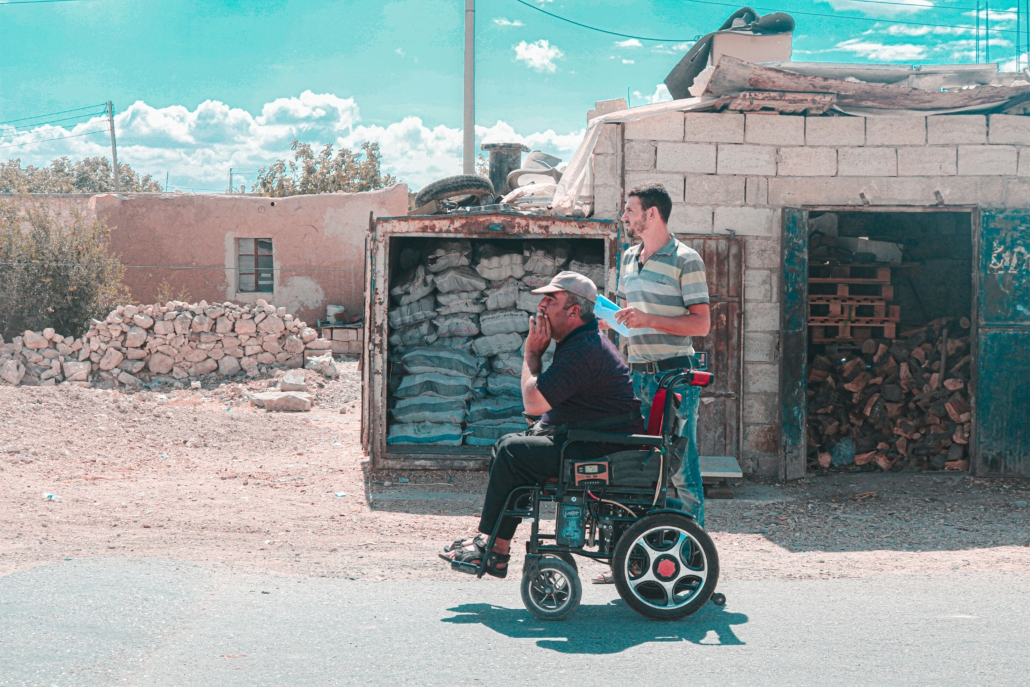 Bombing, blockades and economic collapse have pushed Yemen into one of the world’s most severe humanitarian crises. Disability and poverty in Yemen are deeply intertwined with 82.7% of Yemenis now living in multidimensional poverty as of 2023. Amid this emergency, at least 4.5 million people (about 15% of the population) live with a disability, the World Health Organization (WHO) estimates. Poverty and disability interact in a vicious cycle: conflict injuries and chronic conditions raise household expenses while stigma and inaccessible services block income opportunities.
Intersecting Barriers
Destroyed roads, damaged bridges and collapsing health facilities isolate rural districts. Families often travel for hours to reach the nearest functioning clinic, only to discover medicine shortages or unaffordable fees. Children with disabilities rarely enter classrooms because buildings lack ramps, teachers lack training and transport costs exceed family budgets. A 2023 policy study found that the Ministry of Education and the Social Fund for Development must still reach 70% of rural areas with inclusive services. Exclusion starts early and lasts a lifetime, trapping entire households in chronic poverty.
Poverty and Disability by the Numbers
- About 82.7% of Yemenis experience multidimensional poverty (2023 UNDP survey).
- According to the World Bank, 4.5 million Yemenis live with a disability.
- Households that include a person with a disability are 20% more likely to fall below the poverty line,
War continues to expand these figures. Landmines, air-delivered munitions and improvised explosives have caused thousands of amputations since 2015, swelling rehabilitation queues and deepening poverty gaps. Disability and poverty in Yemen continues to reinforce each other with every passing year of conflict.
NGO Response: Humanity & Inclusion
Humanity & Inclusion (HI) returned to Yemen in 2014 and built a nationwide rehabilitation network. Between 2015 and 2024, HI:
- Delivered rehabilitation sessions to 42,500 people injured or disabled by the conflict
- Fitted 660 people with prosthetic or orthotic devices
- Supplied 43,200 mobility aids such as crutches and wheelchairs
- Trained 820 Yemeni health workers in disability-inclusive care
- Provided psychosocial support to 29,800 survivors of violence and displacement
HI teams operate inside hospitals in Sana’a, Hajjah, Aden, Lajih and Taizz. Mobile outreach units extend care to frontline villages where no other provider can travel safely. By pairing physical rehabilitation with mental-health counselling, HI helps survivors regain mobility, return to school or work and reduce their dependence on cash assistance.
Government and Donor Action
While NGOs rebuild individual lives, large-scale income support remains critical. The Emergency Cash Transfer Project, which Yemen’s Social Welfare Fund launched with support from UNICEF and the World Bank’s International Development Association in August 2017, channels quarterly payments to every district in the country. By May 2018, the program had reached 1.5 million of the poorest families—about 9 million people or one-third of the population.
Each household receives the local-currency equivalent of $30 USD, a sum that covers staple foods and basic medicines and keeps children in school. Because registration lists include people with disabilities, the project injects direct purchasing power into some of the most excluded households.
Inclusive Education
The Social Fund for Development works with the Ministry of Education to expand inclusive schooling. By late 2024, the partnership had integrated children with disabilities into 400 public schools through teacher training, resource rooms and small-scale infrastructure upgrades.
Although coverage remains uneven, the initiative demonstrates how low-cost adaptations—braille textbooks, sign-language modules and community-based rehabilitation volunteers—can open classrooms and reduce long-term dependency.
Toward an Inclusive Recovery
Conflict still blocks Yemen’s path to stability, yet targeted interventions prove that progress is possible. Humanity & Inclusion restores mobility and dignity one patient at a time. The Emergency Cash Transfer Project prevents destitution for millions and keeps the economy alive at neighborhood level. Government-supported inclusive education starts to break the link between disability and illiteracy. Donors and policymakers can scale these models by:
- Funding additional rehabilitation centers and prosthetic workshops in underserved governorates
- Increasing cash-transfer amounts to match inflation and prioritizing recipients with disabilities
- Embedding accessibility standards in every reconstruction contract
Yemen cannot afford to rebuild without its most vulnerable citizens. A recovery strategy that places people with disabilities at its center will not only cut poverty but also strengthen social cohesion and economic resilience. The numbers show that inclusive solutions already work; sustained investment will multiply those gains and move Yemen closer to a future where disability and poverty in Yemen no longer dictate a person’s fate.
– Nafeesah Rahman
Nafeesah is based in London, UK and focuses on Global Health for The Borgen Project.
Photo: Unsplash
