Examining the Gender Wage Gap in Yemen
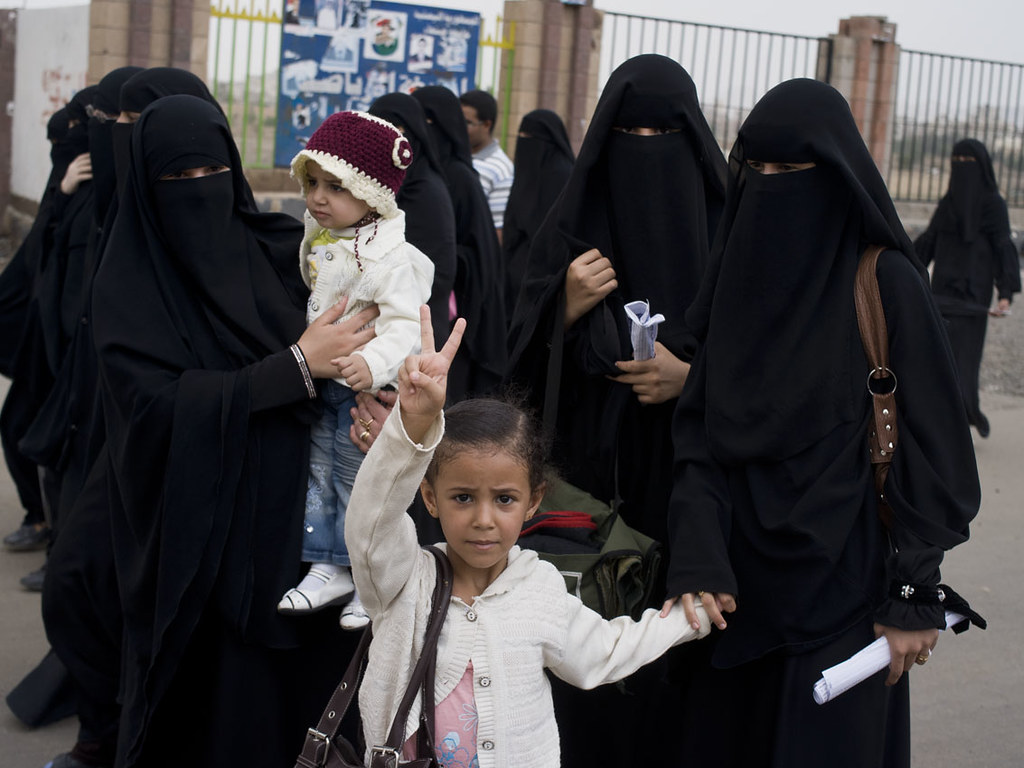 Yemen, a country located in the southwestern part of the Arabian Peninsula in Western Asia, is known as the poorest country in the region. In 2021, a study that The UN Development Program and Oxford Poverty and Human Development Initiative conducted indicated that 82.7% of Yemen were residing in multidimensional poverty. Over the last decade of violence infiltrating Yemen, war has shattered Yemen’s current economic status and further exacerbated gender inequality. In 2021, the United Nations Development Programme (UNDP) ranked Yemen 155 out of 156 in the World Economic Forum’s Global Gender Gap index, roughly a rate of 49% signifying major disparities among men and women. Here is what to know about the gender wage gap in Yemen.
Yemen’s 2014 Civil War
Yemen’s civil war, a conflict that began in 2014, occurred when the Houthi rebels, a Shiite group, seized the capital of Yemen, demanding economic reforms and political change. This invasion escalated into a civil war, in which regional powers such as a Saudi-led coalition became involved, leading into a decade-long civil war that is currently ongoing. This continuous turmoil has left Yemen unstable and has led the international community to declare Yemen as “the world’s worst humanitarian crisis,” as more than 21 million Yemenis face dire need for assistance due to famine and disease.
This conflict has devastated poverty levels and caused a health decline due to inaccessible health services, affecting the citizens in Yemen, particularly women. With limited access to education and employment, women often face exclusion from formal income opportunities, widening Yemen’s gender wage gap.
The Outcome of Yemen’s Civil War
A sociological survey released in 2024 by UIN Sunan Gunung Djati Bandung in Indonesia revealed that 47% of Yemeni women experience gender discrimination at work. This discrimination further hinders job prospects for women and decreases workforce participation, therefore increasing the rate of the gender wage gap in Yemen and exposing the disproportionate hardships women face.
Due to widespread poverty from lack of resources, women face fewer job opportunities when compared to their male counterparts. Consequently, only 55% of women are unemployed, while men have a rate of only 25%, as stated by a labor force survey conducted by the International Labour Organization (ILO) in 2015.
However, despite the damage the conflict has inflicted on women’s position in society and in the workforce, U.N. Women indicated significant increases in women’s presence in the public sphere, as they have become more active in public life and have sought employment, improving the overall status of women.
The Government’s Efforts To Diminish Inequality
While the current state of Yemen has caused a large economic disparity for women, efforts remain in place to improve such disparities. The Government of Yemen has approved initiatives to develop women’s health and strategies to diminish Yemen’s wage gap, such as ratifying the Convention on the Elimination of All Forms of Discrimination against Women (CEDAW) in 1984 and the Convention on the Rights of the Child (CRC) in 1991.
CEDAW is an international treaty that defines what is deemed as discriminatory against women and sets an agenda for national action to end such discrimination. Since its establishment, CEDAW has encouraged a reconsideration of Yemeni’s laws, such as early marriage, child labor and women’s political participation, allowing for the engagement of women not only in the workforce, but to uphold a greater position in society.
The CRC is an international human rights treaty, providing rights for children and guaranteeing education and health care that support the well being of children. It has encouraged education among the youth, especially girls, which increases the likelihood of their involvement in the workforce, decreasing the unemployment rate for women. The CRC aims to decrease gender inequality, which in return supports women’s involvement in the workforce.
The UNDP Strategic Plan
Alongside governmental intervention, UNDP has initiated forward-looking efforts, such as the UNDP Strategic Plan effective through 2023-2025, aiming to assist a variety of countries, including Yemen. UNDP has outlined several strategic approaches including:
- Providing three signature solutions to support gender equality and strengthen the economic and structural framework for women in society such as signature solution 6, which promotes equal rights for women and girls.
- Tackling the disparities between women and men through gender equality initiatives, such as implementing policies and programs focusing on women’s leadership, humans rights and access to justice.
- Developing a wide range of communication materials to effectively promote and integrate gender equality into mainstream aid efforts.
- Supporting the Women, Peace and Security agenda, ensuring that all conflict prevention is directly affiliated with addressing gender inequality.
Looking Ahead
Although war has undeniably damaged the nation and its citizens, continued support from organizations and international efforts remains imperative to begin building a more equitable society, shrinking the gender wage gap in Yemen, presenting expanded resources and providing essential opportunities without excluding women.
– Lojine Goumaa
Lojine is based in Fayetteville, NC, USA and focuses on Global Health and Celebs for The Borgen Project.
Photo: Flickr
