• Link to X
  • Link to Facebook
  • Link to Instagram
  • Link to TikTok
  • Link to Youtube
  • About
    • About Us
      • President
      • Board of Directors
      • Board of Advisors
      • Financials
      • Our Methodology
      • Success Tracker
      • Contact
  • Act Now
    • 30 Ways to Help
      • Email Congress
      • Call Congress
      • Volunteer
      • Courses & Certificates
      • Be a Donor
    • Internships
      • In-Office Internships
      • Remote Internships
    • Legislation
      • Politics 101
  • The Blog
  • The Podcast
  • Magazine
  • Donate
  • Click to open the search input field Click to open the search input field Search
  • Menu Menu

Tag Archive for: Panama

Posts

Development, Global Poverty, Hunger

Biofortification to Minimize Hunger in Panama

Panama, known for the Panama Canal, is characterized by its tropical forests and mountainous terrains, connecting Central America to South America. Over the last two decades, Panama has experienced economic growth and attained the status of a high-income country. However, inequality remains a significant issue, with disparities between the urban, rural and indigenous populations. The government is taking steps to improve the situation and reduce poverty and hunger in Panama. 

Current Statistics

Panama has made significant progress towards decreasing poverty, hunger and malnutrition and achieving SDG 1 and SDG 2.

  • Poverty has reduced to 1.54% in Panama in the last twenty years, but it is more than 70%. among the rural and indigenous population. 
  • Malnutrition in the population has decreased from 24.5% in 2001 to 4.5% in 2021. 
  • Wasting in children under 5 is recorded to be 1%.  Still, challenges remain in reducing stunting, which is reduced to 15.9% at the national level but is as high as 60% among the indigenous population. 

Combating Hunger and Malnutrition with Everyday Foods

Panama’s success has been made possible because of the government’s dedication to combatting inequalities, hunger and malnutrition through various food fortification and nutritional programs. Some of these programs are mentioned here. 

  • School Lunch- The Ministry of Education has launched various programs to improve children’s health, especially in the vulnerable population. These initiatives provide meals  (grains) fortified with essential vitamins and minerals such as vitamins A, D, zinc and folate.
  • Fortification of Crops- The government of Panama, in collaboration with the other partners, has been running a biofortification program called AgroNutre since 2006. Fortified varieties of beans, sweet potato and maize have been released, whereas pumpkin, cassava and cowpea fortification is planned. 
  • Mandatory Fortification of Staple Foods- Panama mandates fortifying wheat flour and rice with essential micronutrients to combat deficiencies among the population. 
  • Fortified Milk- In partnership with Tetrapak, the government is providing fortified milk to over 200,000 children in around 400 schools nationwide. The milk is fortified with 10 vitamins, three minerals and Omega 3 and aims to reduce stunting and wasting in children.

Through these initiatives, Panama is bridging disparities in its population and aims to elevate the quality of life for its citizens.

– Maria Waleed

Photo: Flickr

January 23, 2025
https://borgenproject.org/wp-content/uploads/borgen-project-logo.svg 0 0 Borgen Project https://borgenproject.org/wp-content/uploads/borgen-project-logo.svg Borgen Project2025-01-23 01:30:212025-01-22 22:20:32Biofortification to Minimize Hunger in Panama
Global Poverty, Human Trafficking

Raising Awareness of Human Trafficking in Panama

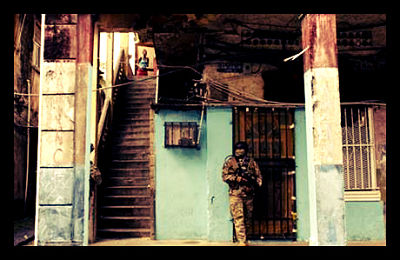
5 Progressive Steps Toward Raising Awareness of Human Trafficking in PanamaWithin the last five years, there have been many cases of human trafficking throughout Panama. Human trafficking refers to the use of fraud or coercion in order to obtain some type of labor or commercial sex act from a victim. Most trafficking victims in Panama are women from South and Central America, being exploited for sexual purposes. However, children and men are also victims.
Men from South and Central America, China and Vietnam are forced to work in construction, agriculture, mining and restaurants. Children are mainly used for domestic servitude and sexual exploitation. Tactics used include debt bondage, false promises and threats of reporting illegal immigration. In recent years, police have reported that some traffickers have even used illegal substances as a means to acquire victims. Below are five efforts to tackle the issues posed by human trafficking.

  1. UNODC: The UNODC, or the United Nations Office on Drugs and Crime, operates in Central America and the Caribbean to provide member states with technical assistance in the fight against serious and organized crime. In late January of 2020, the UNODC partnered with the General Secretariat of the National Commission against Trafficking in Persons to hold an informative breakfast in Panama to share its progress and challenges. The event also welcomed people to volunteer their support and funding through the Unit for the Identification and Care of Victims of Trafficking in Persons. There is hope that through events like this, the government of Panama will continue to make developments and advancements in putting an end to human trafficking. Hope remains that these efforts will also inspire more volunteering from those willing to work against the crime.
  2. National Secretariat for Childhood, Adolescence and Family: In 2019, Panama made efforts to reduce the likelihood and prominence of child labor throughout the country. One of these efforts included the implementation of the National Secretariat for Childhood, Adolescence and Family (SENNIAF). This agency conducts inspections to identify children living through child labor practices. Shelters for victims of trafficking, as well as care plans for children who were previously used as child laborers, are also available through this agency.
  3. Reforms in Law: In 2011, the government of Panama enacted Law 79. The law deals with trafficking in persons and related activities, thereby providing the legislative framework regarding human trafficking. The law aims to provide victims with respect in regard to their status. The initial step of this process requires public servants to immediately report to the police if they believe a person may be a victim of human trafficking, as outlined by Article 44. After a person is confirmed to be a victim of trafficking, Article 47 states that the person is allowed to stay in the country for at least 90 days in order for the victim to both physically and emotionally recover. Possibly, the most significant provision that the government has implemented is in Article 37. The portion asserts that no victim of human trafficking may be detained, accused or processed for entering the country illegally.
  4. International Organization for Migration: Headquartered in Panama, the IOM works to support the efforts of the government in Panama to develop and implement plans to prevent, investigate and prosecute trafficking crimes, while protecting victims. In line with the annual World Day Against Trafficking in Persons on July 30, 2021, the IOM held a panel on raising awareness, victim protection and crime prevention. The event was attended by government authorities and members of civil society. Its main goal was to analyze the advances and challenges associated with the issue of trafficking, as well as to develop a perspective of human rights for the protection of trafficking victims.
  5. Districts Free of Child Labor Initiatives: The government of Panama created anti-child labor agreements such as the SENNIAF listed above. Through efforts made by these agencies, Panama has experienced an increase in victim identifications, as well as training and awareness of the issue among its population.

Three Key Improvements

As a result of many of these efforts, the following improvements have taken place.

  • Child labor training was provided to 105 law enforcement officials, 55 prosecutors and 21 tourism authorities.
  • A local NGO identified 1,497 cases of child labor in 2019. Of the cases, 1,444 received care, scholarships and follow-ups from a program for 3 years in regard to academic work.

  • The Labor Inspectorate carried out 945 inspections for child labor.

The Road Ahead

Though much progress had been made in eliminating human trafficking within Panama, more work is required to see a definitive elimination in cases. A key way to work on eliminating the issue is by spreading awareness of the issue to others; human trafficking is no different. Through the work of many organizations and agencies, Panama has seen an increase in the knowledge of the matter, and the government keeps the hope that trafficking will no longer persist.

– Nia Hinson
Photo: Flickr

October 13, 2021
https://borgenproject.org/wp-content/uploads/borgen-project-logo.svg 0 0 Jennifer Philipp https://borgenproject.org/wp-content/uploads/borgen-project-logo.svg Jennifer Philipp2021-10-13 07:30:192024-06-11 23:16:53Raising Awareness of Human Trafficking in Panama
Global Poverty

Access to Clean Water in Panama for Indigenous Communities

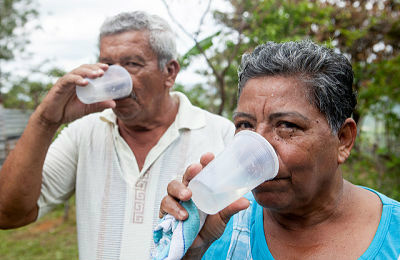
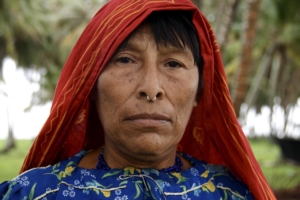
Access to Clean Water For Panama's Indigenous CommunitiesAccess to clean water and sanitation resources is a major issue in Panama. While this is an obstacle for all citizens, Panama’s indigenous communities are disproportionately affected. There are six major indigenous communities in Panama: Naso, Bri Bri, Ngobe-Bugle, Bokata, Guna and Embera-Wounaan. These indigenous groups make up around 200,000 of Panama’s population. Many indigenous communities are poverty-stricken. Only 9% of indigenous communities in Panama are not living in poverty and have access to clean water resources.

Lack of Clean Water for Indigenous Communities in Panama

The lack of necessary resources leads to health problems for indigenous communities in Panama. There are several diseases associated with a lack of clean water, such as diarrhea and dysentery. Indigenous communities often have no choice but to use unclean water sources. Location, especially in remote areas, can be a major obstacle to accessing clean water in Panama.

United Nations Joint Programme

Several programs are working to help indigenous communities access clean water in Panama. The United Nations is working toward a solution through its “Joint Programme on Water and Sanitation for Dispersed Rural and Indigenous Communities in Nicaragua, Panama, and Paraguay.” The U.N.’s program worked to educate local populations about managing their water process. Its goal was to ensure more widespread access to clean water and proper sanitation. By tackling the problem in this way, the U.N. was seeking a long term and sustainable solution. The U.N.’s project developed under the Millenium Development Goals Fund. It assists in sustaining economic advances for indigenous communities.

Sanitation Information System

After the program, the U.N. gained assistance from The Rural Water and Sanitation Information System (SIASAR). The companies’ goal was to provide Nicaragua, Panama and Paraguay with accurate information about the success and quality of the newly acquired water resources. The data from SIASAR focuses on four categories: system, community, service provider and technical assistance. SIASAR data showed that over 60,000 households now have access to clean water, while 19,000 remain without access.

Solea Water

Solea Water has also been helping increase access to clean water in Panama. One of Solea Water‘s main goals is to ensure that indigenous communities are empowered to control and sustain their development of water sources. The organization assists indigenous people with their work and programs. Solea water also asks indigenous people to help with the programs the organization itself has started. The organization’s goal is to ensure a sense of understanding and growth by working together.

Solea Water recently completed a project, with the assistance of the residents in La Reserva, called “La Reserva Panama Project Report”. The report displays the lack of water sources for residents in La Reserva over a long period of time. Solea Water’s project helped the La Reserva community access clean water again.

According to a 2019 annual report released by Solea Water, it raised over $52,000 worth of funds for completed and future projects. This has allowed Solea Water to help close to 2,700 people around Panama. Solea Water has completed almost 50 projects and has helped a total of 25,000 people since 2015.

Indigenous communities in Panama continue to struggle with accessing clean water. Alongside this issue is a lack of resources in general and a high level of poverty among indigenous communities. Location has continued to affect their access to resources. Multiple organizations are dedicated to helping indigenous communities access clean water in Panama. The United Nations is working to improve access through a water and sanitation program in Nicaragua, Panama and Paraguay. Solea Water has also worked to help indigenous communities empower themselves and sustain growth from their joint projects.
– Jamal Patterson
Photo: Flickr
July 23, 2020
https://borgenproject.org/wp-content/uploads/borgen-project-logo.svg 0 0 Kim Thelwell https://borgenproject.org/wp-content/uploads/borgen-project-logo.svg Kim Thelwell2020-07-23 13:30:402020-07-23 14:45:20Access to Clean Water in Panama for Indigenous Communities
Global Poverty, Humanitarian Aid

The Success of Humanitarian Aid to Panama

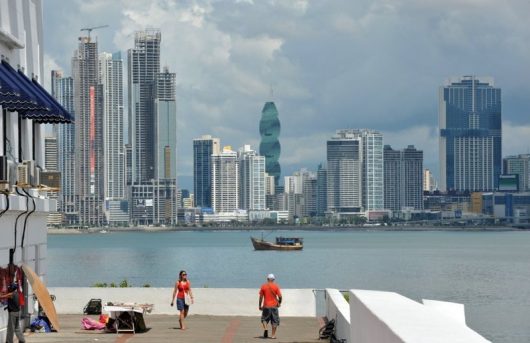
Humanitarian aid to PanamaThe U.S. began providing aid to Panama in 1961. In its early stages, the main purpose of humanitarian aid to Panama was to eradicate poverty in the country’s rural communities. Between the mid-1960s and the early 1980s, the focus shifted to improving Panama’s infrastructure and public facilities. In the 1990s, USAID was used to help jumpstart Panama’s economy following a political transition.
The Success Stories

In 2012, the USAID mission in Panama was officially closed. This means that after 51 years of providing humanitarian aid to Panama, the country had reached a point where it could deal with its own developmental and economic challenges.

At the time the mission was closed, the poverty rate had fallen from a high of 23 percent to seven percent, and the official unemployment rate was just 4.3 percent.

The health of Panama’s citizens also improved greatly during the period in which USAID was active in Panama. The life expectancy went up to 76 years and the fertility rate went down to 2.4 children per woman.

Access to education is now nearly universal in Panama. The country’s education system includes 11 years of free and compulsory education provided by the government. The curriculum includes science, math, language, social studies and other subjects needed to train a thriving workforce.

Humanitarian aid to Panama also helped the country during its transition back to democracy in 1990. The aid was used to bolster an economic recovery after a 20-year military dictatorship. It also helped stabilize Panama’s new democratic government.

From Aid Recipient to Aid Provider

When Puerto Rico was devastated by Hurricanes Irma and Maria in September and early October 2017, Panama was quick to ship aid in the form of milk, oil and rice to the island.

Panama had been receiving U.S. foreign assistance for over 50 years and they have seen tremendous benefits from USAID. But the biggest success story of all is that Panama has become a country that is now able to provide aid to other countries in times of crisis.

When former aid recipients are able to give back to American citizens in their time of need, it is a reminder that foreign assistance is not a handout, but an investment in the future. USAID in Panama assisted Panama in their economic, political and humanitarian development. It also helped create a powerful ally for the U.S.

– Aaron Childree

Photo: Flickr

November 18, 2017
https://borgenproject.org/wp-content/uploads/borgen-project-logo.svg 0 0 Borgen Project https://borgenproject.org/wp-content/uploads/borgen-project-logo.svg Borgen Project2017-11-18 01:30:002024-05-29 22:29:20The Success of Humanitarian Aid to Panama
Global Poverty

Debating Disparity: Panama Poverty Rate Declining

Panama Poverty Rate

Panama is a country of sharp contrasts. Despite recent economic growth that has benefitted some, many Panamanians still suffer from poor living conditions as the Panama poverty rate remains high, especially in rural areas.

According to the World Bank, 18.7 percent of Panamanians live in poverty. However, it is important to note the decrease in poverty that has taken place over recent years. Between 2008 and 2014, poverty was reduced from 26.2 percent to 18.7 percent and extreme poverty was reduced from 14.5 percent to 10.2 percent.

Much of this poverty is manifested in rural areas where the benefits of Panama’s dramatic economic growth have failed to reach. Those that live in rural areas of Panama often suffer from a greater rate of poverty. Extreme poverty in rural areas reaches 27 percent, in sharp contrast to urban areas where only four percent live in extreme poverty.

Poverty is even worse in indigenous areas—known as “comarcas”—where 70 percent of Panamanians live in poverty. In these areas, many lack access to clean water and sanitation, contributing to a poor quality of life outside of the bustling urban centers.

The economic growth that has benefited Panama recently is newsworthy. Compared to other countries in Central America, Panama’s GDP has grown twice as fast. This is due, at least in part, to the expansion of the Panama Canal, a thriving banking industry and an outflow of cash from Venezuela. As Panama’s economy grows, however, so does its income inequality.

This economic growth has not created better living conditions for all and has only exacerbated the disparity between the wealthy and the poor of Panama. According to a CIA analysis, Panama has the second-worst income distribution among Latin American countries, despite its reputation as one of the world’s fastest growing economies.

Perhaps the key to continuing to lower the Panama poverty rate is addressing the inequality in income distribution. While Panama’s economy is expected to continue growing in the future—the forecast in 2017 is 5.4 percent—it is important to determine how this growth can be used to benefit those that still live below the poverty line.

– Jennifer Faulkner

September 16, 2017
https://borgenproject.org/wp-content/uploads/borgen-project-logo.svg 0 0 Borgen Project https://borgenproject.org/wp-content/uploads/borgen-project-logo.svg Borgen Project2017-09-16 01:30:392020-06-29 17:09:14Debating Disparity: Panama Poverty Rate Declining
Global Poverty, Water

Eight Facts About Water Quality in Panama

Water Quality in Panama
As one of the most prosperous and developed countries in Central America, Panama is a leader in the area regarding sanitation and water quality. Current estimates say that 93% of Panamanians have access to an improved water source, while 69% have access to improved sanitation. Despite these numbers, there have been many challenges in recent years pertaining to water quality in Panama, especially in rural areas.

  1. Many of Panama’s improvements in water quality occurred in the 1990s after Ernesto Perez Balladares was elected president in 1994. The privatization of water and electric companies helped to improve conditions as the country continued to invest in urban areas.
  2. Data from the World Bank showed an increase in the percentage of those that have access to an improved water source from 83.8% up to 94.7% between 1990 and 2015.
  3. The Instituto de Acueductos y Alcantarillados Nacionales (IDAAN) has been responsible for water quality in Panama for more than 50 years. IDAAN recently set up a tariff system to help cover investment costs as their expenses increase.
  4. In 2013, 840,000 of the country’s population of 3.8 million did not have 24-hour access to water, while 600,000 lacked access to a potable supply, and 30,000 relied on tank trucks to deliver drinking water.
  5. A 15-day rainstorm in December of 2010 created a clog in purification equipment in a water treatment plant, resulting in a month-long shutdown that hindered more than a million residents’ access to water in Panama City.
  6. Recent studies about the effects of climate change have suggested that periods of flood and drought may threaten both Panama’s water quality and the water supply in the Panama Canal. This may pose a huge threat to Panama’s shipping industry, as it takes 52 million gallons of water to move just one ship through the canal.
  7. One recent threat toward water quality in Panama has been the agricultural runoffs in rural areas that may contain pesticides, animal feces and other contaminants. After facing pressure to confront this issue in 2015, Panama’s National Assembly created the Ministry of the Environment to focus on giving rural residents consistent access to clean water.
  8. If present trends continue, Panama hopes to increase drinking water coverage for both urban and rural areas above 90 percent by 2020.

While the country has made tremendous progress in the last few decades, water quality in Panama remains an issue due to poor response to problems such as drought and runoff. In the near future, Panama will have to respond to changes brought about by climate change and other factors to ensure the continued health and prosperity of their nation.

– Nick Dugan

Photo: Flickr

July 13, 2017
https://borgenproject.org/wp-content/uploads/borgen-project-logo.svg 0 0 Borgen Project https://borgenproject.org/wp-content/uploads/borgen-project-logo.svg Borgen Project2017-07-13 07:30:492020-06-04 10:20:04Eight Facts About Water Quality in Panama
Food & Hunger, Global Poverty

The Current Cost of Living in Panama

Cost of Living in Panama
Known for its 48-mile canal connecting the Pacific Ocean with the Atlantic Ocean, Panama receives over a million visitors each year. Panama’s beautiful beaches, ecotourism and international festivals can seduce many tourists into making Panama their home rather than a vacation spot. For those who entertain the thought of Panama as their permanent home, it is important to know the cost of living in Panama as well as what it’s like to live there.

Panama has a relatively low cost of living, which can range from $1,120 to $8,000 per month for two people, while the average middle-class salary in Panama is estimated at $1,200 per month. These costs fluctuate depending on what region or city you are going to be living in Panama.

The unemployment rate in Panama is 4.5%. The labor force in Panama is made up of 1.78 million people; a large majority of the population works in services while the rest works in agriculture and industry. The standard workweek in Panama is 48 hours, which is 8 hours more than a full-time work week here in the United States.

While the cost of living in Panama is low, migrants should know much more about Panama before making the decision to move there. For example, while Panama’s crime rate compared to other Central American countries is relatively low; however, it is still high compared to most of the United States. Panama, Colon, Herrera and Chiriqui are among the provinces with the largest cities which had the highest overall crime rate. There has been a pattern of decreasing crime in Panama. Homicide, armed robberies and petty theft rates have all continuously fallen.

Moving from the United States to Panama may come as a huge shock when you realize that Panama’s population is only four million. Approximately one-third of Panama’s population lives in Panama City or the immediate area around it. Panama City is packed with nightlife, shopping areas. The rest of the areas in Panama provide a quiet and relaxed life which provides quicker access to Panama’s nature.

There are many things to consider and know about Panama before turning your yearly vacation into a forever home. While Panama may be very appealing to the eye and its beautiful attractions may coerce someone into a quick move, the cost of living in Panama may be a deciding factor.

– Danyel Harrigan

Photo: Flickr

July 13, 2017
https://borgenproject.org/wp-content/uploads/borgen-project-logo.svg 0 0 Borgen Project https://borgenproject.org/wp-content/uploads/borgen-project-logo.svg Borgen Project2017-07-13 07:30:012024-06-04 01:08:21The Current Cost of Living in Panama
Global Poverty, Refugees

10 Important Facts About Refugees in Panama

Panama Refugees
Panama is a country located on the isthmus between Central and South America which hosts thousands seeking asylum from nearby countries such as Nicaragua and Venezuela. However, the majority of refugees in Panama come from Colombia.

Over more than 50 years of drug-related conflict, 6.6 million Colombians have been forced to leave their homes. An estimated 370,000 Colombian refugees live in countries near their own, and Panama is a major hub. Below are ten facts about refugees in Panama and organizations working to improve their circumstances.

  1. Panama is a possible destination for refugees because of its relative safety and proximity to countries currently at war. As a result, many applications go unreviewed for years due to high volume. Of 893 requests for asylum in Panama from Colombia last year, just 28 went under review, of which 23 were accepted.
  2. Also, few Colombian refugees receive Refugee Status Determination (RSD), meaning deportation is a constant possibility. Without the direct support of a governing body, there is no guarantee of essential resources and safety.
  3. Due to a lack of documentation, Colombian refugees in Panama have little job security. Sometimes, refugee families cannot afford to stay.
  4. Fortunately, organizations identify these gaps and step in to help. The Norwegian Refugee Council (NRC) offers legal services and counseling to Colombian refugees in Panama, helping them to achieve official refugee standing and to defend their property rights.
  5. The NRC aims to empower refugees in the context of the law as a whole. The staff at a convenient Panama-based office train authorities to maximize their ability to help, escort new asylum seekers to refugee commissions and ensure a basic understanding of the law so refugees can avoid falling victim to crime.
  6. In 2016, the Office of the United Nations High Commissioner for Refugees (UNHCR) issued an initiative to improve resources and security for refugees in some Latin American countries, Panama included. The appeal calls for $18.1 million to ensure housing, child protection and related resources. So far the appeal has fulfilled nearly half of these requests.
  7. Closely following these efforts, the UNHCR supported the release of the San Jose Action Statement, in which nine countries across North and Central America agreed to protect those struggling to flee danger in their home countries.
  8. Participating countries will formulate solutions to keep refugees safe as they cross borders. Implementing the use of clear, abundant documentation and creating access to legal services are foundational elements of the plan.
  9. The process also includes training national officials according to the concerns of refugees, with a specific focus on law and policy. This step is already in motion in all nine participating countries.
  10. Protecting refugees in Panama and ensuring them basic resources will mean extensive data collection.  This plan is an endeavor that has presented a challenge already, as there is little existing protocol. Countries continue brainstorming to troubleshoot such issues.

Though technicalities pervade—and sometimes inhibit—the flow of refugees from places of conflict into Panama, the work of compassionate nations and organizations like NRC and the U.N. promise smoother transitions. With their continued efforts, the experiences of refugees in Panama are bound to keep improving.

– Madeline Forwerck

Photo: Flickr

July 11, 2017
https://borgenproject.org/wp-content/uploads/borgen-project-logo.svg 0 0 Borgen Project https://borgenproject.org/wp-content/uploads/borgen-project-logo.svg Borgen Project2017-07-11 07:30:292024-12-13 17:58:2010 Important Facts About Refugees in Panama
Developing Countries, Global Poverty, Health

Poverty and Happiness Coexisting In Panama

poverty_happiness_panamaA Gallup poll revealed that Panama was one of the happiest countries in the world, followed by Paraguay and El Salvador. The poll interviewed people in 148 countries and asked about their experiences the day before. People were asked if they smiled a lot, if they felt respected and if they were well-rested.

Panama is one of the poorest countries in the world. Why are people there so happy?

1. Positive Attitude

Latin American countries focus on positives such as friends, family and religion despite the difficulties they may face in their daily lives. With the economic boom, including more jobs, resulting from the success of the Panama Canal comes increased traffic and crime. However, Panamanians choose to focus on the positives. People in the happiest, yet poorest, Latin American countries find joy in moral satisfaction more than in material goods, a mentality that is often not found in citizens within developed countries.

“Overall, I’m happy because this is a country with many natural resources, a country that plays an important role in the world,” Carlos Martinez said. “We’re Caribbean people, we’re people who like to celebrate, to eat well and live as well as we can. There are a lot of possibilities here, you just have to sacrifice a little more.”

2. Health Care

State-of-the-art equipment, highly skilled doctors and reasonably-priced health insurance are just a few benefits of living in Panama. As a result of a good healthcare system, life expectancy is quite high in Panama – 74 years for men and 80 years for women.

3. Favorable Climate

The temperature remains at about 80 degrees Fahrenheit year-round. Furthermore, the country does not experience dry and rainy seasons. The weather, along with a developed pension system, draws retirees to the country. In 2005, Panama won first place in the global index of the most comfortable countries in the world. According to the American Association of Retired Persons and the organization “International Living,” the United States recognized Panama as one of the world’s four best countries to live in outside the United States.

– Haley Sklut

Sources: Live Science, Daily Mail, World Mathaba,
Photo: News

January 31, 2014
https://borgenproject.org/wp-content/uploads/borgen-project-logo.svg 0 0 Borgen Project https://borgenproject.org/wp-content/uploads/borgen-project-logo.svg Borgen Project2014-01-31 11:38:142024-12-13 17:49:57Poverty and Happiness Coexisting In Panama
Global Poverty

Colon Misses Out on Panama’s Economic Growth

Colon Misses Out on Panama's Economic Growth
The Panama Canal is framed by Panama’s two largest cities. At one end is Panama City, a vibrant, bustling metropolitan center that is currently experiencing some of Latin America’s greatest growth. At the Canal’s other end, just forty miles away, lies the city of Colon, where potable water, electricity, structurally sound buildings, and meaningful work are all in short supply for the city’s 220,000 residents.

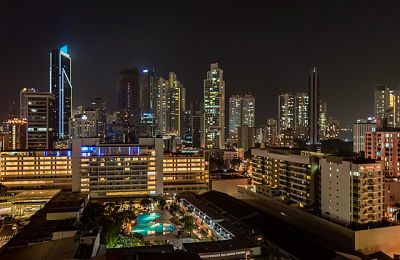
Panama has had an average economic growth of nine percent every year for the last five years. This is due in large part to foreign investment and development in Panama City, where Central America’s first subway is currently under construction. The tallest building in Latin America, a 70-story Trump hotel and condominium, is not out of place among newly constructed skyscrapers, malls, and restaurants.

But Colon has not enjoyed the same booming industrial and commercial development. The city has the largest duty-free trade zone in the Western hemisphere, which has long been a point of contention between residents and developers. Recent development within the zone has benefited businesses there, but not the city at large. The duty-free zone caused social unrest last year when Panama’s president passed a law allowing sale of land in and near the zone. Residents feared this would displace them from their homes and hurt their incomes. Several were killed in the protests.

The economic inequality between Colon and Panama City stems in part from racial segregation and discrimination. Racism is a long-standing problem in many Latin American countries, and Panama is no exception. Those with light skin are often viewed more favorably than those with dark skin in terms of wealth, attractiveness, and ability.

Colon is predominantly black, while Panama City has a larger percentage of European descendants. Many believe that racial discrimination has played a role in Colon’s economic depression.

The stark disparity between Panama City and Colon is an example of the unequal economic growth occurring all over the world. In many places, wealth remains concentrated where it is already abundant, while the poor remain poor, and grow poorer. Correcting this imbalance will require a multifaceted, in-depth, strategic approach that the world’s poor are unable to implement themselves. Therefore, those who have the means to do so are responsible for working to make humane living conditions and economic security realities for every person on the planet.

– Kat Henrichs

Source: NY Times
Photo: AP

April 13, 2013
https://borgenproject.org/wp-content/uploads/borgen-project-logo.svg 0 0 Borgen Project https://borgenproject.org/wp-content/uploads/borgen-project-logo.svg Borgen Project2013-04-13 08:43:402024-06-07 04:44:45Colon Misses Out on Panama’s Economic Growth

Get Smarter

  • Global Poverty 101
  • Global Poverty… The Good News
  • Global Poverty & U.S. Jobs
  • Global Poverty and National Security
  • Innovative Solutions to Poverty
  • Global Poverty & Aid FAQ’s
Search Search

Take Action

  • Call Congress
  • Email Congress
  • Donate
  • 30 Ways to Help
  • Volunteer Ops
  • Internships
  • Courses & Certificates
  • The Podcast
Borgen Project

“The Borgen Project is an incredible nonprofit organization that is addressing poverty and hunger and working towards ending them.”

-The Huffington Post

Inside The Borgen Project

  • Contact
  • About
  • Financials
  • President
  • Board of Directors
  • Board of Advisors

International Links

  • UK Email Parliament
  • UK Donate
  • Canada Email Parliament

Get Smarter

  • Global Poverty 101
  • Global Poverty… The Good News
  • Global Poverty & U.S. Jobs
  • Global Poverty and National Security
  • Innovative Solutions to Poverty
  • Global Poverty & Aid FAQ’s

Ways to Help

  • Call Congress
  • Email Congress
  • Donate
  • 30 Ways to Help
  • Volunteer Ops
  • Internships
  • Courses & Certificates
  • The Podcast
Scroll to top Scroll to top Scroll to top