• Link to X
  • Link to Facebook
  • Link to Instagram
  • Link to TikTok
  • Link to Youtube
  • About
    • About Us
      • President
      • Board of Directors
      • Board of Advisors
      • Financials
      • Our Methodology
      • Success Tracker
      • Contact
  • Act Now
    • 30 Ways to Help
      • Email Congress
      • Call Congress
      • Volunteer
      • Courses & Certificates
      • Be a Donor
    • Internships
      • In-Office Internships
      • Remote Internships
    • Legislation
      • Politics 101
  • The Blog
  • The Podcast
  • Magazine
  • Donate
  • Click to open the search input field Click to open the search input field Search
  • Menu Menu

Tag Archive for: North Korea

Posts

Global Poverty, Politics

On the Main Causes of Poverty in North Korea

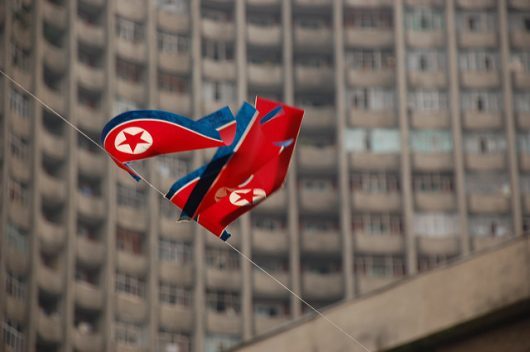
Causes of Poverty in North KoreaNorth Korea, the only country in the world which still adopts Stalinist principles, has long been one of the most impoverished countries in the world. Recently, it scored 28.6 in the 2016 Global Hunger Index, a level which the International Food Policy Research Institute classified as “serious.” A report published by the Korea Institute for National Unification (KINU) in 2013 estimated that about half of North Korea’s 24 million lives in “extreme poverty,” who are “severely restricted in access to fuel for cooking and heating.”

The two primary causes of poverty in North Korea are as follows:

Climate and geography
North Korea’s climate is less suitable for agricultural production than that of South Korea. Northern and northwestern winds that blow from Siberia cause the winters in North Korea to be bitterly cold, often involving heavy snow storms. This type of weather is particularly harsh in the mountainous regions in the north, contributing to the relative lack of arable land in North Korea. Due to the cold temperatures, single cropping is usually practiced in the north, while double cropping is possible in the south where winters are less severe.

Because of the country’s mountainous terrain, the regime has sought to increase agricultural production mainly through double cropping, rather than through expanding the cultivable area. However, due to factors such as short cropping season, prolonged and harsh winter, and uncertainty of the spring weather, the results have often been disappointing.

Despotic regime
Another one of the causes of poverty in North Korea is the despotic regime succeeded by the Kim family. During the 1980s, the North Korean regime embarked on a radical economic policy of self-sufficiency known as “juche.” This policy wreaked havoc on the country’s economy, especially after the collapse of the Soviet Union in 1991, after which the country could not import cheap fuel, its industrial base was fractured and its production of fertilizer decreased.

North Korea’s provocations on the international stage, such as the shelling of the South Korean island in 2010 and repeated nuclear tests, also resulted in numerous sanctions by the U.N., which restricted the amount of humanitarian aid going into North Korea.

These are the main causes of poverty in North Korea. Whether North Korea will be able to escape from poverty will heavily depend on the international community’s efforts, as well as the regime’s willingness to adopt open-market reforms, just as China did in the late 1970s.

– Minh Joo Yi

Photo: Flickr
August 16, 2017
https://borgenproject.org/wp-content/uploads/borgen-project-logo.svg 0 0 Borgen Project https://borgenproject.org/wp-content/uploads/borgen-project-logo.svg Borgen Project2017-08-16 01:30:392020-06-12 08:50:57On the Main Causes of Poverty in North Korea
Aid, Global Poverty

How to Help People in North Korea

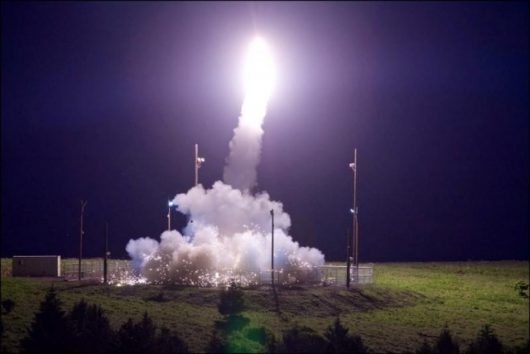
Help People in North KoreaNorth Korea is in the news often lately—from the comatose American student Otto Warmbier dying after his release from the country, to dictator Kim Jong Un testing missiles capable of reaching the United States. What is less mainstream knowledge, however, is the plight of 25 million North Koreans who face chronic food shortages, poverty and a repressive regime. Focus is not often on how to help people in North Korea.
North Korea’s government spends more than 20 percent of its GDP on defense while more than half of its population lives in extreme poverty. As a result, one-third of children have stunted growth and thousands, if not millions, die of preventable starvation.

North Korea represses its citizens by censoring and restricting any information from outside the closed-off country. State propaganda leads North Koreans to believe the rest of the world is threatening and inferior. For crimes against the regime — real or perceived — an estimated 200,000 people work in abusive prison camps where torture and rape abound.

The vast amount of suffering in North Korea seems daunting, but there is hope. Here is how to help people in North Korea:

  1. Mail in old flash drives
    The North Korean government brainwashes residents to think it is doing a wonderful job protecting it from the outside world, despite struggling to feed, house and employ its people. It is possible to help free North Koreans from this manipulation by sending old flash drives to Flash Drives for Freedom. The nonprofit will erase what is on them and fill them with films, internet content and books. It works with South Korean partners to smuggle the drives into North Korea.According to Wired, these glimpses of outside information have the power to change North Koreans’ view of the U.S. and other nations the dictatorship has labeled as evil. Recognizing the regime’s lies can empower citizens to question the legitimacy of the regime and encourage others to do the same.
  2. Support organizations
    Multiple agencies worked for years to relieve suffering in North Korea. One of them, the Defense Forum Foundation, began working for human rights in the country in 1996. The Defense Forum Foundation helped establish Free North Korea Radio, a radio program broadcast into North Korea with messages from defectors. The organization also rescued hundreds of North Korean refugees and created annual events to spread awareness and encourage people to act.Another organization, Liberty in North Korea, rescued more than 600 refugees by providing safe passage over thousands of miles of China and Southeast Asia. According to its website, $3,000 is all it takes to rescue and resettle one refugee.The North Korea Freedom Coalition could also use donor support. It coordinates with its many partners to get food aid to North Koreans, pressure the government to release abductees and more. It helped establish North Korea Freedom Day in 2004, which garnered public and political support for the North Korea Human Rights Act, signed into law that year.
  3. Contact representatives
    The U.S. Senate and House of Representatives each has a bill reauthorizing and strengthening the North Korean Human Rights Act. Passage of these bills would ensure the U.S. continues working to help people in North Korea — both those who stay and those who flee the country.The Senate bill, for example, wants the U.S. government to expand private broadcasting inside North Korea to disseminate news and information contradictory to what citizens hear from propagandizing, state-controlled broadcasts.Another facet of both bills calls for the United States to urge China to stop returning North Korean defectors where they and their families face several forms of persecution, like sexual abuse and forced labor. They also mention that the United States should cooperate with countries that border North Korea to develop long-term plans of “humanitarian assistance and human rights promotion and to effectively assimilate North Korean defectors.”Also included in the bills is a section for the continuation of supporting North Korean refugees with resettlement in the United States, if that is their choice. Only around 200 North Koreans resettled in the United States. An estimated 100,000 to 300,000 North Koreans have defected since 1953. Several thousand live in China in fear of deportation.

Many people call North Korea the most miserable and repressed society in the world. But there are ways to help people in North Korea.

– Kristen Reesor

Photo: Flickr

August 14, 2017
https://borgenproject.org/wp-content/uploads/borgen-project-logo.svg 0 0 Borgen Project https://borgenproject.org/wp-content/uploads/borgen-project-logo.svg Borgen Project2017-08-14 07:30:282020-06-11 08:54:25How to Help People in North Korea
Global Poverty, Politics

Facts and Figures of North Korea

Facts and Figures of North Korea

Hidden behind the tensions of military bluster between the U.S. and North Korea lies a sad and often overlooked reality: North Korea is an incredibly impoverished country.

The conflict on the Korean peninsula can be traced back to when Japan controlled Korea till 1910. After the Japanese lost in World War II, the peninsula was divided between a communist northern half and a democratic southern half.

Tensions between the north and south erupted into war in 1950. The U.S. led a United Nations coalition to support the south; China was the principal ally of the north. The war ended in a stalemate with the current division becoming a demilitarized zone. North Korea has languished since, relying heavily on outside aid.

Most of the developed world stopped sending monetary aid to North Korea in 2009. South Korea ended aid in 2010 due to conflicts with the incoming government of Kim Jong Un.

Much of North Korea’s poverty problem stems from government spending, or the lack thereof. Most of the country’s budget is allocated to military and defense spending. This means that most of North Korea’s budget is not invested in its people.

This lack of aid has impacted North Korea’s investment in education, health services and infrastructure.

The average education level for a North Korean is only 11 years. The average annual income is only $1300. These disparities stem from the government’s sole interest in military spending, and its lack of interest in its people. These facts and figures of North Korea illustrate that the impoverished Asian nations strongly needs foreign aid, as well as restructuring its own budget, to combat its extreme poverty.

In the interest of its citizens, North Korea could decrease spending on its military and defense program. This could increase international confidence in the country’s financial and political system, therefore increasing foreign aid that could be used for basic services for its populace.

Until the North Korean government focuses on its people instead of its military, and makes serious efforts to combat these disastrous poverty-related facts and figures of North Korea, it will continue to be an impoverished nation.

– Raymond Terry

Photo: Google

August 13, 2017
https://borgenproject.org/wp-content/uploads/borgen-project-logo.svg 0 0 Borgen Project https://borgenproject.org/wp-content/uploads/borgen-project-logo.svg Borgen Project2017-08-13 07:30:282024-05-27 23:53:56Facts and Figures of North Korea
Disease, Global Poverty

Common Diseases in North Korea

Common Diseases in North Korea
For the past years 30 years, North Korea has been incredibly impoverished. The health care system in North Korea is minuscule at best. Children are often malnourished to the point of stunted growth, people cannot receive proper medical attention, and diseases that have been largely eradicated in most parts of the world are still prevalent. Common diseases in North Korea stem from poverty.

North Korea has a unique poverty situation; the government puts money into military spending instead of focusing on the health and prosperity of its people.

In North Korea, the greatest number of deaths come from non-communicable diseases. Although non-communicable diseases—such as cancer, cardiovascular diseases, and respiratory diseases—cause the most mortality, the magnitude of problems caused by malnutrition and communicable diseases increases the likelihood of disease burden in the future. A lack of sufficient nutrition makes fighting off diseases difficult because the immune system has no strength. About a third of North Korean children show signs of stunted growth; starving children are also more susceptible to diseases, making their life expectancy low.

Common diseases in North Korea include cardiovascular disease, cancer, and chronic respiratory disease. In 2013, strokes, ischemic heart disease and chronic obstructive pulmonary disease were North Korea’s most deadly sources of harm. Communicable diseases like tuberculosis and malaria are endemic in North Korea. Tuberculosis, a curable disease, affects 345 out of 100,000 North Koreans. This is considered to be one of the highest rates outside of sub-Saharan Africa. Tuberculosis is a disease associated with poverty, bleak conditions, and a lack of sanitation.

One of the main reasons why these health issues are so apparent is that there is zero guarantee of health care. Article 56 of the North Korean constitution specifies free medical care for all citizens. This has not been accurate. If a patient is unable to provide money or a gift to a doctor, their illness will often go untreated. Most of the patients are too impoverished to provide any sort of compensation. Even if they can provide compensation, there are often not enough resources for help to be provided.

“There are doctors and buildings, but no aspirin, no anesthetic, no basic medicines, no heating, no soap, no milk and therefore no patients. The health system in North Korea collapsed, leaving almost the entire population with no care except for traditional ‘Korio’ herbal medicine,” said Dr. Eric Goemaere, director of Doctors Without Borders. The lack of resources has been going on for approximately four years.

Common diseases in North Korea, such as tuberculosis, show that North Korea is behind the international community. Instead of using its money to provide health care, it uses it for military spending. However, North Korea can’t be a strong, resilient nation when its people are sick. North Korea needs to think about the needs of the people and give doctors the resources to help the sick effectively.

– Lucy Voegeli

Photo: Flickr

July 29, 2017
https://borgenproject.org/wp-content/uploads/borgen-project-logo.svg 0 0 Borgen Project https://borgenproject.org/wp-content/uploads/borgen-project-logo.svg Borgen Project2017-07-29 01:30:372024-06-05 23:47:13Common Diseases in North Korea
Developing Countries, Global Poverty, Human Rights, Slavery

Countries That Still Have Slavery

Countries That Still Have Slavery
Although modern slavery is not always easy to recognize, it continues to exist in nearly every country. In total, there are 167 countries that still have slavery and around 46 million slaves today, according to the 2016 Global Slavery Index.

The U.S. Department of State defines modern slavery as “the act of recruiting, harboring, transporting, providing, or obtaining a person for compelled labor or commercial sex acts through the use of force, fraud, or coercion.”

India, China, Pakistan, Bangladesh, Uzbekistan and North Korea are at the top of the list for countries that still have slavery. Here are some facts about what slavery is like in each of these countries.

The Highest Numbers: 6 Countries That Still Have Slavery

  1. India (18.4 Million) India has the highest number of slaves in the world. Like many other countries, modern slavery in India can take the shape of domestic service, forced begging, commercial sexual exploitation, forced marriage and forced recruitment for armed services. Because of India’s growing economy, many modern slaves work in factories that export goods to other countries. Consequently, men, women and children work long hours without proper compensation or even basic rights.
  2. China (3.4 Million) The Chinese government relies on exports of goods and raw materials even more than India. According to a CNN report, people in China are forced into labor across many different industries. The migration of poor families from rural to urban areas in search of jobs often leads to opportunities for traffickers. Although families travel together, many eventually split up. Individuals sell young boys to other families who lack sons, and girls often face sex slavery or forced marriage.
  3. Pakistan (2.1 Million) Modern slavery in Pakistan, like India, centers on debt bondage, or bonded labor. Brick-making employs around 10 million people in Pakistan. Children and families often work 10 hours each day in brick kilns and are denied basic rights or laws to protect them. Without this protection, workers face torture and sexual exploitation.
  4. Bangladesh (1.5 Million) Contemporary slavery in Bangladesh is accounted for through 80 percent forced labor and 20 percent forced marriage, according to the Global Slavery Index. Poverty, natural disasters and government corruption have made Bangladesh the 11th most vulnerable country to slavery within Asia.
  5. Uzbekistan (1.2 Million) The main cash crop of Uzbekistan is cotton. Each fall, when cotton crops are booming, the government forces millions of people out of their jobs to work in the cotton fields. International organizations monitor the process, however, the government still does not compensate these people. They also do not enforce proper safety precautions.
  6. North Korea (1.1 Million) The government of North Korea has done little to criminalize modern slavery. People of all ages are subject to forced labor while their government says they are “living in a socialist paradise.” One in twenty North Koreans is enslaved. Although the country does not have the highest total number of slaves, it does have the highest concentration of forced labor.

While many countries have taken steps toward banning and criminalizing slavery, there is still much to do. Countries that still have slavery are facing many problems that we all must address. “Improving the rights of 45.8 million human beings is both wise and urgent for all leaders of countries and organizations,” said Andrew Forrest, Founder and Chairman of the Walk Free Foundation. “Eradicating slavery makes sense; morally, politically, logically and economically.”

– Madeline Boeding

Photo: Flickr

July 4, 2017
https://borgenproject.org/wp-content/uploads/borgen-project-logo.svg 0 0 Borgen Project https://borgenproject.org/wp-content/uploads/borgen-project-logo.svg Borgen Project2017-07-04 07:30:122024-12-13 17:58:16Countries That Still Have Slavery
Global Poverty, Human Rights, Refugees

3 Organizations That Support North Korean Refugees

Support North Korean Refugees
North Korea’s government is one of the most restrictive in the world. Unpaid labor is forced upon North Korean civilians, independent press and media are banned and the borders are guarded and monitored closely by both North Korean and Chinese guards. Human Rights Watch reports that North Korea contains prison camps holding hundreds of thousands of North Korean citizens of all ages. Conditions there include torture, sexual abuse and, for those accused of serious crimes, public execution. Discussed below are organizations that support North Korean refugees.

Liberty in North Korea

This organization helps North Koreans escape using calculated courses through China and Southeast Asia. To accomplish this, Liberty in North Korea leverages on-ground relationships and donor funding. The organization also has very systematic resettlement programs available to support North Korean refugees including translation, healthcare, integration and counseling services. Additionally, Liberty in North Korea educates, mobilizes and encourages others to support North Korean refugees via events and fundraisers. The organization has a thorough breakdown of how funds are distributed throughout the escape and resettlement process, and it claims that $3,000 will save and resettle one North Korean refugee.

North Korean Freedom Coalition

This organization partners with political leaders to support North Korean victims of human rights violations. It also hosts the annual North Korean Freedom Week, which raises awareness of the North Korean atrocities and gains support for the freedom of North Korean prisoners being unjustly held. This is a collaboration of several public and private members, including several different independent charities.

Helping Hands Korea (HHK)

This is a non-denominational Christian organization that provides food and basic necessities to North Koreans based on the level of support each requires. HHK also assists with the transport of refugees through Asia to safety. Although the spread of Christianity is not the primary goal of HHK, the organization provides each refugee a Bible and a message of hope.

The level of human rights violations in North Korea has not received the amount of attention it deserves, and further education is necessary to address these issues in a rational and effective way. North Korea continues to develop its weapon systems and actively test nuclear weapons and missiles, in violation of U.N. agreements. The U.S. has hinted that it is willing to use force in dealing with North Korea, but a war would cause an astronomical number of casualties, especially in South Korea. While China has increased its pressure on North Korea to denuclearize, it must take a stronger role in abolishing the inhumane treatment of North Korean citizens and support North Korean refugees.

– Emma Tennyson

Photo: Flickr

July 1, 2017
https://borgenproject.org/wp-content/uploads/borgen-project-logo.svg 0 0 Borgen Project https://borgenproject.org/wp-content/uploads/borgen-project-logo.svg Borgen Project2017-07-01 07:30:282024-12-13 17:58:143 Organizations That Support North Korean Refugees
Developing Countries, Global Poverty

Water Quality in North Korea

Water Quality in North Korea
Water quality in North Korea continues to deteriorate. The country’s water system and sanitation systems are both in a state of disrepair. Even though the country invested in an extensive piped water supply system in the early ’80s, due to natural disasters and low levels of investments the water system in compromised.

As a result of inadequate water quality, North Korea has had poor sanitation and unhygienic behavior from its citizens, resulting in an increased rate of under-five mortality.

Due to the condition of water quality in North Korea, UNICEF’s WASH program has focused on contributing to improved access and utilization of safe drinking water, sanitation services and good hygiene practices in communities and schools in the country.

In 2015, North Korea was impacted by a drought that lasted 18 months, resulting in the lack of drinking water and a further worsening of the country’s water supply system — resulting in an increase in the prevalence of water-borne diseases.

The water quality in North Korea is further threatened by limited sewerage networks and low water levels.

Access to potable water in the country is almost always inadequate and organizations like Concern Worldwide continue to work with local authorities and communities to provide alternative energy and pumping systems to provide North Koreans with water and also build latrines.

Water quality in North Korea continues to negatively impact the country’s food supply and without proper development will continue to result in malnutrition and disease.

While the country’s water issues seem grim, the country has developed a five-year economic plan which focuses primarily on the simultaneous development of nuclear weapons and the economy as a means to improve living conditions in the country.

Although water quality in North Korea continues to worsen, there remains a glimmer of hope in sight for the people of North Korea.

– Rochelle R. Dean

Photo: Flickr

May 7, 2017
https://borgenproject.org/wp-content/uploads/borgen-project-logo.svg 0 0 Borgen Project https://borgenproject.org/wp-content/uploads/borgen-project-logo.svg Borgen Project2017-05-07 01:30:132024-05-28 00:00:13Water Quality in North Korea
Education, Global Poverty

Education in North Korea: Exploring School Systems


Many facets of life in North Korea are kept secret from the world. The business conducted in the nation is very classified, but what about its school systems? How are the youth of North Korea educated?

Education in North Korea is based on socialistic ideals and an efficiency-oriented school system with emphasis on Korean language, mathematics, literature, and the Kims.

Features of the system include 11 free years of education for children from the age of five through 15, no private schools and tight administrative control over the schools by the state administrative system.

Students are given a political education in the “Juche Doctrine” which outlines the Kim Il-sung ideology and revolutionary strategies, illustrating the importance and necessity of collectivistic activities in their nation. Putting these theories into practice are the basis of the North Korean school system.

Not to mention the leader of the communist nation, Kim Jong-un, forces his people to understand the importance of his family. According to a study by the  Korea Institute for Curriculum Evaluation, students learn more about the Kims and their history than any other subject.

Each North Korean student is required to learn about the lives of Kim, his late father Kim Jong-il, his grandfather Kim Il-sung and grandmother Kim Jong-suk for at least 684 hours during the curriculum. Jong-il and Il-sung lessons are roughly 171 hours each, while Jung-suk lessons are only 34 hours.

Why is the combination of Kim’s history and the three bases used? Simple — to help North Korea maintain its oppressive power.

Students as young as four years old are taught about the greatness of the communist ideology and their leaders, past and present, shaping their minds to believe in the North Korean way. There is an emphasis on math in order to help create future technicians, scientists and workers that the government can rely on to help achieve the nation’s goals.

Children are supposed to learn phrases like “Long live Great Leader Generalissimo Kim Il-sung” before “Hello, how are you.”

Uniformity is the most common characteristic among schools in North Korea, comparable to the government. Rather than living up to needs of the youth, education in North Korea more closely relates to the political system. Diversity and creativity in North Korean schools are rarely nurtured.

Overall, instead of producing creative and unique individuals, education in North Korea is based on producing more followers and worshippers of the North Korean regime.

– Mary Waller

Photo: Flickr

April 23, 2017
https://borgenproject.org/wp-content/uploads/borgen-project-logo.svg 0 0 Borgen Project https://borgenproject.org/wp-content/uploads/borgen-project-logo.svg Borgen Project2017-04-23 01:30:022024-12-13 17:57:50Education in North Korea: Exploring School Systems
Global Poverty, Politics, Refugees

Seven Facts About Refugees in South Korea

Refugees in South Korea
South Korea today is considered an economic powerhouse, known for tech giants like Samsung and catchy Korean pop tunes. However, as a rising world leader, South Korea is also taking on more responsibilities for refugees, especially defectors from their neighbor to the north. Here are seven facts about refugees in South Korea:

  1. Some North Korean refugees in South Korea eventually became stars on South Korean reality TV. One show, “Now On My Way to Meet You,” features a panel of North Korean women who talk about life under the North Korean regime. The show’s staff also help the women track down lost family members and reunite them. Other shows pair up North Korean refugees with South Korean reality stars. Experts, however, are divided over whether this recent TV craze helps or hurts tensions with the North.
  2. In 1998, only 12% of North Korea refugees in South Korea were women. According to a survey conducted by a South Korean news agency, the percentage of female refugees jumped to 70% in 2012.
  3. Between 2008 and 2012, the number of North Korean defectors to South Korea who were of middle and high school age nearly doubled from 966 to 1,992. Refugee children, however, reportedly have a difficult time adjusting to school life in the South due to cultural differences.
  1. Refugee children have a middle school enrollment rate of 57.9% and a high school enrollment rate of 10.9%, compared to a high school enrollment rate of 98% for South Korean children.
  2. To remedy this problem, the South Korean government has tried implementing “special schools” for North Korean refugees in South Korea. Among the most well-known of these special schools is the Hankyoreh High School, which teaches refugees the national common curriculum and holds individual sessions to meet each student’s individual needs.
  3. South Korea, along with Japan, has among the strictest refugee policies. Since 1994, as many as 1,144 Syrian refugees have applied for asylum in South Korea, yet government figures show that only three have been approved.
  4. Despite a tight refugee admission policy, South Korea has donated a sum worth $500,000 to a U.N. agency to support Palestinian refugee children in Syria. The donation will be used to better the lives of young girls living in Palestine.

South Korea’s rapid economic success is seen globally as an economic “Miracle on the Han River,” but the prestige of economic success also comes with global responsibilities. One hopes that refugees in South Korea will find miracles of their own.

– Mary Grace Costa

Photo: Flickr

March 8, 2017
https://borgenproject.org/wp-content/uploads/borgen-project-logo.svg 0 0 Borgen Project https://borgenproject.org/wp-content/uploads/borgen-project-logo.svg Borgen Project2017-03-08 01:30:072024-12-13 17:56:42Seven Facts About Refugees in South Korea
Human Rights

Do Sanctions Actually Make a Difference?

Sanctions
Sanctions. A frequently employed strategy to mollify human rights abuses has been marked, at best, as underwhelmingly ineffective.

In 1948, the U.N. General Assembly outlined a Universal Declaration of Human Rights, which “sets out basic rights and freedoms to which all women and men are entitled – among them the right to life, liberty, and nationality; to freedom of thought, conscience and religion, the right to work and to be educated; the right to food and housing; and the right to take part in the government.”

Unfortunately, the UDHR has been ineffective at upholding member-states to their obligations. Violent and nonviolent human rights abuses are common practice for unscrupulous governments.

According to information gathered by Amnesty International, out of the 160 countries in which data was collected, 119 countries arbitrarily restricted freedom of expression. During 2014, at least 18 countries committed war crimes or other violations of the “laws of war.”

In an effort to avoid draconian measures when correcting the irresponsible behavior of international actors, the global community has developed a pattern of implementing sanctions – the process suppressing or excluding economies from reaping the benefits of the global trade system.

Recently, however, the efficacy of sanctions has been questioned. Reports by the International Association for Political Science Students noted that sanctions disproportionately provide adverse consequences for the innocent population, but not the guilty leadership.

The now dismembered U.N. Sub-Commission on the Promotion and Protection of Human Rights issued a resolution in August 1997 where it condemned the use of sanctions as a tool of international diplomacy – further increasing skepticism on the efficacy.

Consequently, both selective and comprehensive sanctions discourage the promotion of human rights, and in fact, create counter-productive consequences – e.g. less distribution of wealth and the advent of black market business practices.

A recent example that undermines the efficacy of sanctions is the U.S. led sanctions on North Korea, which concentrated the remaining resources and wealth in Pyongyang (with the government). As a result, famished North Koreans resorted to cannibalism as an attempt to garner the necessary nutrients to survive.

Other long-standing recipients of U.S. sanctions are Iran and Cuba, which were marked as a pariah for their involvement in the sponsorship of terrorism and spread of communism, respectively. Fortunately, the U.S. has begun to normalize relations with Cuba and is likely to undergo a “fresh-start” without U.S. administered sanctions.

Some sanctions have remained intact for over 30 years without a change in behavior by the target country. At one point, the international community must begin to question the efficacy, as the primary objective to correct misguided international behavior is not achieved. Additionally, the international community must also wonder if the act of sanctioning itself is a violation of the UDHR, as the collateral damage of innocent civilians’ deaths continues to rise.

– Adam George

Photo: Flickr

December 1, 2016
https://borgenproject.org/wp-content/uploads/borgen-project-logo.svg 0 0 Borgen Project https://borgenproject.org/wp-content/uploads/borgen-project-logo.svg Borgen Project2016-12-01 08:53:592024-12-13 17:56:13Do Sanctions Actually Make a Difference?
Page 2 of 41234

Get Smarter

  • Global Poverty 101
  • Global Poverty… The Good News
  • Global Poverty & U.S. Jobs
  • Global Poverty and National Security
  • Innovative Solutions to Poverty
  • Global Poverty & Aid FAQ’s
Search Search

Take Action

  • Call Congress
  • Email Congress
  • Donate
  • 30 Ways to Help
  • Volunteer Ops
  • Internships
  • Courses & Certificates
  • The Podcast
Borgen Project

“The Borgen Project is an incredible nonprofit organization that is addressing poverty and hunger and working towards ending them.”

-The Huffington Post

Inside The Borgen Project

  • Contact
  • About
  • Financials
  • President
  • Board of Directors
  • Board of Advisors

International Links

  • UK Email Parliament
  • UK Donate
  • Canada Email Parliament

Get Smarter

  • Global Poverty 101
  • Global Poverty… The Good News
  • Global Poverty & U.S. Jobs
  • Global Poverty and National Security
  • Innovative Solutions to Poverty
  • Global Poverty & Aid FAQ’s

Ways to Help

  • Call Congress
  • Email Congress
  • Donate
  • 30 Ways to Help
  • Volunteer Ops
  • Internships
  • Courses & Certificates
  • The Podcast
Scroll to top Scroll to top Scroll to top