• Link to X
  • Link to Facebook
  • Link to Instagram
  • Link to TikTok
  • Link to Youtube
  • About
    • About Us
      • President
      • Board of Directors
      • Board of Advisors
      • Financials
      • Our Methodology
      • Success Tracker
      • Contact
  • Act Now
    • 30 Ways to Help
      • Email Congress
      • Call Congress
      • Volunteer
      • Courses & Certificates
      • Be a Donor
    • Internships
      • In-Office Internships
      • Remote Internships
    • Legislation
      • Politics 101
  • The Blog
  • The Podcast
  • Magazine
  • Donate
  • Click to open the search input field Click to open the search input field Search
  • Menu Menu

Tag Archive for: Nigeria

Posts

Global Poverty

10 Facts about the Boko Haram Insurgency

Boko Haram InsurgencyDespite its economic and resource potential, Nigeria, the most populous country in the African region, remains a poor country with a rising poverty rate, now projected at 60.9 percent, according to the National Bureau of Statistics. Besides government planning and expenditure, the activities of the Boko Haram Insurgency remain one of the most significant problems.

The Boko Haram Insurgency, a jihadist rebel group, is internationally recognized and condemned as a terrorist organization. Its ideology stems from the concept of Haram, or a rejection of western education, social and political systems.

Consequently, the following facts encompass some of the most crucial details of the Boko Haram Insurgency.

  1. The inception of the Boko Haram Insurgency can be traced back to 2002. The group declared a supposed ‘caliphate’ in Nigeria back in 2014. Its activities are closely associated with that of a so-called Islamic State. Owing to the widespread influence of the group, the Nigerian government was forced to declare a state of emergency.
  2. The group is infamous for its influence and indoctrination of youth and for perversions against the education system in Nigeria, in concentrated areas like Borno, Yobe and Adamawa. The group is known to operate from its stronghold in the town of Borno.
  3. Over the course of eight years and since the beginning of the group’s activities, over 20,000 people have lost their lives, with many bodies often unaccounted for. Recently, Borno state declared that over 52,311 children have lost their families in the fight against the Boko Haram group.
  4. In 2014, the group gained ubiquitous condemnation for the kidnapping of over 200 schoolgirls from the town of Chibok. Even though many of them were freed with the help of collaborative discussions between the Nigerian and Swiss governments and the rebels, Amnesty International cites that over 2000 children remain in captivity.
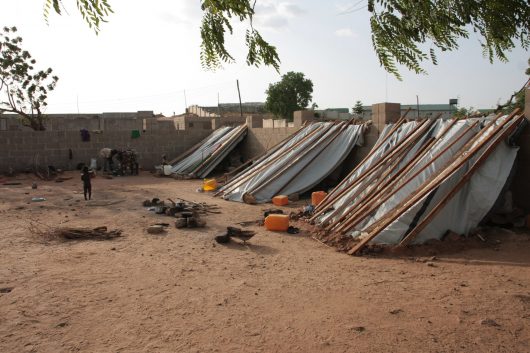
  5. A majority of the civilians caught in the violent actions of the Boko Haram Insurgency are often housed in ramshackle government refugee camps, where resources and necessities are scarce.
  6. Since 2009, a lot of the violence has been concentrated in the Lake Chad region. According to the Norwegian Refugee Council (NRC), over 800,000 children under the age of five around the area are deemed ‘severely malnourished’. An estimated $2.2 billion is needed to address the humanitarian emergency. Fortunately, the UNDP and Germany are working collaboratively on an integrated project that could potentially reach over 20 Nigerian communities.
  7. In recent years, the Nigerian Army has been able to recover a large portion of lost territory and reduce the group’s influence in the country. The Army recently captured a Boko Haram commander and freed around 212 hostages in the process. Moreover, the U.N. has spent a lot of effort on strengthening Sahel security forces in Lake Chad.
  8. In October 2017, the U.K. government pledged its support to Nigeria in the fight against the Boko Haram Insurgency. Currently, they will help the Nigerian military bolster its capacity by providing effective training. The British Military Advisory and Training Team (BMATT) and the Liaison Support Team (LST) will play a crucial role in further actions in Nigeria.
  9. According to a recent report by BBC News, the home of the founder of the Boko Haram Insurgency, Mohammed Yusuf, will be converted into a museum. The founder died during a police interrogation in the early stages of the group’s activities in the year 2009.
  10. According to many Nigerian researchers, a community- based approach toward combatting the problem is recommended.

Overall, the activities of the Boko Haram Insurgency seem to be at its final stages as governments and other stakeholder groups come together to mitigate the negative effects caused by the terrorist group and finally restore peace and order after many years of turbulence.

– Shivani Ekkanath
Photo: Flickr

December 11, 2017
https://borgenproject.org/wp-content/uploads/borgen-project-logo.svg 0 0 Borgen Project https://borgenproject.org/wp-content/uploads/borgen-project-logo.svg Borgen Project2017-12-11 09:34:202024-05-29 22:29:4910 Facts about the Boko Haram Insurgency
Aid, Global Poverty, Humanitarian Aid

The Success of Humanitarian Aid to Nigeria

The Success of Humanitarian Aid to NigeriaIn September 2017, U.N. Aid Chief Mark Lowcock said, “that the Government and humanitarians had made important progress in delivering life-saving relief to millions of people in north-east Nigeria.” He made this statement after visiting the country for two days. He did insist on continued efforts from the international community to support humanitarian aid to Nigeria.

This statement shows that humanitarian aid to Nigeria has been making a meaningful impact on the country. The large African country is home to 186 million people and is a large oil producer, but many people do not benefit from the inherent wealth.

The area that the U.K. and other international groups are concerned with is the North East region. According to the Humanitarian Aid Relief Trust, “Nigeria is a country riven with inequality. 85 percent of the population survive on less than two dollars a day, and certain regions, especially the North East, are far behind the rest of the country in terms of development.” It is extremely important to have funds to support this region.

Because of the poverty and poor living conditions of a large majority of Nigeria’s population, international aid organizations have been sending funds to the country. The U.K. pledged $250 million to Nigeria in August and has been a long-term supporter of its former colony’s development. This pledge was made to help stabilize Nigeria as the country is dealing with the terrorist group, Boko Haram. The U.K. had already given over $100 million in 2017 when they made this new pledge. Britain is concerned about the potential famine that could affect around a million people. According to News24, “The new aid is meant to restore key infrastructure and services, improve health care and education and help farmers.”

In addition to the U.K., USAID has also been helping to address food insecurity in the Northeast. The organization gave 2.2 million people emergency food assistance in September. This has been done through cash transfers so that people can buy locally. The success of this type of humanitarian aid to Nigeria occurs at a much more local level.

USAID has also been funding efforts to help improve road access to the North East so that food and supplies can reach those in need. This effort has positively affected over four million Nigerians.

Because of efforts like these, the international community and the people of Nigeria, specifically those in the North East, are seeing improvements. Providing food and resources in order to maintain stability is a continued effort in Nigeria. These efforts will continue to provide support for Nigerians in need of aid and hopefully, humanitarian aid to Nigeria will continue to thrive.

– Emilia Beuger

Photo: Flickr

December 4, 2017
https://borgenproject.org/wp-content/uploads/borgen-project-logo.svg 0 0 Borgen Project https://borgenproject.org/wp-content/uploads/borgen-project-logo.svg Borgen Project2017-12-04 08:44:252024-05-29 22:29:38The Success of Humanitarian Aid to Nigeria
Hunger, Nonprofit Organizations and NGOs, Technology

“Chowberry” App Reduces Food Waste

ChowberryChowberry is an app combating hunger and food waste in Nigeria. The app was invented by Nigerian software developer Oscar Ekponimo. According to the Nigerian Tribune, Ekponimo has partnered with the program Project FoodAccess to connect impoverished Nigerians and non-governmental organizations with cheap food.

Chowberry works through several steps. The first step involves local grocery stores. As the store’s food products near their expiration dates, the stores begins reducing the food prices each day. The app alerts Nigerians and food organizations about the lowered food prices. Project FoodAccess specifically matches the food with families they register need it the most. These include families with young mothers and female breadwinners.

Chowberry helps to alleviate the problem of hunger, which affects Africa as a whole and Nigeria in particular. According to the United Nations Food and Agriculture Organization, 223 million people in sub-Saharan Africa were hungry or malnourished from 2014 to 2016. Nigeria itself has been declared unable to feed its entire population by the World Food Programme.

Ekponimo himself has a personal experience with hunger. After his father had a stroke and could not work, his family could not afford to feed themselves. Chowberry has given Ekponimo the opportunity to help others going through similar situations.

The app has had a significant impact within different areas in Nigeria. The three-month trial run has fed 200 families and 150 orphans. Many Nigerians have requested that the program expand to more communities.

Chowberry also has assisted the 20 participating grocery stores. Food that would have been thrown out before now gets sold to families in need at a profit to the store. The helpful software has gained international recognition as well, winning the Rolex Award of Enterprise in 2016.

Ekponimo hopes that he can expand Chowberry to feed the hungry in other African countries. With continued innovation from people like Ekponimo, technology like Chowberry could be used to help put an end to hunger in Africa and around the globe.

– Cortney Rowe

Photo: Flickr

October 7, 2017
https://borgenproject.org/wp-content/uploads/borgen-project-logo.svg 0 0 Borgen Project https://borgenproject.org/wp-content/uploads/borgen-project-logo.svg Borgen Project2017-10-07 01:30:132020-07-23 09:47:20“Chowberry” App Reduces Food Waste
Economy, Global Poverty

The Mysterious Case of the Poverty Rate in Benin

Poverty Rate in Benin
Benin, a country of 9.4 million people and 113,000 square miles, is known to  be one of the most stable and inclusive democracies in Africa. The country has seen consistent GDP growth over the past two decades, between 4 and 5 percent annually, with even higher rates in 2013 (7.7 percent) and 2014 (6.4 percent). However, political stability and economic growth have not lessened the poverty rate in Benin. Instead, the country’s poverty rate has been rising.

Despite the GDP, Poverty Rates are Climbing

In 2006, the poverty rate in Benin stood at 37.5 percent, dropping slightly to 35.2 percent in 2009. It then began to rise again, reaching 36.2 percent in 2011 and 40.1 percent in 2015.

How is it that GDP growth has gone hand-in-hand with rising poverty rates?

Economic Vulnerabilities

Twenty-five percent of Benin’s GDP is based on agricultural production. Environmental factors, like drought and severe weather conditions, affect the economy’s predictability and stability. Additionally, production tools are outdated, infrastructure is inadequate, and financing is absent.

Benin’s economy is largely dependent  on informal re-export and transit trade with Nigeria, which makes up about 20 percent of the country’s GDP. Informal labor employs over 90 percent of the country’s labor force and makes up roughly 65 percent of the overall GDP. According to the World Bank, “events in Nigeria can have considerable impact on Benin and create uncertainty in its fiscal space.” African Economic Outlook has reported that the recent economic slowdown in Benin is in part due to lower growth in Nigeria.

Recent Attempts at Reducing Poverty

Benin has been formally trying to fight poverty since 1999. In 2000, the country implemented the Interim Poverty Reduction Strategy (I-PRS). It  then enacted the Poverty Reduction Strategy (PRS 1) for 2003-2005, the Growth and Poverty Reduction Strategy (GPRS 2) for 2007-2009, and most recently the Growth and Poverty Reduction Strategy (GPRS 3) for 2011-2015.

These strategies aimed to bolster the rural economy, control demographic growth, reduce gender inequality, strengthen basic infrastructure, and enrich a microcredit policy–especially for women. Some progress has been measured, with Benin’s Doing Business ranking moving from 158th in 2015 to 155th in 2016.

Building a Diverse Economy from Within

With reliance on Nigeria and agriculture, Benin has the opportunity to improve its business environment from within, becoming more attractive to domestic and foreign investors. Increasing access to credit and infrastructure, such as electricity, will also be key in generating and sustaining business development.

Continuing its efforts to ensure the equal geographical distribution of resources, including access to health and education, and increasing economic opportunities for women will be instrumental for Benin to overcome the steady level of poverty its people have been facing.


– Joseph Dover

Photo: Flickr

September 19, 2017
https://borgenproject.org/wp-content/uploads/borgen-project-logo.svg 0 0 Borgen Project https://borgenproject.org/wp-content/uploads/borgen-project-logo.svg Borgen Project2017-09-19 07:30:472024-05-28 00:16:21The Mysterious Case of the Poverty Rate in Benin
Education, Global Poverty

Improving Nigerian Education: Reading and Numeracy Activity

The country of Nigeria has the highest population of out-of-school children in the world. The country is home to an estimated 30 million primary school aged children, among whom 34 percent of girls and 29 percent of boys are out of school.

The Nigerian education system, aided by many years of effort, still remains weak. Literacy rates are very low among Nigerians above the age of 15, at 69.2 percent for boys and 49.7 percent for girls. In an effort to aid the problem, U.S. nonprofit FHI 360 is implementing a program dubbed the Reading and Numeracy Activity (RANA).

FHI 360 is a dedicated nonprofit human development organization focused on locally driven solutions for human development. FHI 360 with collaboration from Nigeria’s Ministry of Education is implementing a Reading and Numeracy Activity pilot project in an effort to expand the project nationally.

The aim of the project is to improve the quality of literacy and numeracy instruction for girls and boys in primary grades one to three. In the pilot stage, approximately 200 schools will be instructed using the RANA system. The pilot stage will be spanning two states, Katsina and Zamfara. In those two states, the dominant mother tongue is Hausa, and RANA has provided teaching and learning materials in Hausa for 800 teachers and 51,000 students. The Hausa materials provided by the pilot program include a step-by-step teacher guide and student workbooks.

The Reading and Numeracy Activity system is still in the pilot phase and it may take years to analyze the data, but students, teachers and parents are already feeling the effects of the program. A parent involved in the program told the advocacy organization ONE: “The RANA lessons have made him more hardworking and love school. I will support his education to any level within my means. I am very grateful to RANA for giving school a new meaning.”

– Yosef Mahmoud

Photo: Flickr

September 9, 2017
https://borgenproject.org/wp-content/uploads/borgen-project-logo.svg 0 0 Borgen Project https://borgenproject.org/wp-content/uploads/borgen-project-logo.svg Borgen Project2017-09-09 01:30:182024-05-28 00:16:04Improving Nigerian Education: Reading and Numeracy Activity
Education, Global Poverty

RANA: Improving Literacy Rates in Northern Nigeria

Literacy Rates in Northern NigeriaReading is an essential skill in every aspect of life, but in northern Nigeria, illiteracy is a major problem. The uneven development in the country has created an education gap between the north and the south. “Only about 14 percent of children in the northwest region can read a complete sentence, while that number jumps to almost 63 percent in the southwest,” per research conducted in a 2010 Nigeria Education Data Survey. By the time many students reach third grade, they still cannot read anything, no matter the language.

Northern Nigeria also lacks well-trained teachers and teaching materials, making it difficult to improve this problem. There is little parent involvement in schools, and the attendance at schools in the north each day is much lower than schools in the south.

The Nigeria Reading and Numeracy Activity (RANA) is working to change that. Their goal is to improve the literacy rates in northern Nigeria by providing long-term and far-reaching support for 200 schools.

RANA is working with schools to teach students to read in Hausa, a commonly spoken language in the northwest area of Nigeria. In its first year, 2016, RANA helped more than 500 teachers learn how to teach “an evidence-based reading methodology for Hausa.” Teachers also had check-ups each month with RANA’s trainers and got local support from their communities to help them improve literacy rates in northern Nigeria.

There are four main goals that RANA is focused on: “Aims to break every barrier to education access and quality; Invests in every teacher; Measures every outcome; and Connects every classroom.” Using Hausa as the primary teaching language makes it much easier for parents to engage, and teachers receive classroom materials written in Hausa to promote learning. Teachers can see their impact on students through the data that RANA collects, and they can share that success with other teachers through WhatsApp.

Local leaders, royalty and those in charge of the education system in northern Nigeria were encouraged to get involved in the movement as well. RANA’s goal was to promote “an environment conducive to reading that extends beyond the schools in which the project is being implemented.” With the support and understanding of leaders and the local communities, the mission to improve literacy rates in northern Nigeria became easier to accomplish.

The impact and success of RANA’s work have led to similar projects springing up in the area. Parents are encouraging their children to learn to read in Hausa by using RANA materials, and one community has even been photocopying the materials for use in their own schools.

RANA’s program has proven that improved literacy rates are possible in northern Nigeria, especially once communities come together and pay attention to the needs of their current students.

– Mackenzie Fielder

September 8, 2017
https://borgenproject.org/wp-content/uploads/borgen-project-logo.svg 0 0 Borgen Project https://borgenproject.org/wp-content/uploads/borgen-project-logo.svg Borgen Project2017-09-08 01:30:082024-05-28 00:16:03RANA: Improving Literacy Rates in Northern Nigeria
Global Poverty, Technology

Smart Cities in Nigeria to Help the Country Stay Connected

Smart Cities in NigeriaThe presence of cell phones with “smart” technology is something citizens of the United States and other developed countries often take for granted. This is easy to do in some places because it has become so incorporated into the economy. A new push for smart cities in Nigeria aims to do the same for the developing world.

Recently, the Federal Government of Nigeria decided to embrace the idea of smart technology and incorporate it into Nigeria’s cities, hence the smart cities initiative. This initiative aims to implement technology with internet capability throughout as much of Nigerian city life as possible, in order to connect everyone’s devices to the extent similar to a country like the United States.

This will be accomplished through a partnership with Huawei, a global technology company with over 180,000 employees.  The company’s goal is stated to be to build a “better-connected world.”

In 2016, there were 75 million smart phone users in Africa, but this number is expected to reach 512 million by 2018.  Therefore, the Ministry of Communications in Nigeria has decided to launch the Smart City initiative in order to involve state and local governments in the push for smart cities.

Mr. Tank Li, the managing director of Huawei Technologies Nigeria Limited, states that the “Nigerian government has realized the potential of its digital economy.  Unlocking the dividends of digital economy becomes imperative in the face of dwindling oil revenue…infrastructural deficit, high unemployment rate, harsh business environment and corruption amongst others.”

The idea of a digital economy is growing in importance in today’s world, and it is something Nigeria seeks to embrace with its smart cities initiative. Smart cities in Nigeria will hopefully turn Nigeria’s economy in a sustainable positive direction, creating opportunity and efficiency in the next ten years, potentially adding up to $88 billion to the GDP in Nigeria and more than three million jobs.

Germany has stated a willingness to assist and partner with Nigeria as the smart cities initiative develops.  The German ambassador to Nigeria stated that Germany is ready to partner with Nigeria from the debate stage to the implementation level.

“We project in the near future a digital economy that will bring about enormous changes in society,” said Li.  “This fourth industrial revolution is going to impact people’s lives in unimaginable ways and this will happen through the convergence of the cyber and physical worlds.  The implementation of smart cities in Nigeria is a way for Nigeria to keep up with the ever-changing digital world.”

– Ellen Ray

Photo: Google

September 6, 2017
https://borgenproject.org/wp-content/uploads/borgen-project-logo.svg 0 0 Borgen Project https://borgenproject.org/wp-content/uploads/borgen-project-logo.svg Borgen Project2017-09-06 01:30:452024-05-28 00:16:08Smart Cities in Nigeria to Help the Country Stay Connected
Global Poverty

How the Internet is Improving Healthcare in Nigeria

Healthcare in NigeriaIn Nigeria, the ratio of healthcare workers to citizens rests at 1.95 per 1,000 people, according to the World Health Organization. The unequal distribution and inadequate production of such workers create systematic challenges for healthcare in Nigeria.

One possible solution shortly, as put forward by Vodacom, is the Internet of Things (IoT). Vodacom is a communication company based in Africa and majority owned by Vodafone, one of the largest communication companies in the world. Kaduna, one of Nigeria’s 36 states, has recently partnered with Vodacom to launch a state-wide technology based healthcare system called SMS for Life 2.0.

This technology-based system is grounded in the Internet of Things, or the idea that “anything that can be connected, will be connected.” Technology is moving towards a future in which any given device can have a switch to the internet or other devices, including items like lamps, washing machines and other devices that historically have nothing to do with communication. The idea is that there will be increased opportunity for efficiency, productivity and safety.

What this looks like about healthcare in Nigeria, specifically the state of Kaduna, is more than 250 facilities currently using this digital form of healthcare with plans to implement it throughout the rest of the country, especially due to increasing chronic illnesses. Vodacom’s future goals include making essential medicines more available to citizens and more efficient healthcare delivery.

Lanre Kolade, managing director of Vodacom Business Nigeria, says, “IoT can be used to increase access to healthcare by extending the scope of care services to rural and hard-to-reach areas and ensuring that essential medicines are available where and when they are needed. This technology is powering connected medical services that enable healthcare professionals to diagnose and consult with patients and first responders remotely, no matter where they are.”

While systems implementing this idea of the Internet of Things allow for endless connections, it also includes challenges that society will have to wade through, such as security and privacy. The boundaries between helping people and monitoring their every move have yet to get explored.

– Ellen Ray
Photo: Flickr

August 22, 2017
https://borgenproject.org/wp-content/uploads/borgen-project-logo.svg 0 0 Borgen Project https://borgenproject.org/wp-content/uploads/borgen-project-logo.svg Borgen Project2017-08-22 01:30:122024-05-28 00:15:39How the Internet is Improving Healthcare in Nigeria
Global Poverty, Human Rights

10 Important Facts About Human Rights in Nigeria

Human rights in Nigeria are a mixed bag. The nation has some strong constitutional rights that it guarantees to its citizens. However, these rights are often undermined by a corrupt government, abuses of power from law enforcement and the latent threat of Islamist insurgency group Boko Haram. Here are 10 facts about human rights in Nigeria.

  1. Freedoms of speech, religion and the press are constitutionally protected human rights in Nigeria. However, freedom of the press is limited through anti-defamation laws with severe penalties. Journalists found to be in violation of these laws have been detained and arrested without trial.
  2. Freedom of assembly is also constitutionally guaranteed in Nigeria, but this freedom is still restricted. If the government deems an event as threatening to national security, it can ban the event from taking place. This power has been used to disrupt peaceful protests by political organizers.
  3. As of December 2016, Nigeria has not yet criminalized police and military use of torture. However, a measure to outlaw torture passed Nigeria’s House of Representatives in June of 2016.
  4. Nigerian security forces frequently engage in human rights abuses. Officers that commit unlawful killings routinely go unpunished. In 2015, Nigerian soldiers unlawfully killed more than 350 Islamic Movement of Nigeria protesters during a road blockade.
  5. Nigerian security forces have also had issues with racketeering. Amnesty International discovered that the Special Anti-Robbery Squad torturing suspected criminals and demanding bribes from their families in exchange for freedom. There have also been reported cases of Nigerian officers abducting people from their homes and arbitrarily arresting civilians. The government often fails to hold offending officers accountable.
  6. Nigeria has more than two million internally displaced persons (IDPs). IDPs are people who have fled from their homes but not their country. One-fifth of IDPs live in overcrowded camps where they do not receive proper amounts of food, water, medical care and sanitation. Thousands have died in these camps due to these conditions. There are also many recorded instances of guards bribing female IDPs for sex.
  7. Discrimination against women is rampant in Nigeria. Little more than 5 percent of Nigeria’s National Assembly seats are held by women. Many families send their sons to school while neglecting their daughters and the law denies women equal right to property. Crimes against women receive harsh penalties, but often go unreported. This past year, Nigeria codified gender based discrimination protections into law.
  8. In 2014, the Nigerian National Assembly enacted a law that criminalizes any expression of a same-sex relationship. Those who are found in violation can be imprisoned for 14 years. The law has enabled police abuses such as detaining suspected homosexuals indefinitely and raiding NGOs that teach HIV prevention. In parts of Nigeria, LGBT persons can be sentenced to death.
    Thousands of civilians have been forcibly evicted from their homes by the Nigerian government. There have been many occasions where these evictions occurred without proper compensation, resettlement and prior notification to homeowners.
  9. The Nigerian government is notoriously corrupt. According to the government, 55 public officials stole $9 billion from the government between 2006-2013. This amounts to roughly a quarter of the nation’s annual budget. Nigeria’s president Muhammadu Buhari has introduced a number of anti-corruption measures and has prosecuted several high profile officials for offenses. However, Buhari’s political opposition has claimed that these reforms are aimed at disproportionately impacting Buhari’s political opponents.
  10. The terrorist group Boko Haram remains as a threat to national security and human rights in Nigeria. Boko Haram’s goal is to overthrow the Nigerian government and install an Islamic caliphate. Its activities are largely responsible for Nigeria’s great number of IDPs and it has received international attention for abducting hundreds of schoolgirls and forcing them into sex slavery. In 2015, Boko Haram lost all of its territory, but many of the children abducted still remain missing. While the group is no longer as powerful as it once was, there is always a chance for resurgence.

Nigeria has quite a way to go before it can be considered a free country, but there is a clear path to improving the record of human rights in Nigeria. The nation as well as NGOs and the international community will have to continue to push anti-corruption reforms. An ethical government can better serve the needs of its citizens and can be better trusted to handle foreign aid responsibly.

Nigeria also needs to institute reforms that will hold members of the police and the military accountable for unlawful actions. Economic development is also crucial to improving human rights in Nigeria. A Nigeria that has prospered through trade and has greater ties to the international community may be more willing to institute social reforms that will create greater opportunities for women and decriminalize homosexuality.

– Carson Hughes
Photo: Flickr

August 21, 2017
https://borgenproject.org/wp-content/uploads/borgen-project-logo.svg 0 0 Borgen Project https://borgenproject.org/wp-content/uploads/borgen-project-logo.svg Borgen Project2017-08-21 01:30:342024-05-28 00:15:3610 Important Facts About Human Rights in Nigeria
Global Poverty

An Expanding Country: Four of the Main Causes of Poverty in Nigeria

Causes of Poverty in Nigeria
Nigeria, located on the west coast of Africa, is a country known for its booming oil economy and the number of people it harbors within its borders. With a population of nearly 200 million, it’s the most populous country in all of Africa. But while the economy of Nigeria continues to expand, the amount of people living in poverty in Nigeria grows along with it.

As of 2016, 112 million Nigerians live in poverty. In 1990, that number was 51 million. As Nigeria continues to grow, the number of people that live in poverty within its borders should not expand with it. To alleviate poverty, it’s important to understand the causes. Here are four of the root causes of poverty in Nigeria.

1. Government Corruption

Since its founding, government corruption has plagued Nigeria. This corruption is one of the major causes of poverty in Nigeria. Government officials often take payments from oil companies that are supposed to go into public trusts—payments that can often total more than $1 billion—and instead siphon that money into their own personal bank accounts.

When government officials engage in this kind of corruption, the poor and underserved populations within Nigeria are inevitably hurt. If these large sums of money stopped going into government officials’ pockets, the Nigerian government could use that money to build up the country’s infrastructure—electricity, roads, running water and more.

2. Lack of Economic Infrastructure

An infrastructure that supports economic growth at every level is essential to pull people out of poverty. In Nigeria, economic infrastructure includes things like access to micro-credit that help farmers invest in their crops and entrepreneurs lift their businesses off the ground. Micro-credit is an especially important tool for Nigerian women working to escape poverty.

Female entrepreneurship and autonomy can provide financial stability to entire families and, by extension, larger communities. Another one of the main causes of poverty in Nigeria is the simple fact that many Nigerians, especially in rural communities, do not have the means to escape their circumstances. Setting up economic structures that empower Nigerian people is vital to combating poverty within the country.

3. Poor Access to Education

Economic infrastructure is not the only infrastructure that is lacking in Nigeria. Currently, a lack of a robust educational system underserves many of the poorest Nigerians. 10.5 million Nigerian children do not attend school at all, and 60% of those children are girls.

These problems are especially profound in the northern, more rural parts of Nigeria. Terrorist groups such as Boko Haram that vilify Western education further exasperate the situation. Education gives many the skills they need to enter the workforce and escape impoverishment, and the lack of educational opportunity is one of the truly devastating causes of poverty in Nigeria.

4. Poor Access to Healthcare

Nigeria might be the most populous country in Africa, but they are running low on healthcare professionals. The current ratio of nurses, midwives and doctors to patients is 1.95 to 1,000.

With such a low density of medical care available, many people in Nigeria either go completely without medical care or without enough medical care. But sickness is costly, and oftentimes can trap people into never-ending cycles of poverty. Improving Nigerians’ access to healthcare is an essential step to reduce the amount of poverty in Nigeria.

At the surface, these problems can seem daunting and unsolvable. But the first step to crafting sustainable solutions is understanding the contours of the problem. By understanding the causes of poverty in Nigeria, organizations like UNICEF and WHO have started various initiatives to strengthen the economic, education, and health care infrastructure in Nigeria, as well as reduce government corruption.

Working hand in hand with international partners, Nigeria is continuously demonstrating its commitment to crafting a better future for its impoverished citizens.

– Adesuwa Agbonile
Photo: Flickr

August 1, 2017
https://borgenproject.org/wp-content/uploads/borgen-project-logo.svg 0 0 Borgen Project https://borgenproject.org/wp-content/uploads/borgen-project-logo.svg Borgen Project2017-08-01 01:30:252020-07-06 07:23:06An Expanding Country: Four of the Main Causes of Poverty in Nigeria
Page 4 of 13«‹23456›»

Get Smarter

  • Global Poverty 101
  • Global Poverty… The Good News
  • Global Poverty & U.S. Jobs
  • Global Poverty and National Security
  • Innovative Solutions to Poverty
  • Global Poverty & Aid FAQ’s
Search Search

Take Action

  • Call Congress
  • Email Congress
  • Donate
  • 30 Ways to Help
  • Volunteer Ops
  • Internships
  • Courses & Certificates
  • The Podcast
Borgen Project

“The Borgen Project is an incredible nonprofit organization that is addressing poverty and hunger and working towards ending them.”

-The Huffington Post

Inside The Borgen Project

  • Contact
  • About
  • Financials
  • President
  • Board of Directors
  • Board of Advisors

International Links

  • UK Email Parliament
  • UK Donate
  • Canada Email Parliament

Get Smarter

  • Global Poverty 101
  • Global Poverty… The Good News
  • Global Poverty & U.S. Jobs
  • Global Poverty and National Security
  • Innovative Solutions to Poverty
  • Global Poverty & Aid FAQ’s

Ways to Help

  • Call Congress
  • Email Congress
  • Donate
  • 30 Ways to Help
  • Volunteer Ops
  • Internships
  • Courses & Certificates
  • The Podcast
Scroll to top Scroll to top Scroll to top