• Link to X
  • Link to Facebook
  • Link to Instagram
  • Link to TikTok
  • Link to Youtube
  • About
    • About Us
      • President
      • Board of Directors
      • Board of Advisors
      • Financials
      • Our Methodology
      • Success Tracker
      • Contact
  • Act Now
    • 30 Ways to Help
      • Email Congress
      • Call Congress
      • Volunteer
      • Courses & Certificates
      • Be a Donor
    • Internships
      • In-Office Internships
      • Remote Internships
    • Legislation
      • Politics 101
  • The Blog
  • The Podcast
  • Magazine
  • Donate
  • Click to open the search input field Click to open the search input field Search
  • Menu Menu

Tag Archive for: Education

Posts

Advocacy, Children, Developing Countries, Education, Gender Equality, Global Poverty

Harry Styles Speaks In Video About Education

Harry_Styles

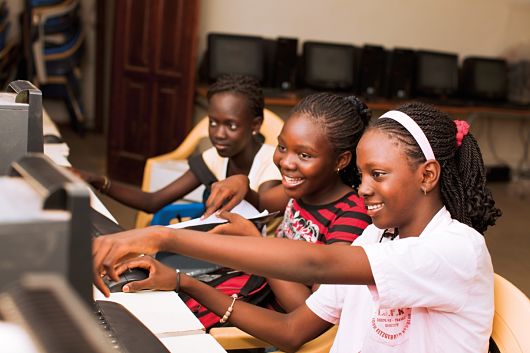
On July 27, Harry Styles of One Direction spoke in a video sanctioned by his campaign, action/1D, about his views on global education and those who deserve a better quality of life.

“I want to live in a world where every child can go to school,” Styles said at the beginning of the video.

Styles, along with bandmates Louis Tomlinson, Liam Payne and Niall Horan, recently launched the action/1D campaign to inspire fans and promote awareness for global education, poverty, climate change, disease and inequality.

With action/1D, supporters can get involved in the campaign by posting pictures and videos that correspond to a topic related to the cause. Fans of One Direction can also catch the boys in videos where each band member will begin with the phrase: “I want to live in a world where…”

In Styles’ video, he spoke about how much he enjoyed school, and the children that he met in Ghana who dream of getting an education. These children cannot afford school, Styles said, and they spend their days working instead of learning.

“At the moment, they have to work all day every day just to earn enough to eat,” Styles said.
The “What Makes You Beautiful” singer brings light to a continuing problem.

According to UNICEF, there are almost 624,000 children not in primary school. Those who do receive an education do not learn the tools required to be successful in secondary school or professional work.

“Often, the school environment is not conducive to learning: classes are overcrowded, water and sanitation facilities are lacking and trained teachers and school books are in short supply,” UNICEF reports.

For those children with disabiliites, education is even more difficult to attain. According to the 2010 national census, 20% of children with physical disabilities are not attending school.

In addition, gender inequality does not provide for an equal amount of girls in school as boys. The national average amount of education is seven years, and in Northern Ghana, girls attend school for just three years.

“Making education available to 100 percent of people around the world is one way to ensure that poverty declines,” the article said.

Along with The Borgen Project, Styles and other members of action/1D agree that education a key to ending extreme poverty. One Direction’s campaign, which is associated with a similar organization, action/2015, seeks to create a world where education, along with health, climate change and inequality, are no longer a problem.

This year, two U.N. summits will gather some of the most influential people in the world. During each conference, these leaders will formulate plans to fix these issues.

With the help of these conferences, numerous humanitarian organizations and Styles, extreme poverty just might end; as Styles pointed out in his video, this change can begin with education.

“Going to school could literally change their lives, but for now, all they can look forward to is a life of struggle, and they deserve so much more,” he said.

Action/1D asks fans of the band to group together to make a difference. To contribute to the cause and to learn more about the campaign, visit the action/1D website.

– Fallon Lineberger

Sources: Action/1D 1, Action/1D 2, Action/2015, The Borgen Project, United States Census, Twitter, UNICEF
Photo: Sugarscape
August 6, 2015
https://borgenproject.org/wp-content/uploads/borgen-project-logo.svg 0 0 Borgen Project https://borgenproject.org/wp-content/uploads/borgen-project-logo.svg Borgen Project2015-08-06 07:45:042024-06-04 01:17:41Harry Styles Speaks In Video About Education
Children, Development, Education, Global Poverty

The School Fund Connects Investors with Students

the_school_fund
There are 63 million secondary school-aged children around the world who are unable to attend school. In West and Central Africa, this number amounts to 40 percent of their youth population. In India, 16 million children of lower and secondary school age do not receive an education. The School Fund works with investors to provide resources and funds to developing regions to help children in need.

On average, an individual’s wage increases 15 to 25 percent for each additional year of schooling he or she receives. Girls and young women who receive an education are far less likely to become a child bride and typically grow up to be healthier and more educated about sex. Women who receive an education are more prone to have healthier children and smaller families. Education can also help girls grow up to become leaders in their communities.

The School Fund operates its services by first helping investors find students to support. This process is determined by selecting a student based on their country, gender, academic interests or fundraising deadlines. The second step helps the investors decide how much to donate, and step three allows the donators to stay in touch with the students they have helped in order to see how they are contributing the funds to their education.

The School Fund has been able to provide scholarships to over 1,100 students in Africa, Asia and Latin America, totaling over US$400,000 in funds used for tuition, uniforms, materials, exam fees and food. Students have been funded by over 3,500 donors, representing more than 1,500 years of education.

The organization was founded by Matt Severson and Andrew Perrault in 2009. Having been friends for many years and sharing interests in both traveling and development, the pair traveled to Tanzania in 2007 while still in high school. While there, they were both touched by how friendly and thoughtful the residents were. Even though many of them lived in poverty, they were still willing to share with the two of them.

During his travels, Matt Severson met a young boy named John Medo. Medo came from a family of seven who lived on US$45 a month. John Medo was intelligent — he had aced all of the exams necessary for secondary school, but his family could not afford the US$150 fee for tuition. When Severson met Medo, he was working to become a farmer. Matt Severson was inspired by John Medo’s kindness and decided to provide funds for his schooling. This marked the beginning of The School Fund.

Over the next two summers, Severson and Perrault worked to expand and build The School Fund from the ground up. Now The School Fund supports students in Tanzania, Haiti, the Philippines and many other places in the world. As Matt Severson puts it, there are many other “John Medos” in the world who need support to attend school. The School Fund plans to continue to connect investors with students in need.

– Julia Hettiger

Sources: The School Fund 1, The School Fund 2, UNICEF
Photo: Ghana Culture Politics

August 6, 2015
https://borgenproject.org/wp-content/uploads/borgen-project-logo.svg 0 0 Borgen Project https://borgenproject.org/wp-content/uploads/borgen-project-logo.svg Borgen Project2015-08-06 01:30:282024-06-05 03:46:40The School Fund Connects Investors with Students
Children, Education, Global Poverty

Child Empowerment International Provides Education in Sri Lanka

Child Empowerment International provides schooling for underprivileged children in Sri Lanka
Children living in areas in Sri Lanka affected by war commonly do not have access to the resources and funds needed to receive an education. Many of these children suffer from posttraumatic stress disorder and issues due to their harsh living conditions. Child Empowerment International works to help children who have been negatively affected by war and other violent experiences overcome difficulties, cope with reality and receive an education.

Child Empowerment International establishes day schools in the refugee centers and communities these children live in. Over the past 17 years, the organization helped increase an individual’s future earnings by ten percent through education and training. Their staff of over 200 teachers prepares students for testing in Sri Lanka, which is based on the British education system. Studies conducted by Child Empowerment International have shown students graduating from their program score in the top five percentile on these standardized exams.

Students are taught basic school subjects like grammar and biology and receive career training to become carpenters, seamstresses, chefs, mechanics and hotel managers. Many students are also taught English and computer skills.

Child Empowerment International was started in 1998 to provide children living in war ridden zones holistic care. The organization started with 17 schools, but by the following year they were up to 29 schools. Child Empowerment International began by training teachers and counselors to mentor children who had suffered from sexual abuse and other traumatic experiences.

Founder Adam Salmon worked to establish a textbook-exporting company in Sri Lanka in 1994, but decided to change his line of work when he realized there were large numbers of abandoned children not receiving aid from other organizations. As the founder, he manages the hundreds of teachers working for Child Empowerment International and dedicates his time to improving the lives of the 6,800 children impacted by the organization.

The organization also dedicated themselves to helping the survivors of the tsunami that struck Sri Lanka in 2004. Several hundred students were orphaned by catastrophe and Child Empowerment International lost 126 of their students. The organization worked to find homes for children, provide resources and rebuild the schools lost to the storm.

Today, Child Empowerment International has over 80 schools established in Sri Lanka and other impoverished communities. Their newest project enacted in 2010 is working to provide education and healthcare to children in Uganda.

Students at their schools have successfully graduated from university and gained professional experience in the profession of their choice, with many of them becoming teachers or health professionals. Child Empowerment International is gathering quantitative data of the impact of their work on an individual’s success. Publication of this is set for 2017.

– Julia Hettiger

Sources: Child Empowerment, Global Giving, Matador Network
Photo: Porticus

August 1, 2015
https://borgenproject.org/wp-content/uploads/borgen-project-logo.svg 0 0 Borgen Project https://borgenproject.org/wp-content/uploads/borgen-project-logo.svg Borgen Project2015-08-01 01:33:512020-07-03 12:33:30Child Empowerment International Provides Education in Sri Lanka
Development, Education, Global Poverty

New Futures Organisation Addresses Poverty in Cambodia

New_Futures_Organisation
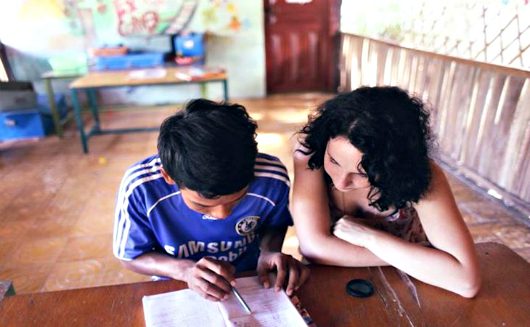
New Futures Organisation, a nonprofit established in 2007, dedicates its time to improving conditions in impoverished communities in Takeo, Cambodia by exposing youth residents to education, technology and empowerment. The members of New Futures Organisation establish village schools in communities that normally cannot afford the resources needed to provide children a proper education, as well as drop-in centers for at-risk students and orphans. As the children in the village schools grow up and transition into university, New Futures Organisation continues to help them find jobs and sponsorships they can use for university costs.

While school in Cambodia is free, many families living in rural farmlands lack the funds necessary to pay for uniforms and books. Cambodian schools in the region are typically located in the heart of Takeo, miles away from the villages. During rainy seasons, the dirt tracks taken by children commuting to school become inadequate for walking. Children are also required to help their families with farming duties. All of these factors make it difficult for many children to attend school full time.

There are currently seven village schools in Takeo that provide education to over 100 students. These schools are cost-free to families who live in rural regions, and are centrally located so children can access them even during rainy seasons. Classes are held to fit the schedule that comes with farm work.

New Futures Organisation originally started as an orphanage and drop-in center for at-risk youths. The drop-in center houses many orphaned children while helping them reconnect with extended family members, or find good homes when the first option is not available. The families that take in orphaned children are provided with care packages each month to make up for the additional money, food and toiletries needed to house these children. The drop-in center also remains open for them to work on homework, earn tuition and receive hot meals when their home life is not fit for such accommodations.

Many of the children living at the drop-in center and attending the village schools aspire to attend college. New Futures Organisation helps these students achieve their goals by providing and finding sponsorships from organizations and community members, giving them emotional support and helping them become empowered adults so they can lead in their communities.

Other projects sponsored by New Futures Organisation to alleviate poverty in Cambodia include teaching English classes to children and adults and hosting local blood drive banks at health centers in Takeo. They also help local police officers by teaching them English and helping them communicate effectively with tourists and westerners.

– Julia Hettiger

Sources: Matador Network, Idealist, New Future Organisation
Photo: My Travel Affairs

August 1, 2015
https://borgenproject.org/wp-content/uploads/borgen-project-logo.svg 0 0 Borgen Project https://borgenproject.org/wp-content/uploads/borgen-project-logo.svg Borgen Project2015-08-01 01:30:222020-07-06 12:06:04New Futures Organisation Addresses Poverty in Cambodia
Education, Health, Sanitation, Women

Why Menstrual Hygiene Remains a Challenge in Nepal

Menstrual-Hygiene

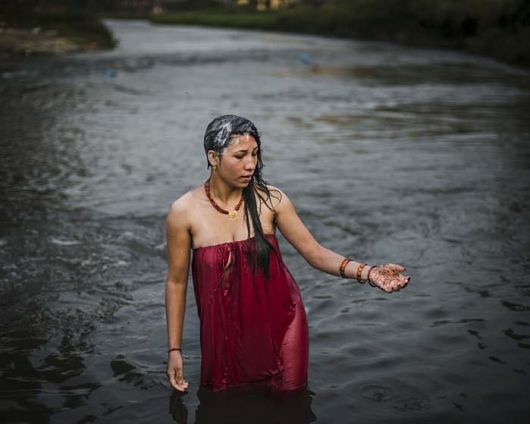
Old taboos surrounding menstruation die hard in Nepal where, until 2005, Chhaupadi, the practice of ostracizing women and girls from their own homes during their periods, did not face a national ban.

The Nepalese Supreme Court declared Chhaupadi illegal in 2005. However, the practice still retains a foothold in the country’s western region and myths surrounding women’s natural cycles remain a national problem.

Chhaupadi, which is based upon the belief that menstruating women are toxic, prohibits menstruating women and girls from inhabiting any public space, socializing with others and using water sources that other people share.

According to the tradition, women and girls on their periods are also banned from sharing food or touching anyone. Rather than eating with their families, these “untouchables” must remain outside the house and keep their distance while a family member throws boiled rice to them, like they would to a dog.

The effects of Chhaupadi are extremely dehumanizing and psychologically stressful, with young girls told that they will bring bad luck on their families if they enter their own homes during menstruation. In communities where the tradition is still practiced, even women and girls who do not believe they are truly toxic fear disobeying the rules of Chhaupadi and incurring the anger of family or village elders.

In addition to being emotionally degrading, Chhaupadi also places women and girls at risk for rape, abduction, snakebites and animal attacks, as well as malnourishment. Forced to sleep in rickety huts without adequate insulation or ventilation, women and girls face illness exacerbated by the cold and unhygienic conditions or asphyxiation from improperly ventilated heat sources.

Even in regions where Chhaupadi is not practiced, taboos surrounding menstruation still affect Nepalese women and girls. The Nepali Times reports that today many households in Kathmandu still prohibit menstruating women from entering kitchens or temples, eating with the family and sleeping on their beds.

These practices condition women to view their bodies as unclean and to devalue themselves because they take the blame for any misfortune their families may experience. Chhaupadi’s legacy contributes to a wider disregard of women and girls that places them in danger.

A prime example comes in the wake of the recent earthquake that devastated Nepal. Although the refugees require many resources that aid organizations are working to meet, menstrual hygiene is far from the minds of most.

Female refugees have few sanitary resources. Some reuse the same menstrual products for days, washing them in unfiltered water sources in the same areas where refugees openly defecate.

“There are no proper toilet facilities or private spaces in the camps,” reported Dr. Hema Pradhan, consultant gynecologist and fistula surgeon at the Kathmandu Model Hospital. She called the sanitary practices in these camps “worrisome.”

Ursula Singh, a program officer for women’s rights NGO Loom Nepal, stated, “We went to the village of Kavre on the outskirts and saw some girls sitting huddled in tents, covered in blood.” Most girls, she elaborated, wait until dark to step outside and dispose of or attempt to sanitize menstrual products.

“We want them to at least practice hygienic disposal because they are in super exposed conditions and that puts them at a higher risk to contract diseases,” Singh said. However, the only hygienic means of disposing of sanitary napkins is often digging holes and burying them in the ground.

In a culture with superstitions such as the belief that any plant a menstruating woman touches will die, disposing of menstrual products and trying to manage period blood and symptoms in an area with as little shelter or privacy as a refugee camp must be a traumatic experience. Lingering stigmas place women under intense scrutiny and many would rather risk disease, injury or abuse than suffer negative social responses to their behavior while menstruating.

– Emma-Claire LaSaine

Sources: Time, Nepali Times, IRN News, Reuters, New York Times
Photo: Time

July 31, 2015
https://borgenproject.org/wp-content/uploads/borgen-project-logo.svg 0 0 Borgen Project https://borgenproject.org/wp-content/uploads/borgen-project-logo.svg Borgen Project2015-07-31 08:21:302024-05-27 09:26:12Why Menstrual Hygiene Remains a Challenge in Nepal
Activism, Education, Global Poverty

8 Colombian NonProfit Organizations

non-profit_organizations_in_colombia
From building housing for people living in vulnerable conditions to the promotion of education, Colombian organizations work on humanitarian causes in the country.

Poverty, education, health and living are the main areas that many nonprofit organizations in Colombia work on in order to contribute to the betterment of the Colombian community.

According to the Departamento Administrativo Nacional de Estadística (DANE), 784,000 people in Colombia prevailed out of poverty in 2014. In the same year, extreme poverty also experienced a decrease of 407,000 people.

These results represent a reduction in the poverty rate of Colombia, making them the lowest results in the past 13 years.

Nonprofit organizations form a part that contributes to the betterment of the Colombian society. Here are 8 Colombian nonprofit organizations that are making a difference:

Federación Nacional de Cafeteros de Colombia

Considered one of the biggest rural nonprofit organizations in the world, the Federación Nacional de Cafeteros de Colombia works for the betterment of the Colombian coffee farmers.

Representing more than 563,000 families, the Federación Nacional de Cafeteros de Colombia works to improve the life quality of Colombian coffee producers by optimizing production costs and maximizing the coffee quality.

Fundación Antonio Restrepo Barco

Responding to the issues of a country that has different social conditions and tending to social problems are some of the activities that members of the Fundación Antonio Restrepo Barco do.

The foundation believes that the families living in crisis areas are more afflicted by social issues and problems. Fundación Antonio Restrepo Barco forwards projects related to the protection of children rights, education, health and social and regional development of attention to vulnerable communities.

Fundación Juan Felipe Gómez Escobar

This foundation, also known as “La Juanfe,” works to bring a better life to the children and young people from Cartagena, Colombia. They do this by providing health care, and by bringing psychological and affective care.
The entity works with various partners that are national and international businesses, and public and private agencies.

Asociación Metrópoli Colombia

This association works for the creation of spaces where people living under vulnerable conditions could experience personal growth, the transformation of their surroundings, and equal opportunities through education and culture.

Through the program “Espacios de encuentro para la construcción de la vida y la paz,” Metrópoli Colombia proffers the availability of spaces that provide access to education, wellness, arts and culture as a means of improving the life quality of children and young people.

Corporación Día de la Niñez

This is a nonprofit organization that promotes the importance that childhood has in the development and progress of the community and families, especially in communities that live under poverty and/or violence.

They have as a mission to promote children games in the familiar and communitarian aspects.

Fundación OCMAES

This is a nonprofit foundation that works to promote people’s talent. Fundación OCMAES foments the education among young Colombians that have an academic potential, but do not have the economical facilities to afford professional programs or continue with their studies.

Through the “Programa de Apoyo Universitario,” the foundation gives scholarships to young Colombians with academic potential.

Fundación SERVIVIENDA

This organization improves the life quality of the communities living in vulnerable conditions by the construction of houses for these Colombian communities.

The foundation is compromised with integral development and brings security, identity and the sense of social belonging.

Fundación Terpel

They work to bring quality education to Colombian children. The entity implements programs that develop competitions in leadership, mathematics and language for children and young people living under vulnerable conditions.

– Diana Fernanda Leon

Sources: DANE, Federación Nacional de Cafeteros de Colombia, Fundación Antonio Restrepo Barco, Fundación Juan Felipe Gómez Escobar, Metrópoli Colombia, Corporación Día de la Niñez, Fundación Ocmaes, Fundación Servivienda, Fundación Terpel,
Photo: Fundación Juan Felipe Gómez Escobar

July 31, 2015
https://borgenproject.org/wp-content/uploads/borgen-project-logo.svg 0 0 Borgen Project https://borgenproject.org/wp-content/uploads/borgen-project-logo.svg Borgen Project2015-07-31 01:30:162024-12-13 17:52:168 Colombian NonProfit Organizations
Education

Revolutionary Period Panties in the Developing World

period_panties
May 28th marks Menstrual Hygiene Day, a day of awareness seeking to break the taboo that exists in cultures and societies around the world. Menstrual Hygiene Day also seeks to raise awareness about the importance of good menstrual hygiene management (MHM).

Why is this so important?

Menstrual Hygiene is fundamental to education, the economy, health, the environment and human rights. Below are some statistics:

  1. Education: UNESCO estimates that 1 in 10 African teen girls will miss school because of their period and eventually drop out. These girls are still having to use socks filled with ash to manage their periods.
  2. Economy: In Bangladesh, garment workers miss work for an average of six unpaid days per month due to vaginal infections.
  3. Health: Poor menstrual hygiene not only affects physical health but also social and mental well-being.
  4. Environment: The average North American woman will use and throw away about 13,000 tampons and pads in her lifetime.
  5. Human Rights: A lack of adequate menstrual hygiene management denies women and girls their right to education, right to health and right to work in favorable conditions.

What is THINX?

A new company is trying to break the taboo surrounding menstruation, which is usually referred to as the “week of shame” in developing countries. THINX has designed period-proof underwear that they claim protects from leaks and keeps you dry.

The idea emerged when wearing a white skirt to a meeting and was developed over the course of three years of research by three women in New York City who sought underwear that was reliable during their periods. The end result is stain-resistant, anti-microbial, leak-resistant, absorbent underwear with a moisture-wicking layer.

THINX claims they can replace tampons and pads if you’re comfortable doing so. It offers underwear designed for light, medium and heavy days, with the level of absorbency ranging from one half, one, and two tampons worth or absorbency, respectively. They wash just like regular underwear, just cold wash and hang dry.

For the 80 percent of American women who have had accidents and have expressed anxiety during their periods, these period-proof panties may seem like a good investment.

How does your purchase help girls in the developing world?

The three women behind THINX love to travel. While they were in Africa, they met a young girl named Amale on a weekday, asked her why she wasn’t in school, and she said, “It’s my week of shame.” Amale misses about one week of school each month due to her period. She uses things she can find such as sticks, leaves, mud and dirty rags.

The women decided to partner with AFRIpads, an organization based in Uganda that makes washable, reusable cloth pads at an affordable price. The result is that for every pair of underwear you buy, seven washable, reusable pads will be produced for one woman. THINX felt that instead of giving them away, they are helping this movement grow by creating jobs for local women who make these pads and their girls can go to school with no shame. The underwear are currently made in a family-run factory in Sri Lanka.

THINX has received reviews from companies such as ELLE calling them “magic panties” and Fast Company saying they are “ingeniously designed.”

Considering that a woman throws away five or more pairs of underwear every year, it would be a better and more thoughtful investment to buy period panties that are stain-resistant and that help women and girls around the world.

– Paula Acevedo

Sources: Thinx, Menstrual Hygiene Day
Photo: Menstrual Hygiene Day

July 28, 2015
https://borgenproject.org/wp-content/uploads/borgen-project-logo.svg 0 0 Borgen Project https://borgenproject.org/wp-content/uploads/borgen-project-logo.svg Borgen Project2015-07-28 01:29:002024-05-27 09:26:28Revolutionary Period Panties in the Developing World
Advocacy, Aid Effectiveness & Reform, Global Poverty

Charity Versus Chauvinism: Successful Working Methodology at BRAC

BRACAmidst the daily fight against global poverty levels, success stories arise from one of the world’s largest development charities. Recently awarded the World Food Prize for successfully pulling more than 150 million people in developing countries out of poor living conditions, Fazel Hasan Abed, founder of the Bangladeshi charity BRAC, seems to have stumbled upon a working methodology.


What makes this methodology different from other approaches can be found in the difference between chauvinism and charity. Chauvinistic approaches to world aid portray a very “hands-off” tactic, whereas charity clearly sets out to give direct help to those in need.

Many IGOs are now looking to out-source the BRAC method. This method utilizes a short amount of time, 24 months, and a high amount of pressure on developing communities in order to produce the greatest results.

The first step is to determine the target individuals of aid by looking at the “determinants of poverty” – little to no healthcare availability, no livelihood skills or capital, low self-esteem and illiteracy, as well as social exclusion. This is done through “participatory wealth ranking,” which directly engages the community.

Next, the individuals are provided with adequate resources and taught fundamentals through “asset grants.” Fundamentals include different livelihood skills and literacy abilities, such as being able to write his or her name for the first time.

The last tactic is monitoring. Arguably, this demonstrates the importance of such a hands-on approach and in fact is referred to as the “hand-holding” step. Progress is closely supervised. For two years the individuals receive direct assistance and have proven that these individuals are able to maintain a better quality of life over the next four years after they “graduate” the BRAC system.

While this methodology might seem a “brute force approach” concerning its direct and hands-on elements, it proves to be the most effective. BRAC is smart, efficient, and proven to work. It targets the “ultra-poor” specifically, sets goals and drives the ball home until the individuals have successfully been pulled out of poor living conditions.

– Felicia L. Warren

Sources: The Guardian
Photo: Flickr

July 27, 2015
https://borgenproject.org/wp-content/uploads/borgen-project-logo.svg 0 0 Borgen Project https://borgenproject.org/wp-content/uploads/borgen-project-logo.svg Borgen Project2015-07-27 12:58:232020-07-10 18:02:44Charity Versus Chauvinism: Successful Working Methodology at BRAC
Children, Education, Global Poverty

Corazones para Peru Provides Helps Children

Corazones_para_Peru
Herzen für eine neue Welt (Hearts for a New World) was founded in Konigstein, Germany in 1998. Their project, Corazones para Peru, works to improve living conditions for children and families in the Peruvian Andes’ Chicon Valley near Cusco. In the past 17 years, Corazones para Peru has established a children’s village, multiple schools and two health centers.

The children’s village, located in Munaycha, Peru, has become home to over 80 orphaned or abandoned children. The village features a healthcare system, schools and a bridge program for college students in need of a place to live. The health facilities service over 400 people a month providing them with immediate healthcare, vaccinations and pharmaceutics.

Volunteers for Corazones para Peru have built 13 schools, allowing 1,000 children to receive an education. Along with these schools, members of the organization established kindergartens to prepare 50 children a year for school.

The village is supplied by an organic agricultural center, and volunteers have planted over 20,000 trees to prevent soil erosion and contribute to the economy of the village. It also features two psychologists, a social assistant, a pedagogue and three trained cooks to help raise the children physically and mentally apt to grow up to be healthy and well adults. Seven live-in dormitory matrons and 16 trained volunteers also contribute to the village staff.

Schools built in the village are equipped with jungle gyms, gymnasiums and recreational centers and all follow Corazones para Peru’s meal program. Many times, children have to walk many miles to reach schools just to spend the whole day learning on an empty stomach. The meal program eradicates this issue by supplying schools with meals for students. Throughout the last couple of years, Corazones para Peru has invested two million dollars to supply schools with basic educational materials like blackboards, books and pencils.

German volunteers teach English, physical education and extracurricular classes to students in the village. In addition, they teach them valuable skills like teamwork and tolerance and provide them with financial and personnel support.

Corazones para Peru’s project, Learning with Heart, strives to help children, especially young girls, receive an education. In Peru, completion of secondary school is a requirement for apprenticeships and attending universities. Many residents miss their chance of receiving an education because the school is too expensive or the family experiences a great financial loss from the loss of labor. Learning with Heart supports families with monthly funds so their children can attend school and become who they want to be.

Hearts for a New World plans to continue working in Peru for many years with the goal of rounding out future generations of Peruvians to create a better living environment and community for Peru’s residents.

– Julia Hettiger

Sources: Herzen Helfen, Shoulder To Shoulder, Matador Network
Photo: Flickr

July 27, 2015
https://borgenproject.org/wp-content/uploads/borgen-project-logo.svg 0 0 Borgen Project https://borgenproject.org/wp-content/uploads/borgen-project-logo.svg Borgen Project2015-07-27 09:07:552020-07-14 10:16:51Corazones para Peru Provides Helps Children
Education, Family Planning and Contraception, Global Poverty, Health

Sexual Health of Adolescents in the Developing World

sexual_health
There are more than 1 billion teenagers worldwide. Seventy percent of them live in developing countries. According to the Demographic and Health Surveys and the AIDS Indicators Survey, the average age that young people in impoverished countries have their first sexual encounter is, at the lowest, age 16 or younger, and, at the highest, 19.6.

Just like in developed nations, with sexual activity comes the risk of sexually transmitted diseases and unwanted pregnancies. Unlike wealthier nations, these impoverished countries lack adequate healthcare. In places such as Sub-Saharan Africa, AIDs is an epidemic. Two-thirds of those infected are adolescents.

Adolescent girls run the greatest risk for sexual and reproductive health threats. A young girl that becomes pregnant who lacks access to healthcare faces many serious health risks. Pregnancies, child-birth and abortions are all perilous. The likelihood that a 15-year-old girl in a developed nation could ultimately die of maternal complications is 1/3800. Compare this to just 1/150 in the developed world.

Meet Reem: she is a 15-year-old girl living as a refugee in a camp. Her two-month-old baby is underweight because it was born prematurely and because Reem was never taught how to breastfeed. She has no one to help her, her husband was killed before the baby was born, and her mother was separated from her in the national conflict.

In other instances, girls marry older men. Hibo is a 13-year-old girl living in a Somalian refugee camp. The oldest of five children, she is responsible for helping her mother care for the family. Her parents are planning to marry Hibo to a wealthy landowner that will bring the family much-needed money and honor. She has been told that it is her duty to marry, serve her husband, and bear him children.

Married women like Hibo are encouraged to have children as soon as possible. Their social status and identity are associated with raising children. Being childless is frowned upon. Unfortunately, wedding older men who have had previous partners bring the potential for STDs.

Young people also face the danger of sexual violence. A national survey in Swaziland revealed that one-third of girls aged 13-24 suffered sexual abuse before the age of 18. Boys face abuse as well but are reported as being less likely to reach out for help from healthcare providers.

Although young people are getting married at an older age, the amount of premarital intercourse is increasing. At the same time, contraceptive use for all teens is low. In Sub-Saharan Africa, contraceptives are used by a low of 3% of sexually active adolescents in Rwanda and a high 46% in Burkina Faso.

Due to the U.N.’s Millennium Development Goals, more youth have greater access to formal education. Health officials decided that school-based sexual/reproductive health programs were the perfect way to educate adolescents. Yet, a survey of these programs and their effects have produced varied results. Not all adolescents attend school, and the funding for these programs is not always there.

The Save the Children organization understands that if there are no programs that specifically reach young people with sexual health programs and education, they will never access the care and knowledge they need. The organization has set up teen-accessible places to teach them about safe sex and offer health services.

Their methods and the continuation of school-based programs have been yielding promising results in places like Mexico, Nigeria and the Dominican Republic. Young people are taking more measures to prevent STDs and unwanted pregnancies.

– Lillian Sickler

Sources: Guttmacher Institute, Women and Children First (UK), Alliance for International Youth Development
Photo: The Times

July 27, 2015
https://borgenproject.org/wp-content/uploads/borgen-project-logo.svg 0 0 Borgen Project https://borgenproject.org/wp-content/uploads/borgen-project-logo.svg Borgen Project2015-07-27 09:00:492024-05-27 09:26:02Sexual Health of Adolescents in the Developing World
Page 46 of 67«‹4445464748›»

Get Smarter

  • Global Poverty 101
  • Global Poverty… The Good News
  • Global Poverty & U.S. Jobs
  • Global Poverty and National Security
  • Innovative Solutions to Poverty
  • Global Poverty & Aid FAQ’s
Search Search

Take Action

  • Call Congress
  • Email Congress
  • Donate
  • 30 Ways to Help
  • Volunteer Ops
  • Internships
  • Courses & Certificates
  • The Podcast
Borgen Project

“The Borgen Project is an incredible nonprofit organization that is addressing poverty and hunger and working towards ending them.”

-The Huffington Post

Inside The Borgen Project

  • Contact
  • About
  • Financials
  • President
  • Board of Directors
  • Board of Advisors

International Links

  • UK Email Parliament
  • UK Donate
  • Canada Email Parliament

Get Smarter

  • Global Poverty 101
  • Global Poverty… The Good News
  • Global Poverty & U.S. Jobs
  • Global Poverty and National Security
  • Innovative Solutions to Poverty
  • Global Poverty & Aid FAQ’s

Ways to Help

  • Call Congress
  • Email Congress
  • Donate
  • 30 Ways to Help
  • Volunteer Ops
  • Internships
  • Courses & Certificates
  • The Podcast
Scroll to top Scroll to top Scroll to top