• Link to X
  • Link to Facebook
  • Link to Instagram
  • Link to TikTok
  • Link to Youtube
  • About
    • About Us
      • President
      • Board of Directors
      • Board of Advisors
      • Financials
      • Our Methodology
      • Success Tracker
      • Contact
  • Act Now
    • 30 Ways to Help
      • Email Congress
      • Call Congress
      • Volunteer
      • Courses & Certificates
      • Be a Donor
    • Internships
      • In-Office Internships
      • Remote Internships
    • Legislation
      • Politics 101
  • The Blog
  • The Podcast
  • Magazine
  • Donate
  • Click to open the search input field Click to open the search input field Search
  • Menu Menu

Tag Archive for: Education

Posts

Education, Global Poverty

Malawi: Education Over Marriage

Malawi: Education Over Marriage
A minute is all it takes for 28 young girls around the world to be married off as child brides, adding up to 15 million underage brides per year. One of the main reasons for young marriage is to relieve the bride’s family of having to support her, which some struggle to do. As a result, the cycle of poverty continues with those girls having to abandon school and years later, their own underage daughters get married.

A child’s place is at school learning, making friends and playing. They are usually emotionally and physically unprepared for marriage, making them susceptible to domestic abuse and life-threatening pregnancies and births.

Until Feb. 2015, Malawi had one of the highest rates of child marriage, with 50 percent of girls being married before the age of 18. This changed in Feb. 2015, when President Peter Mutharika signed a law raising the marriage age from 15 to 18. To show the commitment to enforcing the law, 300 child marriages were annulled and kids were sent back to school earlier this month. Despite the progress, there is a loophole where parents can provide consent for 16-year-old girls to marry.

The fight to pass this law has been a process with Malawi’s Stop Child Marriage campaign beginning in 2011 by Girls Empowerment Network (Genet) and Let Girls Lead. They trained 200 girls in the Chiradzulo District of southern Malawi to become advocates. The advocates lobbied 60 village chiefs to change laws and establish by-laws to protect teen girls from marriage and sexual initiation practices.

The bylaws force men who marry girls under 21 to give up land and pay a fee of seven goats, a major economic penalty in the region. The bylaws also imposed social sanctions such as three months of janitorial service in a local health clinic for parents who marry their underage daughters.

Genet had hoped the election of the first woman president, Joyce Banda, would raise the marriage age, but she didn’t. Then in 2014, when Peter Mutharika was elected, Genet advocated extensively with his minister of gender, Patricia Kaliati. Fortunately, President Mutharika believes in the empowerment of financially independent women and signed the law.

Although it is difficult to break cultural beliefs and traditions, especially in rural areas, progress is being made at the government level. The local education campaigns will play a key role in educating and spreading the word about the new law, especially in places where people may be less educated regarding the law.

One strong advocate, Memory Banda, 18, was able to finish school, but her younger sister wasn’t as lucky. Memory’s younger sister was married at 11 to a man in his early 30s. This led her to speak up and help in leading the campaign to pass the law. Memory’s sister is now 16 with three children. In March, Memory spoke at the U.N. Commission on the Status of Women for herself, her sister and the 70 million girls married as kids.

– Paula Acevedo

Sources: Global Citizen, The Guardian
Photo: Flickr
August 28, 2015
https://borgenproject.org/wp-content/uploads/borgen-project-logo.svg 0 0 Borgen Project https://borgenproject.org/wp-content/uploads/borgen-project-logo.svg Borgen Project2015-08-28 08:19:252024-12-13 18:04:51Malawi: Education Over Marriage
Education, Global Poverty

Environmental Education as an Agent of Change in the Developing World

Environmental Education as an Agent of Change in the Developing World
It is no secret that Earth is facing a massive environmental crisis. Changes to the environment have resulted in climate change that has affected weather across the world. Pollution sickens children and creates thick layers of smog that envelop entire cities.

Climate change hits hardest in the developing world, where it kills 8.4 million people a year, which is more than HIV/AIDs and malaria kill. Many in developing countries still use more traditional fuel sources like wood and coal instead of cleaner energy. The issue has dropped off the agenda of the Sustainable Development Goals, the successors of the Millennium Development Goals that expire this year.

What is the answer to all this doom and gloom? While there might not be a one-off solution to climate change, education on the issues facing the planet is certainly a big step in the right direction. Sadly, a recent study found that 40 percent of adults on earth are not aware of the idea of climate change. Lack of education also hits home in Africa and Asia, where people “are more likely to consider global warming a personal threat if they notice changes in the local temperature.”

It is often only by sensing a change in temperature that people deem climate change a threat. In Malawi, the local language does not have a word for the phenomenon. One way to combat climate change through education might be to explain the forces moving behind the slight temperature changes that people sense in order to make them understand the issue on a bigger, global scale. Knowledge on the subject can have an impact on a range of decisions that individuals might make – which crops to plant or where to place a new port, for example.

Environmental education can provide people with the necessary knowledge, behavior changes and skills that are needed in order to successfully carry out climate change mitigation and adaptation: it “can enable individuals and communities to make informed decisions and take action for climate-resilient sustainable development.”

The education of women and girls about the issues related to climate change is important. Recent studies have shown that when this happens, communities “are better able to adapt and thus be less vulnerable to extreme weather events and climate change.” When women are educated, they and their families are less likely to be vulnerable to death or injury during natural disasters.

More education on the specifics and intricacies of how natural environments function and change is needed in the developing world. Along with this, more knowledge must be spread on how individuals have an impact on their climate and the environment around them. With more of this in curriculae around the world, the effects of climate change might lessen.

Environmental education is an untapped resource when it comes to combating climate change. Those behind creating policy have not yet really utilized education as a sector that can fight climate change. Over the course of time, education has been used as a tool for social change. Today is no different – the planet needs a change in ideas and attitudes, and education is a way by which these changes can begin to sprout.

– Greg Baker

Sources: Washington Post, Brookings, AllAfrica, IPS News
Photo: UC San Diego News Center

August 26, 2015
https://borgenproject.org/wp-content/uploads/borgen-project-logo.svg 0 0 Borgen Project https://borgenproject.org/wp-content/uploads/borgen-project-logo.svg Borgen Project2015-08-26 01:30:232024-12-13 18:04:43Environmental Education as an Agent of Change in the Developing World
Education, Global Health

Chinese Government Implements HIV/AIDS Prevention Classes

HIV:AIDS prevention
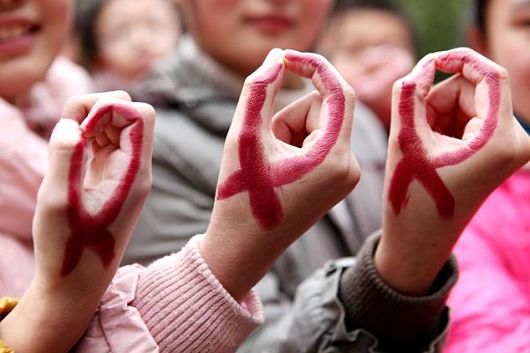
China’s National Health and Family Planning Commission and the Ministry of Education declared last week that teachers must now cover HIV/AIDS prevention in the classroom.

The move was in conjunction with the announcement that some areas of China are seeing higher rates of HIV/AIDS cases among students than other populations.

Overall, there are currently around half a million people with HIV/AIDS in China, with the possibility of hundreds of thousands of undiagnosed cases, according to the World Health Organization.

Under the requirement, middle school students must attend six hours of classes dealing with HIV/AIDS prevention, while high school students are required to attend four hours of classes. The departments also recommended that schools provide students with information regarding counseling and HIV testing sites.

Implementing the requirement is seen as a bold move for the Chinese government, as it is still coming to terms with the idea that the younger generation is more sexually liberated than older generations.

Sex education, in fact, is not currently taught in most schools in China.

However, a study by Durex, a condom maker, revealed that people in China are losing their virginity at a younger age, with the average currently at 21.2 years. The study also showed that 60 percent of those between the ages of 19 and 25 in China have had sex.

– Matt Wotus

Sources: Daily Mail, Wall Street Journal
Photo: Daily Mail

August 24, 2015
https://borgenproject.org/wp-content/uploads/borgen-project-logo.svg 0 0 Borgen Project https://borgenproject.org/wp-content/uploads/borgen-project-logo.svg Borgen Project2015-08-24 01:30:472020-04-24 13:16:48Chinese Government Implements HIV/AIDS Prevention Classes
Education, Refugees and Displaced Persons

Makeshift School Serves Calais Refugees

Makeshift school serves Calais refugees
When refugees imagine the amount of time they will be living in an encampment, they probably do not anticipate staying long — their minds already drift to a possible future beyond the camp’s makeshift walls.

However, as more refugees flee from conflicted countries such as Syria, Afghanistan and Africa, these supposedly temporary living arrangements are beginning to become communities of their own. For a camp in Calais, France, mosques, churches, shops, a barber and, as of last month, a school can be found in the encampment for those passing through.

According to an article by the global campaign A World at School, the largest camp in the northern part of Calais and Western Europe is known as “the Jungle,” housing as many as 3,000 immigrants who wait in the hopes of gaining entrance into the United Kingdom.

Near the Jungle is the English Channel tunnel, known for its connection between France and England, which serves as a potential point of entry for migrants. Despite the danger and increased security around the border zones, migrants are willing to risk everything for the chance to jump on trains and lorries bound for the UK.

Meanwhile, refugees attempt to include aspects of normalcy into their everyday schedules by attending school or passing the time playing a game of dominoes. Makeshift tents and poorly constructed buildings make up the encampment, which is filled with people who have already survived the dangerous trek from their homes in the Middle East and Africa.

Today, it is not uncommon to see a school inside of a refugee camp, so when refugees started asking how to say French words or numbers, a makeshift school was created by Nigerian Zimarco Jones. It was soon up and running, staffed with the help of French volunteers.

Constructed from materials such as branches and wood panels, the makeshift school seats 20 students and faces a blackboard. Since its establishment in July, it has been given the name L’Ecole Laïque du Chemin des Dunes, which translates to The Secular School of Dune Way.

Mostly young men attend the school to learn both English and French and other subjects, but Jones plans to build an additional school for the more than 20 children and 200 women who live in the camp.

The current state of conflict in the world has displaced an astronomical number of children from their homes, wreaking havoc on their childhoods and robbing them of their education. Fortunately, there are opportunities that can be found in those temporary homes and stops along the way to their final destination — some place they earnestly look forward to one day calling home.

– Nikki Schaffer

Sources: A World at School, The Guardian 1, The Guardian 2
Photo: Al Jazeera America

August 23, 2015
https://borgenproject.org/wp-content/uploads/borgen-project-logo.svg 0 0 Borgen Project https://borgenproject.org/wp-content/uploads/borgen-project-logo.svg Borgen Project2015-08-23 01:30:192024-06-04 04:33:48Makeshift School Serves Calais Refugees
Education

Shaquille O’Neal Supports UNIFORM

Shaquille_O'Neal
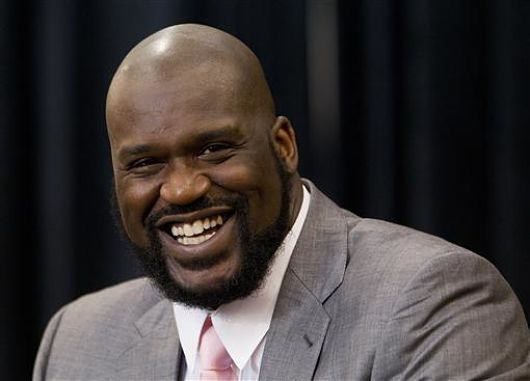
Athlete Shaquille O’Neal and fashion designer Whitney Port have geared up to join the UNIFORM cause to support children’s education in Liberia. The idea for UNIFORM came from Chid Liberty, the owner of Africa’s first fair trade apparel factory, Liberty and Justice. The project was created to get the company’s employees back to work and to get kids back in school after the Ebola crisis in 2014.

The cost of uniforms is often enough to keep children out of school. Many West African schools require students to wear uniforms, and this puts many kids out of luck for education.
For every shirt sold by UNIFORM, a uniform is donated to a child who cannot afford a needed uniform.

Port and O’Neal have shown their support for UNIFORM by designing and advocating for the products. O’Neal is spreading the word as a UNIFORM ambassador. Port is designing a graphic for a women’s muscle tank as a collaboration with her fashion line, Whitney Eve.

Because of these celebrities and many other contributors, many children can receive an education and new clothing. “It sounds so silly to us here, but if you can imagine, the average civil servant in Liberia makes 60 to 80 dollars a month,” Liberty said. “If you have five kids and all of them need a 10 dollar uniform to go to school, it is basically a month’s pay just to get your kids’ uniforms. So, it’s a super critical thing because if you don’t have a uniform, you simply can’t go to school.”

Not only does the clothing line promote education, but the clothes are also made of comfy material and are factory-direct products. UNIFORM sells black, white and gray shirts, and with the purchase of one product, the buyer receives a notebook, pencil and a photo of a child who received a school uniform. Since UNIFORM is factory-direct, the products are good quality and lower prices.

“The UNIFORM team is responding to Liberia’s post-Ebola challenges in a way that advances women’s rights and universal access to education for all children,” the UNIFORM website said. UNIFORM is made ethically in West Africa, so the clothing line provides jobs for over 300 people, 98 percent of whom are women. The factory in Monrovia, Liberia that manufactures the clothes was built with the goal to give impoverished local women fair employment. These women are given healthcare benefits as well as literacy classes.

UNIFORM’s goal is to sell enough clothing to get 50,000 kids in school by the end of the year. Liberty said that UNIFORM has currently helped 6,000 kids. With this goal in mind, the UNIFORM team is creating new items for the UNIFORM clothing line.“We’ll have our signature T-shirt, but we are working on all kinds of great products from oxfords to brief cases, all of them tying in with helping kids go to school,” Liberty said. Liberty is devoted to helping children go to school. To contribute to the cause and to help Liberty, go to uniform.is.

– Fallon Lineberger

Sources: Look to the Stars, Style Blazer, UNIFORM
Photo: Deadline

August 22, 2015
https://borgenproject.org/wp-content/uploads/borgen-project-logo.svg 0 0 Borgen Project https://borgenproject.org/wp-content/uploads/borgen-project-logo.svg Borgen Project2015-08-22 01:30:562024-05-27 09:27:32Shaquille O’Neal Supports UNIFORM
Education

Whiz Kids Workshop Bridges Educational Gaps

whiz_kids_workshop
Whiz Kids Workshop, a nonprofit located in Ethiopia, uses media to educate children who do not have access to schooling. The organization has created three shows called Tsehai Loves Learning, Involve Me-Watch Me and Little Investigators that educate children on the fundamentals of learning. They use media and technology to promote literacy, health education and gender equality.

Whiz Kids Workshop was founded in 2005 by a husband and wife team who were inspired to help young children prepare for primary school in rural Ethiopia. Because the Ethiopian government does not have enough money to provide learning materials to children in preschools or kindergartens, many children miss out on basic education that prepares them for higher level schooling. Whiz Kids Workshop bridges this gap by providing young students with educational television programs, fundamental learning materials, storybooks and workbooks.

Their television show, Tsehai Loves Learning, had been expanded to movie screenings and DVDs all over Ethiopia. The show uses animation and puppets to present research based facts to their target audience of children ages 3 through 9. Topics covered by the show range from public health and ethics to literacy and preparing children for school.

Involve Me-Watch Me was the first Ethiopian television program for youths ages 9 through 15. As of 2013, Whiz Kids Workshop has published over 30 educational storybooks and produced 32 radio show episodes based on this show. These books and shows have been distributed in 115 schools.

Little Investigators promotes scientific learning in a fun way and is the first Ethiopian show to do so. The show is targeted toward teenagers and aims to introduce the scientific method and how it can be used to analyze global warming, current issues and much more.

As of right now, the organization is producing their fourth show, Girls in Red, an animated series created especially for adolescent girls. The show tackles issues like child marriages, health issues like HIV and practicing safe sex. According to the United Nation’s campaign, Girl Up, only 38 percent of females ages 15 to 24 are literate, 20 percent of girls are married before the age of 15 and 12 percent of girls within this age range are mothers or pregnant with their first child. Young girls in Ethiopia are also seven times more likely to be HIV positive than males. Girls in Red is in the process of being produced with the goal to reduce these numbers and help young, Ethiopian females live healthier and smarter lives.

– Julia Hettiger

Sources: Whiz Kids Workshop, Fast Company, Tadias
Photo: Fast Company

August 22, 2015
https://borgenproject.org/wp-content/uploads/borgen-project-logo.svg 0 0 Borgen Project https://borgenproject.org/wp-content/uploads/borgen-project-logo.svg Borgen Project2015-08-22 01:30:082024-12-13 18:04:50Whiz Kids Workshop Bridges Educational Gaps
Education

Rebuilding Education in Sierra Leone

Rebuilding Education in Sierra Leone
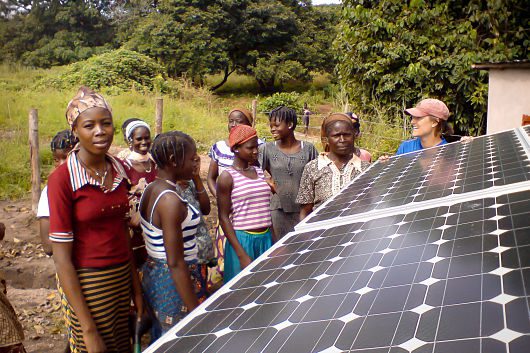
Before the Revolutionary United Front crossed from Liberia into Sierra Leone and started the 12-year war, Sierra Leone had one of the best education systems in Africa. Rebuilding education in Sierra Leone since has been a challenge and Ebola has made it even more difficult.

Only 48.09 percent of the population above the age of 15 in Sierra Leone are literate. Primary school enrollment is over 130 percent due to the amount of non primary school aged Sierra Leoneans who are attending classes because they missed out on educational services during the war. The UN estimates that 64 percent of primary aged children are enrolled in school.

During the 12 years of the war, there was no education unless the families fled to Guinea or Liberia. Out of the crisis of the civil war came an opportunity to ensure education would grow and enhance the livelihoods of Sierra Leoneans.

The Netherlands provided funding to the Cross Border Schools Project in Sierra Leone and has trained over 3,000 educators. After completing the training programs, teachers plan their own lessons and find their teaching methods are making a bigger impact.

Education in Sierra Leone is taken seriously by the government. Sierra Leone spends 14 percent of its national budget on education, which is much higher than most other countries in the region.

Other improvements have been made as well. 76 percent of Sierra Leonean children complete primary school and many go on to junior secondary education. However, 50 percent of primary school teachers still have no qualifications.

It cost $20 to send a Sierra Leonean to school and 70 percent of Sierra Leone families are living on less than a dollar a day. Poverty, child marriage, pregnancy and sexual abuse are the most significant barriers to education for girls in Sierra Leone.

UNICEF works on ensuring girls are attending school through building classrooms, providing sanitation facilities, training teachers and providing learning materials. The rights of girls in the classroom are protected through rights-based and gender-sensitive environments that helps girls succeed in the classroom.

Sierra Leone is still healing from the wounds left by the Revolutionary United Front during the civil war, but education is gradually improving and the youth are benefiting from the revival of education.

– Donald Gering

Sources: Al Jazeera, Global Partnership, Social Progress Imperative, UNICEF 1, UNICEF 2, UNICEF 3
Photo: Just Giving

August 21, 2015
https://borgenproject.org/wp-content/uploads/borgen-project-logo.svg 0 0 Borgen Project https://borgenproject.org/wp-content/uploads/borgen-project-logo.svg Borgen Project2015-08-21 01:30:032024-05-27 09:27:31Rebuilding Education in Sierra Leone
Education, Global Poverty

Five Facts About Education in Tunisia

5 Facts About Education in Tunisia
Since the 1980s, Tunisia has experienced success in increasing its human development index score through investments in education and improving the quality of life. However, there are challenges to providing quality education in Tunisia due to unorthodox practices, such as private tutoring practiced by educators.

Here are five facts about education in Tunisia:

1. Tunisia ranks ninth in the world in private tutoring and 70 percent of students participate in tutoring services. About 54 percent of these students received private tutoring from their own teachers. Many of these private lessons include parts of the curriculum that are only available through payment.

2. In order to combat corruption in the education system, Tunisia has an external integrity analysis of education. This allows the country to take appropriate actions to reduce corruption. Recommendations to Tunisia’s government include implementing a new code of conduct for teachers and reforming the admission process for universities.

3. Tunisia ranks 69th in the world in access to basic knowledge. Basic knowledge includes literacy, primary school enrollment, secondary school enrollment and gender parity in secondary school enrollment.

4. About 82 percent of people over the age of 15 are considered to be literate, which ranks Tunisia 93rd in the world in literacy. In 2008, the World Bank reported that 96.79 percent of people between the ages of 15 and 24 were literate, which provides a strong foundation of hope for the future of literacy in Tunisia.

5. The mean years of schooling in Tunisia have increased 4.5 years since 1980 and Tunisia remains one of the top countries in Africa for access to information. Around 43.8 percent of the population has access to the Internet, which contributes to a better education for students.

Education in Tunisia is showing remarkable progress in enrollment numbers for higher education and access to primary education. It will remain important in Tunisia to engage students and their parents to ensure educational reform is successful.

– Donald Gering

Sources: Open Society Foundation, Social Progress Imperative, Trading Economics, UN, UNDP
Photo: Tunisient Tunisia

August 19, 2015
https://borgenproject.org/wp-content/uploads/borgen-project-logo.svg 0 0 Borgen Project https://borgenproject.org/wp-content/uploads/borgen-project-logo.svg Borgen Project2015-08-19 01:30:572024-06-11 02:48:13Five Facts About Education in Tunisia
Advocacy, Education

Congress’s Newest International Basic Education Caucus

International_Basic_Education_Caucus
Last week, Representative Dave Reichert (R-WA) and Representative Mike Quigley (D-IL) officially launched the newest caucus in Congress: the bipartisan International Basic Education Caucus.

These two members came together across party lines to encourage a commitment from both Republicans and Democrats in support of basic-quality education around the world. The caucus, officially launched on June 24, 2015, is encouraged and supported by several partner organizations, including the Global Campaign for Education (GCE-US), RESULTS and the Basic Education Coalition. It aims to promote understanding in the 114th Congress of the many global issues associated with inadequate primary education in developing countries — including increasing economic and security issues in the United States. The caucus is intended to encourage its members — and Congress at large — to think of universal education not just as an altruistic good, but as a critical strategic advantage for the United States.

With over 121 million children and adolescents out of school around the world, U.S. funding for international education in developing nations has become increasingly important. Education is the key to breaking the cycle of poverty in these nations. The caucus will not only promote understanding of the types of challenges that arise from a lack of quality, universal education, but will also encourage bipartisan legislation to address these challenges.

One such piece of legislation is the Education For All Act, which has been introduced in previous sessions of Congress, most recently in 2013 by Congresswoman Nita Lowey (D-NY) and Congressman Reichert (R-WA). The bill, which had 76 cosponsors in the House and the Senate, was intended to amend the Foreign Assistance Act of 1961, to include further assistance for developing nations in order to promote universal primary education around the world. It simultaneously strengthened the U.S.’s commitment to global education and supported the means by which developing societies could become sustainable and independent. Though the bill did not pass when introduced, it is possible that the new caucus will bring about increased support for similar pieces of legislation in coming sessions.

While there are numerous congressional caucuses that do very little, there appears to be a reason to be optimistic when considering the future of the International Basic Education Caucus. The caucus will take part in numerous activities, including sponsored briefs on basic education issues, congressional receptions in coordination with partner organizations and letters to the presidential administration and to various world leaders. Such activities are intended to help increase support in Congress for basic international education programs, improve understanding of the seriousness of global education issues among world leaders and establish the means with which to respond to attacks on education, such as recent attacks on schools by Boko Haram in Nigeria or by the Taliban in Pakistan.

Representative Reichert commented upon the caucus’s launch, saying, “If we are going to spread freedom, promote economic growth, enhance stability and security and alleviate poverty around the world, the best way to do that is by first ensuring every young child […] has access to basic education.”

An innovative and historic effort, the bipartisan International Basic Education Caucus has the potential to make a real impact in developing nations and the world at large.

– Melissa Pavlik

Sources: Basic Education Coalition, Congressman Mike Quigley, National Education Association
Photo: Flickr

August 18, 2015
https://borgenproject.org/wp-content/uploads/borgen-project-logo.svg 0 0 Borgen Project https://borgenproject.org/wp-content/uploads/borgen-project-logo.svg Borgen Project2015-08-18 08:21:572024-05-27 09:25:45Congress’s Newest International Basic Education Caucus
Development, Global Poverty

India’s Poverty Reduction Potential

poverty_reduction
With a population of over 1.2 billion, India is in a similar position as China was years ago. China lifted hundreds of millions out of poverty by itself due to its unprecedented economic growth. India may not have incredible growth, but with a large population and a growing role in international markets, there is huge potential to reduce poverty enormously.

A UN report compared the differences in growth between both China and India, both being high-growth, high-population states. The report outlines China and India’s differing political systems and openness to foreign markets as strong factors that contributed to both increased growth and a high reduction in poverty. India’s lack of poverty reduction is in part due to the country not being able to fully leverage tools that could have led to greater economic growth similar to China’s. Lack of infrastructure spending and not being an “attractive destination for financial capital until 2004” has also constrained India’s economic potential. Coupled with the 2008 economic crisis, these factors all hurt India’s poverty reduction at the time.

Now, India has a chance to make up for lost time. As one of the countries with the most people in poverty in the world, public policy in India has a substantial impact on the future of the globally impoverished. In 2011, the percentage of India’s population under the national poverty line was over 20 percent. What is needed for India to meet its own domestic challenge of reducing poverty and simultaneously have an influence on the global statistics of poverty?

Today, millions of people in India do not have access to toilets. Sewage systems in many cities are outdated, broken, unhygienic or simply nonexistent. These facts are signifiers of the investments that India needs to make in order to help alleviate suffering of the lives of many poor citizens. Infrastructure of all types must be heavily sought after by government officials. This would allow for rural towns to have greater access to goods and services and provide better services to the nation, such as sewage and improved public health.

Education is still below ideal in India as well. It is well documented that education for both sexes is vital to creating a base of knowledge with which workers are likely to have more social mobility and job opportunities. The literacy rate in India is about 65 percent. Improving basic literacy translates to creating a section of future workers who can occupy jobs that grow rapidly in developing nations, thus preparing a workforce for tomorrow.

With hundreds of millions still in poverty, India could be the next bastion of poverty reduction if the right steps are taken. Nothing revolutionary is needed to change the course of millions of Indian livelihoods, but adhering to the tried and proven concepts would go a long way. Now that India has overcome its past stumbles and has emerged onto the world scene, it has a chance to take a look around and see where the paths diverge. Choosing a path that invests heavily in basic needs for the poor, such as education, public health and infrastructure, would go a long way in ensuring a strong economic future for a country that has yet to fully extend its wings.

– Martin Yim

Sources: The World Bank 1, United Nations, The World Bank 2, BBC
Photo: Flickr

August 8, 2015
https://borgenproject.org/wp-content/uploads/borgen-project-logo.svg 0 0 Borgen Project https://borgenproject.org/wp-content/uploads/borgen-project-logo.svg Borgen Project2015-08-08 01:30:192020-07-06 11:21:45India’s Poverty Reduction Potential
Page 45 of 67«‹4344454647›»

Get Smarter

  • Global Poverty 101
  • Global Poverty… The Good News
  • Global Poverty & U.S. Jobs
  • Global Poverty and National Security
  • Innovative Solutions to Poverty
  • Global Poverty & Aid FAQ’s
Search Search

Take Action

  • Call Congress
  • Email Congress
  • Donate
  • 30 Ways to Help
  • Volunteer Ops
  • Internships
  • Courses & Certificates
  • The Podcast
Borgen Project

“The Borgen Project is an incredible nonprofit organization that is addressing poverty and hunger and working towards ending them.”

-The Huffington Post

Inside The Borgen Project

  • Contact
  • About
  • Financials
  • President
  • Board of Directors
  • Board of Advisors

International Links

  • UK Email Parliament
  • UK Donate
  • Canada Email Parliament

Get Smarter

  • Global Poverty 101
  • Global Poverty… The Good News
  • Global Poverty & U.S. Jobs
  • Global Poverty and National Security
  • Innovative Solutions to Poverty
  • Global Poverty & Aid FAQ’s

Ways to Help

  • Call Congress
  • Email Congress
  • Donate
  • 30 Ways to Help
  • Volunteer Ops
  • Internships
  • Courses & Certificates
  • The Podcast
Scroll to top Scroll to top Scroll to top