• Link to X
  • Link to Facebook
  • Link to Instagram
  • Link to TikTok
  • Link to Youtube
  • About
    • About Us
      • President
      • Board of Directors
      • Board of Advisors
      • Financials
      • Our Methodology
      • Success Tracker
      • Contact
  • Act Now
    • 30 Ways to Help
      • Email Congress
      • Call Congress
      • Volunteer
      • Courses & Certificates
      • Be a Donor
    • Internships
      • In-Office Internships
      • Remote Internships
    • Legislation
      • Politics 101
  • The Blog
  • The Podcast
  • Magazine
  • Donate
  • Click to open the search input field Click to open the search input field Search
  • Menu Menu

Tag Archive for: Education

Posts

Aid Effectiveness & Reform, Children, Development, Education, Global Health, Global Poverty, United Nations

What Have the Millennium Development Goals Achieved?

What Have the Millennium Development Goals Achieved?

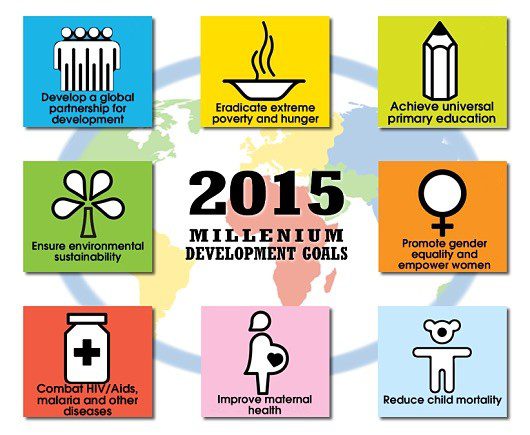
What Have the Millennium Development Goals Achieved? In 2000, the United Nations set out on a clearly defined mission to end global poverty by means of tackling eight core areas of need. Now we are looking back, 15 years later, and seeing how successful the UN was in meeting their goals-and where the new Sustainability Goals will need to take up the slack.

The Millennium Development Goals were designed as a framework for developing impoverished nations by addressing the most critical needs of the society, like reliable food sources, access to education, and adequate health care.
Each goal had specific targets which the United Nations hoped they would meet by 2015. Some goals had more success than others.

The UN’s goal of halving global poverty was met with resounding success, as the number of people living on less than one dollar and 25 cents a day dropped from one point nine billion in 1990, to 836 million in 2015. An estimated 14 percent of the global population are living in extreme poverty today, down from nearly half in 1990.

The reduction in the proportion of undernourished people globally narrowly missed its target, coming within two percent of the 50 percent reduction goal. Though narrowly missing their target, given the exponential human population growth over the last three two decades, it is still a considerable success.

The goals suffered two more near misses in their attempts to increase educational opportunities for all, including establishing gender equality in schools. An estimated 10 percent of children are not receiving any formal education, and only about two -thirds of developing countries have achieved gender equality in the classroom.

Goals four and five of the Millennium Goals, which addressed child and maternal mortality, respectively, both failed to meet their targets. While both the mortality rate of children under five and maternal deaths were reduced by over half, both failed to reach the two-thirds reduction target.

Goal six, stop and reverse the spread of HIV/AIDs, malaria, and other diseases was similarly not met in the given 15 year time frame. Although the rate of new HIV/AIDS infections has fallen by around 40 percent, an estimated two point one million people are still being infected annually. The fight against malaria and other diseases prevalent in developing areas has seen more success however, with an estimated six point two million malaria deaths averted between 2000 and 2015.

The final two goals of the 2000 Millennium Development Goals tackled strengthening infrastructure, sustainable development, and international partnership. While both goals are still on-going endeavors, over the last decade, two point six billion people have gained access to improved drinking water and official development assistance to developing nations has risen by nearly seven percent.

Overall, the United Nations has experienced great success in their struggle to address the needs of the poor around the world, but they are the first to admit that more work is needed. In the official Millennium Development Goals report, released earlier this month, Wu Hongbo Under-Secretary-General for Economic and Social Affairs admitted that success has been uneven across developing nations. “Millions of people are being left behind, especially the poorest and those disadvantaged because of their sex, age, disability, ethnicity or geographic location. Targeted efforts will be needed to reach the most vulnerable people,” said Hongbo.

The Quick and Dirty of Hits and Misses:
Goal #1: Target goal met and exceeded
Goal #2: Target goal nearly achieved
Goal #3: Not met
Goal #4: Not met
Goal #5: Not met
Goal #6: Not met
Goal #7: Target achieved ahead of schedule
Goal #8: No target specified, on-going action

The Sustainable Development Goals of 2015 will pick up where the Millennium Goals left off and continue to guide the United Nations as they work to eradicate global poverty.

– Gina Lehner

Sources: The Guardian, UN
Photo: Global Classrooms

July 9, 2015
https://borgenproject.org/wp-content/uploads/borgen-project-logo.svg 0 0 Borgen Project https://borgenproject.org/wp-content/uploads/borgen-project-logo.svg Borgen Project2015-07-09 15:02:462020-07-10 12:53:34What Have the Millennium Development Goals Achieved?
Children, Education, Gender Equality, Global Poverty, Inequality, United Nations

Effects of Gender Relations in Textbooks

Gender-Relations

The effort to educate the world’s poor is making strides with the United Nation’s new commitment to education, as well as the resourcefulness of people who see a need for their communities. The U.N. proposes that 90% of children have been reached. However, the majority of students are boys and many children who do not attend school are girls.

Getting to school is not the only challenge for girls. Part of the problem are the curricula’s textbooks that depict gender inequality. This is evident in countries like Thailand, Pakistan, Bengal and Kenya.

The stories, images or examples either do not include women or describe them in submissive, traditional roles like cleaning, cooking and serving men. The men are depicted as the ones who hold positions as political leaders, drivers, teachers or doctors. Often, history books leave out influential women in history or do not accurately portray the lives of women. For example, a Thai book shows only a man receiving a land title, when in reality a large portion of the women hold their own land titles. While these biases are subtle, studies have shown that they still reinforce negative stereotypes of women.

Rae Blumberg, who has done extensive research on gender relations in textbooks, insists that “When girls don’t see themselves in textbooks, they’re less likely to envision themselves doing great things.” There are already low percentages of women working in government and leadership positions in these poor nations. The textbooks only “reinforce, legitimate and reproduce patriarchal gender systems” that keep women out of these positions.

The lack of accurate portrayals of women in these positions can discourage young girls from getting an education or trying hard in class. However, educating women and young girls is the key to raising communities out of poverty. For instance, by keeping young girls in school, child marriage can be reduced. There are links between education and lower birth rates and birth mortality. Education can also protect children from diseases and malnutrition through the provision of health information, such as prevention techniques. With an education, girls can make a living and be positive contributors to their community, the economy and their family.

It is important to keep young girls in school. While changing cultural norms that prevent girls from attending school will take time, addressing bias in textbooks is a reasonable start. By replacing the textbooks or having conversations about the bias, more girls can succeed in getting an education that will hopefully eliminate gender biases.

– Katherine Hewitt

Sources: The Guardian, Manushi-India.org NPR, UNESCO Reuters Blogs
Photo: Fabius Maximus

July 9, 2015
https://borgenproject.org/wp-content/uploads/borgen-project-logo.svg 0 0 Borgen Project https://borgenproject.org/wp-content/uploads/borgen-project-logo.svg Borgen Project2015-07-09 08:03:052024-06-05 03:00:37Effects of Gender Relations in Textbooks
Advocacy, Education, Global Poverty, Technology

Computer Game Educates Players About Global Issues

Computer_Game_Educates
Five years ago, a group of students from the Philippines created the computer game “Wildfire” to win the Microsoft Imagine Cup Game Design Competition, one of five major categories in the annual contest. The theme of the contest was, “Imagine a world where technology helps solve the toughest problems.”

The technology competition brings together students from all around the world with the goal of helping solve the globe’s biggest issues. Overall, the 2010 contest saw over 300,000 students from more than 100 countries go head-to-head.

The five creators of “Wildfire,” a mix of college students and graduates, call themselves By Implication. The group of friends decided to enter the contest after Typhoon Ketsana brought devastation to Manila, the capital of the Philippines, in 2009.

On its website, By Implication stresses that worldwide problems must be tackled head on, as they cannot be overcome by using magic or potions.

“Wildfire,” which is free and can be played an unlimited number of times, demonstrates just this. The computer game educates players about global health issues and how they can help solve them.

Designed and created with a virtually nonexistent budget, the game permits users to navigate their own city in an attempt to defeat the health issues, known as the “bad guys.”

Players are on their own until they collect “inspiration points,” which they can then use to obtain the assistance of volunteers around them. This teaches that a player is powerless if he or she is alone. Transition to the real world, and this idea illustrates that by working together, people have the ability to do something great.

In addition, the computer game educates players with informative buttons. A player can encounter the buttons, which contain short facts about crises including poverty and water quality, while navigating his or her own city. In the end, if players and volunteers can defeat not only the problems they encounter, but also the time limit, their city will thrive.

For the creators of “Wildfire,” they hope that by learning about certain issues, those who play the game will become motivated to help solve them.

– Matt Wotus

Sources: ABC News, Imagine Cup, Imagine Cup Wildfire by Implication
Photo:Neogaf

July 6, 2015
https://borgenproject.org/wp-content/uploads/borgen-project-logo.svg 0 0 Borgen Project https://borgenproject.org/wp-content/uploads/borgen-project-logo.svg Borgen Project2015-07-06 09:55:192020-07-11 11:53:29Computer Game Educates Players About Global Issues
Global Poverty, Technology

E-Libraries Bridge Digital Divide Across Sri Lanka

E-Libraries Bridge Digital Divide Across Sri Lanka-TBP
The Sri Lankan government installed e-library computer centers in hundreds of community centers and places of worship across Sri Lanka to combat the country’s digital divide, increase digital literacy and stimulate the economy in rural areas.

The Program, e-Library Nenasala (eLNP), is completely free to the public, no matter what background a person comes from. “The eLibray Nenasalas have literally opened the gateway to wisdom and knowledge in rural Sri Lanka,” explains Nenasala’s website.

The program originally began in an environment of despair and desparation— the tsunami in the Indian Ocean of December 26, 2004. A total of 35,000 Sri Lankans died that day. Family members and friends urgently needed access to communication and information, and both were facilitated by the e-library program.

The computer centers across Sri Lanka have increased the country’s computer usage and technological literacy rate from below 10 percent in 2004, to nearly 40 percent today.

Computers and internet access have given communities access to life-changing services and information. Children can stream videos on learning the English language; women can learn about nutrition, breast-feeding, sanitation and vaccinations. Farmers can learn how to increase their crop yields, and entrepreneurs have access to information on how to start a business. Migrant workers staying in Sri Lanka can also Skype with family members in far-away countries.

Community members, thanks to their access to computers, now have access to assistance with how to write a resume or conduct a job search. Adults can fill out important applications online such as passports or driver’s licenses; they can also take government examinations.

The Nenasala computer centers also bring the community together; teens are trained in computer skills, and then volunteer to teach older community members.

“Without a doubt, the e-Library Nenasala Program is making a real and lasting impact on the lives of poor rural residents throughout Sri Lanka. People are getting locally relevant information and hands-on experience in the subject areas that matter most to them. Community members have a real investment in these centers, which promotes their longevity and sustainability for many years to come,” explained Deborah Jacobs, who directs the global libraries initiative at the Gates Foundation.

So far, 283 e-Library computer centers have been built. When the program first began, the government “knew that the low-income, rural residents it was targeting wouldn’t necessarily flock to the Nenasalas, or ‘wisdom centers.’ Fear, distrust, or just plain unfamiliarity would likely keep them away” explained Impatient Optimists, The Gates Foundation’s website.

For this reason, the e-library computer centers are based in some of the most trustworthy places of all— places of worship. This unconventional cultural adaptation has been critical in the success of the E-Library Program. “These institutions are seen as community centers and places of learning. They are familiar, welcoming, and trusted,” said Impatient Optimists.

E-Libraries can be found in Muslim Mosques, Buddhist Temples, Christian churches and Hindu Kovils across Sri Lanka.

Temples have been an especially effective location for the e-libraries because of their traditional, ancient association with learning as well as their role as the center of the village. The temples of Sri Lanka are also open to all people, no matter the race, gender, age or even religion. Small donations from the community help to keep the e-libraries functioning and up-to-date.

The eLNP program has been so effective that it received the Gates Foundation’s Access to Learning Award, a one million dollar value. The award began 15 years ago to promote providing the world’s poor with access to technology.

The organization plans to use the money to upgrade hardware at various locations. eLNP also plans to begin a new program where community members can temporarily rent tablets and install education software for children where there is not ample access to schooling.

The Sri Lankan government hopes to increase computer literacy and usage rates through the Nenasala computer centers to 75 percent by 2016.

– Aaron Andree

Sources: Bill & Melinda Gates Foundation, Impatient Optimists, Philanthropy News Digest

July 6, 2015
https://borgenproject.org/wp-content/uploads/borgen-project-logo.svg 0 0 Borgen Project https://borgenproject.org/wp-content/uploads/borgen-project-logo.svg Borgen Project2015-07-06 09:50:112020-11-18 12:23:52E-Libraries Bridge Digital Divide Across Sri Lanka
Education, Global Poverty

Education Helps Eradicate Poverty in Chile

Education-Eradicating-Poverty-in-Chile
In recent times, some of the largest economic growth in South America has occurred in a small and notoriously narrow country, the Republic of Chile. A standard-bearer of free-market capitalism, Chile’s rapid expansion over the past 35 years has been staggering. According to Forbes, “poverty has fallen from 50 percent to 11 percent, per-capita income has increased from 4.000 dollars to almost 20.000 dollars and inflation was reduced from over 250 percent per year to less than 7 percent per year.” Often referred to as the “The Miracle of Chile,” this development seemed to lift the country out of economic and political chaos and into remarkable prosperity.

In 1973, Chile was in dire straits. Its annual rate of inflation had reached 150 percent and its economy was spiraling downward. On top of this, the country experienced the bloodiest coup of 20th century South America in which the military dictatorship of General Augusto Pinochet seized power from the Socialist president Salvador Allende. Over the course of just one month, over 3,000 Chileans lost their lives as military planes strafed and bombed the presidential palace. Ironically, this militaristic dictator became the source of the economic miracle.

General Pinochet promptly began to dismantle Allende’s socialist system and in its place instituted free-market economic policies. To enact these policies, Pinochet gathered together a collection of economists named the ‘The Chicago Group,’ as many members had studied at the University of Chicago. The group endorsed lower tax rates, the privatization of state companies, lower government spending and deregulation. But this growth came at a price to civil liberties and democratic values. In his 1980 constitution, Pinochet set the stage for Chile’s growth by prioritizing economic freedom at the cost of political oppression and social programs.

In 1990, Pinochet failed to retain his office after losing a public election and Chile steered back towards democracy. While his policies in the 1980s had brought the country out of financial failure and into economic prosperity, they left the poorest Chileans behind. Due to tax cuts and lackluster government spending, 45 percent of Chileans still lived in poverty. To the new Chilean government of the 1990s, the next big step was to confront poverty. Their solution was social spending.

Their plan was extraordinarily successful. Between the years of 1989 and 1997, the new Chilean government increased “health and education investments (mostly ignored under Pinochet) by 179.3 and 115 percent respectively,” according to a report from Brandeis University. This social spending helped to dramatically lower poverty; every percentage of growth Chile experienced between 1990 and 1996 counted 50 percent more to the reduction of poverty than under Pinochet’s regime. Ultimately, the poverty rate fell from 39 percent to 20 percent from 1990 to 2000. In comparison, poverty across South America only fell from 48 percent to 44 percent.

Of all social expenditures, education received the most attention and made the greatest impact. During the 1990s, spending on education grew at a rate of 10.6 percent annually and 274 percent cumulatively over the entire decade. The same Brandeis study mentioned above found that the increases in education spending were particularly effective in decreasing the severity of poverty in Chile.

However, Chile’s expansion, while exceptional, has not exactly been miraculous. According to the Brookings Institute, Chile has one of the highest rates of income inequality in the world. Unfortunately, Chile’s education system, particularly higher education, suffers from a similar form of stratification even though it has expanded by 33 percent in the past two decades. In terms of enrollment, 62 percent of Chileans from the upper 20th percentile in income attend institutions of higher education. By contrast, only 21 percent attend from the lower 20th percentile.

While Chile has developed rapidly, due in large part to social spending in education, it has left many of its poorest behind. With the current president Michelle Bachelet planning further tax increases to provide free education to all Chileans, it is possible that another miracle may be on the horizon.

– Andrew Logan

Sources: BBC, Bloomberg, Brandeis University, Brookings Institute, Forbes, IFPRI, MIT Poverty Action Lab, University of Hawaii
Photo: SnipView

July 3, 2015
https://borgenproject.org/wp-content/uploads/borgen-project-logo.svg 0 0 Borgen Project https://borgenproject.org/wp-content/uploads/borgen-project-logo.svg Borgen Project2015-07-03 08:30:442024-06-04 03:53:02Education Helps Eradicate Poverty in Chile
Education, Global Poverty

China’s Ambitious Plan for its Higher Education System

higher_educationDuring the 2008 Summer Olympics held in Beijing, China’s notoriously polluted capital, a controversial interview surfaced on the website of Tsinghua University. Alleged to have the support of university president Binglin Gu, the interview condemned the Chinese higher education system as teeming with “serious academic corruption dry and irrelevant to society curriculum, and rote memorization teaching methods.” It continued on to say, “The old-fashioned methods of teaching and teaching material caused our society to lose many Da Vinci’s and Bill Gates … up to now, China has no Nobel prize-winners, which has a lot to do with this kind of education pattern.”
While the interview was later revealed to be a fabrication by hackers, it still garnered enough attention to challenge the effectiveness of Chinese higher education, now the largest system of tertiary education in the world. The question remains though: Are the claims true?

As the report claims, China’s education style is, in a way, old fashioned. China has long favored memorization and exams for its education. This tradition dates all the way back to the 7th century, when China’s growing bureaucracy created the challenging keju exam system in order to select the best administrators. More than a millennium has passed, but the importance of the exam in Chinese education remains.

The college entrance exams, or the gaokao, a modern form of the ancient keju, serves as the single admission criteria for all Chinese universities. It has become a national obsession for college-bound students. In order to succeed on these intensely rigorous tests, the college hopeful have resorted to “cram-schools,” which fill the hours between school and bedtime with studying. On weekends, some 20,000 students will arrive at certain cram schools at 6:20 in the morning only to return home over 14 hours later.

The college admissions process has also received criticism for its bias and discrimination. Reports have suggested that more wealthy, urban students from influential cities like Shanghai and Beijing are 41 times more likely to be admitted to Peking University compared to more rural and poorer students from the province of Anhui.

Not surprisingly, more testing means Chinese students spend more time in classrooms than their Western peers. While more than one-third of Chinese college students experience 30 hours of class time a week, the average UK college student spends 14 hours equally working inside and outside of the classroom. In comparison, 40 percent of Chinese college students spend less than five hours working outside of class.

The Chinese obsession with tests corresponds to the increasing attendance and funding among the country’s colleges. In 1999, the Chinese government expanded its education system in order to jumpstart its stagnant economy. The number of graduating students has spiked since then. In 2003 there were 2.12 million university graduates in China, with almost 7 million a decade later, according to government estimates.

However, this investment in education has not entirely paid off. As more and more Chinese have enrolled in universities, China has found its economy actually decelerating, albeit in small amounts. Recent graduates have also struggled with employment, with only 35 percent having found employment. Post-graduate students fare even worse, with only 26 percent having found employment.

While China has invested greatly in its own higher education, its best universities still cannot hold a candle to those elsewhere, particularly in the West. This has led a large number of Chinese students to seek more valuable college educations abroad to get an edge in an increasingly difficult domestic job market. More than 3 million Chinese students have chosen to study abroad and they represent 20 percent of international students from OECD countries.

These international students often do not return home. In fact, according to a study, 85 percent of Chinese students who earned their doctorate in America in 2006 were still there five years later. With so many potential academics and intellectuals not returning to the country, many proclaim that China has a “brain-drain.” Only recently have Chinese citizens begun to win Nobel prizes for work done in their home country.

To entice its many expatriate academics back to their homeland, China has offered generous benefits. Those who return can expect free housing, a 1 million Yuan bonus and state-of-the-art facilities. The results were exceptional: From 2005 to 2012, published research articles from universities rose by 54 percent, with patents increasing eightfold. However, returning professors still have to work in an academic environment that restricts their research. Currently, the Chinese government plays a major role in directing research and rewards academics for the quantity of articles published rather than their quality.

Yet the sheer amount of money China has invested in its higher education system should guarantee results, a Harvard Business Review article stressed. It predicted that China will soon produce the most PhDs of any country in the world and lauded the increasing productivity of its professors.

The question still remains as to whether or not China can innovate and compete in both the realms of business and education. While perhaps less revered and creative, China’s universities are pioneering a controversial yet forward-looking path. To those guiding this burgeoning system, quantity has a quality of its own.

– Andrew Logan

Sources: The Economist, Harvard Business Review, New York Times 1, New York Times 2, Times Higher Education, TIME, University of Buffalo
Photo: New York Times

July 2, 2015
https://borgenproject.org/wp-content/uploads/borgen-project-logo.svg 0 0 Borgen Project https://borgenproject.org/wp-content/uploads/borgen-project-logo.svg Borgen Project2015-07-02 15:31:332024-05-27 09:25:26China’s Ambitious Plan for its Higher Education System
Education

Educating the World’s Disabled Children

disabled_children

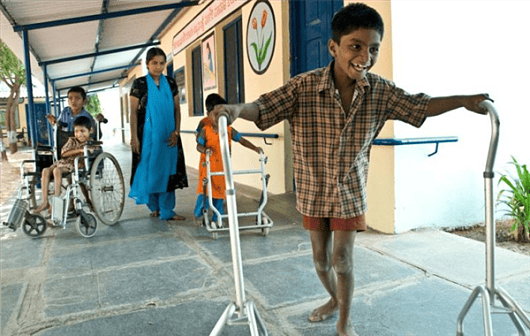
When organizations reach out to provide children in developing countries with an education, one group of children is often overlooked — children with disabilities.

The issue of not reaching children with disabilities is diverse. For example, there are children who physically cannot make it to school, and those who need specialized equipment, curriculum and teachers in order to learn and participate in school.

There are estimated to be around 93 million children with a disability in the world, with 80 percent of them living in developing countries. As there are limited to no resources to help them, these children are unfortunately more likely to drop out of school.

Many children with severe disabilities are already left out of the community and discriminated against. By lacking an education, these children will be further overlooked.

Some of these disability issues can be addressed by providing healthcare access to young children. Identifying that someone needs glasses or a hearing aid, for example, can allow children to go back to school and continue learning. Fixing clubfoot or cleft smile can ensure that children can physically get to school and speak without significant impediment.

One activist for education for disabled children is Ashwini Aangadi from India. As a visually impaired person herself, she recognized the need for schools for disabled children, especially blind youth. The schools for which she advocates not only provide an education that is accessible to blind students, but also accommodates the students. This way, students do not have to worry about transportation and self-care.

Aangadi believes that education is a key to giving the visually impaired a self-reliant and dignified life. This extends beyond just visually impaired children, to all disabled children. With an education, these children can begin to live a healthier, safer life and make meaningful contributions to the community.

– Katherine Hewitt

Sources: DNA India, Global Partnership,
Photo: Sulekha

July 1, 2015
https://borgenproject.org/wp-content/uploads/borgen-project-logo.svg 0 0 Borgen Project https://borgenproject.org/wp-content/uploads/borgen-project-logo.svg Borgen Project2015-07-01 08:00:252020-07-14 14:43:37Educating the World’s Disabled Children
Education, Global Poverty

University of the People: Free Education for the World

Education_for_the_World
Education empowers individuals and gives them a chance to escape poverty. This idea is so accepted and powerful that one of the United Nations Millennium Development Goals (MDGs) calls to “Achieve Universal Primary Education.”

However, what is next for those who have achieved primary education? If a person has a primary or even secondary education, are there resources to allow that individual to obtain a higher education?

Often, a young adult may desire a higher education but find that their financial situation will keep them from achieving a traditional higher education without substantial scholarships. Possibly, they are too geographically far from a traditional university or need to work to contribute to the household income.

Fortunately, a global revolution in higher education is taking shape through the work of the University of the People. They have created a business plan that provides free higher education for the world online. So far, they only have four programs, but they are all accredited: Associate of Science and Bachelor of Science in Business Administration, and Associate of Science and Bachelor of Science in Computer Science. The sequence of courses is comparable to any brick-and-mortar education, and are overseen by an advisory board of professionals from several large universities.

Anyone over the age of 18 with a secondary diploma and proficiency in English can apply to the University of the People. Tuition is completely free and course materials are all accessible on the Internet and available to download. There is a small application fee, and each course does require a $100 end-of-course examination. However, the fees have the possibility of being covered through scholarships.

How is all this achievable? Well, the University has partnered with several large names in this endeavor, such as Yale University for research, New York University for applications and Hewlett-Packard for internships. Furthermore, well-qualified instructors and professionals volunteer as course instructors and course developers. People dedicated to the cause of giving everyone access to higher education make this business plan succeed.

Even with such great strides in access to education, those in poverty are still at a disadvantage. A large group of potential students is left out of this revolution because they lack Internet access, working computers or English proficiency.

However, those areas are being addressed. For example, the University of the People pledged to accept 250 qualified Haitians into the program. The University hopes this group of students will help the rebuilding of Haiti by becoming leaders through this educational opportunity. To aid the students, the University of the People pledged to “locate places for students to go to study, furnish these places with computers, ensure electricity and back-up generators and provide satellite Internet.”

The United States can also help with the technological disadvantages that Africa faces through the Electrify Africa Act. This act would establish partnerships and devote financial help to Sub-Saharan Africa, where electricity is wildly inconsistent. By creating reliable electricity sources in Africa, the economy will likely improve, and people will have the ability to escape poverty. If Sub-Saharan Africa had reliable electricity and, in turn, access to the Internet, a large group of potential students would have the opportunity to achieve higher education through the University of the People.

Students lacking English proficiency are also being addressed. The United Nations is working to bring primary education to every child around the globe with the aforementioned MDGs. Once a child is literate in their own language and has passed primary education, educators can start to focus on teaching a foreign language with proficiency in secondary school, thus opening doors for higher education.

The University of the People has rolled out a solid business plan that is already showing results. So many people around the globe that thought they would never be able to achieve a higher education due to finances or distance now have an opportunity to succeed and move out of poverty.

– Megan Ivy

Sources: Congress.gov, University of the People, UN Millennium Goals
Photo: The Positive Approach

June 28, 2015
https://borgenproject.org/wp-content/uploads/borgen-project-logo.svg 0 0 Borgen Project https://borgenproject.org/wp-content/uploads/borgen-project-logo.svg Borgen Project2015-06-28 09:00:432020-07-15 11:20:36University of the People: Free Education for the World
Development, Education, Global Poverty

How a New Program is Providing Safer Schools for the World’s Poor

safer_schools
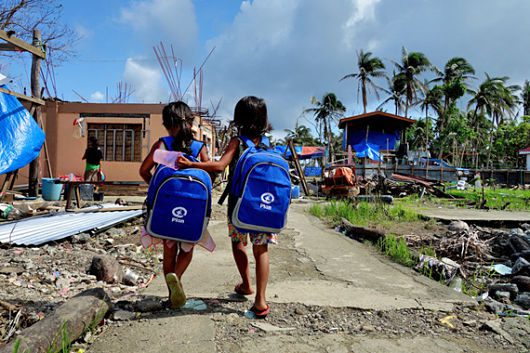
On April 25, 2015 a 7.8 magnitude earthquake hit Nepal. Two thousand schools collapsed, and five thousand others were damaged, forcing children to abandon their studies.

In the developing world nothing is more important than education, and when an already weak infrastructure crumbles under a natural disaster, it can be devastating for schools and a catastrophic defeat in the fight against poverty.

The Nepal earthquake was not an isolated incident. Every year natural disasters wreak havoc on underdeveloped nations, destroying the lives and property of millions. In 2013 the Philippines was the victim of a destructive typhoon that damaged 2,500 schools and disrupted the critical studies of 1.4 million children. And two years later, in March 2015, Cyclone Pam dramatically affected the Republic of Vanuatu.

The Global Program for Safer Schools (GPSS), recently created to address these issues, is managed by the Global Facility for Disaster Reduction and Recovery (GFDRR). The new initiative is not only building demolished school buildings but also reinforcing and retrofitting schools at risk in catastrophe prone areas.

GPSS maintains relationships with a wide range of international partners, including the United Nations and agencies such as UNICEF, UNESCO and UNISDR, international NGOs like Save the Children and private sector companies such as Arup. Additionally, it works with ministries of finance, public works and education, integrating risk considerations and investing in large scale education benefits for communities.

The lack of education around the world is shocking, and its effect on poverty are staggering. Nearly a billion people entered the 21st century unable to read a book or sign their name. Less than 1 percent of what the world spent every year on weapons was needed to put every child into school by the year 2000. Yet it didn’t happen. Based on enrollment data, about 72 million children of primary school age in the developing world were not in school in 2005.

Clearly education is a necessity, playing a vital role in alleviating poverty around the globe, but it is a luxury much of the world does not have, perhaps more so for girls. The state of school facilities in the developing world can be extremely fragile, and protecting them could make an immense difference.

Maternal deaths could be reduced by two thirds in the world if all mothers completed school, saving 98,000 lives. An extra year of secondary school boosts girls’ eventual wages by 15-25 percent. When women and girls earn income, they reinvest 90 percent of it in their families – buying books, medicine and bed nets and ensuring education for their children. Girls who stay in school for seven or more years typically marry four years later and have two fewer children than girls who drop out. And fewer dependents per worker allows for greater economic growth.

As much as 55 percent of the reduction in hunger from 1970 to 1995 can be attributed to improvements in women’s education and their status in society. School-based HIV/AIDS education programs are effective in preventing HIV infection, reducing the burden of this disease on families and communities.

Education can be one of the greatest tools fighting global poverty today. The Global Program for Safer Schools, through rebuilding disaster stricken institutions and retrofitting those at risk, ensures that disadvantaged children around the world have a chance.

– Jason Zimmerman

Sources: World Bank, Global Facility for Disaster Reduction and Recovery, Global Facility for Disaster Reduction and Recovery, New Internationalist, UNICEF, United Nations
Photo: Plan

June 24, 2015
https://borgenproject.org/wp-content/uploads/borgen-project-logo.svg 0 0 Borgen Project https://borgenproject.org/wp-content/uploads/borgen-project-logo.svg Borgen Project2015-06-24 02:02:582024-05-27 09:25:16How a New Program is Providing Safer Schools for the World’s Poor
Education, Global Poverty

Afghanistan’s Rule of Law and Future Can Flourish

Afghanistan

Afghanistan is one of the most dangerous and impoverished nations in the world. What can be done to help to turn it around?

One of the biggest problems Afghanistan faces is its history of a weak rule of law. The rule of law has to do with the strength of legal institutions, as well as laws themselves. It also applies to how laws are carried out—equally or unequally.

When the rule of law is strong, it provides a basis for a society’s economic development, security, infrastructure and an accountable government. A strong rule of law also improves public health, alleviates poverty and improves education.

Weak rule of law leads to crime, corruption and the unequal application of laws across a society. Afghanistan has struggled with all these things, and improving and solidifying the rule of law is important to secure its future. For a country to flourish, a strong rule of law is needed.

It is a generally accepted idea, that for some, education is a pathway out of poverty. However, without a strong rule of law, which limits the Taliban preventing girls from going to school or corruption from impacting learner’s education, this pathway is fraught with difficulties. Corruption is a massive problem in Afghanistan—the country ranked last for the absence of corruption in the World Justice Project’s 2014 Rule of Law Index.

Sadly, the problem runs deeper than merely educating Afghan girls and boys with hopes that they will escape poverty. For Afghanistan to improve its rule of law and therefore it’s future, it’s legal education system must continue to be developed.

Because of Afghanistan’s five constitutions since 1964 along with Soviet occupation and the Taliban government, the country’s legal system been decimated and fallen behind the rest of the world. The legal education system has failed to produce a capable body of legal experts, instead a group of jurists who have made their best effort in recent times but are woefully unprepared.

Since U.S. military intervention and the fall of the Taliban in 2001, much has been done to try and improve both the university and legal education systems in the county. Strengthening these institutions can lead to fewer instances of land disputes—the main cause of conflict in Afghanistan. They are common because both informal and formal devices used to resolve the conflicts are fragile and weak.

Land disputes are also a perfect example of a weak rule of law because they illustrate an instance where a law says one thing, but in practice, it is not relevant, enforced or practical. The current land ownership law states the need for documents proving ownership of land, however, only 20 percent of land actually has these documents.

The U.S. State Department has played a role in developing the legal system in Afghanistan by bringing young lawyers to the U.S. to study, who have then gone back to their home country to set up legal practices. This is a good step, but improvement in the rule of law via more development of the legal education system in Afghanistan itself could go even further to improve its future as a safer, less impoverished country.

– Greg Baker

Sources: The Hague Institute for Global Justice, The New York Times, United States Institute for Peace, The World Justice Project, U.S. Department of State
Photo: Clarksville Online

June 17, 2015
https://borgenproject.org/wp-content/uploads/borgen-project-logo.svg 0 0 Borgen Project https://borgenproject.org/wp-content/uploads/borgen-project-logo.svg Borgen Project2015-06-17 21:21:272024-12-13 17:51:30Afghanistan’s Rule of Law and Future Can Flourish
Page 48 of 67«‹4647484950›»

Get Smarter

  • Global Poverty 101
  • Global Poverty… The Good News
  • Global Poverty & U.S. Jobs
  • Global Poverty and National Security
  • Innovative Solutions to Poverty
  • Global Poverty & Aid FAQ’s
Search Search

Take Action

  • Call Congress
  • Email Congress
  • Donate
  • 30 Ways to Help
  • Volunteer Ops
  • Internships
  • Courses & Certificates
  • The Podcast
Borgen Project

“The Borgen Project is an incredible nonprofit organization that is addressing poverty and hunger and working towards ending them.”

-The Huffington Post

Inside The Borgen Project

  • Contact
  • About
  • Financials
  • President
  • Board of Directors
  • Board of Advisors

International Links

  • UK Email Parliament
  • UK Donate
  • Canada Email Parliament

Get Smarter

  • Global Poverty 101
  • Global Poverty… The Good News
  • Global Poverty & U.S. Jobs
  • Global Poverty and National Security
  • Innovative Solutions to Poverty
  • Global Poverty & Aid FAQ’s

Ways to Help

  • Call Congress
  • Email Congress
  • Donate
  • 30 Ways to Help
  • Volunteer Ops
  • Internships
  • Courses & Certificates
  • The Podcast
Scroll to top Scroll to top Scroll to top