• Link to X
  • Link to Facebook
  • Link to Instagram
  • Link to TikTok
  • Link to Youtube
  • About
    • About Us
      • President
      • Board of Directors
      • Board of Advisors
      • Financials
      • Our Methodology
      • Success Tracker
      • Contact
  • Act Now
    • 30 Ways to Help
      • Email Congress
      • Call Congress
      • Volunteer
      • Courses & Certificates
      • Be a Donor
    • Internships
      • In-Office Internships
      • Remote Internships
    • Legislation
      • Politics 101
  • The Blog
  • The Podcast
  • Magazine
  • Donate
  • Click to open the search input field Click to open the search input field Search
  • Menu Menu

Tag Archive for: Education

Posts

Economy, Education, Global Poverty

Understanding the Reasons Why Tajikistan is Poor

Why Is Tajikistan PoorTajikistan has done an incredible job over the past 15 years of reducing poverty and strengthening its economy. However, the poverty rate still remains at 31 percent. Despite being in the top 10 percent of countries in terms of poverty reduction, the question of why Tajikistan is poor remains.

Poor soil and a lack of employment opportunities have driven more than one million Tajiks to work abroad, mostly in Russia, in order to support their families. Additionally, narcotics are a huge source of economic activity in Tajikistan, leading to hostile environments for students and driving away foreign investment.

Education in Tajikistan is often truncated. There is limited opportunity for secondary school, and higher education is an opportunity only the most privileged can afford. The levels of education across Tajikistan are lower for women, as 12 percent do not end up graduating the compulsory nine years of primary school.

Minimal infrastructure is another explanation as to why Tajikistan is poor. Though there is a fairly well developed system of roads, they are in need of repair and supplement. Access to the internet and clean water, not to mention basic health care, is also restricted, and the railway system is rudimentary and ineffective.

Besides a lack of education and overall infrastructure, the rule of law in Tajikistan is weak, likely due to a history of civil war and a former dependence on the Soviet Union. This makes foreign direct investment unlikely, leaving little chance for new businesses to grow and develop.

Much has been done in recent years to continue to strengthen the Tajikistan economy, yet the question of why Tajikistan is poor remains. The country must work even harder than in the past, increasing access to the internet and energy, developing the private sector more fully and making the country an attractive one for foreign direct investment if they wish to continue the impressive growth that has been the norm for fifteen years.

– Connor S. Keowen

Photo: Flickr

October 3, 2017
https://borgenproject.org/wp-content/uploads/borgen-project-logo.svg 0 0 Borgen Project https://borgenproject.org/wp-content/uploads/borgen-project-logo.svg Borgen Project2017-10-03 07:30:012024-05-29 22:27:03Understanding the Reasons Why Tajikistan is Poor
Aid, Development, Education, Global Poverty, Women

Teaching Impoverished Women Solar Panel Engineering

Teaching Impoverished Women Solar Panel EngineeringA business partnership between law firm Hogan Lovells and Barefoot College seeks to help women in the developing world rise out of poverty by offering programs in solar panel engineering. Barefoot College, founded in 1972, is a college built by and for the rural poor, whose main objective is “to demystify and decentralise technology and put new tools in the hands of the rural poor with a singular objective of spreading self-sufficiency and sustainability.” This initiative, conducted in partnership with Hogan Lovells, focuses on teaching impoverished women solar panel engineering. The objective is for these women to bring the technology back to their villages and provide a renewable light source to destitute rural areas.

The project estimates it will bring clean, renewable power to over 200,000 people by training 400 women at five centres in Latin America, Africa and the Pacific Islands. Since 2008, when the initiative started, the college estimates it has trained 1084 women, or ‘solar mamas’ as they call them, from 83 different countries in solar panel installation and maintenance. Hogan Lovells is now providing Barefoot with pro bono legal advice and financial backing to help with the most recent expansion of the program.

Although a majority of the women are illiterate, through sign language and color-coded textbooks they are taught how to create, install and maintain solar panels for their community. Not only does this help bring a renewable power source to thousands of destitute villages, but by teaching impoverished women solar panel engineering, it helps to develop gender equality in these regions. The ‘solar mamas’ become respected community advisers and hold a high position as the installers and maintainers of a village’s main power source.

Installing solar panels also brings an array of other benefits to poor, rural, areas. It replaces the use of toxic kerosene, allowing children to study at night with the use of lamps, and family incomes tend to rise, since they pay less than what they paid for kerosene, batteries, candles, etc. Barefoot estimates that it has replaced over 500 million litres of the highly toxic and flammable kerosene since the program started.

Barefoot College and its ‘solar mama’ initiative in cooperation with Hogan Lovells is an example of the innovative progress made by non-governmental institutions in the race to meet the U.N’s Sustainable Development Goals. By training impoverished women in solar panel engineering, Barefoot, in a single program, addresses seven of the 17 goals, including tackling poverty, promoting gender equality and developing affordable and clean energy. It is an example to be followed.

– Alan Garcia-Ramos

Photo: Flickr

September 29, 2017
https://borgenproject.org/wp-content/uploads/borgen-project-logo.svg 0 0 Borgen Project https://borgenproject.org/wp-content/uploads/borgen-project-logo.svg Borgen Project2017-09-29 01:30:522020-07-17 08:15:49Teaching Impoverished Women Solar Panel Engineering
Development, Education, Global Poverty

How Online Education Can Alleviate Global Poverty

Online Education

Information technology and the ever-increasing access to it has been a product of the 21st century. It has been both a blessing and a curse to the modern world, but does it also have an opportunity to give rise to global access to education? Some argue that the faults of an online education lead students to abuse internet access when “learning” subjects, while others see it as a tool to springboard educational opportunities for both young people as well as those whose community’s systems for education may not have adequate resources.

Massively open online courses, or MOOCs, have recently been made more readily available for online education. With these, students can take courses on several areas of discipline at a variety of different levels, ranging from single courses in business and finance to a more extensive series of courses on web design.

An online education platform utilizing MOOCs, Coursera, has been a forerunner in this type of educational experience by making these courses available for free to any student with access to a computer or smartphone. Co-founder Daphne Koller has made it her mission to enable impoverished communities by making these classes available as a “real course” experience, as opposed to a watered down or less intuitive version that a naysayer may argue is the downfall of online education.

These courses also provide a legitimate certificate that can act as college credit or be presented to a potential employer once a course or set of courses is finished. Koller contends that an online education not only makes courses more accessible, but is also a more enriched way of learning. The courses employ interactive techniques and self- and peer- evaluation during the lesson, where otherwise a student may be complacent or simply not paying attention.

So, students can enjoy a flexible and valuable education online from essentially anywhere in the world, but what does this mean for the future of global poverty?

Platforms such as these not only provide insight into education experiences through models of self-evaluation, self-tutoring, and accessibility, but also open doors for entrepreneurial self-starters. People with the drive to lift themselves out of poverty situations through their own ingenuity and passion would be able to do so, as long as this tool is made available. With seemingly limitless and fast-paced technology advances, online education has the potential to revolutionize the educational experience as a whole and enable more people to take advantage of the power of knowledge.

– Casey Hess

Photo: Flickr

September 27, 2017
https://borgenproject.org/wp-content/uploads/borgen-project-logo.svg 0 0 Borgen Project https://borgenproject.org/wp-content/uploads/borgen-project-logo.svg Borgen Project2017-09-27 01:30:512020-07-16 17:50:12How Online Education Can Alleviate Global Poverty
Economy, Education, Global Poverty

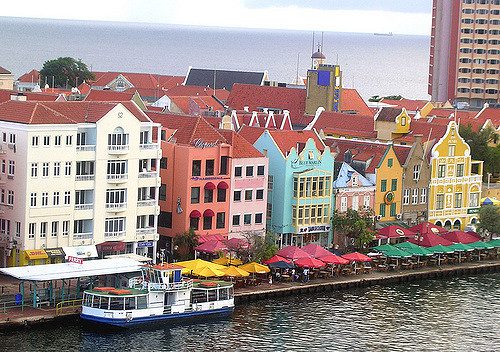
Addressing the Curacao Poverty Rate

Curacao Poverty RateOn October 10, 2010, after centuries operating as a deep-water port for the Dutch, the small Caribbean island of Curacao gained autonomy as a state in the Kingdom of the Netherlands. 80 percent of the country’s debt was forgiven by the Dutch, and most government positions were undertaken by local citizens. For many who lived on the island, 10/10/10 marked the dawn of a new era of opportunity. “We were confident that we were going to have this perfect future,” said political analyst Michiel van der Veur.

Enthusiasm was short lived. Soon after gaining autonomy, the assassination of politician Helman Wiels plunged the island into turmoil. Between 2012 and 2013, Curacao had four prime ministers, greatly increasing the instability. As a country plagued with such unrest, it should be no wonder that the Curacao poverty rate is over 25 percent.

A small island country located in the Caribbean, much of the economy in Curacao is based around tourism and is thus highly sensitive to fluxes in the world market. Most of the country’s necessities are imported, leading to large trade deficits.

The Curacao poverty rate is likely increased by the country’s “brain drain” problem. Like many other developing island nations, citizens who are ambitious and educated often leave, moving to other countries with better opportunities for people with their skill sets.

However, Curacao has committed itself to addressing the country’s widespread poverty. With the support and assistance of the U.N. Development Program, Curacao has created a National Development Plan (NDP), which will focus on improving the economy through a series of steps from 2015 to 2030.

The NDP focuses on five themes to accomplish its goal: education, economy, sustainability, national identity and good governance. As diminishing the Curacao poverty rate is a priority, economy is one of the most important themes. In order to accomplish this, Curacao will focus on structural reform, government support, sectoral growth, supporting investments and broadening ownership of industry and land.

With the NDP, Curacao has taken a significant step towards strengthening the economy and the country as a whole. While there is much work to do, the country’s history as a long time trading center and large deep water port point to a high probability of success.

– Connor S. Keowen

Photo: Flickr

September 27, 2017
https://borgenproject.org/wp-content/uploads/borgen-project-logo.svg 0 0 Kim Thelwell https://borgenproject.org/wp-content/uploads/borgen-project-logo.svg Kim Thelwell2017-09-27 01:30:242024-05-29 22:26:53Addressing the Curacao Poverty Rate
Global Poverty, Human Rights, Women & Children

3 Violations of Human Rights in Tanzania

Human Rights in TanzaniaOn June 22, 2017, Tanzanian President John Magufuli stated that pregnant adolescent girls will not be allowed to return to school because their pregnancies encourage other girls to have sex. This statement represents one of the several ways young women and other vulnerable Tanzanian populations are set up to fail, trapped in an endless cycle of poverty. There are numerous violations of human rights in Tanzania. This article will discuss three.

To understand the extensive violation of human rights in Tanzania, one must first understand what the Universal Declaration of Human Rights says. This document was created on December 10, 1948 by the United Nations General Assembly because of the events of World War II. The document lists thirty articles or rights that belong to all people. The three articles of the document that are regularly transgressed in Tanzania are:

  1. Article 3: Everyone has the right to life, liberty and security of person.
  2. Article 5: No one shall be subjected to torture or to cruel, inhuman or degrading treatment or punishment.
  3. Article 26: Everyone has the right to education. Education shall be free, at least in the elementary and fundamental stages. Elementary education shall be compulsory. Technical and professional education shall be made generally available and higher education shall be equally accessible to all on the basis of merit.

Mistreatment of Young Women

Tanzanian women lack the human rights guaranteed to all in articles 3 and 26: the rights to livelihood, freedom, safety and an education. In their 2016 report, “I Had a Dream to Finish School,” the Human Rights Watch reported that girls in Tanzania are sexually harassed by teachers, bus drivers and adults. The leaders in their lives who are supposed to guarantee their safety instead request sex in exchange for gifts, rides or money. Schools in the country do not report sexual abuse cases to police. In addition, there is no system for reporting these infractions confidentially. The result? Less than one-third of girls entering lower-secondary schools graduate.

In addition to being sexually harassed, girls also are forced to take pregnancy tests at school. If a girl is pregnant, the school then expels her. Tanzanian schools expel around 8,000 pregnant girls each year. This policy reinforces President Magufuli’s June comments and is intended to discourage an upsurge in teen pregnancies. In reality, the policy violates the human rights of these young women. It also targets the victims rather than the offenders.

Barring Education through Testing

Tanzanian school children lack the human rights guaranteed in articles 5 and 26: the rights to not be exposed to cruel punishments and to seek an education. According to the Human Rights Watch, the Tanzania government controls the number of students who can seek a secondary education by making it mandatory for all students to take the Primary School Leaving Exam (PSLE). The only students who can attend secondary school are students who pass the exam.

However, passing the exam is very difficult. This is because quality of education at the primary level is poor. At the primary level, students are taught by teachers who have not specialized in the subject they instruct and class sizes are enormous. The average class has 70 students enrolled. Many students fail the PSLE as a result and are not allowed to retake it. Since 2012, more than 1.6 million adolescents can’t pursue secondary education because of their exam results. This violation of human rights in Tanzania thus denies an opportunity for upward mobility.

Corporal Punishment in the Classroom

In addition to impeding children’s chances to continuing their education, adults utilize corporal punishment to discipline students when they do attend school. Students suffer from physical and psychological abuse in Tanzanian schools. Some teachers beat students with bamboo or wooden sticks, or with their hands or other objects. These actions make securing rights that much harder for this population.

While the state of human rights in Tanzania may seem grim for vulnerable populations, there is hope. Legislation currently in Congress can help to reverse these violations if passed. The Protecting Girls Access to Education in Vulnerable Settings Act seeks to work with international governments to ensure all women and children can peaceably seek an education. Help get this important piece of legislation passed by contacting your leaders today.

– Jeanine Thomas

Photo: Flickr

September 26, 2017
https://borgenproject.org/wp-content/uploads/borgen-project-logo.svg 0 0 Kim Thelwell https://borgenproject.org/wp-content/uploads/borgen-project-logo.svg Kim Thelwell2017-09-26 07:30:412020-07-16 21:26:243 Violations of Human Rights in Tanzania
Aid, Education, Global Poverty

How to Help People in Togo Through Education

Help People in Togo

Togo is an African country that values education, even though “more than 30% of the population lives below the poverty line.” There is a need to help people in Togo receive proper education to prevent further poverty and to empower its women and youth. The different ways to help people in Togo revolve around these factors.

Accessible Education
Over the last decade, Togo has benefited from free basic education. Previously, a basic education was less accessible to children simply because their families could not afford the yearly fees. The efforts to help people in Togo ensure that families were not keeping their children out of school because of fees have continued to this day.

However, 20 percent of children still do not attend school and 30 percent must work to aid their families. Advocating for primary education to be a requirement for all Togolese children is the next step towards progress. Nonetheless, funding Togo’s schools ensures they will not be forced to charge families once again.

As for the quality of that education, it is crucial to hire adequate teachers who do not utilize child labor for the teacher’s own economic gain. Moreover, for the children’s safety and for a more effective learning environment, most buildings require extensive maintenance and infrastructure improvements. For example, many schools in Togo do not have electricity.

Efforts made by organizations partnered with Togo have seen improvement. Even with a standard class size of 80 children, non-government organizations have provided students with necessary materials and other forms of aid.

Empowerment
Providing adequate education allows Togo’s young adults to trust their own educated minds to help them make a difference in their country. This idea has already started to bear fruit, as a number of Togolese are working to foster innovation and healthful practices among their fellow citizens.

Sename Koffi Abdojinou founded WoeLab, an organization that utilizes renewable resources to create technology to help people in Togo. For example, a member named Afate Gnikou made a 3D printer out of e-waste alone.

Kokou Senamé, a youth from Togo, advocates for sexual education. He feels that youth leadership is vital and that youths should be able to educate one another about contraceptives. The voice of a peer is very impactful when it comes to topics with intense stigmas. Sexual education is extremely important in a country with about 120,000 people with HIV. Educating youths to use protection also helps prevent unwanted pregnancies.

Safe Childbirth
UN Women works to protect the life and health of pregnant women. In 2010, there were “287,000 maternal deaths…in Central African Republic, Chad, Guinea, Haiti, Mali, Niger and Togo.” Without proper healthcare and education, pregnancy puts mothers and their children at risk.

To help people in Togo, UN Women is advocating for adequate training for midwives and other health workers, ensuring a safer birthing process.

Empowering women to gain adequate knowledge regarding childbirth and child rearing is the first step towards alleviating poverty. Once Togolese mothers are properly cared for, they can advocate for their own children to value education and provide youths with the confidence to fight for change.

– Brianna White

Photo: Flickr

September 24, 2017
https://borgenproject.org/wp-content/uploads/borgen-project-logo.svg 0 0 Borgen Project https://borgenproject.org/wp-content/uploads/borgen-project-logo.svg Borgen Project2017-09-24 01:30:232020-07-09 17:54:20How to Help People in Togo Through Education
Education, Global Poverty, Technology

Technological Advancements in Kenyan Education

Technological Advancements in Kenyan EducationNew technological advancements in Kenyan education are attracting students and parents to schools in the area. Such advancements not only aid the students’ learning, but also get them excited about going to school and getting a basic education.

Amaf Primary and Elim Academy in Kawangware, a low-income settlement in Nairobi, have already reaped the benefits of such technology. Since advertising their new computers, these schools both have waiting lists and excited students.

The M-Pesa Foundation Academy in Thika is also establishing itself as a benchmark for Kenyan education reform. Every student has their own iPad, allowing for free use of the Internet to nurture discovery and an interest in learning.

These efforts can be attributed to the eLimu project, which selected these schools to integrate interactive tablets into the classroom to allow them to use modern and advanced teaching methods.

Plan International Kenya is another organization that works alongside projects such as eLimu to advance literacy among children through the use of technology. After being piloted in 25 schools, Plan International Kenya is set to put its technological resources in 300 schools across the country.

With the help of such famous technical partners as Nokia, British Telecom and Lenovo, OSL works to help teachers create more interactive and inclusive learning methods and environments through information and communication technologies.

The main idea behind these new technological advancements in Kenyan education is to help teachers make school more exciting and interactive to attract more students.

After recognizing the success of the 16 pioneer teachers selected for training, the Kenyan government is now supporting the implementation of a project to work with the Kenya Institute of Curriculum Development to train teachers to integrate modern technology into their teaching methods.

– Tucker Hallowell

Photo: Google

September 22, 2017
https://borgenproject.org/wp-content/uploads/borgen-project-logo.svg 0 0 Borgen Project https://borgenproject.org/wp-content/uploads/borgen-project-logo.svg Borgen Project2017-09-22 01:30:542024-05-29 22:26:41Technological Advancements in Kenyan Education
Education, Global Poverty

African Students in China

African Students in China
The number of African students in China is on the rise.

In 2000, there were less than 2,000 African students enrolled in Chinese universities. In 2015, there were 50,000.

The number of African university students in China surpasses both the United States and the United Kingdom, which each host around 40,000 students. France remains the host of the most African students at 95,000.

The increase in African students in China coincides with the strengthening relationships between China and numerous African countries. China is focused on Africa, and has provided several African countries assistance in areas like government and education, which continues to this day.

An example of these partnerships is China’s gift of 65 scholarships to Ghanaian students for the 2017/2018 academic year. As reported by Xinhua News, the Chinese government has also provided other resources to Ghana’s government.

For the Chinese government, African students in China encourages strong times between the Asian country and the African continent. CNN highlights how China hopes that investments in Africa will create strong economic and political partnerships with the African people.

One of the benefits for African students in China is affordable education. Chinese education is relatively inexpensive, even without a scholarship.

African students in China also benefit their countries. Because Chinese laws discourage international students from remaining after their studies, many African students return home and use their skills and education in their home countries.

Many students feel that the business connections they make with China are valuable beyond education, along with learning the language of a country that is considered to be a rising power.

African students in China illustrate a growing, mutually beneficial relationship between China and Africa. China’s commitment towards assisting Africa and Africa’s receipt of resources and opportunities has created a multi-country network and a climate of exchange that is continually expanding.

– Cortney Rowe

Photo: Flickr

September 21, 2017
https://borgenproject.org/wp-content/uploads/borgen-project-logo.svg 0 0 Borgen Project https://borgenproject.org/wp-content/uploads/borgen-project-logo.svg Borgen Project2017-09-21 07:30:022024-05-27 23:58:55African Students in China
Education, Global Poverty, Women and Female Empowerment

KOICA Project “Better Life for Girls” to Fund Girls Education

Girls Education

In order to initiate better girls education around the world, the Korean International Cooperation Agency (KOICA) has worked in several countries to improve access to education. In its most recent effort, it granted $6 million to UNICEF in August 2017. The aim of this grant is to assure better health, protection and widespread education for Jordanian children, as well as Syrian refugee children who have found a new home in Jordan.

The funding will be put to a variety of beneficial uses, such as health education, reliable water sanitation, psychological counseling and amplified education for children with disabilities. In addition, specific psychological help will be given to women and girls who may be victims of gender-based violence, discrimination or child marriage.

The funding comes as part of KOICA’s five-year-long, $200 million program, “Better Life for Girls,” which aims to increase the amount of girls in schools in developing countries, better the quality of the education they receive and ensure that no girl is victim to being treated unfairly or receiving a lesser education on account of her gender.

In July of 2016, KOICA brought the “Better Life for Girls” program to Uganda, pledging $5 million to adolescent girls’ education over the course of two and a half years. They promised an emphasis on technology, educating parents as well as children on the harm of early pregnancy and child marriage and encouraging men and boys to join the efforts in reducing abuse and mistreatment of women.

As KOICA points out, almost 62 million girls cannot go to school. Poor families in third-world countries often prioritize boys’ education over girls, who are forced to drop out of school or forgo attending altogether. Many girls are needed at home, are subjected to child marriage, or become pregnant at a young age, restricting their ability to get an education. The Uganda Demographic and Health Survey states that one in four girls from ages 15 to 19 is pregnant or has a child, meaning that she often cannot go to school.

But it is education that will empower women to be able to make decisions about their own health, to start a lucrative career that will allow her independence, and to contribute to her own future and her society’s future with her intellectual prowess. Not only does KOICA wish to encourage this, the agency wants to spread awareness about the unfair treatment of girls at schools in developing countries and explore their untapped potential.

Another effort from the “Better Life for Girls” program was made in the Gaza strip in February of 2016. KOICA pledged $500,000 to the United Nations Relief and Works Agency for Palestine Refugees in the Near East. The UNRWA’s technical and vocational education and training program helps highlight job opportunities and provides training in those areas to Palestinian refugees in Gaza, particularly women. KOICA’s contribution enabled the UNRWA to reevaluate its program and ensure that it would guide bright and innovative refugees to employment.

The “Better Life for Girls” program serves to remind that there is no limit to the new heights that may be reached with more women at the helm, with more girls learning how to make society a better place, with more female minds behind the world’s newest inventions, political advancements, medical discoveries and more.

Expanding girls education will improve the community and open the world to millions more people who have the potential to lead, create, heal and discover. It will change the world for the better.

– Charlotte Armstrong

Photo: Flickr

[hr]

Learn about the Protecting Girls Access to Education in Vulnerable Settings Act.

[hr]

September 21, 2017
https://borgenproject.org/wp-content/uploads/borgen-project-logo.svg 0 0 Borgen Project https://borgenproject.org/wp-content/uploads/borgen-project-logo.svg Borgen Project2017-09-21 01:30:432024-06-04 01:17:47KOICA Project “Better Life for Girls” to Fund Girls Education
Education, Global Poverty, Refugees

New Crowdfunding App for Refugees

Crowdfunding App for Refugees

EdSeed, a new crowdfunding app for refugees, connects education facilities, donors and displaced university students on mobile phones. The app offers refugee students an opportunity to raise the money they need to attend an acclaimed university. It also provides an accessible and reliable method for people and corporations to donate to refugees in a way that will help them become self-reliant.

There is an estimation that, of the 65 million refugees in the world, only 1 percent have access to higher education. At least 200,000 Syrians had their post-secondary education interrupted when they had to flee their home country. No longer on the path to a degree, most of these previous students now find themselves struggling economically in a world that values educated workers.

The app gives students a social media-style profile where they supply details such as degree, university, career aspirations, past academic performance and personalized videos and pictures. Donors can filter their search to find the type of students they wish to support. Individuals can choose between $10 to $100 donations, while corporations can donate from $10,000.

Students can share their edSeed profiles on other social media sites, and the app will also campaign for specific profiles monthly who aren’t receiving as much attention. The students can also monitor their funding process and amounts.

EdSeed partners with universities and scholarship foundations who will verify student profiles and will receive the funds directly, providing a trustworthy platform for donors. The app hopes to raise 6,000 scholarships within three years.

Since its start in April, 500 students have already signed up and 12,000 individual and 3 corporate donors have expressed interest. However, edSeed hopes to accelerate its growth to handle more traffic.

EdSeed hopes to expand beyond higher education and provide funding for apprenticeships, mentoring organizations and other types of degrees that will provide refugees with a quicker route to economic independence. This crowdfunding app for refugees is on its way to help thousands of students worldwide.

– Hannah Kaiser

Photo: Flickr

September 19, 2017
https://borgenproject.org/wp-content/uploads/borgen-project-logo.svg 0 0 Borgen Project https://borgenproject.org/wp-content/uploads/borgen-project-logo.svg Borgen Project2017-09-19 07:30:362020-07-01 19:30:39New Crowdfunding App for Refugees
Page 20 of 67«‹1819202122›»

Get Smarter

  • Global Poverty 101
  • Global Poverty… The Good News
  • Global Poverty & U.S. Jobs
  • Global Poverty and National Security
  • Innovative Solutions to Poverty
  • Global Poverty & Aid FAQ’s
Search Search

Take Action

  • Call Congress
  • Email Congress
  • Donate
  • 30 Ways to Help
  • Volunteer Ops
  • Internships
  • Courses & Certificates
  • The Podcast
Borgen Project

“The Borgen Project is an incredible nonprofit organization that is addressing poverty and hunger and working towards ending them.”

-The Huffington Post

Inside The Borgen Project

  • Contact
  • About
  • Financials
  • President
  • Board of Directors
  • Board of Advisors

International Links

  • UK Email Parliament
  • UK Donate
  • Canada Email Parliament

Get Smarter

  • Global Poverty 101
  • Global Poverty… The Good News
  • Global Poverty & U.S. Jobs
  • Global Poverty and National Security
  • Innovative Solutions to Poverty
  • Global Poverty & Aid FAQ’s

Ways to Help

  • Call Congress
  • Email Congress
  • Donate
  • 30 Ways to Help
  • Volunteer Ops
  • Internships
  • Courses & Certificates
  • The Podcast
Scroll to top Scroll to top Scroll to top