Posts
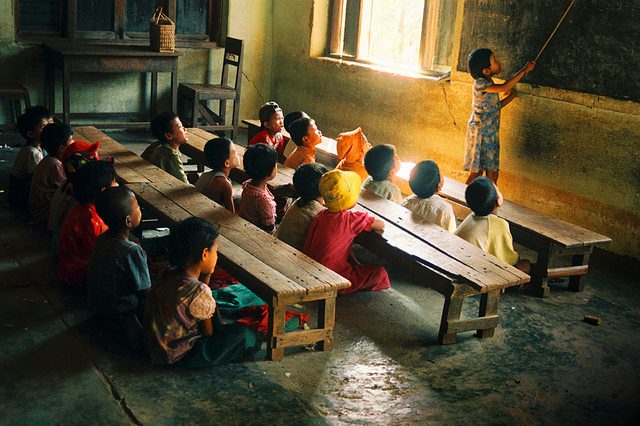
Due to a variety of factors, the access to quality education in Myanmar is generally poor. Below are seven things everyone should know about education in Myanmar.
- The amount of money invested into education in Myanmar is low. Only 1.3 percent of the country’s GDP is allocated to education. This is lower than the average reported by the Organization for Economic Cooperation and Development. Myanmar now ranks 164th out of 168 by the U.N. Human Development Index for public spending on education.
- In the 1940s and 1950s, Myanmar had one of the highest literacy rates out of all of the countries in Asia. Compared to its counterparts, Myanmar was expected to be one of the fastest developing areas in the region. However, a lack of funding has since decreased the access to quality education in Myanmar.
- Students do not get to choose what they study. Even if students choose to pursue secondary education, they have little choice in terms of their area of study. Students will be assigned to study a subject based on their previous test scores, even if the area they are forced to go into does not provide many job opportunities.
- Education in Myanmar is only mandatory for five years. After the five required years, many students drop out of school due to family financial struggles. At 50 percent, the number of kids enrolled in secondary education in Myanmar is about half of the enrollment percentage of secondary school students in the United Kingdom.
- Politics play a significant role in access to quality education in Myanmar. After trying to pass an education bill proposed in 2014 – that would give citizens less autonomy over their education – many students protested against the government. Though their behavior might have had them arrested in the past, they were successful in getting the government to reconsider the education bill, which was passed in 2015.
- The Quality Basic Education Program (QBEP) and UNICEF are working to improve access to education for all children in Myanmar. The QBEP strives to provide quality education services to 34 areas in Myanmar. Of QBEP’s aims, one of them is to provide help to children and communities that are the most disadvantaged.
- Over recent years, investment in education has improved. In a span of only two years, from 2012 to 2014, public spending on education in Myanmar increased by 49 percent.
Though the investment in education in Myanmar has improved in recent years, there is still a lot of progress to be made within the country’s education system. Many organizations, such as QBEP and UNICEF, are taking steps in the right direction by working to provide better access to education for all children in Myanmar.
– Haley Rogers
Photo: Flickr
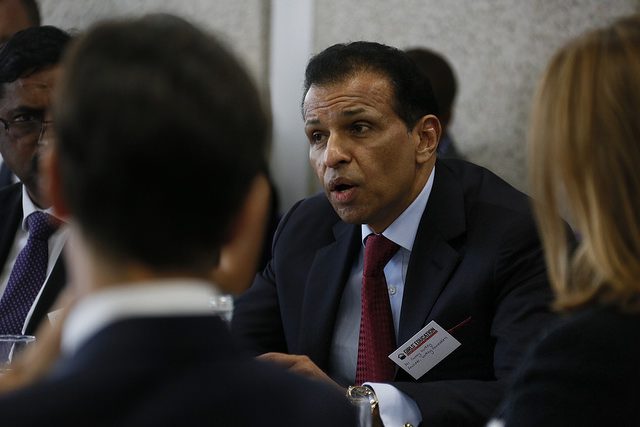 The Varkey Foundation is a nonprofit organization meant to improve the standards of education for underprivileged children around the world. Through building teacher capacity and advocacy campaigns, the Varkey Foundation is able to accomplish this goal.
The foundation started with Sunny Varkey, an education entrepreneur who believes that education “plays a key role in reducing conflict, prejudice, poverty and intolerance around the world.” Through the Varkey Foundation, programs geared toward improving classroom instruction, teacher appreciation and the advocation for improved global education have helped the world greatly.
The following are descriptions of the Varkey Foundation’s various campaigns and programs:
- Instructional Leader Program
The Instructional Leader Program is a low-cost teacher training program that addresses the issue of teacher quality. This program consists of a five day, face-to-face course aimed at school administration and principals in order to improve teacher quality within schools. The Varkey Foundation also has training courses for tutors. It has established satellite schools to continue professional development and Saturday workshops based on school needs. - Making Ghanaian Girls Great!
Making Ghanaian Girls Great! (MGCubed) is an interactive distance-learning program—the first of its kind in Ghana. Through the use of technology and multimedia content, MGCubed is able to deliver quality teaching to over five thousand students throughout Ghana. This program uses solar powered computers and projectors to broadcast lessons to connected classrooms across Ghana. Through MGCubed, the quality of education increases and girls also have access to an after-school program specifically geared toward gender studies. - Varkey Teacher Ambassadors
Varkey Teacher Ambassadors are role models who promote great practices in education and are leaders in developing learning techniques. These teachers are known to go above and beyond for their students’ education for the best possible future. The teachers who become ambassadors are given the opportunity to share and promote their projects to larger audiences online or at the Global Education and Skills Forum. - Global Teacher Prize
The Global Teacher Prize is a $1 million prize that is annually given to a teacher that has made an extraordinary contribution to their profession. The purpose of this prize acknowledges that teachers should be recognized and celebrated for their efforts. Not only does this prize reflect the impact of the teacher on their students, but also their effort put forth in bettering the community. Through the recognition of hard working teachers, education can improve, thus improving social, political, health and economic issues throughout the world. - Global Education and Skills Forum
The purpose of the Global Education and Skills Forum is to address the challenges of education and how to improve them. This forum brings together world leaders from public, social and private sectors to seek solutions for these issues. The forum emphasizes the question, “How do we get there together?” In other words, the event is meant to bring focus to how leaders can take these solutions, implement them and make sure they benefit everyone. The forum lasts two days, where more than 2,000 delegates share and debate new ways to transform education to best benefit the world.
The Varkey Foundation focuses intently on education and leaders within education in order to improve students and communities around the world. The Varkey Foundation’s programs and campaigns continue to focus on the best possible solution, as well as acknowledging teachers in all their efforts.
– Rebekah Covey
Photo: Flickr

Education in Spain is a broad and extended topic. Although the federal form of government in the country resides in Madrid, and is lead by the prime minister Mariano Rajoy, the country is divided within 17 autonomous regions that have smaller forms of government within each one. This leads to some schools in Spain teaching Spanish in the particular dialect from each region, such as in Catalonia, the Basque country, Galicia and more.
The Spanish schooling system is divided within three categories: public schools, private schools and state-funded private schools. Regardless of public schools being completely funded by the state, thus free of charge for the students who attend such schools, class materials, books and sometimes uniforms still need to be paid with citizens’ own money.
Sunken within the 2008 economic crisis, the European country of Spain has just now started to recover its economy and generate interest, breaking the loop that has positioned the country at the second highest unemployment rate within the European Union, Greece taking the first place. The sector that has been most affected by the economic crisis of the past several years has been public education in Spain. This issue has been a notoriously increasing one since the economic crisis started, due to extreme budget cuts on the public schooling system within the European country.
Prime minister Mariano Rajoy declared José Ignacio Wert as the minister for education in the year of 2011, and from then to 2015, when Wert was substituted by Iñigo Méndez de Vigo, education was greatly affected. From the year 2012 to 2013, public schools’ teaching systems declined when sharp cuts forced the government to leave up to 25,000 teachers unemployed. Public universities’ tuition fees increased by 66 percent, taking Spanish citizens out on the street to protest the dreadful management that increased the numbers of people who could not afford education for their families.
The main consequence regarding these issues has been the increase of school dropouts, which stood at an alarming rate of 25 percent in 2014, the highest school dropout rate in the European Union. However, there is good news. Even with high levels of poverty, education in Spain was ranked as having the 12th lowest inequality gap for students of all the countries in Europe.
Spanish residents fight for a better schooling system and education in Spain everyday. The lack of teachers, economic resources and the increase of students per class have lead to a series of educational strikes in order to make the Spanish government understand and respond to the gravity of the issue.
– Paula Gibson
Photo: Flickr

In an interview with BBC News, 16-year-old Hye-Min Park explains that her studious efforts are all in the name of achieving her dreams of becoming an elementary school teacher. Attending hagwons in South Korea is a part of that journey.
A day in the life of a South Korean Student
Park leaves her home for school at 7:30 a.m. which she attends until 4:00 p.m. She returns home for a quick bite, leaving again for private lessons at her hagwon from 6:30 p.m. until 9:00 p.m.
After her hagwon lessons conclude, she heads back to school for a study session until 11 p.m. Once she gets home, she continues studying until 2 a.m. Her alarm is set for 6:30 a.m. to wake up later that morning to do it all over again.
Despite seeming like a long and intensive day, Park explains that she is able to forget her hardships when she sees her efforts pay off in the form of good marks at school.
What is a hagwon?
Hagwons are for-profit private institutions throughout South Korea that students often attend in substitution of public kindergarten or preschool, as an after-school program and sometimes both.
Some have nick-named these institutions “crammers” as hagwons in South Korea typically teach a fast-paced curriculum in various subjects including English grammar, mathematics, fine arts and music.
Nearly 100,000 hagwons can be found throughout the country, and 95 percent of students have taken lessons from these institutions by the time they graduate high school.
The Cost
South Korean parents spent over $15 billion, or 18 trillion Korean Won, on private education annually. That’s more than triple the average Organisation for Economic Co-operation and Development (OECD) country’s expenditure on private education, and more than anywhere else in the world.
The hagwon structure may be evolving the educational system, acting as a market in which supply and demand rule all.
Three-quarters of Korean students prefer their hagwon lessons to their day school classes. Sohn Kwang Kyun, a math teacher at Sky Education (a top-grossing hagwon), thinks this is because hagwons are consumer-oriented. Hagwon lessons match students’ abilities with the appropriate lessons and pace.
Choi Jung Yoon is also a teacher at Sky Ed. Yoon believes that the preference towards hagwons is also because they are elective; because students elect to take them, they are more engaged.
But how optional are they? The importance of gaining admission into top universities fuels the demand for supplementary lessons from private institutions like hagwons. Further, increasing competition may necessitate hagwon attendance.
The price of hagwons may come at another cost: a loss of interest and motivation in the formal education system and increased stress.
Self-harm was the number one cause of premature death in 2016. Self-harm claims approximately 900 lives annually and continues to be the second leading cause of death for adolescents and young adults under 30. Depression and anxiety disorders rank fourth and ninth, respectively, for health problems causing the most disability.
Hagwons in South Korea is designed to enhance students’ cognitive abilities and contribute to South Korea‘s admirable reputation of educational devotion. However, the added responsibility may also add pressure on Korean students and compromise their mental health.
– Sloan Bousselaire
Photo: Flickr

Education in the United Arab Emirates (UAE) has undergone significant changes since the small Arab nation was founded in 1971. At that time, options for students were few and far between, but this has changed significantly in recent years.
The UAE currently offers every citizen education completely free, from kindergarten to even university. The government even funds the educational endeavors of students if they seek to further their studies abroad. Moreover, the literacy rate in the UAE is 93.1 percent for males and 95.8 percent for females, according to recent estimates. This is a significant increase from the rate of adult literacy in 1975, which was only 54 percent for men and 31 percent for women.
University enrollment rates similarly paint a more optimistic picture of the educational landscape in the UAE. About 95 percent of all girls in their final year of high school apply to university, while 80 percent of males in their final year of high school apply to university. However, education in the UAE still requires improvements in order to produce competitive students in today’s world. This is evidenced by the goals of the UAE Vision 2021, the government’s five-year plan to push the country to innovate and develop, where education is given immense importance in order to secure the future prosperity of the nation on the world stage. The UAE hopes to diversify its economy, especially by investing in the very citizens who are likely to play a major role in its future growth.
Furthermore, the benefits of improving education in the UAE are by no means vague or illusory. Indeed, Dubai Cares, the philanthropic organization based in the UAE, attempts to address poverty across the globe by means of education. This program is devoted to combating poverty and hunger through education via a variety of means – one, in particular, is to establish school programs that ensure the children are being fed in countries ranging from Ghana to Palestine. Dubai Cares firmly believes that in education lies the key to effectively fighting poverty. Another prominent example is investing in girls’ education, believing that doing so enlightens others and results in health benefits that will affect future generations.
The intersection of education and philanthropy is hardly a surprise. Educating others gives them the tools to make proper decisions that are in their long-term interest. It helps them pull themselves out of poverty and also avoid it in the future. The future returns of such an endeavor cannot be lightly dismissed since educated parents are likely to instill the same values in the younger generation.
– Mohammad Hasan Javed
Photo: Flickr

In September 2017, a BBC News correspondent reported a 60-year old woman from East Africa, Florence Cheptoo, learning to read for the first time. This feat is surprisingly uncommon for Cheptoo’s demographic in Kenya.
Although Kenya is one of the “best-educated low-income countries in sub-Saharan Africa,” the literacy rate among females, particularly the elderly, are lower than males. According to Global Ageing Campaign, “literacy rates among older people – especially older women – remain low and are often lower than for the population as a whole.”
The literacy rates among women have increased exponentially within the last 30 years, since the National Literacy Campaign launched in Kenya in 1979. During this time, according to a study from the International Review of Education, around 35 percent of males 15 and older and 70 percent of females in the same age group were illiterate. Furthermore, 93 percent of women over the age of 55 could not read.
In 1993, women comprised 70 percent of those enrolled in the adult literacy programs in Kenya, due to a lack of available educational opportunities for girls. Prior to the National Literacy Campaign, Cheptoo, who was born in 1957, did not receive support from her parents for education, encouraged instead to get married and have children. This is typical in sub-Saharan Africa, where females are often persuaded to marry early and are “unlikely to find any professional opportunities that enable economic self-sufficiency,” according to Daraja Academy.
Today, the female literacy rate is 74.9 percent, compared to the literacy rate of males at 81.1 percent, a stark difference from the literacy rates of the past. The female literacy rate is continually increasing with the support of secondary schools for girls including Daraja Academy and Oprah Winfrey’s Leadership Academy, which allow females of the future generations to secure an education.
Adult literacy programs are bridging the education gap for women who did not receive proper schooling in their youth. These literacy programs are a turning point for women, like Cheptoo, and provide them with learning opportunities to increase their knowledge of the world that surrounds them.
– Ashley Howard
Photo: Flickr

Although 44.8 percent of Comorians were below the poverty line in 2004, a few organizations have fought causes of poverty in Comoros to reach satisfying results. In 2009, the Comoros Poverty Reduction Strategy (CPRS) was approved and implemented from 2010 to 2014. Its goals were to stabilize the economy, improve health and promote education. In light of these efforts, among others, the island nation’s GDP grew 3.17 percent between 2000 and 2014, with 1.22 percent of that growth occurring from 2010 to 2014.
Agriculture
After merely a year of the CPRS influences, Comoros saw progress in agricultural production. Luckily, CPRS was not alone in its efforts. The International Fund for Agricultural Development (IFAD) provides four loans and two grants to Comoros to protect and increase agricultural production. Because of IFAD’s efforts in cultivation, 60,855 households benefit each year.
Due to an increased level of agricultural production, food prices increased. Thus, the Gross National Income responded with a one percent increase from 2010 to 2014. With the higher food production rates came a higher labor demand, establishing a need for more women in the labor force. By attacking one cause, like farming, CPRS was able to improve multiple aspects of the economy.
Health
Another focus of the CPRS is Comorian health and safety. Combating disease is a major implementation of the CPRS, as it prevents death and strengthens Comoros’ economy. One of the strategies was to “ensure appropriate allocation of resources by levels of service and equality of access to health services.” This led to a decrease in infant and maternal mortality rates. Cases of malaria also decreased from 42 percent in 2006 to 36 percent in 2011 as a result of the malaria ACT and efforts to grant free bed nets. Comorian life expectancy steadily rose from age 60 in 2006 to 63 in 2014.
Education
The CPRS envisions a basic education plan in place until 2020 to alleviate future causes of poverty in Comoros. The strategy emphasizes gaining high enrollment and completion rates, but battles with gender inequalities. The Gross Enrollment Ratio decreased favorably from 107 percent in 2008 to 103 percent in 2014 because of the increase in students completing basic schooling. The quality of education in Comoros has also been a focus of the CPRS by encouraging proper training for teachers, but also by holding teachers accountable for students’ performances.
The combined efforts to improve agriculture, health and education within Comoros has ignited a motivation for change. With continued efforts on behalf of the government and other organizations, soon the people of Comoros will have the opportunity to rise above the poverty line.
-Brianna White
Photo: Flickr
 Barbados, an independent British Commonwealth island nation, is the most flourishing country in the Caribbean area, with free education and accessible healthcare. However, there is still a need to help people in Barbados.
The country has made it a priority to provide efficient and accessible healthcare to include physical, mental, and social help. Because of this, such issues as infant and child mortality rates have decreased, and vaccines have greatly reduced preventable diseases. In addition, according to Commonwealth Health Online, there has been a decline in the AIDS fatality rate as well as an increase in the prevention of mother-to-child transmission.
Unfortunately, Barbados still struggles with the lack innovations in healthcare and patients’ growing expectations, as well as a failure to combat communicable and chronic non-communicable diseases, with HIV/AIDS as the exception. The government hopes to implement some changes, including supplying services in a more cost effective way, developing and integrating delivering services, and fulfilling unmet and vulnerable needs.
Concerning education, the Barbados government pays for schooling and provides compulsory primary school, from age five to eleven; compulsory secondary school, eleven to sixteen; and optional tertiary school, which is post-secondary education. But even with the seemingly sound educational system, some of the high standards have been declining over the past decade, due to negative attitudes from the students, poor academic performances, and the lack of technology to aid in the success of students.
To help people in Barbados regarding education, workshops have been developed to help teachers teach students better. The government has plans to help strengthen the technological infrastructure, to better teacher training, and to recognize teacher’s contributions to the nation-building actions.
While the health and education systems are taking strides to improve, there are still major issues in the country, such as the lack of space and inefficient land use. According to the 2010 National Environment Summary, there is the possible threat of land degradation and droughts. There is also inadequate waste management in Barbados
In addition, there is the insufficient reliability of freshwater. There are between 96-98 percent of homes connected to the public water supply, while the rest just have slight access. The ground water supply is deemed fair, providing disinfected water. But, the development of sewage treatment plants is necessary to finally dispose from homes via septic tanks.
To help people in Barbados dealing with land, drought, and water issues, the charities listed below are active on the island. Donations or volunteer work can directly assist those citizens who are most in need on Barbados.
Verdun House
Future Centre Trust
Caribbean Permaculture Research Institute
Variety the Children’s Charity
– Chavez Spicer
Photo: Flickr
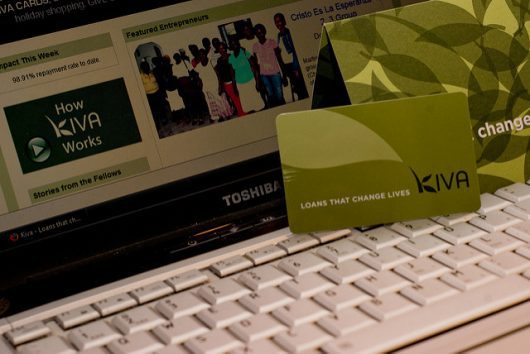 For many of the world’s poor, access to equipment, capital and necessities like basic healthcare are difficult to acquire. Kiva.org is a pioneer for online micro-lending that enables low-income entrepreneurs to do something they otherwise would not have been able to afford. Kiva facilitates connecting a lender to a borrower, who then helps fund a no-interest loan as low as $25 (USD). The borrowers are then held accountable to repay the loan. As of today, Kiva is working in 84 countries and has a 97 percent loan repayment rate. Essentially, micro-lending is working.
Recently, Kiva entered a new lending space: education. With its Student Micro-loans program, now anyone can lend as little as $25 to students. In 2010, Kiva launched in Paraguay, Bolivia and Ecuador by working closely with its field partners to find prospective students in the three countries and create a customized loan program that works within the countries’ educational systems. Kiva’s CEO Premal Shah stated that moving into short-term student loans was a natural transition for Kiva. Shah saw an opportunity for financing something that had a long-lasting effect, and education fit the bill because student micro-loans create an education option for students in poor nations.
Improving access to education should be a top priority globally. Investing in higher education is a must if a country wants to encourage economic development. Education shapes the next generation of innovators, inventors and experts. Kiva CEO Shah mentioned that a one-year certificate in accounting can mean a 200-300 percent income increase in the countries Kiva is serving. It is a practical method to break generational poverty, which is why many impoverished nations treat education as a necessity. International focus on higher education was prominent during the 1990s, when student enrollment in public education doubled in developing countries.
Another startup, Vittana.org, launched a micro-lending marketplace for students and has since partnered with Kiva to help students get into the workforce and marketplace after matriculation. In 2014, Vittana and Kiva hoped to help 20,000 students access micro-loans for their educations. As a practical matter, the organizations are focusing on countries where jobs are abundant, but most require some level of higher education, like a certificate or degree. The purpose of aiding the borrowers in getting jobs afterwards is to secure Kiva’s interest in repayment. The loan is a loan, not a donation. Once repaid, the lenders have the option to re-invest in another borrower, or in this case, another student.
In short, student micro-loans create an education option for students of poor nations. By enabling education, students around the world have the chance to pursue knowledge and skills, and they are more competitive in the workforce and have the opportunity to break the cycle of generational poverty. When even one person steps away from poverty, it benefits them, their family and their community at large. Facilitators like Kiva and Vittana make it easy for anyone with $25 to get involved. In sum, their strategy is to pursue solutions to the lack of access to school with a simple, working concept that student micro-loans create an education option for students in poor nations.
– Taylor Elkins
Photo: Flickr
