• Link to X
  • Link to Facebook
  • Link to Instagram
  • Link to TikTok
  • Link to Youtube
  • About
    • About Us
      • President
      • Board of Directors
      • Board of Advisors
      • Financials
      • Our Methodology
      • Success Tracker
      • Contact
  • Act Now
    • 30 Ways to Help
      • Email Congress
      • Call Congress
      • Volunteer
      • Courses & Certificates
      • Be a Donor
    • Internships
      • In-Office Internships
      • Remote Internships
    • Legislation
      • Politics 101
  • The Blog
  • The Podcast
  • Magazine
  • Donate
  • Click to open the search input field Click to open the search input field Search
  • Menu Menu

Tag Archive for: Education

Posts

Education, Global Poverty

Improving Nigerian Education: Reading and Numeracy Activity

The country of Nigeria has the highest population of out-of-school children in the world. The country is home to an estimated 30 million primary school aged children, among whom 34 percent of girls and 29 percent of boys are out of school.

The Nigerian education system, aided by many years of effort, still remains weak. Literacy rates are very low among Nigerians above the age of 15, at 69.2 percent for boys and 49.7 percent for girls. In an effort to aid the problem, U.S. nonprofit FHI 360 is implementing a program dubbed the Reading and Numeracy Activity (RANA).

FHI 360 is a dedicated nonprofit human development organization focused on locally driven solutions for human development. FHI 360 with collaboration from Nigeria’s Ministry of Education is implementing a Reading and Numeracy Activity pilot project in an effort to expand the project nationally.

The aim of the project is to improve the quality of literacy and numeracy instruction for girls and boys in primary grades one to three. In the pilot stage, approximately 200 schools will be instructed using the RANA system. The pilot stage will be spanning two states, Katsina and Zamfara. In those two states, the dominant mother tongue is Hausa, and RANA has provided teaching and learning materials in Hausa for 800 teachers and 51,000 students. The Hausa materials provided by the pilot program include a step-by-step teacher guide and student workbooks.

The Reading and Numeracy Activity system is still in the pilot phase and it may take years to analyze the data, but students, teachers and parents are already feeling the effects of the program. A parent involved in the program told the advocacy organization ONE: “The RANA lessons have made him more hardworking and love school. I will support his education to any level within my means. I am very grateful to RANA for giving school a new meaning.”

– Yosef Mahmoud

Photo: Flickr

September 9, 2017
https://borgenproject.org/wp-content/uploads/borgen-project-logo.svg 0 0 Borgen Project https://borgenproject.org/wp-content/uploads/borgen-project-logo.svg Borgen Project2017-09-09 01:30:182024-05-28 00:16:04Improving Nigerian Education: Reading and Numeracy Activity
Developing Countries, Education, Global Poverty

The Long-Lasting Effects of Education in Conflict Zones

Education in Conflict ZonesOne of humanity’s most fundamental rights, the right to an education, is also often one of the first to suffer during times of disaster or war. Conflict can result in children becoming orphaned, being pressured into joining the armed forces, marrying young and becoming victims of sexual or violent abuse. UNICEF reported in April that 25 million children aged six to 15 are missing out on an education in conflict zones across 22 countries.

Many affected families flee their homes in pursuit of an education for their children as well, braving violent odds to become refugees. A UNICEF survey found that one in three parents or guardians in Greece cited better education opportunities as the reason why they left their country for Europe.

“At no time is education more important than in times of war,” stated to Josephine Bourne, Chief of Education for UNICEF. “Without education, how will children reach their full potential and contribute to the future and stability of their families, communities and economies?” UNICEF works in affected countries to ensure that displaced children receive an education in conflict zones, training teachers, rehabilitating schools and delivering supplies. The organization and its partners work in 190 countries and territories today, with a focus on children in the most vulnerable settings.

The combination of a lack of social skills, lack of education and loss of hope and happiness stemming from growing up in a conflict area often create conditions for radicalized refugee children. They may find it difficult to resist joining their country’s armed forces. Many Syrian children, for example, would rather receive a $400 monthly salary to join the war rather than work long hours for $10 a day at a shoe factory.

Governments and their people prioritize necessities like food, shelter and water during times of war over education. But without a substantial education, children grow up without the essential knowledge needed to contribute to a peaceful, economically and politically stable society. A suspension of education in conflict zones is responsible for the loss of entire generations of productive members of society, forced to be soldiers instead of scientists and child-brides instead of teachers.

– Katherine Gallagher

September 9, 2017
https://borgenproject.org/wp-content/uploads/borgen-project-logo.svg 0 0 Borgen Project https://borgenproject.org/wp-content/uploads/borgen-project-logo.svg Borgen Project2017-09-09 01:30:012024-06-11 02:48:31The Long-Lasting Effects of Education in Conflict Zones
Education, Global Poverty

Why Education in Niger Falls Short

Education in NigerLike many other African countries, education in Niger needs improvement. In its current state, Niger’s students lack the support and opportunities they need to fully thrive. Poverty and poor access to schooling both contribute to the struggling educational system in place. To make education in Niger more valuable and within reach, cooperative work from all levels is key, including those in Niger, Africa and abroad.

Although education in Niger is compulsory between the ages of seven and 15, the country has one of the lowest literacy rates in the world. Less than one-third of adults can read and write. Having such a low literacy rate throughout the country limits Niger’s ability to address its widespread poverty. Improved literacy can positively contribute to economic and social development by promoting economic growth, reducing crime, increasing civic engagement and preventing disease. Education is a truly powerful tool, and it is one that Niger desperately needs.

Education in Niger also needs to acknowledge girls and young women. In 2009, less than half of young girls were enrolled in primary school. The low attendance rates correlate with the high number of child marriages in Niger. When more than one-third of women in Niger are married before age 15, child-rearing takes precedence over finishing a basic education. This trend also reflects in female literacy rates: less than a quarter of young women can read and write. Other Niger populations vulnerable to limited educational opportunities include people in rural and nomadic areas and those with disabilities. If Niger wants to improve the state of its education system, it cannot forget those who can so easily be forgotten.

The government of Niger recognizes that building a better education system must be a priority for the country. A government program has been put in place to improve education in Niger and schooling is available free of charge. Partnering with the Millennium Challenge Corporation and the United States Agency for International Development, the Niger Education and Community Strengthening program aims to provide more opportunities for students and developing the links between local communities and schools.

However, progress is still slow. The population of those who are illiterate or uneducated is still staggering, and it takes time to implement effective outreach. A high population growth rate, low enrollment rates and high dropout rates also all hinder current efforts. Continued support and awareness of education in Niger is crucial in bridging the gaps and propelling the country toward a healthy, educated future.

– Allie Knofczynski

Photo: Flickr

September 6, 2017
https://borgenproject.org/wp-content/uploads/borgen-project-logo.svg 0 0 Borgen Project https://borgenproject.org/wp-content/uploads/borgen-project-logo.svg Borgen Project2017-09-06 07:30:462024-05-28 00:15:57Why Education in Niger Falls Short
Education, Global Poverty

Educating Pregnant Students in Tanzania

Pregnant Students in TanzaniaMore than two dozen nonprofits have condemned the Tanzanian government for its refusal to educate teenage mothers and pregnant students in Tanzania.

Since the 1960s, Tanzanian schools have had the power to refuse educating pregnant students in Tanzania. This has culminated in 55,000 young mothers being expelled over the last decade, according to the Center for Reproductive Rights.

The protest came to a head when President John Magufuli commented on the matter. During a speech, Magufuli declared that no pregnant student will ever attend or return to school as long as he is president.

Magufuli reasons that educating pregnant students in Tanzania would encourage other girls to get pregnant as well. He also believes that teenagers would be too distracted to concentrate on school. The 29 organizations highlight how this stance against educating pregnant students in Tanzania infringes on their human rights. All students, according to Equality Now, have a right to education, regardless of whether or not they have a child.

Equality Now also highlight that the government’s actions unfairly puts the consequences of pregnancy solely on the mothers. According to The Guardian, 21 percent of girls between 15 and 19 in Tanzania are already mothers, oftentimes due to “rape, sexual violence and coercion.”
Lack of education, moreover, exacerbates the poverty that most of the pregnant students live in. Many young mothers are forced to take menial jobs in order to support themselves and their children.

Equality Now urges Tanzania to put the burden of pregnancy consequences on the sexual perpetrator rather than the victim. The organization requests that the government establishes stricter punishments for rapists in order to curtail teen pregnancy.

The organization also asks for more sexual education for teenagers. Unfortunately, many of the teenagers do not realize the connection between sex and pregnancy.

Finally, Equality Now has observed how other countries have readmitted pregnant or new teenage mothers. According to the nonprofit organization, there is no rise in pregnancies due to the presence of pregnant students.

The Tanzanian government is resistant to change on this matter. Magufuli feels that the foreign nonprofit organization are involving themselves in matters best left to the national government.

Regardless, organizations like Equality Now will continue working towards educating Tanzanian pregnant students.

– Cortney Rowe

Photo: Flickr

September 5, 2017
https://borgenproject.org/wp-content/uploads/borgen-project-logo.svg 0 0 Borgen Project https://borgenproject.org/wp-content/uploads/borgen-project-logo.svg Borgen Project2017-09-05 07:30:232020-07-02 11:26:47Educating Pregnant Students in Tanzania
Education, Global Poverty

Free Tuition Latest in Philippine Education Reforms

Philippine Education ReformsPhilippine President, Rodrigo Duterte, has signed a bill that will grant free tuition to students attending state universities. Free higher education could prove to be a much-needed step out of the poverty trap for the 42 percent of Filipinos living on less than $2 a day.

The law, which was signed August 3 against the recommendation of the Duterte’s economic advisers, is estimated to cost nearly 100 billion pesos – roughly $2 billion US – per year. Some senators have claimed that when the plan is fully implemented it will only cost a quarter that much. The challenge for Duterte is the full implementation throughout the country’s 112 state schools.

There are some strings attached. Free tuition will only be available to students who maintain high grades throughout secondary education. In addition to that, all students – even those in private higher education institutions – will be required to pass drug screenings to attend school. The latter requirement is an extension of the recent crackdown on drug usage by the Duterte regime.

This bill is just the latest of many Philippine education reforms. In 2012 and 2013, the Kindergarten Act and the Enhanced Basic Education Act extended the formal education timeline by three years, from 10 to 13. Around the same time, the United States Agency for International Development (USAID) became involved with the Philippine education reforms.

In 2011, after the launch of the U.S. led Partnership for Growth project, USAID began working closely within the Filipino school system, helping the nation reach its literacy goals and foster new partnerships between each nation’s higher learning institutions.

Even with the help of the U.S., the price of education has been a consistent problem for people in the Philippines. Unable to cover the costs of schooling equally in its 13 districts, the government has historically chosen to focus efforts and money on primary schooling. Duterte’s new law is the first of its kind to focus on higher education. Only time will tell whether his Philippine education reforms are financially feasible, but many Filipino lawmakers realize the importance of investing in human capital.

Education is commonly seen as being one of the steadfast ladders out of poverty. This tuition bill is just a piece of Duterte’s promised grand social spending plan– the regime hopes to add more skilled workers to its labor pool who are ready to take on the changing demands of a highly technological economy.

– Tj Anania

September 5, 2017
https://borgenproject.org/wp-content/uploads/borgen-project-logo.svg 0 0 Borgen Project https://borgenproject.org/wp-content/uploads/borgen-project-logo.svg Borgen Project2017-09-05 01:30:192024-06-11 23:17:12Free Tuition Latest in Philippine Education Reforms
Education, Global Poverty

Open Air School in Pakistan Brightens Next Generation’s Future

Open Air School in PakistanIn Pakistan, about 58 percent of the population is illiterate and 11-12 million children are working instead of attending school. But thankfully, a firefighter in Islamabad is working to help change these major societal problems in Pakistan.

For the past 30 years, Mohammed Ayub, affectionately known as “Master Ayub,” has held classes in a park near Pakistan’s parliament to educate poor children who cannot afford an education.

At this “open air” school in Pakistan, the children are taught a 1st to 10th grade curriculum, and are even taught how to speak English.

Ayub felt compelled to start teaching poor children after he moved from the agricultural town of Mandi Bahauddin, to Islamabad, Pakistan’s capital. In the city of Islamabad he saw small children in the streets doing various types of work such as cleaning cars, selling trinkets or begging.

One day after work, he approached one of these working children and told him that he would give him an education completely for free. The child accepted his preposition, and as word spread of his open air school in Pakistan, many more children began to enroll. Now, as soon as his work finishes at 3 pm, he goes to the park to teach about 200 students with the help of former students and friends.

Ayub himself pays for all of the students’ books, pencils and food.

Ayub believes education is extremely important for poor children because these citizens are especially vulnerable to developing into criminals and terrorists. In an interview with VPRO Metropolis, Ayub said “poor people; they need help. They start thinking negatively. They become thieves or plot bombings. That’s why I want to help them, so that they have an aim in life. They are our future teachers and doctors.”

His students are very ambitious and dream of becoming doctors and scientists. Before exams, they all gather in the park at night to study; when it gets chilly, they bundle up and study harder.

Ayub’s former students have gone on to attend university and secure well-paying jobs, and in the future, Ayub dreams of building a school for his students, especially because he hopes to incorporate computers in his teaching. In an interview with Al Jazeera he says that he wants to leave a facility behind after his death “where these children continue to get the light of education.”

– Anna Gargiulo

Photo: Flickr

September 3, 2017
https://borgenproject.org/wp-content/uploads/borgen-project-logo.svg 0 0 Borgen Project https://borgenproject.org/wp-content/uploads/borgen-project-logo.svg Borgen Project2017-09-03 01:30:352024-12-13 17:58:26Open Air School in Pakistan Brightens Next Generation’s Future
Education, Global Poverty, Technology

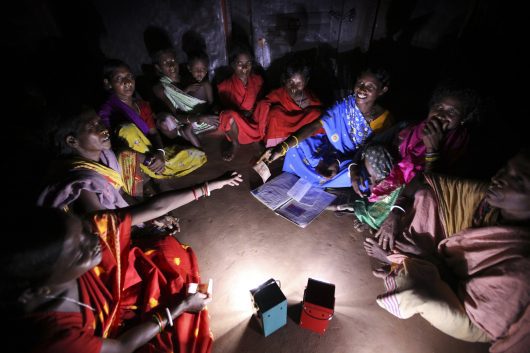
Solar-Powered Lanterns Boost Grades for Kenyan Students

Solar Powered LanternsMore than one billion people around the world do not have access to electricity, as is the case in northern Kenya. When the sun sets, many families and health facilities rely on kerosene lamps as a source of light. These, however, are a major hazard, especially for young students who need to be able to study late into the night. Not only do they cause a fire hazard but they can also cause a strain on vision and respiratory problems.

The Panasonic Corporation began The Solar Lantern Project to provide a safer alternative for light in northern Kenya. The company donated more than 2,000 solar-powered lanterns to schools and clinics in the counties of Samburu and Isiolo.

The solar-powered lanterns have become a huge success in the schools of northern Kenya. They are recharged there during the day and are taken home by students at night to allow them to study and complete their homework. Students are not risking their health when they use the lamps.

Parents of students in northern Kenya can save almost two percent of their monthly expenses when their child brings home the solar-powered lanterns. In an interview conducted by Medium, a Kenyan mother stated that she “had to spend 20 shillings on kerosene every day.” Thanks to the solar-powered lanterns, she saves “around 1,000 shillings a month.”

Solar energy has become a popular alternative to electricity in many poor countries. It is accessible anywhere and an alternative source that is sustainable. According to research conducted by the International Energy Agency, “enough solar energy falls on the surface of the earth every 90 minutes to meet the entire planet’s energy needs for a year.”

The environment also benefits from using the Panasonic solar-powered lanterns instead of kerosene lamps. The fumes that come from burning kerosene contaminate the air and only further global warming. If one million lamps are in use by the end of 2018, they are “expected to reduce greenhouse gas emissions by over 30,000 tonnes between 2014 and 2018.”

Panasonic’s solar-powered lanterns may seem like a small solution, but they are allowing students to learn better and more safely outside of the classroom. The benefits of these lamps will continue to improve poverty in Kenya, slowly, but at least in the right direction.

– Mackenzie Fielder

Photo: Flickr

August 28, 2017
https://borgenproject.org/wp-content/uploads/borgen-project-logo.svg 0 0 Borgen Project https://borgenproject.org/wp-content/uploads/borgen-project-logo.svg Borgen Project2017-08-28 07:30:352020-06-25 09:20:15Solar-Powered Lanterns Boost Grades for Kenyan Students
Education, Global Poverty

Understanding the Causes of Poverty in Cameroon

Causes of Poverty in CameroonAs poverty rates across the globe continue to fall, urban centers continue to grow and people increasingly have access to education, Cameroon seems to be slipping in the wrong direction. Rural poverty, inadequate infrastructure and a struggling school system continue to hinder the lives of people across Cameroon, contributing to a rising poverty rate in the last 10 years.

Cameroon is a country of more than 23 million people. Out of the entire population, 24 percent of people live in poverty, and 55 percent of those in poverty live in rural communities.

Two causes of poverty in Cameroon and reasons for the gap between rural and urban poverty are a lack of infrastructure and an education system that fails to develop alongside shifting labor needs.

As the IMF noted in a 2014 survey, “the country’s infrastructure indicators trail those of regional peers. In spite of a slight improvement in the overall quality of infrastructure in 2013, indicators are low by sub-Saharan African standards, especially for roads, air transportation and electricity.”

This lack of infrastructure, which limits transportation, cuts off  those who live in rural areas. Rural citizens do not have access to fundamental resources and are marooned from diversified labor opportunities.

Furthermore, the education system has failed to develop alongside market demands. As the World Bank found, “the country’s tertiary education continues to focus on traditional academic disciplines and is not positioned to respond to economic transformation.”

In Cameroon, 43 percent of the population has little or no formal and primary education. What’s more, 67 percent of the population that is of working-age has received no further training in developing job sectors, leading to a significantly higher level of unemployment among youth–especially those living in rural areas.

This double-edged sword hits residents in the countryside. They have higher odds of living in poverty because of struggling infrastructure and inadequate educational opportunities. The country must address these issues to combat the causes of poverty and increasing poverty rates.

Indeed, steps are being taken. People are across the country are calling for performance-based financing for educational institutions to drive up competitiveness and quality of studies. Also, many organizations, including Heifer International, an organization that works to end global hunger and poverty, are working to increase jobs in rural areas. Regarding infrastructure, Cameroon recently launched a 10-year development plan focused on massive public investment in infrastructure, including roads.

By understanding the roles of infrastructure and education in the causes of poverty in Cameroon, the country may be able to improve living conditions for its impoverished people.

– Joseph Dover

Photo: Flickr

August 28, 2017
https://borgenproject.org/wp-content/uploads/borgen-project-logo.svg 0 0 Borgen Project https://borgenproject.org/wp-content/uploads/borgen-project-logo.svg Borgen Project2017-08-28 01:30:122024-05-28 00:16:06Understanding the Causes of Poverty in Cameroon
Education, Global Poverty

BISP’s Education Program Graduates Pakistanis From Poverty

Program Graduates Pakistanis From PovertyBenzair Income Support Program’s (BISP) University Poverty Graduation Buddy Program graduates Pakistanis from poverty, improving their livelihoods and investing in their futures.

BISP has reached more than 5.4 million women beneficiaries across Pakistan and contributes to human capital development through primary education conditional cash transfers. Its goal is to increase households’ incomes, skills and capital, reducing poverty across Pakistani communities.

The issue BISP hopes to remedy is that beneficiaries often lack adequate information and opportunities to overcome poverty. Under BISP’s University Poverty Graduation Buddy Program, university students help poor Pakistani women find sustainable solutions to overcome poverty.

In a meeting at BISP headquarters in July, BISP chairperson Marvi Memon stated that the Higher Education Commission (HEC) enlisted universities to nominate 20 students each for the graduation program. Students are linked with a corresponding BISP beneficiary in the area near their participating university. BISP’s education program graduates Pakistanis from poverty by enhancing their skills and providing financial services.

BISP’s skills development and coaching enrich beneficiaries’ lives with training that transforms their present state and invests in their futures. Through the University Poverty Graduation Buddy Program, students help create opportunities for beneficiaries by preparing them with the tools to become entrepreneurs. Students market products made by beneficiaries through E-commerce and showcase the success to a panel of judges who choose the best graduation model. Graduation models are as follows: Training for Rural Economic Empowerment, Microfinance and Interest Free Loans, Employee Guarantees, Comprehensive Coaching for the Extreme Poor, Inclusive Business Cooperation and Households Overcoming Extreme Poverty.

BISP explores the best global practices, graduation models and sustainable solutions to develop poverty-reduction methods in a local context. University students are an asset to BISP’s graduation model development and poverty reduction by helping beneficiaries find inclusive information and access opportunities to overcome their poverty.

With university students’ partnership, BISP continues finding solutions to reduce poverty and improve local Pakistani communities.

– Sarah Dunlap

Photo: Flickr

August 28, 2017
https://borgenproject.org/wp-content/uploads/borgen-project-logo.svg 0 0 Borgen Project https://borgenproject.org/wp-content/uploads/borgen-project-logo.svg Borgen Project2017-08-28 01:30:022024-05-28 00:15:43BISP’s Education Program Graduates Pakistanis From Poverty
Developing Countries, Education, Global Poverty

Closing the Gap on Education During Crisis

Education During CrisisIt seems that every day, a new crisis emerges in some area of the world. Whether it is a natural disaster, war or a political upheaval, there is a common theme: humanitarian aid organizations are quick to respond, while education during crisis falls by the wayside.

In impoverished countries, education is typically lacking, as the need for food and shelter come first. Conflict is a leading cause of both poverty and the suspension of education.

According to An International Network for Education in Emergencies (INEE), conflict-affected countries have 20 percent of the world’s primary-school-aged children. Unfortunately, these nations also host 50 percent of the world’s out-of-school children.

Access to a quality education is the United Nation’s fourth sustainable development goal. According to the U.N., “When people can get quality education, they can break from the cycle of poverty… Education is also crucial to fostering tolerance between people and contributes to more peaceful societies.”

Many organizations are working to make education during crisis a top priority. One such organization, Education Cannot Wait, is thinking of innovative ways to give children in poor situations a quality education.

In alliance with the U.N.’s sustainable development goal, Education Cannot Wait cites five challenges that need to get conquered for all of the world’s children to receive adequate education by the year 2030. They are as follows:

  1. Lack of prioritization (during emergencies)
    Only two percent of humanitarian aid during a crisis gets given to educational programs.
  2. Poor coordination between humanitarian and development groups
  3. Preparedness in the educational sector is a problem during emergencies.
    According to the INEE, individual sectors should create contingency plans that will help in creating a cohesive procedure for education during a crisis.
  4. Insufficient humanitarian funding
    Currently, $8.5 billion is needed annually to close the education gap. Humanitarian and development efforts have not matched the frequency of crisis.
  5. Lack of real-time data
    As the problem of inadequate education during crisis is often unrecognized, the data collected on the issue is not enough to promote change.

Many people are simply unaware that there is a problem of a lack of education during a crisis. One of the most important tools in counteracting the problem is knowledge and awareness. This is why the U.N. is also working to inform people and give clear ways to help. Here are a few ways to help today:

  • Ask your government leaders to make education a priority in policy and practice.
  • Lobby the government to commit to free, primary school education for all.
  • Encourage the private sector to invest in education.
  • Urge non-governmental organizations to foster the growth of education at the local level.

– Madeline Boeding

Photo: Google

August 25, 2017
https://borgenproject.org/wp-content/uploads/borgen-project-logo.svg 0 0 Borgen Project https://borgenproject.org/wp-content/uploads/borgen-project-logo.svg Borgen Project2017-08-25 07:30:442024-05-28 00:15:52Closing the Gap on Education During Crisis
Page 22 of 67«‹2021222324›»

Get Smarter

  • Global Poverty 101
  • Global Poverty… The Good News
  • Global Poverty & U.S. Jobs
  • Global Poverty and National Security
  • Innovative Solutions to Poverty
  • Global Poverty & Aid FAQ’s
Search Search

Take Action

  • Call Congress
  • Email Congress
  • Donate
  • 30 Ways to Help
  • Volunteer Ops
  • Internships
  • Courses & Certificates
  • The Podcast
Borgen Project

“The Borgen Project is an incredible nonprofit organization that is addressing poverty and hunger and working towards ending them.”

-The Huffington Post

Inside The Borgen Project

  • Contact
  • About
  • Financials
  • President
  • Board of Directors
  • Board of Advisors

International Links

  • UK Email Parliament
  • UK Donate
  • Canada Email Parliament

Get Smarter

  • Global Poverty 101
  • Global Poverty… The Good News
  • Global Poverty & U.S. Jobs
  • Global Poverty and National Security
  • Innovative Solutions to Poverty
  • Global Poverty & Aid FAQ’s

Ways to Help

  • Call Congress
  • Email Congress
  • Donate
  • 30 Ways to Help
  • Volunteer Ops
  • Internships
  • Courses & Certificates
  • The Podcast
Scroll to top Scroll to top Scroll to top