10 Facts About Russian Sanctions
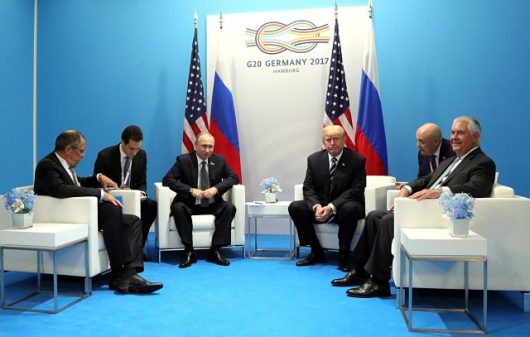 Current U.S. sanctions against Russia began in 2014 as a response to the Russian annexation of Crimea in Ukraine.
Sanctions are generally an economic tool, though they may also include political or diplomatic measures. Modern economic sanctions have become increasingly sophisticated and are often targeted against narrow groups or even individuals instead of entire nations.
Economic sanctions have a spotty history of effectiveness regardless of how they are applied. They have had an effective political impact in isolated cases, like the heavy sanctions against South Africa’s former apartheid government. However, there are many counter-examples. The U.S. maintained sanctions against Iraq and its ruling Ba’ath party for over a decade after the 1990 invasion of Kuwait. Those sanctions appeared to create no significant policy changes from Saddam Hussein’s government, but had a severe effect on the quality of life in Iraq.
10 quick facts about the current sanctions against Russia:
- The Russian sanctions mainly target the energy industry. U.S. energy companies may not do business with Russia, nor may they transfer oil or gas drilling technology to Russian agents. U.S. banks are prohibited from issuing long-term loans to Russian companies for energy-focused projects.
- The U.S. Department of the Treasury is the responsible agency for overseeing economic sanctions on behalf of the U.S. federal government.
- The European Union (EU) gets approximately 3o percent of its natural gas from Russian suppliers, making sanctions a difficult process for EU nations.
- The EU joined the U.S. in levying sanctions against Russia in September 2016 following the downing of Malaysian Airlines flight 17 over eastern Ukraine in July 2016. The flight was carrying 206 EU nationals.
- Russian sanctions have resulted in more than $1 billion in losses to ExxonMobil, the company formerly headed by U.S. Secretary of State Rex Tillerson.
- The International Monetary Fund estimated that the Russian GDP could be 1.5 percent lower in 2016 due to sanctions.
- The U.S. Congress passed additional sanctions against Russia in July 2017, reacting to evidence that Russia intentionally interfered in U.S. elections processes in 2016. The updated sanctions bill, signed into law in August 2017, constrains the power of the U.S. President to unilaterally reduce or remove Russian sanctions.
- The Russian sanctions affect dozens of specified Russian companies and government organizations, and include specific individuals in high-ranking positions in the intelligence and defense ministries.
- Since the imposition of Russian sanctions, the ruble has declined over 50 percent in value relative to the U.S. dollar.
- Sanctions have reportedly contributed to a sharp uptick in the number of Russians living in poverty (from 15.5 million in 2013 to 19.8 million in 2016). One foreign policy expert speculated in the Chicago Tribune that sanctions have even contributed to a decline in the Russian population.
Economic sanctions, despite their occasional success, have gained a reputation for harming the most vulnerable members of a targeted nation while often not having the intended effects on its government. North Korea would perhaps be the best modern example of this situation. It remains to be seen whether the current sanctions against Russia will change the behavior of its government without placing an undue burden on the population.
– Paul Robertson
Photo: Google
