• Link to X
  • Link to Facebook
  • Link to Instagram
  • Link to TikTok
  • Link to Youtube
  • About
    • About Us
      • President
      • Board of Directors
      • Board of Advisors
      • Financials
      • Our Methodology
      • Success Tracker
      • Contact
  • Act Now
    • 30 Ways to Help
      • Email Congress
      • Call Congress
      • Volunteer
      • Courses & Certificates
      • Be a Donor
    • Internships
      • In-Office Internships
      • Remote Internships
    • Legislation
      • Politics 101
  • The Blog
  • The Podcast
  • Magazine
  • Donate
  • Click to open the search input field Click to open the search input field Search
  • Menu Menu

Tag Archive for: Economic Growth

Information and news about economic growth

Posts

Global Poverty

Development Underway of Road Infrastructure in South Sudan

infrastructure in south sudanLocated in northeastern Africa, covering approximately 644,329 square kilometers of land, South Sudan is home to over 10 million people. Prior to gaining independence from the north in 2011, it was estimated that there were about 4,000 to 5,500 kilometers of main roads, of which only 50 kilometers were paved. There were also about 7,500 kilometers of secondary roads that were also unpaved and in various conditions of ruin. Infrastructure in South Sudan has been classified as underdeveloped and has been a serious constraint on the growth of the economy.

Suitable roads and railways are a vital part of building a stable state. Structurally sound infrastructure contributes to improving access to markets, food production and economic growth. It also allows for quick and easy responses to internal conflict and increases individuals’ access to hospitals and schools.

However, it will be no easy task for South Sudan to build an effective roadway system. The country suffers from a lack of trained professionals, difficulty obtaining materials and severe rainy seasons that restrict the use of bridges.

Because South Sudan is a developing country, in order to work towards becoming more sustainable, it requires the aid of partner countries and organizations, like the World Bank, the United States Agency for International Development and the United Nations. Investments made in the infrastructure of developing countries can only meet a small amount of the overall needs. To ensure the overall sustainability of infrastructure in South Sudan, partner countries and organizations must help to create local financial institutions and supply the country with the tools needed to govern the operation and advancement of roadways.

Some of the work that the United Nations Office for Project Services (UNOPS) has contributed to South Sudan is the construction and rehabilitation of more than 430 kilometers of roads and repairs on an additional 45 kilometers, including 10 bridges and four airstrips. On behalf of USAID, UNOPS is also currently working to renovate the damaged Juba Nile Bridge.

UNOPS is also working to restore and assemble roads in remote and conflict-prone areas like Warrap, Jonglei and Eastern Equatoria under programs that are currently being led by the United Nations Development Programme and funded by the South Sudan Recovery Fund. These programs intend to heighten security and address the causes of conflict occurring in the area.

The World Bank has also made contributions to South Sudan’s infrastructure by financing the construction of 424 kilometers of roads in order to help stimulate growth for communities in rural areas that are located along the roadways and to connect locals to markets, schools and healthcare facilities. The hopes of this project will be to better the lives of those inhabitants along the roadway by connecting them to the outside world.

Without better roads, infrastructure in South Sudan will not be able to tackle some of its biggest challenges. South Sudan’s government must prioritize the construction of roads and bridges in the country. The roadway system is necessary for buying and selling goods between states and with the bordering countries of Sudan, Ethiopia, Kenya and Uganda. Road improvements are the first step to growing the economy in South Sudan and providing more opportunities for its people.

– Zainab Adebayo

Photo: Flickr

January 27, 2018
https://borgenproject.org/wp-content/uploads/borgen-project-logo.svg 0 0 Borgen Project https://borgenproject.org/wp-content/uploads/borgen-project-logo.svg Borgen Project2018-01-27 01:30:382024-05-29 22:38:52Development Underway of Road Infrastructure in South Sudan
Development

5 Development Projects in Nicaragua

 NicaraguaAmong the many ongoing development projects in Nicaragua, one company’s $50 billion idea may be the economic launch it needs to defeat the nation’s poverty. Despite the country’s growing economy, it is still one of the poorest countries in Central America. Currently, 29.6 percent of Nicaraguans are living in poverty and 8.3 percent are living in extreme poverty.
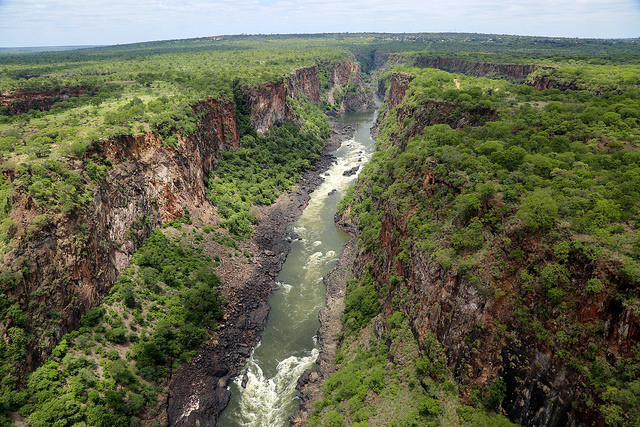
Nicaragua’s economic standing is predicted to shift positively with the development of certain infrastructure throughout the country. This includes building the Nicaragua Grand Canal, a free trade zone, two ports, an international airport and hotels with connecting roads.

Wang Jing, a Chinese business tycoon, proposed this project in June 2013. Following his project proposal, he created the Hong Kong Nicaragua Canal Development Incorporated (HKND) and invested $200 million of his own.

Development projects in Nicaragua are still in progress and have many significant advantages that will help the Nicaraguan economy blossom.

The Canal

While an interoceanic canal through Central America already exists, the Nicaragua Grand Canal will bring additional opportunities for trade throughout the Western Hemisphere. The canal is estimated to be 178 miles long and 30 meters deep, which will accommodate larger ships.

Over twice as deep, and three times as long, a canal of this size would be significantly larger than the Panama Canal. Accommodating larger ships through this canal will be a large incentive for several global companies to use it.

Free Trade Zone

The proposed Free Trade Zone development project in Nicaragua benefits everyone with tariff-free trade. It also provides the opportunity to avoid customs and have full control of product movement. With fewer regulations, producers and consumers can get products faster and at a better price.

In comparison to Bonded Warehouses, consumers and producers benefit from a Free Trade Zone. In addition to the canal benefits, this Free Trade Zone will encourage businesses around the world to utilize the new developments.

The Ports

The development of a seaport would boost the economy by creating jobs for Nicaraguan citizens. With the creation of two ports, the country would benefit financially from imports and exports. As a result of the opportunities that these ports would create, poverty levels would decrease. Nicaragua would also become a major contender in international trading.

Building an International Airport

An international airport would open more opportunities for travel. This development project in Nicaragua is crucial because it will encourage tourists, businesses, journalists and world leaders to visit more frequently than before, simply out of convenience.

It is also a means of product movement. Airports create several jobs from janitorial and stock, to managing and piloting. The nation would see significant economic change because of its development.

Hotel and Highway Development Projects in Nicaragua

Hotel development projects in Nicaragua would boost tourism rates substantially. Nicaraguan tourism has grown over the last several years, which has created several employment opportunities. In 2013, Nicaraguan tourism created 7.9 percent of the nation’s employment and is predicted to hit almost 9 percent by 2024.

Not only would hotels create hundreds of jobs for struggling locals, but it would also bring in a substantial amount of revenue for the country and the value of the land. With the creation of hotels and resorts comes investors, which have a substantial effect on the economy as well.

Unfortunately, these projects have not had much progress, despite breaking ground in December 2014. Although Jing suffered from the 2015 stock market crash, he is still hopeful and persistent that these projects will be completed, regardless of his own financial standings. These projects could be the effort that puts an end to the serious poverty issue which threatens many Nicaraguans.

– Courtney Hambrecht

Photo: Flickr

January 27, 2018
https://borgenproject.org/wp-content/uploads/borgen-project-logo.svg 0 0 Borgen Project https://borgenproject.org/wp-content/uploads/borgen-project-logo.svg Borgen Project2018-01-27 01:30:222024-05-29 22:38:545 Development Projects in Nicaragua
Global Poverty

Sustainable Agriculture in Zimbabwe

Sustainable Agriculture in ZimbabweThe landlocked sub-Saharan nation of Zimbabwe once enjoyed a reputation as the “breadbasket of Africa,” but in just over a decade it went from being a major crop exporter to a recipient of international food aid. Under the authoritarian government of Robert Mugabe, smallholder agriculture was neglected by the state, and productivity plummeted. As the country suffered through years of economic crises, sustainable agriculture in Zimbabwe stagnated. Modern Zimbabwe can no longer provide its citizens with food staples, and more than 40 percent of infants suffer from chronic malnutrition.
Agricultural Productivity in Zimbabwe

Low agricultural productivity in Zimbabwe stems from a complex web of interrelated issues. Farming practices like slash and burn agriculture have degraded soils, as has an overdependence on pesticides and other chemicals. The lack of crop variety is problematic; when a family cultivates only one crop, such as corn or millet, they have no recourse when drought decimates the harvest.

Recent rainfall patterns have shifted from their historic schedules, rendering ancient knowledge obsolete. Rains can be overly abundant or followed by long dry periods of intense heat. Farmers lack access to infrastructure, new equipment, credit, markets and irrigation.

The Impact of Climate Change

Climate change is widely recognized as a serious impediment to food security and sustainable agriculture in Zimbabwe. As a result, the Food and Agriculture Organization of the U.N. FAO has included in their Zimbabwe projects a strong focus on climate change resilience.

It encourages resilient livestock production through improved feeding strategies, fodder crop production, animal husbandry and breeding practices. F.A.O. promotes climate-smart technology and farming systems such as greater crop diversity, crop rotation, irrigation, storage facilities and improved processing and preservation.

F.A.O. and the World Agroforestry Centre both endorse conservation agriculture, which uses mulch to conserve water, improve soil health and minimize runoff and erosion. It includes practices such as:

  • Agroforestry
  • Zero tillage
  • Alley cropping
  • Integrated pest management
  • Organic farming
  • Contour farming
  • Crop and pasture rotation

Sustainable Agriculture in Zimbabwe Through Modern Cultivation Methods

In tandem with local partner Agricultural Partnership Trust, German aid organization Welthungerhilfe provides education, resources and community organizing to ensure better harvests for food security and surpluses for higher income.

Welthungerhilfe teaches modern cultivation methods using natural fertilizers and ecological plant protection to preserve soil health while improving yields. It instructs farmers on drought-resistant, climate-adapted crops such as peanuts, sweet potatoes and tomatoes. The organization also provides both chickens and training to help smallholders start chicken farms.

With Welthungerhilfe’s help, farmers gain access to grain stores for emergency use and protection against rodents. Welthungerhilfe encourages community, leading nutrition clubs and organizing farmers for marketing, better prices and improved credit access.

Across sub-Saharan Africa, both wildlife conservation and sustainable farming are becoming increasingly prevalent. Sustainable agriculture in Zimbabwe is intertwined with environmental and animal protection.

Farmers can benefit economically from efforts to save endangered species. For instance, the Rhino Conservation Trust uses the “horns and thorns” approach, paying farmers to manage and conserve local wildlife. It has funded sustainable agricultural practices such as protecting wildlife, conserving water, preventing deforestation and sequestering carbon in soil.

The good news is that people, animals and the environment can all benefit from sustainable agriculture in Zimbabwe. In the words of Raol du Toit, director of the Rhino Conservation Trust, the solution is to help farmers practice agriculture “in appropriate areas, using appropriate practices.”

– Anna Parker

Photo: Flickr

January 26, 2018
https://borgenproject.org/wp-content/uploads/borgen-project-logo.svg 0 0 Borgen Project https://borgenproject.org/wp-content/uploads/borgen-project-logo.svg Borgen Project2018-01-26 19:58:572024-05-29 22:39:00Sustainable Agriculture in Zimbabwe
Global Poverty

Progress of Road Infrastructure in Mali Drives Development

infrastructure in mali
Mali is the eighth largest country in Africa bordering Algeria, Niger, Mauritania, Guinea, Senegal, Cote d’Ivoire and Burkina Faso and is located in the North-Western region of the continent.

Infrastructure Development

Most of the population in Mali is concentrated in the southern area with mostly nomads inhabiting farther north. In the south, there is easier access to resources, agriculture and the market for buying/selling goods.

Infrastructure greatly reflects the accommodation to this geographic and demographic distribution. Road infrastructure in Mali is particularly keen on creating a network of connectivity between people, resources and export ports. This is why Mali has one of the most spatially concentrated infrastructure networks in the continent.

There are three international corridors that link landlocked Mali to the sea: Tema-Ouagadougou-Bamako, Dakar-Bamako and Abidjan-Ferkesessedougou-Bamako. These routes help bring Malian exports to central ports for shipping as well as interregional trade between other nations. Both of these help build the economy in Mali rather than keeping it as a self-reliant country struggling with poverty.

Local and Global Connectivity

The connectivity of road infrastructure in Mali has greatly improved local and global business prospects. For example, there is a transnational intercity highway known as Kankan-Kourémalé-Bamako that is the only way to enter and exit between Conakry (a port city in Guinea) and Bamako (the capital city of Mali). The African Development Bank Group highlights how this highway has “revolutionized the daily lives of thousands of people.” The highway has seen an increase in traffic for commuting workers who are now able to travel longer distances for better work. Traders set up their stalls along the highway and have seen a significant increase in customers and profits.

Mali does excellent work to maintain their roads, especially the significant highways and interregional methods of transport. Road infrastructure in Mali has guaranteed excellent safety for all users; in fact, a newly generated Road Authority has allowed for necessary maintenance throughout the year.

Despite inadequate funding, road infrastructure in Mali has been a highlighted priority to pave the way for economic growth. The nation’s government has directed much of its national funds toward maintenance and development of the overall road network, and as a result, Mali has set an excellent example for neighboring countries for how to diversify the economy by expanding transportation networks.

– Caysi Simpson

Photo: Flickr

January 25, 2018
https://borgenproject.org/wp-content/uploads/borgen-project-logo.svg 0 0 Borgen Project https://borgenproject.org/wp-content/uploads/borgen-project-logo.svg Borgen Project2018-01-25 01:30:432024-05-29 22:38:53Progress of Road Infrastructure in Mali Drives Development
Global Poverty

Sustainable Agriculture in Honduras Helping Rural Farmers

Sustainable Agriculture in HondurasSuffering from a severely unequal distribution of income and high underemployment, Honduras is one of the poorest countries in Central America. Especially after Hurricane Mitch in 1998, which caused approximately $2 billion in damage, Honduras has had a long struggle to rebound economically. Agriculture comprises 13.5 percent of the GDP, but it also employs 40 percent of the labor force. With support from other countries, sustainable agriculture in Honduras could lead the country into a healthier, more prosperous period.

Honduras has long relied on U.S. trade and remittances for economic stability. Regarding agriculture specifically, in April 2015 the U.S. and Honduras signed an agreement to support the development of sustainable agriculture in Honduras. It will provide the government of Honduras with a vast amount of U.S. agriculture products valued at $17 million.

By selling these products, the government will then have the money to implement their own projects that focus on job creation and income opportunities for vulnerable citizens such as rural farmers. Similarly, it hopes to build a stronger agricultural sector that can begin to focus on sustainable forms of farming.

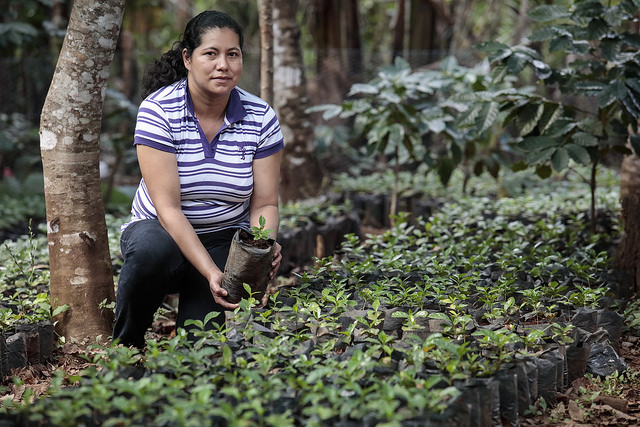
TechnoServe, a nonprofit that aims to help the impoverished, recognizes that climate change severely affects Honduras. Its Dry Corridor has had recent issues with flooding and droughts that are wreaking havoc on rural farming. TechnoServe decided to start the Sustainable Agricultural Improvement project (MAS in Spanish) to help build farmers’ resilience to climate change in their bean and coffee farms—two of the country’s major exports. It provides training on sustainable agriculture practices and access to high-quality products.

By learning from TechnoServe, farmers have been able to buy more drought-tolerant seeds than traditional varieties and organic fertilizers that increase water retention, all at a better price thanks to a marketing agreement that MAS facilitated. Similarly, 3,400 bean farmers and 16,000 coffee farmers have increased their incomes by an average of 50 percent.

The project has also helped these farmers access more than $15 million in funding during the past four years, which has allowed over 700 farmers to build solar-powered machinery to reduce regular fuel-based machines that are not as sustainable. As a result of these sustainable practices, participating coffee farmers have sold 14,500 tons directly to exporters.

With help from USAID and smaller programs and groups, sustainable agriculture in Honduras has slowly improved. As climate change increasingly wreaks havoc on poorer nations with droughts, extreme weather and varied agricultural productivity, these projects support Honduran farmers through loans, financing, knowledge and exceptional products.

Slowly, sustainable agricultural in Honduras is gaining ground in a manner that similarly sustains economic growth and stability for farmers. With international support, Honduras as a nation can sustain and improve its agricultural market.

– Nick McGuire

Photo: Flickr

January 25, 2018
https://borgenproject.org/wp-content/uploads/borgen-project-logo.svg 0 0 Borgen Project https://borgenproject.org/wp-content/uploads/borgen-project-logo.svg Borgen Project2018-01-25 01:30:302024-05-29 22:38:46Sustainable Agriculture in Honduras Helping Rural Farmers
Global Poverty

Hydroelectric Power a Key Part of Infrastructure in Lesotho

infrastructure in lesotho

In the middle of South Africa lies the small, mountainous country of Lesotho. The landlocked country, also known as the Kingdom of Lesotho, gained independence from British rule in 1966.

Lesotho is a poor country with a gross income of $570 per capita and a life expectancy of 51 years for men and 56 years for women. Infrastructure in Lesotho has its strengths and weaknesses; while the country may lack secure road infrastructure, it has one natural resource that has proved profitable through the years.

Road Transportation

The main transportation infrastructure in Lesotho is an 8,000 km road system, which accounts for 70 percent of the country’s transport system. The vast majority of the roads are made of gravel or earth; a smaller percentage is paved. The gravel and earth roads are often vulnerable to extreme weather conditions and the hilly, winding roads make navigating through Lesotho quite difficult. One of Lesotho’s biggest issues with road transport is a lack of safety. The country has an exceptionally high number of road incidents, especially in poor weather conditions.

In 2010, the Lesotho government elected to participate in the Decade of Action for Road Safety initiative developed by the United Nations. Member states are to adhere to the five pillars of the initiative, which are road safety management, safer roads, safer vehicles, safer road users and improved post-crash response. The initiative will focus largely on improving the quality of existing roads and building more paved roads throughout the country.

The project aims to decrease the number of road incidents by 50 percent in 2020, the final year of the initiative.

Water and Dams

As far as providing potable drinking water, Lesotho is comparable to most other countries in southern Africa. Lesotho does reasonably well with providing water to the rural population; however, issues of access and distance to drinking water still remain. However, with Lesotho’s numerous rivers, the country has no shortage of water overall. In fact, the water may prove profitable in the very near future.

The Lesotho Highlands Water Project was established by the signing of a treaty between South Africa and Lesotho in 1986. The initiative relies on the creation of numerous dams along the Lesotho rivers and tunnels that will deliver water to South Africa. The dams will also provide hydroelectric power for Lesotho.

The project was established by the signing of a treaty between the two countries in 1986. Phase I of the project, which was completed in 2003, involved the construction of two dams: the Katse and the Mohale. The second construction of Phase I was a hydropower station that will provide hydropower energy to improve the access to and quality of electricity throughout the country. Phase II is still in progress and its projected conclusion is not until 2024.

The Lesotho Highlands Water Project should benefit the overall infrastructure in Lesotho and contribute to the country’s income. Taking advantage of this abundant resource can be of great benefit to the country’s impoverished people and improve their lives greatly in the future.

– Danielle Poindexter

Photo: Flickr

January 24, 2018
https://borgenproject.org/wp-content/uploads/borgen-project-logo.svg 0 0 Borgen Project https://borgenproject.org/wp-content/uploads/borgen-project-logo.svg Borgen Project2018-01-24 07:30:102024-05-29 22:38:47Hydroelectric Power a Key Part of Infrastructure in Lesotho
Development

5 Development Projects in Tonga

5 Development Projects in Tonga

Tonga is a country comprised of 170 islands in the South Pacific, located close to Fiji and American Samoa. The island nation has a relatively high unemployment rate. This, coupled with an economy largely dependent on agricultural means of making money, has led to the creation of various development projects in Tonga. In recent years, these projects have improved stability in different aspects of the country.

Education

In 2012, the Peace Corps began a development project in Tonga designed to teach English as a foreign language. Aside from teaching English, the project’s larger goals are to improve the Tongan education system through the utilization of more computers and other technology. It also assists Tongan teachers in discovering new methods of teaching that are more student-centred. In addition, the project focuses on helping students develop healthy lifestyle habits. These lifestyle lessons are taught as part of the English language curriculum.

Growth Development

One of the more recent development projects in Tonga began in April 2017. The World Bank approved $5 million for policy reforms in the island nation. According to a press release on the World Bank website, these reforms aim to “improve the management of public finances, boost government accountability and encourage a more dynamic and inclusive economy.”

Climate Change

In 2013, the Asian Development Bank launched the Climate Resilience Sector Project in Tonga. This projects helps strengthen the country in the face of increasingly dangerous threats from climate change. The project finances low cost solutions which are executed at the local community level. Aside from this, the Asian Development Bank is also working with the Tongan government to create more renewable energy. By 2020, Tonga hopes to get 50 percent of its energy from renewable sources.

Environmental Protection

In July 2014, the United Nations Development Programme’s Pacific Office in Fiji created a project with the intention of protecting the ecosystem of the Fanga’uta Lagoon Catchment on Tongatapu Island. The project’s three main goals are to improve management of the lagoon, introduce an environmental management plan and educate local communities and national stakeholders about the role of the lagoon ecosystem and the benefits of protecting it.

Improved Healthcare System

The Australia-Tonga Aid Partnership, created in 2016, is a project where the Australian government provides funding each year to assist development projects in Tonga. Just last year, Tonga received around $30.4 million in aid from Australia. In particular, one of the projects that utilizes this funding is the Tonga Health System Support Program.

Phase One of the program began in 2009. Following this, Phase Two of the program started in March 2015. The objectives of the program are to stop the progression of noncommunicable diseases, generally advance health care services across the nation, provide enhanced mental health services, improve gender equality and provide access to universal health care.

Tonga has begun to experience a flourishing tourism industry that is becoming a main source of income for the nation. As a result of these five development projects in Tonga, the country can maintain economic, environmental and social stability as it continues to progress.

The support from these organizations will help Tonga combat increasing environmental risks that the country will face from climate change. Through these programs, Tonga will only continue to grow and further advance their infrastructure.

– Jennifer Jones

Photo: Flickr

January 24, 2018
https://borgenproject.org/wp-content/uploads/borgen-project-logo.svg 0 0 Borgen Project https://borgenproject.org/wp-content/uploads/borgen-project-logo.svg Borgen Project2018-01-24 01:30:542024-05-29 22:38:475 Development Projects in Tonga
Global Poverty

Efforts to Improve Sustainable Agriculture in Venezuela

Sustainable Agriculture in Venezuela
Agriculture is one of the most vital and ever-changing foundational blocks of a country, and can change due to environmental or man-made change. In Venezuela, food scarcity is a major issue in urban areas; thankfully, sustainable agriculture in Venezuela may make a huge difference in bringing food security to inner-city and rural areas. With the ever-changing weather conditions and political upheaval, though, Venezuela may not be able to maintain the sustainable agriculture market it is currently trying to build.

Sustainability Plan

According to the Food and Agriculture Organization of the United States, Venezuela has a six-year sustainability plan for agriculture in the region. It focuses on four major areas of sustainable agriculture in Venezuela: Supporting sustainable agricultural development, supporting initiatives aimed at achieving food security and sovereignty, supporting adaptation to climate change, risk management and preservation of the environment and promoting the Latin America and the Caribbean Without Hunger initiative and support to the South-South cooperation.  

The government has a total of $22,650,000 allotted to be distributed among these four areas. However, these only touch the surface of efforts to protect and increase sustainable agriculture in Venezuela.

Agricultural Production

The Venezuelan Embassy to the United States has shared fact sheets on agriculture in the area. In 2012, they reported that nearly 64 percent of Venezuelans live in urban areas, and that with the increase of movement to cities and other rapidly modernizing areas, the amount of available produce and farming capability decreased. To combat such statistics, the Venezuelan government has not only increased the amount of agriculture-protective policy, but has also supported the development of 191 agricultural production units in major cities across the country.

These agricultural production units aim to help communities become self-sustaining in their local agriculture, and offer the ability to grow and collect fresh fruits and vegetables in a majorly commercial area. These units are supported by the Agro-Ciudad program, an organization which focuses on helping provide healthy and environmentally friendly food products for the schools, businesses, universities and communities that have adopted the program.

Meaningful Impacts and Political Climates

According to the fact sheet, the Agro-Ciudad aided 1,600 people and over 12,306 producers in the growth of their community produce. In addition, Agro-Ciudad helped create several workshops to teach local groups about all of their opportunities for growing produce in their area.

With so many opportunities to support sustainable agriculture in Venezuela, it is also not surprising that people are incredibly passionate about protecting the innovations against a volatile political culture. According to the Council of Foreign Relations, on July 30, 2017, President Nicolas Maduro won his election undisputedly, and moved to make a political coup almost immediately.

With Maduro in complete control of the government, changes impacting agriculture in Venezuela have yet to play out. Overall, sustainable agriculture in Venezuela is emerging, but the question of whether or not it will last within a new political sphere requires time to determine.

– Molly Atchison

Photo: Flickr

January 24, 2018
https://borgenproject.org/wp-content/uploads/borgen-project-logo.svg 0 0 Borgen Project https://borgenproject.org/wp-content/uploads/borgen-project-logo.svg Borgen Project2018-01-24 01:30:372024-05-29 22:38:48Efforts to Improve Sustainable Agriculture in Venezuela
Global Poverty

The Growth of Sustainable Agriculture in Papua New Guinea

Sustainable Agriculture in Papua New Guinea
Just north of Australia in a region known as Melanesia is the island nation of Papua New Guinea, situated on the eastern side of New Guinea island. It’s one of the most culturally diverse nations on the world stage, but it’s also among the most rural with an economy that largely turns on agriculture.

Sustainable agriculture in Papua New Guinea is crucial to lifting more of its population from poverty. The Asian Development Bank reports that 39.9 percent of the country’s population lived below the national poverty line in 2009.

Agriculture: The Stats

According to the World Bank, just 18 percent of Papua New Guineans live in urban areas, so farming would seem to make sense as an economic lifeline. However, the New Agriculturist notes that the nation is very mountainous, leaving just 25 percent of its land suitable for agriculture.

This presents a significant problem when it comes to developing sustainable agriculture projects in Papua New Guinea; but thankfully, new technologies stand to make a difference and boost agricultural output in the island nation.

Solar-Powered Milling Technology

According to the Papua New Guinea National Agriculture Research Institute (NARI), a solar-powered rice-milling technology is being pioneered in the Morobe province; this trial began in 2017 and should continue through 2019.

This technology’s potential lies in the fact that rice has become a staple food in Papua New Guinea since its introduction about a century ago. However, it has never become a staple crop because natural milling conditions are less than ideal.

Solar-powered mills aim to replace diesel-powered ones, which are more expensive to operate and repair. If solar power proves to be a more reliable and efficient technology, rice milling and other forms of farming will likely see an expansion and provide more support to rural communities.

Boosting Sustainable Agriculture in Papua New Guinea: More Successes

This test run joins a host of efforts to improve sustainable agriculture in Papua New Guinea, including the Productive Partnerships in Agriculture Project (PPAP), which tried to benefit smallholder cocoa and coffee producers when it started in 2014.

PPAP aims to boost industry coordination, build links between local farmers and agribusiness for improved access to markets/technologies and improve infrastructure for that access. The World Bank estimates that more than 20,000 local coffee and cocoa farmers had benefitted by 2015, and farms adopting improved farming practices continues to grow.

Future Benefits

Hopefully, sustainable agriculture projects in Papua New Guinea will make farming more economical and reduce poverty levels as more citizens are able to engage with the career. Future improvements also stand to benefit women especially, who often form the backbone of the Papua New Guinea agricultural industry.

– Chuck Hasenauer
Photo: Flickr

January 24, 2018
https://borgenproject.org/wp-content/uploads/borgen-project-logo.svg 0 0 Borgen Project https://borgenproject.org/wp-content/uploads/borgen-project-logo.svg Borgen Project2018-01-24 01:30:102024-06-05 02:36:42The Growth of Sustainable Agriculture in Papua New Guinea
Global Poverty

Investment in Infrastructure in Laos Bringing Profit

infrastructure in LaosThe importance of infrastructure means road and transport connectivity, telecommunications, housing and education as sources of economic development. With these basic essentials, the economy of a country opens to the world, bringing capital and improving quality of life.

Laos is one of the fastest-growing economies in Southeast Asia, with natural resources accounting for a third of the growth. Power infrastructure in Laos is under development, according to the Department of Energy Business. Two-thirds of the population in Laos has access to electricity, and the power sector is working towards sustainability and energy efficiency. By promoting sustainable power, natural resources are preserved.

The Lao government plans to establish hydropower as a source of energy for the country and export electricity to neighboring countries who are in need of electric power. The government hopes that by 2020, hydropower as an infrastructure in Laos will provide profits to combat poverty within the country.

Telecommunications as an infrastructure in Laos is another necessity that needs to be addressed. The National Academic of Sciences and Engineering Medicine wrote of the importance of telecommunication as a foundation for social and economic development as well as a vital groundwork for national security.

Telecommunication as an infrastructure in Laos is slowly gaining momentum. Laos has seen countless reforms and progress of telecommunications as an infrastructure to draw the attention of foreign investors. However, internet services have been slow, a concern that many Laotians see as a deterrent to social and economic development. Fortunately, progress is expected to continue to 2022.

In 2017, infrastructure in Laos continued to improve. The Ministry of Finance and the World Bank signed a $25 million agreement to stabilize roads through maintenance. The Lao PDR Road Sector II Project is meant to improve road infrastructure for efficiency and safety. Once roads are stabilized around Laos, rural people will be able to find safety in regards to severe weather and will not have to travel on unsafe roads.

Infrastructure in Laos is slowly making progress and providing efficient and maintained infrastructure to improve its citizens’ quality of life. These efforts will have an enormous effect on alleviating poverty and growing prosperity in the country.

– Jennifer Serrato

Photo: Flickr

January 23, 2018
https://borgenproject.org/wp-content/uploads/borgen-project-logo.svg 0 0 Borgen Project https://borgenproject.org/wp-content/uploads/borgen-project-logo.svg Borgen Project2018-01-23 07:30:472019-11-11 06:02:04Investment in Infrastructure in Laos Bringing Profit
Page 21 of 44«‹1920212223›»

Get Smarter

  • Global Poverty 101
  • Global Poverty… The Good News
  • Global Poverty & U.S. Jobs
  • Global Poverty and National Security
  • Innovative Solutions to Poverty
  • Global Poverty & Aid FAQ’s
Search Search

Take Action

  • Call Congress
  • Email Congress
  • Donate
  • 30 Ways to Help
  • Volunteer Ops
  • Internships
  • Courses & Certificates
  • The Podcast
Borgen Project

“The Borgen Project is an incredible nonprofit organization that is addressing poverty and hunger and working towards ending them.”

-The Huffington Post

Inside The Borgen Project

  • Contact
  • About
  • Financials
  • President
  • Board of Directors
  • Board of Advisors

International Links

  • UK Email Parliament
  • UK Donate
  • Canada Email Parliament

Get Smarter

  • Global Poverty 101
  • Global Poverty… The Good News
  • Global Poverty & U.S. Jobs
  • Global Poverty and National Security
  • Innovative Solutions to Poverty
  • Global Poverty & Aid FAQ’s

Ways to Help

  • Call Congress
  • Email Congress
  • Donate
  • 30 Ways to Help
  • Volunteer Ops
  • Internships
  • Courses & Certificates
  • The Podcast
Scroll to top Scroll to top Scroll to top