• Link to X
  • Link to Facebook
  • Link to Instagram
  • Link to TikTok
  • Link to Youtube
  • About
    • About Us
      • President
      • Board of Directors
      • Board of Advisors
      • Financials
      • Our Methodology
      • Success Tracker
      • Contact
  • Act Now
    • 30 Ways to Help
      • Email Congress
      • Call Congress
      • Volunteer
      • Courses & Certificates
      • Be a Donor
    • Internships
      • In-Office Internships
      • Remote Internships
    • Legislation
      • Politics 101
  • The Blog
  • The Podcast
  • Magazine
  • Donate
  • Click to open the search input field Click to open the search input field Search
  • Menu Menu

Tag Archive for: Economic Growth

Information and news about economic growth

Posts

Global Poverty

Sustainable Agriculture in Somalia Promoting Staple Crops

Sustainable agriculture is defined as “the production of food, fiber or other plant or animal products using farming techniques that protect the environment, public health, human communities and animal welfare.” Somalia is in the third year of a devastating drought that has left about half of the population (six million people) facing severe water and food shortages. Sustainable agriculture in Somalia is part of the solution for those that are experiencing these scarcities and searching for a way to survive.

The Somali Agriculture Technical Group (SATG) is a nonprofit organization dedicated to creating sustainable agriculture in Somalia via homegrown solutions that are both practical and scientific. The SATG has preserved seeds specifically tied to the Somali culture, improved production techniques for higher yields and trained and collaborated with numerous people at the local, regional, national and international levels.

One example of its triumph is the return of the Filsan mungbean. The Filsan mungbean is a staple in the country because of its quality when cooked, its large seed, its early maturity and its high yield that is uncommon among beans. In the beginning, Filsan was introduced by Bonkaay Dry Land Agriculture Research Station. However, before it was able to be introduced at a scale level, the Somalian government collapsed and the introduction was put on hold.

With the help of the World Vegetable Centre in Taiwan, the Somali Agronomist’s Association and the International Crops Research Institute for the Semi-Arid Tropics in Nairobi, the SATG was able to develop and distribute over one ton of Filsan seeds to farmers in the middle and lower Shebelle regions.

After the collapse of the government in 1990, the general population was left in the lurch. People began relying on their neighbors for assistance rather than the government. Grassroots organizations began to expand and become integral parts of communities all over the country. The SATG provided farming machinery, higher-yield seeds and training packets on how to get the most out of the land. The organization actively pushes for the spread of knowledge and the goal of independence.

The training modules that the SATG strives to make common knowledge are full of information on the plant being grown, how it should be cultivated and how to keep it producing for as long as possible. The SATG also provides informational booklets on specific pesticides that should be used to protect plants from harmful pests.

Sustainable agriculture in Somalia is growing and becoming more common as people come to realize that they must take action now for a future with food security. While resources may be limited for farmers, access to help and knowledge is ever-present and available. From local residents sharing tips on growing tomatoes to an organization that donates tons of seeds to those in need, sustainable agriculture in Somalia can only be beneficial.

– Irimar Waters

Photo: Flickr

January 29, 2018
https://borgenproject.org/wp-content/uploads/borgen-project-logo.svg 0 0 Borgen Project https://borgenproject.org/wp-content/uploads/borgen-project-logo.svg Borgen Project2018-01-29 01:30:382024-05-29 22:38:54Sustainable Agriculture in Somalia Promoting Staple Crops
Global Poverty

Promoting Pacific Prosperity: Five Development Projects in Nauru

development projects in Nauru

Nauru, the world’s smallest republic, is home to 10,000 citizens. Its economic decline corresponds with the depletion of phosphate mines in the 1980s. Phosphate mining and exports resumed in 2005, but the Nauruan government estimates the phosphate deposits’ remaining life to be 30 years.

Nauru has become increasingly dependent on aid; Australia is its largest donor. The following development projects in Nauru aim to support an economically stable and independent republic.

Aid Investment Plan 2015-2016 to 2018-2019

This project aims to promote more effective public sector management, invest in nation-building infrastructure and support human development.

Electricity Supply Security and Sustainability Project

Investments will provide two new fuel-efficient generators for the Nauru Utilities Corporation (NUC), help repair the corporation’s power station and support institutional strengthening of the NUC.

Port Development Project

Alleviating Nauru’s reliance on its problematic port mooring system, this project will construct a quay wall and access causeway, reconstruct port buildings and storage containers and strengthen the Nauru ports’ institutional capacity.

Pacific Private Sector Development Initiative

Sponsored by the Asian Development Bank, this project will reestablish banking services, improve financial literacy and undertake reforms to expand financial services on the island.

Nauru Infrastructure and Essential Services

One of several Australian projects in the nation, the goals of this project are to plan, coordinate and maintain essential infrastructure and utilities development, identify key priorities for infrastructure development and provide improved access to affordance priority health facilities.

Australia’s 2015-2016 aid program enabled development projects in Nauru and contributed to:

  • Maintaining 100 percent primary school enrollment
  • Achieving 100 percent coverage for tuberculosis and hepatitis B vaccines for newborns
  • Introducing Nauru’s first taxation system
  • Establishing the Intergenerational Trust for the People of Nauru
  • Adopting the Queensland Certificate of Education
  • Graduating 14 students from the University of New England with an associate’s degree in teaching
  • Addressing domestic violence and decision-making

Current development projects in Nauru focus on the broader Nauruan community’s need and the government’s development priorities. Nauru’s stabilization will promote prosperity and security in the Pacific region.

– Carolyn Gibson

Photo: Flickr

January 29, 2018
https://borgenproject.org/wp-content/uploads/borgen-project-logo.svg 0 0 Borgen Project https://borgenproject.org/wp-content/uploads/borgen-project-logo.svg Borgen Project2018-01-29 01:30:252024-05-29 22:38:55Promoting Pacific Prosperity: Five Development Projects in Nauru
Global Poverty

Sustainable Agriculture in Mongolia Affected by Harsh Winters

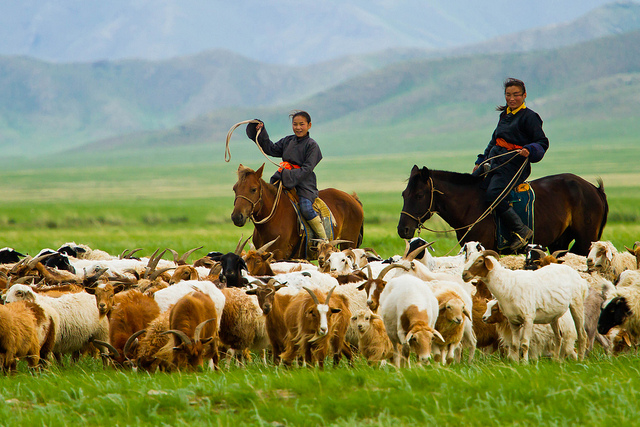
sustainable agriculture in MongoliaMongolia sits between Siberia and China and harbors the northern tip of the Gobi desert, desert plains and its legendary steppes. These inhospitable environments do not easily lend themselves to the cultivation of crops. In response to their harsh surroundings, Mongolians developed a society around animal husbandry that has served them well over the millennia. Unfortunately, the introduction of the Soviet system in the early twentieth century, combined with an increase in adverse weather conditions due to climate change, have damaged sustainable agriculture in Mongolia. Today, the Mongolian government, in conjunction with other nations and international aid organizations, is fighting to make Mongolia self-sustaining agriculturally.

Seventy-three percent of the land in Mongolia is used for agriculture and makes up 13.3 percent of the country’s GDP. Less than 1 percent of that land is arable. This land is located mostly in the north, where the river valleys allow for irrigation. Some land in the center of the country is used for the cultivation of wheat and barley, or hardy vegetables such as potatoes, cabbage and carrots. Some fruits and vegetables are grown in and around cities.

The European Commission on International Cooperation and Development sees these small-scale gardening projects in and around cities as an excellent way to help Mongolians improve their food security. Because much of Mongolia’s fruits and vegetables are imported, the urban poor of Mongolia’s cities have less access to these foods. To increase sustainable agriculture in Mongolia and access to food, the EC helped to construct glass and plastic greenhouses in and around cities in Mongolia. The growing season for the beneficiaries increased from six to nine months and 3,000 people are now able to sustain a balanced diet.

Small-scale projects like the one led by the EC are helpful to a few people in a small area, but in time can grow to impact and influence people on a larger scale. Time is not on Mongolia’s side. Climate change has increased the presence and power of two major enemies of sustainable agriculture in Mongolia: desertification and dzuds, extended periods of harsh winter conditions.

Since 2006, the FAO has funded and supported projects to increase the sustainability of agriculture in Mongolia. Most of the funding goes to the livestock industry. The FAO, along with the Mongolian government, wants to increase the security and sustainability of herders and their livestock. This is based on both economic and historical precedents; 72.6 percent of land in Mongolia is used as pasture.

In 2009-2010, according to the Food and Agriculture Organization of the United Nations, 9.2 million heads of livestock, or 25 percent of the Mongolian livestock population, were killed due to a dzud. FAO emergency funds for the Mongolian project were used to protect the livestock in the seven most affected provinces immediately following the dzud and help replace the animals that were lost.

Urbanization and mining also contribute to the loss of pasture lands. Not all farmers are able to obtain assistance from the state after the loss of their animals during dzuds or the average harsh climate of Mongolia. Many of these farmers and their families are forced to move to cities to find work, food, and shelter.

Climate is not the only factor in the loss of farmers or pastoral lands. The edges of the Gobi desert are slowly creeping forward deeper into Mongolia, affecting the grasslands near deserts. Changes in weather patterns often whittle away at the grassland and help spread the desert soil and sands further. Tin, copper, coal, tungsten and gold are just a few materials that lie beneath the surface of Mongolia. The mining has been useful in improving the economy but is detrimental to the environment and sustainable agriculture in Mongolia.

Sustainable agriculture in Mongolia will improve with time. By working with different international bodies the government has proved that it wants to improve this sector of the economy. Food security and sustainability will also improve the quality of life in Mongolia. Hopefully, once again the families of the steppes will be able to live self-sustaining lives, now in conjunction with the Mongolians of the cities.

– Nick DeMarco

Photo: Flickr

January 29, 2018
https://borgenproject.org/wp-content/uploads/borgen-project-logo.svg 0 0 Borgen Project https://borgenproject.org/wp-content/uploads/borgen-project-logo.svg Borgen Project2018-01-29 01:30:002024-05-27 09:34:19Sustainable Agriculture in Mongolia Affected by Harsh Winters
Global Poverty

Furthering the Development of Sustainable Agriculture in Liberia

sustainable agriculture in LiberiaAgriculture is the backbone of any economy, but this is particularly true in Liberia. Over 80 percent of Liberians live in poverty, earning less than $2 per day. They rely heavily and primarily on small-scale subsistence farming for their income, nutrition, food and survival.

After decades of internal conflict, sustainable agriculture in Liberia was left unattended by policy and programs, thus very little positive change occurred. Farmlands shrunk, water resources were mismanaged and the distribution and production of food suffered. Liberia was also one of the countries hit the hardest by the Ebola virus, which took a toll on its agriculture.

Set of Challenges

A number of challenges have prevented sustainable agriculture in Liberia. From poor pest management and lack of technology to the limited use of fertilizer and modern-day cultivation methods, Liberia lacks good quality farm inputs. Furthermore, due to poor road networks and high transport costs, there is little incentive to produce food beyond subsistence levels.

The West Africa Agricultural Productivity Project

The West Africa Agricultural Productivity Project (WAAPP-Liberia) is a regional project supported by the World Bank and the Japanese Government. It has helped fund the resuscitation of the Central Agricultural Research Institute, which is Liberia’s only agricultural research institute. Badly damaged during the country’s civil wars, this institute will support young Liberian scientists who have come to serve Liberia’s Ministry of Agriculture.

This project, funded by the World Bank, is looking to support sustainable agriculture in Liberia by progressing research in technology, production of adaptive seed adaptive and regulatory policy.

Climate Change Adaptation Agriculture Project

Since climate change has such a huge impact on agriculture, the Climate Change Adaptation Agriculture Project aims to increase the resilience of poor, agriculturally-dependent communities and decrease the vulnerability of the agricultural sector to climate change in Liberia. One of its major accomplishments has been addressing the deforestation in Liberia that has led to unsustainable agriculture practices such as charcoal/fuelwood production for energy in cooking and drying, logging practices and unsustainable mining practices.

In collaboration with the Center for Sustainable Energy Technology and Society for the Conservation of Nature of Liberia, this project has piloted production and use of energy-efficient cookstoves and ovens for drying fish in Montserrado and Grand Cape Mount County.

These two projects are just some of the ways sustainable agriculture in Liberia is slowly but surely healing from years of turmoil and misuse. These efforts can create a better Liberia for both the land and its people.

– Kailey Brennan

Photo: Flickr

January 28, 2018
https://borgenproject.org/wp-content/uploads/borgen-project-logo.svg 0 0 Borgen Project https://borgenproject.org/wp-content/uploads/borgen-project-logo.svg Borgen Project2018-01-28 11:42:572024-05-29 22:39:02Furthering the Development of Sustainable Agriculture in Liberia
Global Poverty

Sustainable Agriculture in Iran


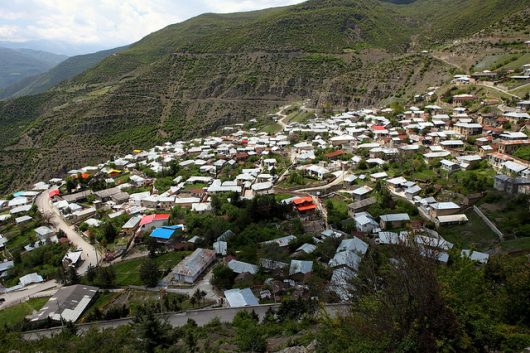
Agriculture plays an important role in Iran’s economic sector. In fact, it accounts for over one-quarter of the GDP and one-quarter of employment. However, Iranian land also experiences diverse climatic conditions. These conditions along with issues such as the increasing population and destruction of natural resources, overdependence on pesticide, insecticide and chemicals, limited arable land, soil erosion and water pollution threaten sustainable agriculture in Iran. As such, fostering sustainable agriculture in Iran is a major goal for the country.


Fostering Sustainable Agriculture in Iran Through the Forestry Sector

One notable project led by the Food and Agriculture Organization (FAO) of the United Nations focuses on the country’s forestry sector. In an effort to foster sustainable agriculture in Iran, it aims to save oak and boxwood trees in the Iranian forests. The FAO has developed 15 reports and guidelines it believes are crucial in ensuring sustainable agriculture in Iran.

Additionally, the FAO implemented a project between 2015 to 2017 in support of establishing sustainable forest management in Iran. This effort increased the resilience and strengthened the capacity of forests to overcome natural shocks resulting from repeated droughts. The FAO also established a UTF (Unilateral Trust Fund) project in order to respond to the most urgent issues related Iranian forests.


Water Management Methods

Farming has become a challenge in Iran due to declining rainfalls and the overuse of water. The Conservation of Iranian Wetlands project is implemented by the Departments of Environment and Agriculture, the U.N. Development Programme and the Global Environment Facility. It is a sustainable agriculture initiative in Iran that aims to expose villagers to crucial water management methods. It showcases simple agricultural techniques such as composting that saves not only the environment but also improves the economy.


Training Farmers with Simple Agricultural Techniques

This initiative started small, initially bringing only 25 farmers from a village to demonstrate 9 different agricultural and water management techniques. However, those farmers replicate the sustainable approaches they learn on the site in their own farms, thereby increasing yields.

Through theoretical classes and practical demonstrations, these farmers learn about crucial alternatives to traditional flood irrigation and the use of chemical fertilizer. Since both techniques overuse water, the sustainable techniques introduced in this project teach farmers to use water efficiently.

For instance, the traditional flood irrigation method requires farms to be irrigated for days at a time. Conversely, through adopting the techniques promoted in this project, crops would need only five hours of water. These techniques save 4400 cubic meters of water in the region.

In addition to helping the environment, it also helps increase farmers’ individual incomes since it increases yields significantly. For instance, the average yield of one hectare in the wetland is 70 tonnes. By using the sustainable techniques, yields are doubled up to 148 tonnes for common crops such as tomatoes or watermelons.

This project also aims to involve women by bringing 11 women facilitators who learn the techniques and implement them in their communities. Plans of reproducing this initiative in other parts of Iran are already in effect.

Since so many livelihoods in the country depend on agriculture, working toward having sustainable agriculture in Iran is crucial. Hopefully, with continued support and initiatives in this sector, sustainable agriculture in Iran will become a reality, which would not only save the environment but also increase incomes.

– Mehruba Chowdhury

Photo: Flickr

January 28, 2018
https://borgenproject.org/wp-content/uploads/borgen-project-logo.svg 0 0 Borgen Project https://borgenproject.org/wp-content/uploads/borgen-project-logo.svg Borgen Project2018-01-28 01:30:472024-05-29 22:38:55Sustainable Agriculture in Iran
Global Poverty

Sustainable Agriculture in El Salvador


The country of El Salvador is known for being the smallest and most densely populated country in Latin America. It has the 12th highest GDP in the Americas. A large portion of their economic growth comes from remittances. Despite its comfortably high GDP, 32.7 percent of its citizens live in poverty and there is a need for developing sustainable agriculture in El Salvador.

The Development of Sustainable Agriculture in El Salvador

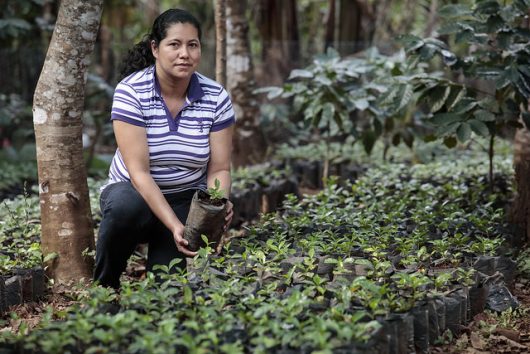
Agriculture, which had decreased substantially in the 1990s, continues to play an important role in the economy as it employs 25 percent of the country’s labor force. Coffee and sugar, El Salvador’s main exports, account for a significant portion of the agricultural sector. 

As well, El Salvador is one of the most susceptible countries to climate change. Ninety percent of its land is deforested and there is little access to water. In 2014, for example, rains did not come and farmers lost almost 95 percent of their crops. With the growth and help of certain programs pertaining to sustainable agriculture in El Salvador, a healthier and safer life for the impoverished will come.

Grassroots Organizations Working with Farming Communities

One example of a collective is the US-El Salvador Sister Cities (USESSC), a grassroots network of 17 cities and organizations that work in solidarity with farming communities in El Salvador. One of the groups they support is CRIPDES, the Association for the Development of El Salvador. With them, USESSC has enabled local committees to utilize organic agriculture practices.

One of their main phases to impact sustainable agriculture in El Salvador is to educate farmers. For example, the project teaches farmers how to create organic fertilizer instead of purchasing ones filled with synthetic chemicals.

El Salvadoran Native Seeds

Another main objective is to save native seeds as a way of continuing tradition and helping the economy in a circular way. Monsanto, a massive agrochemical company from the U.S., used to be the main provider of seeds in El Salvador. However, El Salvadoran native seeds are better suited for the environment than Monsanto ones.

Several years ago, the U.S. Embassy withheld $300 million in aid from El Salvador until they agreed to the Central American Free Trade Agreement (CAFTA). This would have opened bidding to companies like Monsanto, making their seeds easier to import. However, CRIPDES and other groups protested and contacted Congress. As a result, the position reversed.

In 2015, the El Salvadoran Ministry of Agriculture created the Family Agriculture Program. This gave 560,000 small farm families the opportunity to plant bean and corn seeds across the country to revitalize small-scale agriculture. They ended up producing 50 percent of corn seed supply and 8 percent came from native seeds, which turned out to be the highest ever.

With continued development and a focus on domestic products, sustainable agriculture in El Salvador will flourish. Through these ventures, not only will its economy improve, but the possibility to provide for its own citizens will become easier. 

– Nick McGuire

Photo: Flickr

January 28, 2018
https://borgenproject.org/wp-content/uploads/borgen-project-logo.svg 0 0 Borgen Project https://borgenproject.org/wp-content/uploads/borgen-project-logo.svg Borgen Project2018-01-28 01:30:322024-05-29 22:38:55Sustainable Agriculture in El Salvador
Global Poverty

Investment Helps Spur Improved Infrastructure in Gabon

Investment Helps Spur Improved Infrastructure in Gabon
Infrastructure has become an issue of increasing salience for the country of Gabon. Diminishing growth rates and persistent poverty have become common; oil shocks have put the economy into tumultuous waters. To address this, the West African nation, with a population roughly the size of Nebraska, has recently prioritized addressing inadequate infrastructure in Gabon. It is doing so in partnership with Bechtel, a company known for its landmark development projects across the globe.

The Role of Infrastructure in Gabon

Economists agree that infrastructure is a crucial component of economic growth, especially in developing countries. Along with increased productivity, improved infrastructure also disproportionately helps the poor. This is achieved through improved access to markets and facilitating human capital accumulation and economies of scale.

Put simply, better roads, railways and ports make transporting goods easier and cheaper. Furthermore, better telecommunication infrastructure, like telephone lines and internet access, enables more participation in economic activity. Education and healthcare also become more accessible, which allows people to improve their productivity.

For infrastructure in Gabon, where less than half of airports have paved runways and only 11 percent of roads are paved, there is plenty of room for investment to catalyze improved economic output.

The State of Gabon’s Economy

Despite boasting per capita GDP rates larger than most of its underdeveloped neighbors, Gabon has found itself confronted with significant development challenges. Its economy is overly reliant on a triad of natural resources; oil, manganese, and timber exports comprise the majority of the nation’s income. Petroleum revenues alone are responsible for 45 percent of the nation’s GDP. Such a dependence on exports, particularly natural resources, typically stifles a nation’s primary sector.

Development difficulty has also been exacerbated by an often unstable business environment fostered by the government. Gabon performs poorly – 167th out of 190 – on the World Bank’s Doing Business report, which measures a nation’s ease of doing business.

Previously, corruption had effectively thrown sand in the gears of the economy. It dissuaded foreign investors and compelled them to funnel capital elsewhere. Many potential investors find the nation’s regulatory apparatus too onerous. Furthermore, oil money often does not trickle down to benefit the citizens.

However, budget shortfalls attributable to poor fiscal planning and mercurial oil prices, as well as declining growth rates have facilitated a renewed emphasis on infrastructure investments and encouraged more government transparency.

Bechtel’s Commitment to Infrastructure

Unfazed by many of the obstacles to infrastructure in Gabon, Bechtel began an ambitious “master plan” for the nation’s infrastructure in 2010. The San Francisco-based construction and civil engineering firm agreed to a $25b public-private partnership. Its aim is to “balanc[e] economic progress with social and environmental policies… includ[ing] new schools and fiber-optic communications” as well as to increase industrial capacity within the nation.

Reaping the Rewards

Bechtel’s ambition to help modernize infrastructure in Gabon has shown tangible benefits for the nation and its people. Thus far, the partnership has successfully built five thousand public housing units, the nation’s first community wastewater treatment plant, and designed a new port, marina and conference center in the capital city of Libreville.

Gabon has made significant strides in other areas, too. When Bechtel began their work, less than 6 percent of Gabonese had internet access; by July 2016, the rate was 48.1 percent.

Although public debt and pervasive poverty remain problems, investment in infrastructure has offered a blueprint for building a better environment for Gabon and improved economic prospects for its people.

– Brendan Wade

Photo: Flickr

January 28, 2018
https://borgenproject.org/wp-content/uploads/borgen-project-logo.svg 0 0 Borgen Project https://borgenproject.org/wp-content/uploads/borgen-project-logo.svg Borgen Project2018-01-28 01:30:072024-05-25 00:02:17Investment Helps Spur Improved Infrastructure in Gabon
Global Poverty

Sustainable Agriculture in Uganda Must Be Addressed

Sustainable Agriculture in UgandaMany people do not often give in-depth thought about the countries in Africa. Even when thought is given, it is most often toward more well-known countries, such as Nigeria. One country that does not get recognition is the country of Uganda. More specifically, the agriculture in Uganda, and the need for sustainability, is in dire need of attention.

The need for sustainable agriculture in Uganda has been met with help from organizations such as the Uganda Sustainable Agriculture Support Organization (USASO) which helps train people in sustainable methods of farming. Ugandans are taught to both plant and take care of the foods they grow. The women of Uganda learn the most, as they make up a significant part of the workforce. They, along with children, learn to fertilize soil and create a sustainable food source for the country through farming.

In 2004, Uganda adopted the Uganda Organic Standard, which helped make big changes in terms of Uganda’s economy. This standard helped improve income and food security, as well as increased the number of certified organic farmers by 359 percent between the years of 2002 to 2007. Acreage under organic agricultural production also increased by 60 percent. It also helped reduce greenhouse gas emissions and agricultural chemical runoff into local water bodies.

Despite the seemingly positive effects that farming has had on the economy of Uganda in the early 2000s, research done by environmental scientist Festus Bagoora shows that farming in places with dry land, such as Uganda, might not be the best thing for long term sustainability. Considering 22 percent of land area in Uganda is dry, and thus contains fragile ecosystems, farming in these lands could have an adverse effect on the grazing area of the cattle that usually reside there, and therefore have a negative outcome on sustainable agriculture in Uganda.

These outcomes include both drought and desertification, which have become more of a problem because of the over-cultivation of land through farming and the grazing of cattle. These are problems that have not yet touched Uganda but have the potential to become an issue. Although the economy of Uganda is surviving on the exports of coffee, plantains, sweet potatoes and more, the soil in these lands needs to be surveyed in order to determine if it can be farmed or not. This is crucial to the land’s ecosystem, as without the proper care for the soil, the ecosystem could fall apart and leave Uganda in a very poor position in terms of agriculture.

The agriculture in Uganda is in constant fluctuation. The sustainability of it has yet to be determined, as the country still has a ways to go in order for its economy to become stable. Its ecosystem is fragile and will require constant care in order for the country to be able to successfully have blossoming agriculture that everyone can benefit from. This can be reached through the proper care for soil, as well as care for the cattle and where the livestock are grazing. Addressing these can lead to a proper and more sustainable agriculture in Uganda.

– Simone Williams

Photo: Flickr

January 27, 2018
https://borgenproject.org/wp-content/uploads/borgen-project-logo.svg 0 0 Borgen Project https://borgenproject.org/wp-content/uploads/borgen-project-logo.svg Borgen Project2018-01-27 07:30:542019-11-11 05:39:52Sustainable Agriculture in Uganda Must Be Addressed
Development, Global Poverty

Five Important Development Projects in Mauritania

Mauritania is a country located in West Africa that gained independence from France in 1960. In 2007, Mauritania saw the election of its first independent and freely elected president. However, his term in office ended abruptly when he was deposed by the military in 2008. General Abdel Aziz was then sworn into the presidency in August 2009 and was again re-elected in 2014.

Mauritania continues to experience tensions between ethnic groups, and suffered serious threats to its security through activities from various terrorist organizations. However, since 2011 strategies and development projects in Mauritania have been implemented that use dialogue and military actions, which have stopped terrorist attacks from occurring thus far.

After years of insecurity and instability, the situation in Mauritania is improving politically. Various international and national organizations are working in Mauritania to improve the lives of citizens and increase economic growth and decrease food insecurity. Here are five development projects in Mauritania that are currently active or have recently concluded.

  1. Skills Development Support Project
    This project was initiated by the World Bank and implemented by the Directions des Projets Education et Formation. The project ran from April 2011 to December 2017. Carrying a total cost of $17.6 million, this project’s objectives were to improve the efficiency as well as quality of training institutions in Mauritania and to foster a more “market driven technical and vocational education training system.”
  2. Programme de développement durables des oasis
    This project was approved in 2003 and ran until 2012, and was financed by IFAD. Costing a total of $33.9 million, its major objective was to reduce the poverty rate in five provinces in Mauritania. The project promoted sustainable farming solutions through the spread of technology and supported the financing of economic as well as social infrastructures, which reached 50,000 households.
  3. Poverty Reduction Project in Aftout South & Karakoro Phase II
    This is another project financed by IFAD, but one that is currently active. Costing a total of $28.9 million, this project aims to improve livelihoods and incomes for women and young people in 21,000 rural households in three moughataas (departments), which include M’Bout, Ould-Yengé and Kankossa. This will be achieved by fostering an increase in the economy through sustainable resource management, specifically by developing systems of crop and livestock management, soil restoration and water management and support for local project development.
  4. Construction of the Rosso-Boghé road
    This project is funded by the African Development Bank (ADB), the Nigeria Trust Fund (NTF) and the Mauritanian government, with loans of $11.69 million and a grant of $720,000 from the ADB and a loan of $8.6 million from the NTF. The construction of this road will help develop the right bank of Senegal River and will have an enormous impact in promoting the development of agriculture, fishing industries and transportation services. It will affect 100,000 people in 67 localities.
  5. Integrating disadvantaged young people into the building sector
    This project, started in 2006, will conclude in 2020 and will affect regions of Gorgol, Guidimakha and Brakna in Mauritania. Implemented by the International Labour Organization, and costing a total of €3.2 million, this project’s primary objective is to help improve the living conditions of youth through improving access to professional training and employment. The goal of the results are to improve the quality of work in construction through training and enlarge the scope of professional training programs.

Although only five development projects in Mauritania are mentioned here, there are numerous other organizations working within the country to improve the lives of Mauritanians. Through collaborative and inclusive effort, the livelihoods, economy and food security of many are sure to improve.

– Miho Kitamura

Photo: Flickr

January 27, 2018
https://borgenproject.org/wp-content/uploads/borgen-project-logo.svg 0 0 Borgen Project https://borgenproject.org/wp-content/uploads/borgen-project-logo.svg Borgen Project2018-01-27 07:30:462024-05-24 23:59:31Five Important Development Projects in Mauritania
Global Poverty

Sustainable Agriculture in Malaysia Promoting Production of Palm Oil

sustainable agriculture in MalaysiaSustainable agriculture in Malaysia centers on the production of palm oil. Globally, people consume more palm oil than any other vegetable oil and it is found as an ingredient in products ranging from soap to bread.

Palm oil grows in tropical environments, and Malaysia, located in southeast Asia, has that ideal climate. Because people consume such great quantities of palm oil, its vast production has large effects on the environment and the communities in which it is grown. As demand for palm oil continues to increase, conventional farming practices decrease biodiversity and harm the regions where it is grown.

However, on the positive side, when palm oil is produced sustainably, the environmental harms are minimized. While some countries use destructive farming practices such as clearing forests to grow palm oil, Malaysia is a model for sustainable agriculture.

Malaysian palm oil production meets the U.S. definition of sustainable agriculture. The U.S. standard is based on the 1990 Farm Bill by the Department of Agriculture. This bill lays out a framework for sustainable agricultural practices.

Malaysian production of palm oil is able to meet the standards of the bill largely due to Malaysia’s certification for sustainable palm oil, Malaysia Sustainable Palm Oil (MSPO), which started in 2015 and will be mandatory by 2019. MSPO is based on seven principles that emphasize a commitment to sustainable agriculture in Malaysia.

Below are the seven principles and the ways palm oil farming practices commit to sustainable agriculture in Malaysia.

  1. Management and commitment responsibility
    Malaysia has committed to having 100 percent of its palm oil plantations MSPO certified by 2019.
  2. Transparency
    Malaysia is transparent with its agricultural practices as they pertain to palm oil. Additionally, Malaysia is transparent with the percentage of palm oil plantations that are MSPO certified and its plan to obtain 100 percent certification.
  3. Compliance with legal requirements
    This is a basic principle whereby Malaysian plantations will abide by laws and regulations governing palm oil agricultural practices.
  4. Social responsibility, health, safety and employment conditions
    The palm oil industry employs over 500,000 people in Malaysia and is an integral part of the economy. Growing palm oil improves the standard of living for many farmers in Malaysia and can aid in diminishing poverty.
  5. Environment, natural resources, biodiversity and ecosystem services
    Palm oil is an efficient crop, meaning a large amount of palm oil is gained from a small area of plants. This allows for a smaller environmental impact compared to other crops. Additionally, the Malaysian Palm Oil Wildlife Conservation Fund oversees the production of palm oil and ensures it does not negatively affect biodiversity where it is grown.
  6. Best practices
    The cultivation of Malaysian palm oil uses sustainable farming practices. These include integrated pest management and biomass, as well as avoiding deforestation.
  7. Development of new plantings
    As of 2017, Malaysia had 5.74 million hectares of palm oil plants. As new plants are introduced, Malaysia wants to ensure that it meets the standards that have been laid out for the already existing plantations.

As more palm oil plantations become MSPO-certified, the model of sustainable agriculture in Malaysia is one that other countries can base their own farming practices on. The positives of sustainable agriculture, especially relating to palm oil, benefit the farmers, the environment and even the consumer.

– Hayley Herzog

Photo: Flickr

January 27, 2018
https://borgenproject.org/wp-content/uploads/borgen-project-logo.svg 0 0 Borgen Project https://borgenproject.org/wp-content/uploads/borgen-project-logo.svg Borgen Project2018-01-27 01:30:452024-05-29 22:38:53Sustainable Agriculture in Malaysia Promoting Production of Palm Oil
Page 20 of 44«‹1819202122›»

Get Smarter

  • Global Poverty 101
  • Global Poverty… The Good News
  • Global Poverty & U.S. Jobs
  • Global Poverty and National Security
  • Innovative Solutions to Poverty
  • Global Poverty & Aid FAQ’s
Search Search

Take Action

  • Call Congress
  • Email Congress
  • Donate
  • 30 Ways to Help
  • Volunteer Ops
  • Internships
  • Courses & Certificates
  • The Podcast
Borgen Project

“The Borgen Project is an incredible nonprofit organization that is addressing poverty and hunger and working towards ending them.”

-The Huffington Post

Inside The Borgen Project

  • Contact
  • About
  • Financials
  • President
  • Board of Directors
  • Board of Advisors

International Links

  • UK Email Parliament
  • UK Donate
  • Canada Email Parliament

Get Smarter

  • Global Poverty 101
  • Global Poverty… The Good News
  • Global Poverty & U.S. Jobs
  • Global Poverty and National Security
  • Innovative Solutions to Poverty
  • Global Poverty & Aid FAQ’s

Ways to Help

  • Call Congress
  • Email Congress
  • Donate
  • 30 Ways to Help
  • Volunteer Ops
  • Internships
  • Courses & Certificates
  • The Podcast
Scroll to top Scroll to top Scroll to top