• Link to X
  • Link to Facebook
  • Link to Instagram
  • Link to TikTok
  • Link to Youtube
  • About
    • About Us
      • President
      • Board of Directors
      • Board of Advisors
      • Financials
      • Our Methodology
      • Success Tracker
      • Contact
  • Act Now
    • 30 Ways to Help
      • Email Congress
      • Call Congress
      • Volunteer
      • Courses & Certificates
      • Be a Donor
    • Internships
      • In-Office Internships
      • Remote Internships
    • Legislation
      • Politics 101
  • The Blog
  • The Podcast
  • Magazine
  • Donate
  • Click to open the search input field Click to open the search input field Search
  • Menu Menu

Tag Archive for: Doctors Without Borders

Posts

COVID-19, Global Poverty

Games Done Quick Generates Millions for Global Healthcare

Games Done Quick
Crammed into the convention center of a suburban Minneapolis DoubleTree Hilton, thousands sat in a room filled with chairs, a pair of projection screens, a TV, a few gaming consoles and PCs, a stack of prizes and a couch, listening to the clicks of keyboards and joysticks over seven days. Competitors, many of whom were unknowns sitting among the crowd, trained for years, memorizing specific levels paths and honing their muscle memories, in anticipation for this week. Around the world, millions watch the lightning-fast action online, shooting comments into a scrolling chat box and sending in donations to fill up a green bar at the bottom of the screen. This is the scene of a typical Games Done Quick event. Generally, people are here for two things: to see video games — from classics like Super Mario Bros. to newcomers like Elden Ring — finished in record-breaking times and to generate millions of dollars toward saving lives.

About Games Done Quick (GDQ)

Games Done Quick, also known simply as GDQ, is a series of live-streamed and in-person charity events built around marathons of video game speed runs. Speedrunning is a popular style of gaming where players attempt to complete sections or entire games as quickly as possible — sometimes using hacks and/or glitches to achieve better times. GDQ typically regularly hosts two major events throughout the year: Awesome Games Done Quick and Summer Games Done Quick.

Though these events focus on speed-running video games, GDQ’s central goal is raising money for nonprofits. In the past, it has even controversially switched which games participants would play mid-event in hopes of maximizing the amount of viewership and donations. Over the nine years that GDQ has been hosting events, they have raised a total of $34 million toward charities that fight cancer, provide education to women in the developing world, and give health care to those around the world who would otherwise not receive it.

GDQ and Doctors Without Borders

Doctors Without Borders is a nonprofit organization whose mission is to provide medical care to anyone who needs it. According to its website, it works in more than 70 countries. Typically, the organization works mostly in conflict zones, areas where natural disasters have hit and locations where access to traditional health care is either limited or nonexistent.

Recently, Doctors Without Borders has been involved in the global response to COVID-19 by supporting developing nations’ overwhelmed healthcare systems, refugee search and rescue operations in the Mediterranean Sea and providing displaced peoples from the Lake Chad region of Africa medical attention as the area experiences a period of violent conflict.

In July 2022, GDQ hosted its annual Summer Games Done Quick, benefitting Doctors Without Borders. It was its first in-person event since 2019, having switched to an online format during the COVID-19 pandemic. In total, viewers watching on the popular live streaming platform Twitch donated more than $3 million to Doctors Without Borders. According to its website, GDQ claims to be the largest event in the world raising money for Doctors Without Borders.

The Future of GDQ and Live Streaming for Charity

In August 2022, GDQ plans to host “Flame Fatales,” which will feature a cast of female-only speedrunners and benefit the Malala Foundation. The Malala Foundation is a nonprofit advocating for the funding of secondary education for girls around the world and supporting education activists.

Outside of GDQ, Twitch, among other live streaming services, has served as a platform for numerous other fundraisers. These include large-scale, produced events, such as GDQ, but also individual streamers encouraging their viewership to donate to charity while watching.

In 2021, French streamers ZeratoR and Dach hosted Z Event 2021 on Twitch. By collaborating with other popular streamers, they raised a record-breaking $11.5 million to fight world hunger through the organization Action Against Hunger.

Throughout his career, individual streamer Nick28T has driven those watching his gaming streams to donate more than $200,000 to the BC Cancer Foundation, which funds cancer research, advocacy and care for patients living in British Columbia.

In 2020 alone, Twitch reported that streamers across the site managed to raise over $81 million for charity. In response to the popularity of charity streams, Twitch has invested in specially made tools for philanthropy. It has partnered with Tiltify, a service that provides streamers with fundraising overlays, donation tracking tools and more. The partnership represents the company’s attempt to compete with other platforms like YouTube and Facebook to host these massive charity drives as more fundraisers choose to go digital.

– Ryan Morton
Photo: Flickr

September 11, 2022
https://borgenproject.org/wp-content/uploads/borgen-project-logo.svg 0 0 Jennifer Philipp https://borgenproject.org/wp-content/uploads/borgen-project-logo.svg Jennifer Philipp2022-09-11 07:30:532022-09-08 10:39:30Games Done Quick Generates Millions for Global Healthcare
Education, Global Poverty, Health

Doctors Without Borders Helps Ukraine

Doctors Without Borders Helps UkraineDoctors Without Borders is an international, non-governmental group that cares for people affected by conflict, disease, natural and human-made disasters and exclusion from health care in more than 70 countries. Since the war’s beginning, Doctors Without Borders helps Ukraine in many different ways.

Doctors Without Borders Helps Ukraine

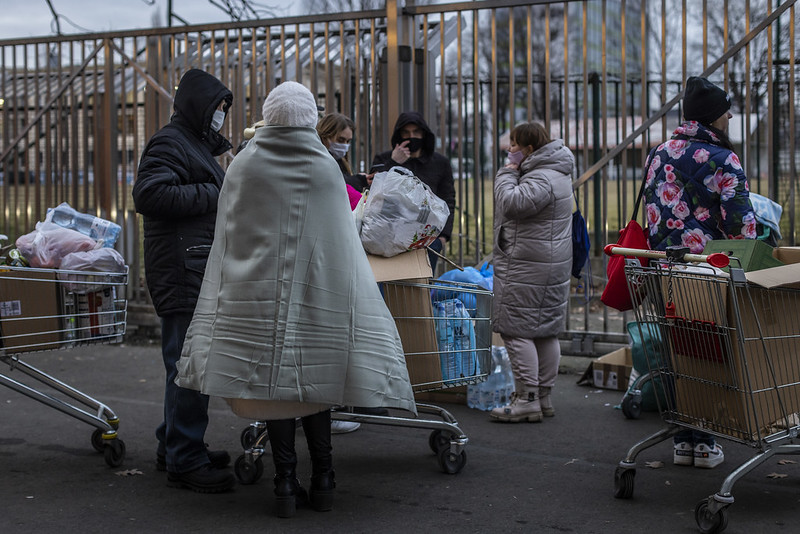
Since Russia launched a large-scale military operation against Ukraine in February 2022, millions of people have fled their homes, 7 million remaining displaced in Ukraine and 5 million fleeing to various neighboring countries.

Doctors Without Borders has maintained a presence in Ukraine since 2014, working to respond to the needs of HIV and tuberculosis patients. As the war has escalated over the last couple of months, the organization has halted its normal activities and launched emergency projects in Ukraine, tending to the current residents as well as the refugees in surrounding countries.

Doctors Without Borders teams are making every effort to help in Ukraine. Working with Ukrainian railways, the organization constructed a two-car medical train to transport patients from the east side of the country– the most affected side– to medical facilities on the west side of the country in April 2022. Doctors Without Borders is also setting up mobile clinic teams around the country.

Since implementing these teams at the war’s beginning, the organization has carried out more than 800 medical procedures in the subway stations, where Ukrainians are taking shelter against Russian bombing, according to its website. A team in Southwestern Ukraine has started tending to the needs of displaced people who need mental health care, and those who were receiving treatment for injuries and illnesses before the war broke out.

Helping Ukrainian Doctors

Due to the lack of trauma training that many Ukrainian doctors have, Doctors Without Borders has employed trauma specialists to teach those working in the hospitals how to assess and deal with trauma cases. A large effect that Doctors Without Borders has had on helping in Ukraine is the donation of medical supplies to the already-existing clinics and hospitals in the country.

Prior to the war’s outbreak, supply lines around the country were already extremely insecure, and the effects of the war have heightened the uncertainty of the lines even more.

Ukrainians have been in desperate need of medical equipment since the war’s beginning, having to make do with a very limited supply of first-aid kits, surgical tools, general resources and funds to administer vaccines. In March 2022, Doctors Without Borders delivered its first shipment of medical supplies to the Ukraine Ministry of Health and has continued to donate on a regular basis, according to its website.

COVID-19

Before the war, around 35% of Ukrainians had been fully vaccinated against COVID-19. As the conflict continues to rage, a surge of COVID-19 cases is taking place as a result of the disruption to testing and vaccine administration. As of August 2022, there are currently more than 4,000 active cases of COVID-19, and very limited supplies to help.

Doctors Without Borders teams around the world have been responding to the pandemic since 2020 and make no exception in Ukraine as the war brings up other pressing health issues. COVID-19 activities are remaining at the forefront of health care within the organization’s emergency activities, as Doctors Without Borders is providing Ukrainians with regular testing and vaccinations.

In addition to medical supplies and treatment, Doctors Without Borders has also donated a large supply of cold-weather clothing and tents to support the large population of homeless Ukrainians, according to its website. As the war continues to rage, Doctors Without Borders, in conjunction with other global aid organizations, is doing everything possible to provide relief to those who are unfairly facing displacement and danger.

– Ava Lombardi
Photo: Unsplash

August 9, 2022
https://borgenproject.org/wp-content/uploads/borgen-project-logo.svg 0 0 Kim Thelwell https://borgenproject.org/wp-content/uploads/borgen-project-logo.svg Kim Thelwell2022-08-09 07:30:222024-05-30 22:29:54Doctors Without Borders Helps Ukraine
Charity, Global Poverty, Humanitarian Aid

5 Charities Operating in Afghanistan

Operating in Afghanistan
After years of war and conflict, Afghanistan is facing a major humanitarian crisis. The country’s economy has almost completely collapsed following the takeover of the Taliban in 2021. The Taliban’s involvement in Afghanistan’s economic system has left the nation nearly isolated after the withdrawal of support from major players, such as the United States. Approximately 95% of Afghanistan homes that the World Food Programme (WFP) surveyed have been experiencing food insecurity since September 2021. Households are losing income and numbers are deteriorating quickly. Here are five charities operating in Afghanistan to provide relief.

The UN World Food Programme (WFP)

The U.N. World Food Programme has been one of the major charities operating in Afghanistan, providing food to Afghans for six decades. Due to years of conflict and instability, the majority of the population in Afghanistan is food insecure and malnutrition has doubled among children, according to Save the Children. The organization is responsible for record levels of food provision, serving 16 million Afghans since August 2021.

CARE USA

CARE USA is a nonprofit dedicated to providing humanitarian and economic support to countries experiencing crises globally with a special focus on the wellbeing of women and children. The organization has introduced three programs in Afghanistan. These include women and girls’ empowerment, resiliency and humanitarian relief efforts.  In 2021, CARE reached more than 1.1 million people to provide food, water, health care and education. Many of these programs work to promote sustainable progress in women’s health, inclusive governance and stability for the people of Afghanistan.

International Rescue Committee (IRC)

The International Rescue Committee is a global humanitarian charity operating in Afghanistan since the 1980s. The nonprofit provides cash assistance and other basic necessities while supporting health center operations and safe learning spaces for Afghan children. The International Rescue Committee also promotes sustainability in its poverty reduction efforts. It works with local communities to help them create and manage their own projects. In fact, more than 99% of the International Rescue Committee’s staff in the country are Afghan citizens.

The Central Asia Institute (CAI)

The Central Asia Institute is an organization focused on improving access to quality education in central Asian countries. The nonprofit created 15 schools in the Kunar province of Afghanistan, securing access to education for 452 students. The CAI also provides scholarships to primarily women educators to finish their schooling and secure paid teaching jobs. CAI provides emergency aid to displaced women and families.

Doctors Without Borders

Medical assistance is critical during the humanitarian crisis in Afghanistan. Doctors Without Borders works to establish medical facilities and provide free, safe health care to the people of Afghanistan. The majority of its work consists of maternal and neonatal health care provisions, and it provided approximately 112,000 emergency consultations in 2020 while assisting in almost 40,000 births.

Looking Ahead

Support from the international community is crucial to the survival of the people of Afghanistan. While policy action is necessary for sustainable rebuilding, people on the ground cannot wait for support to meet their basic needs. These global organizations are providing immediate assistance to millions, and their work will continue to prove invaluable.

– Hannah Yonas
Photo: Flickr

August 2, 2022
https://borgenproject.org/wp-content/uploads/borgen-project-logo.svg 0 0 Jennifer Philipp https://borgenproject.org/wp-content/uploads/borgen-project-logo.svg Jennifer Philipp2022-08-02 07:30:462022-07-30 11:07:185 Charities Operating in Afghanistan
Global Poverty, NGOs, Refugees

How NGOs in Ukraine Alleviate Poverty During War

NGOs in UkraineUkraine has a long history of political turmoil and foreign interference since it achieved independence from the Soviet Union in 1991. From the annexation of Crimea in 2014 to Russia’s covert war in the Donbas, Russia has consistently engaged in undermining the territorial and political integrity of Ukraine. Remaining in line with these actions, on February 24, 2022, Russian President Vladamir Putin authorized a military invasion, or what he dubs a “special military operation,” against neighboring Ukraine. During the first week of the invasion, 1 million refugees fled the destruction and warfare taking place in Ukraine. In light of the destruction that the Russian invasion caused, NGOs in Ukraine are trying to funnel much-needed aid from international donors to Ukrainians.
Medical Assistance

The Russian invasion of Ukraine has led to an abysmal shortage of necessary medical supplies. Ukraine is “facing shortages of zeolite,” a necessary material for the manufacturing of medical oxygen, and by March 1, 2022, UNAIDS announced that Ukraine has “less than a month’s” supply of HIV/AIDS medication. In addition, Ukraine has had to abruptly pause efforts to contain Polio “as health authorities shift to emergency care.”

With the lack of medical supplies, NGOs in Ukraine, including Doctors Without Borders and Project HOPE, have been funneling medical aid to alleviate the critical medical shortages in Ukraine. Doctors Without Borders is organizing kits of both medicine and medical equipment to alleviate Ukraine’s medical shortages from Doctors Without Borders’ logistical bases in Bordeaux and Brussels. To increase the supply capacity for medical assistance, Doctors Without Borders is also establishing warehouses in Western Ukraine.

Project HOPE, with more emphasis on supporting Ukrainian refugees, is operating in Eastern Europe to deliver crucial medical supplies to fleeing Ukrainians in coordination with government agencies. In Moldova, Project HOPE has been coordinating with Moldova’s Ministry of Health to deliver medical supplies for Ukrainian refugees, which includes an Interagency Emergency Health Kit designed to assist 10,000 individuals for a span of three months. The Interagency Emergency Health Kit consists of one ton of medical resources, such as medical supplies, topical treatments, oral therapeutics and medical devices.

Refugee Assistance

Aside from NGOs in Ukraine delivering medical assistance, NGOs are also operating outside of Ukraine in Eastern Europe to support refugees. In particular, “CARE’s partner organization” is operating with aid workers on the Slovak-Ukrainian borders to establish heated tents for people to rest as well as sanitation facilities and portable toilets. For refugees, emergency relief teams are also providing “crisis intervention and psychosocial assistance” services.

The organization People in Need is also providing heated tents, designed to provide a space for Ukrainian refugees to rest, capable of holding up to 200 individuals. The organization is also providing water, hygiene items, food and SIM cards for communication on the Slovak-Ukrainian border. Furthermore, People in Need has also established facilities for Ukrainians waiting for border control near Velky Berezny to vet them.

The humanitarian crisis in Ukraine is critical: the U.N. estimates that an additional 4 million individuals “may flee Ukraine.” While the Russian invasion of Ukraine is dim, there is hope as NGOs in Ukraine are providing aid and local organizations are working to alleviate the refugee flow from Ukraine into Eastern Europe.

– Alexander Richter
Photo: Flickr

March 15, 2022
https://borgenproject.org/wp-content/uploads/borgen-project-logo.svg 0 0 Kim Thelwell https://borgenproject.org/wp-content/uploads/borgen-project-logo.svg Kim Thelwell2022-03-15 01:30:332024-05-30 22:25:51How NGOs in Ukraine Alleviate Poverty During War
Clean Water Access, Education, Global Poverty, Hunger

9 Facts About South Sudan

Facts about South SudanIn South Sudan, poverty and food insecurity are prevalent despite the country’s abundance of natural resources. Challenges include civil wars and prolonged violence. These challenges contribute to a significant number of people living below the poverty line within the nation. Several facts about South Sudan provide insight into the country’s economic and social landscape.
9  Facts About South Sudan

  1. A 50-Year Conflict. From 1955 through 2005, North and South Sudan faced civil wars and conflict. In January of 2005, the leaders of North and South Sudan signed the Comprehensive Peace Agreement (CPA). This agreement granted Southerners a revised Interim Constitution and partial autonomy. However, even with a signed peace agreement, social, political and economic conflict continues in South Sudan.
  2. Gaining Independence. In January 2011, 98% of Southerners in Sudan voted to secede from the north. Due to this vote, in July 2011, the Republic of South Sudan was formed — the world’s youngest country.
  3. High Poverty Rate. South Sudan has a population of about 12 million people. The overwhelming majority of the population, about 80%, resides in rural areas. According to the World Bank’s latest estimates, about 82% of South Sudanese people endure poverty, surviving on less than $1.90 per day.
  4.  An Abundance of Natural Resources. Although South Sudan falls high on the poverty scale, the country has many natural resources. The Nile River, petroleum, marble/dolomite, aluminum, iron ore and gold stand as the nation’s major natural resources. Of these resources, oil fuels the country’s economy, with outside investors dominating the sector. The issue is that about 85% of the population works in non-wage pastoral jobs and does not benefit from the abundance of natural resources.
  5. Water and Sanitation are Limited. In 2019, just half of the South Sudanese population had access to safe drinking water. Also, just 10% of people had “access to basic sanitation.” On a positive note, due to the work of the U.S. Agency for International Development (USAID), almost a million more South Sudanese people received “access to improved drinking water” between 2008 and 2019.
  6. Inadequate Health Care. Less than 50% of the South Sudanese population has access to health services. The government allocates only 2.6% of its budget to health care. For this reason, many citizens rely on non-governental organizations (NGOs) for their health care needs. Doctors Without Borders is a movement dedicated to providing medical aid globally. In 2019, Doctors Without Borders had 19 project sites across South Sudan. The organization’s medical assistance is vast and ranges from tackling malaria to vaccinating children and treating gunshot wounds.
  7. Food Insecurity is High. More than 60% of the population is currently enduring food insecurity. The International Relief Committee (IRC) believes that famine will increase even more in 2021. This stems from the cumulative effects of “conflict, an economic crisis, recurrent flooding and COVID-19” as well as displacement. The IRC is advocating for an infusion of support to stave off famine in South Sudan. Action Against Hunger is an NGO currently aiding South Sudan in hunger relief. As the world’s hunger specialist, its goal is to create new, better ways to deal with hunger. In 2020, it helped 558,079 people in South Sudan. Of this number, the organization’s health and nutrition programs helped more than 300,000 people. Further, 103,004 people received help through “food security and livelihood programs.”
  8. Life Expectancy is Increasing. South Sudanese life expectancy stood at 57.6 years of age in 2018. For males, the life expectancy was 56.1 years old. For the female counterpart, the life expectancy was higher at 59.1 years old. This is a steady increase over the years — 20 years ago, in 1998, the life expectancy at birth stood at 48.3 years old.
  9. Access to Education. More than 70% of South Sudanese children are not attending school. Some of these children live in pastoral settings and need to follow the herds so they cannot attend school. Girls are the largest group of students out of school.  This is due to poverty, cultural and religious beliefs and child marriage.

Looking Ahead

These facts about South Sudan may seem discouraging, but there are NGOs working on solutions. World Concern is a faith-based organization that works in South Sudan and 11 other countries. The organization provides assistance in the areas of water access, health, child protection, education, food security and nutrition, disaster and crisis response as well as economic resilience. World Concern supports countries village by village and operates in eight villages in South Sudan.

Hope is on the horizon for the people of South Sudan as organizations like World Concern, the IRC, Doctors Without Borders and Action Against Hunger step up to help. Coupled with the country’s abundance of natural resources, these efforts ensure South Sudanese people are able to rise out of poverty.

– Ariel Dowdy
Photo: Flickr

January 28, 2022
https://borgenproject.org/wp-content/uploads/borgen-project-logo.svg 0 0 Jennifer Philipp https://borgenproject.org/wp-content/uploads/borgen-project-logo.svg Jennifer Philipp2022-01-28 01:30:562024-05-29 23:13:509 Facts About South Sudan
Child Poverty, Global Poverty

The Arab Spring: Addressing Poverty in Sudan

Arab Spring
The term “Arab Spring” characterized a series of upheavals across the Middle East and North African regions (MENA) in which a surge of citizens defied their authoritarian governments. It all started in Tunisia in 2010 when a man set himself on fire in a demonstration against police corruption. Sudan joined the anti-oppression movement in an effort to eradicate oppression and poverty in Sudan soon after. Now, a decade and a new government later, the country finds itself in an ideal position to begin seriously addressing poverty in Sudan.

A Tragic History

For many years, the Sudanese have suffered the brutal dictatorship of an authoritarian regime. In 2003, Sudan People’s Liberation Army (SPLA) and the Justice and Equality Movement (JEM) took up arms against their government in Darfur. These groups launched attacks against government facilities and army facilities in an attempt to obtain more financial and democratic power for the citizens. The subsequent conflict became known as the Darfur Genocide.

Both Sudan’s government, headed by President Omar al-Bashir, and the movements that opposed it were non-Arab. This conflict led to the deaths of around 15,000 people and the uprooting of millions of citizens. Bashir created a country dichotomized into Arabs and Africans, as opposed to a country that acted as a home for all Sudanese people. These conditions laid the foundation for the Bashir administration’s oppression of the Sudanese people. In 2011, the stage was set for the Arab Spring in Sudan. As a result of these protests, violence erupted. Throughout, Bashir retained his presidency.

Economic Challenges

Poverty in Sudan and socioeconomic woes increased following July 2011, when South Sudan gained independence from Sudan after Africa’s longest-running civil war. Considering most oil fields prospered in the south of the country, the most significant price Sudan paid was the loss of oil profits. As a result, Sudan’s inflation went rampant, provoking major upset among the Sudanese. The younger generations found it exceptionally challenging to find a job. Instead of addressing these issues, Sudan used most of its resources for military purposes. Additionally, a drought worsened Sudan’s already restrictive agricultural policies.

The failure of the industrial labor market caused unemployment and poverty to spread. The absence of economic opportunity prompted Bashir to eradicate nearly all civil society organizations. As a result, human rights and labor units shut down. Conjointly, due to Bashir’s Islamic leadership, women experienced extreme restraints. Indeed, Sudanese people experienced their basic rights stripped from them and those they loved, leaving them with exceptionally limited freedom.

Poverty in Sudan prevailed when bread, a basic food, became unaffordable. Violence and economic struggles contributed greatly to the oppression of the Sudanese people. However, the loss of affordable access to the most basic aspect of life, food, triggered the people to rise up and demand change.

New National Solidarity

One catalyst driving the protests was the desegregation of the different factions of Sudan. New national solidarity arose in recent years with the hope of ending Bashir’s rule. It was no longer Arabs verse the Africans. One example illustrating this was the chants throughout the northern and southern parts of Sudan beginning in late 2018. Multi-ethnic protestors chanted “we are all Darfur” while Darfur’s protestors chanted “we are all Khartoum,” demonstrating solidarity across the different religions and ethnicities of Sudan.

As the protests gained momentum, many more joined in hopes of replacing the regime with a government that could recover some of the economic loss. Public opposition groups played a key role in even the poorest communities. This ensured that everyone’s voices were on display despite their economic status. Women also took to the streets to protest the mistreatment they had experienced over the years, proving that all segments of Sudanese society engaged and committed themselves to the revolution.

A Successful Revolution

Sudanese citizens again requested Bashir to resign, but he refused. The government reacted violently, murdering a number of protestors. This only served to further outrage and inspire demonstrators around the country. Finally, the opposition assembled peacefully outside Sudan’s military headquarters in Khartoum, the capital, demanding Bashir’s resignation.

Critically, the revolution attained military assistance despite the military being a fundamental pillar of Bashir’s rule. In the face of the massive scale of the uprisings, the military began wavering in its support of Bashir. Leaders eventually determined that self-preservation was the only choice, and the military deposed the dictator.

Sudan Today

Despite the success in overthrowing Bashir, poverty in Sudan remains a major issue. Some 36% of the population lives below the poverty line. Poverty in Sudan exacerbates other issues, resulting in approximately 1 million children experiencing global acute malnutrition.

Due to its perseverance, Sudan is experiencing rebuilding. Many organizations are addressing poverty in Sudan. The United Nations Children’s Fund (UNICEF) is assisting in the establishment of early childcare programs in Darfur, Sudan. Additionally, the organization is going through an appeal process to raise $211 million to assist in humanitarian efforts. Some of the targeted recipients include 7.4 million children and 2.5 million internally displaced persons. Another organization committed to aiding the next generation of Sudan is Save the Children. In 2020, it helped 374,000 children by addressing poverty in Sudan through nourishment, education, protection and crisis aid. Doctors Without Borders also aims to improve the severely-lacking health care in Sudan.

A Brighter Future

The Sudanese have always fought for human rights and against tyranny. They triumphed due to their tenacity, finally ending a dictatorship that lasted for 30 years. Now, with support from its international allies, Sudan is undeniably on its road to alleviating the effects of poverty.

– Tiffany Lewallyn
Photo: Flickr

January 4, 2022
https://borgenproject.org/wp-content/uploads/borgen-project-logo.svg 0 0 Jennifer Philipp https://borgenproject.org/wp-content/uploads/borgen-project-logo.svg Jennifer Philipp2022-01-04 01:30:332024-12-13 17:51:29The Arab Spring: Addressing Poverty in Sudan
Children, Development, Education, Global Poverty, Health, Refugees

5 Programs Supporting Refugees in France

Refugees in France
Over the past decade, Europe has become a hub for migrants and refugees fleeing conflict and unrest. Selling most if not all of their personal belongings, families leave their homes behind with eyes set on safer borders in Europe. France is among the most popular nations to settle in — during 2020 alone, 87,659 people applied for asylum in France. For those who do survive the journey, which includes walking, hitchhiking and overcrowded boats, new challenges await. Although the poverty rate in France stood at 14.8% in 2018, refugees and asylum seekers face disproportionately higher rates of poverty. When they first arrive in France, many of these families end up in tents and shanty settlements with little access to clean water and food. However, several programs aim to support refugees in France.

5 Programs Supporting Refugees in France

  1. French Refugee Council (FRC). Founded in 2013, the FRC is an independent NGO providing practical support to refugees in France with the objective of helping them rebuild their lives. FRC staff work directly with refugees by facilitating access to education, job opportunities and legal assistance. The organization hosts several programs, including integration workshops focused on equipping migrants with the skills needed to become “a productive part of the host society.” Refugees learn bout the “French job market and workplace culture” while receiving French language lessons. The FRC’s Teach a Refugee Program aims to “connect local citizens with asylum seekers and refugees through language classes.” Since 2016, 863 immigrants have benefited from this program, which aims to break the language and cultural gaps between immigrants and locals. The FRC also helps refugees who may have already obtained vocational qualifications by working to validate any existing degrees and work experience.
  2. Refugee Food Festival. In partnership with the city of Paris and the UNHCR, the nonprofit Food Sweet Food hosts the festival annually in June around the time of World Refugee Day (June 20). Food Sweet Food works with local restaurants in the city to open their kitchens and change their menus to local dishes prepared by refugee chefs. The public then receives an invitation to these restaurants to engage with the cuisine and people. Food Sweet Food sees cuisine as a way to bridge gaps and bring diverse communities together — the objective of this festival is to create an environment to change cultural perceptions, create dialogue and facilitate refugee integration. Since its beginning in 2016, the Refugee Food Festival has seen chefs from Ivory Coast, Iraq, Syria and more. Other European cities also welcome the event. The Refugee Food Festival has seen engagement from more than 116,000 citizens and 239 chefs in 19 cities.
  3. Doctors Without Borders. Well known for providing medical care to those who lack access across the globe, Doctors Without Borders (MSF) is also active in France, specifically targeting unaccompanied minors. MSF works to provide legal, medical and other support to minors who are unable to successfully apply for child protection. Many young refugees find themselves extremely vulnerable, especially with regards to finding accommodation. To remedy this, MSF offers unaccompanied minors nightly emergency accommodation in Paris and Marseille, hosting up to 150 minors a night. Additionally, MSF makes its regular mobile health clinics available to “migrants of all ages in Paris.” In 2019 alone, “734 minors benefited from [MSF’s] services.”
  4. Comede. Formally known as the “Committee for the health of exiles,” Amnesty International, Cimade and Groupe Accueil Solidarité established Comede in 1979 to safeguard the health and rights of “refugees, asylum seekers, unaccompanied foreign minors,and other immigrants/foreigners” in France. Comede offers medical, psychological, social and legal care to these vulnerable groups with the aim of helping them increase their autonomy. Comede operates hotlines to connect individuals with any services that they might need when they first arrive in France. Utilizing hotlines and working alongside lawyers, health service providers and social workers, Comede has helped more than 100,000 people since its founding in 1979.
  5. The Salvation Army. With an active presence in more than 130 countries, the Salvation Army is one the largest charity organizations in the world. “A joint project between Paris and neighboring Saint-Denis,” the Salvation Army-run drop-in center is open to all migrants and refugees every day of the week. Opened in 2019, the center aims to assist the growing number of refugees who find themselves in shanty settlements when they arrive in France. The center provides showers, a charging station, washing machines and sleeping quarters. Refugees can also find free breakfast at another center nearby. The drop-in center also hosts French classes, and with 2,000 square meters of space, it has the capacity to hold 70 people but often sees visitors in the hundreds.

Journeying thousands of miles in unsafe conditions in search of a better life, refugees find new challenges waiting for them when they arrive in Europe. These five organizations try to address the many facets of integrating and starting a life in a new society.

– Owen Mutiganda
Photo: Flickr

December 9, 2021
https://borgenproject.org/wp-content/uploads/borgen-project-logo.svg 0 0 Kim Thelwell https://borgenproject.org/wp-content/uploads/borgen-project-logo.svg Kim Thelwell2021-12-09 01:30:172024-06-06 01:05:445 Programs Supporting Refugees in France
Development, Education, Global Poverty, Health

CAR Addresses Gender Inequality and HIV 

Gender Inequality and HIV
Gender Inequality and HIV is a significant issue in the Central African Republic (CAR). In fact, it is still the primary cause of death in the nation, with nearly 5,000 people dying from HIV/AIDS in 2020. More than 50% of the nearly 110,000 people living with HIV in CAR are not receiving treatment for it. Furthermore, gender inequality within the CAR HIV/AIDS response is ever-present. However, CAR, with the support of organizations like Doctors Without Borders and UNAIDS, is working to make health services for HIV/AIDS more accessible and create a setting where women can get the help that they need, tackling both gender inequality and HIV.

Gender Inequality and HIV in the Central African Republic

Statistics from the year 2020 indicate that 88,000 adults and children are living with HIV in CAR. Of the total number of people living with HIV in CAR, women aged 15 and older account for approximately 51,000 cases. Meanwhile, 1,200 women aged 15 and older have died from HIV.

The aforementioned statistics align with the social and economic conditions present in CAR. MICS-6 survey data from 2021 indicates that 23.6% of females between 15 and 49 years of age entered into a marriage or union before reaching the age of 15. On top of this, CAR gender-based violence information management system records also reveal 72 instances of rape and 340 instances of gender-based violence during the month of January 2021.

Female genital mutilation is also a common practice in the region, with 21% of CAR women undergoing this traditional yet harmful procedure. Deputy Special Representative of the United Nations Secretary-General in the Central African Republic Denise Brown attributes this violence against women to a combination of “protracted insecurity, violence and humanitarian crises compounded with toxic masculinities and negative social norms.”

The CAR Government Takes Action

The CAR government has conducted an assessment of gender dimensions and HIV response. The results of the assessment reveal that the female members of the population do not receive the full benefit of HIV program advances. The assessment also shows that HIV was prevalent among 15% of female sex workers. Meanwhile, less than a quarter of pregnant mothers obtain “access to prevention of mother-to-child HIV transmission services.”

Acting on these figures, the Central African Republic government has put together an intervention plan for 2021-2023 to assist marginalized women. The plan includes “biomedical and behavioral interventions to promote gender-transformative education and sensitization” to alleviate “barriers to access to HIV services by women, girls and key populations.” In addition, various strategies of care will “promote access to health, social and psychosocial services for women,” with a focus on reducing mother-to-child transmission of HIV. Furthermore, monitoring will allow for accountability regarding gender equality and HIV progress.

Médecins Sans Frontières (MSF) Assists

The CAR government is not alone in its efforts. Other organizations such as Médecins Sans Frontières, also known as Doctors Without Borders, have also stepped up efforts to help improve access to HIV services in the CAR region. Beginning in 2019 in the capital city of Bangui, this help comes in the form of MSF teams “providing free medical care and psychological support for patients” infected with advanced HIV and tuberculosis complications. The treatment serves as specialized care in an area where HIV prevalence is double the national average. Furthermore, MSF has set up community anti-retroviral (ARV) groups in various areas where designated community representatives can supply ARV drug refills. This endeavor eliminates the burden of transport expenditure on already impoverished people and “time spent in medical consultations.”

Besides providing care, MSF also helps patients care for themselves through self-management. Peer support receives encouragement. This has led to advocacy among community members. The close of 2020 has seen the establishment of “276 community ARV groups in CAR, representing some 2,300 patients.” With the efforts of the government and organizations such as MSF, CAR can make progress in both the realms of gender inequality and HIV.

– Jared Faircloth
Photo: Flickr

November 7, 2021
https://borgenproject.org/wp-content/uploads/borgen-project-logo.svg 0 0 Lynsey Alexander https://borgenproject.org/wp-content/uploads/borgen-project-logo.svg Lynsey Alexander2021-11-07 07:30:562021-11-05 06:36:46CAR Addresses Gender Inequality and HIV 
Global Poverty

The Anglophone Crisis in Cameroon


Cameroon’s anglophone regions have been stuck in a civil war involving the government and separatist groups. Beginning in October 2016, this war is continuing to take a severe toll on Cameroon’s civilians. The Anglophone Crisis has a devastating effect on poverty in the region. Additionally, the crisis ruined livelihoods and caused several civilian casualties.

Historically, the British and the French governed Cameroon. However, in 1972, French Cameroon assumed executive control over the entire region, including the British sector. As a result, the Anglophone Cameroonians found themselves slowly shrinking in power. A protest by the Anglophone Cameroonians in 2016 resulted in a lethal response from the Francophone government. Subsequently, it set off the Anglophone Crisis. A group of Anglophone separatists declared independence in a region called Ambazonia.

Civilians in the Crossfire

At least 4,000 civilians died as a result of the Anglophone Crisis, and the crisis displaced far more. Throughout the region, citizens have witnessed the burning of buildings, the kidnapping of their neighbors and the destruction of homes. Those who survive escape to live in the jungle or seek refuge in neighboring countries, often living on little to no food, water and money.

Originally, the cycle of conflict was repetitive: a radical separatist would incite an attack on the Francophone military, and the military would respond by going after the separatists in a frenzy. However, several recent Anglophone attacks shifted to target civilians. Francophone government security forces are also consistently unafraid to abuse any civilians suspected of having separatist connections.

Humanitarian Concerns

There are human rights abuses coming from both sides of the Anglophone Crisis. However, providing aid to the region is extremely difficult. The Francophone government has a complex and tough procedure that organizations must go through in order to receive approval. Additionally, these organizations also have to negotiate with separatist groups. However, both sides are kidnapping aid workers due to suspected collusion.

As more and more people experience displacement, it is increasingly more difficult for these civilians to find assistance. In particular, the healthcare system in Cameroon is in shambles. During the COVID-19 pandemic, this becomes especially dangerous. The United Nations has reported that nearly 20% of healthcare facilities are no longer functioning. The organization Doctors Without Borders was running a free ambulance system that has completed thousands of referrals. However, the organization suspended the program in the Ambazonia region in December 2020.

Peace Movements

A movement of grassroots peace activists, largely women, attempt to end the Anglophone Crisis following the breakdown of official talks between the two sides. They do not have the prowess or protection that the international mediators have. However, they do have the benefit of being local. They understand the conflict in a way that outside groups do not, and they work on multiple facets of peace. Groups worked to soften a school boycott that disrupted children’s education for years. Also, they helped former fighters of the conflict re-integrate back into society.

Peacemaking is still dangerous, and many people on either side do not want it to happen. These activists are subject to arrest, abduction and torture from both the Anglophones and Francophones. Despite the risks, their work is incredibly important. With their goals of social cohesion and healing, these peace activists bring hope to a dark period of time.

– Jessica Li
Photo: Flickr

September 24, 2021
https://borgenproject.org/wp-content/uploads/borgen-project-logo.svg 0 0 Yuki https://borgenproject.org/wp-content/uploads/borgen-project-logo.svg Yuki2021-09-24 01:30:332021-09-22 14:12:40The Anglophone Crisis in Cameroon
Developing Countries, Global Poverty, Poverty Reduction

5 Facts About Poverty in Nigeria

About Poverty in NigeriaThe wealthiest and most populous African country, Nigeria plays a substantial role in global poverty alleviation. Its success or failure has wider implications for the rest of the developing world. The history of Nigeria is a storied one, its chiefdoms and local tribes tracing their origins to the ancient kingdoms of sub-Saharan Africa. But, only in 1914 did Nigeria emerge in its present form under British colonial rule, followed by independence in 1960. Even then, the country suffered from the debilitation of military rule. It was not until the turn of the century that Nigeria blossomed as a full and free democracy.

Most recently, COVID-19 has dented the economy as global supply chains were sent into prolonged shock. But, a young Nigerian population meant that the human impact was minimized to a greater extent than in some Western countries. Furthermore, Nigeria is also expected to register positive economic growth in 2021. By 2100, Nigeria is slated to have the second-largest population in the world, surpassing China and trailing India. . Understanding the complexities of poverty in this highly crucial corner of the globe grows more imperative by the day.

5 Facts About Poverty in Nigeria

  1. Poverty in Nigeria is widespread. To date, around 40% of Nigerians live in poverty. The economy is dependent on oil, creating inherent vulnerabilities for supply chain disruptions. Depending on the stability of the wider world, millions of additional Nigerians could fall into poverty within a relatively short span of time.
  2. Inequality is similarly high. By the common method of international measurement, Nigeria actually has less inequality than the United States. But, this overshadows the vast challenges facing the country. Unemployment is high at 33%. Women are disproportionately impacted because of gender inequality and discrimination. Nigerian women own less property than men and a significant contingent of the female population is illiterate.
  3. The wealth gap has created the political conditions for terrorism to flourish. Boko Haram, one of the leading terrorist groups in the world, has headquartered itself on the outskirts of Nigeria. The organization is responsible for tens of thousands of deaths and the displacement of millions.
  4. Progress is possible. Over the years, life expectancy has risen. In 1960, life expectancy was 37. By 2019, that figure was 55.
  5. Nigeria is also a fast-growing economy. A recession in 2016 led to an economic contraction and the COVID-19 pandemic had a similar effect. But, these are exceptions. The economy otherwise grows quite fast. One example lies in 2014 when the economy expanded by 6.3%.

Doctors Without Borders

Times are changing. Organizations like Doctors Without Borders are taking the lead in tackling some of Nigeria’s biggest challenges. In many countries, poverty and health form a vicious cycle, with one reinforcing the other. Without adequate medical treatments, millions fall victim to poverty and lack the resources to access opportunities. Doctors Without Borders cuts the problem at its source.

Drawing on donations from across the world, the group treats more than 50,000 Nigerians for malaria, a disease mostly eliminated in the Western world but greatly affecting developing countries in sub-Saharan Africa where hundreds of thousands died in 2019 alone. At the same time, Doctors Without Borders has taken a multipronged approach by increasing hospital admission rates, allowing more than 60,000 Nigerians to receive necessary medical treatment in a hospital facility.

These facts paint an optimistic picture of Nigerian development. Increases in life expectancy and strong economic growth can also make substantive impacts on poverty alleviation. In the coming years, better resource allocation on the part of the Nigerian government can allow more flexible responses to the challenges facing the nation.

– Zachary Lee
Photo: Flickr

September 21, 2021
https://borgenproject.org/wp-content/uploads/borgen-project-logo.svg 0 0 Kim Thelwell https://borgenproject.org/wp-content/uploads/borgen-project-logo.svg Kim Thelwell2021-09-21 07:30:222021-09-21 00:51:195 Facts About Poverty in Nigeria
Page 4 of 12«‹23456›»

Get Smarter

  • Global Poverty 101
  • Global Poverty… The Good News
  • Global Poverty & U.S. Jobs
  • Global Poverty and National Security
  • Innovative Solutions to Poverty
  • Global Poverty & Aid FAQ’s
Search Search

Take Action

  • Call Congress
  • Email Congress
  • Donate
  • 30 Ways to Help
  • Volunteer Ops
  • Internships
  • Courses & Certificates
  • The Podcast
Borgen Project

“The Borgen Project is an incredible nonprofit organization that is addressing poverty and hunger and working towards ending them.”

-The Huffington Post

Inside The Borgen Project

  • Contact
  • About
  • Financials
  • President
  • Board of Directors
  • Board of Advisors

International Links

  • UK Email Parliament
  • UK Donate
  • Canada Email Parliament

Get Smarter

  • Global Poverty 101
  • Global Poverty… The Good News
  • Global Poverty & U.S. Jobs
  • Global Poverty and National Security
  • Innovative Solutions to Poverty
  • Global Poverty & Aid FAQ’s

Ways to Help

  • Call Congress
  • Email Congress
  • Donate
  • 30 Ways to Help
  • Volunteer Ops
  • Internships
  • Courses & Certificates
  • The Podcast
Scroll to top Scroll to top Scroll to top