• Link to X
  • Link to Facebook
  • Link to Instagram
  • Link to TikTok
  • Link to Youtube
  • About
    • About Us
      • President
      • Board of Directors
      • Board of Advisors
      • Financials
      • Our Methodology
      • Success Tracker
      • Contact
  • Act Now
    • 30 Ways to Help
      • Email Congress
      • Call Congress
      • Volunteer
      • Courses & Certificates
      • Be a Donor
    • Internships
      • In-Office Internships
      • Remote Internships
    • Legislation
      • Politics 101
  • The Blog
  • The Podcast
  • Magazine
  • Donate
  • Click to open the search input field Click to open the search input field Search
  • Menu Menu

Archive for category: Women

Information and news about woman issues

Development, Global Poverty, Women, Women & Children, Women and Female Empowerment

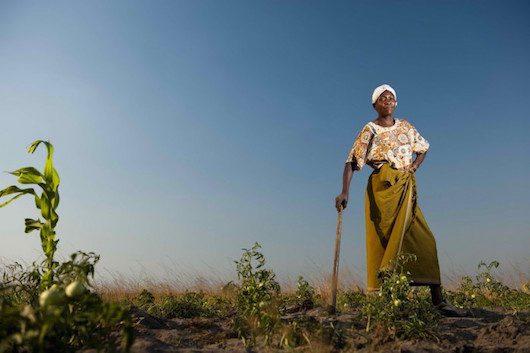
5 Ways Addressing Women’s Rights Reduces Poverty

Addressing Women's Rights
Since the 1970s, women have had a key role in addressing women’s rights in terms of ending global poverty.

There are several reasons for this phenomenon, whether laws in certain countries stimulating this repression or customs in a society. Laws protecting women often remain unimplemented at the national and local levels.

The U.N. Commission for Africa states that women, in particular, suffer from inequality, both socially and economically. It is important to recognize women’s rights implications for the declination of global poverty.

1. It Increases Education Enrollment

Young girls are among the largest of demographics not receiving an education. It is a known fact that women with equal rights become more educated. These women are more likely to participate in the job field. Education results in gaining the skills necessary to obtain work and consequently gain financial resources to rise above the poverty line.

2. It Increases Enrollment in the Job Sector

As women acquire education and skills, they may gain the aspirations of entrepreneurship. The right to education for women also creates future options for labor. Furthermore, as women become educated, their role is expanded beyond child-rearing. Women are then able to obtain a presence in the working field.

3. Women Are More Likely to Participate in Decision Making

Women with legal rights are more likely to own land and therefore to access finance. The U.N. claims that rural women with the right of control over their land increase social and political status. Addressing women’s rights in controlling land boosts bargaining power domestically and empowers their public voice.

4. It Diminishes Dependence

Many women who are impoverished are widows, single-headed households or those who did not have an income to begin with. Addressing women’s rights to education and ownership enables them to earn a living regardless of challenging situations. When women have rights to land ownership and to education, it ensures their ability to provide for their families’ daily needs. Land ownership also decreases the prospects of women being evicted and subsequently sliding into poverty.

5. It Reduces Unpaid Work

Many women spend a lot of time doing household work such as caring for children. Additionally, many women spend a great portion of their day preparing meals and gathering water, during which they resort to paying for childcare. Greater equality in the household would allow women the opportunity to spend time carrying out paid work.

The U.N. states that with access to resources such as financial credit, technical assistance, training and land ownership, the feminization of poverty will diminish.

– Mayra Vega

Sources: U.N.E.C.A., UNDP 1, UNDP 2, UNDP 3, UNDP 4, U.N. 1, Sachs, Jeffrey, U.N. 2
Photo: Africa Agribusiness

February 15, 2016
https://borgenproject.org/wp-content/uploads/borgen-project-logo.svg 0 0 Borgen Project https://borgenproject.org/wp-content/uploads/borgen-project-logo.svg Borgen Project2016-02-15 01:30:062024-12-13 17:54:105 Ways Addressing Women’s Rights Reduces Poverty
Education, Global Poverty, Women, Women and Female Empowerment

Six Ways Education Empowers Women in Poverty

Education Empowers WomenEducation empowers women and girls, and investing in their education is one of the most effective ways to reduce global poverty. Still, females face many barriers to educational opportunities. According to the Global Partnership for Education, 63 million girls are not in school worldwide, and women represent almost two-thirds of the world’s illiterate.

A recent report by the World Bank found that girls who receive little to no amount of education are more likely to live in poverty, be married as children, suffer domestic abuse and lack control over their own health care decisions, which is detrimental to their families and communities.

Here are six of many ways education empowers women in poverty:

1. Education Helps Women Avoid Child Marriages

“Child marriage is an appalling violation of human rights and robs girls of their education, health and long-term prospects,” Babatunde Osotimehin, M.D., the Executive Director of the United Nations Population Fund, said to UNICEF. “A girl who is married as a child is one whose potential will not be fulfilled.”

Providing girls with access to educational can be an effective way to reduce child marriage rates worldwide. According to the United Nations Educational, Scientific and Cultural Organization (UNESCO), the rate of child marriage within sub-Sahara, South and West Africa would fall by 64 percent if every girl within the region received a secondary education level.

2. Education Empowers Women to Family Plan

The amount of education a woman receives influences a women’s choice and ability to plan family sizes. Family planning allows women to give birth to the number of children they desire and determine the spacing of their pregnancies.

In sub-Saharan Africa, women with no education have an average of 6.7 births on average, compared to 3.9 for women within the region who have obtained a secondary education level, as reported by UNESCO.

3. Education of Mothers Decreases Child Mortality

A woman’s education is integral to the health of her family. The more education a girl gains throughout her childhood, the better chance her future child has for survival.

According to the United States Agency for International Development (USAID), the probability of infant mortality decreases by five percent to 10 percent for each extra year of education a mother has.

Around four million child deaths have been prevented over the last four decades due to an increase in female education, according to a study in The Lancet journal funded by the Bill and Melinda Gates Foundation.

4. Education Increases the Likelihood of Women Surviving Pregnancy and Birth Complications

Education isn’t just integral to the health of a woman’s child; it is also important for the mother. Pregnancy and birth pose extreme health risks for women in poverty stricken areas, and education plays a significant role in helping mothers survive them. Women with higher levels of education are more likely to adopt simple and low cost hygienic practices throughout pregnancy, and react to health issues.

According to UNESCO, maternal mortality would fall by 66 percent if all women had completed primary education.

5. Education Gives Women Higher Income Earning Power

Each extra year of schooling a girl receives is incredibly valuable, raising her ability to enter the labor force. Every year of secondary school education a girl receives is directly correlated with an 18 percent increase in her future earning, according to a World Bank study.

6. Education Empowers Women to Stand Up to Domestic Violence

Gender-based violence is a global phenomenon. One-third of women who have been in a relationship have experienced physical or sexual violence, according to the World Health Organization (WHO). Low education levels are associated with an increased risk of experiencing domestic violence.

Through education, women have the opportunity to gain knowledge to stop this phenomenon. In Sierra Leonne after a large expansion of school opportunities, women’s tolerance of domestic violence dropped from 36 percent to 26 percent according to UNESCO.

“I firmly believe that when you invest in a girl’s education she will support herself and her children and contribute to her community and her nation, charting a path towards a better world in which human rights are respected and there is dignity for all,” Prime Minister of Norway and co-chair of the MDG Advocacy Group, Erna Solberg, said in an interview with Daily Development. “Education empowers women. It increases their economic contribution, strengthens their political voice and boosts their influence across the board. That is why delivering education to all girls is so vital.”

– Lauren Lewis

Sources: United Nations Development Program, UNESCO, White House, USAID, World Bank, The Lancet, Global Partnership for Education, UNICEF, World Health Organization, Daily Development
Photo: The Clinton Foundation

February 10, 2016
https://borgenproject.org/wp-content/uploads/borgen-project-logo.svg 0 0 Borgen Project https://borgenproject.org/wp-content/uploads/borgen-project-logo.svg Borgen Project2016-02-10 01:30:032024-05-27 09:28:50Six Ways Education Empowers Women in Poverty
Disease, Women

Indian-American Physicians Take Reins of Indian Healthcare

Indian_HealthcareThe American Association of Physicians of Indian Origin (AAPI) will focus on women’s health and non-communicable diseases (NCDs) in India in its 10th Global Health Summit.
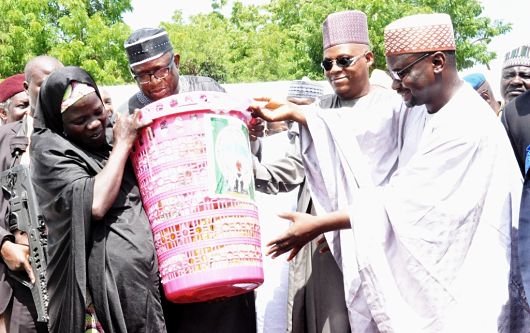
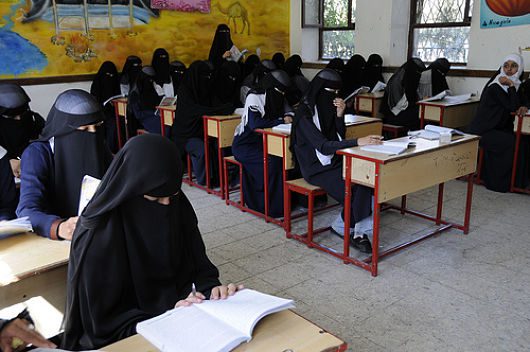
For almost a decade, the AAPI has gathered to contribute to the discussion of healthcare in India. This year, the focus will be on women’s health and non-communicable diseases, which plague 5.8 millions of Indians each year, according to the WHO.

Also included in this year’s summit will be a launch of the country’s first Trauma and Brain Injury Guidelines, reports ETHealthworld.

“This GHS promises to be one with the greatest impact and significant contributions towards harnessing the power of international Indian diaspora to bring the most innovative, efficient, cost effective healthcare solutions to India,” says AAPI.

This year’s summit will be held from Jan 1 to 3, 2016, in New Delhi.

The annual summit is not the only effort by the AAPI to improve Indian healthcare.

The organization also houses the Global Clinical Research & Trial Network (AAPI-GCRTN), which fosters collaboration on research and clinical trials; the Young Physician Section (AAPI-YPS), which educates and enhances the careers of young physicians; and the Charitable Foundation (AAPI-CF), which serves the poor in remote areas of India and the U.S.

The AAPI and its contributions to health in India serve as an example of the country’s growing interest in health and poverty, as well as its growing resources.

The Government of India has made tremendous progress recently, especially in commitment to pressing issues concerning the poor members of its population.

At the beginning of this year, India became the first country to adapt the Global Monitoring Framework on NCDs. In line with the WHO’s Global action plan for the prevention and control of NCDs 2013-2020, the framework’s targets are aimed at reducing the number of global premature deaths from NCDs by 25 percent by 2025, says the WHO.

India is paving the way for developing countries’ healthcare, and this summit will provide solutions for multiple healthcare problems that can be applied to other areas.

– Ashley Tressel

Sources: India Times, AAPI Global Healthcare Summit, AAPI USA, AAPI Charitable Foundation, AAPI YPS, WHO                                                                                                                                                                      Photo: Flickr

November 9, 2015
https://borgenproject.org/wp-content/uploads/borgen-project-logo.svg 0 0 Borgen Project https://borgenproject.org/wp-content/uploads/borgen-project-logo.svg Borgen Project2015-11-09 07:30:282024-05-27 09:28:18Indian-American Physicians Take Reins of Indian Healthcare
Global Poverty, Sanitation, Women

Meet Flo

Meet Flo
When living in poverty, girls beginning the transition into puberty can face difficult challenges. Due to being unable to access affordable sanitary items, many young girls have to use reusable menstrual pads, and the process is often time-consuming and dangerously unsanitary. The lack of access to cheap and affordable sanitary products is a scary thought for many women, and for these young girls, it has consequences beyond hygiene.

In many countries with extreme poverty there are stigmas against puberty for women, and many young girls fear their menstrual cycle and will drop out of school in order to hide at home. The students from the Art Center College of Design created a solution to this problem.

Meet “Flo”, an invention that allows young women living in extreme poverty a multi-purpose device for more effectively dry, sanitary and discreetly concealed reusable menstrual pads. Flo was created by the James Dyson Foundation, which released a video explaining how the device makes periods safer and less disruptive to young women’s lives.

On the website, the James Dyson Foundation talks about what makes Flo so unique. A statement released states, “Girls will have access to dry, clean pads that can reduce illness and will be more comfortable, both physically and emotionally. Girls will be able to work around their menstrual cycle and be in control…By having control over their menstrual cycle, girls do not have to give up their dreams and can be empowered to pursue what they want to become.”

– Elizabeth Steadman

Sources: GOOD, Metro, James Dyson Award,
Photo: Flickr

October 2, 2015
https://borgenproject.org/wp-content/uploads/borgen-project-logo.svg 0 0 Borgen Project https://borgenproject.org/wp-content/uploads/borgen-project-logo.svg Borgen Project2015-10-02 08:32:182024-06-04 04:33:49Meet Flo
Global Poverty, Women

NEMA Issues Delivery Kits to Displaced Pregnant Women

NEMA
Nigeria’s National Emergency Management Agency (NEMA), issued 410 delivery kits to internally displaced pregnant women housed at camps in Maiduguri, Borno State. Among the delivery kits were a wax print and infant feeding bottles along with a mattress, a blanket and a net for the expected newborns.

The kits also included a baby bag, diapers, a basket, a towel, baby soap, and supplements for the mother such as milk and cocoa drink. The supplies come at a vital time since some of these women are due to give birth in late August or September.

The north-eastern Nigerian Borno State has been the worst affected in the conflict against the Boko Haram insurgency which began in 2009. Sani-Sidi, NEMA’s director general, says insurgent attacks have displaced many people, leading to the creation of 23 IDP camps in Borno State.

“In all the camps in the state, 60 percent of the IDPs are women and children classified as vulnerable and needing more support,” he said. “As a result, 410 pregnant women were selected [to receive delivery kits] out of 1,980 identified pregnant women in 13 female IDP camps in Maiduguri.”

Aid from NEMA comes a month after a July donation by Deluxe Childbirth Services coordinated in partnership with U.S. Agency for International Development (USAID), the United Nations Population Fund, and two USAID projects – THE Expanded Social Marketing Project in Nigeria and the Targeted States High Impact Project.

During this donation, UNFPA’s Ratidzai Ndhlovu underlined an expected high in births among Nigerian IDPs, stating that there would be an expected 60,000 births by the end of 2015.

According to UNICEF, a Nigerian woman’s chances of death during pregnancy and childbirth are 1 in 13. Additionally, newborn Nigerian mortalities, which occur among the first week of life, make up about one-fourth of total deaths of children under five years of age.

A majority of these deaths arise from complications during birthing or pregnancy, which serves to highlight the importance of maternal and newborn health care access, especially within vulnerable and displaced populations.

– Jaime Longoria

Sources: Premium Times 1, Premium Times 2, UNICEF

September 23, 2015
https://borgenproject.org/wp-content/uploads/borgen-project-logo.svg 0 0 Borgen Project https://borgenproject.org/wp-content/uploads/borgen-project-logo.svg Borgen Project2015-09-23 05:14:242024-05-27 09:25:17NEMA Issues Delivery Kits to Displaced Pregnant Women
Education, Global Poverty, Women, Women and Female Empowerment

Improving Education Levels for Women in the Middle East

women_in_the_middle_east
Women in the Middle East are subjected to extreme patriarchal systems that often deprive them of their human rights and their dignity. In 1995, Dr. Golnar Mehrah a UNICEF education consultant published a report titled “Girls drop out of primary school in the Middle East and North Africa.”

In his report, Dr. Mehrah set out to discover why despite the fact that girls’ enrollment rates had increased significantly since 1985, girls were dropping out before the 5th grade. In this report, he found that there existed a gender disparity in the enrollment of girls in primary school in the Middle East and North Africa. The primary reason for both male and female dropouts in the Middle East and North Africa region was poverty.

Their parents pulled them from school in order to help with domestic and agricultural tasks. In many cases, there were a lack of basic programs for students such as an available teacher for a given grade. In some villages in the Middle East and North Africa regions lack educators past a certain grade level making it difficult for students to be promoted to the next grade.

A report by the Population Reference Bureau on the Middle East and North Africa region sheds light on the challenges that women face in the region. Two key factors highlighted in the report was the MENA culture and the oil based economy. The report shows a clear gender biased toward men in the region.

In the report, women were asked if they could only afford to send one child to a university and they had a son and a daughter who would it be. An overwhelming majority of the women said they would pay for their son over their daughter to go to school. The statistics were shocking with 39 percent in favor of the son going on to higher education and only 8 percent in favor of the daughters.

There is a clear son preference in Middle Eastern culture that has privileged them with certain advantages in their society. In certain places in the MENA region this gender biased is enforced by a set of codified laws. This trend is slowly changing with the rise of women activists in Islamic society who demand better treatment for women.

Recently a news report from U.S. News and World Report shows a rise in enrollment rates for women in several countries in the Middle East and North Africa region as of 2014. The current global score for the Middle East and North Africa region is 31 which is actually higher than the global average of 30.

As foreign aid and development enter the region, many MENA countries are seeing the economic benefits of breaking away from rigid tradition and encouraging women’s participation in education. Egypt, in particular, is making great strides toward women’s education.

– Robert Cross

Sources: Public Reference Bureau, UNICEF Report, US News and World Report
Photo: Open Equal Free

September 9, 2015
https://borgenproject.org/wp-content/uploads/borgen-project-logo.svg 0 0 Borgen Project https://borgenproject.org/wp-content/uploads/borgen-project-logo.svg Borgen Project2015-09-09 01:30:312024-05-27 09:27:40Improving Education Levels for Women in the Middle East
Children, Global Poverty, Health, Women

Rwandan Parliament Seeks to Increase Maternity Coverage

Maternity coverageIn March, the Government of Rwanda approved a bill granting mothers full compensation while on a 12-week maternity leave. If implemented, the Maternity Leave Benefits Scheme would increase maternity coverage by 80 percent for the second half of their leave from the workplace.

Throughout the spring, the bill moved through parliament but was temporarily tabled in the House because of other pressing issues. Members of parliament are set to discuss this important legislation in the next few weeks, though, according to an article in Equal Times.

Because of the current system, many Rwandan women on maternity leave return to the workplace after just six weeks because they cannot afford to lose 80 percent of their compensation for that time.

Minister of Finance and Economic Planning Claver Gatete said that the current plan is not conducive to supporting a mother and her child both socially and financially.

The new legislation will have employers compensating mothers for the first six weeks and a social security fund covering compensation for the second six weeks. As an insurance scheme rather than a government fund, the additional compensation will come from a new income tax.

Public and private sector employees will make a 0.6 percent contribution of their salary to the insurance scheme in order to cover the costs of this fund. Contributions are set to be taken through the existing Rwanda Social Security Board, but the scheme funds are set to be distinct from other social security funds.

There is widespread support throughout Rwanda for this legislation, many calling this bill “long overdue.” Dominique Bicamumpaka, president of the Congrés du Travail et de la Fraternité — Rwanda (CONTRAF) was quoted in Equal Times, explaining her and other campaigners’ support for this legislation.

“[CONTRAF was] involved in the whole process and we encourage all the citizens to embrace this new initiative wholeheartedly because when a woman gives birth, it is not only for the family but also for the society,” she said.

If adopted, this bill will improve living conditions for mothers and their newborns, while also giving mothers more value and credibility in Rwandan society.

Many Rwandans consider this legislation a major step toward improving working conditions for women throughout the country. However, advocates such as Andre Mutsindashyaka, secretary general of the Rwanda Extractive Industry Workers Union, hope that this is just the first step of many other adjustments in making the workplace more mother-friendly.

“We are trying to make it easier for mothers, especially that nursing, by finding ways how they can work but also look after their babies,” he was quoted in Equal Times.

“So far, there is a plan that we hope to launch in five years, which will see each office have a daycare centre where mothers can breastfeed their babies. So far, some places like [the Rwandan Tea Authority] are providing [daycare facilities] and we hope that eventually, every office can do the same.”

– Arin Kerstein
Photo: Flickr

September 5, 2015
https://borgenproject.org/wp-content/uploads/borgen-project-logo.svg 0 0 Borgen Project https://borgenproject.org/wp-content/uploads/borgen-project-logo.svg Borgen Project2015-09-05 01:30:162020-07-02 13:11:20Rwandan Parliament Seeks to Increase Maternity Coverage
Global Poverty, Technology, Women, Women and Female Empowerment

Wonder Women Initiative Takes Off in Indonesia

Wonder Women Initiative Takes Off in Indonesia
For decades, the iconic comic book superheroine Wonder Woman has been a representation of justice, strength and all that is right in the universe. Today, the spirit of Wonder Woman is as present as it has ever been, but it has been breathed into the organization titled, appropriately, Wonder Women. In 2015, it is this plural variation of the legendary superhero’s name that resonates the most with global change.

The Wonder Women Initiative is a movement to revitalize poverty-stricken areas by teaching the women of these communities to sell new pieces of technology and equipment to their neighbors and members of their towns or villages. The effort has been especially successful in Indonesia over the last few years. Some of the items sold include solar lanterns, clean cookstoves and water filters.

An article by CNBC detailing the Wonder Women program recently said, “Since the program started in 2011, more than 300 women have become ‘micro-social-entrepreneurs,’ selling around 10,000 clean technology products to their communities.” The Wonder Women initiative has been extremely successful because of its grassroots approach to eradicating poverty. This project operates under the umbrella of the large non-government organization Kopernik.

Kopernik was founded on the belief that only a simple piece of technology can drastically turn around poverty situations all over the world. The NGO’s website provides certain statistics such as “780 million people live with dirty water, when a simple filter can provide safe, clean, convenient drinking water” and “1.3 billion people rely on dim, dirty, dangerous kerosene for lighting, when simple solar lanterns can provide clean, bright light at night.” Kopernik receives money directly from donors all over the world and in turn, uses these funds to produce cost-effective technology products that can be sent to third world countries and commercialized by an initiative like Wonder Women.

Wonder Women is impacting thousands of lives every year and revitalizing the way nonprofits work. By teaching women how to sell technology at cost-effective prices within their communities, Wonder Women is positively affecting the global economy. Kopernik has a quote on its site that reads, “Our namesake, Nicolaus Copernicus, changed the way people see the world. Like Copernicus, we want Kopernik to be a catalyst for change.” Much like its namesake, Wonder Women is promoting justice and all that is right with the world.

– Diego Catala

Sources: CNBC, Kopernik
Photo: Dorkly

August 25, 2015
https://borgenproject.org/wp-content/uploads/borgen-project-logo.svg 0 0 Borgen Project https://borgenproject.org/wp-content/uploads/borgen-project-logo.svg Borgen Project2015-08-25 01:30:392024-06-05 02:12:10Wonder Women Initiative Takes Off in Indonesia
Advocacy, Global Poverty, Philanthropy, Women

Warren Buffett: Generosity May Save Generations

How Warren Buffett Generosity Can Save Generations
According to Forbes Magazine, Warren Buffett is one of the wealthiest men in the world, with a net worth of over $72 billion. Buffett amassed a great portion of his wealth through investment and involvement in his family’s business, Berkshire Hathaway. Since coming into his fortune, Buffett has created a non-profit called The Susan Thompson Buffett Foundation, which is a large family foundation third only to The Bill and Melinda Gates Foundation and The Ford Foundation.

After Buffett’s first wife, Susan Thompson, passed away at the age of 72, he decided to focus the foundation’s efforts on charitable causes. One of the most funded causes was creating an IUD, an intrauterine contraceptive device. All of the foundation’s donations to research, funding and supplying were made in confidence, but it is evident that without funding for research the world would be in a much different place.

When IUDs were first created, they had more negative side effects than positive outcomes. Since few women saw their use, research on this form of contraceptive slowed to a halt, but after ten years of minimal research, the Buffett Foundation decided to invest in better contraceptives for women who did not have access to medical facilities. According to Buffett, not allowing women to decide when they want to get pregnant is essentially failing to utilize half of the brainpower in the world, as these people are constantly worried or concerned about pregnancy and their children.

Since Buffett’s investment, three major IUDs have emerged: ParaGard, which is a copper IUD that can last 3 years; Mirena, which is a plastic IUD that secretes hormones and can last up to five years; and most recently, Liletta, which is very similar to Mirena and was developed by a non-profit funded by Buffett in order to offer a cheaper option to women who could not afford a standard IUD.

The longevity of IUDs, some lasting up to 10 years, has made them an ideal form of contraception for busy women who do not have a steady schedule and cannot take pills at the same time every day. IUDs are 99 percent effective and have proven to be safe and beneficial for women in underdeveloped countries. In some developing countries, women are still dying in childbirth due to far too many pregnancies and a lack of control over their fertility. However, as female reproductive rights become a more pressing issue, IUDs and their cheap — or maybe even free — existence could make a huge difference.

Many women who live in poverty feel as though they do not have control over their bodies, an issue that has been brought up with several women’s rights’ activist groups. In order to grant women more control, we must grant them access first to contraceptives and next to education. When women are given the option to decide whether or not to have a child, they are able to make better decisions for their families and for their futures. Childhood mortality rates will decrease, female life expectancy will increase and overall national GDP will also increase. This is one simple change funded by one outstanding man that could provide women in developing nations a chance to take control of their lives and make a difference.

– Sumita Tellakat

Sources: Bloomberg, Forbes
Photo: Forbes

August 24, 2015
https://borgenproject.org/wp-content/uploads/borgen-project-logo.svg 0 0 Borgen Project https://borgenproject.org/wp-content/uploads/borgen-project-logo.svg Borgen Project2015-08-24 01:30:012020-04-17 16:51:51Warren Buffett: Generosity May Save Generations
Gender Equality, Global Poverty, Women

Chocolate Company Creates Jobs for Women in Ghana

Chocolate Company Creates Jobs for Women in Ghana

Divine Chocolate is a Fair Trade chocolate company partially owned by Kuapa Kokoo Limited. Kuapa Kokoo is Ghana’s leading farmer’s cooperative for chocolate, dedicated to quality both in their products and in the lives of the members.

The Fair Trade aspect of the company prevents large organizations from taking advantage of the small-farm cocoa farmers. This allows the farmers to receive a fair income and reduces the chances of child labor and forced labor.

One of the more important aspects of Divine Chocolate is the emphasis on the empowerment of women. Approximately 32 percent of the Kuapa Kokoo cooperative is made up of women. Women are given the opportunity to learn business skills, reading and writing skills, and even new trades through the Divine Chocolate’s Women’s Cocoa Farming Training program and the Kuapa Kokoo Women’s Fund.

The lack of education among women farmers in Ghana makes it easy for others to take advantage of them. The additional education helps protect the women from those who may cheat them and also increases their ability to run efficient farms and produce quality cocoa.

Women in the co-op who have higher levels of education are encouraged to become leaders. Those who have learned other skills have the opportunity to take out microloans from the Kuapa Kokoo Credit Union to start their own businesses. This allows them to receive a secondary income, especially when cocoa beans are not in season. Christiana Ohene-Agyare was the first woman to be nominated president of the Kuapa Kokoo cooperative in 2010.

“Being a member of Kuapa Kokoo has taught me that whatever a man can do, a woman can also do and even better,” said Ohene-Agyare to Divine Chocolate.

Kuapa Kokoo and Divine Chocolate are changing the view of women in Ghana through their innovative structure. Women are given the opportunity to learn, lead and make money through the training program and the Kuapa Kokoo Women’s Fund. The extra income earned by the women allows them to send their children to school as well.

Ghana is the second-largest producer of cocoa behind the Ivory Coast.

– Iona Brannon

Sources: Divine Chocolate, Fair Trade USA, Fair Trade, Good News Network
Photo: The News

August 23, 2015
https://borgenproject.org/wp-content/uploads/borgen-project-logo.svg 0 0 Borgen Project https://borgenproject.org/wp-content/uploads/borgen-project-logo.svg Borgen Project2015-08-23 08:24:362024-12-13 17:52:17Chocolate Company Creates Jobs for Women in Ghana
Page 28 of 36«‹2627282930›»

Get Smarter

  • Global Poverty 101
  • Global Poverty… The Good News
  • Global Poverty & U.S. Jobs
  • Global Poverty and National Security
  • Innovative Solutions to Poverty
  • Global Poverty & Aid FAQ’s
Search Search

Take Action

  • Call Congress
  • Email Congress
  • Donate
  • 30 Ways to Help
  • Volunteer Ops
  • Internships
  • Courses & Certificates
  • The Podcast
Borgen Project

“The Borgen Project is an incredible nonprofit organization that is addressing poverty and hunger and working towards ending them.”

-The Huffington Post

Inside The Borgen Project

  • Contact
  • About
  • Financials
  • President
  • Board of Directors
  • Board of Advisors

International Links

  • UK Email Parliament
  • UK Donate
  • Canada Email Parliament

Get Smarter

  • Global Poverty 101
  • Global Poverty… The Good News
  • Global Poverty & U.S. Jobs
  • Global Poverty and National Security
  • Innovative Solutions to Poverty
  • Global Poverty & Aid FAQ’s

Ways to Help

  • Call Congress
  • Email Congress
  • Donate
  • 30 Ways to Help
  • Volunteer Ops
  • Internships
  • Courses & Certificates
  • The Podcast
Scroll to top Scroll to top Scroll to top