• Link to X
  • Link to Facebook
  • Link to Instagram
  • Link to TikTok
  • Link to Youtube
  • About
    • About Us
      • President
      • Board of Directors
      • Board of Advisors
      • Financials
      • Our Methodology
      • Success Tracker
      • Contact
  • Act Now
    • 30 Ways to Help
      • Email Congress
      • Call Congress
      • Volunteer
      • Courses & Certificates
      • Be a Donor
    • Internships
      • In-Office Internships
      • Remote Internships
    • Legislation
      • Politics 101
  • The Blog
  • The Podcast
  • Magazine
  • Donate
  • Click to open the search input field Click to open the search input field Search
  • Menu Menu

Archive for category: Women

Information and news about woman issues

Women

Obama Focuses on African Reform

African_Reform
In a recent landmark visit to Africa, President Obama pledged to all African nations that the United States was planning on reaffirming its efforts to bolster all aspects of African reform, ranging from economic to social reforms. Obama’s visit bared a theme of hope for the future of all African nations, as the President visited extensively with the African Union in their headquarters located in Ethiopia.

“Africa is on the move,” was the slogan repeatedly used by President Obama throughout his time on the African continent. The ideology behind this phrase comes from the recognition of African reform in taking steps forward regarding technological improvements as well as economic developments. An article by the Guardian stated, “Politicians and entrepreneurs love to point out that the old stereotypes of war, famine and hopelessness have been replaced by some of the fastest growing economies in the world, as if they are the first to discover it.” Obama was quick to shed light on Africa’s new image in the 21st century during his time on the continent.

Homophobia across Africa was a big issue of conversation for Obama during his visit to Africa. The President made it a point to relate the topic of homosexuality in a social context to the African Union. According to the same article by the Guardian, “The president compared homophobia in Africa with racism in America.” Obama’s stance was one of progressiveness towards a typically close-minded group, but the President used his immense popularity in Africa due to his Kenyan roots to connect with the people. The media response to Obama’s message was extremely positive with many outlets beginning to call for reform on their own.

In addition to speaking out against homophobia, Obama also spent time championing for women’s rights. An article by All Africa was quoted as saying, “[Obama] added that Africa has to attach due emphasis to women and girls because unless girls are educated and given opportunity to be innovators, engineers, doctors, business women, it will be difficult to the continent to bring about change.” The President arrived in Africa to push an agenda that would help Africa as a whole rise up to a new level of social reform and is walking away with satisfaction.

– Diego Catala

Sources: All Africa, The Guardian
Photo: Flickr

August 3, 2015
https://borgenproject.org/wp-content/uploads/borgen-project-logo.svg 0 0 Borgen Project https://borgenproject.org/wp-content/uploads/borgen-project-logo.svg Borgen Project2015-08-03 01:30:192020-02-19 11:46:36Obama Focuses on African Reform
Global Poverty, Women

Groups Speak Out Against Helms Amendment

Helms_Amendment
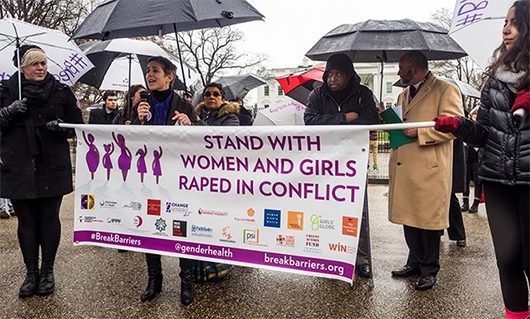
Many organizations and individuals are becoming more vocal against the Helms Amendment. Passed by a conservative Congress in 1973 as a reactionary measure against the landmark court case, Roe v. Wade, the Helms Amendment denies women in countries receiving American aid the ability to get abortions with government money.

This amendment has received flack from both liberals and conservatives due to the denial of safe abortion options for women who are victims of rape during war. The opposition has grown a lot of steam world wide.

Before President Obama touched down in Kenya last week, the Kenyan government tore down a billboard that seemed to be politically motivated. According to reports, the billboard implored President Obama to utilize his executive action to help women who are victims of rape in developing countries.

After the Kenyan government took the billboard down, many were upset. Perhaps the government wanted Obama’s trip to his father’s country to be pleasurable and void of political dissonance.

Obama is not just receiving pressure to revoke the amendment abroad, but also at home.

Before his trip to Kenya, 70 U.S. non-government organizations called for Obama to visit health clinics in Kenya that attend to women’s’ health so that he can see for himself what the amendment is causing.

At the “Religious Coalition for Reproductive Choice” in June, religious leaders requested that Obama use swift action to revoke the amendment. The support to revoke the amendment is not just from leaders, but from the majority of the American public.

BuzzFeed reported that 81 percent of people support a woman’s right to have access to an abortion in the case of rape or for the safety of the mother. Although this poll shows people’s views domestically, they can translate to the global stage.

Women living in countries rampant with a gang and terrorist violence are subject to rape. Because of the lack of protection the perpetrators have, the victims are oftentimes subject to sexually transmitted infections and pregnancy.

Due to rape being a tool of war, many from both sides express their disdain for the harsh bill. Perhaps the president will one day voice his opposition.

– Erin Logan

Sources: The Daily Beast, Buzzfeed 1, Gender Health, Buzzfeed 2
Photo: Woman Under Seige Project

August 2, 2015
https://borgenproject.org/wp-content/uploads/borgen-project-logo.svg 0 0 Borgen Project https://borgenproject.org/wp-content/uploads/borgen-project-logo.svg Borgen Project2015-08-02 01:30:492024-12-13 18:04:36Groups Speak Out Against Helms Amendment
Education, Health, Sanitation, Women

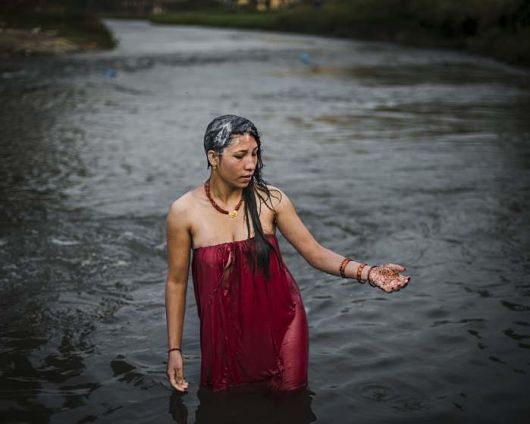
Why Menstrual Hygiene Remains a Challenge in Nepal

Menstrual-Hygiene

Old taboos surrounding menstruation die hard in Nepal where, until 2005, Chhaupadi, the practice of ostracizing women and girls from their own homes during their periods, did not face a national ban.

The Nepalese Supreme Court declared Chhaupadi illegal in 2005. However, the practice still retains a foothold in the country’s western region and myths surrounding women’s natural cycles remain a national problem.

Chhaupadi, which is based upon the belief that menstruating women are toxic, prohibits menstruating women and girls from inhabiting any public space, socializing with others and using water sources that other people share.

According to the tradition, women and girls on their periods are also banned from sharing food or touching anyone. Rather than eating with their families, these “untouchables” must remain outside the house and keep their distance while a family member throws boiled rice to them, like they would to a dog.

The effects of Chhaupadi are extremely dehumanizing and psychologically stressful, with young girls told that they will bring bad luck on their families if they enter their own homes during menstruation. In communities where the tradition is still practiced, even women and girls who do not believe they are truly toxic fear disobeying the rules of Chhaupadi and incurring the anger of family or village elders.

In addition to being emotionally degrading, Chhaupadi also places women and girls at risk for rape, abduction, snakebites and animal attacks, as well as malnourishment. Forced to sleep in rickety huts without adequate insulation or ventilation, women and girls face illness exacerbated by the cold and unhygienic conditions or asphyxiation from improperly ventilated heat sources.

Even in regions where Chhaupadi is not practiced, taboos surrounding menstruation still affect Nepalese women and girls. The Nepali Times reports that today many households in Kathmandu still prohibit menstruating women from entering kitchens or temples, eating with the family and sleeping on their beds.

These practices condition women to view their bodies as unclean and to devalue themselves because they take the blame for any misfortune their families may experience. Chhaupadi’s legacy contributes to a wider disregard of women and girls that places them in danger.

A prime example comes in the wake of the recent earthquake that devastated Nepal. Although the refugees require many resources that aid organizations are working to meet, menstrual hygiene is far from the minds of most.

Female refugees have few sanitary resources. Some reuse the same menstrual products for days, washing them in unfiltered water sources in the same areas where refugees openly defecate.

“There are no proper toilet facilities or private spaces in the camps,” reported Dr. Hema Pradhan, consultant gynecologist and fistula surgeon at the Kathmandu Model Hospital. She called the sanitary practices in these camps “worrisome.”

Ursula Singh, a program officer for women’s rights NGO Loom Nepal, stated, “We went to the village of Kavre on the outskirts and saw some girls sitting huddled in tents, covered in blood.” Most girls, she elaborated, wait until dark to step outside and dispose of or attempt to sanitize menstrual products.

“We want them to at least practice hygienic disposal because they are in super exposed conditions and that puts them at a higher risk to contract diseases,” Singh said. However, the only hygienic means of disposing of sanitary napkins is often digging holes and burying them in the ground.

In a culture with superstitions such as the belief that any plant a menstruating woman touches will die, disposing of menstrual products and trying to manage period blood and symptoms in an area with as little shelter or privacy as a refugee camp must be a traumatic experience. Lingering stigmas place women under intense scrutiny and many would rather risk disease, injury or abuse than suffer negative social responses to their behavior while menstruating.

– Emma-Claire LaSaine

Sources: Time, Nepali Times, IRN News, Reuters, New York Times
Photo: Time

July 31, 2015
https://borgenproject.org/wp-content/uploads/borgen-project-logo.svg 0 0 Borgen Project https://borgenproject.org/wp-content/uploads/borgen-project-logo.svg Borgen Project2015-07-31 08:21:302024-05-27 09:26:12Why Menstrual Hygiene Remains a Challenge in Nepal
Global Poverty, Women

Interview with Mardge Cohen, Co-Founder of WE-ACTx

Interview With Mardge Cohen, Co-Founder of WE-ACTxWomen’s Equity in Access to Care & Treatment, or WE-ACTx, aims to provide the women and children of Rwanda with proper access to healthcare and treatment. Nearly 10 years after the Rwandan Genocide, this HIV/AIDS initiative brought much needed aid to communities of women and children in Kigali. Now, more than 12 years later, the organization continues its work, offering not only clinical care and mental health services for people infected with HIV/AIDS, but also youth programs and support with income generation—aimed at addressing both poverty and malnutrition.

I caught up with Mardge Cohen, co-founder of WE-ACTx, and spoke a bit about the organization’s origins, progress and successes, which have allowed this quite exceptional organization to thrive among the people of Kigali, Rwanda.

Tell me, how did WE-ACTx begin?

“The organization was started in 2004. We went to Rwanda because one of the other people who formed the organization, named Anne-Christine d’Adesky, a journalist, had been writing a book about HIV and women. She had been to Rwanda and these heads of associations talked to her about how the women of Rwanda, who had been raped during the genocide and were then infected with HIV, were not getting access to medicines for HIV. But the men who raped them, who were in jail, were getting medicines for their HIV. These women thought that was very unfair, and they asked Anne-Christine to bring a bunch of physicians and advocates to help fast-track medicine for these women because they were getting very sick and dying.

The genocide was in 1994 and this was in 2004, and it takes about a decade, 10 years, after you’re infected with HIV to become very sick. The women were just getting sick and the leaders of these associations wanted to do something about it.”

Do you feel that these at risk populations of Rwanda are ignored by the government, or were ignored?

“In 2004, nobody was getting medications for HIV. It was before PEPFAR (The U.S. President’s Emergency Plan for AIDS Relief). It was before the global fund. It was at a time… you know I’d been working on HIV since 1987, and people were saying things about Africa: ‘Well, we’ll just give them medication for pneumonia, for prophylaxis. We can’t afford… and the people in Africa wouldn’t know how to manage, there isn’t a good enough infrastructure to manage the antiretroviral therapy, so we’ll just ride them off.’ And they were going to ride them off. You know, right now there are 36 million people living with HIV worldwide and 26 million of them are in Africa, and most of them are in Sub-Saharan Africa.

That’s an enormous number of people that people were thinking of just riding off, so the governments of those countries in Africa really had no wherewithal to actually help people. The drugs weren’t there. They weren’t letting the drugs get there, so my feeling is my experience in Rwanda was in fact the government seriously wanted to help people. Once medication became available, they figured out ways to actually control the dispersal of the medicine so that it got out to people, and they tested everybody. I was aware of some countries where tests got outdated, expired, in garages and never got to people—that’s not what happened in Rwanda. In Rwanda, they really tried.”

You didn’t face much resistance from the government?

“Well, our approach was a little bit different from the government’s because our approach was very women-centered and youth-centered, and their approach was more decentralized… sort of a public health model where people would just go to the nearest clinic to where they lived. Everybody would sort of be engaged in the healthcare system that way, but because HIV comes with a lot of stigma people didn’t really want to go to clinics near where they lived. Women sort of liked the idea of going to a place that cared about women and worried about their emotional reaction to HIV, gender-based violence and helping them try to become productive members of society—not just worrying about HIV as it affected the baby or the husband, but rather cared about them as real people. So, people wanted to come to our program even though it may not have been a neighborhood clinic.

That was a little bit problematic for the Rwandan government. They didn’t like that so much, but they then saw that we did very well with connecting women to care and having people with very good retention rates and adherence to medication. Then, after a while, we had a lot of good youth programming because we had so many women who they had kids—a lot of attention to youth friendly programs. Then we got on better with the Rwandan government public health system and now we’re in very good shape. We do a research program with their principal investigators, and we’re principal investigators; It’s much more collegial.”

What did you have to do to overcome cultural differences? I know that specifically in Rwanda, people don’t very much like to talk about things involving sex.

“So, there was a pretty big public health campaign to get people tested. And, you know, in Africa it’s said that one of the major risk factors for a woman having HIV was being in a monogamous relationship with her husband. It’s just that he probably is not in a monogamous relationship with her. Women who had done everything they were supposed to do, get married, have children, they were at risk for HIV. As a result, we didn’t really have to have that many difficult conversations with them, but they were reticent to talk about things… but after a while, we used a model of peer advocacy.

We found some Rwandan women who were HIV-infected who were sort of a bit more leader-ish and wanted to sort of help other women. We utilized them to help us understand what the cultural differences were and for them to sort of share with the other women what efficacy the drug we had and the approach we were taking. That really, really helps—a peer model really got through some of those cultural differences. I think one of the things that I learned was that you have to be very patient; I’m a very impatient person and things are very slow, and change happens over a long period of time. It’s not quick. There was a lot of stigma related to HIV and there still is because we went there 11 years ago and now its 2015 but there’s still a lot of stigma.”

Did you do some advocacy in the community to try to change that perception?

“We did, especially if there were kids in schools or if there were neighborhoods that were giving people a hard time or landlords who kicked people out of their homes. We did legal training of advocates to sort of have the people… you see, there aren’t that many lawyers in Rwanda and the case loads that they have are so great that there’s sort of a paralegal system and we try to train our patients—a significant number of them—to participate that way in dealing with those issues. That sort of helped. We also tried to provide a very joyous atmosphere for the children because their lives are pretty rough, and every year we have this thing called ‘Day of the African Child’—a big party for all the families, like 1,200-1,400 people come and have a big party and its just to celebrate that they’re alive. Those kind of thing help the parents and the patients realize that we were not trying to get away with anything or do anything bad, but really just trying to provide a better quality of life for people who are HIV-infected.”

Was it a bit difficult to break into the community in Kigali?

“Well, luckily, these groups—these women’s groups, these leaders who had spoken to my friend Anne-Christine d’Adesky—they were still there. Initially, it started with 5 groups, and they called us in and told us where to go and they told us what to do, so I never felt like I was . . . bringing our stuff and putting it on people in Rwanda. I felt that the Rwandans had called us in. I thought that we were very lucky to have that approach, and they told us what they wanted from us. That made it, I think, a good way to be in another culture, in another country, and we’ve maintained that. We have partner association meetings four times a year where we review what’s going. We didn’t have to put up a shingle and hope people would come. Basically, those associations keep bringing their members to us, so I think it a pretty good model for being connected to community groups. You know, AIDS groups, women groups, local groups, service groups…

Then there’s the issue of the genocide and I think those are some of the lessons we learned, too. In some of the groups, people didn’t always want to work together, and we had a sort of… We didn’t understand that, or we didn’t think of that as behind some of the problems that we encountered, but it sometimes was. But now, the staff is sort of mixed grouping and everybody have bought into the mission to provide good HIV care for children, women, their partners and their families. And I think everybody does the best they can to make that happen.”

Do you feel that a substantial amount of progress has been made?

“Oh yeah! I mean, HIV is a deadly disease. We now have about 2,600 people—I’d say 90 percent—of those over 25 adhere wonderfully to their medicines and are doing great. A small percentage need a lot more help to take their medicine and keep doing well. The younger people, who have had the disease longer because most of them were born with it, have sometimes become resistant to some of the medicine. So, we have to put them on more complicated regimens.

Some of the good medicines we have in this country are not readily available there. When I first started that was true. Then for a while, the medicines we had in Rwanda and the medicines we had in the U.S. were the same. Now the U.S. is way, way passed Rwanda and a lot of countries in Africa and Latin America. They don’t have the medicines we have, which are really excellent medications. So, that’s a problem, but there is generally progress. I watched, at this ‘Day of the African Child,’ I watched kids who I knew when they were 10 who are now 21 years of age, and they’re confident, they’re strong, they’re going to university—it’s amazing! It’s an enormous amount of progress!”

Was the genocide the main reason why you chose to work in Rwanda?

“It was more HIV, but in the context of the genocide. I had an interest in intimate partner violence because I had seen a lot of that in the care I gave women in Chicago who were HIV infected. We’ve done studies, and there’s just high prevalence of gender-based violence, like 62 percent lifetime—here [in the U.S.]—experience with either sexual, physical, or emotional abuse. Then, we looked at it in Rwanda, in our clinic, post-genocide, and it was 62 percent also. It was the same in both countries—you know poor population, difficult situation of sexually transmitted disease where people go off to try to make a living somewhere else… In the U.S. there was lot of drug use and a lot of difficult relationships with partners. There had been issues [in Rwanda]—people had lost partners during the genocide, people had been raped during the genocide. I was interested in Rwanda because my friend had been here and we had been asked to go, but I thought that because of everything that I had learned related to women with HIV and their experiences, it would be useful in this ultimate experience of gender-based violence, which was the genocide, where about a quarter of a million women were raped. So it was sort of both things.”

What do you think the main difference is between the government in Rwanda and in a country like Zimbabwe, which has seen a lot of resistance to NGOs that are trying to come into the country trying to help people with HIV?

“I think Rwanda sort of benefited post-genocide and by the 2001-2003 people coming in. A lot of Western and European countries that felt so guilty of not helping during the genocide were now giving lots of money. At the same time, there was lots of money going into HIV in a lot of countries, but the difference was that . . . there was money straight to the government and there was NGOs’ money, but what Rwanda did—very importantly—was it controlled the NGOs a lot, or tried to. There was a very strong government presence… very strong. One can’t write anything related to Rwanda without mentioning how wonderful the Rwandan government is. One can’t really be there without somehow being acknowledged by or understand the relationship with the Rwandan government, but its not just that; It’s that there was a lot of government will in Rwanda to do well in terms of the HIV epidemic, and in some sense, I think they wanted to be a poster-child for being able to distribute medicines well and lower the prevalence as opposed to be known for the genocide. It was a way to sort of make history—current history—much more positive as a country. And they were one of the best at utilizing the many millions of dollars that were given to them to help with the HIV epidemic. I think it was disproportionately more than what other countries got, but they utilized it extremely well. The other countries who maybe should have gotten more never used it well, often. There wasn’t the same governmental will, which I think you need.

It’s not just an issue of, are the NGOs disorganized? are they sort of stepping all over each other? and are they not doing what’s right? There are those issues, which I did see a bit in Rwanda and I had seen in a lot of other countries, but what I didn’t see in Rwanda was a government that wasn’t taking the epidemic seriously. They really put energy and resources… they used the resources they got to have a very strong public health system which helped HIV and other things along the way. It really addressed maternal mortality, infant mortality… When I started in Rwanda there were 30 doctors for 10 million people, and now there are so many more physicians and nurses who are trained related to HIV. And I think it’s an issue not just of the government’s relationship to NGOs, but of the government itself, having a strong presence related to the problems that the society is facing. I think that’s different from Zimbabwe and other countries.”

What do you think is lacking in terms of support for NGOs that do the same work that you do?

“Well, we have to do a lot of fundraising and I mean that is hard . . . that is one of our issues and it is a lot of work to raise money. I think what we do is really deliver the product we say we’re going to deliver, and I think that’s why we’ve been successful so far in our fundraising. We’ve been sustained for 11 years, so that speaks to our success in itself.

What I think we did that was good is that right now in Rwanda there is a local NGO called WE-ACT for Hope. It’s all Rwandan-run and they now manage the entire clinic, so our job is to fundraise a certain amount that we commit to, along with a few other groups that they get money from, and we do a lot of guidance related to program and other things, research… but they’re responsible—they are running the show. I think if you have local folks running the show, not just in a body, but rather the responsibility of a true locally credentialed NGO, which is also what Rwanda encourages, that’s a good way to go!”

– Jaime Longoria

Sources: Mother Jones, WE ACTx
Photo: WE ACT

July 29, 2015
https://borgenproject.org/wp-content/uploads/borgen-project-logo.svg 0 0 Borgen Project https://borgenproject.org/wp-content/uploads/borgen-project-logo.svg Borgen Project2015-07-29 15:17:422020-07-07 12:53:34Interview with Mardge Cohen, Co-Founder of WE-ACTx
Developing Countries, Global Poverty, Women, Women and Female Empowerment

Economic Incentives for Empowering Women in Developing Nations

empowering_women
In 2009, Bill Gates visited Saudi Arabia and was asked how Saudi Arabia could attain its goal of becoming one of the top countries in the world. In response, Gates said, “Well, if you’re not fully utilizing half the talent in the country, you’re not going to get too close to the Top 10.” Women deserve equal rights and treatment, but for many men in cultures that have yet to embrace this fact, this reality may not be enough to change minds. Enter money—what are the monetary incentives to help women contribute to the well-being of their own countries?

Women across the world represent about 40% of the world’s workforce. This is a huge figure and exemplifies the need for allowing this 40% to gain proper education to increase human capital potential, besides the obvious rights to education that any young girl or boy should possess. A study found that each year of education of women correlated with a decrease in child mortality by 9.5%. That’s a heavy figure to consider; it should be criminal for a developing country not to invest in women. The International Monetary Fund estimates that if women were able to access the same resources for agriculture, food production could increase by 2.5 to 4%. If that wasn’t enough reason to begin to treat women as equals in developing nations, then consider the fact that women make up a disproportionate figure of 70% of the world’s poor.

Allowing women to have equal rights and treatment in developing countries has a variety of benefits. Less workplace discrimination means more women can work instead of being outsiders to the economy of a country. Increasing the career opportunities and general rights for women could also usher in more investment from developed countries who may find more cultural connection with the developing nation. Studies have also shown that women are better at spending money in ways that benefit children than men, but, currently, women are earning significantly less than men across the world.

By empowering women in developing nations, poverty rates could be slashed, businesses could be started, existing industries could be revitalized and greater human capital resources could be fully realized. Gates said it best, and with elegance. The question really just becomes: why waste half of the talent you have?

– Martin Yim

Sources: New York Times, International Monetary Fund, The Guardian, United Nations
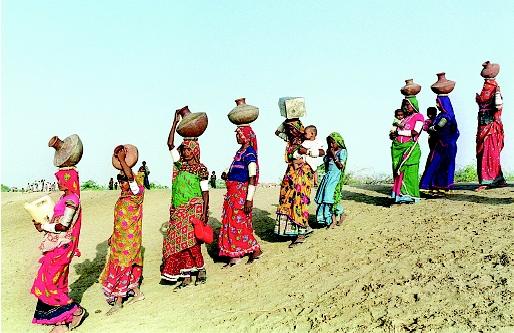
Photo: Water Encyclopedia

July 27, 2015
https://borgenproject.org/wp-content/uploads/borgen-project-logo.svg 0 0 Borgen Project https://borgenproject.org/wp-content/uploads/borgen-project-logo.svg Borgen Project2015-07-27 08:19:052024-12-13 17:51:56Economic Incentives for Empowering Women in Developing Nations
Global Poverty, Sanitation, Women

Product Helps Women in India Who Don’t Have Access to Clean Toilets

access_to_clean_toilets

A new product, launched by a Delhi startup last year, gives women the ability to urinate while standing up.

The PeeBuddy is a single-use funnel created from paper that is both coated and waterproof. The funnel is seen as one possible solution to India’s lack of clean toilets.

The country is one of the worst in terms of access to clean toilets. A study released by the World Bank in 2013 showed that over 600 million people defecate without the use of a toilet. This figure corresponds to over 53% of households.

Even if women can find a public toilet to use, it is often dirty. As a result, it is common for them to drink less water, which can lead to health issues.

A study published in the Journal of Nutrition demonstrated that dehydration was a primary factor in instigating headaches, loss of focus and fatigue.

By using the PeeBuddy and urinating while standing up, women in India are able to create a more hygienic atmosphere in an otherwise dirty bathroom. The startup’s website says the product is ideal for restaurants, nightclubs, public toilets and other popular destinations.

The idea for such a creation was born during a road trip consisting of four couples, according to Deep Bajaj, PeeBuddy’s founder.

During the trip from India’s capital territory to Jaipur, a city to the south in the Rajasthan state, Bajaj said the group made frequent stops to look for clean bathrooms, as only around one in five met the wives’ standards.

When one of the women on the trip commented how she wished she were in Europe so she could have access to a plastic device to use when encountering unsanitary toilets, Bajaj came up with the idea for the PeeBuddy.

The product is favored over others that have been produced because of the relatively cheap cost. A pack of 20 funnels costs 375 rupees (less than $6).

GoGirl, for example, is a reusable device made of silicone, but costs $9.99 each. Pee Pocket, also a disposable, coated-paper funnel, costs $24.99 for a 48-pack.

While some stores have been slow to put PeeBuddy on shelves, possibly because of the unusual product name, 20,000 packs had been sold through April of this year, due in large part to Amazon India.

The startup is also currently working with several corporations to help make the PeeBuddy more widely available.

– Matt Austin Wotus

Sources: PeeBuddy, The Huffington Post 1, The Huffington Post 2, The Huffington Post 3, YourStory
Photo: My Choices

July 25, 2015
https://borgenproject.org/wp-content/uploads/borgen-project-logo.svg 0 0 Borgen Project https://borgenproject.org/wp-content/uploads/borgen-project-logo.svg Borgen Project2015-07-25 09:11:242020-07-03 16:31:03Product Helps Women in India Who Don’t Have Access to Clean Toilets
Global Poverty, Health, Women, Women & Children, Women and Female Empowerment

Ketamine Enables Life-Saving C-sections for Women in Developing Regions

ketamine

“Every minute of every day, a woman dies somewhere as a result of pregnancy or childbirth,” says Thomas Burke, chief of Massachusetts General Hospital’s Division of Global Health and Human Rights.

Ketamine, an inexpensive anesthetic, is a solution to the global crisis of maternal death due to pregnancy, enabling women to undergo C-sections rather than facing death or serious injury.

Each day, 1,400 women die from causes relating to pregnancy. Pregnancy is the second largest killer of women, behind only HIV/AIDS. And for each woman that dies from pregnancy, 50 to 100 are disabled or suffer from disease. Pregnancy related death affects around 15 to 20 million women every year.

A major cause of death and injury during pregnancy is obstructed labor and a lack of availability of a cesarean section. When labor is obstructed and no C-section is available, women frequently die, suffer from postpartum hemorrhage (which can also cause death), or suffer from fistula (where the bladder and rectum walls erode and are permanently connected to the vagina).

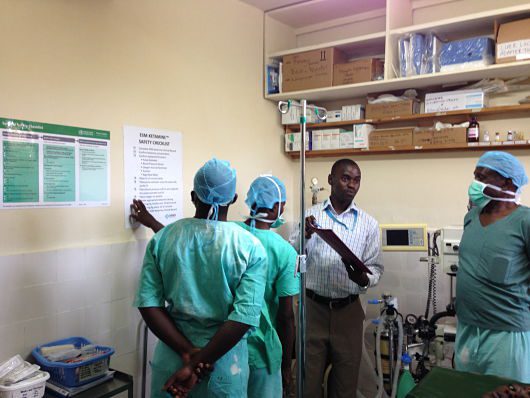
Many clinics and hospitals in developing countries lack the ability to perform C-sections because no anesthesia or anesthesiologists are present, which are necessary for this intensive surgery. This lack of anesthesia services presents a global problem, as anesthesia can potentially save countless lives of women.

Massachusetts General Hospital is addressing this crisis. They created an innovative way to provide anesthesia services to remote, extremely impoverished regions. Their initiative is called The Every Second Matters for Mothers and Babies—Ketamine for Painful Procedures and Emergency Cesarean Section (ESM-Ketamine). Ketamine is an extremely inexpensive anesthetic; it has been used without any formal procedure around the world for over 40 years, and has a near perfect safety record even with little equipment.

C-sections are the most common worldwide operation. One study of 49 countries estimates that if there was an increase in C-sections (by 2.8 million), 59,100 cases of obstetric fistula and 16,800 maternal deaths would be prevented.

The ESM-Ketamine initiative’s goal is to train clinicians that have no background in anesthesia. The Ketamine initiative offers four days of training for mid-level and above healthcare providers for C-sections and emergency surgeries, using Ketamine as an anesthetic, when no professional anesthetist is available.

Most anesthesia training programs require around four years of training, which is simply not feasible in these developing communities, nor an immediate solution to a crisis that is happening now.

The World Health Organization estimates that 10-15% of births require a C-section. Kenya Demographic Health Survey recently reported that C-section rates in many parts of Kenya are lower than one percent of births. A 2011 Kenya Ministry of Health study also found that only 18 anesthetists exist in the Nyanza region, which has a population of 5.8 million.

Since May 29, 2015, ESM-Ketamine initiative has trained healthcare providers in various hospitals across Kenya, resulting in 231 safe, life-improving surgeries. The program’s initial success demonstrates the powerful potential that Ketamine has for making previously impossible surgeries accessible to women in developing nations, women that provide deeply-rooted social and economic stability to their communities.

When a mother dies or is disabled, her entire community is impacted, and quality of life diminishe—child death rate increases, child education decreases, and both families and communities become more economically unstable.

The maternal mortality rate (MMR), or the ratio of the number of women that die per 10,000 births, was 11.7 in the United States in 2005. In 2014, there are still places on earth where one in six women die from pregnancy related causes; in South Sudan, Afghanistan, and Sierra Leone, the MMR is as high as 2,054.8.

The ESM-Ketamine program provides an inexpensive solution that allows women to undergo cesarean sections, rather than dying or becoming seriously disabled. Healthy women enable a healthy, stable community.

– Margaret Anderson

Sources: Massachusetts General Hospital, World Journal of Surgery, Harvard H Policy Review
Photo: Massachusetts General Hospital

July 23, 2015
https://borgenproject.org/wp-content/uploads/borgen-project-logo.svg 0 0 Borgen Project https://borgenproject.org/wp-content/uploads/borgen-project-logo.svg Borgen Project2015-07-23 08:42:042020-07-07 14:44:59Ketamine Enables Life-Saving C-sections for Women in Developing Regions
Education, Women, Women and Female Empowerment

Chinese Woman Receives Global Recognition For Education

Global Recognition_For_Education
On July 2, Dr. Betty Chan Po-king received her third honorary degree in Bath, United Kingdom, from the University of Bath, granting her global recognition for education efforts from three continents.

At the summer graduation ceremony for the University of Bath, an honorary graduate award was presented to Po-king for Doctor of Laws. After her fifteen-year relationship with the university, the accolade was given to her for her commitment to providing and stimulating education, cultural diversity, and leadership.

This honor is one of three given to Po-king in the span of five years. Po-king initially earned an honorary doctorate in Humane Letters from the University of Illinois at Urbana-Champaign, U.S., her first intercontinental accomplishment in her professional career.

Four years later, she received a second award in China, Asia. The Honorary Fellowship by the Hong Kong Institute of Education was presented to Po-king in acknowledgement of her grand involvement in education in Hong Kong and beyond.

The University of Bath facilitated her third academic accolade in Europe. Honorary degrees are the most esteemed awards given by this university and are set aside for people of noticeable excellence.

Po-king originally earned her doctorate at The Union Institute and University in Vermont in 1985 and went on to acquire experience for teaching. She then became the Director of Yew Chung International Schools in China and California, which was founded by her mother, Madam Tsang Chor-hang.

In addition to her several doctorate degrees, Po-king has also served in numerous leadership positions for her educational efforts.

She has served as the Treasurer of the Pacific Early Childhood Education Research Association, the Chairperson of Child Education and Community Services Discipline Board of Vocational Training Council and the adviser of the Center for Child Development.

Po-king has served as a Member of Standing Committee on Language Education Research, a member of the Education and Manpower Bureau and a member of Appeals Board (Education) in Hong Kong, as well. She was also appointed as a Hong Kong Convention Ambassador of the Hong Kong Tourism Board and the Advisory Committee on Teacher Education and Qualifications.

Po-king’s educational ability has also presented her with unique opportunities as a Chinese female educator.
She became a member of one of the first groups of female life members of Phi Delta Kappa Educational Foundation. In addition, she was the first Chinese Keynote Speaker at the 2004 Alliance for International Education Conference in Dusseldorf, Germany.

Po-king has traveled all around the world for her educational experience. According to China Education Development, where she is a founder, “she has integrated the essence of the Eastern and Western education and has accumulated rich experience in teachers’ training.”

With her extensive knowledge of education, Po-king could very well earn additional award in another continent, but for now, her global recognition in Europe, the U.S., and Asia will continue to propel her career and enhance global education.

– Fallon Lineberger

Sources: China Education Development, PR Newswire, University of Bath 1, University of Bath 2, Yew Chung International School, Yew Wah Education Management
Photo: South China Morning Post

July 21, 2015
https://borgenproject.org/wp-content/uploads/borgen-project-logo.svg 0 0 Borgen Project https://borgenproject.org/wp-content/uploads/borgen-project-logo.svg Borgen Project2015-07-21 13:37:222024-05-27 09:25:56Chinese Woman Receives Global Recognition For Education
Food Security, Gender Equality, Global Poverty, Nonprofit Organizations and NGOs, Women

Bangladesh Rural Advancement Committee

women_in_povertyBangladesh Rural Advancement Committee (BRAC) leader Sir Fazle Hasan Abed won the World Food Prize in 2015 for his achievements in promoting global food security. The primary objective of BRAC is to alleviate global poverty through methods that reduce maternal mortality and invest in maternal health, family planning, services to women, empowerment to women, agriculture and other livelihoods. Bangladesh achieved the Millennium Development Goal of halving hunger by 2015, according to recognition by the United Nations.

Outreach has reached 11 other nations making BRAC the leading anti-poverty advocate and activist in the world. BRAC has given 150 million people an opportunity to improve. Abed has lead BRAC for 43 years, starting in 1972 when the committee focused on helping Bangladesh recover from war with Pakistan. It now has a large staff of about 110 thousand people in the countries of Bangladesh, Afghanistan, Pakistan, Philippines, Sir Lanka, Liberia, Sierra Leone, South Sudan, Tanzania, Uganda and Haiti.

Many success stories stem from BRAC, such as the increase in the rate of immunized Bangladeshi children from 2 percent in 1986, to 70 percent in 1990. BRAC gives those in poverty microfinance, health, education, agriculture and livestock services.

The committee gave $1.5 billion small loans to those in need with $100 to $150 per person. The organization nurtures the eight percent of Bangladesh’s poorest in two-year programs created to lift them out of poverty and receive loans. BRAC uses grants, monthly salaries and health services benefiting families, as they are educated about budgeting in and out of the country. Their methods such as this have assisted 180 thousand people out of poverty.

According to statistics last year, Bangladesh is a leader amongst least developed countries (LDC) fighting for gender equality. The amount of women in parliament has increased, rising from only 10 percent in 1991, to 20 percent in 2011.

The key to success in Bangladesh has been women’s labor in agricultural and exporting positions. There were two million women working in ready-made garment (RMG) factories, which is the top export sector, reeling in a profit of $2 billion a year.

The life expectancy of women increased from 54.3 years in the 1980s, to 69.3 years in 2010. Secondary school enrollment for girls has increased, rising from 1.1 million in 1991, to 3.9 million in 2005. Today, girls are less likely to be married at a young age and fertility rates have fallen. An increase in nutritional intake and higher incomes are another result of benefiting women.

Bangladesh is ranked 100 out of 128 when it comes to gender equality. There is still some work to be done, and Abed knows this. He received the Trust Women 2014 Hero award for promoting women’s rights, becoming the first man to receive this award.

Abed was selected among 160 nominations from 45 countries. The award is given to an innovator whose activity has aided women to learn and sustain their rights. After receiving the World Food Prize in 2015, Abed upholds his goal in helping women when he stated in an article by Environmental News Service, “the real heroes in our story are the poor themselves and, in particular, women struggling with poverty.”

A work in progress within BRAC is teaching mothers in Bangladesh how to make oral rehydration fluid in order to fight diarrohoeal deaths. BRAC is particularly proud of halving the number of child mortality since the 1980s. The organization has been working on training midwives in order to reduce mortality rates of both mother and child.

BRAC’s microfinance has been especially empowering women. Microfinance is essential in rural and social development. Of the borrowers in Bangladesh, 92 percent are women and 90 percent live in a rural area.

Bangladesh has increased gender equality in two particular educational levels. Youth literacy and secondary schooling has improved greatly with higher girl to boy ratios. The country has reduced the gender gap faster than the global average and hopes are high to reserve one third of Bangladesh’s parliament for women by 2020.

However, women will continue have challenges to come. The employment rate of women in 2010 was 58 percent, which is ranked 30 percent lower than men. Women are also still unable to own land, and lack necessary tools to perform productively on the agricultural scale. They also face early and forced marriage, maternal deaths, abandonment, and hold a small amount of job opportunities.

Even so, BRAC has successfully impacted the country and Africa. Its microfinance and two-year nurturing programs have generated success. The fertility rate and child survival has improved in Bangladesh and it’s still reaching to further help women. Results for women’s equality in Bangladesh are expanding beyond borders as people leave poverty with the support of BRAC.

– Katie Groe

Sources: The Daily Star, IRIN, Harvard University SAI, The Guardian, Environment News Service
Photo: IPS News

July 13, 2015
https://borgenproject.org/wp-content/uploads/borgen-project-logo.svg 0 0 Borgen Project https://borgenproject.org/wp-content/uploads/borgen-project-logo.svg Borgen Project2015-07-13 11:37:012024-06-04 01:08:12Bangladesh Rural Advancement Committee
Development, Women

How Clean-Burning Gas Stoves Can Help Sudan

world_globe_borgen_africa
The country of Sudan has been struggling with violent conflicts since an ongoing genocide began in the Darfur region in 2003. Over the past twelve years, nearly 400,000 citizens were killed and another 2.5 million were displaced by the Janjaweed militia. The country has been investigated for many human rights violations, but the suffering continues today. Currently, 2.7 million citizens reside in displaced persons camps, and 4.7 million rely on humanitarian aid to survive.

Daily life in Darfur is difficult for anyone, but women face an exceptionally dangerous reality. Rape has often been used as a tool of war in this region. Militias will enter villages, kill off the men of the households, and then rape the women. Many women do not report these experiences, but even when they do, the authorities do little to help. Victims may be ostracized, especially if they become pregnant.

In Sudan, wood burning stoves are commonly used for cooking. Being in charge of collecting firewood means miles of walking alone, and women often face violence when they go to gather fuel for these stoves. They could be attacked or raped while making these walks. Even when left alone, they still suffered from wounds on their hands and feet after dragging wood for miles.

Fueling these wood stoves was extremely dangerous for women. Furthermore, the stoves presented environmental concerns. Deforestation has damaged the fertile land in Sudan, and indoor wood stoves produce toxic smoke. To tackle these issues, The Darfurian Women’s Development Network began distributing gas stoves to thousands of households in Darfur.

The organization hoped to raise awareness of the negative health and environmental impact of wood stoves, reduce pressure on the dwindling natural resources necessary to fuel them and reduce indoor air pollution and toxic smoke production. They distributed gas stoves to 15,000 households in Darfur, specifically targeting the groups who struggled most: single women, displaced citizens, manual workers and farmers. These stoves are powered exclusively by LPG gas, a clean energy source.

So far, the gas stoves have had an overwhelmingly positive impact, especially for women. They no longer need to make frequent, dangerous treks to gather firewood, leaving them less vulnerable to sexual violence and giving them peace of mind. With a decreased need for wood to burn, ecosystems can begin to recover. Smoke from wood burning stoves could cause coughing and chest infections when inhaled, but the gas stoves pose no such health threats.

The gas stoves cannot solve all the problems that Sudanese citizens currently face, but they have improved quality of life for many. The Darfurian Women’s Development Network will continue distributing these stoves in order to keep steadily working towards a brighter future for Sudan.

– Jane Harkness

Sources: The Guardian, Practical Action, Response Magazine, United Human Rights Council

July 12, 2015
https://borgenproject.org/wp-content/uploads/borgen-project-logo.svg 0 0 Borgen Project https://borgenproject.org/wp-content/uploads/borgen-project-logo.svg Borgen Project2015-07-12 14:23:262024-05-27 09:25:49How Clean-Burning Gas Stoves Can Help Sudan
Page 29 of 36«‹2728293031›»

Get Smarter

  • Global Poverty 101
  • Global Poverty… The Good News
  • Global Poverty & U.S. Jobs
  • Global Poverty and National Security
  • Innovative Solutions to Poverty
  • Global Poverty & Aid FAQ’s
Search Search

Take Action

  • Call Congress
  • Email Congress
  • Donate
  • 30 Ways to Help
  • Volunteer Ops
  • Internships
  • Courses & Certificates
  • The Podcast
Borgen Project

“The Borgen Project is an incredible nonprofit organization that is addressing poverty and hunger and working towards ending them.”

-The Huffington Post

Inside The Borgen Project

  • Contact
  • About
  • Financials
  • President
  • Board of Directors
  • Board of Advisors

International Links

  • UK Email Parliament
  • UK Donate
  • Canada Email Parliament

Get Smarter

  • Global Poverty 101
  • Global Poverty… The Good News
  • Global Poverty & U.S. Jobs
  • Global Poverty and National Security
  • Innovative Solutions to Poverty
  • Global Poverty & Aid FAQ’s

Ways to Help

  • Call Congress
  • Email Congress
  • Donate
  • 30 Ways to Help
  • Volunteer Ops
  • Internships
  • Courses & Certificates
  • The Podcast
Scroll to top Scroll to top Scroll to top