• Link to X
  • Link to Facebook
  • Link to Instagram
  • Link to TikTok
  • Link to Youtube
  • About
    • About Us
      • President
      • Board of Directors
      • Board of Advisors
      • Financials
      • Our Methodology
      • Success Tracker
      • Contact
  • Act Now
    • 30 Ways to Help
      • Email Congress
      • Call Congress
      • Volunteer
      • Courses & Certificates
      • Be a Donor
    • Internships
      • In-Office Internships
      • Remote Internships
    • Legislation
      • Politics 101
  • The Blog
  • The Podcast
  • Magazine
  • Donate
  • Click to open the search input field Click to open the search input field Search
  • Menu Menu

Archive for category: Women

Information and news about woman issues

Global Health, Health, Politics and Political Attention, Women

What Hillary Clinton Means For Women’s Health Worldwide

Hillary-Clinton-Women's-Health

In April of this year, Hillary Clinton announced her candidacy for president. As a strong democratic nominee with a lot of political capital, she has the power to raise big money and advocate for issues on her platform.

According to her website and her voting record, she is an advocate for small business and defining America’s core values. Many see her as a strong candidate for the election next year.

However, unlike her last campaign, Clinton seems to be focusing more on women’s issues.

In 1995, Clinton gave a speech in Beijing entitled, “Women’s Rights Are Human Rights” to the U.N.’s Fourth World Conference on Women. At the time, Clinton was First Lady of the United States. In the speech, Clinton spoke of the continual rape of women during armed conflicts and the act of silencing women and girls around the world. She declared that women’s rights must now be seen as human rights and solved.

Since the 90’s, Clinton has seemed to not focus on women’s issues or place them at the focal point of her 2008 election.

However, this round, she seems to be doing the opposite. Before announcing her candidacy in a speech at Georgetown, Clinton told the audience that women’s rights are not only a responsibility for women, but also men.

At her first major campaign event in June of this year, Clinton seemed to emphasize her support for women’s issues. She supports a women’s right to choose and have easier access to contraceptives.

Clinton has proved herself to be an advocate for women domestically, but what about abroad?

Clinton does not seem to shy away from economic aid to developing countries. In 2012, Clinton visited Africa, promising U.S. assistance to revitalize African economies. Although many attacked her for attaching so many contingencies onto the package, she does want to help.

Combining her commitment to providing assistance to impoverished nations and her advocacy for women’s rights, she would be a tremendous help to women’s health abroad.

Under her watch, we could see a real attempt to repeal the Helms amendment and provide access to family planning tools. Because of her commitment to women domestically, she would support women’s access to education abroad.

Although the campaign trail is long, her commitment to women and impoverished nations would mean great things for women being affected by the lack of access to a proper education, birth control and water.

– Erin Logan

Sources: Hillary Clinton, American Rhetoric, The Guardian, Slate, LA Times, New York Magazine
Photo: Illinois Review

July 9, 2015
https://borgenproject.org/wp-content/uploads/borgen-project-logo.svg 0 0 Borgen Project https://borgenproject.org/wp-content/uploads/borgen-project-logo.svg Borgen Project2015-07-09 09:06:112024-12-13 17:51:47What Hillary Clinton Means For Women’s Health Worldwide
Education, Global Poverty, Women

Sierra Leone’s Ban on Visibly Pregnant Girls Attending School

sierra_leone_banIn 2010, Sierra Leone banned visibly pregnant girls from attending school. Schools were shut down for nine months during the Ebola outbreak, but reopened again on April 14, 2015, with the ban still in place.

The ban is in effect because visibly pregnant girls supposedly set a bad example for their classmates. Sierra Leone’s minister of education, Minkailu Bah, argued that “innocent girls” could be influenced by those who are pregnant and pregnancy rates could increase.

Bah’s statement is far from the truth. Having pregnant classmates would most likely cause a drop in pregnancy rates. NPR explains that teen pregnancies in the United States dropped almost 6 percent from watching the MTV show, 16 and Pregnant. Girls who see their classmates pregnant would be less likely to become pregnant themselves.

Sierra Leone is one of the most dangerous places for expectant mothers, with high rates of maternal and child mortality. One-third of pregnant women in Sierra Leone are teenagers. The teenage pregnancy rates and incidences of maternal and child mortality were decreasing before Ebola, but have increased once again. Incidences of sexual violence rose during the Ebola epidemic, and girls, especially those who had lost a relative to Ebola, traded sex for supplies to help them survive.

The ban on educating pregnant girls is also detrimental because many girls see pregnancy as a turning point and are encouraged to work even harder to get an education because they know that they will have to support themselves as well as their children. The fact that girls who are inspired to get an education are not allowed to access it is extremely worrisome. If Sierra Leone lifts its ban, it will give these girls an opportunity to support themselves.

The ban also fails to acknowledge girls who are pregnant as a result of rape. Seventeen-year-old Isatu Gbanky was a student in Sierra Leone but was not allowed to return to school after it reopened because she was pregnant. Isatu said, “I was raped by a fellow student. He forced me to have sex while I was fetching water for my family. I hope the government makes an exception for girls like me.”

Isatu’s story is unfortunately not unique, but the government has yet to lift the ban on pregnancy for either rape victims or those who became pregnant through consensual sex. However, there is hope that the ban will end soon. The UN Population Fund (UNFPA), Irish Aid and the Department for International Development are working with Sierra Leone, and may be able to come to an agreement over a temporary solution which would involve pregnant girls getting a formal education outside the classroom. Since teenage pregnancy rates in Sierra Leone are so high, if this agreement is reached, it will be extremely significant for education levels throughout the country.

Pregnant girls attending school does not cause higher pregnancy rates. If Sierra Leone wants to lower its rate of teenage pregnancies, it needs to focus on making school cheaper and more accessible, rather than banning pregnant girls who want to attend. Girls who know that they can gain an education and have a future are less likely to get pregnant and more likely to focus on their schooling.

– Ashrita Rau

Sources: The Guardian, NPR, VOA, NY Times
Photo: The Huffington Post

July 2, 2015
https://borgenproject.org/wp-content/uploads/borgen-project-logo.svg 0 0 Borgen Project https://borgenproject.org/wp-content/uploads/borgen-project-logo.svg Borgen Project2015-07-02 13:07:462020-07-14 09:54:19Sierra Leone’s Ban on Visibly Pregnant Girls Attending School
Children, Global Poverty, Women, Women & Children

10 Breakthroughs That Will Help Women and Children

10 Breakthroughs That Will Help Women and Children
Since the Millennium Development Goals were adopted in 2000, global poverty has nearly halved. There have been huge advancements in medicine and more people than before having access to clean drinking water.

However, despite these advancements, women and children are still the most at risk. Because of the uneven progress in reducing global poverty for women and children, the Every Woman Every Child movement was started. Policymakers, donors, healthcare professionals and many others come together to find a solution to the uneven progress in reducing global poverty for women and children.

PATH released a list of Top 10 Technologies in 2015 for Women and Children that will help achieve the Millennium Development Goals. Here is a summary of each:

For Women:
1. Nonpneumatic AntiShock Garment is used to prevent postpartum hemorrhaging. It compresses the body and circulates blood to the vital organs after the mother has given birth.

2. Magnesium Sulfate is a low-cost, effective drug in treating life-threatening convulsions, preeclampsia and eclampsia, all pregnancy-related conditions.

3. Sayana Press is a new form of injectable contraceptive that is packaged in a one-time use, simple to administer needle. This increases women’s access to contraceptives and eliminates the risk of transmitting disease through sharing needles.

For Newborns:
4. Helping Babies Breathe is a program and simulator created to train 1 million birth attendants to make sure the baby takes it’s first breath, regardless of where it is born.

5. Chlorhexidine is a low-cost antiseptic that prevents the disease from entering the baby’s system through the newly-cut umbilical cord.

6. Continuous Positive Airway Pressure Device is designed to help premature babies breathe. It is an air and water pump system that gently flows pressurized air into the baby’s lungs.

For Children:
7. Kit Yamoyo is a bundled package of zinc and oral rehydration solution, which are affordable diarrhea treatment. Cola Life created the Kit Yamoyo to pack with Coca-Cola bottles that are delivered to Africa to spread the cure to diarrhea.

8. Phone Oximeter is a low-cost mobile health platform that allows people to test their blood oxygen levels using a sensor on the phone to test for pneumonia. The device then tells them the diagnosis and treatment options without needing access to a doctor.

9. Rotavac is an effective vaccine to cure rotavirus, the cause of deadly diarrhea. It costs $1 per dose and has already become widely available in India, changing the lives of thousands.

10. Backpack PLUS Project is a toolkit made to empower health workers in areas where the patients may never be within proximity to a doctor. The prototype includes medicines, diagnostics and supplies to increase the number of lives saved.

– Hannah Resnick

Sources: PATH, Every Woman Every Child
Photo: African Union

July 2, 2015
https://borgenproject.org/wp-content/uploads/borgen-project-logo.svg 0 0 Borgen Project https://borgenproject.org/wp-content/uploads/borgen-project-logo.svg Borgen Project2015-07-02 09:34:292024-06-04 03:53:0410 Breakthroughs That Will Help Women and Children
Aid Effectiveness & Reform, Global Poverty, Women

Women in Poverty: The Good, Bad and Ugly

women_in_poverty

If you have paid attention to any type of news recently, you likely know that women’s rights and equality have been a hot topic in the United States. These issues that women face—violence, employment issues, malnutrition and more—only multiple in developing and impoverished areas around the globe.

Among the tribulations women face are violence, malnutrition, lack of education, unemployment, less access to healthcare and family stress. All of these come in different forms, but with more than 3 billion people in the world living in poverty and 60 percent of those being women according to The Hunger Project, these factors influence billions of women and children every day.

Like in most poverty-based situations, there are positive aspects occurring as well as unpleasant and disturbing news.

The Ugly: Violence.

Domestic abuse, sex trafficking, childhood marriage and sexual exploitation all fall into the category of violence but are not limited to those forms of violence. Violence is one of the ugliest problems women around the world face, especially impoverished women.

UN Women reported that female children who are poor are “2.5 times more likely to marry in childhood than those living the wealthiest quintile.” If married as a child, girls’ likelihood to experience some form of sexual exploitation increases due to sexual encounters too early in life that are often forced relations.

On top of early marriage, sex trafficking is a widespread problem around the entire world. Sex trafficking occurs in places from the Mid-West of the United States to Central Europe, to highly impoverished areas of Africa.

This disheartening yet growing epidemic targets impoverished women and children specifically. UN Women classified them as being much more vulnerable to become victims of sex trafficking.

For these women and families living in poverty, changing their abusive reality is rarely an option. “Due to their lack of resources and income,” abusive households can provide some forms of security.

The Bad: Though just as ugly, there are numerous additonal troubles that women face while in poverty.

Malnutrition and a lack of healthcare are two of the largest and most threatening problems that women face. The Hunger Project found that “50 percent of pregnant women in developing countries lack proper maternal care,” which results in at least 240,000 deaths annually from pregnancies and childbirth.

The Hunger Project also reported that “1 out of 6 infants are born with a low birth weight in developing countries,” which is due to malnutrition and uncared for health issues in women.

In developing and impoverished areas, healthcare is scarce enough at it is. When healthcare is provided, males are often treated first because of their presumed ability to work more and hold more worth.

This often leaves women and children sickly and untreated. In most situations, men perform agricultural work to sell while women grow food for the family and tend to the children. If unwell, providing for and taking care of the family can become near impossible for these women.

Being uncared for and underfeed trickles down through the families. Nearly 45 percent of deaths in children the age of 5 are due to poor nutrition. With more than 3 million child deaths each year, an average of 8,500 children are dying each day due to malnutrition and a lack of healthcare. Most of these children, according to the Food and Agriculture Organization of the United Nations, are under the age of 5.

The difficulties of finding work and education as a women, can be added stressors. Again, work and education are luxuries in most developing countries, which when provided, often go to male prospects before women.

With such a disadvantage at hand, women face more obstacles in becoming educated and able to find a superior job that will allow them to take better care of their families.

The Good: Finally, there is good news for women in developing and impoverished areas.

More and more people around the globe are becoming informed about poverty and its difficulties especially for women and children. Poverty for any gender is a constant struggle, but the added stress for women is becoming increasingly apparent.

Through news outlets and by word of mouth, talk about poverty and ways to end it is spreading. Because of the work of organizations like The Hunger Project, UN Women, The Borgen Project and countless more, support and assistance is being sent to the most impoverished corners of the world.

A UN Women-supported project has begun to train families and women on how to become entrepreneurs of their own businesses and the economic ins and outs of it. The program has provided training for “more than 5,000 families in Kyrgyzstan and Tajikistan” so far and is equipping them with needed resources.

This is one example of the many organizations and projects that are working to improve the livelihood of people around the world and for women in poverty. Continuing to raise awareness regarding the overwhelming and frightening facts of our world is the first step to ending poverty for all genders and all ages.

– Katherine Wyant

Sources: UN Women, FAO, The Hunger Project
Photo: Grameen Foundation

July 1, 2015
https://borgenproject.org/wp-content/uploads/borgen-project-logo.svg 0 0 Borgen Project https://borgenproject.org/wp-content/uploads/borgen-project-logo.svg Borgen Project2015-07-01 08:29:442024-05-27 09:25:31Women in Poverty: The Good, Bad and Ugly
Global Poverty, Human Trafficking, Women

Kranti Organization: Educating Girls in Mumbai’s Red Light District

kranti_organization
The Indian education system is steadily improving, thanks in part to the Right to Education Act passed in 2009. This granted free education for all children between the ages of 6 and 14. Now, 98 percent of children in India are enrolled in primary school. But this number does not tell the full story.

Many students in India still slip between the cracks — namely, female students. 62 percent of out-of-school children are female, as are two-thirds of illiterate citizens between the ages of 15 and 24. Furthermore, female students are much more likely to face harassment at school, which contributes to their increased dropout rates.

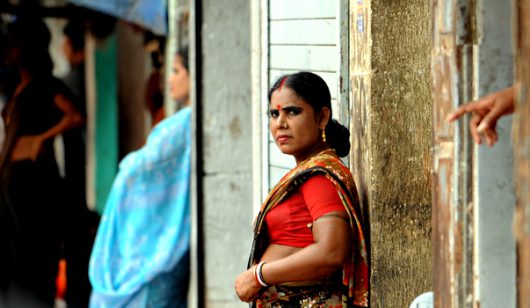
In 2010, Robin Chauraysia founded the Kranti organization, a nongovernmental organization (NGO) specifically working to educate and empower girls who were born in Kamathipura, Mumbai’s red light district. Established by the British in the 1700s, Kamathipura is one of the world’s oldest and largest red light districts. Here, over 10,000 women from all over India and nearby countries, such as Nepal and Bangladesh, work as prostitutes. Most have been trafficked, sold by relatives or trapped by men who promised them a better life in Mumbai. New arrivals to Kamathipura are often kept captive and blackmailed into staying. These women become stuck in the industry, as other employers discriminate against working and former prostitutes, and will not even hire them for simple jobs such as cleaning.

Chauraysia’s goal in starting the Kranti organization was to give these girls the same opportunities and education as more fortunate children and help them grow up to become leaders. Due to the extra support most students require, as well as the need to serve differing education levels, Kranti exists outside of the formal school system. However, the girls are encouraged to attend formal schooling when they feel ready. All girls receive therapy upon entering Kranti, which incorporates both cognitive-based methods and more creative practices, such as art or dance-movement therapy. They also work on improving their relationships with their mothers, who they are often taught to be ashamed of because of their profession.

Eventually, girls begin attending classes in a wide range of subjects. All students practice meditation and journal writing every day. They also learn math, reading, music, current events and creative thinking. At the center of the Kranti curriculum are multiple social justice units, covering topics such as caste, class, religion, the environment, gender, sexuality and women’s rights. The girls learn about the roots of India’s most pervasive social justice issues and where progress needs to be made. They work on projects around these units and offer creative solutions to the problems presented. They are also required to choose one physical extracurricular, such as karate or kickboxing, and one artistic extracurricular like photography or painting.

“Kranti” is the Hindi word for “revolution,” and the girls are traveling the world to spread the stories of their own personal revolutions. Kranti takes three to five trips each year, some around India and some abroad, in order to connect with other NGOs and lead workshops. The girls also wrote a play titled “Lal Batti Express,” or “Red Light Express,” about their stories of struggling and surviving. The play focuses on their experiences with discrimination and dealing with the stigma of their background. They are currently touring across the United States, performing at theaters and schools in New York and Los Angeles, a jail in Washington, D.C. and a domestic violence support group in Chicago. Kranti is also working with the Utah-based nonprofit Operation Underground Railroad, which helps rescue children from sex slavery.

When it comes to getting an education, women in India often face obstacles. But as the girls who were given a second chance with Kranti spread their message of revolution, they prove that it is possible for children of any background to succeed with the right support.

– Jane Harkness

Sources: GOOD Magazine, The Guardian 1, The Guardian 2, Kranti, KSL, NBC
Photo: The Guardian

June 30, 2015
https://borgenproject.org/wp-content/uploads/borgen-project-logo.svg 0 0 Borgen Project https://borgenproject.org/wp-content/uploads/borgen-project-logo.svg Borgen Project2015-06-30 06:45:052024-06-04 03:53:02Kranti Organization: Educating Girls in Mumbai’s Red Light District
Violence Against Women, Women

Violence against Women in Bangladesh

women_in_bangladesh

Bangladesh is a small South Asian country which borders India, Myanmar, and the Bay of Bengal. Since it gained independence in 1971, Bangladesh’s economy has been growing about 6% annually. However, while the economy in Bangladesh is becoming more progressive, socially, Bangladesh still has room for advancement. Patriarchal customs mean that many women in Bangladesh face threats of violence.

Some main acts of violence committed against women include dowry killings, rape, sexual harassment and stalking, acid attacks, physical and mental abuse and sex trafficking. Nearly two out of every three women in Bangladesh are victims of some form of violence.

Gender based violence is on the rise. In 2004, there were 2,981 cases of dowry related violence; women are beaten or killed because their parents fail to pay the dowry that her in-laws request. This number rose to 4,563 cases in 2012.

Gender discrimination also leads to women having less opportunities. The literacy rate for women in Bangladesh is only 43.2%, while 61.0% of Bangladeshi men are literate. The unemployment rate for women is 70.7%, much higher than the 12.4% unemployment rate for men. Even though many women help in the agricultural sector, 73% of those women contribute what is considered as unpaid ‘family labor’ and do not receive a salary. This is problematic because even if women work for their family, patriarchal values dictate that many of the women are not given control of the property or the family income, and therefore the women are not able to spend the money they earn as they see fit.

Many women in Bangladesh fail to report violence committed against them because there persists a stigma surrounding rape, abuse, and domestic violence in the country. The police are also likely to blame the victim and favor the side of the abuser. From 2010 to 2012, the Bangladeshi police received 109,621 complaints about violence against women. However, the police determined that only 6,875 of these complaints were ‘genuine’ and should be further investigated. The inspector-general of police, who is responsible for investigating crimes involving violence against women, told the Inter Press Service news agency that “On many occasions . . . the law was used to harass the accused. It does seem that not all complaints are genuine”.

The stigma surrounding violence against women means that many women do not get the justice they deserve. In 2011, there were 420 recorded cases of rape in Bangladesh, and only 286 reached the prosecution stage.

Luckily, there are laws and programs being implemented to help reduce the amount of gender based violence that is taking place in Bangladesh. A joint program with the UN has instituted a three-tier strategy to help reduce this violence. The first part of the UN’s program is designed to enhance the capacities of the government and to support NGO’s in order to help prevent violence against women and protect victims. The program also aims to protect survivors of violence and to change social attitudes, which lead to much gender based violence.

Some important achievements of the UN’s program have been increased access to healthcare for women, a decrease in the rate of child-marriages and dowry-killings and more awareness about the lesser-known forms of gender based violence, such as sexual harassment in the workplace.

There are also specific laws which have been instituted by the Bangladeshi government in an effort to prevent violence against women. Some of these laws include the 2010 Domestic Violence Act and the 2000 Suppression of Violence against Women and Children Act.

The 2010 Domestic Violence Act criminalizes domestic violence. This was a landmark act because many Bangladeshi women face cruelty by their husbands. A 2007 report stated that 53% of married women in Bangladesh were physically and/or sexually abused by their husbands. If the court deems that domestic violence is likely to occur, it can either relocate the victim to a shelter or evict the perpetrator of the violence.

The Suppression of Violence against Women and Children act was passed in 2000 and makes clear that there will be harsh punishment for those convicted for committing violent crimes. The law targets rape, trafficking, and kidnapping.

Though legislation is an important step toward ending violence against women in Bangladesh, in order for significant change to occur, societal attitudes must change in order to end the stigma and victim-blaming that women face when they report violence carried out against them.

– Ashrita Rau

Sources: MDG Achievement Fund, IPS News Odhikar, Department of Women’s Affairs, Bangladesh UN, CIA CIA World Factbook, OHCHR
Photo: Women Deliver

June 29, 2015
https://borgenproject.org/wp-content/uploads/borgen-project-logo.svg 0 0 Borgen Project https://borgenproject.org/wp-content/uploads/borgen-project-logo.svg Borgen Project2015-06-29 12:14:522024-06-04 01:08:11Violence against Women in Bangladesh
Advocacy, Economy, Education, Health, Women

What it Means to Educate the World

Educate the World

Teach the world. Fix its problems. Seems like pretty simple logic.

However, advocacy for education around the world may seem like a broad scope, and many times the necessity of “spreading education” comes across so vague that it gets lost in the web of international aid “talk”. In order to understand the importance of education and creating more opportunities for education around the world, everyone should know some of the educational programs being created around the world. Here are a few just to start the long list!

Health Education: Rampant spread of disease is a significant concern in many developing nations around the globe. Many illnesses in poorer regions of the world are preventable and treatable, yet people in said communities continue to suffer. Health education is instilled in many countries, teaching many about general health and sexual health. HIV/AIDS in particular, remains a main focus for many international aid organizations, and by teaching safe sex practices and overall safer health practices, there will hopefully be an end to the spread of these deadly illnesses. To learn more about these kinds of organizations, go to www.planusa.org.

Economic Education: Instead of simply giving money to poor communities, it is important to also teach sustainable and smarter economic practices in order to assure more long-term effects from international aid efforts. Certain education advocacy groups go into poor communities in other countries, teaching small business owners and families more efficient strategies of economics and savings. This not only builds up said business, but also puts more money in the homes and to the families of the small communities, and moreover stimulates the overall economy. To learn more about these types of programs, go to www.trickleup.org.

Women’s Education: Educating and empowering women around the world is a huge objective in many international education programs. Many women in developing nations experience extreme oppression, and in many cases, abuse. By educating women, in particular skills and safer health practices, they are given more of ability to be independent, and are less likely to stay in circumstances in which they are abused. To see more about these types of programs go to www.learningpartnership.org.

Education covers a number of interests and fields, especially when dealing with international aid and relief organizations. By educating the world, we do more than teach people how to read and write. Education is matter of sustainable living, health, success and happiness.

– Alexandrea Jacinto 

Sources: Learning Partnership, Plan USA, Trickle Up Organization
Photo: World Vision

June 16, 2015
https://borgenproject.org/wp-content/uploads/borgen-project-logo.svg 0 0 Borgen Project https://borgenproject.org/wp-content/uploads/borgen-project-logo.svg Borgen Project2015-06-16 14:21:252024-12-13 17:51:29What it Means to Educate the World
Aid Effectiveness & Reform, Nonprofit Organizations and NGOs, Women, Women and Female Empowerment

Caterpillar Foundation Donations

Caterpillar_foundation-donations
Founded in 1952, Caterpillar Foundation dedicates itself to transforming lives within the international communities where Caterpillar works.  It has been the champion for programs that support education, environment and emergency relief.

The program has donated over 550 million dollars to organizations that put poverty onto the path of prosperity “by investing in those proven to yield the best results – women and girls.”  Last year the foundation committed itself to a three year 29.2 million dollar commitment. Partnering with Opportunity International the joint venture looks to service 16.7 million people across Asia, Africa and Latin America.

The Caterpillar Foundation’s commitments will be leveraged through Opportunity International via microfinance loans, savings and financial training.  Due to Caterpillar’s strong commitment to women and girls, most of the money will be financed to women, or groups of women, looking to form working relationships.

As of August 2014, Caterpillar Foundation announced the allocation of an additional 11 million dollars to help with Africa’s water and energy needs. Five million dollars have been distributed to help programs that address public policy needs and lack of access to energy. Five million dollars will be used to extend an already existing water line in Tanzania and Ethiopia. The last million will help teach women and girls about the dangers of traditional cookstoves and the benefits of adopting clean cooking solutions.

Most recently Caterpillar has committed itself to another generous contribution of 2.5 million dollars to The Poverty Project.  This nonprofit organization has received wide acclaim since the implementation of its new strategy unveiled in 2012. Global Citizen is an online platform that serves as the basis for all the work performed by the registered Global Citizens. There are more than 250,000 global citizens that have partaken in 1.75 million actions that have contributed to more than 35 campaign victories and announcements.

The Poverty Project has since released a new strategy as of January 1 of this year. The strategy focuses on ending extreme poverty by 2030.  With its announcement of a new vision, The Poverty Project has also put forth a new theory of change and an updated framework. These proposals are all designed to create a movement of unstoppable Global Citizens.

This dynamic and effective strategy is what caught the eye of the Caterpillar Foundation.  Since the three main goals of this foundation are education, environment and emergency relief, the money given to The Global Poverty Project has all been earmarked for specific projects.

The Global Poverty Project has determined that universal sanitation brought into impoverished areas will increase the chances for women to receive an education, get a job or run a small business.  This is where the bulk of the money will go.  It will also be used to put restrooms inside homes and provide them with running water. The remainder of the money will be used to help educate the 31 million girls who currently do not attend school around the world.

– Frederick Wood II

Sources: Peoria Public Radio, Caterpillar, Global Poverty, Peoria Public Radio 2
Photo: Urban Times

October 10, 2014
https://borgenproject.org/wp-content/uploads/borgen-project-logo.svg 0 0 Borgen Project https://borgenproject.org/wp-content/uploads/borgen-project-logo.svg Borgen Project2014-10-10 12:00:322024-06-05 01:58:15Caterpillar Foundation Donations
Activism, Women, Women and Female Empowerment

Mountain2Mountain: Bikes for Change

Mountain2Mountain is a recently established nonprofit that believes change can happen through the use of bikes. One of its biggest campaigns is women’s rights and equality for women in Afghanistan.

It is illegal for women to ride bikes in Afghanistan. However, bikes have long been a “symbol of freedom of mobility.” In the United States, they were used as such during the women’s suffrage movement of the early 1990s.

M2M was founded in 2006 by Shannon Galpin. In 2009, she became the fist woman to bike across Afghanistan. The goal of this mission was to “challenge perceptions of gender.” One of her biggest inspirations was the four years she worked in Kandahar prison. In this all women’s Afghan prison, Galpin found that women there lacked a voice. These women had passionate stories of struggle and injustice and Galpin wanted to help them be heard.

This inspired the creation of two M2M projects, Combat Apathy and Strength in Numbers. Combat Apathy is the activist wing of M2M and is an online platform where women and men can share their stories of hardship and triumph. Strength in Numbers, or SIN, is a campaign to create awareness and support for women on bikes.

There will be a summit this fall in Rome for SIN in which expansion to other countries will be attempted, as well as a solidarity ride. The project is also organizing U.S. based summer bike camps, which are aimed at young girls who are at risk or have experienced gender violence.

In Afghanistan, though, the biggest accomplishment for the SIN campaign is their support of the women’s cycling team. The project gives support to the team in the form of buying equipment, recruiting coaches, securing sponsorships, arraigning safe travel to and from training and financing regional traveling. SIN has even petitioned for the cycling team’s access as observers to the 2016 Olympics in Brazil, with further efforts to gain access to the 2020 Olympics in Tokyo.

An attempt at expanding the movement outside Kabul has also begun by starting the first women’s mountain biking team in the province of Bamiyan. The team is financed by SIN and given gear and clothing.

The press coverage and international media attention have helped raise the popularity of the cycling team and there has been evidence of growing national pride. This changing perception will help advance women’s rights in Afghanistan.

The goal of the Afghan women’s cycling team is to give women a chance to achieve freedom in an otherwise oppressive country. Cycling on the team is not just about exercise or confidence building for these women. Its about all Afghan women who can gain greater access to education and healthcare by riding bikes. Access to both leads to higher literacy rates and lower maternal mortality.

These women cyclist are extremely brave as they endure a lot of criticism and even violence for their actions: rocks are often thrown at them as they ride and they are insulted by passing cars.

One of the team members, Marjan Sidiqqi, said that, “They tell us that it is not our right to ride our bikes in the streets and such. We tell them that this is our right and that they are taking our right away. Then we speed off.” This is a bold thing to say in a country where many still believe that women who ride bikes dishonor their families and that women’s cycling is a moral crime slightly worse than adultery.

Mountain2Mountain is still in its infancy, so data on the nonprofit is hard to find. It has not yet been reviewed on charity network and not been completely evaluated by GuideStar. This does not mean it is illegitimate, only that attention should be paid to its development and individual and government donors should keep an eye out for possible support now or in future.

— Eleni Marino

Sources: Mountain2Mountain, Combat Apathy, CityLab, GuideStar
Photo: Mountain2Mountain

September 17, 2014
https://borgenproject.org/wp-content/uploads/borgen-project-logo.svg 0 0 Borgen Project https://borgenproject.org/wp-content/uploads/borgen-project-logo.svg Borgen Project2014-09-17 03:00:132024-05-27 09:21:44Mountain2Mountain: Bikes for Change
Global Poverty, Technology, Women

Facebook Helps Eliminate Health Care Barriers in Africa

eliminate health care barriers
As part of a trend to eliminate healthcare barriers for the poor, Facebook is helping to provide free access to advantageous websites to impoverished women in Africa. Some of these websites target pregnant women and advocate and educate for better maternal health.

At this point, inaccessibility to expensive data plans has been a large barrier between women and the internet. With a new mobile app that the company unveiled this past week, women will have free access to websites like MAMA (Mobile Alliance for Maternal Action) and WRAPP, which advocates for women’s rights. The application was designed in coordination with local government groups to fill in some of the communication gaps that persist.

With the first initiative scheduled for Zambia, the pilot program has the potential to branch out to other developing countries. Though the program is accessible to both men and women, women will be disproportionately helped through this program. With Zambia having a significant gender inequality gap, women will be able to gain more from having access to healthcare information and job postings that will now become more accessible.

As part of the growing technologies industry looking to expand their market to the estimated five billion people without internet access, Facebook is reaching out to the underexposed in Africa. CEO Mark Zuckerberg said of the project, “I believe connectivity is a human right.” With the motivation to connect and network users of the application to other parts of the country and the world, Zuckerberg is well on his way to an integrated global community.

The application is a game-changer for women’s rights, particularly in traditionally oppressive governments. With support from many international women’s rights groups as well as vocal laudation from the Executive Director of U.N. Women, the Facebook app has the potential to create a social revolution around the world.

– Kristin Ronzi

Sources: The Telegraph, Tech Crunch
Photo: TechCrunch

September 13, 2014
https://borgenproject.org/wp-content/uploads/borgen-project-logo.svg 0 0 Borgen Project https://borgenproject.org/wp-content/uploads/borgen-project-logo.svg Borgen Project2014-09-13 08:00:292024-12-13 17:51:11Facebook Helps Eliminate Health Care Barriers in Africa
Page 30 of 36«‹2829303132›»

Get Smarter

  • Global Poverty 101
  • Global Poverty… The Good News
  • Global Poverty & U.S. Jobs
  • Global Poverty and National Security
  • Innovative Solutions to Poverty
  • Global Poverty & Aid FAQ’s
Search Search

Take Action

  • Call Congress
  • Email Congress
  • Donate
  • 30 Ways to Help
  • Volunteer Ops
  • Internships
  • Courses & Certificates
  • The Podcast
Borgen Project

“The Borgen Project is an incredible nonprofit organization that is addressing poverty and hunger and working towards ending them.”

-The Huffington Post

Inside The Borgen Project

  • Contact
  • About
  • Financials
  • President
  • Board of Directors
  • Board of Advisors

International Links

  • UK Email Parliament
  • UK Donate
  • Canada Email Parliament

Get Smarter

  • Global Poverty 101
  • Global Poverty… The Good News
  • Global Poverty & U.S. Jobs
  • Global Poverty and National Security
  • Innovative Solutions to Poverty
  • Global Poverty & Aid FAQ’s

Ways to Help

  • Call Congress
  • Email Congress
  • Donate
  • 30 Ways to Help
  • Volunteer Ops
  • Internships
  • Courses & Certificates
  • The Podcast
Scroll to top Scroll to top Scroll to top