• Link to X
  • Link to Facebook
  • Link to Instagram
  • Link to TikTok
  • Link to Youtube
  • About
    • About Us
      • President
      • Board of Directors
      • Board of Advisors
      • Financials
      • Our Methodology
      • Success Tracker
      • Contact
  • Act Now
    • 30 Ways to Help
      • Email Congress
      • Call Congress
      • Volunteer
      • Courses & Certificates
      • Be a Donor
    • Internships
      • In-Office Internships
      • Remote Internships
    • Legislation
      • Politics 101
  • The Blog
  • The Podcast
  • Magazine
  • Donate
  • Click to open the search input field Click to open the search input field Search
  • Menu Menu

Archive for category: Women

Information and news about woman issues

Sustainable Development Goals, United Nations, Women

2016 Women Deliver Conference: Advocating for Health

Women_Education

The 4th annual Women Deliver Conference, the largest conference in the world discussing women’s rights and issues, was held on May 16-19 in Copenhagen, Denmark.

Women Deliver is an organization that advocates for women’s and girls’ health and well-being. The organization holds conferences and focuses on building partnerships, gaining new allies, and developing and sharing advocacy tools to help others participate in the cause.

Building on the success three previous Women Deliver Conferences, the Conference focuses this year on the Sustainable Development Goals (SDGs) laid out by the United Nations. Specifically, the focus will be on women’s health issues and women’s and girls’ education and economic empowerment.

5,700 policymakers, researchers and advocates participated in what is being called the largest convention to discuss female rights in a decade. People from 2,000 organizations and 169 countries all convened in an effort to bring women and girls to the forefront of the SDGs. Among the participants were journalists, young people and representatives from both the private sector and UN agencies.

This is an important time to bring attention to the SDGs and make progress towards those goals.

In a blog for the Council on Foreign Relations, Dr. Daniela Ligiero, Vice President of the Girls and Women Strategy at the United Nations Foundation, explains why now is such an important time to take a real look at female rights.

One of these reasons is that it is important to revitalize the community’s energy in addressing women’s rights. As Dr. Ligiero points out in her blog, the biggest threat to the SDGs is the loss of momentum driving the impetus to find real strategies and solutions for approaching the very real problem of gender inequality around the world.

Additionally, the discussion of women’s rights cannot be limited to Goal 5 of the SDGs, which pertains to gender equality alone. Other goals of the SDGs that focus on education and on health issues must be included in the big picture in order to make real advances for women and girls as a whole.

The Conference provides scholarships for participants to travel to the event and has inspired a lot of participation, with over 5,000 applicants.

The biggest hope for the Women Deliver conference is to take the ambitious goals set forth for improving women’s and girls’ rights and create concrete strategies for accomplishing them.

– Katherine Hamblen

Photo: Flickr

June 11, 2016
https://borgenproject.org/wp-content/uploads/borgen-project-logo.svg 0 0 Borgen Project https://borgenproject.org/wp-content/uploads/borgen-project-logo.svg Borgen Project2016-06-11 01:30:082024-12-13 17:54:302016 Women Deliver Conference: Advocating for Health
Advocacy, Global Poverty, Women, Women and Female Empowerment

Takeaway from Reading “Half the Sky”

Half the sky

Reading a book like Half the Sky illuminates how unfair our world is. Though women make up about half of the world’s population, they are consistently discriminated against, overlooked and are in some cases, treated as second class citizens.

It is not surprising that the authors of Half the Sky, Nicholas D. Kristof and Sheryl WuDonn, are award winning writers for their work in raising awareness about the reality most women face in their countries in relation to discrimination.

Written as a series of essays, this book has two parts. The first part of the essay highlights the oppression and discrimination against women especially in developing countries and how this problem is often overlooked due to corruption, lack of strong justice systems and the patriarchal state of these nations.

The second part focuses on practical ways to create this “movement and effect the change needed” to address these situations.

From the beginning to the end of this enlightening book, it is obvious that the writers are very knowledgeable on their topic of discussion and their work shows extensive research in different areas of discrimination within different locations in developing countries.

From discussing issues such as women being promised work and ending up in sexual slavery and imprisonment, to illuminating health issues within developing countries such as women and girls ending up with fistulas after birth, women dying from HIV and AIDS, women and girls going through female genital mutilation as well as being overlooked in terms of getting an education, this book paints a sad reality of women’s lives in the developing world.

The most fascinating point that arises in the book is the fact that culture is the main catalyst for the way women are treated in their societies. In our dynamic world, culture in the developing countries seems unchangeable, especially in relation to its negative aspects. Another surprising fact in the book is the idea that older women in some of these societies are perpetrators of discrimination towards other younger women in the society.

Here, this is quite a deviation from what the “West” has portrayed in development; the idea that men are the main perpetrators of women’s oppression.

Half the Sky not only raises awareness about the injustices women faces but it also advocates for women to fight for their rights by speaking up and resisting the discrimination they face. Though the book points out a few strong and relentless women like Usha Narayane, Sunitha and Krishna who do exactly this and fight for justice, it highlights that most women in the developing world are vulnerable and are unable to get access to their rights.

Half the Sky is the voice of the vulnerable, uneducated and oppressed women in the developing world.

– Vanessa Awanyo

Photo: Google Images

April 21, 2016
https://borgenproject.org/wp-content/uploads/borgen-project-logo.svg 0 0 Borgen Project https://borgenproject.org/wp-content/uploads/borgen-project-logo.svg Borgen Project2016-04-21 01:30:212020-06-19 14:04:50Takeaway from Reading “Half the Sky”
Activism, Global Poverty, Technology, Women, Women and Female Empowerment

Why Every Woman in Africa Should Have Access to a Cell Phone

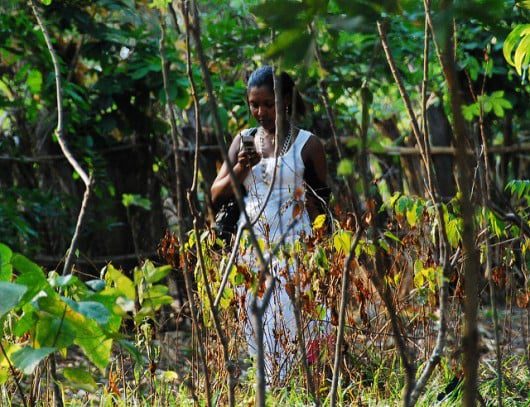
Cell PhoneAs technology continues to advance and grow more accessible, women around the world are increasingly gaining access to a cell phone for the first time. Though it is taken for granted in much of the developed world, cell phone use opens multiple doors that were not there before. According to Africa in Focus, technology can be thought of as a tool that creates opportunities for women. Specifically, technology has permitted women entry into the realms of finance, education and health and employment, thereby encouraging female empowerment and democratization in low-income countries.
Firstly, cell phone ownership gives women the ability to be financially independent, because they can open an online bank account separate from their husbands’. Impatient Optimists claims that “A private account gives women in developing nations control over their money as well as the ability to put food on the table.”

Currently, 1.7 million women in low-income countries don’t own a cell phone, according to the GSMA (an association representing mobile operators worldwide). Women are also 14 percent less likely to own a phone than men. Therefore, technology is a vital component of big-picture solutions to gender inequality and female disempowerment.

Secondly, cell phones are beneficial in the realm of women’s education and health. Impatient Optimists notes that “The East African nation has rolled out an ambitious program allowing parents to register their child’s birth via mobile phone. Under the program, midwives can request a child’s birth certificate by sending a text message.”

The East African program will save women time and money because they will not have to travel to the capital to acquire a birth certificate for their child. The Millennium project reported that most women live on less than 1 dollar per day. Under such conditions, the option of an online birth certificate can have a dramatic impact. Significantly, children in Africa need a recorded birth certificate in order to access schools, medical care, and, eventually, a bank account.

Thirdly, cell phone access can increase employment for women in Africa. Impatient Optimists points out that having a mobile phone allows women to open their own businesses in remote villages, as opposed to walking a great distance in order to register the business.

The New York Times recognizes that, “economically empowered women are one of the most important engines of growth in developing countries, and they play a central role in building prosperous communities.” That is why women in Africa must have their own phones, instead of sharing with family members.

When women have access to their own phones, bank accounts, and financial situations, they often invest in health-care, nutritious food and education. In fact, The New York Times reports that, “A child born in a household where the mother controls the family budget is 20 percent more likely to survive and much more likely to thrive.”

Women in Africa should be given the power and authority to make financial decisions for their family, given that they tend to prioritize moral and just causes. A mobile phone in the hands of a determined woman could benefit not only the economy, but the daily lives of families across Africa.

– Megan Hadley

Photo: Flickr

April 17, 2016
https://borgenproject.org/wp-content/uploads/borgen-project-logo.svg 0 0 Borgen Project https://borgenproject.org/wp-content/uploads/borgen-project-logo.svg Borgen Project2016-04-17 01:30:582020-06-19 14:05:23Why Every Woman in Africa Should Have Access to a Cell Phone
Global Poverty, Women

CARD MRI Empowers Women through Microfinance

CARD MRIThe Center for Agriculture and Rural Development’s Mutually Reinforcing Institution (CARD MRI) fights poverty in the Philippines. It does this through strategic microfinance programs aimed at helping women living in poverty.

The institution first started helping women with finances for activities on a small scale like education, farming and health. Now, the institute’s main goal is to help women evolve into businesspersons through years of training and education on how to manage loans.

These newly evolved businesswomen called for a new type of assistance. To accommodate, CARD created multiple banking institutions such as CARD Bank, Inc. and CARD SME Bank, Inc.

CARD MRI was founded unofficially in 1986, as CARD, an organization to help social development. It was founded by 15 development practitioners. They came together in December 1986 to assist underdeveloped communities in the Philippines.

The year 1988 marked the official start of CARD’s operations. They began assisting women who owned no land by creating a training-focused community and livelihood assistance program for coconut workers. The organization followed this model for some time. Then it initiated another program for landless women, called the Landless People’s program, in 1990.

It was in 1995 that CARD decided to extend its program to start the Mutually Reinforcing Institution. After receiving the proper licensing in 1997, CARD MRI began assisting landless men and women through their microfinance programs.

In addition to assisting with loan management development and livelihood expenses, CARD MRI also has a Microfinance Plus program that assists people with holistic needs. The program issues micro-insurance for pharmaceutical needs, strategic marketing services and life insurance.

CARD MRI routinely collaborates with other development programs to ensure everyone has fair access to their community development services. These services include health, education, resource mobilization and communication.

Most recently, CARD MRI acquired the Riza Rural Bank. This allowed them to expand their services even further throughout the Philippines. The creation of their Leasing and Finance Corporation was fulfilled in 2013, adding to their growing number of reinforcing institutions.

– Julia N. Hettiger

Sources: CARD-MRI, My Philanthropedia, PR News Wire
Photo: Flickr

April 9, 2016
https://borgenproject.org/wp-content/uploads/borgen-project-logo.svg 0 0 Borgen Project https://borgenproject.org/wp-content/uploads/borgen-project-logo.svg Borgen Project2016-04-09 01:30:122024-12-13 18:05:56CARD MRI Empowers Women through Microfinance
Education, Gender Equality, Global Poverty, Women, Women and Female Empowerment

The UN Unites Gender Equality and Global Education

Gender Equality
International Women’s Day 2016 rekindled awareness of the progress of the Sustainable Development Goals (SDGs), particularly the fifth goal to achieve gender equality.

While the number of impoverished women has decreased by 50 percent since 1995 and 90 percent of girls attend primary school, the lack of access to secondary school and the prevailing workplace gender gap beg the question: How will gender equality be achieved by 2030?

Fast Company reported that in North Africa and the Middle East, millennial women have as few employment opportunities as did their mothers and grandmothers and they are three times less likely to run a business than their male counterparts. Ellen Johnson Sirleaf, the first female president of the Republic of Liberia, estimated that full gender equality will require a minimum of 80 years.

One of the surest catalysts to accelerate gender equality is to give women and girls better access to education. Educated women lead healthier lives, provide for their families and better contribute to society. Consequently, in order for the world to complete the fifth SDG, it must achieve worldwide quality education as well.

“Education is key to opening up so many opportunities for girls. We can’t emphasize that enough,” Terri McCullough, director of No Ceilings: The Full Participation Project, told Bustle.

On March 8, the U.N. Statistical Commission met with the Economic and Social Council and the U.N. General Assembly to discuss electing gender equality as a global education indicator.

Indicators enable world leaders to monitor the progress of the SDGs within their countries to ensure the goals remain on track. Both gender equality and global education require reaching out to the 510 million women who remain illiterate.

If approved, the official statement would read, “Extent to which (i) global citizenship education and (ii) education for sustainable development, including gender equality and human rights, are mainstreamed at all levels in (a) national education policies, (b) curricula, (c) teacher education and (d) student assessment.”

Establishing gender equality as a global education indicator will help countries analyze each factor of global education and pinpoint where progress is lacking. One major barrier between women and education is negative cultural perception of educated females.

In order to help more girls receive an education, countries must change the public opinion of girls and education. The Global Education Monitoring (GEM) Report launched an Instagram campaign to investigate the pervasiveness of gender bias in textbooks worldwide. GEM Report will also host a side-event at the May 2016 Women Deliver Conference to improve training for female teachers.

The balance of gender equality and education benefits men as well as women. Mandisa Shields of The Daily Orange pointed out that when women are not qualified to work in the fields of their choice, men are required to fill the vacant positions, weakening the labor force. As a result, countries suffer both academically and economically.

The ultimate goal of each country is absolute eradication of global poverty, a goal that depends on the full completions of the other SDGs. At the announcement of the SDGs, Irish president Michael Higgins told the U.N., “We cannot achieve the new Sustainable Development Goals if we do not achieve gender equality.”

– Sarah Prellwitz

Sources: Daily Orange, EFA Report, Bustle, Fast Company, Irish Aid

April 3, 2016
https://borgenproject.org/wp-content/uploads/borgen-project-logo.svg 0 0 Borgen Project https://borgenproject.org/wp-content/uploads/borgen-project-logo.svg Borgen Project2016-04-03 01:30:192024-12-13 18:05:51The UN Unites Gender Equality and Global Education
Global Poverty, Health, Women

Higher Number of Women Landowners Relieves Poverty

Women Landowners Relieve Poverty
As the number of women landowners grows, the overall condition of their communities improves drastically. This topic was recently covered at the World Bank Land and Poverty Conference 2016, the 17th annual conference, earlier this month.

The conference, “Scaling up Responsible Land Governance,” brought together many experts from many fields from around the globe to talk about land strategy.

A large portion of this year’s conference highlighted the work of researchers focusing on the empowerment of women in developing countries through land ownership. Perhaps one of the greatest benefits of increasing women landowners is the link to fewer cases of domestic violence.

With greater access to land ownership for women, the need for young daughters to marry diminishes and households have more access to resources. According to Klaus Deininger, an economist for the World Bank and conference organizer, women with greater land rights typically have more personal wealth, leading to lower levels of domestic violence.

“If women have stronger bargaining power, they actually can resist,” Deininger says in an article by Reuters. “Their husbands will think twice before beating them.”

The conference tackled questions on how to enhance women’s awareness of their legal rights and how to ensure women’s rights in land interventions. The Landesa Rural Development Institute is an organization that seeks to provide solutions to these questions by securing greater access for potential women landowners in developing countries.

Laws and policies often dilute or deny women’s rights to land. Even when laws enshrine such rights, loopholes, low implementation and enforcement and sex-discriminatory practices often undercut these formal guarantees.

Landesa’s Center for Women’s Land Rights has programing in both India and Rwanda to combat those challenges. In partnership with West Bengal’s Department of Women and Child Development, the Security for Girls Through Land Project provides vocational training and skills to adolescent girls in order to improve their health and nutrition. The curriculum is based on land rights, asset creation and land-based livelihoods.

The project creates “girls groups” which are peer-facilitated meetings in which girls are given lessons to educate them about land rights and the positive benefits associated with control over land. Girls are taught to start “kitchen gardens” to grow produce for the family or to sell. As the girls begin to earn money, often for the first time, families begin to think of girls as an asset rather than a burden.

The project, beginning in 2010, has already reached 40,000 girls in over 1,000 villages in West Bengal. In addition to engaging with girls in local communities, the project reaches out to boys in local schools in an effort to change the mindset that young women are an economic burden.

The U.N. Food and Agriculture Organization reports that women make up half of the world’s agriculture workforce. As these women have greater access to land, the ripple effect, according to Landesa, includes better nutrition for families, improved family health, educational gains and reduced domestic violence.

– Michael A. Clark

Sources: Landesa, Reuters, World Bank
Photo: Flickr

March 29, 2016
https://borgenproject.org/wp-content/uploads/borgen-project-logo.svg 0 0 Borgen Project https://borgenproject.org/wp-content/uploads/borgen-project-logo.svg Borgen Project2016-03-29 01:30:572020-06-20 23:23:17Higher Number of Women Landowners Relieves Poverty
Education, Global Poverty, Women, Women and Female Empowerment

Five Reasons Educating Women Fights Poverty

Educating WomenGender parity in education around the globe has not yet been achieved but great strides are being made toward that goal.

Regions such as sub-Saharan Africa and South Asia remain challenges, as boys in these regions are still more than one-and-a-half times more likely to complete their secondary education than girls. Organizations such as UNESCO, UNICEF and the World Bank keep track of statistics like these in their quest to provide education to girls and women in need.

Data from these types of organizations also illustrates the greater benefits of educating women. Here are five major reasons that educating women benefits everyone:

1. Educated women tend to have smaller, healthier families. Women who stay in school longer are likely to be older when they marry and when they have their first child. Education provides more access to information about family planning and educated women are more likely to have fewer children. Additionally, women learn about immunizations and general medical care for their children. They may also learn how to treat preventable diseases and learn hygiene practices to keep their children healthy.

2. Educated women are more likely to contribute to the economy. The more women participate in a country’s workforce, the healthier its GDP becomes — and every year of additional education increases a person’s capacity to be productive in the workforce. Families also increase their income when both parents contribute, which leads to more families rising out of poverty. UNESCO data shows that if girls enjoyed the same access to education that boys do, per capita income would increase by 23 percent over 40 years.

3. Education combats the problem of hunger. Women who receive more education are older and have more access to life-saving information by the time they begin having children. They are more likely to recognize the signs of malnutrition and to recognize proper nutrition that will prevent their children from becoming malnourished or stunted.

4. Educating women counters the threat of violence and terrorism. If lacking education, both women and men are more likely to be less tolerant of those who look different, who speak a different language or practice a different religion. Increasing tolerance in communities that were previously under-educated serves to spread that tolerance around the world and women are in a prime position to promote this in further generations as caretakers of their own children.

5. Educated women are more likely to have educated children. Once they have experienced the benefits of education for themselves, women are likely to want their children to have the same benefits. This perpetuates the trends of smaller, healthier families, healthier economies and better-informed world citizens.

Not only is educating women one of the most efficient ways for aid organizations to make an impact on gender equality, it also benefits the greater community in terms of prosperity, health and peace.

– Katie Curlee Hamblen

Sources: Bloomberg, UNGEI, UNESCO, World Bank

March 24, 2016
https://borgenproject.org/wp-content/uploads/borgen-project-logo.svg 0 0 Borgen Project https://borgenproject.org/wp-content/uploads/borgen-project-logo.svg Borgen Project2016-03-24 01:31:482024-06-04 04:33:55Five Reasons Educating Women Fights Poverty
Global Poverty, Women, Women and Female Empowerment

Empowering Women Through Technology

Empowering Women Technology
Women around the world experience poverty at higher rates than men because of certain customs and cultural norms. In many developing countries, women are confined to traditional roles and have limited access to capital, training and technology that could enrich their lives. Such inequality has broad consequences that affect not just women, but the entire community in impoverished regions. Empowering women and ensuring their health and safety correlates directly with ensuring food security for the whole community. The health and financial stability of mothers, in particular, has a huge influence on the welfare and nutrition of children.

The International Center for Research on Women (ICRW) has studied the ways in which the improved economic status of women positively affects children, families and societies.

Places where women have more social mobility and control over their finances also have lower child mortality rates, more transparent businesses and faster economic growth. In addition, children’s educational opportunities and job prospects are largely contingent upon their mothers’ incomes and financial stability.


The Role of Technology in Empowering Women


Access to technology also plays a large part in cementing gender inequality, especially in developing countries. For example, even though women constitute the majority of the agricultural workforce in developing countries, it is common for tools to be designed for men’s use, which makes them more difficult for women to use and also limits women’s productivity.

Women in these countries also have less access to information and communication technologies (ICTs), such as radio and mobile phones, that could facilitate better education and strengthen economic participation. When it comes to energy services in the home, many women struggle to find products that are clean, efficient, safe and affordable.

However, global efforts are being made to empower women and facilitate income-generating activities. In Kenya, the production of fuel-efficient cookstoves has created jobs for women and saved them money on energy. In China, India, Malaysia and Thailand, motorized scooters have increased safety for urban women and expanded employment and educational opportunities. Cisco Systems and UNIFEM have promoted ICT educational academies in the Middle East to give women more power and opportunities in the labor market.

The International Fund for Agricultural Development (IFAD) supports the efforts of nongovernmental organizations, the private sector and developed countries’ governments to empower women through technology. But they stress that women in developed countries must be included in such efforts. Specifically, they should be assisted to act collectively and be allowed to participate in the design process of new technologies.

This message has been heard by Congress. In November 2015, the House Committee on Foreign Affairs held a hearing on increasing opportunity for women through technology as a way of driving international development.

At the hearing, Sonia Jorge, executive director of the Alliance for Affordable Internet, advocated for policy reforms and investments that would expand women’s access to the Internet and other ICTs. Geena Davis, founder and chair of the Geena Davis Institute on Gender and Media, stated that such expansions ought to be crucial to U.S. foreign policy, since they would help “boost economic growth, empower democratic governance and advance global development.”

– Joe D’Amore

Sources: House Committee, ICRW, IFAD, Practical Action
Photo: Sameday Papers

March 9, 2016
https://borgenproject.org/wp-content/uploads/borgen-project-logo.svg 0 0 Borgen Project https://borgenproject.org/wp-content/uploads/borgen-project-logo.svg Borgen Project2016-03-09 01:30:482024-12-13 18:05:36Empowering Women Through Technology
Developing Countries, Education, Global Poverty, Women, Women and Female Empowerment

Educating Women in Developing Countries

Education Women in Poverty

Educating women is a powerful weapon in fighting global poverty. But those living in developing countries may not reach their full potential because they often do not receive a proper education.

Currently, females are underrepresented both in school enrollment and attendance in developing countries.

According to the book “Deprived Devis: Women’s Unequal Status in Society,” “The evidence is overwhelming that education improves health and productivity and that the poorest people gain most. When schools open their doors wider to girls and women, the benefits multiply.”

There are several indicators that reveal important patterns and trends in women’s education in developing countries, such as measures of literacy, enrollment status and years spent in school. The World Bank says, “Each of these indicators leads to the same conclusions: the level of female education is low in the poorest countries, with just a handful of exceptions, and by any measure, the gender gap is the largest in these countries.”

Literacy Rates
Literacy is one of the dominant objectives of education around the world. The ability to read and write is a human right; nonetheless, the literacy rates remain low among women, especially in developing countries.

Primary School Enrollment
UNICEF says that low adult literacy rates are a result of past under-investment in the education of women, specifically referring to primary school.

Dropout Rates and Years of Schooling
According to the World Bank, “Gross enrollment rates, which are usually reported for all primary and secondary classes, tend to mask some other important measures of educational progress. These include how many of the students remain in school, how many are promoted to the next grade, and how many complete each cycle.”

Secondary School Enrollment
Female enrollment at the secondary level has remained low in the developing world. Many women drop out during primary school or do not have access to the resources they need in order to attend secondary school.

Teachers Training
The lack of access to education in developing countries can also be blamed on the decline in teacher training. This diminution is due to the shortage of teachers in low-income countries. There are not enough resources to train individuals for this role.

Poverty
Poverty is also considered a major contributor. “If a family has limited funds and has to be selective on whom to send to school, more often than not, it is going to be the men,” according to UNICEF.

Cultural Practices
The machismo ideology still prevails in some developing countries — and adverse cultural practices also contribute to the lack of access to education. Females are more likely to stay home and learn how to be housewives and mothers.

Recently, a UNICEF spokesperson emphasized that “females are often shackled by gender roles and outdated traditions, with male privilege and entitlement ensuring that when educational opportunities are limited, men will take available classroom space. Gender roles and traditions that keep girls from school contribute an additional barrier to universal education: illiterate mothers.”

The speaker also added that UNICEF ensures children have access to a rights-based, quality education that is rooted in gender equality because it creates a ripple effect of opportunity that impacts future generations.

The United Nations identified the importance of universal education during the establishment of the Millennium Development Goals (MDGs). In order to meet the goals, the World Bank said that “developing countries need to focus more on improving female enrollment and attendance of secondary and tertiary education as well as continuing efforts to improve women’s access to primary education.”

The U.N. recognizes three social benefits of providing females with education: better health care for women and their families, better maternal and infant health and outcomes, and finally, access to better jobs that help families and countries prosper. UNICEF adds that “All of these occurrences are imperative to global development, and they can be accomplished by educating females in developing countries.”

– Isabella Rölz

Sources: Google Books, The World Bank, UNGEI, UNICEF, United Nations
Photo: Women Thrive

March 7, 2016
https://borgenproject.org/wp-content/uploads/borgen-project-logo.svg 0 0 Borgen Project https://borgenproject.org/wp-content/uploads/borgen-project-logo.svg Borgen Project2016-03-07 01:30:582024-05-27 09:33:15Educating Women in Developing Countries
Global Poverty, Health, Women, Women and Female Empowerment

Pregnant Women’s Journeys Made Easier

Pregnant Woman's Journey Made EasierIn some developing countries, giving birth does not mean simply rushing to the hospital in pursuit of a doctor. In fact, most women with low-risk pregnancies deliver their baby at home with a trained midwife or trained birth attendant. But for women experiencing high-risk pregnancies, rushing to the hospital could mean traveling 15 miles or more in stressful and unpredictable conditions, which is quite a distance for a woman in labor to travel.

The journey toward emergency care includes many obstacles such as rough, unpaved terrain and unreliable transportation. The harsh conditions of the road serve as a catalyst for the 2.8 million deaths of newborns every year. Similarly, on average, one woman per minute dies due to pregnancy and childbirth.

Fortunately, pregnant women’s journeys are being made easier through the use of maternity waiting homes. The World Health Organization (WHO) defines maternity waiting homes as residential facilities located near a qualified medical facility, where women defined as “high risk” can await their child’s birth and be transferred to a nearby facility shortly before delivery or earlier should complications arise.

These waiting homes serve as a crucial component in closing the geographical gap between rural areas with poor access to equipped facilities and urban areas with available obstetric care. Their main function is to link communities with the health system in a continuum of care.

However, recent studies show that an increasing number of women do not want to stay in maternal waiting homes because of poor, unsafe and unclean conditions. In response, Merck for Mothers, the Bill and Melinda Gates Foundation, Africare in partnership with Michigan and Boston University intervened and encouraged local communities to build and upgrade their waiting home facilities.

In an attempt to improve the waiting home conditions, many facilities have started selling produce and handmade goods to generate income, turning the facility into a community managed enterprise. Once the waiting homes acquire the proper funds, they can begin adequately supporting pregnant women.

Without the acceptance and participation of the entire community, waiting homes are unlikely to succeed. The satisfaction of women staying in the home is an essential part of the facility’s success or failure. The credibility of a waiting home determines whether or not it is worth the trip.

Health services generally benefit from favorable reports and the best way to spread these is by word of mouth, according to WHO. Also, the more a community talks about the provided services, the easier it becomes to identify the services that need to be improved and additional ones that need to be created. If implemented and promoted correctly, these maternity waiting homes have the potential to save lives.

– Megan Hadley

Sources: Impatient Optimists, WHO, Africare
Photo: Flickr

March 4, 2016
https://borgenproject.org/wp-content/uploads/borgen-project-logo.svg 0 0 Borgen Project https://borgenproject.org/wp-content/uploads/borgen-project-logo.svg Borgen Project2016-03-04 01:30:232024-12-13 18:05:47Pregnant Women’s Journeys Made Easier
Page 27 of 36«‹2526272829›»

Get Smarter

  • Global Poverty 101
  • Global Poverty… The Good News
  • Global Poverty & U.S. Jobs
  • Global Poverty and National Security
  • Innovative Solutions to Poverty
  • Global Poverty & Aid FAQ’s
Search Search

Take Action

  • Call Congress
  • Email Congress
  • Donate
  • 30 Ways to Help
  • Volunteer Ops
  • Internships
  • Courses & Certificates
  • The Podcast
Borgen Project

“The Borgen Project is an incredible nonprofit organization that is addressing poverty and hunger and working towards ending them.”

-The Huffington Post

Inside The Borgen Project

  • Contact
  • About
  • Financials
  • President
  • Board of Directors
  • Board of Advisors

International Links

  • UK Email Parliament
  • UK Donate
  • Canada Email Parliament

Get Smarter

  • Global Poverty 101
  • Global Poverty… The Good News
  • Global Poverty & U.S. Jobs
  • Global Poverty and National Security
  • Innovative Solutions to Poverty
  • Global Poverty & Aid FAQ’s

Ways to Help

  • Call Congress
  • Email Congress
  • Donate
  • 30 Ways to Help
  • Volunteer Ops
  • Internships
  • Courses & Certificates
  • The Podcast
Scroll to top Scroll to top Scroll to top