• Link to X
  • Link to Facebook
  • Link to Instagram
  • Link to TikTok
  • Link to Youtube
  • About
    • About Us
      • President
      • Board of Directors
      • Board of Advisors
      • Financials
      • Our Methodology
      • Success Tracker
      • Contact
  • Act Now
    • 30 Ways to Help
      • Email Congress
      • Call Congress
      • Volunteer
      • Courses & Certificates
      • Be a Donor
    • Internships
      • In-Office Internships
      • Remote Internships
    • Legislation
      • Politics 101
  • The Blog
  • The Podcast
  • Magazine
  • Donate
  • Click to open the search input field Click to open the search input field Search
  • Menu Menu

Archive for category: Women and Female Empowerment

information and Stories about woman and female empowerment.

Development, Education, Global Poverty, Women and Female Empowerment

Mobile Schools in Kenya Help Girls Get an Education

Mobile_Schools
Although Kenya’s education system has improved over the past decade, many students are still left behind. One million Kenyan children are currently out of school, and while that number has steadily decreased in recent years, it still places Kenya at ninth in the world for out of school children. Even if a child does complete primary school, the quality of education is often insufficient for retaining necessary skills, a glaring flaw best illustrated with the statistics surrounding illiteracy in Kenya. Among men ages 15 to 29 who have completed six years of primary school, 6 percent are illiterate and another 26 percent are only semi-literate. For women of the same age group with the same level of education, the problem is even worse: 9 percent are illiterate, and 30 percent are semi-literate.

Marginalized children, particularly poor girls from rural areas, have still not benefited from improvements in Kenya’s school system. For example, almost all children from wealthy families in the capital, Nairobi, attend school, but in the North East region, only 55 percent of poor girls and 43 percent of poor boys attend school. This is partly due to the fact that the indirect cost of secondary education typically exceeds the monthly income of many families in rural areas.

Adeso, a Nairobi based development charity, is currently working to bring education to those who may have never had the chance to set foot in a classroom. The organization focuses on the idea that in order to improve the quality of life across Africa, development must come primarily from within Africa. Adeso works on development in four main areas. They aim to educate young people and equip them with necessary life skills, provide humanitarian aid where people lack food security, water, and sanitation, strengthen local economies, and influence local and international government policies.

Adeso runs a mobile school program in rural areas of Kenya that brings learning to nomadic students, usually girls, whose families have to relocate frequently in order to survive. They plan the school calendar around the weather patterns. Most formal learning is scheduled for rainy seasons when children do not have to balance labor demands and are more likely to stay in one place. The schools will travel with students as far as possible to allow them to continue their education.

The mobile school program was launched in February 2014, but funds are expected to run out by 2016. Adeso hopes to continue the program, but faces many obstacles, from political insecurity to poor infrastructure, to a pervasive belief in many areas that girls should not be educated. Adeso is still working towards securing more funding in order to extend the program. However, should the mobile schools close, the organization hopes that students have benefited from further education and can pass on what they have learned to their communities.

– Jane Harkness

Sources: Adeso 1, Adeso 2, Adeso 3, Huffington Post, UNESCO
Photo: Miss Tourism Kenya

July 27, 2015
https://borgenproject.org/wp-content/uploads/borgen-project-logo.svg 0 0 Borgen Project https://borgenproject.org/wp-content/uploads/borgen-project-logo.svg Borgen Project2015-07-27 14:32:172024-06-04 03:53:08Mobile Schools in Kenya Help Girls Get an Education
Developing Countries, Global Poverty, Women, Women and Female Empowerment

Economic Incentives for Empowering Women in Developing Nations

empowering_women
In 2009, Bill Gates visited Saudi Arabia and was asked how Saudi Arabia could attain its goal of becoming one of the top countries in the world. In response, Gates said, “Well, if you’re not fully utilizing half the talent in the country, you’re not going to get too close to the Top 10.” Women deserve equal rights and treatment, but for many men in cultures that have yet to embrace this fact, this reality may not be enough to change minds. Enter money—what are the monetary incentives to help women contribute to the well-being of their own countries?

Women across the world represent about 40% of the world’s workforce. This is a huge figure and exemplifies the need for allowing this 40% to gain proper education to increase human capital potential, besides the obvious rights to education that any young girl or boy should possess. A study found that each year of education of women correlated with a decrease in child mortality by 9.5%. That’s a heavy figure to consider; it should be criminal for a developing country not to invest in women. The International Monetary Fund estimates that if women were able to access the same resources for agriculture, food production could increase by 2.5 to 4%. If that wasn’t enough reason to begin to treat women as equals in developing nations, then consider the fact that women make up a disproportionate figure of 70% of the world’s poor.

Allowing women to have equal rights and treatment in developing countries has a variety of benefits. Less workplace discrimination means more women can work instead of being outsiders to the economy of a country. Increasing the career opportunities and general rights for women could also usher in more investment from developed countries who may find more cultural connection with the developing nation. Studies have also shown that women are better at spending money in ways that benefit children than men, but, currently, women are earning significantly less than men across the world.

By empowering women in developing nations, poverty rates could be slashed, businesses could be started, existing industries could be revitalized and greater human capital resources could be fully realized. Gates said it best, and with elegance. The question really just becomes: why waste half of the talent you have?

– Martin Yim

Sources: New York Times, International Monetary Fund, The Guardian, United Nations
Photo: Water Encyclopedia

July 27, 2015
https://borgenproject.org/wp-content/uploads/borgen-project-logo.svg 0 0 Borgen Project https://borgenproject.org/wp-content/uploads/borgen-project-logo.svg Borgen Project2015-07-27 08:19:052024-12-13 17:51:56Economic Incentives for Empowering Women in Developing Nations
Global Poverty, Sanitation, Women

Product Helps Women in India Who Don’t Have Access to Clean Toilets

access_to_clean_toilets

A new product, launched by a Delhi startup last year, gives women the ability to urinate while standing up.

The PeeBuddy is a single-use funnel created from paper that is both coated and waterproof. The funnel is seen as one possible solution to India’s lack of clean toilets.

The country is one of the worst in terms of access to clean toilets. A study released by the World Bank in 2013 showed that over 600 million people defecate without the use of a toilet. This figure corresponds to over 53% of households.

Even if women can find a public toilet to use, it is often dirty. As a result, it is common for them to drink less water, which can lead to health issues.

A study published in the Journal of Nutrition demonstrated that dehydration was a primary factor in instigating headaches, loss of focus and fatigue.

By using the PeeBuddy and urinating while standing up, women in India are able to create a more hygienic atmosphere in an otherwise dirty bathroom. The startup’s website says the product is ideal for restaurants, nightclubs, public toilets and other popular destinations.

The idea for such a creation was born during a road trip consisting of four couples, according to Deep Bajaj, PeeBuddy’s founder.

During the trip from India’s capital territory to Jaipur, a city to the south in the Rajasthan state, Bajaj said the group made frequent stops to look for clean bathrooms, as only around one in five met the wives’ standards.

When one of the women on the trip commented how she wished she were in Europe so she could have access to a plastic device to use when encountering unsanitary toilets, Bajaj came up with the idea for the PeeBuddy.

The product is favored over others that have been produced because of the relatively cheap cost. A pack of 20 funnels costs 375 rupees (less than $6).

GoGirl, for example, is a reusable device made of silicone, but costs $9.99 each. Pee Pocket, also a disposable, coated-paper funnel, costs $24.99 for a 48-pack.

While some stores have been slow to put PeeBuddy on shelves, possibly because of the unusual product name, 20,000 packs had been sold through April of this year, due in large part to Amazon India.

The startup is also currently working with several corporations to help make the PeeBuddy more widely available.

– Matt Austin Wotus

Sources: PeeBuddy, The Huffington Post 1, The Huffington Post 2, The Huffington Post 3, YourStory
Photo: My Choices

July 25, 2015
https://borgenproject.org/wp-content/uploads/borgen-project-logo.svg 0 0 Borgen Project https://borgenproject.org/wp-content/uploads/borgen-project-logo.svg Borgen Project2015-07-25 09:11:242020-07-03 16:31:03Product Helps Women in India Who Don’t Have Access to Clean Toilets
Global Poverty, Health, Women, Women & Children, Women and Female Empowerment

Ketamine Enables Life-Saving C-sections for Women in Developing Regions

ketamine

“Every minute of every day, a woman dies somewhere as a result of pregnancy or childbirth,” says Thomas Burke, chief of Massachusetts General Hospital’s Division of Global Health and Human Rights.

Ketamine, an inexpensive anesthetic, is a solution to the global crisis of maternal death due to pregnancy, enabling women to undergo C-sections rather than facing death or serious injury.

Each day, 1,400 women die from causes relating to pregnancy. Pregnancy is the second largest killer of women, behind only HIV/AIDS. And for each woman that dies from pregnancy, 50 to 100 are disabled or suffer from disease. Pregnancy related death affects around 15 to 20 million women every year.

A major cause of death and injury during pregnancy is obstructed labor and a lack of availability of a cesarean section. When labor is obstructed and no C-section is available, women frequently die, suffer from postpartum hemorrhage (which can also cause death), or suffer from fistula (where the bladder and rectum walls erode and are permanently connected to the vagina).

Many clinics and hospitals in developing countries lack the ability to perform C-sections because no anesthesia or anesthesiologists are present, which are necessary for this intensive surgery. This lack of anesthesia services presents a global problem, as anesthesia can potentially save countless lives of women.

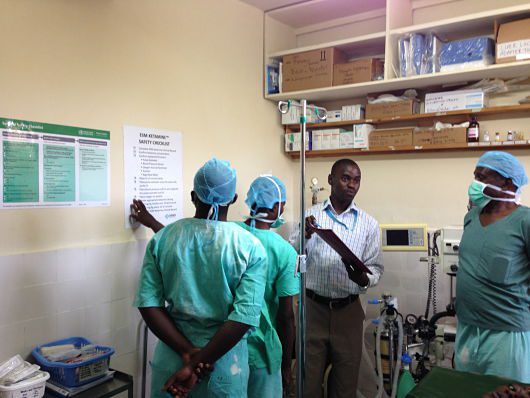
Massachusetts General Hospital is addressing this crisis. They created an innovative way to provide anesthesia services to remote, extremely impoverished regions. Their initiative is called The Every Second Matters for Mothers and Babies—Ketamine for Painful Procedures and Emergency Cesarean Section (ESM-Ketamine). Ketamine is an extremely inexpensive anesthetic; it has been used without any formal procedure around the world for over 40 years, and has a near perfect safety record even with little equipment.

C-sections are the most common worldwide operation. One study of 49 countries estimates that if there was an increase in C-sections (by 2.8 million), 59,100 cases of obstetric fistula and 16,800 maternal deaths would be prevented.

The ESM-Ketamine initiative’s goal is to train clinicians that have no background in anesthesia. The Ketamine initiative offers four days of training for mid-level and above healthcare providers for C-sections and emergency surgeries, using Ketamine as an anesthetic, when no professional anesthetist is available.

Most anesthesia training programs require around four years of training, which is simply not feasible in these developing communities, nor an immediate solution to a crisis that is happening now.

The World Health Organization estimates that 10-15% of births require a C-section. Kenya Demographic Health Survey recently reported that C-section rates in many parts of Kenya are lower than one percent of births. A 2011 Kenya Ministry of Health study also found that only 18 anesthetists exist in the Nyanza region, which has a population of 5.8 million.

Since May 29, 2015, ESM-Ketamine initiative has trained healthcare providers in various hospitals across Kenya, resulting in 231 safe, life-improving surgeries. The program’s initial success demonstrates the powerful potential that Ketamine has for making previously impossible surgeries accessible to women in developing nations, women that provide deeply-rooted social and economic stability to their communities.

When a mother dies or is disabled, her entire community is impacted, and quality of life diminishe—child death rate increases, child education decreases, and both families and communities become more economically unstable.

The maternal mortality rate (MMR), or the ratio of the number of women that die per 10,000 births, was 11.7 in the United States in 2005. In 2014, there are still places on earth where one in six women die from pregnancy related causes; in South Sudan, Afghanistan, and Sierra Leone, the MMR is as high as 2,054.8.

The ESM-Ketamine program provides an inexpensive solution that allows women to undergo cesarean sections, rather than dying or becoming seriously disabled. Healthy women enable a healthy, stable community.

– Margaret Anderson

Sources: Massachusetts General Hospital, World Journal of Surgery, Harvard H Policy Review
Photo: Massachusetts General Hospital

July 23, 2015
https://borgenproject.org/wp-content/uploads/borgen-project-logo.svg 0 0 Borgen Project https://borgenproject.org/wp-content/uploads/borgen-project-logo.svg Borgen Project2015-07-23 08:42:042020-07-07 14:44:59Ketamine Enables Life-Saving C-sections for Women in Developing Regions
Global Poverty, Human Rights, Human Trafficking, Violence Against Women, Women and Female Empowerment

Power to Victims: Human Trafficking

Human Trafficking
Human trafficking is a major concern especially for young people in underdeveloped and developing nations. However, there have been major efforts to save those taken into modern-day slavery, and victims of such atrocities are now fighting back.

Victims are fighting back with two different approaches: through advocacy programs, and through direct involvement in ending human trafficking and returning others who have fallen victim. These victims range in age, gender and nationalities, whether poor countries in Africa or citizens of the United States. Human trafficking a global issue that affects every nation directly.

The United Nations has founded that 70% of those taken into human trafficking are young women and children. When victims, especially women and children, are able to escape their traffickers, they often find themselves in need of help. For this reason, many shelters and organizations have begun to appear around the world—in order to shelter and protect these traumatized victims, as well as bring their violators to justice.

The Philippines have had several young people taken into human trafficking against their will, and, as the issue is given more attention, victims of the practice are now finding the strength to oppose their captors. Many of these victims are women and children, stolen from shelters—as many of them were already fleeing unsafe living circumstances.

There are shelters throughout the Philippines that are specifically established to house people who have fled their human trafficking captors, assist them in reintegrating into society and also give the legal assistance needed to take down their traffickers.

Human trafficking is also being combated by nonprofit organizations that are emerging all over the globe. A number of organizations have been created to spread awareness of the issue in an effort to end the terrible practice.

One group that was created for such a purpose is Polaris, a nonprofit organization that works with survivors of human trafficking and governments of different countries to apprehend human traffickers and bring back captives who have been taken against their will. One of the biggest efforts in ending the phenomena is through advocacy and spreading awareness of the issue, as is the case for many security concerns throughout the world.

– Alexandrea Jacinto

Sources: CNN, The Polaris Project, The United Nations Office of Drugs and Crime
Photo: FBI

July 22, 2015
https://borgenproject.org/wp-content/uploads/borgen-project-logo.svg 0 0 Borgen Project https://borgenproject.org/wp-content/uploads/borgen-project-logo.svg Borgen Project2015-07-22 13:28:532020-07-14 11:45:10Power to Victims: Human Trafficking
Education, Women, Women and Female Empowerment

Chinese Woman Receives Global Recognition For Education

Global Recognition_For_Education
On July 2, Dr. Betty Chan Po-king received her third honorary degree in Bath, United Kingdom, from the University of Bath, granting her global recognition for education efforts from three continents.

At the summer graduation ceremony for the University of Bath, an honorary graduate award was presented to Po-king for Doctor of Laws. After her fifteen-year relationship with the university, the accolade was given to her for her commitment to providing and stimulating education, cultural diversity, and leadership.

This honor is one of three given to Po-king in the span of five years. Po-king initially earned an honorary doctorate in Humane Letters from the University of Illinois at Urbana-Champaign, U.S., her first intercontinental accomplishment in her professional career.

Four years later, she received a second award in China, Asia. The Honorary Fellowship by the Hong Kong Institute of Education was presented to Po-king in acknowledgement of her grand involvement in education in Hong Kong and beyond.

The University of Bath facilitated her third academic accolade in Europe. Honorary degrees are the most esteemed awards given by this university and are set aside for people of noticeable excellence.

Po-king originally earned her doctorate at The Union Institute and University in Vermont in 1985 and went on to acquire experience for teaching. She then became the Director of Yew Chung International Schools in China and California, which was founded by her mother, Madam Tsang Chor-hang.

In addition to her several doctorate degrees, Po-king has also served in numerous leadership positions for her educational efforts.

She has served as the Treasurer of the Pacific Early Childhood Education Research Association, the Chairperson of Child Education and Community Services Discipline Board of Vocational Training Council and the adviser of the Center for Child Development.

Po-king has served as a Member of Standing Committee on Language Education Research, a member of the Education and Manpower Bureau and a member of Appeals Board (Education) in Hong Kong, as well. She was also appointed as a Hong Kong Convention Ambassador of the Hong Kong Tourism Board and the Advisory Committee on Teacher Education and Qualifications.

Po-king’s educational ability has also presented her with unique opportunities as a Chinese female educator.
She became a member of one of the first groups of female life members of Phi Delta Kappa Educational Foundation. In addition, she was the first Chinese Keynote Speaker at the 2004 Alliance for International Education Conference in Dusseldorf, Germany.

Po-king has traveled all around the world for her educational experience. According to China Education Development, where she is a founder, “she has integrated the essence of the Eastern and Western education and has accumulated rich experience in teachers’ training.”

With her extensive knowledge of education, Po-king could very well earn additional award in another continent, but for now, her global recognition in Europe, the U.S., and Asia will continue to propel her career and enhance global education.

– Fallon Lineberger

Sources: China Education Development, PR Newswire, University of Bath 1, University of Bath 2, Yew Chung International School, Yew Wah Education Management
Photo: South China Morning Post

July 21, 2015
https://borgenproject.org/wp-content/uploads/borgen-project-logo.svg 0 0 Borgen Project https://borgenproject.org/wp-content/uploads/borgen-project-logo.svg Borgen Project2015-07-21 13:37:222024-05-27 09:25:56Chinese Woman Receives Global Recognition For Education
Activism, Education, Global Poverty, Women and Female Empowerment

Michelle Obama Launches Global Education Campaign

Michelle-Obama-Global-Education-Campaign
At a luncheon on June 29, Michelle Obama announced the introduction of an international global education campaign called “Let Girls Learn,” focuses on educating adolescent girls worldwide.

To begin her speech, Obama said that about 31 million young girls around the world are not in school. Many of these girls lead difficult lives because of the lack of sufficient education in their area. Girls who are not educated are more susceptible to HIV/AIDS and other life-threatening diseases. They are less likely to build successful lives for themselves without proper education.

Bendu Fafana, a young girl from Bong Country, Liberia, said that attending school was challenging for her because her father was not present in her life and her mother had passed away.

“I dropped from school because I was not getting any support,” Fafana said.

In a video presented by the White House, President Barack Obama said that there are studies that prove that educated girls are much less likely to get married early. Not only will their future children be healthier, but the family will have a better chance at a job that creates sufficient income for the children. This creates a chain of healthy living, which can generate better-functioning societies that lead to greater opportunities for economic growth for both developing and developed countries.

Michelle Obama said that “Let Girls Learn” will provide volunteers from groups like the U.S. Peace Corps to work with local leaders to bring education to girls like Fafana. She also said that “Let Girls Learn” is not only a philanthropic aspiration, but is also vital for foreign policy and international development.

Not only will this endeavor help the U.S. economically, but this opportunity can also help produce worldwide equality. Obama said that economic obstacles are not the only things that inhibit girls from receiving schooling: much of the problem is about views and cultures.

“It’s about whether societies cling to laws and traditions that oppress women,” she said.

“Let Girls Learn” will fund a program in North Africa and the Middle East that will encourage the native girls to learn about social issues in their communities and societies. The campaign will also provide a space that will encourage girls to reflect upon human rights and democracy. In addition, the initiative will contribute to organizations against gender-based violence.

With help from USAID, the U.S. Department of State, the Millennium Challenge Corporation and the U.S. Peace Corps, “Let Girls Learn” will increase efforts to produce tactical partnerships and political goals that will help adolescent girls succeed.

Alexa Ofori, a Peace Corps Volunteer in Cambodia, gave her thoughts about one of the goals of “Let Girls Learn.”

“Girl empowerment is for a girl to be able to have the self-esteem and, really, the confidence to be able to feel like they can do anything they put their minds to,” she said.

This education plan includes these programs and at least 24 others that will provide information about proper health and nutrition, prevent child, early and forced marriage, ensure safety for young children and, of course, deliver education to areas without.

Learn more about Let Girls Learn.

– Fallon Lineberger

Sources: My San Antonio, White House 1, White House 2
Photo: Share America

July 15, 2015
https://borgenproject.org/wp-content/uploads/borgen-project-logo.svg 0 0 Borgen Project https://borgenproject.org/wp-content/uploads/borgen-project-logo.svg Borgen Project2015-07-15 10:54:232024-12-13 17:51:53Michelle Obama Launches Global Education Campaign
Food Security, Gender Equality, Global Poverty, Nonprofit Organizations and NGOs, Women

Bangladesh Rural Advancement Committee

women_in_povertyBangladesh Rural Advancement Committee (BRAC) leader Sir Fazle Hasan Abed won the World Food Prize in 2015 for his achievements in promoting global food security. The primary objective of BRAC is to alleviate global poverty through methods that reduce maternal mortality and invest in maternal health, family planning, services to women, empowerment to women, agriculture and other livelihoods. Bangladesh achieved the Millennium Development Goal of halving hunger by 2015, according to recognition by the United Nations.

Outreach has reached 11 other nations making BRAC the leading anti-poverty advocate and activist in the world. BRAC has given 150 million people an opportunity to improve. Abed has lead BRAC for 43 years, starting in 1972 when the committee focused on helping Bangladesh recover from war with Pakistan. It now has a large staff of about 110 thousand people in the countries of Bangladesh, Afghanistan, Pakistan, Philippines, Sir Lanka, Liberia, Sierra Leone, South Sudan, Tanzania, Uganda and Haiti.

Many success stories stem from BRAC, such as the increase in the rate of immunized Bangladeshi children from 2 percent in 1986, to 70 percent in 1990. BRAC gives those in poverty microfinance, health, education, agriculture and livestock services.

The committee gave $1.5 billion small loans to those in need with $100 to $150 per person. The organization nurtures the eight percent of Bangladesh’s poorest in two-year programs created to lift them out of poverty and receive loans. BRAC uses grants, monthly salaries and health services benefiting families, as they are educated about budgeting in and out of the country. Their methods such as this have assisted 180 thousand people out of poverty.

According to statistics last year, Bangladesh is a leader amongst least developed countries (LDC) fighting for gender equality. The amount of women in parliament has increased, rising from only 10 percent in 1991, to 20 percent in 2011.

The key to success in Bangladesh has been women’s labor in agricultural and exporting positions. There were two million women working in ready-made garment (RMG) factories, which is the top export sector, reeling in a profit of $2 billion a year.

The life expectancy of women increased from 54.3 years in the 1980s, to 69.3 years in 2010. Secondary school enrollment for girls has increased, rising from 1.1 million in 1991, to 3.9 million in 2005. Today, girls are less likely to be married at a young age and fertility rates have fallen. An increase in nutritional intake and higher incomes are another result of benefiting women.

Bangladesh is ranked 100 out of 128 when it comes to gender equality. There is still some work to be done, and Abed knows this. He received the Trust Women 2014 Hero award for promoting women’s rights, becoming the first man to receive this award.

Abed was selected among 160 nominations from 45 countries. The award is given to an innovator whose activity has aided women to learn and sustain their rights. After receiving the World Food Prize in 2015, Abed upholds his goal in helping women when he stated in an article by Environmental News Service, “the real heroes in our story are the poor themselves and, in particular, women struggling with poverty.”

A work in progress within BRAC is teaching mothers in Bangladesh how to make oral rehydration fluid in order to fight diarrohoeal deaths. BRAC is particularly proud of halving the number of child mortality since the 1980s. The organization has been working on training midwives in order to reduce mortality rates of both mother and child.

BRAC’s microfinance has been especially empowering women. Microfinance is essential in rural and social development. Of the borrowers in Bangladesh, 92 percent are women and 90 percent live in a rural area.

Bangladesh has increased gender equality in two particular educational levels. Youth literacy and secondary schooling has improved greatly with higher girl to boy ratios. The country has reduced the gender gap faster than the global average and hopes are high to reserve one third of Bangladesh’s parliament for women by 2020.

However, women will continue have challenges to come. The employment rate of women in 2010 was 58 percent, which is ranked 30 percent lower than men. Women are also still unable to own land, and lack necessary tools to perform productively on the agricultural scale. They also face early and forced marriage, maternal deaths, abandonment, and hold a small amount of job opportunities.

Even so, BRAC has successfully impacted the country and Africa. Its microfinance and two-year nurturing programs have generated success. The fertility rate and child survival has improved in Bangladesh and it’s still reaching to further help women. Results for women’s equality in Bangladesh are expanding beyond borders as people leave poverty with the support of BRAC.

– Katie Groe

Sources: The Daily Star, IRIN, Harvard University SAI, The Guardian, Environment News Service
Photo: IPS News

July 13, 2015
https://borgenproject.org/wp-content/uploads/borgen-project-logo.svg 0 0 Borgen Project https://borgenproject.org/wp-content/uploads/borgen-project-logo.svg Borgen Project2015-07-13 11:37:012024-06-04 01:08:12Bangladesh Rural Advancement Committee
Development, Women

How Clean-Burning Gas Stoves Can Help Sudan

world_globe_borgen_africa
The country of Sudan has been struggling with violent conflicts since an ongoing genocide began in the Darfur region in 2003. Over the past twelve years, nearly 400,000 citizens were killed and another 2.5 million were displaced by the Janjaweed militia. The country has been investigated for many human rights violations, but the suffering continues today. Currently, 2.7 million citizens reside in displaced persons camps, and 4.7 million rely on humanitarian aid to survive.

Daily life in Darfur is difficult for anyone, but women face an exceptionally dangerous reality. Rape has often been used as a tool of war in this region. Militias will enter villages, kill off the men of the households, and then rape the women. Many women do not report these experiences, but even when they do, the authorities do little to help. Victims may be ostracized, especially if they become pregnant.

In Sudan, wood burning stoves are commonly used for cooking. Being in charge of collecting firewood means miles of walking alone, and women often face violence when they go to gather fuel for these stoves. They could be attacked or raped while making these walks. Even when left alone, they still suffered from wounds on their hands and feet after dragging wood for miles.

Fueling these wood stoves was extremely dangerous for women. Furthermore, the stoves presented environmental concerns. Deforestation has damaged the fertile land in Sudan, and indoor wood stoves produce toxic smoke. To tackle these issues, The Darfurian Women’s Development Network began distributing gas stoves to thousands of households in Darfur.

The organization hoped to raise awareness of the negative health and environmental impact of wood stoves, reduce pressure on the dwindling natural resources necessary to fuel them and reduce indoor air pollution and toxic smoke production. They distributed gas stoves to 15,000 households in Darfur, specifically targeting the groups who struggled most: single women, displaced citizens, manual workers and farmers. These stoves are powered exclusively by LPG gas, a clean energy source.

So far, the gas stoves have had an overwhelmingly positive impact, especially for women. They no longer need to make frequent, dangerous treks to gather firewood, leaving them less vulnerable to sexual violence and giving them peace of mind. With a decreased need for wood to burn, ecosystems can begin to recover. Smoke from wood burning stoves could cause coughing and chest infections when inhaled, but the gas stoves pose no such health threats.

The gas stoves cannot solve all the problems that Sudanese citizens currently face, but they have improved quality of life for many. The Darfurian Women’s Development Network will continue distributing these stoves in order to keep steadily working towards a brighter future for Sudan.

– Jane Harkness

Sources: The Guardian, Practical Action, Response Magazine, United Human Rights Council

July 12, 2015
https://borgenproject.org/wp-content/uploads/borgen-project-logo.svg 0 0 Borgen Project https://borgenproject.org/wp-content/uploads/borgen-project-logo.svg Borgen Project2015-07-12 14:23:262024-05-27 09:25:49How Clean-Burning Gas Stoves Can Help Sudan
Global Health, Health, Politics and Political Attention, Women

What Hillary Clinton Means For Women’s Health Worldwide

Hillary-Clinton-Women's-Health

In April of this year, Hillary Clinton announced her candidacy for president. As a strong democratic nominee with a lot of political capital, she has the power to raise big money and advocate for issues on her platform.

According to her website and her voting record, she is an advocate for small business and defining America’s core values. Many see her as a strong candidate for the election next year.

However, unlike her last campaign, Clinton seems to be focusing more on women’s issues.

In 1995, Clinton gave a speech in Beijing entitled, “Women’s Rights Are Human Rights” to the U.N.’s Fourth World Conference on Women. At the time, Clinton was First Lady of the United States. In the speech, Clinton spoke of the continual rape of women during armed conflicts and the act of silencing women and girls around the world. She declared that women’s rights must now be seen as human rights and solved.

Since the 90’s, Clinton has seemed to not focus on women’s issues or place them at the focal point of her 2008 election.

However, this round, she seems to be doing the opposite. Before announcing her candidacy in a speech at Georgetown, Clinton told the audience that women’s rights are not only a responsibility for women, but also men.

At her first major campaign event in June of this year, Clinton seemed to emphasize her support for women’s issues. She supports a women’s right to choose and have easier access to contraceptives.

Clinton has proved herself to be an advocate for women domestically, but what about abroad?

Clinton does not seem to shy away from economic aid to developing countries. In 2012, Clinton visited Africa, promising U.S. assistance to revitalize African economies. Although many attacked her for attaching so many contingencies onto the package, she does want to help.

Combining her commitment to providing assistance to impoverished nations and her advocacy for women’s rights, she would be a tremendous help to women’s health abroad.

Under her watch, we could see a real attempt to repeal the Helms amendment and provide access to family planning tools. Because of her commitment to women domestically, she would support women’s access to education abroad.

Although the campaign trail is long, her commitment to women and impoverished nations would mean great things for women being affected by the lack of access to a proper education, birth control and water.

– Erin Logan

Sources: Hillary Clinton, American Rhetoric, The Guardian, Slate, LA Times, New York Magazine
Photo: Illinois Review

July 9, 2015
https://borgenproject.org/wp-content/uploads/borgen-project-logo.svg 0 0 Borgen Project https://borgenproject.org/wp-content/uploads/borgen-project-logo.svg Borgen Project2015-07-09 09:06:112024-12-13 17:51:47What Hillary Clinton Means For Women’s Health Worldwide
Page 63 of 82«‹6162636465›»

Get Smarter

  • Global Poverty 101
  • Global Poverty… The Good News
  • Global Poverty & U.S. Jobs
  • Global Poverty and National Security
  • Innovative Solutions to Poverty
  • Global Poverty & Aid FAQ’s
Search Search

Take Action

  • Call Congress
  • Email Congress
  • Donate
  • 30 Ways to Help
  • Volunteer Ops
  • Internships
  • Courses & Certificates
  • The Podcast
Borgen Project

“The Borgen Project is an incredible nonprofit organization that is addressing poverty and hunger and working towards ending them.”

-The Huffington Post

Inside The Borgen Project

  • Contact
  • About
  • Financials
  • President
  • Board of Directors
  • Board of Advisors

International Links

  • UK Email Parliament
  • UK Donate
  • Canada Email Parliament

Get Smarter

  • Global Poverty 101
  • Global Poverty… The Good News
  • Global Poverty & U.S. Jobs
  • Global Poverty and National Security
  • Innovative Solutions to Poverty
  • Global Poverty & Aid FAQ’s

Ways to Help

  • Call Congress
  • Email Congress
  • Donate
  • 30 Ways to Help
  • Volunteer Ops
  • Internships
  • Courses & Certificates
  • The Podcast
Scroll to top Scroll to top Scroll to top