• Link to X
  • Link to Facebook
  • Link to Instagram
  • Link to TikTok
  • Link to Youtube
  • About
    • About Us
      • President
      • Board of Directors
      • Board of Advisors
      • Financials
      • Our Methodology
      • Success Tracker
      • Contact
  • Act Now
    • 30 Ways to Help
      • Email Congress
      • Call Congress
      • Volunteer
      • Courses & Certificates
      • Be a Donor
    • Internships
      • In-Office Internships
      • Remote Internships
    • Legislation
      • Politics 101
  • The Blog
  • The Podcast
  • Magazine
  • Donate
  • Click to open the search input field Click to open the search input field Search
  • Menu Menu

Archive for category: Women and Female Empowerment

information and Stories about woman and female empowerment.

Education, Global Poverty, Women and Female Empowerment

Global Education Fund: Success in Kenya

success_in_kenya
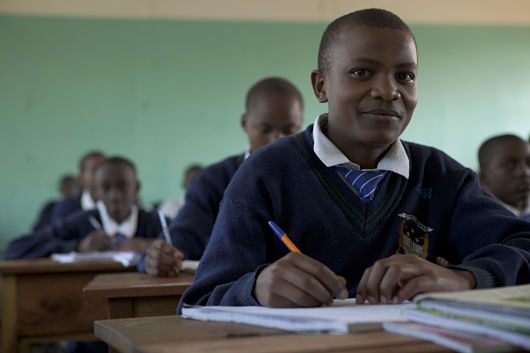
The quality of education and learning in Kenya is below that of what it should be, despite increases in student enrollment. Enrollment does not ensure attendance, and often times resources are not available to students to help them learn at the rate and level necessary.

The good news is that the Global Education Fund has implemented a program to address the quality of educational success in Kenya. With only 19% of sixth-grade students reading at the appropriate level, this program is much needed.

The program provides leadership training and scholarships for students living in Nairobi. A mentoring initiative for these students, the Young Leaders Program, was also developed from this project.

Global Education Fund scholars have achieved significant achievements: 100% of these students have completed secondary school, 86% have passed the national exam (compared to the average pass rate of 29%) and 55% have qualified for university courses.

The Young Leaders Program is unique because it combines the following components:

  • Scholarships for students who cannot afford to attend school
  • Leadership training
  • Mentoring for younger students
  • Experiential learning to increase career opportunities
  • Female role models for young girls
  • Community engagement

The Global Education Fund has worked with 140 high school students. Student progress is tracked and evaluated so that these students can have continued support throughout their development. This project is one example of many initiatives that can help break the cycle of poverty by securing quality education for young children.

– Iliana Lang

Sources: Global Education Fund 1, Global Education Fund 2
Photo: Extraordinary Journeys Africa

August 8, 2015
https://borgenproject.org/wp-content/uploads/borgen-project-logo.svg 0 0 Borgen Project https://borgenproject.org/wp-content/uploads/borgen-project-logo.svg Borgen Project2015-08-08 01:30:362020-07-02 17:38:37Global Education Fund: Success in Kenya
Global Poverty, Women and Female Empowerment

Women Entrepreneurs Aim to Improve their Communities in Africa

women_entrepreneurs
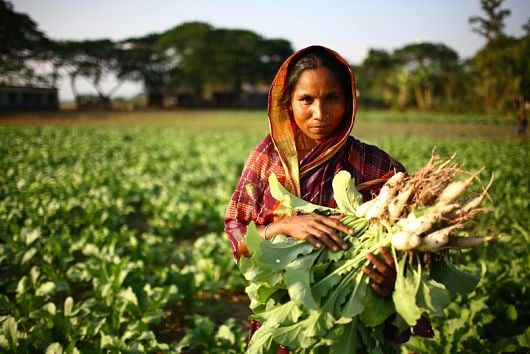
Three Entrepreneurs from Ghana, Cameroon and Rwanda are applicants to The Anzisha Prize. The prize aims to support young, African entrepreneurs who have created innovative change in their communities by addressing social issues or starting successful small businesses.

Twelve of the finalists win a free, week-long trip to South Africa to participate in entrepreneurship workshops and conferences at the African Leadership Academy campus near Johannesburg. The grand prize winners are then selected from the top twelve and receive $75,000 dollar prizes that will give their small businesses a jump-start as well as publicity.

In 2015, the organization selected winners from a pool of around 500 applicants. The amount of applications this year is a record—but only 27 percent of them were women applicants.

Despite the low number of women applicants, there are many women entrepreneurs in Africa. However, they are often forced into innovative solutions out of need, rather than a desire to do so. How We Made it In Africa described in an illustrative example, “This means that they might be self-employed by selling fruit on the side of the road, but the opportunity for them to grow beyond the informal stage may never present itself.”

African women usually lack access to education on financial and development skills; this is due to the fact that males are typically sent to school more often than females.

Still, the following Anzisha Prize women have overcome the odds and made positive, impactful changes in their communities through their entrepreneurial innovation.

Mabel Suglo: Assembling Shoes to Employ the Disabled

Mabel Suglo is a 21 year old woman from Ghana, a co-founder of the Eco-Shoes Project. The initiative helps disabled artisans assemble desirable, marketable shoes out of used tires and recycled clothing.

The Project began in 2013; today five people work for Suglo.

“There are millions of discarded car tyre stockpiles and waste materials in Ghana which pose an environmental and health hazard. Eco-Shoes rescues some of the millions of tyres and other material waste creating an environmental nuisance, to make fashionable and comfortable shoes.” said Suglo, according to How We Made it in Africa.

If Suglo wins the Anzisha Prize, she plans to invest in more sophisticated machinery to increase shoe output. She also wants to create an e-commerce site and give her workers improved training in technology.

Vanessa Zommi: Tea to treat Diabetes in Cameroon

In 2013, when Vanessa Zommi was only seventeen, she founded Emerald Moringa Tea in Molyko, Cameroon. The company treats the moringa plant, transforming the raw substance into a healthy tea that treats diabetes.

“The World Health Organisation’s research estimates 190 million people suffer from diabetes worldwide. This research further estimates that by the year 2025, there will be about 330 million patients in the world. Studies show that drinking moringa tea after a meal can ease digestion, and after two hours of intake, sugar levels in the body drop.” said Zommi, according to How We Made it in Africa.

Zommi plans to expand her company in the future; she currently employs six people and sales are limited to Molyko, Cameroon. She hopes the prize money will assist her in this expansion.

Chantal Butare: Milk Cooperative to help Farmers Sell

Chantal Butare, a twenty-one-year-old graduate of the University of Rwanda founded a dairy cooperative that aids farmers who produce milk in accessing markets.

Butare started the Kinazi Dairy Cooperative in 2012; she noticed farmers, especially women farmers, often struggled to sell all of the milk they produced.

The Cooperative, to date, has helped over 3,200 farmers. It employs twelve milk collectors who supply Rwanda and Burundi.

“My vision is to help eradicate poverty and hunger among vulnerable people in my community,” said Butare, according to How We Made it in Africa.

– Aaron Andree

Sources: Anzisha Prize, How We Made It in Africa
Photo: Clinton Foundation

August 7, 2015
https://borgenproject.org/wp-content/uploads/borgen-project-logo.svg 0 0 Borgen Project https://borgenproject.org/wp-content/uploads/borgen-project-logo.svg Borgen Project2015-08-07 01:30:492024-12-13 18:04:39Women Entrepreneurs Aim to Improve their Communities in Africa
Activism, Education, Global Poverty, Women and Female Empowerment

Chelsea Clinton Visits Haiti

haiti

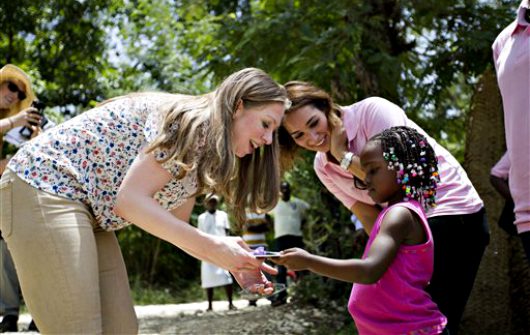
On July 28 and 29, Chelsea Clinton, the Clinton Foundation Vice Chair, visited Clinton Foundation-funded Haitian projects in Port-au-Prince to oversee agricultural improvement, health reform and female employment progress.

The Clinton Foundation’s slogan is “Partners in Haiti’s Future,” and the organization has definitely created many opportunities for the country to flourish in the present. The work of the foundation and its supporters has aided more than 85,000 farmers with new agriculture techniques. In addition, more than 350,000 people’s lives were bettered because of the organization’s social enterprises, and 9.9 million people have access to HIV/AIDS medication.

In total, the Clinton Foundation has helped raise more than $30 million for Haiti for its Trees of Hope program, Clinton Climate Initiative, Chakipi Acceso Distribution Enterprise, the Clinton Health Access Initiative and more.

Clinton visited Haiti to supervise the projects as well as inspire those who are being helped by the foundation. Clinton observed local artisans, posting an Instagram picture of herself holding a locally crafted doll with the caption “#ActionIsGreater through partnership and collaboration.”

This photo practices some of the Clinton Foundation’s guiding principles: “We’re all in this together,” and “The greatest good is helping people live their best life story.”

To further acknowledge these principles, Clinton hosted a meeting with the Clinton Foundation President, Donna Shalala, where the two discussed women’s success in the Haitian workplace and ways to create more opportunities for female employment.

Clinton said the implementation of new programs for the betterment of Haiti’s female youth is crucial to female empowerment and achievement.

“We need programs… to help close the gap, so that girls and young women who haven’t had the chance to get educated don’t live with the burden of illiteracy their whole lives,” she said.

During her stay, Clinton made it a point to visit local female-owned businesses to show support for successful female entrepreneurship. The business, Caribbean Craft, is supported by the Clinton Foundation where products are crafted and later sold in popular U.S. stores like Anthropologie and HomeGoods.

In support of other projects, Clinton visited the Clinton Giustra Enterprise Partnership’s (CGEP) Acceso-Haiti depot. There, local farmers can store their peanuts for safe-keeping. The depot also serves to empower local farmers.

“Across Haiti, CGEP is helping more than 1,500 local smallholder farmers increase their peanut yields dramatically and better sort and store their peanuts,” Clinton said.

Because of depots like this, the Clinton Foundation has helped Haitian farmers grow higher yields of crops and improve market access. In turn, the organization’s help with agriculture creates greater opportunities for a healthy lifestyle.

To check up on the Foundation’s projects for better health in Haiti, Clinton visited Partners in Health’s Mirebalais Hospital. This hospital is the country’s top educational hospital because of the influence of one of the Clinton Foundation’s supporters, Paul Farmer.

Because of his commitment, Clinton said that the hospital employees were just as good as health workers in any developed country.

After leaving the hospital, Clinton said she took time to reflect on stories about the projects created by the Clinton Foundation in her heart. She said she feels confident that Haiti’s future is bright.

“I left with an even stronger belief in what’s possible in Haiti,” Clinton said.

The Clinton Foundation has many projects that have greatly benefited the people of Haiti, and the organization is continually editing and drafting plans to implement for the persistent improvement of the Caribbean country.

– Fallon Lineberger

Sources: ABC News, Caribbean Journal, Clinton Foundation 1, Clinton Foundation 2, Vogue
Photo: Jakarta Post

August 6, 2015
https://borgenproject.org/wp-content/uploads/borgen-project-logo.svg 0 0 Borgen Project https://borgenproject.org/wp-content/uploads/borgen-project-logo.svg Borgen Project2015-08-06 07:47:362024-12-13 18:04:39Chelsea Clinton Visits Haiti
Development, Global Poverty, Women and Female Empowerment

Opening Opportunities for Mayan Girls

mayan_girls
The Population Council, along with partner organizations, created a program entitled Abriendo Oportunidades (Opening Opportunities) in order to support the development of young Mayan girls. To date, it has reached 8,000 young girls.

These young girls often live in more rural, isolated regions where access to school and health services is limited. This particular subset of the population in Guatemala tends to marry early without finishing their education.

Abriendo Oportunidades was designed to connect Mayan girls with mentors and provide them with leadership training and life skills. Locally trained professionals often facilitate the program in community girls’ clubs. Gender-based violence is also discussed in a safe setting to provide young girls with the knowledge and tools to stay safe.

An evaluation of the program in 2007 has demonstrated great success in opening opportunities for Mayan girls. All girls in the program have completed sixth grade, 97 percent of the girls did not become pregnant and 88 percent of the girls were able to open bank accounts. These achievements are important because these girls will have greater opportunities open to them in the future. For example, with financial security and education, they can better plan for the timing of children if they wish to have them later in life.

The program results also reveal a change in the attitudes of these young girls. Over half of the girls now wish to complete university and over 90 percent want to wait until later in life to have children. With greater confidence and leadership, these Mayan girls feel an increase in freedom and respect from their fellow community levels. The confidence these girls now have is one of the most important indicators of success. If young girls believe they can achieve education and important careers, they are more likely to be able to do so.

Abriendo Oportunidades has been adapted for communities in Costa Rica, El Salvador, Haiti, Honduras and Nicaragua. Researchers have also further developed the program to be used with adolescent boys who need to learn just as much about gender-based violence and female empowerment.

– Iliana Lang

Sources: The Population Council, CNN
Photo: The Population Council

August 6, 2015
https://borgenproject.org/wp-content/uploads/borgen-project-logo.svg 0 0 Borgen Project https://borgenproject.org/wp-content/uploads/borgen-project-logo.svg Borgen Project2015-08-06 01:29:042020-07-10 11:28:14Opening Opportunities for Mayan Girls
Women

Obama Focuses on African Reform

African_Reform
In a recent landmark visit to Africa, President Obama pledged to all African nations that the United States was planning on reaffirming its efforts to bolster all aspects of African reform, ranging from economic to social reforms. Obama’s visit bared a theme of hope for the future of all African nations, as the President visited extensively with the African Union in their headquarters located in Ethiopia.

“Africa is on the move,” was the slogan repeatedly used by President Obama throughout his time on the African continent. The ideology behind this phrase comes from the recognition of African reform in taking steps forward regarding technological improvements as well as economic developments. An article by the Guardian stated, “Politicians and entrepreneurs love to point out that the old stereotypes of war, famine and hopelessness have been replaced by some of the fastest growing economies in the world, as if they are the first to discover it.” Obama was quick to shed light on Africa’s new image in the 21st century during his time on the continent.

Homophobia across Africa was a big issue of conversation for Obama during his visit to Africa. The President made it a point to relate the topic of homosexuality in a social context to the African Union. According to the same article by the Guardian, “The president compared homophobia in Africa with racism in America.” Obama’s stance was one of progressiveness towards a typically close-minded group, but the President used his immense popularity in Africa due to his Kenyan roots to connect with the people. The media response to Obama’s message was extremely positive with many outlets beginning to call for reform on their own.

In addition to speaking out against homophobia, Obama also spent time championing for women’s rights. An article by All Africa was quoted as saying, “[Obama] added that Africa has to attach due emphasis to women and girls because unless girls are educated and given opportunity to be innovators, engineers, doctors, business women, it will be difficult to the continent to bring about change.” The President arrived in Africa to push an agenda that would help Africa as a whole rise up to a new level of social reform and is walking away with satisfaction.

– Diego Catala

Sources: All Africa, The Guardian
Photo: Flickr

August 3, 2015
https://borgenproject.org/wp-content/uploads/borgen-project-logo.svg 0 0 Borgen Project https://borgenproject.org/wp-content/uploads/borgen-project-logo.svg Borgen Project2015-08-03 01:30:192020-02-19 11:46:36Obama Focuses on African Reform
Development, Global Poverty, Women & Children, Women and Female Empowerment

Vital Voices: Projecting the Voices of Notable Women

vital voices

Vital Voices aims to foster growth in the developing world. How? They partner with prominent women leaders in places such as Latin America, the Middle East and Africa. According to the organization, women leaders have helped and educated more than 500,000 other women and girls in their communities with the knowledge that they gained during their partnership.

A Unique Approach

Vital Voices invests in leaders. These women know what they need and what their communities need. The organization encourages their fellows to help their communities and other women leaders in their communities.

The organization focuses on three key aspects: human rights, economic development and political participation. Through these areas of focus, women can obtain fellowships, education and influence.

Human Rights

According to UNICEF, there were 3.7 million victims of human trafficking in Africa in 2014. Vital Voices wants to improve the justice system’s responses and victim protection responses. Partnering with legal and criminal justice experts in Cameroon and Uganda, the organization desires to combat this issue.

In Uganda, Voices partners with AEquitas and Law and Advocacy for Women in Uganda. In Cameroon, Vital Voices partners with AEquitas and Vital Voices network members.

Economic Development

Women business owners face disadvantages that male business owners do not. Voices provides fellowships in Latin America, the Middle East and Africa. Women can learn how to grow their businesses and help their communities.

The fellowships allow businesswomen to learn more about leadership, finances and networking. This not only helps the businesswoman, but it also helps foster economic growth in her community.

Political Participation

According to Vital Voices, women only hold 19% of government positions internationally.

The organization is trying to strengthen women’s representation in the Pacific Islands. Partnering with New Zealand Ministry of Foreign Affairs and Trade and AusAID PLP, Voices empowers women to influence policy change that would increase women’s presence in the workforce.

The Impact

According to U.N. Women, an increase in women in the labor force increases overall economic growth. Vital Voices wants to help women help themselves. In addition, the organization realizes that women have a great impact on the growth of developing countries. Women’s empowerment is now recognized as a way to decrease global poverty.

– Ella Cady

Sources: UNICEF, UN Women, Vital Voices
Photo: Pop Sugar

August 2, 2015
https://borgenproject.org/wp-content/uploads/borgen-project-logo.svg 0 0 Borgen Project https://borgenproject.org/wp-content/uploads/borgen-project-logo.svg Borgen Project2015-08-02 11:43:532024-06-04 01:17:41Vital Voices: Projecting the Voices of Notable Women
Global Poverty, Women and Female Empowerment

The BOMA Project Mentors Kenyans in Running Successful Businesses

The BOMA Project Mentors Kenyans in Running Successful Businesses

The BOMA Project works with women living in Kenya and other arid and drought-prone regions in helping them receive the resources, training and funds they need to start up their own businesses. Another aspect of the BOMA Project also helps Kenyan women pay for school, food and healthcare. Since 2009, 8,481 women have enrolled with the BOMA Project to successfully launch 2,651 businesses. In total, women who have enrolled with the BOMA Project have been able to provide care for over 42,250 dependent children.

The BOMA Project was started by Kathleen Colson after she was invited by a local elected official, with whom she attended Saint Lawrence University, to visit Northern Kenya. After many years of working as president of African Safari Planners and leading many excursions through Africa, she came to the conclusion something needed to be done to help those affected by drought.

When drought strikes, livestock die in herds, leaving families with no source of income, which in turn hinders them from being able to buy the food and supplies that they need to survive. After drought occurs, the men of the family leave the women and children at home to go find suitable grazing land. Oftentimes, women are left with no means for food or aid for up to six months. The BOMA Project works to train these women to find other sources of income from starting up their own businesses.

During her many trips to Northern Kenya, Colson met with village elders, faith leaders, local residents and community development workers to gain a true understanding of life in Kenya. While she spent lots of her time there listening to these people, she also focused on hearing what the women of Kenya had to say about life there. Her compassion was piqued by the struggles, challenges and failing solutions about which the Kenyan women spoke.

Colson and Kura Omar, her guide and translator, concluded training women to start and maintain their own businesses would help best alleviate poverty during droughts. Through the BOMA Project, they enacted the Rural Entrepreneur Aspect Project (REAP), which provides women with a two-year poverty graduation program that gives them a cash grant, training in the business and sustainability field and training from local mentors.

Once the businesses are earning profits, usually after six months, members of REAP work with BOMA representatives in establishing savings accounts to prepare for droughts in the future. The BOMA Project has successfully helped over 50,000 women and children in surviving drought season. By 2018, the BOMA Project hopes to double that to over 100,000.

– Julia Hettiger

Sources: BOMA Project, Aid for Africa, Dining for Women
Photo: BOMANomad

August 2, 2015
https://borgenproject.org/wp-content/uploads/borgen-project-logo.svg 0 0 Borgen Project https://borgenproject.org/wp-content/uploads/borgen-project-logo.svg Borgen Project2015-08-02 07:29:392024-05-27 09:26:24The BOMA Project Mentors Kenyans in Running Successful Businesses
Global Poverty, Women

Groups Speak Out Against Helms Amendment

Helms_Amendment
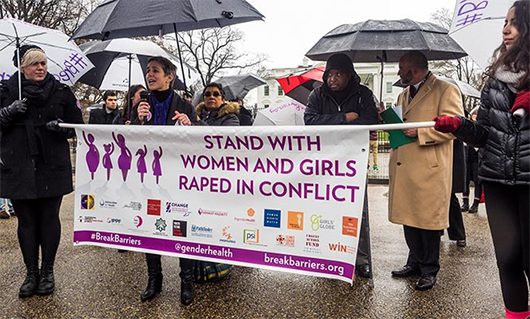
Many organizations and individuals are becoming more vocal against the Helms Amendment. Passed by a conservative Congress in 1973 as a reactionary measure against the landmark court case, Roe v. Wade, the Helms Amendment denies women in countries receiving American aid the ability to get abortions with government money.

This amendment has received flack from both liberals and conservatives due to the denial of safe abortion options for women who are victims of rape during war. The opposition has grown a lot of steam world wide.

Before President Obama touched down in Kenya last week, the Kenyan government tore down a billboard that seemed to be politically motivated. According to reports, the billboard implored President Obama to utilize his executive action to help women who are victims of rape in developing countries.

After the Kenyan government took the billboard down, many were upset. Perhaps the government wanted Obama’s trip to his father’s country to be pleasurable and void of political dissonance.

Obama is not just receiving pressure to revoke the amendment abroad, but also at home.

Before his trip to Kenya, 70 U.S. non-government organizations called for Obama to visit health clinics in Kenya that attend to women’s’ health so that he can see for himself what the amendment is causing.

At the “Religious Coalition for Reproductive Choice” in June, religious leaders requested that Obama use swift action to revoke the amendment. The support to revoke the amendment is not just from leaders, but from the majority of the American public.

BuzzFeed reported that 81 percent of people support a woman’s right to have access to an abortion in the case of rape or for the safety of the mother. Although this poll shows people’s views domestically, they can translate to the global stage.

Women living in countries rampant with a gang and terrorist violence are subject to rape. Because of the lack of protection the perpetrators have, the victims are oftentimes subject to sexually transmitted infections and pregnancy.

Due to rape being a tool of war, many from both sides express their disdain for the harsh bill. Perhaps the president will one day voice his opposition.

– Erin Logan

Sources: The Daily Beast, Buzzfeed 1, Gender Health, Buzzfeed 2
Photo: Woman Under Seige Project

August 2, 2015
https://borgenproject.org/wp-content/uploads/borgen-project-logo.svg 0 0 Borgen Project https://borgenproject.org/wp-content/uploads/borgen-project-logo.svg Borgen Project2015-08-02 01:30:492024-12-13 18:04:36Groups Speak Out Against Helms Amendment
Education, Health, Sanitation, Women

Why Menstrual Hygiene Remains a Challenge in Nepal

Menstrual-Hygiene

Old taboos surrounding menstruation die hard in Nepal where, until 2005, Chhaupadi, the practice of ostracizing women and girls from their own homes during their periods, did not face a national ban.

The Nepalese Supreme Court declared Chhaupadi illegal in 2005. However, the practice still retains a foothold in the country’s western region and myths surrounding women’s natural cycles remain a national problem.

Chhaupadi, which is based upon the belief that menstruating women are toxic, prohibits menstruating women and girls from inhabiting any public space, socializing with others and using water sources that other people share.

According to the tradition, women and girls on their periods are also banned from sharing food or touching anyone. Rather than eating with their families, these “untouchables” must remain outside the house and keep their distance while a family member throws boiled rice to them, like they would to a dog.

The effects of Chhaupadi are extremely dehumanizing and psychologically stressful, with young girls told that they will bring bad luck on their families if they enter their own homes during menstruation. In communities where the tradition is still practiced, even women and girls who do not believe they are truly toxic fear disobeying the rules of Chhaupadi and incurring the anger of family or village elders.

In addition to being emotionally degrading, Chhaupadi also places women and girls at risk for rape, abduction, snakebites and animal attacks, as well as malnourishment. Forced to sleep in rickety huts without adequate insulation or ventilation, women and girls face illness exacerbated by the cold and unhygienic conditions or asphyxiation from improperly ventilated heat sources.

Even in regions where Chhaupadi is not practiced, taboos surrounding menstruation still affect Nepalese women and girls. The Nepali Times reports that today many households in Kathmandu still prohibit menstruating women from entering kitchens or temples, eating with the family and sleeping on their beds.

These practices condition women to view their bodies as unclean and to devalue themselves because they take the blame for any misfortune their families may experience. Chhaupadi’s legacy contributes to a wider disregard of women and girls that places them in danger.

A prime example comes in the wake of the recent earthquake that devastated Nepal. Although the refugees require many resources that aid organizations are working to meet, menstrual hygiene is far from the minds of most.

Female refugees have few sanitary resources. Some reuse the same menstrual products for days, washing them in unfiltered water sources in the same areas where refugees openly defecate.

“There are no proper toilet facilities or private spaces in the camps,” reported Dr. Hema Pradhan, consultant gynecologist and fistula surgeon at the Kathmandu Model Hospital. She called the sanitary practices in these camps “worrisome.”

Ursula Singh, a program officer for women’s rights NGO Loom Nepal, stated, “We went to the village of Kavre on the outskirts and saw some girls sitting huddled in tents, covered in blood.” Most girls, she elaborated, wait until dark to step outside and dispose of or attempt to sanitize menstrual products.

“We want them to at least practice hygienic disposal because they are in super exposed conditions and that puts them at a higher risk to contract diseases,” Singh said. However, the only hygienic means of disposing of sanitary napkins is often digging holes and burying them in the ground.

In a culture with superstitions such as the belief that any plant a menstruating woman touches will die, disposing of menstrual products and trying to manage period blood and symptoms in an area with as little shelter or privacy as a refugee camp must be a traumatic experience. Lingering stigmas place women under intense scrutiny and many would rather risk disease, injury or abuse than suffer negative social responses to their behavior while menstruating.

– Emma-Claire LaSaine

Sources: Time, Nepali Times, IRN News, Reuters, New York Times
Photo: Time

July 31, 2015
https://borgenproject.org/wp-content/uploads/borgen-project-logo.svg 0 0 Borgen Project https://borgenproject.org/wp-content/uploads/borgen-project-logo.svg Borgen Project2015-07-31 08:21:302024-05-27 09:26:12Why Menstrual Hygiene Remains a Challenge in Nepal
Global Poverty, Women

Interview with Mardge Cohen, Co-Founder of WE-ACTx

Interview With Mardge Cohen, Co-Founder of WE-ACTxWomen’s Equity in Access to Care & Treatment, or WE-ACTx, aims to provide the women and children of Rwanda with proper access to healthcare and treatment. Nearly 10 years after the Rwandan Genocide, this HIV/AIDS initiative brought much needed aid to communities of women and children in Kigali. Now, more than 12 years later, the organization continues its work, offering not only clinical care and mental health services for people infected with HIV/AIDS, but also youth programs and support with income generation—aimed at addressing both poverty and malnutrition.

I caught up with Mardge Cohen, co-founder of WE-ACTx, and spoke a bit about the organization’s origins, progress and successes, which have allowed this quite exceptional organization to thrive among the people of Kigali, Rwanda.

Tell me, how did WE-ACTx begin?

“The organization was started in 2004. We went to Rwanda because one of the other people who formed the organization, named Anne-Christine d’Adesky, a journalist, had been writing a book about HIV and women. She had been to Rwanda and these heads of associations talked to her about how the women of Rwanda, who had been raped during the genocide and were then infected with HIV, were not getting access to medicines for HIV. But the men who raped them, who were in jail, were getting medicines for their HIV. These women thought that was very unfair, and they asked Anne-Christine to bring a bunch of physicians and advocates to help fast-track medicine for these women because they were getting very sick and dying.

The genocide was in 1994 and this was in 2004, and it takes about a decade, 10 years, after you’re infected with HIV to become very sick. The women were just getting sick and the leaders of these associations wanted to do something about it.”

Do you feel that these at risk populations of Rwanda are ignored by the government, or were ignored?

“In 2004, nobody was getting medications for HIV. It was before PEPFAR (The U.S. President’s Emergency Plan for AIDS Relief). It was before the global fund. It was at a time… you know I’d been working on HIV since 1987, and people were saying things about Africa: ‘Well, we’ll just give them medication for pneumonia, for prophylaxis. We can’t afford… and the people in Africa wouldn’t know how to manage, there isn’t a good enough infrastructure to manage the antiretroviral therapy, so we’ll just ride them off.’ And they were going to ride them off. You know, right now there are 36 million people living with HIV worldwide and 26 million of them are in Africa, and most of them are in Sub-Saharan Africa.

That’s an enormous number of people that people were thinking of just riding off, so the governments of those countries in Africa really had no wherewithal to actually help people. The drugs weren’t there. They weren’t letting the drugs get there, so my feeling is my experience in Rwanda was in fact the government seriously wanted to help people. Once medication became available, they figured out ways to actually control the dispersal of the medicine so that it got out to people, and they tested everybody. I was aware of some countries where tests got outdated, expired, in garages and never got to people—that’s not what happened in Rwanda. In Rwanda, they really tried.”

You didn’t face much resistance from the government?

“Well, our approach was a little bit different from the government’s because our approach was very women-centered and youth-centered, and their approach was more decentralized… sort of a public health model where people would just go to the nearest clinic to where they lived. Everybody would sort of be engaged in the healthcare system that way, but because HIV comes with a lot of stigma people didn’t really want to go to clinics near where they lived. Women sort of liked the idea of going to a place that cared about women and worried about their emotional reaction to HIV, gender-based violence and helping them try to become productive members of society—not just worrying about HIV as it affected the baby or the husband, but rather cared about them as real people. So, people wanted to come to our program even though it may not have been a neighborhood clinic.

That was a little bit problematic for the Rwandan government. They didn’t like that so much, but they then saw that we did very well with connecting women to care and having people with very good retention rates and adherence to medication. Then, after a while, we had a lot of good youth programming because we had so many women who they had kids—a lot of attention to youth friendly programs. Then we got on better with the Rwandan government public health system and now we’re in very good shape. We do a research program with their principal investigators, and we’re principal investigators; It’s much more collegial.”

What did you have to do to overcome cultural differences? I know that specifically in Rwanda, people don’t very much like to talk about things involving sex.

“So, there was a pretty big public health campaign to get people tested. And, you know, in Africa it’s said that one of the major risk factors for a woman having HIV was being in a monogamous relationship with her husband. It’s just that he probably is not in a monogamous relationship with her. Women who had done everything they were supposed to do, get married, have children, they were at risk for HIV. As a result, we didn’t really have to have that many difficult conversations with them, but they were reticent to talk about things… but after a while, we used a model of peer advocacy.

We found some Rwandan women who were HIV-infected who were sort of a bit more leader-ish and wanted to sort of help other women. We utilized them to help us understand what the cultural differences were and for them to sort of share with the other women what efficacy the drug we had and the approach we were taking. That really, really helps—a peer model really got through some of those cultural differences. I think one of the things that I learned was that you have to be very patient; I’m a very impatient person and things are very slow, and change happens over a long period of time. It’s not quick. There was a lot of stigma related to HIV and there still is because we went there 11 years ago and now its 2015 but there’s still a lot of stigma.”

Did you do some advocacy in the community to try to change that perception?

“We did, especially if there were kids in schools or if there were neighborhoods that were giving people a hard time or landlords who kicked people out of their homes. We did legal training of advocates to sort of have the people… you see, there aren’t that many lawyers in Rwanda and the case loads that they have are so great that there’s sort of a paralegal system and we try to train our patients—a significant number of them—to participate that way in dealing with those issues. That sort of helped. We also tried to provide a very joyous atmosphere for the children because their lives are pretty rough, and every year we have this thing called ‘Day of the African Child’—a big party for all the families, like 1,200-1,400 people come and have a big party and its just to celebrate that they’re alive. Those kind of thing help the parents and the patients realize that we were not trying to get away with anything or do anything bad, but really just trying to provide a better quality of life for people who are HIV-infected.”

Was it a bit difficult to break into the community in Kigali?

“Well, luckily, these groups—these women’s groups, these leaders who had spoken to my friend Anne-Christine d’Adesky—they were still there. Initially, it started with 5 groups, and they called us in and told us where to go and they told us what to do, so I never felt like I was . . . bringing our stuff and putting it on people in Rwanda. I felt that the Rwandans had called us in. I thought that we were very lucky to have that approach, and they told us what they wanted from us. That made it, I think, a good way to be in another culture, in another country, and we’ve maintained that. We have partner association meetings four times a year where we review what’s going. We didn’t have to put up a shingle and hope people would come. Basically, those associations keep bringing their members to us, so I think it a pretty good model for being connected to community groups. You know, AIDS groups, women groups, local groups, service groups…

Then there’s the issue of the genocide and I think those are some of the lessons we learned, too. In some of the groups, people didn’t always want to work together, and we had a sort of… We didn’t understand that, or we didn’t think of that as behind some of the problems that we encountered, but it sometimes was. But now, the staff is sort of mixed grouping and everybody have bought into the mission to provide good HIV care for children, women, their partners and their families. And I think everybody does the best they can to make that happen.”

Do you feel that a substantial amount of progress has been made?

“Oh yeah! I mean, HIV is a deadly disease. We now have about 2,600 people—I’d say 90 percent—of those over 25 adhere wonderfully to their medicines and are doing great. A small percentage need a lot more help to take their medicine and keep doing well. The younger people, who have had the disease longer because most of them were born with it, have sometimes become resistant to some of the medicine. So, we have to put them on more complicated regimens.

Some of the good medicines we have in this country are not readily available there. When I first started that was true. Then for a while, the medicines we had in Rwanda and the medicines we had in the U.S. were the same. Now the U.S. is way, way passed Rwanda and a lot of countries in Africa and Latin America. They don’t have the medicines we have, which are really excellent medications. So, that’s a problem, but there is generally progress. I watched, at this ‘Day of the African Child,’ I watched kids who I knew when they were 10 who are now 21 years of age, and they’re confident, they’re strong, they’re going to university—it’s amazing! It’s an enormous amount of progress!”

Was the genocide the main reason why you chose to work in Rwanda?

“It was more HIV, but in the context of the genocide. I had an interest in intimate partner violence because I had seen a lot of that in the care I gave women in Chicago who were HIV infected. We’ve done studies, and there’s just high prevalence of gender-based violence, like 62 percent lifetime—here [in the U.S.]—experience with either sexual, physical, or emotional abuse. Then, we looked at it in Rwanda, in our clinic, post-genocide, and it was 62 percent also. It was the same in both countries—you know poor population, difficult situation of sexually transmitted disease where people go off to try to make a living somewhere else… In the U.S. there was lot of drug use and a lot of difficult relationships with partners. There had been issues [in Rwanda]—people had lost partners during the genocide, people had been raped during the genocide. I was interested in Rwanda because my friend had been here and we had been asked to go, but I thought that because of everything that I had learned related to women with HIV and their experiences, it would be useful in this ultimate experience of gender-based violence, which was the genocide, where about a quarter of a million women were raped. So it was sort of both things.”

What do you think the main difference is between the government in Rwanda and in a country like Zimbabwe, which has seen a lot of resistance to NGOs that are trying to come into the country trying to help people with HIV?

“I think Rwanda sort of benefited post-genocide and by the 2001-2003 people coming in. A lot of Western and European countries that felt so guilty of not helping during the genocide were now giving lots of money. At the same time, there was lots of money going into HIV in a lot of countries, but the difference was that . . . there was money straight to the government and there was NGOs’ money, but what Rwanda did—very importantly—was it controlled the NGOs a lot, or tried to. There was a very strong government presence… very strong. One can’t write anything related to Rwanda without mentioning how wonderful the Rwandan government is. One can’t really be there without somehow being acknowledged by or understand the relationship with the Rwandan government, but its not just that; It’s that there was a lot of government will in Rwanda to do well in terms of the HIV epidemic, and in some sense, I think they wanted to be a poster-child for being able to distribute medicines well and lower the prevalence as opposed to be known for the genocide. It was a way to sort of make history—current history—much more positive as a country. And they were one of the best at utilizing the many millions of dollars that were given to them to help with the HIV epidemic. I think it was disproportionately more than what other countries got, but they utilized it extremely well. The other countries who maybe should have gotten more never used it well, often. There wasn’t the same governmental will, which I think you need.

It’s not just an issue of, are the NGOs disorganized? are they sort of stepping all over each other? and are they not doing what’s right? There are those issues, which I did see a bit in Rwanda and I had seen in a lot of other countries, but what I didn’t see in Rwanda was a government that wasn’t taking the epidemic seriously. They really put energy and resources… they used the resources they got to have a very strong public health system which helped HIV and other things along the way. It really addressed maternal mortality, infant mortality… When I started in Rwanda there were 30 doctors for 10 million people, and now there are so many more physicians and nurses who are trained related to HIV. And I think it’s an issue not just of the government’s relationship to NGOs, but of the government itself, having a strong presence related to the problems that the society is facing. I think that’s different from Zimbabwe and other countries.”

What do you think is lacking in terms of support for NGOs that do the same work that you do?

“Well, we have to do a lot of fundraising and I mean that is hard . . . that is one of our issues and it is a lot of work to raise money. I think what we do is really deliver the product we say we’re going to deliver, and I think that’s why we’ve been successful so far in our fundraising. We’ve been sustained for 11 years, so that speaks to our success in itself.

What I think we did that was good is that right now in Rwanda there is a local NGO called WE-ACT for Hope. It’s all Rwandan-run and they now manage the entire clinic, so our job is to fundraise a certain amount that we commit to, along with a few other groups that they get money from, and we do a lot of guidance related to program and other things, research… but they’re responsible—they are running the show. I think if you have local folks running the show, not just in a body, but rather the responsibility of a true locally credentialed NGO, which is also what Rwanda encourages, that’s a good way to go!”

– Jaime Longoria

Sources: Mother Jones, WE ACTx
Photo: WE ACT

July 29, 2015
https://borgenproject.org/wp-content/uploads/borgen-project-logo.svg 0 0 Borgen Project https://borgenproject.org/wp-content/uploads/borgen-project-logo.svg Borgen Project2015-07-29 15:17:422020-07-07 12:53:34Interview with Mardge Cohen, Co-Founder of WE-ACTx
Page 62 of 82«‹6061626364›»

Get Smarter

  • Global Poverty 101
  • Global Poverty… The Good News
  • Global Poverty & U.S. Jobs
  • Global Poverty and National Security
  • Innovative Solutions to Poverty
  • Global Poverty & Aid FAQ’s
Search Search

Take Action

  • Call Congress
  • Email Congress
  • Donate
  • 30 Ways to Help
  • Volunteer Ops
  • Internships
  • Courses & Certificates
  • The Podcast
Borgen Project

“The Borgen Project is an incredible nonprofit organization that is addressing poverty and hunger and working towards ending them.”

-The Huffington Post

Inside The Borgen Project

  • Contact
  • About
  • Financials
  • President
  • Board of Directors
  • Board of Advisors

International Links

  • UK Email Parliament
  • UK Donate
  • Canada Email Parliament

Get Smarter

  • Global Poverty 101
  • Global Poverty… The Good News
  • Global Poverty & U.S. Jobs
  • Global Poverty and National Security
  • Innovative Solutions to Poverty
  • Global Poverty & Aid FAQ’s

Ways to Help

  • Call Congress
  • Email Congress
  • Donate
  • 30 Ways to Help
  • Volunteer Ops
  • Internships
  • Courses & Certificates
  • The Podcast
Scroll to top Scroll to top Scroll to top