• Link to X
  • Link to Facebook
  • Link to Instagram
  • Link to TikTok
  • Link to Youtube
  • About
    • About Us
      • President
      • Board of Directors
      • Board of Advisors
      • Financials
      • Our Methodology
      • Success Tracker
      • Contact
  • Act Now
    • 30 Ways to Help
      • Email Congress
      • Call Congress
      • Volunteer
      • Courses & Certificates
      • Be a Donor
    • Internships
      • In-Office Internships
      • Remote Internships
    • Legislation
      • Politics 101
  • The Blog
  • The Podcast
  • Magazine
  • Donate
  • Click to open the search input field Click to open the search input field Search
  • Menu Menu

Archive for category: Women and Female Empowerment

information and Stories about woman and female empowerment.

Global Poverty, Women and Female Empowerment

Correlation Between Gender and Poverty

As the United States grapples with the gender gap, countries abroad deal with an even larger one. Women abroad face economic, political, social and structural barriers that prevent them from succeeding in a competitive market, revealing a correlation between gender and poverty.

ONE, an international campaign and advocacy organization, has addressed an open letter to German Chancellor Angela Merkel and African Union Commission Chairperson Nkosazana Dlamini-Zuma. Both leading women will hold meetings at the upcoming G7 Summit in Germany and African Union Summit in South Africa. In both meetings, there will be one agenda: women’s empowerment.

This year, a blueprint will be drawn up for the new global goals, which will influence investments for the next 15 years. Known as the Sustainable Development Goals, the plan aims to target its efforts on eradicating global poverty by 2030. With this in mind, ONE’s goal to address gender and poverty is crucial. The letter addresses the critical need to raise awareness for women’s rights in regards to global poverty, especially in African governments.

“The poorest women are often barred from owning and inheriting land and other property, opening a bank account, or accessing education. Women in the developing world are far more likely to die giving birth, become child brides (and suffer abuse from their husbands), or suffer from chronic health problems,” ONE reports.

These issues also extend to women’s opportunities in agriculture, which has been reported to be the most effective at reducing poverty. According to the “Poverty is Sexist” report, agricultural productivity for females is 23 to 66 percent lower than males. With the lack of access to labor, tools, extension services and financing, these problems persist. However, if efforts were refocused on women and poverty, it is projected that agriculture could increase by 20 to 30 percent, feeding 100 to 150 million additional people.

How can efforts be refocused on this gender-sensitive subject? When women are placed at the forefront of the new development agenda, better targeted investments are made in health, education and economic empowerment. These investments have specific challenges and opportunities; however, by reducing the gender gap in poorer countries, strides can be made.

“Reducing differences in the employment rate between men and women by 2017 could generate an additional $1.6 trillion in global output,” says ONE.

In addition, stronger health systems that benefit women could decrease maternal and child deaths; reliable energy could allow women and girls to spend less time collecting fuel (increasing time for economic pursuits); and quality education could create an economic and social benefit for the entire world.

Influential women around the world have already signed ONE’s petition to raise awareness for women in poverty—including Beyoncé, Lady Gaga and Meryl Streep. The petition can be signed here.

– Briana Galbraith

Sources: Billboard, ONE 1, ONE 2, ONE 3
Photo: Miami Agent Magazine

March 31, 2015
https://borgenproject.org/wp-content/uploads/borgen-project-logo.svg 0 0 Borgen Project https://borgenproject.org/wp-content/uploads/borgen-project-logo.svg Borgen Project2015-03-31 08:00:292024-05-27 09:23:29Correlation Between Gender and Poverty
Advocacy, Education, Global Poverty, Women & Children, Women and Female Empowerment

10,000 Girls Empowers Senegal

10,000_girls
In the moment of need she had to decide whether she will rise to the occasion or fall under the pressure. After the very sudden death of her 26-year-old daughter who left behind five grandchildren – Viola Vaughn was left searching for the pathway to peace. A native of Detroit, Michigan, she spent had much of her life working in Africa. Sensing a need for a return to Africa, her husband and the five grandchildren headed to Kaolack a small town in Senegal.

With a hopeful heart they moved, little did Vaughn know another sudden tragedy, the death of her husband would occur shortly after the move. Lost in her grief Vaughn devoted all of her time to home-schooling her grandchildren ages four to 12.

Word of Vaughn’s success with her grandchildren began spreading and more and more children wanted to have Vaughn as their teacher. Mothers approached her with stories of their children not doing well in school, within two weeks her classroom went from five to 20 students eager to learn from their teacher. Vaughn became more aware of the increasingly low statistical rates of girls getting an education because of the high demands that are put on them on the home front. Most young girls would only fail because they would not be able to make it to classes and exams leading to high dropping out rates and failed classes. In 2001, Vaughn decided to make it official and turned her grandchildren’s bedrooms into classrooms.

She conducted a system of teaching them how to teach and support one another. Within a mere two years the group grew from five to 20 to now 80 girls who are thriving in school. She received a grant and has hired teachers, she had set a limit to 100 but the enrollment rate is exceedingly increasing. The girls are especially ambitious, wanting to take it to 10,000 students.

In order to raise money to reach their goal of 10,000 students, the girls learned to bake. Vaughn taught them and they are now selling their goodies for profit towards the school. With the rapid fundraising of money the girls were able to buy books, supplies and to support more students. The most amazing part is that they are becoming fully self-sufficient, learning skills beyond math and science.

The girls now have a catering, baking and sewing businesses. More than 1,500 girls are now enrolled in Vaughn’s program in six different locations and the waiting list of 1,000 continues to increase. Growing up some of her students were told they would never make it to high school are now earning their college degrees. She hopes that her girls will help revolutionize the region, and she slowly has done just that. The original school started in Senegal, in the city of Kaolack and has since spread to Kaffrine, Kaymor, Koungheul, Maleme-Hoddar, Ndoffane and Kedougou, all small to mid-size towns in Senegal.

10,000 Girls is empowering, uplifting, motivating and encouraging girls all across the globe that they do have the right to an education and they were born with a purpose.

– Charisma Thapa

Sources: Daily Good, 10,000 Girls
Photo: Inter Press Service News

December 6, 2014
https://borgenproject.org/wp-content/uploads/borgen-project-logo.svg 0 0 Borgen Project https://borgenproject.org/wp-content/uploads/borgen-project-logo.svg Borgen Project2014-12-06 12:00:372024-12-13 17:51:1710,000 Girls Empowers Senegal
Education, Women & Children, Women and Female Empowerment

Girl Rising: A Campaign to Educate Our Girls

Girl Rising
Breaking the cycle of poverty and creating the cycle of education, empowerment and uplifting out of poverty. “Girl Rising,” a feature-length documentary centers on these ideas, shining light on the importance of educating our girls around the world. Millions of girls across the globe are seen useful for one thing: reproduction. Girl Rising focuses on educating girls enabling them to use their voice that they were given to stand up for their rights, wait till they are stable to have their own family and educate their children, families and communities. By breaking those obstacles that girls face from the day that they are born.

Girl Rising focuses on removing those barriers that limit these girls such as young marriage, gender-based discrimination and violence, domestic slavery and sex trafficking. Removing these barriers will not only lead to stronger, healthier, safer and more vibrant girls, it will improve the outlook of the world as a whole.

Girl Rising, created in 2013, has since turned into a global movement and has been viewed by millions across the world in campuses, neighborhoods, communities and cities across the world in order to raise awareness and funds. You can bring Girl Rising to your classroom, campus, organization and community. There are so many opportunities to raise awareness. Join the community, host a screening, facilitate a fundraiser and invest in girls education. The options are limitless.

Girl Rising is also in partnership with USAID working on the Girl Rising’s Empowering Next Generations to Advance Girls Education (ENGAGE) project. Launched in 2014, the project focuses on teaching communities to value girls by understanding their worth and the benefits of educating and empowering them. Currently, the project works in India, the Democratic Republic of Congo and Nigeria, with hopes to grow and give all girls a chance to go and stay in school, and become healthy, functioning members of their communities and society as a whole.

The Girl Rising ENGAGE campaign works to create a better world for girls by:

  • Increasing public awareness of and attention to the importance of a good education and the barriers girls often face to accessing it.
  • Mobilizing men, women and youth to take concrete actions that create paths for girls to attain quality primary and secondary education.
  • Engaging corporate and government leaders to build an enabling environment for girls, promoting policy change for, and financial investment in their education.
  • Bringing the message to the source in the classroom.

Girl Rising has a teaching opportunity for educators to utilize the free Girl Rising Educator’s Edition and the Girl Rising curriculum. This can lead to engaging students in meaningful discussion and lessons that encourage them to think critically about the importance of educating girls.

The Girl Rising movement is on its way of establishing a name from its beginnings as a documentary to a force that is changing the educational climate for girls across the world. CNN International was so enraptured by the Girl Rising phenomena that the network continues to celebrate the world of girls in the series new “A Girl’s World.” The series chronicles the story of seven girls in seven different countries all writing unique stories of their own. Following their ambitions, dreams, adversaries, the seven girls may all be different but they can come together with their newfound voices. “Girl Rising” and “A Girl’s World” are reminders to value and honor your grandmothers, mothers, daughters, sisters and the girls of the world.

To become an advocate and learn more about Girl Rising follow here.

– Charisma Thapa

Sources: Girl Rising 1, Girl Rising 2, CNN
Photo: Scarlet Called Scout

November 23, 2014
https://borgenproject.org/wp-content/uploads/borgen-project-logo.svg 0 0 Borgen Project https://borgenproject.org/wp-content/uploads/borgen-project-logo.svg Borgen Project2014-11-23 04:00:582024-06-05 01:58:17Girl Rising: A Campaign to Educate Our Girls
Activism, Refugees and Displaced Persons, Women and Female Empowerment

Girl Scouts Arise in Refugee Camps

girl_scouts
The Girl Scouts of the U.S.A. is an organization known for building girls’ confidence, courage and character in order to make the world a better place. Girl Scouts is active in more than 92 countries across the globe and is a part of the World Association of Girl Guides and Girl Scouts (WAGGGS), which comprises of over 10 million girls and adults in 145 countries. The Association’s purpose is to connect member organizations and promote girls and young women to develop to their fullest potential.

Two U.S. college students have taken the initiative further and brought Girl Scouts to refugee camps in Jordan. U.S. college students Howlader Nashara and Ameera Naguib are the troop’s leaders. They started with helping the girls get to know each other, and they planned the different badges they wanted the girls to earn throughout the year. Because of the troop, the girls are now versed in skills that they would not have had the opportunity to learn otherwise, such as first-aid, self-defense, gardening, computer skills and financial literacy.

A grassroots effort, the Collateral Repair Project, has joined forces with the Girl Scouts and is sponsoring more than 20 Girl Scout troops, assisting girl refugees of the Syrian civil war three years ago. The mission of this grassroot effort is to bring assistance to refugees and other victims of war/conflict. The Collateral Repair Project seeks to repair this damage, offer guidance, assistance and even temporary homes to thousands of Iraqis and Syrian refugees.

Girl Scouts empowers girls and encourages them to discover that life can be filled with fun, friendship and the power of forming a community. Through field trips, sports clinics, community service projects, cultural exposure, environmental stewardship and basic life-skills training, girls are able to grow and reach their true full potential.

– Charisma Thapa

Sources: The Girl Scouts, Good News Network Collateral Repair Project
Photo: Flickr

November 15, 2014
https://borgenproject.org/wp-content/uploads/borgen-project-logo.svg 0 0 Borgen Project https://borgenproject.org/wp-content/uploads/borgen-project-logo.svg Borgen Project2014-11-15 08:00:422024-05-27 09:23:00Girl Scouts Arise in Refugee Camps
Global Poverty, Women and Female Empowerment

Livestock Production Brings Revenue for Women

revenue_for_women
Ethiopia is oftentimes seen as a place of extreme poverty and famine with no opportunities for the locals to improve their business. The situation is especially difficult for women, whose potential is limited by cultural and legal inequalities. However, there is an opportunity that is considered which could provide many women with a stable source of income. That opportunity is livestock. Although women still are not fully capable of making financial decisions in Ethiopia, the dairy sector is monopolized by small business farmers and processing the milk is mainly a women’s job.

This traditional role for women in the past could have been seen as disempowering, however recently there has been a fresh view and women are turning dairy into an economic opportunity for themselves and their families. With the help of training and financial assistance from USAID, these women are able to obtain the skills needed to empower themselves in spite of their obstacles. The main industries that employ women are livestock fattening and dairy production, however there are still areas in Ethiopia that women do not have access to the training and knowledge that others take for granted.

The USAID Agricultural Growth Program, Livestock Market Development, project is a part of the U.S. Government’s Feed the Future Initiative and it aims to improve nutrition and increase revenue for women. The way it plans on doing this is through training and investments in dairy, meat and live animals. Both men and women will benefit from this project but there will be special attention given to helping women become entrepreneurs with training designed specifically for their empowerment.

Strengthening Ethiopian organizations to build effective partnerships is one of the main objectives for the project as well. USAID funding is helping meet these needs with an advanced cattle cross-breeding program to create offspring that is 10 times more productive than the current cow. The project has a five year execution plan and so far there are significant results from it. About 100 women were able to receive training on entrepreneurship and leadership in one session in 2013. The same women now act as business role models within their own livestock market.

Although extreme poverty is still a major issue throughout Ethiopia, programs like this are making it easier for everyone, especially women to break the cycle and make their own business successful. Women finding success is something new to Ethiopia and this program looks to continue to empower them and help the whole country work itself out of poverty.

– Brooke Smith

Sources: USAID  Feed the Future
Photo: Flickr

November 1, 2014
https://borgenproject.org/wp-content/uploads/borgen-project-logo.svg 0 0 Borgen Project https://borgenproject.org/wp-content/uploads/borgen-project-logo.svg Borgen Project2014-11-01 04:00:572024-05-27 09:21:47Livestock Production Brings Revenue for Women
Aid Effectiveness & Reform, Nonprofit Organizations and NGOs, Women, Women and Female Empowerment

Caterpillar Foundation Donations

Caterpillar_foundation-donations
Founded in 1952, Caterpillar Foundation dedicates itself to transforming lives within the international communities where Caterpillar works.  It has been the champion for programs that support education, environment and emergency relief.

The program has donated over 550 million dollars to organizations that put poverty onto the path of prosperity “by investing in those proven to yield the best results – women and girls.”  Last year the foundation committed itself to a three year 29.2 million dollar commitment. Partnering with Opportunity International the joint venture looks to service 16.7 million people across Asia, Africa and Latin America.

The Caterpillar Foundation’s commitments will be leveraged through Opportunity International via microfinance loans, savings and financial training.  Due to Caterpillar’s strong commitment to women and girls, most of the money will be financed to women, or groups of women, looking to form working relationships.

As of August 2014, Caterpillar Foundation announced the allocation of an additional 11 million dollars to help with Africa’s water and energy needs. Five million dollars have been distributed to help programs that address public policy needs and lack of access to energy. Five million dollars will be used to extend an already existing water line in Tanzania and Ethiopia. The last million will help teach women and girls about the dangers of traditional cookstoves and the benefits of adopting clean cooking solutions.

Most recently Caterpillar has committed itself to another generous contribution of 2.5 million dollars to The Poverty Project.  This nonprofit organization has received wide acclaim since the implementation of its new strategy unveiled in 2012. Global Citizen is an online platform that serves as the basis for all the work performed by the registered Global Citizens. There are more than 250,000 global citizens that have partaken in 1.75 million actions that have contributed to more than 35 campaign victories and announcements.

The Poverty Project has since released a new strategy as of January 1 of this year. The strategy focuses on ending extreme poverty by 2030.  With its announcement of a new vision, The Poverty Project has also put forth a new theory of change and an updated framework. These proposals are all designed to create a movement of unstoppable Global Citizens.

This dynamic and effective strategy is what caught the eye of the Caterpillar Foundation.  Since the three main goals of this foundation are education, environment and emergency relief, the money given to The Global Poverty Project has all been earmarked for specific projects.

The Global Poverty Project has determined that universal sanitation brought into impoverished areas will increase the chances for women to receive an education, get a job or run a small business.  This is where the bulk of the money will go.  It will also be used to put restrooms inside homes and provide them with running water. The remainder of the money will be used to help educate the 31 million girls who currently do not attend school around the world.

– Frederick Wood II

Sources: Peoria Public Radio, Caterpillar, Global Poverty, Peoria Public Radio 2
Photo: Urban Times

October 10, 2014
https://borgenproject.org/wp-content/uploads/borgen-project-logo.svg 0 0 Borgen Project https://borgenproject.org/wp-content/uploads/borgen-project-logo.svg Borgen Project2014-10-10 12:00:322024-06-05 01:58:15Caterpillar Foundation Donations
Global Poverty, Women and Female Empowerment

BeadforLife Empowers Women with Business Ed.

Beadsforlife
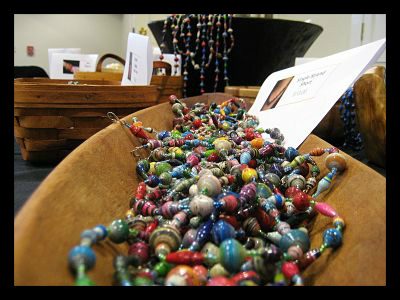
In 2004, BeadforLife was formed to provide women the opportunity to grow by giving them the tools to launch their own businesses. In the past 10 years, members of the beading program have initiated over 2,200 micro-businesses that operate on a very small scale.

Women who are part of the beading program have one task: rolling beads. By doing this, it gives the women a consistent source of income so they are no longer living on less than a dollar a day. The beading program is 18 months long, and every year, about three to four new groups are made. Each group consists of 40 to 60 women that go through three months of training on how to bead recycled paper into jewelry.

In addition to the training that the women get for beading, they also receive training in areas like business so that they will gain the skills needed to launch their own businesses one day. So far, statistical data has proven this method to be successful.

On average, while enrolled in the beading program, women’s income increases to seven to ten times their previous income. For these women, earning a steady income means more than just having money. An income means that they can eat healthier, get the right health care, put their kids in schools and also improve the living conditions for their family.

As part of the program, women must save some of their money so it can go toward a business of their own one day. This is a requirement, because it ensures that most of the women will continue to make money after the program. The promise of a stable future, makes the longevity of the program more effective. There are common businesses that women tend to open and those are: poultry rearing, restaurants, retail stores, vegetable stands, tailoring and renting rooms in their own homes.

BeadforLife has helped thousands of women get their families out of poverty. The organization reaches more than 1.2 million people and has raised millions to fight poverty. Due to the growth and success of the organization, it has expanded its line of products. In Northern Uganda the branch of the program buys Shea nuts. Currently, BeadforLife is partnered with over 760 women to buy Shea nuts during harvest. Products made from the women in this program are available for purchase on the organization’s website.

– Brooke Smith

Sources: BeadForLife, ONE
Photo: Flickr

October 7, 2014
https://borgenproject.org/wp-content/uploads/borgen-project-logo.svg 0 0 Borgen Project https://borgenproject.org/wp-content/uploads/borgen-project-logo.svg Borgen Project2014-10-07 08:00:062024-05-27 09:22:45BeadforLife Empowers Women with Business Ed.
Activism, Women, Women and Female Empowerment

Mountain2Mountain: Bikes for Change

Mountain2Mountain is a recently established nonprofit that believes change can happen through the use of bikes. One of its biggest campaigns is women’s rights and equality for women in Afghanistan.

It is illegal for women to ride bikes in Afghanistan. However, bikes have long been a “symbol of freedom of mobility.” In the United States, they were used as such during the women’s suffrage movement of the early 1990s.

M2M was founded in 2006 by Shannon Galpin. In 2009, she became the fist woman to bike across Afghanistan. The goal of this mission was to “challenge perceptions of gender.” One of her biggest inspirations was the four years she worked in Kandahar prison. In this all women’s Afghan prison, Galpin found that women there lacked a voice. These women had passionate stories of struggle and injustice and Galpin wanted to help them be heard.

This inspired the creation of two M2M projects, Combat Apathy and Strength in Numbers. Combat Apathy is the activist wing of M2M and is an online platform where women and men can share their stories of hardship and triumph. Strength in Numbers, or SIN, is a campaign to create awareness and support for women on bikes.

There will be a summit this fall in Rome for SIN in which expansion to other countries will be attempted, as well as a solidarity ride. The project is also organizing U.S. based summer bike camps, which are aimed at young girls who are at risk or have experienced gender violence.

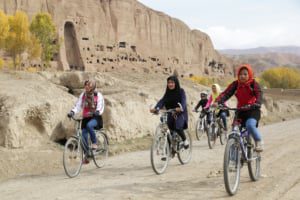
In Afghanistan, though, the biggest accomplishment for the SIN campaign is their support of the women’s cycling team. The project gives support to the team in the form of buying equipment, recruiting coaches, securing sponsorships, arraigning safe travel to and from training and financing regional traveling. SIN has even petitioned for the cycling team’s access as observers to the 2016 Olympics in Brazil, with further efforts to gain access to the 2020 Olympics in Tokyo.

An attempt at expanding the movement outside Kabul has also begun by starting the first women’s mountain biking team in the province of Bamiyan. The team is financed by SIN and given gear and clothing.

The press coverage and international media attention have helped raise the popularity of the cycling team and there has been evidence of growing national pride. This changing perception will help advance women’s rights in Afghanistan.

The goal of the Afghan women’s cycling team is to give women a chance to achieve freedom in an otherwise oppressive country. Cycling on the team is not just about exercise or confidence building for these women. Its about all Afghan women who can gain greater access to education and healthcare by riding bikes. Access to both leads to higher literacy rates and lower maternal mortality.

These women cyclist are extremely brave as they endure a lot of criticism and even violence for their actions: rocks are often thrown at them as they ride and they are insulted by passing cars.

One of the team members, Marjan Sidiqqi, said that, “They tell us that it is not our right to ride our bikes in the streets and such. We tell them that this is our right and that they are taking our right away. Then we speed off.” This is a bold thing to say in a country where many still believe that women who ride bikes dishonor their families and that women’s cycling is a moral crime slightly worse than adultery.

Mountain2Mountain is still in its infancy, so data on the nonprofit is hard to find. It has not yet been reviewed on charity network and not been completely evaluated by GuideStar. This does not mean it is illegitimate, only that attention should be paid to its development and individual and government donors should keep an eye out for possible support now or in future.

— Eleni Marino

Sources: Mountain2Mountain, Combat Apathy, CityLab, GuideStar
Photo: Mountain2Mountain

September 17, 2014
https://borgenproject.org/wp-content/uploads/borgen-project-logo.svg 0 0 Borgen Project https://borgenproject.org/wp-content/uploads/borgen-project-logo.svg Borgen Project2014-09-17 03:00:132024-05-27 09:21:44Mountain2Mountain: Bikes for Change
Global Poverty, Technology, Women

Facebook Helps Eliminate Health Care Barriers in Africa

eliminate health care barriers
As part of a trend to eliminate healthcare barriers for the poor, Facebook is helping to provide free access to advantageous websites to impoverished women in Africa. Some of these websites target pregnant women and advocate and educate for better maternal health.

At this point, inaccessibility to expensive data plans has been a large barrier between women and the internet. With a new mobile app that the company unveiled this past week, women will have free access to websites like MAMA (Mobile Alliance for Maternal Action) and WRAPP, which advocates for women’s rights. The application was designed in coordination with local government groups to fill in some of the communication gaps that persist.

With the first initiative scheduled for Zambia, the pilot program has the potential to branch out to other developing countries. Though the program is accessible to both men and women, women will be disproportionately helped through this program. With Zambia having a significant gender inequality gap, women will be able to gain more from having access to healthcare information and job postings that will now become more accessible.

As part of the growing technologies industry looking to expand their market to the estimated five billion people without internet access, Facebook is reaching out to the underexposed in Africa. CEO Mark Zuckerberg said of the project, “I believe connectivity is a human right.” With the motivation to connect and network users of the application to other parts of the country and the world, Zuckerberg is well on his way to an integrated global community.

The application is a game-changer for women’s rights, particularly in traditionally oppressive governments. With support from many international women’s rights groups as well as vocal laudation from the Executive Director of U.N. Women, the Facebook app has the potential to create a social revolution around the world.

– Kristin Ronzi

Sources: The Telegraph, Tech Crunch
Photo: TechCrunch

September 13, 2014
https://borgenproject.org/wp-content/uploads/borgen-project-logo.svg 0 0 Borgen Project https://borgenproject.org/wp-content/uploads/borgen-project-logo.svg Borgen Project2014-09-13 08:00:292024-12-13 17:51:11Facebook Helps Eliminate Health Care Barriers in Africa
Activism, Global Poverty, Women & Children, Women and Female Empowerment

Inner Mongolia: Changing China’s Views on Women

Inner Mongolia
In the northern Chinese province of Inner Mongolia, a recent conference was held by the Inner Mongolia Women’s Federation in the provincial capital. The topic of conversation was the role of women in the family and maintaining harmonious ties.

With the discussion taking place at a psychology center, psychologists provided an open dialogue about household relationships and engaged the women to openly discuss some problems and provide insight.

Though there are many who are considered homemaking women, the goal of the meeting was to provide insight, assistance and discussion around topics that previously had not been adequately discussed.

In recent months, Inner Mongolia has been in the forefront of equalizing opportunities for women. Along with having open dialogues about women’s interests in the capital, other events have focused on the professional development of women.

Though much of the Chinese agricultural business is dominated by men, women are becoming farming agents and spreading their professional wisdom with others. By including women in the conversation, the Chinese government is hoping to expand the potential of the agricultural business by accessing a greater population.

Though many of these local conferences are supported by women’s interest groups in the region, to improve domestic and professional conditions for women, Inner Mongolia is not alone. The dialogue in Inner Mongolia is reflective of a greater conversation in China as more women are entering the workforce and developing professional careers

With more conferences happening in large cities across China including Beijing, the recognition of women as resources for growth and development has influenced the way they are being acknowledged. While the dichotomy of women working professionally or staying home is still strong other ventures are emphasizing both roles.

These women’s interest groups are maximizing the opportunities of every day women both in Inner Mongolia and the rest of China. The projected goal of these endeavors is to help better economic conditions for women and enable greater social equality both in the home and in their professions.

– Kristin Ronzi

Sources: Women of China, Catalyst
Photo: Little Star


10 Facts about Poverty in China


September 6, 2014
https://borgenproject.org/wp-content/uploads/borgen-project-logo.svg 0 0 Borgen Project https://borgenproject.org/wp-content/uploads/borgen-project-logo.svg Borgen Project2014-09-06 12:00:142024-05-27 09:21:38Inner Mongolia: Changing China’s Views on Women
Page 65 of 82«‹6364656667›»

Get Smarter

  • Global Poverty 101
  • Global Poverty… The Good News
  • Global Poverty & U.S. Jobs
  • Global Poverty and National Security
  • Innovative Solutions to Poverty
  • Global Poverty & Aid FAQ’s
Search Search

Take Action

  • Call Congress
  • Email Congress
  • Donate
  • 30 Ways to Help
  • Volunteer Ops
  • Internships
  • Courses & Certificates
  • The Podcast
Borgen Project

“The Borgen Project is an incredible nonprofit organization that is addressing poverty and hunger and working towards ending them.”

-The Huffington Post

Inside The Borgen Project

  • Contact
  • About
  • Financials
  • President
  • Board of Directors
  • Board of Advisors

International Links

  • UK Email Parliament
  • UK Donate
  • Canada Email Parliament

Get Smarter

  • Global Poverty 101
  • Global Poverty… The Good News
  • Global Poverty & U.S. Jobs
  • Global Poverty and National Security
  • Innovative Solutions to Poverty
  • Global Poverty & Aid FAQ’s

Ways to Help

  • Call Congress
  • Email Congress
  • Donate
  • 30 Ways to Help
  • Volunteer Ops
  • Internships
  • Courses & Certificates
  • The Podcast
Scroll to top Scroll to top Scroll to top