• Link to X
  • Link to Facebook
  • Link to Instagram
  • Link to TikTok
  • Link to Youtube
  • About
    • About Us
      • President
      • Board of Directors
      • Board of Advisors
      • Financials
      • Our Methodology
      • Success Tracker
      • Contact
  • Act Now
    • 30 Ways to Help
      • Email Congress
      • Call Congress
      • Volunteer
      • Courses & Certificates
      • Be a Donor
    • Internships
      • In-Office Internships
      • Remote Internships
    • Legislation
      • Politics 101
  • The Blog
  • The Podcast
  • Magazine
  • Donate
  • Click to open the search input field Click to open the search input field Search
  • Menu Menu

Archive for category: United Nations

Information and stories about United Nations.

Foreign Aid, Global Poverty, United Nations

Rwandan Genocide: Lessons Learned, 20 Years Later

rwandan_genocide_20_years_later_child_opt
It was only twenty years ago that the now infamous “Genocide Fax” was sent, a detailed letter to the United Nations headquarters in New York explaining the brewing events leading up to the mass slaughter that we now know as the Rwandan Genocide.

The letter, sent by the then-Force Commander of the UN peacekeeping mission for Rwanda (UNAMIR), General Romeo Dallaire, explained that ethnic Hutu extremists were stockpiling weapons and distributing them to the militias. An informant had also revealed to him that “he has been ordered to register all Tutsi in Kigali” in preparation “for their extermination.” These harrowing discoveries prompted Dallaire to contact UN headquarters, convinced that it was necessary to act. The final line of the letter read, ‘Peux ce que veux. Allons-y,’ translating to ‘Where there is a will there is a way. Let’s go.’

The UN however, decided against acting. Then-Head of UN Peacekeeping Operations, Kofi Annan, instructed Dallaire to essentially do nothing, as “unanticipated repercussions” could ensue.

The repercussions that Dallaire anticipated did ensue, following the tragic plane attack that killed then-President Habyarimana just three months later.

Then came the horrifying Rwandan genocide that claimed nearly one million lives in less than 100 days.

Twenty years later the nation has far surpassed anyone’s expectations. Due to an onslaught of foreign aid and a revitalized Rwandan pride, the country has built itself back and shows no signs of stopping.

Under the leadership of President Paul Kagame, more than one million Rwandans have lifted themselves out of poverty and nearly all children attend school. Investment has nearly tripled since 2005 and economic opportunities abound. Malaria deaths have fallen more than 85 percent, and nine out of every 10 Rwandans claim that they “trust in the leadership of their country.” The transformations that Rwanda has made are far from over, as the country aims to be a middle-income nation by 2020.

These achievements prove just how much can be accomplished in the face of adversity. The Rwandan people have lifted their country out of despair and created a beacon of hope to all of those who still suffer under the dark cloud of genocide.

Not only that, but they have taught us a valuable lesson.

We have a responsibility as human beings to protect each other from such mass atrocities. Unfortunately, the United Nations learned this in a painful way. However, they have now been at the forefront of putting a stop to genocides in countries such as Libya, Kenya and the Democratic Republic of the Congo.

Twenty years later we remember all of those who lost their lives in the Rwandan genocide, and we thank them for the valuable lesson that we now must put into practice.

– Mollie O’Brien

Sources: The Guardian, The Huffington Post
Photo: Global Solutions

April 10, 2014
https://borgenproject.org/wp-content/uploads/borgen-project-logo.svg 0 0 Borgen Project https://borgenproject.org/wp-content/uploads/borgen-project-logo.svg Borgen Project2014-04-10 10:34:262019-12-11 13:21:53Rwandan Genocide: Lessons Learned, 20 Years Later
Human Rights, United Nations

For North Korea, It’s Still 1940

North Korea and the United Nations go head to head on matters of human rights. In a resolution passed on March 28, the UN Human Rights Council in Geneva condemned North Korea for “systematic, widespread and gross human rights violations, including crimes against humanity, that continue to be committed in the country.”

The resolution came shortly following a Human Rights Council Commission of Inquiry conducted earlier in the month, and received acceptance by 30 nations, against six opposing and 11 abstaining.

Many of the human rights violations allegedly occurring in North Korea are unparalleled in a world modernized by the 1948 UN Declaration of Human Rights. A great number of people are detained in prison camps for crimes they did not commit. Their guilt, it seems, is declared by association with family members or close friends of those who allegedly committed political crimes. The Commission report provided evidence for circumstances of rape, murder and torture within the prison labor camps.

North Korean officials did not appreciate the Commission and resolution results. So Se Pyong, North Korea’s UN envoy, claimed the UN Human Rights Council had politically confronted North Korea, putting the nation on the defensive. When UN Human Rights investigators asserted North Korean Supreme Leader Kim Jong Un be tried for crimes devastatingly akin to those committed under Nazi rule, the country’s ambassador told the Council to “mind your own business.”

Despite the horrendous situation the investigative Commission has shown, many activists are pleased that the results have led to such strong support for the UN resolution.  Rather than stopping at investigations of nuclear proliferation and weapons development, the United Nations will now be putting Security Council and General Assembly staff to work on bringing justice to North Korea.

At this point, some world powers are wary of the extent that can be done regarding the issue. At most, North Korea could be taken to the International Criminal Court by UNSC, yet China and Russia, both veto powers, voted against the March resolution. However, an increase in investigation could possibly turn the tide. Human rights may not yet be completely universal, but for now the world is making progress.

– Jaclyn Stutz

Sources: Al Jazeera, Amnesty International, Human Rights Watch, Reuters
Photo: Yahoo

April 5, 2014
https://borgenproject.org/wp-content/uploads/borgen-project-logo.svg 0 0 Borgen Project https://borgenproject.org/wp-content/uploads/borgen-project-logo.svg Borgen Project2014-04-05 04:00:082024-05-26 23:24:00For North Korea, It’s Still 1940
Human Rights, United Nations

United Nations Spotlights U.S. Human Rights Violations

human_rights
In a report released by the UN Human Rights Committee (UNHRC), the United States was found to be in violation of previously established human rights law. The International Covenant on Civil and Political Rights was placed into effect in the mid-1970s as international law and the U.S. has failed to uphold it with practices including torture in Guantanamo Bay, drone strikes and massive surveillance practices.

The U.S. has already broken United Nations charters multiple times with military interventions in the Middle East.

Bulk data collection however, has become one of the major domestic human rights violations following Edward Snowden’s whistleblowing of the NSA program. The UNHRC urged the U.S. to remove their surveillance program, as it is a major violation of the right to privacy.

Moreover, the surveillance spotlight in the U.S. is not limited to the NSA. The UN Congressional Intelligence Committees have addressed surveillance by executive agencies in the past, but have failed to produce any action—until just recently.

The Senate Intelligence Committee, tasked with overseeing intelligence agencies in the executive branch such as the National Security Agency and the Central Intelligence Agency, have made allegations that the CIA spied on computers that the committee had used. The allegations have thus sparked ongoing conflict between the two branches of government and human rights advocates are stepping into the ring.

A 6,300 page long Senate Intelligence Committee report on the CIA “enhanced interrogation” program is waiting to be voted on for release. The report covers highly controversial interrogation tactics and is expected to be sent to President Barack Obama’s desk for approval to be publicly released. The Senate Intelligence Committee’s Chairwoman, Dianne Feinstein (D-Calif.) has also said there is currently enough support for the vote to pass; however, the official vote is set to occur later in the week.

Concerning the release of the controversial report, President Barack Obama stated, “I would urge them to go ahead and complete the report and send it to us, and we will declassify those findings so that the American people can understand what happened in the past.”

– Jugal Patel

Sources: Politico, The Huffington Post, Foreign Policy, The Guardian, The Washington Post
Photo: Popular Resistance

April 4, 2014
https://borgenproject.org/wp-content/uploads/borgen-project-logo.svg 0 0 Borgen Project https://borgenproject.org/wp-content/uploads/borgen-project-logo.svg Borgen Project2014-04-04 04:00:202024-12-13 17:50:12United Nations Spotlights U.S. Human Rights Violations
Global Poverty, United Nations

How Protecting the Environment Alleviates Poverty

A common misconception is that protecting the environment exacerbates poverty in poor nations because it prevents agricultural development and the ability to harvest natural resources. This is far from the truth. In fact, environmental protection initiatives actually help alleviate poverty.

A study done in Costa Rica reveals that ecotourism efforts contribute to decreased poverty levels in regions situated near protected parks and natural areas. Thanks to the economic opportunities provided by the ecotourism sector, these regions have seen nearly 66% reduction in poverty. Paul Ferraro, professor of economics and environmental policy at Georgia State University, finds three triggering factors that show a direct correlation between poverty reduction and environmental conservation.

Triggers of Poverty Reduction Linked to Environmental Protection

  1. Changes in tourism and recreational activities
  2. Infrastructural changes (e.g. roads, health clinics and schools)
  3. Changes in ecosystem services (e.g. crop pollination and nutrient cycles)

A similar study was done by the Proceedings of the National Academy of Sciences (PNAS) on protected areas of Thailand and Costa Rica established 15 years ago. The study concluded, “the net impact of ecosystem protection was to alleviate poverty.” Communities around protected areas in Costa Rica experienced a 10% decrease in poverty, while the communities in Thailand saw almost a 30% reduction. As in the previous study, PNAS finds that tourism revenue and job opportunities directly contributed to reduced levels in poverty.

Protecting biodiversity is critical for 75% of the world’s poor who live in rural areas and depend on sustenance farming and fishing for survival. Disappearing or declining species in an ecosystem directly impacts people’s ability to provide food for their families. Local villagers in the Sierra Leone region of West Africa, for example, experienced direct effects of biodiversity loss as a result of overfishing and pollution. As fishing makes up their main source of food, the coastal community struggled to sustain their protein-rich diet with the loss of diversity in fish stocks. The World Bank helped restore the marine ecosystem by improving fishing regulations and introducing sustainable fishing techniques in the area.

The World Bank invests over $1 billion in nature and wildlife protection, and an additional $300 million in environmental and natural resource law enforcement. Moreover, investments in biodiversity help create jobs and raise incomes around the world. The Bank has already helped boost income levels in communities within rural regions of South Africa, Kenya and Honduras. The long-term impacts of these investments contribute simultaneously to two of the eight U.N. Millennium Development Goals:

Eight U.N. Millennium Development Goals:

  1. Eradicate extreme poverty and hunger
  2. Achieve universal primary education
  3. Promote gender equality and empower women
  4. Reduce child mortality
  5. Improve maternal health
  6. Combat HIV/Aids, malaria and other diseases
  7. Ensure environmental sustainability
  8. Develop a global partnership for development

The protection of natural ecosystems from environmental degradation, such as pollution, deforestation and biodiversity loss, ensures the safety and stability of local impoverished communities that rely on those precious natural resources for survival. Environmental protection has proven to be a key factor in poverty reduction around the world, and it is critical that international organizations, like the World Bank, continue to support global initiatives in hopes of making the UN Millennium Development Goals a reality.

– Gloria Kostadinova

Sources: Nature World News, National Geographic, Triple Pundit, World Bank, United Nations
Photo: Maag-Uma

March 28, 2014
https://borgenproject.org/wp-content/uploads/borgen-project-logo.svg 0 0 Borgen Project https://borgenproject.org/wp-content/uploads/borgen-project-logo.svg Borgen Project2014-03-28 04:00:332024-05-26 23:22:11How Protecting the Environment Alleviates Poverty
Development, Global Poverty, Poverty Reduction, United Nations

World Poverty on the Decline

world poverty
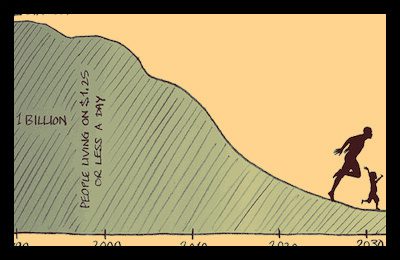
Despite the ever-pressing need to lend aid to the global community, as of recently, world poverty has been declining-presumably from a convergence of factors such as foreign aid, economic stabilization and increased development. As a result of increased investment in education, health, housing and facilitated access to water, living conditions around the globe have undergone improvement, further contributing to the decline in world poverty. According to a development report by the United Nations, the decline of poverty in the developing world was surpassing predictions.

The UN reported that “The world is witnessing an epochal ‘global re-balancing’ with higher growth in at least 40 poor countries helping lift hundreds of millions out of poverty and into a new ‘global middle class.’ Never in history have the living conditions and prospects of so many people changed so dramatically and so fast.” Furthermore, shortly after the release of the UN report, Oxford University conducted a study supporting the UN’s findings.

According to Oxford University’s poverty and human development initiative, poverty in many regions of the world is no longer as acute. According this initiative, acute poverty in the poorest countries could become eliminated within the short time frame of 20 years. Among the countries that could experience the eradication of severe poverty are Nepal, Bangladesh, Ghana, Tanzania and Bolivia.

Furthermore, the method of gauging poverty has also changed. Sabine Alkire and Maria Emma Santos of the UN engendered the Multidimensional Poverty Index (MPI) in 2010 to provide a more compressive measure of poverty. The MPI measures poverty along ten dimensions, such as nutrition, child morality, schooling, cooking fuel, water, sanitation, electricity and infrastructure. Unlike older measures of poverty that overlook critical indicators of poverty such as nutrition and health, the MPI is a far more thorough assessment.

Despite the economic crises of 2008 and 2009 that had catapulted the global economy into a recession, the world’s poorest nations are still able to rapidly approach the achievement of Millennium Development Goals. According to estimates by the World Bank, the global poverty rate is projected to fall below 15 percent by 2015, implying that other consequences of poverty such as hunger and death are also projected to decline significantly.

– Phoebe Pradhan

Sources: The Guardian, UN
Photo: Dreambook

March 5, 2014
https://borgenproject.org/wp-content/uploads/borgen-project-logo.svg 0 0 Borgen Project https://borgenproject.org/wp-content/uploads/borgen-project-logo.svg Borgen Project2014-03-05 10:23:112024-06-05 01:57:13World Poverty on the Decline
Developing Countries, Development, Refugees and Displaced Persons, United Nations

Typhoon Recovery in the Philippines: 100 Days

typhoon_recovery
It’s been more than 100 days after the devastating Typhoon Haiyan hit the Philippines and recovery efforts are still underway for those who have been displaced from their homes.

The storm, one of the most powerful ever recorded, hit the archipelago on November 8th, killing nearly 6,000 people and displacing 4.1 million.

A government-led recovery effort, known as the Strategic Response Plan (SRP), was launched following the typhoon. The plan covers the next twelve months and requires $788 million, of which 45% has already been received.

Along with these typhoon recovery efforts, the United Nations and its affiliated partners have helped to provide food, medicine, water, and sanitation and hygiene assistance to those affected. Tents and tarpaulins have been distributed to approximately 500,000 families, but many more still remain without shelter.

UN Humanitarian Coordinator for the Philippines, Luiza Carvalho notes that, “the need for durable shelter for millions of people whose homes were damaged or destroyed is critical.”

In Tacloban, a city of 250,000, major typhoon recovery efforts have been underway to pump money back into the local economies. Coconut farmers and fishermen represent the backbone of the economy in this area but their livelihoods have been severely threatened by the storm. In response, the UN development programme has recently implemented both short-term and long-term plans to help farmers get back on their feet.

Oxfam has noted that the Filipino government has been slow to deliver funds for agricultural and reconstruction support.

Thanks to generous donor contributions, great things have been achieved in the relief phase of the recovery effort. In the coming weeks, it is critical that the international community continues to provide support to those whose lives have been devastated by Typhoon Haiyan.

In a recent UN statement, Carvalho noted, “the Filipino people should be commended for the pace of progress that we have seen in the first 100 days. But we cannot afford to be complacent.”

– Mollie O’Brien

Sources: The Guardian, UN
Photo: Aljazeera

February 26, 2014
https://borgenproject.org/wp-content/uploads/borgen-project-logo.svg 0 0 Borgen Project https://borgenproject.org/wp-content/uploads/borgen-project-logo.svg Borgen Project2014-02-26 22:20:022024-06-05 01:57:11Typhoon Recovery in the Philippines: 100 Days
Food & Hunger, Foreign Aid, United Nations

U.N. Security Council Proposes Rules Against Syria

UN Security Council
The continuing conflict in Syria between the Bashar al-Assad’s regime and opposition forces, the National Coalition, has led to a grave population in crisis where basic humanitarian needs are not being met.

But despite the push for nationwide access to United Nations relief aid, the Syrian government is determined to keep the course with restrictions. Thus, western powers of the U.N. Security Council have opined for sanctions against Syria.

Russia, however, has continued to veto such proposals.

United States President Barack Obama, alongside French President Francois Hollande, are adamant that save for Russia, the Security Council is completely in favor of aiding the undernourished population. Obama levies criticisms towards Russia in obstructing the Security Council.

The Syrian city of Homs, previously blockaded, recently received food aid under a ceasefire. While its war-torn population, ravaged by famine and in dire need of medical supplies, obtained aid; an estimated 200 individuals were evacuated. The two-year siege was broken with the delivery of a month’s worth of food.

Though the success of the recent ceasefire in Homs prevailed, the conflict is far from over.

The National Coalition also has put pressure on Russia. With peace talks currently underway in Switzerland, the Syrian opposition has expressed that the Russians should push the Syrian government towards a resolution.

In addition, the opposition proposes a transitional government that will maintain a ceasefire throughout the nation; the U.N. would run the proposed government.

U.S. Secretary of State John Kerry has also agreed on the need for a transitional government where Assad is not connected.

With discussions at a standstill and a divided U.N. Security Council, progress is slow towards rebuilding a nation where thousands of its civilians have been harmed by violence and hunger with displacement even increasing the numbers negatively afflicted by the conflict.

– Miles Abadilla

Sources: Al Jazeera, Cleveland.com, New York Times, New York Times
Photo: CS Monitor

February 24, 2014
https://borgenproject.org/wp-content/uploads/borgen-project-logo.svg 0 0 Borgen Project https://borgenproject.org/wp-content/uploads/borgen-project-logo.svg Borgen Project2014-02-24 12:13:452024-05-25 00:19:02U.N. Security Council Proposes Rules Against Syria
Global Poverty, Hunger, Inequality, United Nations

With, Without: How Greed Perpetuates Hunger

meat_greed
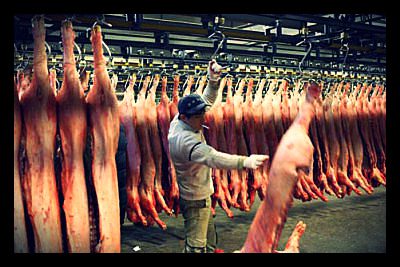
There is enough food in the world to feed everyone, but due to a variety of factors, global hunger persists. In fact, according to the United Nations’ Food and Agriculture Organization (FAO,) the world produces enough food for everyone to intake 2,700 calories a day, much more than the recommended 2,000.

Nevertheless, nearly a billion people go to bed hungry. The reason behind this is multifaceted. Astounding amounts of food are wasted due to poor transportation and storage infrastructure. Even more goes in the trash uneaten. A great deal of grain crops are used for bio-fuels and animal feedlots rather than starving people. Ultimately, it comes down to the fact hunger is caused by inequality.

How are people to combat this inequality? Countries such as Brazil and Ghana have shown success through raising their minimum wage, giving cash to poor people, and investing in small-scale farms. World hunger comes down to the fact that many people simply cannot afford food, with over a billion people living on $1 a day.

The history of poverty begins with globalization and colonialism. When land is privatized and controlled by the few, the majority of people are forced into selling their work for food. Land ownership in the hands of the few is the main cause that spurred income gaps throughout the world.

Colonies exploited the resources and land of their colonies and kept them saddled in debt by claiming ownership in order to maintain this advantage for the long run. Today, less than 25 percent of people use more than 80 percent of the world’s resources. This is a direct result of the economic repression that so many populations are under and have been under for hundreds of years.

Greed led to colonial powers gaining monopolies and establishing claims on resources that were not theirs. Greed led them to effectively enslaving their colonies under shackles of labor and heavy debt for land and resources that originally belonged to the colonies. Although there are many great NGOs and advocacy agencies that have brilliant ideas for solutions to global hunger, few acknowledge colonialism as the original foe, and lack of land ownership as the original problem.

Perhaps people can examine this complex issue more clearly if they perceive it as a parable. In a sun-drenched country, men live peaceful lives on their own farms. One day, a greedy man takes over, burning all their farms and forcing them to work for him. This man builds one massive farm, and exploits their labor and pushes growth, seeking to eat up the rest of the smaller farms in the land. In the end, he is the one who gets all the profits, while the rest barely survive.

This is not a story anyone wants to hear, but it is one that has been in action for centuries. Let us acknowledge this past and seek ways to start a new story.

– Jordan Schunk

Sources: Alternet, The Economist, The Guardian, Huffington Post

January 13, 2014
https://borgenproject.org/wp-content/uploads/borgen-project-logo.svg 0 0 Borgen Project https://borgenproject.org/wp-content/uploads/borgen-project-logo.svg Borgen Project2014-01-13 22:13:062024-05-26 23:02:40With, Without: How Greed Perpetuates Hunger
Advocacy, United Nations

United Nations Treaty Collection

To promote international progress and security, the United Nations creates a series of treaties among nations. The United Nations Treaty Collection (UNTC) is an online database providing full texts of United Nations Treaty Series, League of Nations Treaty Series and multilateral treaties filed by the Secretary-General of the U.N. (SGUN) and its latest status.

The database offers access to over 200,000 bilateral and multilateral treaties filed by the Secretariat. They are recorded in their authentic languages, along with translations into English and French. More than 550 major multilateral instruments cover a wide range of issues that catch global attention, such as human rights, disarmament, commodities, refugees, environment and crimes.

The UNTC offers multiple search criteria so that people can reach treaties by searching participants, subject terms, registration number, date of adoption or keywords.

Apart from treaties, the UNTC publishes information about annual treaty events organized by the Treaty Section of the U.N. The SGUN invites heads of states and governments to attend the event and identifies a series of treaties to be the focus of the event every September. The treaty events aim to advocate universal participation in the multilateral treaties deposited with the SGUN, raise global awareness of international challenges and encourage active engagement of member states in their resolution within the international legal framework.

Treaty training information is also available on the UNTC website. The U.N. hosts annual regional training seminars and workshops on treaty law and domestic implementation of treaty obligations in different countries. The U.N. currently offers member states technical assistance in connection with a range of legal matters. Such assistance includes providing advice, expertise, research, analysis and training.

– Liying Qian

Sources: Learn Stuff, United Nations Treaty Collection, Utrecht University Library
Photo: Wikipedia

January 8, 2014
https://borgenproject.org/wp-content/uploads/borgen-project-logo.svg 0 0 Borgen Project https://borgenproject.org/wp-content/uploads/borgen-project-logo.svg Borgen Project2014-01-08 16:49:332024-05-25 00:36:04United Nations Treaty Collection
Advocacy, Children, Developing Countries, Global Health, Global Poverty, Health, Human Rights, Poverty Reduction, United Nations

Child Labor: An Overview

Child_Labor_an_Overview
“Millions of children are victims of violence and exploitation. They are physically and emotionally vulnerable and they can be scarred for life by mental or emotional abuse. That is why children should always have the first claim on our attention and resources. They must be at the heart of our thinking on challenges we are addressing on a daily basis. We know what to do, and we know how to do it. The means are at hand, it is up to us to seize the opportunity and build a world that is fit for children,” remarked Ban Ki-moon, Secretarty-General of the United Nations on November 20, 2009, on the Twentieth Anniversary of the Convention on the Rights of the Child.

Just as Ban Ki-moon mentioned, children are not physically or mentally ready to enter the labor force. With the lack of physical abilities, the safety of the workplace cannot be ensured, for both the children and other employees. In fact, children are more likely to be abused and mistreated in an environment centering around child labor.

“Few human rights abuses are so widely condemned, yet so widely practiced. Let us make (child labor) a priority. Because a child in danger is a child that cannot wait,” stated Kofi Annan, Former UN Secretary-General. Around the world, more than 211 million children between the age of 5 and 14 are being forced to work. Among these children, 120 million children are working full time.

To eradicate child labor, people should first understand what leads to such situations. For example, poverty is the first and foremost reason of child labor.  Since many parents do not have the capability to support their household, children end up working to help support the family’s daily lives. Another reason for child labor is a poor education system.

When education is expensive or not readily available, impoverished parents do not see the benefit of learning and think that working is a better alternative. In the United States, there are many laws that prohibit child labor, however, in some countries, child labor laws exist, but are not enforced. Companies can thus take advantage of the cheap labor and further exploit it.

On the other hand, many organizations have been striving to put a stop to child labor by various programs. For example, the United Nations has been running campaigns to raise the awareness of child labor across various nations and airing them in global events such as the World Cup. Moreover, in order to raise the level of education in poverty stricken areas, the Red Cross and governments of third world countries have been recruiting teachers to volunteer in remote areas.

– Phong Pham

Sources: Child Labor Public Education Project, UN: Agencies Urge Greater Action, International Labor Rights Forum, UN: Child Labor
Photo: Addicting Info


Facts about Child Labor

December 26, 2013
https://borgenproject.org/wp-content/uploads/borgen-project-logo.svg 0 0 Borgen Project https://borgenproject.org/wp-content/uploads/borgen-project-logo.svg Borgen Project2013-12-26 04:00:472024-05-25 00:32:50Child Labor: An Overview
Page 29 of 35«‹2728293031›»

Get Smarter

  • Global Poverty 101
  • Global Poverty… The Good News
  • Global Poverty & U.S. Jobs
  • Global Poverty and National Security
  • Innovative Solutions to Poverty
  • Global Poverty & Aid FAQ’s
Search Search

Take Action

  • Call Congress
  • Email Congress
  • Donate
  • 30 Ways to Help
  • Volunteer Ops
  • Internships
  • Courses & Certificates
  • The Podcast
Borgen Project

“The Borgen Project is an incredible nonprofit organization that is addressing poverty and hunger and working towards ending them.”

-The Huffington Post

Inside The Borgen Project

  • Contact
  • About
  • Financials
  • President
  • Board of Directors
  • Board of Advisors

International Links

  • UK Email Parliament
  • UK Donate
  • Canada Email Parliament

Get Smarter

  • Global Poverty 101
  • Global Poverty… The Good News
  • Global Poverty & U.S. Jobs
  • Global Poverty and National Security
  • Innovative Solutions to Poverty
  • Global Poverty & Aid FAQ’s

Ways to Help

  • Call Congress
  • Email Congress
  • Donate
  • 30 Ways to Help
  • Volunteer Ops
  • Internships
  • Courses & Certificates
  • The Podcast
Scroll to top Scroll to top Scroll to top