• Link to X
  • Link to Facebook
  • Link to Instagram
  • Link to TikTok
  • Link to Youtube
  • About
    • About Us
      • President
      • Board of Directors
      • Board of Advisors
      • Financials
      • Our Methodology
      • Success Tracker
      • Contact
  • Act Now
    • 30 Ways to Help
      • Email Congress
      • Call Congress
      • Volunteer
      • Courses & Certificates
      • Be a Donor
    • Internships
      • In-Office Internships
      • Remote Internships
    • Legislation
      • Politics 101
  • The Blog
  • The Podcast
  • Magazine
  • Donate
  • Click to open the search input field Click to open the search input field Search
  • Menu Menu

Archive for category: United Nations

Information and stories about United Nations.

United Nations

Report Seeks End to AIDS Epidemic

Recent statistics released in a new report by UNAIDS show that the number of new HIV/AIDS cases have been decreasing steadily. This new data shows that for every 10 percent increase in treatment coverage, there is a one percent decline in new infections among those living with HIV. However, the report also noted that far more international effort was needed because this current pace is insufficient to completely end the AIDS epidemic.

In 2013, 2.1 million new HIV/AIDS cases were recorded, down from 3.4 million new cases in 2001. 2013 also saw an additional 2.3 million people gain access to the life-saving antiretroviral therapy (ART), which is a drug that substantially suppresses many of the symptoms of AIDS and increases life spans. This means that a grand total of 13 million people have previously had or currently have access to ART. AIDS-related deaths have fallen by one-fifth in the past three years.

The most headline-grabbing piece from the report came from Michael Sidibé, Executive Director of UNAIDS, who said, “If we accelerate all HIV scale-up by 2020, we will be on track to end the epidemic by 2030.”

However it is important to know that while there has been significant improvement, considerable work still needs to be done. Sidibé went on to say that if we don’t continue to scale up efforts, then we would “[add] a decade, if not more” to the 2030 goal.

Only 15 countries account for more than 75 percent of the 2.1 million new HIV infections in 2013. In Sub-Saharan Africa the countries of Nigeria, South Africa and Uganda account for 48 percent of all new HIV infections in the region. Fewer than four in 10 people currently with HIV lack the ART necessary to survive. HIV prevalence is estimated to be 12 times higher in sex workers, 19 times higher among gay men, 28 times higher in drug injectors and up to 49 times higher among transgender women. Sub-Saharan adolescent girls and young women account for one in four new HIV infections.

While there are a tremendous amount of fascinating statistics on the matter, it’s important to not get lost in them. This new report from UNAIDS shows that progress is being made, but an even stronger effort is needed in order to end the AIDS epidemic in a timely fashion and save millions more lives.

– Andre Gobbo

Sources: BBC, UNAIDS 1, UNAIDS 2
Photo: New America Media

July 26, 2014
https://borgenproject.org/wp-content/uploads/borgen-project-logo.svg 0 0 Borgen Project https://borgenproject.org/wp-content/uploads/borgen-project-logo.svg Borgen Project2014-07-26 04:00:312024-05-27 09:18:44Report Seeks End to AIDS Epidemic
Advocacy, Global Poverty, Health, United Nations

SDG Post 2015

As the finish line for the Millennium Development Goals quickly approaches, talks are already under way to establish the goals for the next 15 years. The new plan, called the Sustainable Development Goals (SDG), is all about renewing the world’s commitment to helping the world’s poor.

As world leaders begin to establish these new goals, food security and nutrition remain crucial elements. David Taylor, Economic Justice Policy Advisor for Oxfam, tells the Inter Press News Agency, “In a world that produces enough food to feed everyone, there is no excuse for anyone to go hungry.”

Yet, as of today, one in eight people still go hungry or is ailed by some type of malnutrition. This is approximately 842 million people who are under-nourished. Poor nutrition causes 45 percent of deaths in children under five—this is 3.1 million children every year.

While, according to Taylor, ending world hunger is not an unrealistic endeavor, we still face enormous challenges in food security and agriculture. It is imperative to formulate new pathways to overcome inefficiency, corruption and wastefulness.

On June 2, the Open Working Group (OWG) in collaboration with the UN, released Draft Zero on SDG with 17 goals to be accomplished in the next 15 years. In terms of food, one of the main emphases of the program is to boost production by locals, women and marginal groups.

Despite the optimism of those proposing SDG, it is not without critics. In recent months, SDG and its proponents are being accused of bypassing water supply and sanitation as basic human rights. According to a letter of protest signed by 77 non-governmental organizations (NGOs), including Biofuel Watch, Blue Planet Project, Corporate Accountability International and End Water Poverty Coalition, their protest arises from the fact that references to water and sanitation as human rights has been removed from SDG.

While the road ahead of a final SDG is still long and complex, the UN Secratary General is expected to provide an update on the final version of SDG by the end of this year. Proponents and critics are expected to work together, and the UN would be taking into account various contributions in order to achieve a plan that best suits the needs of the most disadvantaged sectors of the global population. The final disclosure of the post-2015 development agenda is expected to coincide with a high-level Summit in September of 2015.

– Sahar Abi Hassan

Sources: Inter Press Service 1, Inter Press Service 2, World Food Programme
Photo: Kean University

July 24, 2014
https://borgenproject.org/wp-content/uploads/borgen-project-logo.svg 0 0 Borgen Project https://borgenproject.org/wp-content/uploads/borgen-project-logo.svg Borgen Project2014-07-24 13:47:502024-12-13 17:49:35SDG Post 2015
Refugees and Displaced Persons, United Nations

Syrian Crisis Making UN Rethink Refugee Camps

Since the start of the Syrian conflict, 2.8 million registered refugees have fled the country and over four million have been displaced internally. With no end in sight, the United Nations has begun to rethink how to handle mass influxes of refugees in host countries.

Refugee camps have long been the main way international aid groups have sheltered people fleeing from conflicts around the world. However, this practice is being reconsidered by the UN, which hopes to place refugees in local communities as opposed to camps.

In camps, refugees often do not have the opportunity to work and are usually confined to restricted areas. However, when refugees are integrated into local communities, they are able to become more self-reliant and contribute to the local economy. This also allows the UN to utilize their funding on already existing communities, as opposed to building and maintaining brand new camps.

Although integration into local communities is preferred for refugees it is ultimately up to the host country–and many have been reluctant. Host countries often experience a drain in resources due to increases in refugee populations, fueling an increase in tensions between the two groups.

The UN hopes to convince host countries that they can benefit economically by allowing refugees to integrate. In addition to basic market advantages, host countries will also be eligible for Targeted Development Assistance (TDA).

TDA allows the UN as well as donor states (such as the United States) to specifically allocate monies to countries that host large refugee populations. The goal is to help host countries provide better security, medical assistance and supplies, as well as educational and vocational training within their existing communities. These services will not only benefit the refugees, but also the lives of the local populations.

A host country cannot be expected to bear the brunt of the refugee influx on its own. Furthermore, camp situations are often unable to provide anything beyond basic necessities, and do not allow refugees enough economic freedom to become more self-reliant. Because of this, international aid is used at a faster rate. As the world experiences a surge in refugees, rethinking how to provide a safe place for refugees while also considering the effects on local populations is essential in order to avoid the development of further conflict.

– Andrea Blinkhorn

Sources: IRIN, U.S. Department of State, The New York Times, UNHCR
Photo: IRIN

July 19, 2014
https://borgenproject.org/wp-content/uploads/borgen-project-logo.svg 0 0 Borgen Project https://borgenproject.org/wp-content/uploads/borgen-project-logo.svg Borgen Project2014-07-19 16:00:112024-05-27 09:18:30Syrian Crisis Making UN Rethink Refugee Camps
Development, Global Poverty, Technology, United Nations

SDGs: Future of Development

2015 will mark the target year for the United Nations Millennium Development Goals (MDGs,) a set of eight development objectives set by world leaders as a commitment to reduce extreme poverty worldwide. The current goals seek to:

  • Eradicate extreme poverty and hunger
  • Achieve universal primary education
  • Promote gender equality and empower women
  • Reduce child mortality
  • Improve maternal health
  • Combat HIV/AIDS, malaria, and other diseases
  • Ensure environmental sustainability
  • Develop a global partnership for development

The U.N. recently released the 2014 MDG Annual Report, in which it applauds progress toward the Millennium Development Goals, encourages continued effort for the initiative’s remaining year and lays the groundwork for a post-2015 development agenda. The new set of goals, referred to as the Sustainable Development Goals, ambitiously aims to “end poverty everywhere” by 2030. A zero draft was released on June 2, in which the Open Working Group laid out 17 post-2015 goals. Concerns have been raised over the length of the draft and the abstract nature of the objectives, which are listed as follows:

  • End poverty everywhere
  • End hunger, improve nutrition and promote sustainable agriculture
  • Attain healthy lives for all
  • Provide quality education and life-long learning opportunities for all
  • Attain gender equality, empower women and girls everywhere
  • Ensure availability and sustainable use of water and sanitation for all
  • Ensure sustainable energy for all
  • Promote sustained, inclusive and sustainable economic growth, full and productive employment and decent work for all
  • Promote sustainable infrastructure and industrialization and foster innovation
  • Reduce inequality within and between countries
  • Make cities and human settlements inclusive, safe and sustainable
  • Promote sustainable consumption and production patterns
  • Tackle climate change and its impacts
  • Conserve and promote sustainable use of oceans, seas and marine resources
  • Protect and promote sustainable use of terrestrial ecosystems, halt desertification, land degradation and biodiversity loss
  • Achieve peaceful and inclusive societies, access to justice for all and effective and capable institutions
  • Strengthen the means of implementation and the global partnership for sustainable development

One notable characteristic of the proposed list of SDGs is its emphasis on science and technology. The draft touches on issues of climate change, water sanitation, energy supply, biodiversity preservation and ocean conservation. Where the document falls short, according to voices in the scientific community, is in its implementation section, which fails to explicitly define the strengthening of science and technology in developing countries as a key focus. Yet, besides the arguments between scientific and political pundits, the trajectory of the SDG project is clear. As published in the SDG zero draft, “we recognize that poverty eradication, changing unsustainable and promoting sustainable patterns of consumption and production and protecting and managing the natural resource base of economic and social development are the overarching objectives of and essential requirements for sustainable development.” – Kayla Strickland Sources: United Nations 1, United Nations 2, SciDev.net 1, SciDev.net 2 Photo: Reegle

July 17, 2014
https://borgenproject.org/wp-content/uploads/borgen-project-logo.svg 0 0 Borgen Project https://borgenproject.org/wp-content/uploads/borgen-project-logo.svg Borgen Project2014-07-17 16:00:282024-05-27 09:18:32SDGs: Future of Development
Activism, Children, United Nations, USAID

Global March Against Child Labor: Continued Progress

Global March Against Child Labor
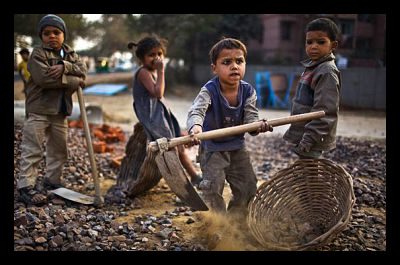
In 1998, a group of forward-thinking activists organized the Global March Against Child Labor. It took groups from over 100 countries to lead a march that crossed 103 countries and ended at the International Labour Organization (ILO) in June 1998, where activists from all over the world rallied to end child labor.

In response, the ILO began the World Day Against Child Labor in 2002. Every year on June 12, governments, citizens and civil societies gather to focus the world’s attention on child laborers and create campaigns to help them.

The movement has lofty ambitions but is still doing a great job of fulfilling them. Before the turn of the millennium, there were nearly 250 million children who were child slaves. The figure has now dropped almost 100 million and is estimated to be around 168 million.

Girls in particular have benefited from this as their numbers have dropped nearly 40 percent since then, while boys have dropped 25 percent. Despite this, some 88 million children still work in potentially fatal jobs.

Like many problems that need to be solved, one method employed in the reduction of child labor is simply raising awareness. The Global March Against Child Labor has proven to governments and civil societies around the world that this is something that needs to be stopped.

The U.S. Department of Labor has played a critical role in producing promotional documents and reports that have been quite successful in raising awareness of this terrible issue. Additionally, USAID acknowledged the power of video and strung together compelling footage in what eventually came to be a feature film about child labor, titled “Stolen Childhoods.”

USAID has played a big role as well in raising awareness. Through the Global Labor Program, USAID has helped workers in Liberia mobilize against employers and has ensured that any exploitative wage practices were discontinued. As children were typically employed in rubber plants in Liberia, USAID managed to ensure that children would not be separated from their parents if they worked, and also oversaw the building of a school on the plant. The employers agreed to pay the adults a living wage.

Another entity that is vital to ending child labor is business. Thanks to the Global March Against Child Labor and USAID’s awareness campaigns, a spotlight has been placed on businesses and their obligation to ensuring that children are not working.

The most prominent advocate of this is the program GoodWeave. This is a system by which companies in India can be certified to ensure that children are not used in the creation of rugs or carpets. Since its inception in 1995, GoodWeave has approved of over 11 million carpets. In that time, the number of children who work in carpet factories has dropped from 1 million to 250,000.

The Global March Against Child Labor was the beginning of a bold social movement, but now we must celebrate and continue its ongoing achievements.

– Andrew Rywak

Sources: USAID Blog, International Labour Organization, U.S. Department of Labor, Global March
Photo: List Top Tens

July 10, 2014
https://borgenproject.org/wp-content/uploads/borgen-project-logo.svg 0 0 Borgen Project https://borgenproject.org/wp-content/uploads/borgen-project-logo.svg Borgen Project2014-07-10 04:00:532024-12-13 17:50:24Global March Against Child Labor: Continued Progress
Food & Hunger, United Nations

Winning the Battle Against Hunger

By the end of 2013, the Food and Agriculture Organization of the United Nations recognized 38 countries that were able to reduce by half the proportion of people suffering from hunger. The result meets the objective for the first U.N. Millennium Development Goal. In 2014, more nations continue to successfully reach the goal.

On 16 June 2014, the FAO recognized China, Morocco and Chile for their exceptional efforts in the fight against global hunger and for achieving the first U.N. Millennium Development Goal, bringing the total number of nations to 40.

China has made significant strides. In 1990 – 92, 272.1 million people suffered from hunger; today that number has been reduced to 158.0 million. The progress accomplished by the Chinese is even more remarkable when looking further back into the nation’s history. In 1979, more than one third of the people in China were hungry and that number has declined to less than 10 percent, which is lower than in the United States. And the country has moved from a recipient of aid to a major global aid donor.

Morocco was also congratulated and formally acknowledged by the FAO for its hunger reducing policies. Impressively, undernourishment in the country dropped from 6.7 percent in 1990-92 to under 5 percent in 2011-13.

The FAO recognized Chile as well. Chile had already achieved the first Millennium Development Goal in 2013. The FAO awarded Chile with a diploma for achieving the 1996 World Food Summit target, which is a more challenging goal to achieve. The 1996 target stipulates that a country decrease the number of hungry people by half in 2015 as compared to the level in 1990. Chile was able to attain this by decreasing undernourishment in the population from 9 percent in 1990-92 to less than 5 percent in 2011-13.

Of the first 38 countries that reached the U.N. goal in 2013, currently 18 have also achieved the World Food Summit target.

The success of these three nations and the other 37 countries demonstrates how governments across the world are taking effective steps to fight hunger and are achieving tangible results. While the task of eliminating hunger may appear daunting, the FAO emphasizes the fact that the goal can be accomplished and that these nations are models for achieving it.

During the ceremony, the FAO also recognized regional movements that have formed to meet the U.N. Zero Hunger Challenge, which seeks to completely eradicate hunger. The organization expressed its support for the 2025 Latin American and Caribbean Hunger-Free Initiative and the African Union’s endorsement of the zero hunger goal for 2025.

While these achievements are pivotal, the FAO continues to stress the need for a continued global effort to reduce hunger. Despite the progress made, more than 840 million people go hungry everyday.

In order to engage continued commitment to fighting hunger and specifically ending malnutrition, the FAO and the U.N. World Health Organization, WHO, are organizing a global governmental meeting, titled the Second International Conference on Nutrition, which is scheduled for November 2014.

-Kathleen Egan

Sources: Food and Agriculture Organization of the United Nations, China.org.cn, Africa Top Success
Photo: China.org.cn

July 8, 2014
https://borgenproject.org/wp-content/uploads/borgen-project-logo.svg 0 0 Borgen Project https://borgenproject.org/wp-content/uploads/borgen-project-logo.svg Borgen Project2014-07-08 08:00:572024-05-27 09:18:06Winning the Battle Against Hunger
Advocacy, Human Rights, United Nations

International Day for Victims of Torture

Rope isolated on white background
This week marked the anniversary of the International Day in Support of Victims of Torture.

According to the United Nations, torture as a practice seeks “to annihilate the victim’s personality and denies the inherent dignity of the human being.”

The U.N. General Assembly adopted resolution 52/149 in December 1997, a resolution that proclaimed June 26 as the U.N. International Day in Support of Torture Victims. Believing torture to be “one of the vilest acts perpetrated by human beings on their fellow human beings,” the resolution maintains the intention to completely eradicate all torture measures and practices.

Torture practices used today include the controversial waterboarding, sleep deprivation, force feeding, electric shock and cold cell, among others. Rape, beatings and public sexual humiliation are also considered to be forms of torture as they are measures used to inflict pain upon other individuals. Countries, including the United States, continue to use enhanced interrogation techniques to obtain information from suspected criminals or terrorists. Many believe these techniques qualify as acts of torture.

“As we honor the victims on this International day, let us pledge to strengthen our efforts to eradicate this heinous practice,” U.N. Secretary-General Ban Ki-moon said.

The U.N. Fund for Victims of Torture has assisted torture victims around the world. It provides direct assistance to torture victims — assistance that includes access to psychological and physical rehabilitation centers as well legal services.

While many countries do not make use of torture practices, 41 countries have not ratified the Convention Against Torture and thus allow and continue to use practices deemed to be inhuman by the U.N. In fact, Amnesty International’s 2013 Report stated that 112 of 159 countries practiced torture methods in 2012.

“Torture is an unequivocal crime,” U.N. High Commissioner for Human Rights, Navi Pillay, said. “Neither national security nor the fight against terrorism, the threat of war, or any public emergency can justify its use,” Pillay said. “All States are obliged to investigate and prosecute allegations of torture and cruel, inhuman or degrading treatment, and they must ensure by every means that such practices are prevented.”

– Ethan Safran

Sources: allAfrica, United Nations, International Business Times, Human Rights Web, United Nations Human Rights, Dignity – Danish Institute Against Torture
Photo: Time and Date

June 30, 2014
https://borgenproject.org/wp-content/uploads/borgen-project-logo.svg 0 0 Borgen Project https://borgenproject.org/wp-content/uploads/borgen-project-logo.svg Borgen Project2014-06-30 19:25:242017-03-20 14:13:00International Day for Victims of Torture
Global Poverty, United Nations

UN Crisis Response in South Sudan

A recently released report from the U.N. offers a sobering update on crisis response and relief efforts in the conflict-torn country of South Sudan. The report said that the U.N. and its various agencies have only received about $739 million of the approximately $1.8 billion that it needs in order to help rebuild after the devastation that has occurred since the conflict first broke out.

The report comes on the six-month anniversary of the outbreak that started in December of 2013, when then-Vice President Riek Machar was forced out of office by Salva Kiir, triggering racial conflict between Nuer and Dinka people, respectively.

Some of the statistics are quite alarming, considering the already catastrophic amount of destruction that has already happened. Over 1 million people are internally displaced, and at least 366,000 have fled the country, while 3.9 million people are at high risk of hunger or famine. And the prices of staple foods have been steadily increasing.

Furthermore, the entire country has also been plagued by a multitude of public health problems. On May 15, a cholera outbreak was declared in the capital city of Juba, with two other outbreaks being declared in other locations. By the end of the year, 116,000 people across the country could be affected by cholera alone. There have also been documented outbreaks of Hepatitis E, meningitis and measles, not to mention that during the current wet season, outbreaks of malaria and pneumonia are on the rise. Without the necessary aid, these statistics could become even worse, and South Sudan could slip even further into disarray.

Toby Lanzer, Deputy Special Representative of the U.N. Secretary General in South Sudan, said “Men, women and children have fled from their homes and sought refuge in the bush, inside U.N. bases and in neighboring countries…With many communities unable to farm or tend properly to their cattle, the risk of famine looms large. In some particularly hard-to-reach areas of the country, people are already starving.”

But despite many of the grim statistics laid out in the report, there have been some successes. For example, 80 percent of communicable diseases have been responded to within 48 hours, 63 percent of children under the age of 5 with severe acute malnutrition have been treated and 82 percent of people that have been affected by the conflict have been provided with safe water.

Fortunately, there is hope for those living in South Sudan. In the words of Lanzer: “With the continued generosity and solidarity of donors around the world, we can help prevent more unnecessary death and despair. Every dollar counts and makes a difference to people’s lives.”

— Andre Gobbo

Sources: The Guardian, United Nations, Office for the Coordination of Humanitarian Affairs,  The Borgen Project
Photo: Action Against Hunger

June 29, 2014
https://borgenproject.org/wp-content/uploads/borgen-project-logo.svg 0 0 Borgen Project https://borgenproject.org/wp-content/uploads/borgen-project-logo.svg Borgen Project2014-06-29 16:00:172024-05-26 23:49:55UN Crisis Response in South Sudan
Global Poverty, United Nations

UN Undercounting World’s Poor

Human Poverty Index
The Oxford Poverty and Human Development Initiative (OPHI) released a report on Tuesday, looking at the state of poverty in the world today. For more than a decade, the United Nations Development Program measured world poverty by its Human Poverty Index (HPI.) The HPI defined poverty as making less than $1.25 a day.

However, the HPI counted countries as one whole mass. Therefore it was unable to pinpoint different degrees of poverty within a country and locate the worst pockets. Also, it put all the importance on income, failing to consider other indicators like health and education.

The report from OPHI created a new index for counting those living in poverty around the world. The Global Multidimensional Poverty index (MPI) is designed to capture the severe deprivations that each person faces at the same time.

It reflects both the incidence of multidimensional deprivation and its intensity (how many deprivations people experience at the same time.) In order to classify a household as poor, the MPI requires that the household be deprived in multiple indicators at the same time.

The MPI identified overlapping deprivations and collected 10 needs beyond the ‘basics’ in three broad categories: nutrition and child mortality under Health; years of schooling and school attendance under Education; and cooking fuel, sanitation, water, electricity, floor and assists under Living Conditions.

The new index also allows for degrees of poverty, instead of focusing on one sole aspect.

One of the consequences of the new index is that the world is more impoverished than had been previously believed. Since the multidimensional poverty approach can be adapted using indicators and weights that make sense at the country level, it can be used as a guide to help governments tailor a poverty measure that reflects multiple local indicators and data.

Instead of 1.2 billion people living in poverty, as had been calculated under the HPI index, there are approximately 1.6 billion people.

More than half of the impoverished population in developing countries reside in South Asia, and another 29 percent live in Sub-Sahara Africa. A total of 71 percent of the poor in the MPI index live in what many consider to be middle-income countries, or countries where development and modernization in the face of globalization are in full swing, but some people are left behind.

Niger is home to the highest concentration of the multidimensionally poor, with almost 90 percent of the population lacking in MPI’s socioeconomic indicators. Most of the poor live in rural areas.

Even in light of this news, there are some bright areas. In five years, Nepal has reduced its MPI numbers from 65 percent of its population living in poverty to 44 percent. Other classically poor countries, like Rwanda, Ghana, Bangladesh and Cambodia, are also improving, both economically and in narrowing the gap between rich and poor.

Yet there are some drawbacks to the new index as well. The indicators that the MPI uses include both outputs (years of education) and inputs (cooking fuel) as well as one stock indicator, child mortality, which does not take into account how recent the death was because flow data is not available for all dimensions.

Another drawback is that the health data is relatively weak and overlooks some groups’ deprivations, especially for nutrition. In addition, under the MPI index, families must be deprived in at least six standard of living indicators to be considered poor. This system makes the MPI less sensitive to minor inaccuracies.

— Monica Newell 

Sources: OPHI, The Atlantic
Photo: Kuldip

June 26, 2014
https://borgenproject.org/wp-content/uploads/borgen-project-logo.svg 0 0 Borgen Project https://borgenproject.org/wp-content/uploads/borgen-project-logo.svg Borgen Project2014-06-26 18:52:502024-05-26 23:51:56UN Undercounting World’s Poor
Human Rights, United Nations

UN General Assembly Elects Prince Zeid

Prince Zeid Ra’ad Zeid al-Hussein of Jordan has unanimously been approved by consensus in the General Assembly as new High Commissioner for Human Rights. Zeid was nominated by Secretary-General Ban Ki-moon earlier this month to replace former Ms. Pillay, whose term ends in August. Prince Zeid is an experienced diplomat and an avid campaigner for international justice. Zeid is currently Jordan’s ambassador to the United Nations.

Zeid is highly qualified for the position from his experience serving as an officer in the Jordanian desert police and serving on the U.N. protection force in former Yugoslavia. He has been the ambassador to the United Nations twice as well as ambassador to the United States from 2007-2010.

The Office of the High Commissioner for Human Rights (OHCHR) is mandated to promote and protect the enjoyment and realization of rights for all people codified in international human rights law and treaties. It prevents human rights violations, promoting human rights and coordinating activities throughout the U.N. The Office leads an effort to integrate human rights in all U.N. agencies.

Zeid will be the first Human Rights Chief from the Asian continent and the first from the Muslim and Arab worlds. This is an enormous step forward for the international community.

“Needless to say this reflects the commitment of the international community towards this important dossier and its commitment to push it forward in this continent as well as in other regions of the world,” said Zeid.

Zeid stressed his commitment to the job and recognizes that it takes wisdom and high levels of coordination with different governments, civil society and all U.N. agencies. He has been a strong supporter of the International Criminal court and has spoken out against sexual violence.

— Catherine Ulrich

Sources: UN, ABC News
Photo: Alarab Alyawm

June 26, 2014
https://borgenproject.org/wp-content/uploads/borgen-project-logo.svg 0 0 Borgen Project https://borgenproject.org/wp-content/uploads/borgen-project-logo.svg Borgen Project2014-06-26 18:47:122024-06-05 01:57:35UN General Assembly Elects Prince Zeid
Page 27 of 35«‹2526272829›»

Get Smarter

  • Global Poverty 101
  • Global Poverty… The Good News
  • Global Poverty & U.S. Jobs
  • Global Poverty and National Security
  • Innovative Solutions to Poverty
  • Global Poverty & Aid FAQ’s
Search Search

Take Action

  • Call Congress
  • Email Congress
  • Donate
  • 30 Ways to Help
  • Volunteer Ops
  • Internships
  • Courses & Certificates
  • The Podcast
Borgen Project

“The Borgen Project is an incredible nonprofit organization that is addressing poverty and hunger and working towards ending them.”

-The Huffington Post

Inside The Borgen Project

  • Contact
  • About
  • Financials
  • President
  • Board of Directors
  • Board of Advisors

International Links

  • UK Email Parliament
  • UK Donate
  • Canada Email Parliament

Get Smarter

  • Global Poverty 101
  • Global Poverty… The Good News
  • Global Poverty & U.S. Jobs
  • Global Poverty and National Security
  • Innovative Solutions to Poverty
  • Global Poverty & Aid FAQ’s

Ways to Help

  • Call Congress
  • Email Congress
  • Donate
  • 30 Ways to Help
  • Volunteer Ops
  • Internships
  • Courses & Certificates
  • The Podcast
Scroll to top Scroll to top Scroll to top