• Link to X
  • Link to Facebook
  • Link to Instagram
  • Link to TikTok
  • Link to Youtube
  • About
    • About Us
      • President
      • Board of Directors
      • Board of Advisors
      • Financials
      • Our Methodology
      • Success Tracker
      • Contact
  • Act Now
    • 30 Ways to Help
      • Email Congress
      • Call Congress
      • Volunteer
      • Courses & Certificates
      • Be a Donor
    • Internships
      • In-Office Internships
      • Remote Internships
    • Legislation
      • Politics 101
  • The Blog
  • The Podcast
  • Magazine
  • Donate
  • Click to open the search input field Click to open the search input field Search
  • Menu Menu

Archive for category: United Nations

Information and stories about United Nations.

Global Poverty, United Nations

The Global Importance of the UN Secretary-General

U.N. Secretary-General
Starting in 1946, the United Nations assigned its first Secretary-General while still in its infancy as an organization. His name was Trygve Lie from Norway, and there have been eight successors since; Antonio Guterres currently serving as U.N. Secretary-General.


The Role of a Secretary-General

The U.N. Charter, the foundational treaty of the U.N., describes the Secretary-General as “chief administrative officer” of the Organization, “who shall act in that capacity and perform ‘such other functions as are entrusted’ to him or her by the Security Council, General Assembly, Economic and Social Council and other United Nations organs.”

Overall, the U.N. Secretary-General is someone who is supposed to symbolize humanitarian ideals of equality and hold an interest for obtaining peace among nations.

On a day-to-day basis, the Secretary-General attends U.N. meetings, consults with world leaders and other state officials and must remain up-to-date on important international and national relations.

In times of crisis, the U.N. Secretary-General should take it upon his/herself to speak in front of the United Nations Security Council (UNSC) and rally support for action. This role requires the utmost responsibility to maintain international peace and security — if there are any conflicts occurring within or between borders that goes against human rights and international security, the Secretary-General must be aware and ready to rally support.


The Seventh Secretary-General

One man who truly upheld and set an example in his role as U.N. Secretary-General was Kofi Annan. Annan, born in Ghana, worked for many years with the U.N. before becoming Secretary-General in 1997.

Human dignity was central to Annan’s mission with the U.N. — he sought to advance human dignity in three predominant ways:

  1. He promoted human rights standards and the Responsibility to Protect (R2P)
  2. He worked through the U.N. institutions themselves to reform their machinery and ability to act (specifically by starting the Human Rights Council)
  3. He focused on zones of conflict to build U.N. operational efforts in needed locations

In the early 1990s, and prior to Annan’s entrance as a Secretary-General, the Cold War left the international field in a state of tension. In zones of conflict, such as during the Rwandan genocide, U.N. was seen in a negative light. Due to a lack of resources and a clear mandate for peacekeeping units to use force, the Rwandan genocide became known for its mass atrocities.


The Revolutionizing Ability of the Secretary-General

Annan had been Undersecretary-General at the time, and vowed to make positive changes starting in 1997; specifically, he wanted to make human rights a concept known and promoted for every member state. While the idea of protecting human rights was casually thrown around in the mid-late 20th Century, it was never fully given the attention it deserved.

During the World Summit in September 2005, all governments in attendance recognized the R2P and even gave it the nickname of being the “Annan doctrine” due to the intense lobbying the Secretary-General did during his years in office for human rights. The R2P meant that all governments within the U.N. clearly accepted their collective responsibility to protect populations from genocide, war crimes, ethnic cleansing and crimes against humanity.

Never before had a Secretary-General put so much effort into humanitarian causes and the protection of birth right; but during Annan’s 10 years in office, U.N. peacekeeping grew both in terms of scale and efficacy. The governing body also increased the annual budget for U.N. peacekeeping from $1 billion in 1997 to $5 billion in 2006. Annan transformed not only the role of the U.N. and its member states, but positively impacted the lives of thousands (if not millions) of people.

– Caysi Simpson

Photo: Flickr

February 7, 2018
https://borgenproject.org/wp-content/uploads/borgen-project-logo.svg 0 0 Borgen Project https://borgenproject.org/wp-content/uploads/borgen-project-logo.svg Borgen Project2018-02-07 01:30:432019-12-06 07:35:38The Global Importance of the UN Secretary-General
Advocacy, Global Poverty, United Nations

The Global Change-Maker: What Has the United Nations Accomplished?

United Nations
Established on October 24, 1945, the United Nations (U.N.) brought the world the values of promoting peace, combatting hunger, spreading democracy and other noble issues. Although critiqued by many, the United Nations has a positive record of bringing change to various lands, and leaving behind its all-encompassing mission. But what has the United Nations accomplished? Below are three of its key achievements:

1. Keeping The Peace

The role of “peace-maker” was one of the United Nation’s first large accomplishments; in fact, the Department of Peacekeeping Operations currently has 15 peacekeeping operations throughout the globe. By responding to crises — such as Haiti’s 2010 earthquake — and providing basic security commitments, each U.N. operation has reinforced political transitions and helped support fragile new state organizations. The U.N. has helped countries to cease large sectors of conflict and move towards regular development, regardless if peacebuilding challenges are present.


2. The Fight For Children

In 1953, the United Nations added UNICEF as a permanent affiliate of their organization. The U.N. General Assembly acquired the Declaration of the Rights of the Child, which explains children’s rights to education, health care, shelter, protection and good nutrition. What has the United Nations accomplished since then? In 2017, the organization created the goal of saving 1.5 million children’s lives through sufficient vaccinations; since 1990, these vaccinations have saved the lives of 122 million children and counting.


3. Human Rights

Announced in 1948 by the United Nations General Assembly for the first time, a document would set out fundamental human rights to be protected universally. The declaration has been translated into over 500 languages. Within the United Nations, the Office of the U.N. High Commissioner for Human Rights (OHCHR) has the main responsibility in the system to protect and promote human rights. The OHCHR also supports the peacekeeping missions in several countries through engaging in human rights via active reports and conducting investigations.


Although there are other accomplishments, these are the three that stick out in answer to the question: “what has the United Nations accomplished?” Pushing for growth as a whole for our future is key. The future is brighter for us all with the spread of peace, children having a chance to reach adulthood and all beings understanding human rights.

– Tara Jackson
Photo: Flickr

January 31, 2018
https://borgenproject.org/wp-content/uploads/borgen-project-logo.svg 0 0 Borgen Project https://borgenproject.org/wp-content/uploads/borgen-project-logo.svg Borgen Project2018-01-31 01:30:352024-05-29 22:39:01The Global Change-Maker: What Has the United Nations Accomplished?
Global Poverty, United Nations

Locals and Returnees Rebuilding Somalia After Years of War

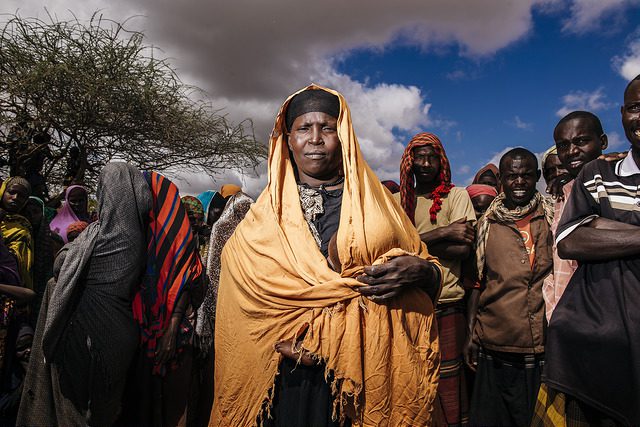
Beginning in the late 1980s with resistance to the military government, armed conflict and social disorganization have marked the lives of nearly two generations of Somalis. Because of the ongoing conflict, thousands of Somalis left their homeland due to the fighting and settled in expatriate communities around the globe. In recent years, however, a fragile stability has returned that sees locals and returnees rebuilding Somalia together.

While this remains good news, the return of Somali nationals who were raised or spent upwards of two decades abroad has generated new conflicts. Local Somalis often have a perception that they are entitled to more rights in their native land than those who have spent their lives abroad. Returning nationals often feel that their education and experience position them better to contribute to future peace and stability for Somalia. These preconceptions fuel disagreements regarding prime positions in government and other employment conflicts.

There is a significant culture gap between returnees and local Somalis, but efforts have begun recently to bridge this gap in the name of improving their war-torn country. A symposium was held in June 2017 to bring these groups together and foster an ongoing dialogue about incorporating all Somalis in the nation’s future. These new efforts hope to see locals and returnees rebuilding Somalia together.

One local participant explained, “It was an important workshop in that it brought together diaspora returnees and the locals. The engagements were amicable as the diaspora returnees and their local counterparts held discussions so as to get to understand each other.”

Returnees are a big part of rebuilding Somalia. One United Nations program in recent years has arranged for dozens of short-term positions in Somalia for expatriates with expert qualifications. Some returnees are keenly conscious of the problems incurred by bringing in outsiders. One American returnee who hosted a legal summit with Somali experts and politicians in 2015 was proud to have completed the project with a minimum of international interference.

Vocational and education programs that support returnees are opening opportunities for Somalis no matter their personal history. The U.N. High Commission for Refugees reported in December 2017 on a program in Mogadishu that is providing training through the country’s Returnee Support Center. Their training programs are increasing the quality of life in the Somali capital for both returning nationals and those who stayed through the wars.

Regional organizations are supporting efforts to integrate the diverse Somali population as well. AMISOM, the African Union Mission in Somalia, is participating in the talks to unite local and returning populations, and has endorsed their continuing work.

“One of the reasons AMISOM is supporting this great initiative is because cooperation and partnership between Somali Diaspora Returnees and Homeland community is critical for the stability and long-term development of Somalia,” said Dr. Walters Samah, AMISOM Political Officer to ReliefWeb.

Despite the fragility of the current situation, Somalia’s prospects have been improving for years. With luck and dedication, this trajectory will continue with locals and returnees rebuilding Somalia together for a better future.

– Paul Robertson

Photo: Flickr

January 22, 2018
https://borgenproject.org/wp-content/uploads/borgen-project-logo.svg 0 0 Borgen Project https://borgenproject.org/wp-content/uploads/borgen-project-logo.svg Borgen Project2018-01-22 07:30:402020-02-12 14:59:06Locals and Returnees Rebuilding Somalia After Years of War
Advocacy, Aid, Global Poverty, United Nations

What Has the UN Done?

What Has the U.N. Done?The United Nations has been working towards world peace, security and good relations in an attempt to solve economic, social, cultural and humanitarian problems globally since 1945. Since then, it has aided the world countless times and accomplished immense goals. Specifically, what has the U.N. done? These programs illustrate what the United Nations has achieved and its top accomplishments.

UNICEF

UNICEF is an agency that was created by the United Nations that stands for the United Nations International Children’s Fund. UNICEF protects the rights of children throughout the world and works towards increasing their standard of living. UNICEF works in 190 countries.

UNAIDS

The United Nations has been highly successful in the global battle against HIV/AIDS. They raise awareness, funds and create programs for prevention and treatment. The most recent UNAIDS update states that it plans to end the AIDS epidemic by 2030.

World Food Programme

The United Nations’ World Food Programme is one of the most successful agencies created by the U.N. thus far. The U.N. World Food Programme feeds 104 million people across 80 countries every year, focusing on war zones, natural disaster areas, health emergencies and poor countries.

UNHCR

Another success of the United Nations is the United Nations High Commissioner for Refugees, founded in 1949. The leaders of the UNHCR work with refugees and ensure that governments take responsibility in regards to refugees. UNHCR has received two Nobel Peace Prizes for work done in Europe and worldwide assistance to refugees.

Peacekeeping Missions

The United Nations has 16 peacekeeping missions underway across the world. The purpose is to encourage peaceful relations between countries. The peacekeeping missions have saved many lives and are one of the most successful projects the U.N. has undertaken throughout history.

Among the accomplishments of the United Nations, it is clear how important they are and what a large impact they have made throughout the world. In addition to these five accomplishments are countless others that are just as crucial to the groundbreaking aid they have provided. The question “What has the U.N. done?” starts with these five important things and continues with many other forms of aid.

– Chloe Turner

Photo: Flickr

January 22, 2018
https://borgenproject.org/wp-content/uploads/borgen-project-logo.svg 0 0 Borgen Project https://borgenproject.org/wp-content/uploads/borgen-project-logo.svg Borgen Project2018-01-22 01:30:382024-05-29 22:38:45What Has the UN Done?
Global Poverty, United Nations

10 Facts About New Director of UNICEF Henrietta Holsman Fore

director of unicef
U.S. businesswoman and former administrator of the U.S. Agency for International Development (USAID) and director of U.S. Foreign Assistance, Henrietta Holsman Fore, became the seventh executive director of the U.N. International Children’s Emergency Fund (UNICEF) on January 1, 2018. Fore is replacing Anthony Lake as director, whose term began in 2010. The following are 10 facts about the new director of UNICEF.

  1. Fore was the first woman to hold the position of USAID administrator, which she served concurrently while being the director of U.S. Foreign Assistance from 2007 to 2009.
  2. Prior to her senior roles in the U.S. Department of State, Fore was the 37th director of the U.S. Mint. She initiated the 50 State Quarters Program and introduced laser engraving during her tenure.
  3. She was the chairman and CEO of her family’s investment and management company, Holsman International. She also was connected to at least 14 other companies, nonprofits and think tanks, according to her professional LinkedIn page, including the Aspen Institute, the Center for Global Development, General Mills and ExxonMobil.
  4. U.N. Secretary General António Guterres announced Fore’s appointment as executive director of UNICEF on December 22, 2017. The announcement received acclaim from multiple organizations, including the U.S. State Department and the Center for Strategic and International Studies.
  5. Fore was chosen by Guterres in consultation with the executive board of the U.N. The executive director position of UNICEF has gone to the U.S. candidate since the organization’s creation in 1947.
  6. Fore is committed to modernizing and revitalizing foreign assistance. In a 2008 keynote address to the Center for Global Development, she discussed reforming priorities to meet the most critical needs, promoting program coordination among agencies and increasing the number of U.S. foreign assistance personnel.
  7. To Chief Executives Organization, American diplomat John Negroponte said, “[Fore] likes to roll up her sleeves…she’s an incessant traveler.” In a speech at the 2014 International Financial Forum, Fore said she had traveled to countries such as Indonesia, Turkey, Nigeria, Egypt, Brazil and India.
  8. At the same forum, former Secretary of State Condoleezza Rice described Fore as, “one of the best appointments that I made,” and as, “one of the best public servants I’ve ever met.”
  9. Fore’s appointment aids Guterres’ mission for gender parity at U.N. senior leadership levels by 2021 and throughout the whole organization before 2030. Current findings suggest there is an inverse relationship between women’s representation and seniority at the U.N.
  10. As executive director of UNICEF, Fore will head one of the most important agencies within the U.N. The organization’s budget was $5 billion in 2017, the second largest of the U.N. agencies.

In his announcement, outgoing UNICEF director Anthony Lake said, “Henrietta Fore will bring a wealth of experience to UNICEF’s work for children.” Her appointment certainly excites individuals committed to ending global extreme poverty, and it will be compelling to witness what UNICEF accomplishes under Fore’s leadership.

– Sean Newhouse

Photo: Flickr

January 18, 2018
https://borgenproject.org/wp-content/uploads/borgen-project-logo.svg 0 0 Borgen Project https://borgenproject.org/wp-content/uploads/borgen-project-logo.svg Borgen Project2018-01-18 07:30:282024-12-13 17:58:3310 Facts About New Director of UNICEF Henrietta Holsman Fore
Development, Global Poverty, United Nations

The History of the United Nations

history of the united nationsThe name United Nations (U.N.) was coined by President Franklin D. Roosevelt and was first used on January 1, 1942 in the Declaration by the United Nations. Twenty-six nations pledged to continue resistance against the Axis powers in the Declaration by the United Nations. Though the name was coined in 1942, the United Nations did not become official until 1945.

A key event in the history of the United Nations is the San Francisco conference, which convened on April 25, 1945. The conference was presided over by Roosevelt, British Prime Minister Winston Churchill, and Soviet Premier Joseph Stalin. Fifty nations were represented at this conference, most of which were from the North, Central, and South American republics.

The nations met in San Francisco to draw up the U.N. Charter, which was signed on June 26, 1945. However, the U.N. did not officially come into existence until October 24, 1945 when the majority of the signatories ratified the Charter. The charter did not come into force until this date because the five permanent members of the U.N. Security Council — China, France, Russia, the United Kingdom and the United States — ratified it.

The main goal of the U.N. Security Council is to maintain international peace, which was among the original aims that many nations had in mind when founding the U.N. Of the five permanent members of the Security Council, all but France were intended to serve as the enforcers of peace, as claimed by Roosevelt. The other allied nations were tasked with establishing other organizations, such as the Food and Agriculture Organization (FAO), to aid the U.N. in its tasks.

Prior to the creation of the U.N., another organization, the League of Nations, existed with a similar goal of achieving peace and promoting international cooperation. The 58-member League of Nations was established under the Treaty of Versailles in 1919. After failing to prevent the Second World War, the League of Nations ceased its activities. Thus, the history of the United Nations began, as many countries saw the necessity for a more successful international organization.

Prior to the more well-known San Francisco conference was the Quebec conference of August 1943. During this conference, Secretary of State Cordell Hull and British Foreign Secretary Anthony Eden decided to begin drafting a declaration calling for an international organization.

Since its creation, the U.N. has addressed many global issues, such as women’s rights, children’s rights and the refugee crisis. Keeping in mind its original goal of maintaining world peace, the U.N. created the U.N. Emergency Force (UNEF) on November 7, 1956. The UNEF, as well as many other organizations and individuals, have been awarded Nobel Peace Prizes.

Today, U.N. membership totals 193 countries and includes almost every single recognized independent state. The U.N. still focuses on its main goals of peacekeeping and building, conflict prevention and humanitarian assistance. Though it has accomplished a lot since its founding, the history of the United Nations has only just begun and the organization has a lot of work in store for the future.

– Haley Rogers

Photo: Flickr

January 6, 2018
https://borgenproject.org/wp-content/uploads/borgen-project-logo.svg 0 0 Borgen Project https://borgenproject.org/wp-content/uploads/borgen-project-logo.svg Borgen Project2018-01-06 01:30:212024-05-29 22:30:02The History of the United Nations
Development, Global Poverty, United Nations

How China Is Leading in Poverty Reduction

China Is Leading in Poverty ReductionChina is the world’s most populated country and has a culture that stretches back nearly 4,000 years. In recent years, its achievements in poverty reduction have been unprecedented. China is leading the world in poverty reduction, outpacing many other major nations in terms of national focus.

These efforts can be attributed to Chinese President Xi Jinping, who has led a drive to eradicate the problem of extreme poverty. For the first time in over 30 years, its list of areas suffering from extreme poverty has been reduced. China removed 28 counties from its list of poorest places in the country. The number of Chinese people lifted out of poverty over the last 30 years accounts for more than 70 percent of the world’s total. Chinese Vice Premier Wang Yang said in a forum that “China is an active advocate and strong force for world poverty alleviation.” This combined with efforts within the country shows how China is leading in poverty reduction.

The government of China hopes to share its experiences and improve collaboration with other countries as part of its plan to follow the 2030 Agenda for Sustainable Development. Years of work have led to China closing in on its goals of achieving a moderately prosperous society by 2020, beginning with the baseline task of lifting all people out of poverty. So far, more than 10 million people have been freed from poverty each year since 2012.

In an interview with Xinhuanet, U.N. Resident Coordinator and Development Resident Representative in China Nicholas Rosellini said: “These achievements not only can benefit China but also bring experience to the world and make great contributions to global poverty reduction efforts.” He goes on to stress that without China’s contribution, there is no way to achieve the common goal of reducing global poverty and believes that China can achieve the goal of comprehensively eliminating rural poverty by 2020.

Additionally, the United Nations will provide systematic support for China’s poverty reduction work. Rosellini commends China’s contributions to world peace, as they contribute more troops to U.N. peacekeeping missions than any other permanent member of the U.N. Security Council. China has become the second-largest country to share U.N. peacekeeping costs.

Although the goals may seem somewhat optimistic, it is still significant that China is leading in poverty reduction around the world. There are many reasons for the U.S. to increase support for global poverty reduction. With less poverty comes less overpopulation, as the higher the death rate is for children in a region, the higher the birthrate. This is because when people know their children will survive, they have fewer children. In addition to this, history has shown that when people transition from barely surviving into consumers, it opens new markets and job opportunities for U.S. companies. In the United States, one out of every five jobs are export-based, and 50 percent of U.S. exports go to developing nations.

There are many positive consequences that can come from fighting global poverty and they should incentive other countries, like the U.S., to increase their support for reducing extreme global poverty.

– Drew Fox

Photo: Flickr

November 12, 2017
https://borgenproject.org/wp-content/uploads/borgen-project-logo.svg 0 0 Kim Thelwell https://borgenproject.org/wp-content/uploads/borgen-project-logo.svg Kim Thelwell2017-11-12 07:30:082024-05-29 22:29:20How China Is Leading in Poverty Reduction
Children, Global Poverty, United Nations

How to Help Honduras and Keep Its Citizens Safe

How to Help HondurasThe term “refugee crisis” has the implication that a group of individuals is subject to persecution, war and/or systemic violence. In essence, a refugee is someone that is catalyzed by fear to leave his or her homeland. So when a United Nations official surveyed the scope of Honduran migrants outside a shelter in Tapachula, Mexico in 2016 and stated “It’s really a refugee crisis,” he called on the world to answer the question “Why are Hondurans afraid to return home?”

In 2014, the number of unaccompanied Honduran minors apprehended in their attempts to cross the U.S. border increased from 7,000 to 17,500. It might be hard to imagine why children might place themselves in such a vulnerable, dangerous circumstance, but this stark rise in migrants is easier to comprehend given that over 60 percent of Hondurans live below the poverty line. On top of this, unemployment is only increasing—currently resting at 7.4 percent, and projected to rise over the next few years. Families often send their children to find income outside the nation’s borders; statistics show that Honduran immigrants remit 26 percent of their income back to their home countries, second only to Guatemala.

However, youth migration is an issue that extends far beyond average familial income. As of this year, Honduras is recognized as the most violent country in the world, outside of all current war zones. Last year, the murder rate was down to 60 murders per 100,000 people, which—though still the deadliest rate in the world—has dropped drastically since 2012. This is largely due to gang violence that recruits young and influences close to every aspect of Honduran life, from early education onward. As jobs remain inaccessible, gangs and organized crime only expand. So the question we should be asking is how to help Honduras and end this cycle of crime and poverty.

One method for how to help Honduras is by donating and/or serving with Food for the Poor (FFP), an international relief and development organization based in the United States. Since 1999, in the catastrophic aftermath of Hurricane Mitch, FFP has worked to improve the conditions in Honduras in terms of agriculture, community development, housing, enterprise and youth/orphan support. In this time, the growing organization has developed close to 15,000 housing units and 15 schools, mobilizing the Honduran youth to achieve literacy and access primary education.

The largest of their 91 working projects is the La Esperanza Community Development Project, which worked in five phases to build homes and create working communities that thrive off of their capacity to be self-sufficient, with access to their own gardens, water and school/community centers. Essentially, these communities are created as safe spaces for the nation’s desolately underprivileged—preventing the vulnerable from seeking “protection” by way of violence.

One could also find out how to help Honduras by researching HELP Honduras, an organization partnered with Rotary Clubs, The Rotary Foundation and AYO (Alternativas y Opportunidades) to improve the system of education in this Latin American nation.

Standing for Health, Education and Literacy Program, HELP Honduras works to supply students with uniforms, books and school supplies in order to support their education and keep withdrawal rates down. Though education is free, the issue in Honduras is not affording school, but affording everything that a student requires. Though one may have access to a classroom, it costs on average $180 for a primary school student to enter that classroom with the essentials necessary to learn. This is out of the price range of many Honduran families, and stands in the way of the next generation becoming educated, independent adults.

On top of this, HELP Honduras sponsors certain students in Tegucigalpa, Santa Barbara and Danli. Each student is granted the necessary elements to attend school, including uniforms, shoes, books and supplies, as well as a tutor to help with any subject in which the student is struggling. This helps keep the child motivated and wanting to return.

Parents of these children are also benefitting from this sponsorship, each obligated to attend parenting courses where they take part in preventive health, vocational and educational programs. One program in particular, Economic Opportunities Training, teaches mothers the basics of market strategy, mobilizing them to become an entrepreneur and/or improve their already existing business. Not only will children feel safe and confident within the confines of their school, they will feel secure at home as well, fostering a cycle of self-confidence that will breed bright and prosperous futures.

Programs like these exist as investments in the future of Latin America and attack the roots of global poverty. Contributing your time or money to aid these programs is a huge help to them and the people of Honduras.

– Briana Fernald

Photo: Flickr

November 5, 2017
https://borgenproject.org/wp-content/uploads/borgen-project-logo.svg 0 0 Kim Thelwell https://borgenproject.org/wp-content/uploads/borgen-project-logo.svg Kim Thelwell2017-11-05 01:30:382024-05-29 22:29:02How to Help Honduras and Keep Its Citizens Safe
United Nations

How a United Nations Declaration Protects Indigenous Groups

How the United Nations Declaration of the Rights of Indigenous Peoples in Australia Helps Protect Aboriginal and and Torres Strait Islander PeoplesIn 2007, the United Nations General Assembly adopted a new declaration sourced from existing international human rights law. This time, though, the organization focused on a specific marginalized group: indigenous peoples. The strong support of the United Nations Declaration of the Rights of Indigenous Peoples was a major step toward increasing communication between indigenous peoples all over the world and the U.N. Member States.

Across the globe, indigenous peoples are often marginalized by the law and face harsh discrimination. A large contributor to the increased vulnerability of indigenous peoples to violence and human rights abuses comes from their displacement. Indigenous groups tend to share a common key value based on their land. When they are taken away from that land, many groups find it much more difficult to fully exercise their human rights.

The declaration, though legally nonbinding, is significant because of the participation of indigenous peoples in its drafting. The document recognizes that all of the human rights outlined in previous United Nations declarations apply to indigenous peoples. While the declaration was supported by most countries, Australia, New Zealand the United States and Canada voted against it.

However, two years later in 2009, Australia voiced its support for the law, signaling progression toward advancing human rights for all of its citizens, and closing the gap between indigenous and non-indigenous Australians. The country has already been considering constitutional changes based on the document.

Following the formal endorsement of the United Nations Declaration of the Rights of Indigenous Peoples in Australia, the government took crucial steps in implementing the core values outlined in the document. In order to educate Aboriginal and Torres Strait Islander peoples about their rights, the Australian government distributed a comprehensive guide to the U.N. document.

The guide to understanding the declaration in Australia specifically addresses rights to country, resources and knowledge, as well as self-governance and more. The document has received a large degree of legitimacy, due to support from not only the Australian government but also countries all across the world, making it an important tool for Aboriginal and Torres Strait Islander peoples to invoke when addressing the human rights violations and discrimination to which they may be subjected.

The adoption of the declaration, after its initial rejection, does not create legal obligations for the countries that support it. What it does do, however, is allow Aboriginal and Torres Strait Islander peoples to use the language of human rights to influence government policies. The Declaration of the Rights of Indigenous Peoples sends a clear message that governments cannot avoid international scrutiny for mistreatment of and violations against their indigenous groups.

– Richa Bijlani

Photo: Flickr

October 28, 2017
https://borgenproject.org/wp-content/uploads/borgen-project-logo.svg 0 0 Borgen Project https://borgenproject.org/wp-content/uploads/borgen-project-logo.svg Borgen Project2017-10-28 01:30:552019-12-31 13:09:54How a United Nations Declaration Protects Indigenous Groups
Global Poverty, Government, Refugees, United Nations

Ethereum Blockchain in Jordan Is Changing Aid

Ethereum Blockchain in Jordan Is Changing How the United Nations Delivers Aid
Distributing aid within areas of conflict, especially those ruled by unstable authoritarian governments, has proven to be a struggle for organizations like the United Nations. These efforts are often plagued by a myriad of issues, such as the distribution of funds to individuals by relief agencies. The Ethereum blockchain in Jordan is shifting the paradigm.

Blockchain technologies, cryptocurrencies and digital banking, however, have the potential to alleviate many of these complications. On May 31, 2017, the United Nation’s World Food Programme (WFP) completed the first successful large-scale trial of the Ethereum blockchain in Jordan to distribute humanitarian aid to Syria.

In order to fully understand the tangible effects that blockchain technology has on the lives of these individuals, it is first necessary to establish a basic background of what exactly this new platform is and what it can do.

Ethereum essentially lends itself to decentralized data recording, meaning that no single person or entity owns the final ledger. Instead, everyone who participates in the network becomes part of the record keeping process.

Blockchain, the technology behind the infamous cryptocurrency Bitcoin as well as Ethereum, has many other applications past transferring money between parties. Like Bitcoin, Ethereum acts as a distributed public blockchain network. However, while Bitcoin’s main application involves peer-to-peer exchange of payments, Ethereum blockchain focuses on both cryptocurrency, called Ether, as well as deploying decentralized applications. These applications generally contain smart contracts: computer codes that facilitate the exchange of money, content, property or anything else of value.

Ethereum offers an unprecedented capacity to carry out nonspecific applications, meaning that instead of just offering peer-to-peer transfer of digital currencies, Ethereum enables the development of potentially thousands of different applications on a single platform. Additionally, hacking and fraudulent activities are virtually impossible on a decentralized network like Ethereum.

Ethereum has many widespread applications, one of which includes legal identification. With current estimates suggesting that there are 1.1 billion people around the world with no official documentation, many of whom are refugees, aid organizations struggle to provide health, financial and educational services without proper identification.

While smartphones or Internet-capable devices are an obvious access point for the identification platform, the project implemented by the WFP was built under the assumption that its beneficiaries might not have access to such luxuries. Instead, the WFP made it possible for thousands of Syrian refugees to pay with a scan of their eyes using the Ethereum blockchain in Jordan.

In this month-long trial, instead of administering funds directly to the recipients, the WFP issued unspecified amounts of cryptocurrency-based vouchers to thousands of Syrian refugees. The U.N. allocated money to the merchants of participating stores where the coupons could be redeemed, effectively cutting out the banking middlemen in the aid distribution processes. Iris recognition devices verified the identities of the refugees at the supermarket in the Azraq camp in Jordan and deducted what they spent from the total sum the WFP provided.

By the end of May 2017, the Ethereum blockchain in Jordan was successfully used to record and authenticate transfers to about 10,000 individuals. WFP consultant Alexandra Alden helped oversee the implementation of this project and stated, “All funds received by the refugees from WFP were specifically used to purchase food items such as olive oil, pasta, and lentils.”


The Future of Ethereum Blockchain in Jordan and Beyond


In terms of future expansion, the WFP intends to include upwards of 100,000 individuals in Jordan in the program as early as August 2017, with hopes of serving the entire Jordanian refugee population by the end of 2018. If this expansion proves successful, the agency will look to expand beyond Jordan to other countries in need of aid.

Additionally, companies including Accenture and Microsoft have been working to design a more comprehensive digital ID network for the U.N. using blockchain technology.

Instead of just receiving food from local merchants, this identification network will provide undocumented refugees with unique identifiers called “stamps” that authenticate services received at camps or through other agencies, such as vaccinations. This system of record keeping will be tested in the near future.

While blockchain technology has the potential to serve the rest of society in various capacities, Ethereum offers those individuals who have been forced to renounce their identities over and over again the possibility of retaining important parts of who they are.

– Richa Bijlani

Photo: Flickr

October 15, 2017
https://borgenproject.org/wp-content/uploads/borgen-project-logo.svg 0 0 Kim Thelwell https://borgenproject.org/wp-content/uploads/borgen-project-logo.svg Kim Thelwell2017-10-15 07:30:162024-06-04 01:08:25Ethereum Blockchain in Jordan Is Changing Aid
Page 13 of 35«‹1112131415›»

Get Smarter

  • Global Poverty 101
  • Global Poverty… The Good News
  • Global Poverty & U.S. Jobs
  • Global Poverty and National Security
  • Innovative Solutions to Poverty
  • Global Poverty & Aid FAQ’s
Search Search

Take Action

  • Call Congress
  • Email Congress
  • Donate
  • 30 Ways to Help
  • Volunteer Ops
  • Internships
  • Courses & Certificates
  • The Podcast
Borgen Project

“The Borgen Project is an incredible nonprofit organization that is addressing poverty and hunger and working towards ending them.”

-The Huffington Post

Inside The Borgen Project

  • Contact
  • About
  • Financials
  • President
  • Board of Directors
  • Board of Advisors

International Links

  • UK Email Parliament
  • UK Donate
  • Canada Email Parliament

Get Smarter

  • Global Poverty 101
  • Global Poverty… The Good News
  • Global Poverty & U.S. Jobs
  • Global Poverty and National Security
  • Innovative Solutions to Poverty
  • Global Poverty & Aid FAQ’s

Ways to Help

  • Call Congress
  • Email Congress
  • Donate
  • 30 Ways to Help
  • Volunteer Ops
  • Internships
  • Courses & Certificates
  • The Podcast
Scroll to top Scroll to top Scroll to top