• Link to X
  • Link to Facebook
  • Link to Instagram
  • Link to TikTok
  • Link to Youtube
  • About
    • About Us
      • President
      • Board of Directors
      • Board of Advisors
      • Financials
      • Our Methodology
      • Success Tracker
      • Contact
  • Act Now
    • 30 Ways to Help
      • Email Congress
      • Call Congress
      • Volunteer
      • Courses & Certificates
      • Be a Donor
    • Internships
      • In-Office Internships
      • Remote Internships
    • Legislation
      • Politics 101
  • The Blog
  • The Podcast
  • Magazine
  • Donate
  • Click to open the search input field Click to open the search input field Search
  • Menu Menu

Archive for category: United Nations

Information and stories about United Nations.

Technology, United Nations

How Poverty Is Reduced Through Basic Technology

How Is Poverty ReducedMost modern technology is marketed towards the world’s wealthy, but that should not inhibit its potential to help the world’s poor. As prices fall and production increases, affordable and basic technology may be the solution for eradicating global poverty.
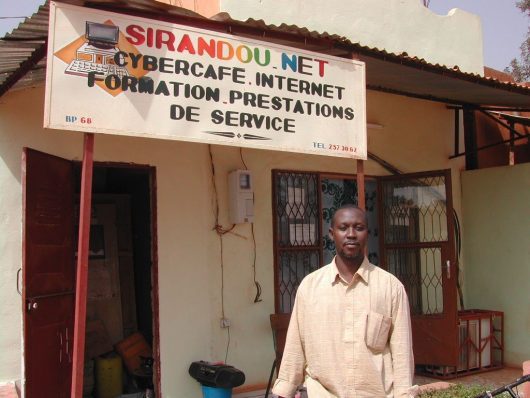
How is poverty reduced through basic technology? First and foremost, by understanding the realistic and productive uses for technology in a community and ensuring that it is relevant.

Too often there are stories of computers collecting dust in African classrooms, or new smartphone apps that can help impoverished people find work — in places where smartphones are unattainable. Despite the vast amount of information on the internet, it is hardly relevant to a rural family in a developing country and will rarely help them escape poverty. In reality, the technology that will help end poverty is more basic.

The United Nations is at the forefront of this vision, with the International Institute for Communication and Development (IICD) working towards the global spreading of information and communications technology (ICT). Founded in 1996, the IICD has come a long way in understanding the pragmatic strategy needed for implementing modern technology in developing countries. The IICD has learned that “it is not the technology itself that makes the difference but rather the people who own it and apply it.” Therefore, helping people get the most out of ICT is now as equally important to the organization’s mission as introducing it.

The IICD works to apply ICT to health, economic and education sectors in different communities around the world. It’s main focus is in the context of helping the U.N. meet its Millennium Development Goals — an effort that the IICD has been at the center of. In short, the IICD works to instigate large-scale social change through low-tech, relevant technology.

Other organizations, such as Kopernik, work on a smaller scale to improve the lives of many through simple technology. Kopernik connects poor, rural families with basic, life-altering technologies that not only save lives, but also save money and time. These simple technologies include water filters, fuel-efficient stoves and solar lights.

Technologies such as solar lights are affordable and sustainable, and their usage is linked to positive behavioral changes and higher household productivity. Investing and distributing this basic technology should be a major priority, for it is fundamental to increasing human development and reducing poverty.

It is not to say that computers and the internet are not infinitely useful and powerful, but we should keep in mind that the internet won’t help a child if they only have access to contaminated water. So, perhaps the question of how to eliminate poverty has a simple answer: distribute relevant, basic technology.

– Catherine Fredette

Photo: Google

September 26, 2017
https://borgenproject.org/wp-content/uploads/borgen-project-logo.svg 0 0 Kim Thelwell https://borgenproject.org/wp-content/uploads/borgen-project-logo.svg Kim Thelwell2017-09-26 07:30:082020-07-16 21:08:34How Poverty Is Reduced Through Basic Technology
Technology, United Nations

How Virtual Reality Is Fighting Global Poverty

Virtual Reality Is Fighting Global PovertyVirtual reality technology is such a recent phenomenon that we have only just tapped into its potential. This technology has been used to expand the capabilities of film and video games, to train soldiers and surgeons, to assist space missions and to aid patients in physical and mental therapy. Non-governmental organizations have found another use for it; now virtual reality is fighting global poverty.

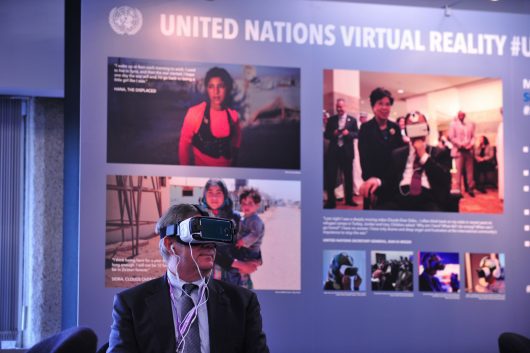
One of the first major forays into using virtual reality to fight global poverty when the U.N. showed a film called “Clouds Over Sidra” which puts the viewer in a Syrian refugee camp in Jordan. The viewer is given a tour by a twelve-year-old girl named Sidra, who explains what her life is like at the camp.

The U.N. has shown this film and others through virtual reality headsets to potential donors at humanitarian fundraising events. These films have seemingly become a hit. At a March humanitarian pledging conference where donors viewed “Clouds Over Sidra,” $3.8 billion was donated to aiding Syrian refugees, well beyond the conference’s goal of $2.3 billion. In New Zealand, one out of six people who saw the film chose to donate, which was twice the normal donation rate.

A major reason why virtual reality is fighting global poverty so effectively is its ability to elicit empathy from viewers. In a 2013 experiment from Stanford University and the University of Georgia, two groups did a color-matching exercise in virtual reality, where one group pretended to be colorblind and the other group was forced into colorblindness through a filter. The study found that the second group spent twice as much time helping colorblind people than the first group. Similar experiments found that people who saw 65-year-old virtual avatars of themselves were more likely to save for retirement, and people who cut down a tree in a simulator used fewer napkins than people who read a description of what happens when a tree is cut down.

The intense, empathetic reactions to VR films have not been lost on VR film producers such as Robert Holzer, CEO of Matter Unlimited. “I’ve never experienced such a visceral reaction to any form of media,” says Holzer. “People are left with something closer to what a memory is, versus what they are left with when it is something that they just watched, and that to me is the wild difference of VR.”

The apparent success of virtual reality has caused other global development nonprofits, such as Amnesty International and Trickle Up, to invest in virtual reality films. It seems that virtual reality isn’t just for video games; it also has the potential to be a significant driver of development funding.

– Carson Hughes

Photo: Flickr

September 25, 2017
https://borgenproject.org/wp-content/uploads/borgen-project-logo.svg 0 0 Kim Thelwell https://borgenproject.org/wp-content/uploads/borgen-project-logo.svg Kim Thelwell2017-09-25 07:30:492024-12-13 17:56:26How Virtual Reality Is Fighting Global Poverty
Global Poverty, United Nations

International Youth Day 2017

International Youth Day 2017We’ve all heard the old adage that children are the future. While it may sound cliché, this idea is what led the United Nations General Assembly to establish International Youth Day on December 17, 1999.

Each year, the day of August 12 is used to spread awareness of the World Program of Action for Youth, which works to improve situations for children and young adults around the world. International Youth Day is also a tool to recognize the ability of youth to instill change in the world.

Since the first observance of International Youth Day in 2000, a theme has been selected each year. Some of the themes include Addressing Health and Unemployment, Tackling Poverty Together, Change Our World and the 2017 theme of Youth Building Peace.

In 2017, the theme of Youth Building Peace was used to highlight the ability of youth to contribute to conflict resolution and sustainable peace. United Nations Sustainable Development Goal 16 aims to ensure that decision making is responsive, inclusive, representative and participatory at all levels.

On December 9, 2015, the United Nations Security Council adopted a resolution on Youth, Peace and Security and identified five key pillars for action: participation, protection, prevention, partnerships and disengagement and reintegration.

Both the U.N. Security Council and The World Program of Action for Youth recognize though International Youth Day that youths are often left out of important decision making because of their age. “When youth are excluded from political, economic and social spheres and processes, it can be a risk factor for violence and violent forms of conflict,” according to the U.N.

“Therefore, identifying and addressing the social exclusion of young people is a precondition for sustaining peace.”

Throughout the decades, many steps have been taken towards building peace. But in recent years, the occurrence of violence and conflict has been far too prevalent. Youths comprise a large part of populations where violent conflict is prevalent.

Since the population of youth across the globe is the biggest it has ever been, it is important now more than ever to include this population in decisions that will affect the future of peace.

– Madeline Boeding

Photo: Flickr

September 15, 2017
https://borgenproject.org/wp-content/uploads/borgen-project-logo.svg 0 0 Borgen Project https://borgenproject.org/wp-content/uploads/borgen-project-logo.svg Borgen Project2017-09-15 01:30:232020-07-14 10:44:52International Youth Day 2017
Global Poverty, Refugees, United Nations

The Connection Between Social Media and Poverty Reduction

Social Media and Poverty ReductionThe U.N. first asked “how can the international community best harness the power of media…to educate and transform?” in a 2017 conference. Although this requires a complicated answer, social media and poverty reduction can be connected by harnessing the power of information to foster development in a technologically advancing world.
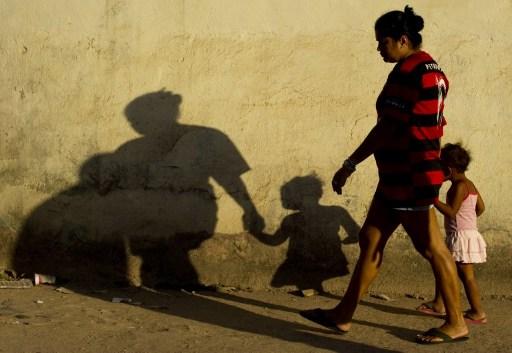
The link is clear: the U.N. recognizes that there are many “opportunities for the media to play a strategic role for eradicating poverty.” This rests on the media’s ability to inform the public about poverty, in many cases by disseminating information through the voices of who have truly experienced it. This provides “an inclusive platform and an open forum to share the views and concerns of people living in vulnerable situations.”


Media and Poverty Reduction: Syrian Civil War


But what does this look like firsthand? When a video of a young Syrian boy named Omran Daqneesh covered in rubble surfaced in 2016, millions of people disseminated the video through their social media channels hours after its publication. The New York Times called the video “an image of civil war,” as for many it humanized the violent events taking place far from home.

Sharing these shocking images can spur quick action. A different image, that of Alan Kurdi, a Syrian boy who drowned while leaving Syria for Greece, gained similar attention. Sharing it via social media had real outcomes: MercyCorps garnered $2.3 million for Syrian refugees in one month, compared to the $4.5 million raised in four years before.

The information-sharing that took place with these images spurred discussions about poverty and war on social media. In many cases, the power in information-sharing means that “the media can play a major role in developing public understanding of economic, social, and environmental issues: the three pillars of sustainable development,” according to the U.N.


Governments Utilize Connection Between Media and Poverty Reduction


Many organizations and governments are harnessing the power in social media and poverty reduction. Rwandan health minister Agnes Binagwaho provides an example with #Ministermondays. Every other Monday, Binagwaho opens a discussion via Twitter for people to voice their concerns about health in the country. Listening to real voices, she is able to craft policies using the experiences she absorbs through social media.

Others are doing similar work. An online social media platform called Digital Green provides farmers in sub-Saharan Africa and South Asia a network to discuss best practices for farming. Similarly, the World Bank Finances app ensures that sustainable development initiatives put funding into the correct hands, preventing fraud via social media.

Unlike other media sources, social media gives a voice to those who have lived in poverty by creating public platforms to spread experience. In this way, the media “affords individuals and communities the possibility to become active in the development process” by using social media platforms as safe spaces for discussion, according to the University of Namibia. Over time, this is generating “long-term suitability and sustainability” for poverty reduction.

Social media and poverty reduction works for other forms of development. Success for the United Nations 2030 Sustainable Development Goals largely rests on the power of the media, according to the U.N., based on its ability to instigate change with credible information sharing. And media hides other tools for poverty eradication; the University of Namibia explains that it also “creates a platform for non-violent discussion and issue resolution” to prevent conflict.

Social media and poverty reduction can be linked through holding guilty parties accountable for their actions. An established social media source known as I Paid a Bribe is doing just this; it creates a space to safely expose corruption in developing countries by text or email. Stories are shared without fear of retaliation, exposing illegal actions and fighting corruption.


Media and Poverty Reduction: Shortcomings


Even so, media does not always work in favor of poverty reduction; many argue that poverty is often given little coverage time via traditional media sources. For example, a study of three prominent U.S. nightly news sources found that in 14 months, an average of only 2.7 seconds in every 22-minute program mentioned poverty. And not all people are able to access social media channels; ending the digital divide that leaves four billion people without internet can harness the power of social media to share stories for reducing poverty.

In some cases, “the knowledge and experiences of people living in poverty are often undervalued” in the media, and “solutions to their own problems are ignored.” This can improperly portray real world experiences. Giving little recognition to those who have lived in poverty, according to the U.N., ultimately plays a role in distorting public perception and negatively influencing policies about poverty reduction.

Despite barriers, the U.N. explains that “the time has come for all policy actors to recognize and support the vital contribution of the media” in reducing poverty. Developing the tools that social media provides to reduce poverty, when done effectively, is gaining traction for development today.

And although Omran Daqneesh’s video alone can not end a civil war, his impact is igniting progress for sustainable development. In a world like today, change stems from diverse voices, making way for progress that was impossible only decades ago.

– Cleo Krejci

Photo: Flickr

September 9, 2017
https://borgenproject.org/wp-content/uploads/borgen-project-logo.svg 0 0 Kim Thelwell https://borgenproject.org/wp-content/uploads/borgen-project-logo.svg Kim Thelwell2017-09-09 01:30:492020-07-08 08:17:55The Connection Between Social Media and Poverty Reduction
Global Poverty, Hunger, United Nations

Future Solutions for the Problem of Hunger in Central America

Hunger in Central AmericaSince mid-2014, the Central American countries of Honduras, Guatemala, El Salvador, Nicaragua, Panama and Costa Rica have been victims of a severe drought. The El Niño conditions that began in March of 2015 have caused staple crops to wither and thousands of cattle to die. These El Niño conditions worsened, and, by the end of June 2016, there were 3.5 million people affected by the drought and 1.6 million at the mercy of hunger in Central America.

This crisis, while dire, has been a rare outlier in the largely successful efforts to ease the pangs of hunger in Central America. Among the major problems contributing to the food shortages of Central America has been widespread poverty. Extreme poverty in Central America was reduced by 50 percent between 1995 and 2011.

The same can be said for hunger itself. Between 1992 and 2014, the number of people affected by hunger in Central America was reduced from 68.5 million to 37 million. While success this resounding is encouraging, it does not by any means imply that the fight to end hunger in Central America is over.

The El Niño drought was one of the worst in recent memory. Though its severity was extreme, it remains indicative of a problem which Central American farmers must face constantly. Droughts devastate Central America with shocking regularity, whether caused by El Niño or other malignant weather patterns.

In order to address the droughts, which, alongside endemic poverty, have been the biggest contributors to the problem of hunger in Central America, the U.N. has begun working with the governments of Honduras, El Salvador and Guatemala in order to better construct strategies that will allow the countries to remain independent in cases of severe drought. The U.N. has instructed farmers to plant crops that are both less water-dependent and more flood-resistant.

The problem of hunger in Central America is not one which will solve itself, but continuing to allow the countries hit hardest by droughts and poverty to rely on foreign aid and intervention a strategy that will not work in the future. The pattern the U.N. and forward-thinking governments like those of Honduras, El Salvador and Guatemala have established is one that must be followed. Countries such as these can utilize the ingenuity of their people alongside the expertise of foreign aid to alleviate both poverty and hunger, creating a prosperous cycle that will benefit themselves both now and in the future.

– Connor S. Keowen

September 1, 2017
https://borgenproject.org/wp-content/uploads/borgen-project-logo.svg 0 0 Borgen Project https://borgenproject.org/wp-content/uploads/borgen-project-logo.svg Borgen Project2017-09-01 07:30:392020-06-25 10:46:33Future Solutions for the Problem of Hunger in Central America
Gender Equality, Global Poverty, Human Rights, United Nations

Human Rights in Croatia

Human Rights in CroatiaAs a newly elected member of the United Nations Human Rights Council, Croatia is promising to protect human rights and fight against discrimination. Considering the unfair treatment of minorities and hate crimes that were written of in the Human Rights Practices report for 2016, the country has a great deal of work to do.

Out of the 24 reported hate crimes in 2015, 15 were related to racism and xenophobia. A recent example of xenophobia in the nation can be seen through the way policemen have been treating asylum-seekers from Serbia. Out of the 10 Afghani asylum seekers who were interviewed, nine reported that the Croatian police were physical with them. Not only did they punch them, but they also seized some of their possessions. After doing all of this, the Croatian police officers forced them out of the country and back to Serbia.

Another large issue in Croatia is the segregation of people with disabilities. People with disabilities in Croatia tend to lack control in their lives because they are placed into institutions rather than communities.

Although human rights in Croatia still need to improve greatly, the people are still making a conscious effort to fix the problems they are faced with. For example, the Humans Rights House Zagreb addresses the country’s issues and introduces solutions to help them. In 2016, they partnered with Gong to explain both the importance of and how to combat hate speech.

To combat segregation of people with disabilities, de-institutionalization has begun in Croatia, in an attempt to legally give those with disabilities their rights. So far, 24 percent of institutions have begun de-institutionalization. While this number may be small, it is a start to a solution.

Croatia, like every other country in the world, is nowhere near perfect. However, with the help of citizens and activists who advocate for what they believe is morally right, human rights in Croatia will continue to progress.

– Raven Rentas

August 30, 2017
https://borgenproject.org/wp-content/uploads/borgen-project-logo.svg 0 0 Kim Thelwell https://borgenproject.org/wp-content/uploads/borgen-project-logo.svg Kim Thelwell2017-08-30 01:30:182024-05-28 00:15:47Human Rights in Croatia
Developing Countries, Global Poverty, United Nations

Pros & Cons of Alleviating Poverty Through Tourism

Alleviating Poverty Through TourismEarly this year, the United Nations declared 2017 as the International Year of Sustainable Tourism for Development with the goal of alleviating poverty through tourism. According to the United Nations World Tourism Organization, the tourism industry has grown by 4 percent every year since the 1960s. In 2016 alone, about $1.4 trillion went towards tourism, making the industry’s potential for poverty alleviation promising.

There are multiple factors that make the tourism industry well-suited for poverty alleviation. The first is the substantial “size and growth of the sector,” which has the potential to sustain development in many developing countries. Through foreign exchange earnings and job creation generated by the tourism industry, alleviating poverty through tourism is made possible. Currently, “tourism contributes to 5 percent of the world’s GDP” and has generated 253 million jobs.

Tourism also has the potential for sustainable growth in developing countries as tourist destinations diversify. In fact, tourism is already the “first or second source of export earnings” among 20 out of 48 of the world’s least-developed countries. For some of these nations, tourism accounts for more than 25 percent of GDP. Alleviating poverty through tourism in these areas would be highly effective as long as tourism is focused on development.

Developing countries have a “comparative advantage” in tourism because tourists look for many features that these nations share. These features include “warm climate, rich cultural heritage, inspiring landscapes and abundant biodiversity.” With these features being most apparent in rural areas, poverty may be alleviated by making destinations out of poorer places.

The tourism industry is also relatively labor-intensive and generates jobs that require little investment. This opens up job opportunities for many people in developing countries including women, young people and minorities. Tourism provides connectivity between sectors and links consumers to producers. Multiple economic sectors benefit from tourism as touring consumers buy a variety of goods. With this connection, both the consumers and producers benefit from increased local investment.

Although there are many pros to alleviating poverty through tourism, developing countries are not seeing the impact from tourism that most may expect. The Global Tourism Dashboard measured the impacts of tourism in 2016 and determined that only 5.6 percent of tourism expenditure went to developing countries. Instead of benefiting these nations, global tourism benefits the economic exchange of rich countries.

For the $79 billion that was spent in 2016 by tourists in developing nations, much of this money did not make a significant impact. The little impact tourism is making is exemplified by Thailand, which is the world’s fourth-most popular destination yet is still classified as a developing country. This shows that cash injection does not necessarily lead to development.

Before tourism can make a profound impact on developing countries, the problem of “leakage” needs to be addressed. Leakage is when a country is spending a “considerable proportion of tourist dollars before they can multiply in the local economy.” This is a significant problem as leakage ranges from 40 to 80 percent in developing countries. Alleviating poverty through tourism will take more than simply expanding the tourism industry.

Although tourism is not currently the most effective way to alleviate poverty, there is still potential for the industry. Countries such as Samoa, Ecuador, Fiji and South Africa are all examples of how tourism can factor into development. For Samoa specifically, tourism is “one of the economy’s main pillars” as the industry contributed to 20 percent of its GDP. This was done through leakage reduction, concentration on local development and investment in training for tourism jobs by the government.

Aside from governmental regulations in developing countries, alleviating poverty through tourism can be made possible through international and individual assistance. International organizations can assist tourism industries in developing countries through financing “transport connectivity” to reduce leakage. Also, training locals for tourism jobs so that the industry can be run by domestic stakeholders is critical for potential development. On an individual level, tourists can support development by making “ethical travel choices.” This means “going local” to benefit the local community rather than deciding to visit and invest in typical tourist destinations.

There is potential for alleviating poverty through tourism as long as developing nations are given the assistance needed to make it work.

– Haley Hurtt

Photo: Flickr

August 21, 2017
https://borgenproject.org/wp-content/uploads/borgen-project-logo.svg 0 0 Kim Thelwell https://borgenproject.org/wp-content/uploads/borgen-project-logo.svg Kim Thelwell2017-08-21 07:30:572020-06-18 09:10:44Pros & Cons of Alleviating Poverty Through Tourism
Education, Global Poverty, Human Rights, United Nations

How to Help People in Iran

How To Help People In IranAlthough Iran is both the second-largest economy and the second-most populous nation in the Middle East with all indicators pointing towards continued growth, the citizens of Iran still face a lot of oppression and human rights violations. Already this year there have been two public hangings, torturing of prisoners, discrimination against minorities, and the lack of important rights for women. Here are a few ideas for how to help people in Iran:

  • Supporting the Center for Human Rights in Iran, a nonpartisan, nonprofit group based out of New York, in their bid to protect the rights of Iranians. The organization has letter-writing campaigns lobbying the 6,000 plus worldwide government officials it reaches to get involved in Iranian human rights. It also produces daily social media content on human rights in Iran that it hopes to have shared across social media.
  • The National Iranian American Council is a nonprofit Washington D.C. organization that seeks to promote the voices of Iranian Americans, and to foster a better relationship between Iran and America through education and increased dialogue. The group provides plenty of material to familiarize oneself with issues affecting Iranians both in America and in Iran. The organization also accepts contributions to aid them in combating human rights abuses in Iran.
  • Educating oneself on the various issues in Iran, particularly those surrounding human rights and poverty, to be able to take an informed stance.
  • Sharing news and facts about the plight of the Iranian people can be another effective way of how to help in Iran, as it helps build awareness and public sympathy.
  • Donating or volunteering with organizations like the U.N. that have programs dedicated to helping countries develop, such as the U.N.’s Educate A Child (EAC) program. The EAC program, implemented in 2012, has given over 700,000 children in Iran and other countries in the Middle East and Africa access to schooling they would not otherwise have had.

The Takeaway:

Although the U.S. and Iran have never had the best of relations, the 2015 nuclear deal that Iran signed onto has helped pave the way to improving relations between the two nations. Even so, the U.S. has maintained sanctions on Iran due to its continued human rights abuses and funding of terrorist organizations. TIME magazine reports that this action is beginning to have an impact.

Though knowing how to help in Iran can be a tricky task, writing to members of Congress and encouraging them to favor the retention of these sanctions and applying pressure to reform their laws, can help have an impact on U.S. policy and potentially help put a stop to human rights violations in Iran.

– Erik Halberg
Photo: Flickr

August 17, 2017
https://borgenproject.org/wp-content/uploads/borgen-project-logo.svg 0 0 Kim Thelwell https://borgenproject.org/wp-content/uploads/borgen-project-logo.svg Kim Thelwell2017-08-17 01:30:342024-05-28 00:15:38How to Help People in Iran
Aid, Global Poverty, United Nations

Global Poverty Issues Addressed by United Nations Agenda 21

United Nations' Agenda 21After meeting in Rio de Janeiro, Brazil in 1992 to discuss sustainable development during the World Summit, the United Nations published Agenda 21. The action plan Agenda 21 addresses social, economic, conservation and developmental issues across the globe.

The United Nations used this meeting as a means to establish sustainable development as a global undertaking. U.N. Agenda 21 notes that people’s needs of today shouldn’t compromise the needs of future generations. It was then declared that the 1990s would be a “turnaround decade” in which leaders would work furiously to reverse the world’s most pressing issues.

The issues that the United Nations saw the world facing during the ’90s were so extreme that it was not certain that the future would be sustainable for generations to come. Climate change, water security and global poverty were among these issues, and the United Nations Agenda 21 leaders decided to meet again in Johannesburg, South Africa in 2002.

By addressing current global issues, the United Nations Agenda 21 acknowledges the damage that the world is currently facing and suggests optimal solutions for future generations.

The United Nations works to solve these problems at international, national, regional and sub regional levels, and they encourage people to act at the local level to help improve global conditions. Additionally, policies are implemented in different federal, state and local governments to help alleviate poverty, protect the environment and create a more sustainable world.

A key component of fighting global poverty and assisting developing countries is the United Nations improvement of access to exports. The expansion of exported goods allows developing countries to improve their market, thus reducing the amount of the population living in poverty.

By diversifying exports, the United Nations saw improvements reflected in production, prices and environmental, social and resource costs.

Although issues such as the diversity of exports had improvements since the making of Agenda 21, there is still a long way to go. The United Nations encourages civilians to do what they can at the local level. It also prompts leaders at the national and international level to address these pressing global issues and improve the future for generations to come.

As stated in the United Nations Agenda 21, “No nation can achieve this on its own; but together we can—in a global partnership for sustainable development.”

– Kassidy Tarala

Photo: Flickr

August 12, 2017
https://borgenproject.org/wp-content/uploads/borgen-project-logo.svg 0 0 Borgen Project https://borgenproject.org/wp-content/uploads/borgen-project-logo.svg Borgen Project2017-08-12 07:30:552024-05-25 00:19:04Global Poverty Issues Addressed by United Nations Agenda 21
Refugees, Refugees and Displaced Persons, United Nations

Refugee Camps: The Elpida Home For Refugees

Elpida home for refugees
While the 2015 refugee crisis somewhat faded from the international media’s view, the flow of refugees and the vulnerability of their human rights remains a meaningful concern among the international community.

From the start of the year to July 2017, more than 100,000 asylum seekers arrived in Europe by sea and upward of 2,000 additional individuals did not survive the attempted crossing. Since the beginning of the crisis, asylum seekers who managed to reach Europe arrived to inadequate and sometimes even dangerous conditions.

At first, in 2015, this seemed to be a symptom of inadequate legislation. However, the fact that these inhumane conditions have persisted points to insufficient humanitarian funding and the deliberate neglect of refugees.

Emina Cerimovic, a researcher with Human Rights Watch, stated that “the mental impact of years of conflict, exacerbated by harsh conditions” and “the uncertainty of inhumane policies, may not be as visible as physical wounds, but is no less life-threatening.” This warning came at a crucial time, as Hungary continues to house asylum seekers in shipping containers despite protests from the United Nations, European Union and the greater international community. As time has gone on, conditions in refugee camps remained stagnant and residents became increasingly less independent. They are forced to rely on the entity running their center for more of their basic needs.

NPR reporter Soraya Nelson, who visited a camp on the Hungary-Serbia border, describes it as a detention camp with only one accessible exit, which enters Serbia, a country that also struggles to uphold just migration policies. According to Nelson, all other gates are heavily guarded. The idea is that “people will get so fed up, they might just decide to leave.”

The containers that make up the camp, while more sturdy than the tents provided in many E.U. refugee centers, are undeniably cramped and allow for little ventilation. Their structure provides no clear separation of families and also house unaccompanied minors, one of the most controversial groups within the asylum-seeking population.

Despite this failure, the Elpida Home for Refugees, located near the industrial Center of Thessaloniki, Greece, provides a model for the future. Elpida, which means “hope” in Greek, managed to bridge the gap between inhumane refugee policies and the humane treatment of refugees. The center was founded by American philanthropist Ahmed Khan in partnership with the Radcliffe Foundation and the Greek Ministry of the Interior as an experiment in refugee assistance.

The Ministry donated an abandoned textile factory to the cause when presented with the concept for Elpida: to provide refugees the independence and services they need to continue their lives. The 6,000 square-meter space was converted into 140 residential units, each for six people or less, with shared bathrooms and a communal kitchen, allowing residents to enjoy private space, prepare meals and participate in the community.

The Elpida Home for Refugees is based on the idea that refugees need assistance from the bottom-up instead of from the top-down as is provided elsewhere. Top-down assistance means asylum seekers receive a small designated space in an overcrowded, often outdoor facility, with limited access to proper nutrition, hygiene and medical care. In these scenarios, typical of most refugee camps, residents are entirely reliant on the government or NGO who operates the camp.

Alternatively, the bottom-up care provided by the Elpida Home for Refugees allows its residents to utilize the tools made available by the organization, such as access to medical care, education, and their own personal rooms, to reclaim their lives and become independent.

The cooperation between the Greek government and the Radcliffe foundation can easily be replicated by other countries and organizations and then even more asylum seekers may find Elpida’s “hope” when they are most vulnerable.

– Alena Zafonte

August 11, 2017
https://borgenproject.org/wp-content/uploads/borgen-project-logo.svg 0 0 Kim Thelwell https://borgenproject.org/wp-content/uploads/borgen-project-logo.svg Kim Thelwell2017-08-11 01:30:092020-07-22 09:16:13Refugee Camps: The Elpida Home For Refugees
Page 14 of 35«‹1213141516›»

Get Smarter

  • Global Poverty 101
  • Global Poverty… The Good News
  • Global Poverty & U.S. Jobs
  • Global Poverty and National Security
  • Innovative Solutions to Poverty
  • Global Poverty & Aid FAQ’s
Search Search

Take Action

  • Call Congress
  • Email Congress
  • Donate
  • 30 Ways to Help
  • Volunteer Ops
  • Internships
  • Courses & Certificates
  • The Podcast
Borgen Project

“The Borgen Project is an incredible nonprofit organization that is addressing poverty and hunger and working towards ending them.”

-The Huffington Post

Inside The Borgen Project

  • Contact
  • About
  • Financials
  • President
  • Board of Directors
  • Board of Advisors

International Links

  • UK Email Parliament
  • UK Donate
  • Canada Email Parliament

Get Smarter

  • Global Poverty 101
  • Global Poverty… The Good News
  • Global Poverty & U.S. Jobs
  • Global Poverty and National Security
  • Innovative Solutions to Poverty
  • Global Poverty & Aid FAQ’s

Ways to Help

  • Call Congress
  • Email Congress
  • Donate
  • 30 Ways to Help
  • Volunteer Ops
  • Internships
  • Courses & Certificates
  • The Podcast
Scroll to top Scroll to top Scroll to top