• Link to X
  • Link to Facebook
  • Link to Instagram
  • Link to TikTok
  • Link to Youtube
  • About
    • About Us
      • President
      • Board of Directors
      • Board of Advisors
      • Financials
      • Our Methodology
      • Success Tracker
      • Contact
  • Act Now
    • 30 Ways to Help
      • Email Congress
      • Call Congress
      • Volunteer
      • Courses & Certificates
      • Be a Donor
    • Internships
      • In-Office Internships
      • Remote Internships
    • Legislation
      • Politics 101
  • The Blog
  • The Podcast
  • Magazine
  • Donate
  • Click to open the search input field Click to open the search input field Search
  • Menu Menu

Archive for category: United Nations

Information and stories about United Nations.

Global Poverty, United Nations

10 Cool Facts About the United Nations

United Nations

The United Nations is an international organization that was founded in 1945. At the end of the Second World War, many countries came together to focus on global peace, climate change, humanitarian emergencies and country development. The organization has become a forum for countries to negotiate and solve problems together in a regulated environment. Below are 10 cool facts about the United Nations.

10 Cool Facts About the United Nations

    1. The U.N. Has Almost 200 Member States
      There are currently 196 member states in the United Nations. These individual states are all recognized by the United Nations as members of the international organization. There are only four countries that are non-members of the U.N. They are Kosovo, Palestine, Taiwan and Vatican City. These countries have received invitations to join the U.N., but have yet to accept.
    2. Branches and Programs of the U.N. Received the Nobel Peace Prize 11 Times
      Over the last 70 years, the United Nations has been given 11 Nobel Peace prizes awarded to various agencies, specialized programs and initiatives. This prize was inspired by the last will of Alfred Nobel in 1895. Upon his death, he left most of his fortune to those who made advancements for the betterment of humanity in the areas of physics, chemistry, physiology, medicine, literature and peace.
    3. The United Nations Was Proposed in 1942
      United States President Franklin D. Roosevelt coined the term the “United Nations” on January 1, 1942. Representatives of 26 nations came together at that time in order to fight the Axis Powers during World War II. However, the U.N. did not officially create a charter until 1945. The organization was officially formed in October 1945 when 51 member states ratified its charter. This day is now celebrated as United Nations Day.
    4. The U.N. Has Six Official Languages
      In 1946, the U.N. established six official languages for its meetings and distributed documentation. The languages are Arabic, Chinese, English, French, Russian and Spanish. During meetings delegates and representatives must utilize one of these languages or provide a written interpretation in one of them. Each language is recognized on a specific day of the year to celebrate cultural diversity and multilingualism.
    5. The U.N. Has Its Own News Site
      In order to keep the world updated on pertinent international issues and achievements, the United Nations has a news site. The site separates stories by world regions, topics and timeliness. The site is available in the official languages of the U.N. and has both a written and audio option.
    6. It Prioritizes Specific Global Issues
      Conflict resolution and peacekeeping are the main efforts of the United Nations, but the organization has many other branches of foreign assistance. Through specialized programs, the U.N. also addresses global issues such as decolonization, climate change, ending world poverty, children’s rights and international law. The website also outlines fast facts to engage readers about various topics.
    7. The U.N. Hosts International Court Hearings
      The main body of the United Nations judicial system is the International Court of Justice. It is composed of 15 judges who each serve nine-year terms and are elected by the U.N. General Assembly and Security Council. This court provides legal advising and settles disputes between member states. It also regulates global commons, such as environmental conservation, international waters, outer space and global trade, and ensures that human rights violations are prosecuted.
    8. The U.N. Has 36 Specialized Agencies, Programs and Partnerships
      There are 36 agencies and programs known as the “U.N. Family.” The programs are funded through voluntary contributions and are considered independent international organizations. The agencies and programs specialize on different issues. For example, UNICEF is the United Nations International Children’s Emergency Fund and focuses on ensuring the proper treatment of children worldwide and the protection of children’s rights.
    9. The Official Emblem Hasn’t Changed Since 1946
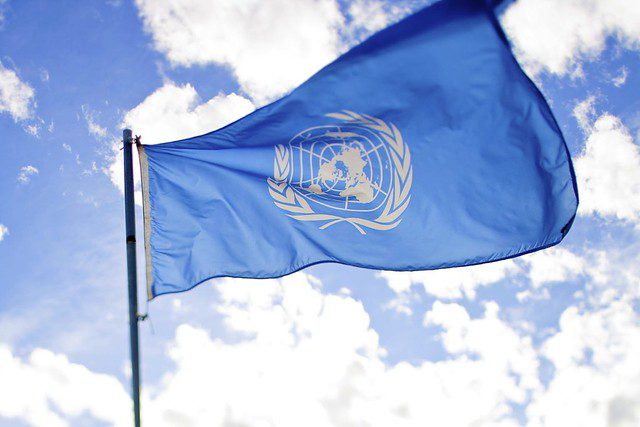
      The United Nations flag and symbol are blue and white. The design team created the logo in 1945, and it was officially adopted by the organization in 1946. The emblem is “a map of the world representing an azimuthal equidistant projection centered on the North Pole, inscribed in a wreath consisting of crossed conventionalized branches of the olive tree, in gold on a field of smoke-blue with all water areas in white,” according to the original description.
    10. The U.N. Has the First Recorded Definition of Human Rights
      In 1948, the United Nations General Assembly drafted the first Universal Definition of Human Rights (General Assembly resolution 217 A). It was drafted by representatives from different legal and cultural backgrounds to make it more comprehensive. It sets out fundamental human rights that should be protected; condemning slavery, torture, imprisonment without trial and prejudice. It has been translated into more than 500 languages.

The United Nations has worked for decades to protect human rights around the world. These 10 cool facts about the United Nations shed some light on the history of the organization as well as some of its policies.

– Emily Triolet
Photo: Flickr
May 7, 2019
https://borgenproject.org/wp-content/uploads/borgen-project-logo.svg 0 0 Kim Thelwell https://borgenproject.org/wp-content/uploads/borgen-project-logo.svg Kim Thelwell2019-05-07 01:30:102024-05-29 23:00:0210 Cool Facts About the United Nations
Global Poverty, Health, United Nations, USAID, Water, Water Quality, Water Sanitation

5 Interesting Facts About World Water Day 2019

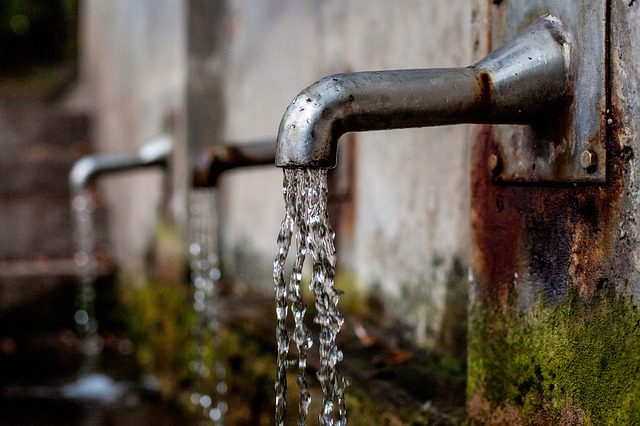
World Water Day 2019While water might seem like a basic necessity, more than 650 million people worldwide lack easy access to clean water. Every year, the United Nations sponsors World Water Day. World Water Day raises awareness about global water crises, demonstrating the need for water in developing nations. Take a look at these interesting facts about how the U.N. celebrated World Water Day 2019.

5 Interesting Facts About World Water Day 2019

  1. “Leaving No One Behind”
    The theme for World Water Day 2019 was “Leaving No One Behind.” Technology is providing new methods to increase access to clean water. Additionally, it mobilizes programs combating water scarcity. Above all, technology connects individuals interested in making a difference, no matter where they are. However, these advances can’t only benefit privileged populations. Improvements must be available to marginalized groups, as well. World Water Day 2019 emphasized access to clean water is a human right, as recognized by the U.N. in 2010. Everyone deserves water, regardless of sex, race, ethnicity, religion or age.
  2. USAID’s Strategy
    The U.S. government is working to implement a strategy to improve global water access through the U.S. Agency for International Development. While the fight to bring access to clean water is global, USAID renewed its commitment to providing clean drinking water this World Water Day. As such, USAID supports the core objectives outlined in the U.S. Government Global Water Strategy. These objectives include promoting better stewardship of freshwater resources and expanding the availability of sanitation services. Additionally, USAID is enacting policy and programs aimed at providing 15 million people access to clean water by 2022.
  3. “Water Action Decade”
    This World Water Day marked the first completed year of the U.N.’s “Water Action Decade.” Three years ago, the U.N. General Assembly unanimously decided to make the global water crisis a top priority for 10 years straight. The “Water Action Decade” kicked off in 2018. Therefore, efforts to increase sustainable water management and access to safe water will last through World Water Day 2028. And nations around the world execute large-scale programs, addressing water scarcity stemming from pollution, drought and urbanization.
  4. Women and Water
    Women played a key role in the message of World Water Day 2019. While many suffer due to water scarcity, women disproportionately carry the burden. According to U.N. research, women and girls make up the majority of people responsible for obtaining water in areas where clean water isn’t accessible. Collectively, women devote around 200 million hours to finding and gathering clean water. Subsequently, a major goal for World Water Day 2019 was improving women’s access to water, which can lead to awesome opportunities that promote independence for women. Therefore, the U.N. sponsors women-led projects in rural areas to include women in community decisions about water as just one part of its commitment to improving universal access to clean water worldwide.
  5. U.N. Sustainable Development Goals
    In fact, World Water Day is just one example of U.N. efforts to meet Sustainable Development Goal 6. Overall, the U.N. has agreed on 17 different goals to promote sustainable development worldwide, specifically in growing and impoverished nations. These Sustainable Development Goals must meet their goals by 2030. Particularly, the primary task of Sustainable Development Goal 6 is to make water safe, affordable and accessible universally. And World Water Day marks just one of many U.N. efforts to reach this crucial goal on target. Ultimately, the first step in achieving universal access to clean water is raising awareness.

Nevertheless, on World Water Day 2019, nations joined hands to strengthen efforts toward making clean water accessible worldwide. The celebration honored organizations that provide aid, unite communities and save lives. And they celebrate innovations that revolutionize water management, along with the people dedicated to campaigning for water access without leaving anyone behind.

– Emmitt Kussrow
Photo: Unsplash

April 29, 2019
https://borgenproject.org/wp-content/uploads/borgen-project-logo.svg 0 0 Kim Thelwell https://borgenproject.org/wp-content/uploads/borgen-project-logo.svg Kim Thelwell2019-04-29 11:37:562024-05-29 22:59:545 Interesting Facts About World Water Day 2019
Education, Global Poverty, United Nations

Four Top Speeches on Girls’ Education

Four Top Speeches on Girls' EducationOver the decades, feminist literature has played a pivotal role in addressing feminism, women’s rights and other related social issues concerning women and girls. Speeches, in particular, have proved to be a powerful vehicle for social justice and mobilization and are helping to promote gender equality and freedom for women globally. There are four top speeches that exemplify the ideals that women’s rights and the importance of girls’ education stand for.

Despite major headway, particularly in global poverty alleviation, there are still significant social and cultural barriers to education for girls around the world. Modern third-wave feminism and contemporary feminist jurisprudence itself continue to prioritize the elimination of gender-based discrimination in all facets along with its focus on intersectionality.

As girls’ education remains one of the most prevalent social issues of today, the following are some of the top speeches on girls’ education that prove to be inspiring and revolutionary not only in their content and scope but also their context and timelessness.

Four Top Speeches on Girls’ Education

  1. ‘What Educated Women Do’ by Indira Gandhi: This particular speech was rendered by former Prime Minister of India Indira Gandhi before her death and it remains one of the most influential speeches on girls’ education, especially as it draws attention to the issues faced in South Asia. Not only does she use anecdotes and experiences from her own life to describe India’s tough social landscape but she also outlines the hardships and conditions for women and children in the country and the continued presence of outdated and oppressing social constructs in society. According to Gandhi, education is paramount to ensuring India’s continued growth and development in the future. Furthermore, she believed that educated women in India can boost the country’s image on the world stage as well.
  2. “Islam Forbids Injustice Against People, Nations and Women,” by Benazir Bhutto: The speech given by Pakistan’s former Prime Minister before her death is especially noteworthy for its radical opposition to politics and society in the country. Bhutto’s position in Pakistan’s political arena was largely dominated by her political activism to end discrimination and inequality. She singled out conservatism and patriarchy in society as being some of the primary causes of discrimination. Moreover, Bhutto’s unraveling of society was especially historic at that juncture as she called into question the religious misinterpretation of Islamic teachings and the propagation of obscurantism that contributes to it. She distinguished between social taboos and Islamic religious teachings to highlight the social injustices adversely impacting women in her country.
  3. ‘Let Girls Learn’ by Michelle Obama in London: Of all the empowering speeches Michelle Obama has given through her tenure as the former First Lady of the United States, a rather remarkable one remains her address on the occasion of her campaign for ‘Let Girls Learn,’ which is an organization that revitalizes the importance of girl’s education across the world. Established in 2015 by the Obamas in collaboration with USAID, Let Girls Learn aims to reach more than 62 million girls globally by increasing existing education programs and securing private-sector commitments. These initiatives will help increase access to education and crumble existing barriers. In her speech, she struck a chord as she passionately advocated for girls’ education as she addressed girls in a school in Mulberry, a borough that is known to be among London’s poorest. On this visit, Michelle Obama collaborated with the U.K. government and secured $200 million in funding to support girls’ education in conflict-ridden zones in countries like Liberia, the Democratic Republic of Congo and Sierra Leone.
  4. UN Address by Malala Yousafzai: Not only did this speech cement Malala Yousafzai’s influence globally but it also alerted the world to the deficiencies and lack of girl’s education in many countries. She drew from the context in Pakistan and her horrific experiences as a child. In her poignant speech, she spoke about practices like child labor, exploitation and other social injustices befalling women. She also emphasized the strong potential that female education could have on the world, particularly in crises like war, conflict and poverty. One of the most striking aspects of her speech is her direct address to world leaders as she urged international discourse on peace and security to center around the protection of women and girls and securing their rights. The last words of her speech, ‘Education first,’ still remain the key pillar for all her initiatives, particularly the work being undertaken by the Malala Foundation.

These four incredible women have been an inspiration to women and girls around the world. They have tirelessly fought for equality for women and an equal chance at education. These four women delivered the four top speeches on girls’ education.

– Shivani Ekkanath
Photo: Pixabay

April 10, 2019
https://borgenproject.org/wp-content/uploads/borgen-project-logo.svg 0 0 Kim Thelwell https://borgenproject.org/wp-content/uploads/borgen-project-logo.svg Kim Thelwell2019-04-10 10:36:442024-05-29 22:59:29Four Top Speeches on Girls’ Education
Global Poverty, Refugees, United Nations

Humanitarian Solutions for the Victims of War in Syria

War in SyriaSyria’s civil war has been raging on for eight years now. The conflict has created a huge population of 5.7 million refugees in critical need of humanitarian assistance. The resulting humanitarian crisis is one of the worst the world has seen in recent years. Several organizations are on the ground trying to provide humanitarian solutions for the victims of war in Syria.

Syrian Democratic Forces

Recently, the Islamic State (IS) made its last stand to desperately hold on to the last tiny piece of territory it has, a small town in Eastern Syria called Baghouz. In September 2018, the Kurdish-led Syrian Democratic Forces (SDF) initiated what they hope to be their final military push to reclaim IS turf. The operation has been excruciatingly slow and deadly.

Civilians are struggling to slip out of the militants’ grasp and into the global humanitarian community. The SDF is working to help extract the civilian families out of the last holdout of IS fighters. It is believed that several thousand people are still huddled together in the final IS enclave. The people pouring out of Baghouz to seek shelter from the war in Syria pose a huge humanitarian challenge.

Almost 40,000 civilians have already left the diminishing IS territory, but the flow was severely interrupted when IS fighters closed off all exit roads. IS extremists were obstructing civilians from escaping, using them as human shields from airstrikes. Now, small groups of refugees sneak out into humanitarian corridors with the help of smugglers. The International Rescue Committee (IRC) is a humanitarian organization working to help refugees escape the war in Syria and to monitor refugee movements.

Save the Children

Children escaping from the war in Syria are especially in need of humanitarian assistance. Beyond food, health services, education and other basic needs, child refugees require mental health services. Syrian refugee children consistently show signs of psychological trauma. Save the Children is striving to provide necessary services for Syrian child refugees. Among other things, they are working to establish recreational spaces and centers for unaccompanied children in the refugee camps. They provide mental health and socializing services in a safe environment for war-weary children.

According to Save the Children, the war in Syria has made it the most dangerous country in the world for children. In Syria, 5.3 million children need humanitarian assistance. Children are not only the victims of violence but also the targets of abduction and recruitment into armed groups. In three refugee camps in North-East Syria, there are more than 2,500 children from at least 30 different countries.

There is much work to be done, and Save the Children emphasizes that the organization is in dire need of more support. Extra funding is necessary to provide case management and protective services for more children. Foreign children need their countries of origin to facilitate repatriation. Save the Children urges the international community to help preserve family unity and aid those returning to their countries of origin from the war in Syria.

Other Humanitarian Organizations

Humanitarian organizations help 700,000 people each month in North Eastern Syria. In March, Brussels will host a pledging conference to raise more funds for humanitarian aid to Syria. In 2018, various nations collectively raised $5 billion for Syrian relief. In Syria, the United Nations aid feeds around 3 million people each month, and U.N. medical assistance has treated nearly 3 million patients.

The U.N. and the Syrian Arab Red Crescent have been cooperating to transport and deliver large amounts of aid to refugee camps in Syria. On February 6, the largest of such shipments arrived in Rukban, a refugee settlement in the demilitarized zone established by the major warring parties. The majority of Rukban’s inhabitants are women and children. The convoy included 133 trucks loaded with food, health and nutritional supplies, hygiene materials, education items, children’s recreational kits and vaccines. The aid came at a critical time to help save the lives of at least 40,000 people who live in the settlement.

The Syrian Society for Social Development (SSSD) is another humanitarian organization working to enhance the lives of marginalized Syrians. They improve and provide schools, community centers, safe spaces, elder care facilities and other communal programs. Since the beginning of the conflict, they have been able to increase the scope of their assistance in both geographical range and by the number of people helped. Their programs have benefitted more than 1 million people.

There are organizations doing everything they can to help Syrian refugees survive and return to a peaceful life. Thanks to the efforts of thses humanitarian organizations, refugees, who have been surrounded by airstrikes and extremist violence, have shelter against the harsh Syrian winter.

– Peter Mayer

Photo: Flickr

February 25, 2019
https://borgenproject.org/wp-content/uploads/borgen-project-logo.svg 0 0 Kim Thelwell https://borgenproject.org/wp-content/uploads/borgen-project-logo.svg Kim Thelwell2019-02-25 01:30:412024-05-29 23:00:20Humanitarian Solutions for the Victims of War in Syria
Global Poverty, United Nations, Women

Poverty and Oppression of the Women in Tajikistan

Women in Tajikistan
For a small country in Central Asia, Tajikistan makes U.S. news relatively frequently, often because the lives of women there differ from the U.S. norm. Those living in the area have suffered from political turmoil and poverty. While the news often focuses on the modern oppression of women, the mistreatment of women in Tajikistan stems from a larger injustice, centuries of poverty in the country that has affected women more than men.

Religious Oppression for Women in Tajikistan

Recently, the news has highlighted that Tajikistan’s Ministry of Culture published a “Book of Recommendations” for women’s attire. In the book, models display what the country deems appropriate attire for many occasions, setting standards for work and many social events.

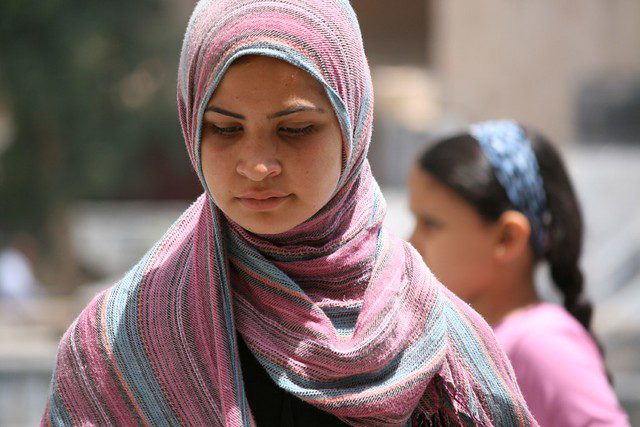
What particularly incited opposition from many was the book’s overt advisement against Muslim and Islamic clothing, like the hijab, as well as Western clothing, which was deemed too scandalous. Furthermore, in 2017, the Tajikistan government instituted a policy of texting women reminders about wearing traditional clothing. This followed the government’s efforts in 2016 to close shops selling women’s religious clothing.

Additionally, the Tajikistan government created a law requiring traditional attire and culture at important events, such as weddings and funerals, officially banning “nontraditional dress and alien garments.” In August, the month it became law, 8,000 women wearing hijabs were stopped by government officials and told to remove their religious garments.

Maternal Mortality Rates for Women in Tajikistan

Tajikistan is one of the world’s poorest countries. Thirty-two percent of Tajiks live in poverty, but in rural areas, that number rises to 75 percent. Consequentially, women face staggering maternal mortality rates with 65 women out of every thousand dying from pregnancy or childbirth. In fact, mortality rates for both mother and infant are higher than any other country in Central Asia, a region already significantly behind Western standards.

This lag correlates with the upheaval faced by Tajiks since the responsibility for healthcare had changed hands so many times in the past. Tajikistan was part of the Soviet Union from 1929 to 1991. Then, shortly after gaining independence in 1991, Tajikistan suffered from a brutal civil war that not only claimed tens of thousands of Tajik lives but also crippled the healthcare system, contributing to such high maternal mortality rates.

Caring for the Home and Family

Political upheaval abruptly caused women to become household managers without any aid, leaving them to struggle with poverty. The civil war crippled industrial and agricultural production, the latter of which the country’s economy depended on almost entirely. Since then, nearly 1.5 million Tajik men have left the country to seek employment elsewhere, often leaving wives in charge of the home and children. But, unfortunately, households headed by women are significantly poorer than those headed by men.

Representation and Education for Women in Tajikistan

Female representation in government has remained below international standards because of the poverty caused by political upheaval. Only 12 of the 62 legislators in Tajikistan are women. Those who do make it into politics are often stuck in the lower ranks with little to no opportunity to rise to levels where they can create change.

Private Muslim schools educated the majority of the country’s population from early 1800 until the 1920s when The Soviet Union secularized education. However, with independence came a decreased government budget for education as the private funds disappeared. Moreover, women either have to marry young or are too busy working and, therefore, do not have an opportunity to receive an education.

Improvements Being Made For Women in Tajikistan

Due to The Soviet Union’s systemized education, literacy rates grew, and that shift in norms has continued to benefit men and women in Tajikistan. Additionally, in the two decades following independence, poverty rates have dropped, suggesting a growing stability. In fact, in 1999, 81 percent of the country lived in poverty, and in ten years that number has almost halved to 47 percent. Additionally, extreme poverty decreased from 73 percent in 1999 to 14 percent in 2013.

The U.N. has been working in Tajikistan to improve conditions for women since 1999 by empowering women and promoting gender equality. Furthermore, local and international stakeholders have been given a way to provide activities for women, such as the Rapid Emergency Assessment and Coordination Team (REACT), which helps train women to respond in disaster situations.

Hope for a Better Future

Therefore, beyond the uproar over women’s clothing being regulated by the government lies a deeper historical injustice due to poverty. Women have had little control over Tajikistan’s laws that have targeted them and a lack of access to education that prevents this fact from changing.

Despite concerning media coverage, possible improvements for the lives of women in Tajikistan exist. As stability grows, the potential exists to improve the budget for healthcare and education and, therefore, reduce poverty. Backed with proper healthcare and educational opportunities, women will have the ability to gain access and opportunities to dictate the laws of their country, such as those about their clothing, by becoming more active in the political sphere.

– Charlotte Preston
Photo: Flickr


November 16, 2018
https://borgenproject.org/wp-content/uploads/borgen-project-logo.svg 0 0 Borgen Project https://borgenproject.org/wp-content/uploads/borgen-project-logo.svg Borgen Project2018-11-16 01:30:212019-08-14 15:58:06Poverty and Oppression of the Women in Tajikistan
Global Poverty, United Nations

The Unrepresented Nations & Peoples Organization: A Voice for the Voiceless

Unrepresented nationsIn 1991, The Unrepresented Nations & Peoples Organization (UNPO) was founded in The Peace Palace in The Hague, Netherlands. The UNPO is an international body with a membership comprised of “indigenous peoples, minorities, citizens of unrecognized States and occupied territories” who use The UNPO as a collective means of participating in the major international community. Over forty unrepresented groups currently make up The UNPO’s General Assembly with a few notable members such as Tibet, Taiwan and Washington D.C.

UNPO’s Mission

The communities joined together in The Unrepresented Nations & Peoples Organization are united in a shared mission guided by the five major principles of nonviolence, human rights, democracy, self-determination, environmental protection, and tolerance stated in The UNPO Covenant. The Covenant draws off of language used in ubiquitous international documents like The United Nations Charter, The United Nations Declaration on the Rights of Indigenous Peoples and others to validate the need for a forum such as The UNPO to exist.

Through its mission, The UNPO is also an ally in the fight to alleviate global poverty. According to estimates from the World Bank, indigenous peoples make up about 5 percent of the population and about 10 percent of those living in poverty around the world. These statistics reveal how indigenous groups are disproportionately affected by poverty. By empowering indigenous and other marginalized people through international representation, The UNPO is taking important steps to combat poverty.

How The UNPO Works

The main decision-making body of The UNPO is the General Assembly, made up of delegations from each of the member communities. The General Assembly convenes every 12-18 months so that UNPO members can discuss the pressing issues in their communities. In addition, the Assembly elects members of the eight members of the Presidency, including the President, two Vice-Presidents, General Secretary, and Treasurer for three-year terms.  

The Presidency has the duty of implementing the policy put forth by the General Assembly during a term. The current President is Mr. Nasser Boladai of West Balochistan. Under the direction of the General Assembly and the Presidency, The Unrepresented Nations & Peoples Organization acts as a key intermediary between the unrepresented communities it represents and international institutions such as The U.N. and E.U.

The UNPO approaches international forums in the role of an advocate for their members as well as a consultant about international decisions on issues relevant to UNPO members. For example, thanks to the work of  The UNPO, marginalized groups and minorities have been able to actively participate in various U.N. sessions of The Human Rights Council, The U.N. Forum on Minority Issues, and The U.N. Permanent Forum for Indigenous Issues.

In addition, the UNPO has successfully lobbied for their inclusion in The Universal Periodic Review (UPR) process launched in 2008 to review the human rights records of all UN Member States. As a result of the advocacy and lobbying done by The UNPO, many of the marginalized and unheard voices that The UNPO represents now have the chance to be heard by those who wield power amongst the international community.

Who is the in the UNPO?

The Unrepresented Nations & Peoples Organization currently represents 43 Nations/ Peoples throughout the world. Each member community has its own set of specific aspirations and concerns that they hope The UNPO can help them verbalize. The UNPO compiles detailed profiles on each of its member communities and then uses this information to help advocate in their interest.

Tibet, or the Government of Tibet in Exile is a member of the UNPO and has a history that is familiar to many. In the 1950’s, Tibet became an occupied territory of The People’s Republic of China and lost its national autonomy and political rights. The Central Tibetan Administration or the Tibetan Government in Exile claims that the Chinese occupation is an illegitimate military campaign. Although the Chinese constitution grants political autonomy to the occupied areas of Tibet, the reality from the Tibetan point of view is that the Chinese preside over them with an authoritarian rule.

Through the influence of The UNPO, The Tibetan Delegation hopes to plead it’s case to the international community and address grievances (violations of political rights, environmental degradation, and suppression of freedom of expression and association) against the Chinese government.

Since 1991, The Unrepresented Nations and Peoples Organization has helped promote the rights and freedoms of minority/marginalized groups throughout the world. As we strive towards shaping a world of equality and justice, The UNPO serves as a fine example of how we can give a voice to the voiceless.

– Clarke Hallum

Photo: Flickr

October 14, 2018
https://borgenproject.org/wp-content/uploads/borgen-project-logo.svg 0 0 Borgen Project https://borgenproject.org/wp-content/uploads/borgen-project-logo.svg Borgen Project2018-10-14 01:30:192024-05-29 22:53:10The Unrepresented Nations & Peoples Organization: A Voice for the Voiceless
United Nations

How Voluntary National Reviews Are Propelling Us Towards our Goals

36. How Voluntary National Reviews Are Propelling Us Towards our Goals

The United Nations High-Level Political Forum met on July 18, 2018, to reaffirm its commitment to the 2030 Agenda for Sustainable Development, as well as to assess the progress that has been made towards achieving its goals thus far.

In an address to the Forum, Secretary-General António Guterres urged that “we need to embed the essence of the 2030 Agenda into everything we do.” This, he explained, will be vital to meeting the 2030 Sustainable Development Goals (SDGs). Statements like this have, to some extent, fallen on deaf ears in past years, as some countries failed to hold up their end of the bargain.

Voluntary National Reviews: Achieving Transparency and Accountability

In the past, the issues of accountability and transparency have been a focal point for the United Nations and the High-Level Political Forum. Most of the actions that the United Nations and its member states agreed to undertake are voluntary and SDGs are not an exception. For this reason, it is difficult to identify what exactly each country’s “end of the bargain” is. The institution and increased use of Voluntary National Reviews (VNRs), however, are addressing this issue.

Voluntary National Reviews have played a fundamental role in facilitating transparency in regards to the 2030 Sustainable Development Goals. VNRs are state-led analyses of each nation’s contributions to aforementioned Goals. The Reviews are conducted in collaboration with most, if not all, sectors of a nation’s government, making for a wholesome and accurate source of information to be shared and discussed at the High-Level Political Forum, as well as in other assemblies.

Voluntary National Reviews role and responsibility

VNRs allow member states to take note of and critique the ways in which other members of the global community are addressing important issues like poverty, education, environment, and more. The Reviews are not statistical analyses but rather collaborative policy and plan analyses which aim to ensure that each nation is working hard and efficiently to contribute in the best way possible to the goals of the Agenda. Conclusions about levels of commitment and strategies to embed the goals in the framework of each member state can be found in the annual VNR Synthesis Report.

Forty-six countries presented their VNRs at the High-Level Political Forum, adding to the 65 that have already presented in 2018. Participatory numbers have more than doubled each year since 2016, showing that member states are even more committed to upholding their individual goals in order to achieve the United Nation’s ultimate goals.

The virtue of VNRs today has been a vice for the United Nations throughout its history. Their voluntary nature allows them to act as an affirmation of a member’s commitment to the SDGs as well as to fighting poverty, opening access to education and addressing the global issues that have yet to be fully addressed. VNRs are proving and will continue to prove to be powerful catalysts for change and progress towards the United Nations 2030 Agenda.

– Julius Long
Photo: Flickr

August 26, 2018
https://borgenproject.org/wp-content/uploads/borgen-project-logo.svg 0 0 Borgen Project https://borgenproject.org/wp-content/uploads/borgen-project-logo.svg Borgen Project2018-08-26 16:00:202024-05-29 22:52:51How Voluntary National Reviews Are Propelling Us Towards our Goals
Gender Equality, United Nations, Women's Empowerment

Five Ways the United Nations Empowers Women Globally

United Nations Empowers Women
The United Nations (UN) is a multinational organization that promotes universal human rights, encourages global cooperation and establishes international law and order among nation-states. The United Nations empowers women because they are the spearhead of social equality. The organization has made great strides in the fight against gender inequality, and the United Nations empowers women socially, politically and economically.

Five Ways the United Nations Empowers Women Globally

  1. Within Kyrgyzstan, the U.N. is teaching 15,000 young people to respect and appreciate gender diversification. The United Nations’ education program in the Chui region of Kyrgyzstan is tackling issues that impact girls and women. The program will consist of seminars that discuss a variety of different topics, such as violence, diversity and livelihood skills.The main objective of these discussions is to bring awareness through education, creating harmonious, respectful relations between men and women. They will enlighten the youth on both human rights and fundamental business skills, allowing the youth to grow together to form more inclusive economic, political and social initiatives for the present and future.Girls are facing many challenges within Kyrgyzstan. The United Nations empowers women by spreading a message of universal human rights. The country is adopting these morals in order to make a better tomorrow for the women of Kyrgyzstan.

  2. Several African countries are currently bringing an end to gender-based violence in education systems. The United Nations, Education International and Gender at Work founded “Education Unions Take Action to End School-Related Gender-Based Violence” in 2016, and the initiative continues to be implemented today. The United Nations empowers women in Ethiopia, Kenya, South Africa, Uganda and Zambia through this program.The goal of this program is to decrease gender-based violence within schools across Africa. Unions have banded together in order to strengthen the cause, learning that education plays a vital role in providing safety to young girls, boys and educators. Discussions and classes have proven to be effective in the fight against gender-based violence. Now, these unions are introducing a global campaign in order to educate the world about the challenges their communities face and the practices they use in order to decrease violence.
  3. The U.N. is hosting workshops in African countries in order to encourage education among girls. The United Nations Girls’ Education Initiative (UNGEI) has a vision for the year of 2030: an inclusive, fair education system that supports equality among women. The workshops across Africa will help with this vision.Called the “Gender-Responsive Education Sector Planning Workshop,” planners for the academic school year will learn about new ways to incorporate young girls in classes. They will also effectively and fairly include both genders in lesson plans. These workshops are sure to provide more opportunities to young girls through West and Central Africa.
  4. The U.N. is giving rural women access to digital technology in order to fortify their economic equality. Many women across the globe work in agriculture, yet they do not have the same property rights as men. The United Nations reported that rural women make up over 25 percent of the world’s population. Rural women provide the food for their communities, yet landowning and financing are just two liberties that they often cannot obtain; the U.N. is working to make that different.The U.N. is breaking gender barriers by giving rural women digital technology so that they can compete with men in the agricultural business. Women are now better able to access agriculture inputs and technologies for climate resilience.The indigenous women of Guatemala are further examples of how the U.N. is empowering rural women globally. These ladies participate in a joint program of many international organizations that help women become financially stable and independent. They are now saving money, which results in better conditions for their home life.
  5. Marta Vieira da Silva is now a Goodwill Ambassador, through which she can empower young ladies to accomplish their dreams. Marta Vieira da Silva is a Brazilian soccer player who now works for the U.N. as a Goodwill Ambassador. She has committed herself to helping young women achieve their goals, whether it is through sports, politics, medicine, business, engineering, etc.Vieira da Silva will work closely with the U.N. Women Executive Director in order to increase opportunities for girls in sports. If complete equality is to be reached, it means equality in all things—including sports. World leaders and international organizations view sports as an engaging way to strengthen gender equality and women’s empowerment.

The United Nations empowers women of all backgrounds and proves that women can do anything if they are only given the chance. With continued efforts from organizations like the U.N., total gender equality is within the world’s reach.

– Diana Hallisey
Photo: Flickr

August 13, 2018
https://borgenproject.org/wp-content/uploads/borgen-project-logo.svg 0 0 Borgen Project https://borgenproject.org/wp-content/uploads/borgen-project-logo.svg Borgen Project2018-08-13 13:30:482024-05-29 22:52:45Five Ways the United Nations Empowers Women Globally
Global Poverty, Refugees and Displaced Persons, United Nations

Dwindling UN Funds Threaten Millions of Palestinians

Threatens Millions of Palestinians
The United Nations Relief and Works Agency (UNRWA) was established in 1949, after the 1948 Arab-Israeli conflict, in order to offer relief and works programs for Palestinian refugees. Since its inception, UNRWA has gone from helping some 750,000 Palestinian refugees to approximately 5 million Palestinians today.

Funding

Funded entirely by the contributions of U.N. member nations, UNRWA directs its efforts towards services ranging from education to healthcare to microfinance. Their budget is divided into 54 percent to education, 17 percent to health, 16 percent to support services, 9 percent to relief and social services, and 4 percent to infrastructure and camp improvement.

Unfortunately, these services are at risk due to a potential $250 million shortfall. A significant decline in the United States’ contribution, from $364 million last year to $60 million this year is said to be responsible for the shortage of funds.

Impact in Syria

Amidst the destructive conflict in Syria, 560,000 Palestinian refugees are among the worst affected. Through the Syria Crisis Response Plan, UNRWA provides vital humanitarian assistance through emergency healthcare, education, food and household items. In Syria alone, $411 million is necessary to maintain these crucial provisions.

The UNRWA has provided 44,000 young Palestinian refugees with the opportunity to pursue primary and secondary education. However, if the funding shortage cannot be met, their safety, as well as their education, is at risk.

Impact in Gaza

Through 22 health centers, UNRWA provides healthcare services to over 1.2 million Palestinian refugees in Gaza. Due to the ongoing conflict in Gaza and limited resources available, UNRWA also offers emergency food assistance to 830,000 Palestinian refugees living below the poverty line as well as 45,870 cash-for-work opportunities and counseling for upwards of 25,000 refugee children. Funding shortages place all of these essential services at risk.

UNRWA has 252 schools in Gaza that educate more than 240,400 students. These schools now face a similar, bleak fate to their Syrian counterparts should this massive funding gap fail to be filled. Aside from providing students a basic education, many of these schools include a dedicated human rights curriculum that promotes conflict resolution.

Impact in the West Bank

Palestinian refugees living in the West Bank are also at significant risk should the UNRWA not be able to resolve its funding shortage. UNRWA provides emergency food assistance to almost 36,000 households, in addition to working to improve camp environments for female and youth refugees. In 2012, for example, UNRWA assisted 113,374 food-insecure Palestinian refugees.

Significance of UNRWA Funding

According to Pierre Krahenbuhl, the commissioner general of the UNRWA, the most urgent threat the funding shortage poses is to emergency food aid to Palestinians in Gaza and Syria. However, the UNRWA has also been instrumental in offering high-quality education throughout the region, promoting gender equality, providing near-universal immunization, investing in small businesses, and providing food assistance to 1.7 million refugees.

What do all of these services have in common? They have been integral to raising Palestinian refugees out of poverty and ensuring basic human rights. We cannot allow UNRWA’s efforts to disappear. Failure to offer these resources threatens millions of Palestinians and only guarantees continued hardship for their communities and the region. 

– McAfee Sheehan
Photo: Flickr

July 19, 2018
https://borgenproject.org/wp-content/uploads/borgen-project-logo.svg 0 0 Borgen Project https://borgenproject.org/wp-content/uploads/borgen-project-logo.svg Borgen Project2018-07-19 01:30:392019-09-13 20:04:29Dwindling UN Funds Threaten Millions of Palestinians
Child Soldiers, United Nations

Myanmar Child Soldiers: the Tatmadaw Kyi’s Takeover

Myanmar
Children, exploitation and guerrilla warfare have become an unfortunate triad all too familiar amongst the people of Myanmar. A country rife with decades of internal armed conflict, the nation relies on the recruitment of underage Myanmar child soldiers into its national army, Tatmadaw Kyi, to help supply ethnic wars with manpower.

Who and What

The children’s purpose? According to Hope for the Nations, the youths are needed to serve and “defend the drug lords of the area at the cost of losing their parents, families, homes and even their own lives.” In fact, some children are recruited and trained at the mere age of 6.

An excerpt from a compilation of personal accounts from former Myanmar child soldiers reads: “Living under armed guard, Arkar Min received one meal a day—a bowl of rice with some oil and salt. He had no bed and slept on the concrete, using his lungi as a pillow. There were six other conscripts, most of them 15; the eldest was 17. None of them had joined voluntarily—they’d been offered work, hoodwinked, kidnapped, and sold into service.”

The Why: Political Instability

It’s near impossible to look at these human rights violations of Myanmar’s youth without looking at the country’s political climate. Following the 1948 breakaway from the United Kingdom, the nation was ignited in upheaval and political turbulence. One of the major causes of these debilitating occurrences was the ethnic minority groups who were unable to compromise on the multi-faceted dilemma of sharing political power. An overwhelming surge of battles erupted between indigenous groups, which led to the enlistment of their vulnerable youth in armies as a chance to seize power.

State armed forces eventually acquired power in 1962, and Myanmar fell under even greater distress. A corrupt and oppressive military dictatorship reigned for virtually 50 years, failing to condemn or control ethnic wars and child soldier recruitment and exploitation. Luckily, 2011 brought hope to the nation when the military handed over power to a civilian government.

A Breach In Corruption

The nation’s established civilian government has brought sought-upon relief to countless families, citizens and children. Not only has the government advanced the national armed forces to more professional levels, but it has also released hundreds of underage children who were wrongfully recruited into war.

The U.N. estimates that thousands of people have been displaced as a result of internal conflict and fighting. According to Aljazeera, in 2015 the military released 146 underage recruits; since its agreement with the U.N. to end the recruitment of children into the military, 699 have been released.

Renata Lok-Dessallien, the U.N. Resident and Humanitarian Coordinator in Myanmar stated, “I am delighted to see these children and young people returning to their homes and families. We are hopeful that institutional checks that have been put in place and continued efforts will ensure that recruitment of children will exist no more.”

Hope For the Youth

There exist many initiatives that aim to eradicate the exploitation of Myanmar child soldiers. Project AK-47, for example, reaches child soldiers and brings them from hopelessness to hopefulness and care. Planting themselves in highly regulated and classified regions of Southeast Asia, members of the Project provide the oppressed youth with basic needs like shelter, food, clothing and education, as well as deeper needs like spiritual care and love.

The utmost goal of Project AK-47 aims to mentor the children into becoming leaders within their own communities. According to Hope for the Nations, some of them will end up as teachers, government leaders, or even workers on tea plantations. It is vital that they are taught how to create a positive impact amongst their own communities and regions, and to carry the spirit of excellence with them wherever they may go.

Positive Redirection and Potential Solutions

Following in line with hopeful solutions, Myanmar’s November 2015 Parliamentary election ensued a large victory for the National League of Democracy. So much so that citizens remain hopeful that their new government will mend the country’s broken human rights situation. This is the time where advocacy will ring strong, and where advocates’ voices of concern will hold ground with developing governments.

A unified voice from the world and from native citizens to remove children from army ranks is a push in the right direction. According to Child Soldiers International, advocates “will be engaging with the national authorities and civil society to see Myanmar opt in fully to the relevant international laws and ensure that domestic laws that prohibit child recruitment are fully observed.” The ultimate goal is loud and clear: to protect the rights of Myanmar’s voiceless youth is to eradicate the recruitment and the exploitation of underage children within the military.

– Mary Miller
Photo: Flickr

June 26, 2018
https://borgenproject.org/wp-content/uploads/borgen-project-logo.svg 0 0 Kim Thelwell https://borgenproject.org/wp-content/uploads/borgen-project-logo.svg Kim Thelwell2018-06-26 01:30:032024-12-13 17:58:50Myanmar Child Soldiers: the Tatmadaw Kyi’s Takeover
Page 11 of 35«‹910111213›»

Get Smarter

  • Global Poverty 101
  • Global Poverty… The Good News
  • Global Poverty & U.S. Jobs
  • Global Poverty and National Security
  • Innovative Solutions to Poverty
  • Global Poverty & Aid FAQ’s
Search Search

Take Action

  • Call Congress
  • Email Congress
  • Donate
  • 30 Ways to Help
  • Volunteer Ops
  • Internships
  • Courses & Certificates
  • The Podcast
Borgen Project

“The Borgen Project is an incredible nonprofit organization that is addressing poverty and hunger and working towards ending them.”

-The Huffington Post

Inside The Borgen Project

  • Contact
  • About
  • Financials
  • President
  • Board of Directors
  • Board of Advisors

International Links

  • UK Email Parliament
  • UK Donate
  • Canada Email Parliament

Get Smarter

  • Global Poverty 101
  • Global Poverty… The Good News
  • Global Poverty & U.S. Jobs
  • Global Poverty and National Security
  • Innovative Solutions to Poverty
  • Global Poverty & Aid FAQ’s

Ways to Help

  • Call Congress
  • Email Congress
  • Donate
  • 30 Ways to Help
  • Volunteer Ops
  • Internships
  • Courses & Certificates
  • The Podcast
Scroll to top Scroll to top Scroll to top