• Link to X
  • Link to Facebook
  • Link to Instagram
  • Link to TikTok
  • Link to Youtube
  • About
    • About Us
      • President
      • Board of Directors
      • Board of Advisors
      • Financials
      • Our Methodology
      • Success Tracker
      • Contact
  • Act Now
    • 30 Ways to Help
      • Email Congress
      • Call Congress
      • Volunteer
      • Courses & Certificates
      • Be a Donor
    • Internships
      • In-Office Internships
      • Remote Internships
    • Legislation
      • Politics 101
  • The Blog
  • The Podcast
  • Magazine
  • Donate
  • Click to open the search input field Click to open the search input field Search
  • Menu Menu

Archive for category: Activism

Information and stories on social activism.

Activism, Global Poverty, Technology

FotoKonbit: Stories Through Photography

To an outsider, Haiti is often synonymous with natural disaster and despair. FotoKonbit is determined, however, to show that Haiti’s society is much more rich and complex than its façade of poverty and turmoil. As a grassroots nonprofit organization, FotoKonbit is a photography workshop designed to give Haitians the freedom to tell their stories through images.

Popular media defines Haiti as a nation in crisis, which isn’t far off from the truth. According to the World Food Programme, even before the earthquake 1.9 million people were ‘food insecure,’ meaning they needed assistance to ward off hunger. Some 55 percent of the nation’s nine million people live below the poverty line of U.S. $1 a day.

Though the statistics are undeniable, the founders of FotoKonbit claim that while Haiti certainly faces challenges, it has a beautiful yet untold culture and history. They have thus made it their mission to ensure that this story is told.

In 2010, a group of American and Haitian educators, photographers and artists founded the organization. The project began in Northern Haiti with a group of adult participants, both men and women, from around the region. With a camera in hand, these citizens used skills acquired from the workshop to capture a story of their culture, still unexposed to the outside world. Noelle Therard, one of the founders, took students to various historical sites to snap photos of the grounds on which Haitian heroes fought for independence.

Since its establishment, FotoKonbit has worked with over one hundred students from nine different communities. They are currently working with five diverse communities: a group of adults in the southern agricultural town of Camp Perrin, adults in the fishing village of Labadie, children in the cities of Jacmel and Cap Haitien and a weekly class at the Zoranje school just outside of Port-au-Prince.

Photos taken by students have been featured on National Geographic’s Instagram account, an achievement that the founders did not foresee. However, this type of renowned coverage is exactly what the organization’s founders had envisioned. The stories of local villages, of Haitian fishermen and farmers, are now accessible to a global audience. With the power of social media, FotoKonbit has a bright future.

Images now have a certain potency that they never once had: they can reach millions of people around the globe within seconds. FotoKonbit is painting an alternative history of Haiti for the world to see – one that is indubitably stricken with poverty, but rich with a resilient population.

– Samantha Scheetz

Sources: Kickstarter, FotoKonbit, World Food Programme
Photo: Kickstarter

August 11, 2014
https://borgenproject.org/wp-content/uploads/borgen-project-logo.svg 0 0 Borgen Project https://borgenproject.org/wp-content/uploads/borgen-project-logo.svg Borgen Project2014-08-11 11:49:422024-06-05 01:57:58FotoKonbit: Stories Through Photography
Activism, Nonprofit Organizations and NGOs, Water

Teenager Leads Water Purification Campaign

While NGOs and governmental organizations often lead the charge in the fight for clean drinking water, one Indian teenager is leading the way on her own.

The teenager is a 16-year-old girl named Prakriti Singh.

“After my grandfather died of jaundice and certain reports about water contamination in Delhi, I toured interiors of Bihar studying water scarcity and contamination issues,” she said in an interview with the Press Trust of India. “But it wasn’t feasible for me to work there, hence I decided to start with Delhi.”

She said that more than 200 families living in Madanpur Khadar consume unsafe drinking water. Because of this, she sent water samples to a laboratory for analysis.

To raise the necessary funds for the purification system, Singh baked and sold cakes. She obtained some money in donations from companies who responded to her requests.

Thanks to the helping hand of Project Why, an NGO with experience in the area, a local school became the home of the water purification system. The system is an Aqua Pristine RO 250 LPH and it can purify some 1,500 liters of water daily.

According to Singh, both families and students of the school maintain access to the clean drinking water. Because of the educational deficiencies with respect to water awareness in the area, Singh decided to appoint “water ambassadors” throughout the school. The ambassadors help to inform the population about clean drinking water.

Since the installation, Singh has helped to install another purification system. She intends to install another one in the future.

India, which has a population of over 1.2 billion people, is one of the fastest growing countries in the world. However, in a country where diarrhea, hepatitis and typhoid kill on a regular basis, maintaining access to legitimate water sources is key to a healthy population.

– Ethan Safran

Sources: The Hindu, CIA
Photo: electropolishing

August 11, 2014
https://borgenproject.org/wp-content/uploads/borgen-project-logo.svg 0 0 Borgen Project https://borgenproject.org/wp-content/uploads/borgen-project-logo.svg Borgen Project2014-08-11 11:10:362024-05-27 09:20:53Teenager Leads Water Purification Campaign
Activism, Global Poverty, Volunteer

Life to Life Building Group

In their own words, the Life to Life Building Group, Inc. (LTLBG) is “in the business of providing for people.” The company has been in this business since 2004, when founders Tim Mooney and Eric Brookhart developed, coordinated and ran a program in which high school students traveled to Uganda.

During the day, Mooney is a high school teacher and Brookheart is a firefighter and builder, so it is no surprise that together, the pair believes LTLBG has a dual effect that mirrors its profession. On a concrete level, the company builds schools and housing in poorer African countries. It also seeks to diversify the experience of American high school students.

While the construction of buildings speak for progress, the students must also prove they are ready to go abroad. Volunteers are required to complete an application that includes an essay portion. They must also launch their own fundraising campaign and are expected to pay for the entirety of their journey.

The program began organically, so it was small. It is also tightly run, so efficiency is quick to increase. In summer 2007, the founders led two groups that saw 50 total students build first a secondary school and then housing units. The company has their eyes on partnering with local businesses in Africa in an attempt to give back even more.

Like so many organizations and services that elect to operate and work in Africa, LTLBG is often asked “Why? Why go to Uganda?” One cheeky response is as follows: “How would our local school district react when, full of excitement, we attend a board meeting and announce we have worked to raise $25,000 to build a school? Perhaps we can add more mulch to the playground.” Wit aside, the founders have plenty of reasons to go.

The truth is that rarely do projects come around as organically as this. Subsequent to earning his degree, Mooney worked in Uganda as a missionary for three years, forming long bonds with educators, doctors and leaders of NGOs in the country. After returning home, an individual reached out to Mooney who brought Brookhart on a home building trip.

After several summers of working in Uganda, a class of Mooney’s students came to him and suggested that they be included on the next trip. The next summer they traveled together under the company name.

Even with all this, LTLBG should not feel the need to answer the question as judgment. The Sub Sahara is home to the most disadvantaged individuals in the world and it is one of the most important places in which to build.

– Andrew Rywak

Sources: Global Building Group, TeleSoft Partners
Photo: Global Building Group

August 7, 2014
https://borgenproject.org/wp-content/uploads/borgen-project-logo.svg 0 0 Borgen Project https://borgenproject.org/wp-content/uploads/borgen-project-logo.svg Borgen Project2014-08-07 13:23:112024-06-04 03:22:13Life to Life Building Group
Activism, Nonprofit Organizations and NGOs

NGO Jobs in Seattle

The city of Seattle is a goldmine for those looking into careers with NGOs (non-governmental organizations). NGOs are typically philanthropic, nonprofit organizations. As a progressive urban center and major economic hub, Seattle is a particularly well-suited place for NGOs to thrive. Below are three of the many great NGOs in Seattle.


The Borgen Project

Openings for paid positions are listed here. Seattle Internships are incredibly competitive with many candidates coming from across the country for the opportunity to be part of The Borgen Project. To improve your chances apply for a winter or spring internship.

Bill and Melinda Gates Foundation

Founded in 1994, the Bill and Melinda Gates Foundation has grown to become the world’s largest private foundation. Though the Foundation focuses on global issues of poverty and development, it is based in Seattle and does many local jobs on the side. The Foundation primarily supports development projects around the world by providing grants. As of 2011, the Foundation was responsible for a grand total of $24.81 billion in grants. As such a large and prosperous organization, there are always openings in the Bill and Melinda Gates Foundation for those with the right skill set.

World Affairs Council

The World Affairs Council has taken a much different take than the Bill and Melinda Gates Foundation. The nonprofit organization is over 60 years old — founded in 1951 — and is geared more towards community outreach and involvement than in money and grants. The Council’s goal is to get Seattle residents more involved in topics of global development. Much like The Borgen Project, the World Affairs Council is a great place to get experience through volunteering and internships — though more long-term opportunities are available for those with more experience under their belts.

Vittana

Vittana is a noteworthy Seattle-based nonprofit organization fighting to end global poverty through microfinancing. The NGO is committed to providing education to troubled and impoverished youth around the world. With very small loans — often only in the hundreds of dollars — Vittana is successfully fighting poverty through education. The organization has limited openings, though its unique approach toward global development makes it an exciting and rewarding place to work.

Seattle is home to a wide variety of NGOs that are devoted to fighting global poverty. Many of them, like Vittana, use atypical methods to great effect. The right combination of innovation and capital has made Seattle a great home for NGOs. For those looking to work at great organizations like these, there is a wealth of job options in Seattle.

– Sam Hillestad

Sources: Devex, The Borgen Project, Vittana.org
Photo: Washington.edu


View Telecommuting Internships.

August 7, 2014
https://borgenproject.org/wp-content/uploads/borgen-project-logo.svg 0 0 Borgen Project https://borgenproject.org/wp-content/uploads/borgen-project-logo.svg Borgen Project2014-08-07 09:14:552024-06-05 01:57:57NGO Jobs in Seattle
Activism, Global Poverty

Participating in the Fair Trade Movement

The cup of coffee you enjoy every morning could help a small-scale family farmer escape poverty. The lotion you put on your hands could put school supplies into the hands of orphaned children in need of an education.

The Fair Trade Movement does these things and so much more by certifying products made by farmers in developing countries who in turn positively influence their communities.

When companies buy fair-trade products, they pay a premium on top of the base price of the good. This money goes toward community development in the region where the product is grown or produced.

Take for example Green Mountain Coffee, the world’s largest purchaser of fair-trade coffee in the world. Every pound of organically grown coffee purchased by a company such as Green Mountain Coffee costs 50 cents. Of this price, 20 cents goes to community development and the remaining 30 cents is given to the farmers who grow the coffee.

In 2011, fair-trade premiums gave about $22 million to farmers and farm workers. These farmers voted to put the money towards new schools, health care facilities and improved equipment to increase the efficiency and quality of their farming operations.

In order to display the stamp of Fair Trade approval on their products, farmers and businesses must meet a set of high standards. These include workplace safety, freedom from discrimination, fair wage levels, absolutely no child labor, responsible waste management and strict rules against the use of toxic chemicals and GMOs.

Participating in the Fair Trade Movement is as easy as being a conscious shopper.

The black and green fair trade certification stamp is easy to recognize, and with 12,000 products bearing this label at more than 100,000 retail locations across North America, consumers will have no trouble finding fair trade items to satisfy a large portion of items on their shopping lists.

Whether they are looking for sports balls or a fine bottle of wine, there are cooperatives, independent small farmers and farm workers in 70 developing countries across Africa, Asia, Oceania, Latin America and the Caribbean producing the goods they need in an ethical and sustainable manner.

– Grace Flaherty 

Sources: Fair Trade USA, NY Times
Photo: The Guardian

August 7, 2014
https://borgenproject.org/wp-content/uploads/borgen-project-logo.svg 0 0 Borgen Project https://borgenproject.org/wp-content/uploads/borgen-project-logo.svg Borgen Project2014-08-07 04:00:122024-05-27 09:20:41Participating in the Fair Trade Movement
Activism, Aid Effectiveness & Reform, Nonprofit Organizations and NGOs

Silicon Valley Community Foundation

Launched in 2007 through a merger between the Peninsula Community Foundation and the Community Foundation Silicon Valley, the Silicon Valley Community Foundation has developed a new approach for giving. The organization’s overall aim is to maximize the impact each donation will have for any given cause.

The Silicon Valley Community Foundation,  led by CEO Emmett D. Carson, operates by working to “simplify giving so donors can focus on their charitable passions, partner with the most effective organizations to create change, and advance innovative philanthropic solutions to challenging problems.” Moreover, its five basic strategies (economic security, education, immigrant integration, regional planning and a community opportunity fund) help ensure the foundation’s success.

In order to achieve maximum outreach, the Silicon Valley Community Foundation collaborates with other foundations and initiatives. Many of these foundations target early childhood education and community leadership projects focused on “strengthening organizations serving low-income and communities of color.”

Initiatives that have recently been completed include the Fostering the Future initiative, which took place over a six year period (2005-2011). Its objective was to provide a better life for youth that are subjected to abuse from either their biological families or foster families, as well as for children who have become too old for foster care. The Envision Bay Area initiative, that took place from 2010-2012, aimed to build a community of both leaders and constituents that made daily decisions based on what would be best for the environment. The Silicon Valley Community Foundation made use of YouChoose Bay Area in order to make this initiative successful. The work from this initiative ultimately “convinced the local planning agencies to set higher greenhouse gas emissions than their staff had initially recommended.”

The Silicon Valley Community Foundation is currently responsible for $2.9 million in assets and has over 1,600 philanthropic funds.

– Jordyn Horowitz

Sources: The Chronicle of Philanthropy, Silicon Valley Community Foundation
Photo: Future Partners

August 5, 2014
https://borgenproject.org/wp-content/uploads/borgen-project-logo.svg 0 0 Borgen Project https://borgenproject.org/wp-content/uploads/borgen-project-logo.svg Borgen Project2014-08-05 12:00:432024-05-27 09:20:38Silicon Valley Community Foundation
Activism, Development, Global Poverty

10 Facts About Yemeni Women

Here are some facts about what Yemeni women face on a daily basis:

1. Being (legally) only half a person

In Yemeni courts, the testimony of a woman is not considered as seriously as the testimony of a man. Women are recognized as “half a person” in courts of law and, as witnesses, their testimonies are often dismissed completely. The only exception to this is if a case involves a situation in which no men were present, or if a woman’s story is confirmed by a man. Women aren’t even allowed to act as witnesses in cases concerning certain subjects (like adultery), even though they may have in fact witnessed the crime.

2. Staying at Home

In Yemen, most women are forbidden to leave the house without the explicit permission of their husbands. Though they may leave in emergency circumstances, this societal law prevents many women from seeking educational opportunities, jobs and other resources.

3. Illiteracy

Only 35 percent of Yemeni women can read.

4. Income Inequality

For every dollar a man makes in Yemen, a woman makes only thirty cents. Many women are not allowed to work at all, as their husbands have forbidden it.

5. Being Uneducated

Worldwide, Yemen ranks 134 in terms of how many of its women receive an education.

6. Anonymity

In addition to being discouraged from seeking education and employment, many Yemeni women are discouraged from seeking something as simple as an ID card. A woman must obtain written consent from her husband to even apply for a passport.

7. Poor Health

Women suffer from unequal access to healthcare in Yemen. This especially complicates childbirth, leading to extremely poor maternal and child health in Yemen. One in 40 Yemeni women dies bearing a child – that’s six women every day.

8. Child, Early and Forced Marriage

The practice of child marriage is very common in Yemen. Nearly half of Yemeni women are married by age 18, and some girls are married off as young as eight or nine years old. Even Yemeni women that were not married as children must marry a man chosen for her by her father or she must, at the very least, marry a man her father expressively approves of. Women in Yemen have extremely little agency when it comes to matrimony; essentially, they must do as their fathers–and then as their husbands–say.

9. Violence

Lacking legal protection from domestic and sexual violence, Yemeni women are commonly faced with the dangers of these crimes.

10. Submission

Yemeni women are subject to the very whim of the men in their country, who can go so far as to “arbitrarily arrest” them for a handful of non-criminal acts. It’s not just cops who can do this – it’s any number of powerful men, including ministers and politicians. Female representation in politics is unusual in Yemen. All in all, Yemen is a man’s country.

– Elise L. Riley

Sources: Washington Post, The Borgen Project, Human Rights Watch, World Bank, The Guardian
Photo: Steve McCurry

August 4, 2014
https://borgenproject.org/wp-content/uploads/borgen-project-logo.svg 0 0 Borgen Project https://borgenproject.org/wp-content/uploads/borgen-project-logo.svg Borgen Project2014-08-04 04:00:562024-12-13 17:50:2510 Facts About Yemeni Women
Activism, Development

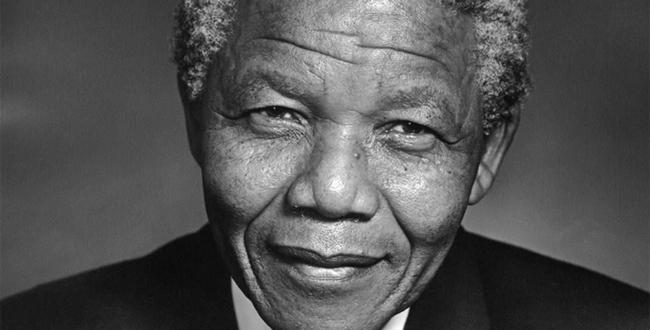
10 Quotes from Nelson Mandela

quotes from nelson mandela
This month the international community celebrated Nelson Mandela International Day, the first time the day has been celebrated since the former South African President’s death.

Nelson Mandela Day, celebrated on July 18, the day of the former South African President’s birthday, was approved in 2009 by the United Nations. The day was created to inspire others to carry on the Nobel Peace Prize recipient’s legacy and to honor the beloved leader himself. On July 18, people around the world are encouraged to offer 67 minutes of their day to those less fortunate. After dedicating 67 years of his own life to working for social justice, Mandela passed away in his home in 2013 at the age of 95.

This year, a foundation spokeswoman from the Nelson Mandela Foundation estimated that 126 countries participated in Mandela Day, as over 1,200 positive deeds were registered on the foundation’s website.

“We have been heartened by the number of sustainable projects still thriving. At the same time it has been inspiring to see the range of innovative new projects to emerge,” said spokeswomen Danielle Melville.

Below are a collection of 10 quotes from Nelson Mandela himself, ranging from his time as prisoner 4664 on Robben Island to the occasion of his many accomplishments and rewards:

1. “There will always be good men on earth, in all countries, and even here at home.” -From a letter to his former wife Winnie Mandela, written in Robben Island, 1970

2. “These countless human beings, both inside and outside our country, had the nobility of spirit to stand in the path of tyranny and injustice, without seeking selfish gain. They recognized that an injury to one is an injury to all and therefore acted together in defense of justice and a common human decency. Because of their courage and persistence for many years, we can, today, even set the dates when all humanity will join together to celebrate one of the outstanding human victories of our century.” -From his Acceptance Speech at the Nobel Peace Prize Ceremony, Norway, 1993

3. “We understand it still that there is no easy road to freedom. We know it well that none of us acting alone can achieve success. We must therefore act together as a united people, for national reconciliation, for nation building, for the birth of a new world. Let there be justice for all. Let there be peace for all. Let there be work, bread, water and salt for all. Never, never and never again shall it be that this beautiful land will again experience the oppression of one by another and suffer the indignity of being the skunk of the world. Let freedom reign.” -From his Inauguration as President of South Africa, South Africa, 1994

4. “I learned that courage was not the absence of fear, but the triumph over it. I felt fear myself more times than I can remember, but I hid it behind a mask of boldness. The brave man is not he who does not feel afraid, but he who conquers that fear.” -From his book, Long Walk to Freedom, 1994

5. “If I were to be granted one wish on this occasion, it would be that all South Africans should rededicate ourselves to truing this into the land of our dreams; a place that is free of hatred and discrimination; a place from which hunger and homelessness have been banished; a safe place for our children to grow into our future leaders.” -From his 80th Birthday Celebration, South Africa, 1998

6. “My inspiration are men and women who have emerged throughout the globe, and who have chosen the world as the theatre of their operations and who fight socio-economic conditions which do not help towards the advancement of humanity wherever that occurs. Men and women who fight the suppression of the human voice, who fight disease, illiteracy, ignorance, poverty and hunger. Some are known, others are not. Those are the people who have inspired me.” -From a speech at London School of Economics, England, 2000

7. “What counts in life is not the mere fact that we have lived. It is what difference we have made to the lives of others that will determine the significance of the life we lead.” -From Walter Sisulu’s 90 Birthday Celebration, South Africa, 2002

8. “One of the most important lessons I learned in my life of struggle for freedom and peace is that in any conflict there comes a point when neither side can claim to be right and the other wrong, no matter how much that might have been the case at the start of the conflict.” -From a Video Message for the Signing of the Geneva Accord, 2003

9. “As I am former prisoner number 46664, there is a special place in my heart for all those that are denied access to their basic human rights. We urge countries to make the policy changes that are necessary to protect the human rights of those who suffer from unfair discrimination.” -From the Closing Ceremony of the XV International AIDS Conference, Thailand, 2004

10. “We are in some ways reminded today of the excitement and enthusiasm I our own country at the time of our transition to democracy. People, not only in our country, but around the world, were inspired to believe the through common human effort, injustice can be overcome and that together a better life for all can be achieved.” -From a letter to President Barack Obama on the occasion of his Inauguration, 2009

– Blythe Riggan

Sources: Citizen, Mandeladay.com, All Africa, NelsonMandela.org, New York Times, USA Today, Nelson Mandela by Himself
Photo: Telegraph

August 1, 2014
https://borgenproject.org/wp-content/uploads/borgen-project-logo.svg 0 0 Borgen Project https://borgenproject.org/wp-content/uploads/borgen-project-logo.svg Borgen Project2014-08-01 09:35:142024-12-13 17:51:0310 Quotes from Nelson Mandela
Activism, Education, Global Poverty

Women in Science: Developing Countries

The role women play in the world’s technology and science movements has become increasingly prominent. Years ago, this field was primarily only led by men. Although education for women in general has improved in recent years, it still remains a problem around the globe.

A UNICEF study that researched the barriers to primary education revealed that 75 percent of children who are out of primary schools have mothers who did not receive any education, due in large part to poverty. In Asia, the Middle East and Africa, that number has risen to 80 percent of children who are out of primary school. This project reveals the importance of getting girls into education and supporting them in doing so.

In developing countries, women play an essential role in making change to communities. Mahatma Ghandi once said, “When a man is educated, an individual is educated; when a woman is educated, a family and a country are educated.” Historically, women have played a minor role in science-related fields, but many countries are making efforts to change that precedent.

Supporting women in science through funding, programs and scholarships is essential to building the next generation of women leaders and increasing science literacy in developing countries. Here are three nations creating increased opportunities for women in science, agriculture and technology:

1. South Sumatra (Indonesia):

Indonesia’s national program, Warintek Multipurpose Community Telecenters, focuses on promoting sustainable development through science and technology for women farmers located in South Sumatra. The program provides a variety of informational kiosks, available in both distance and in-person forms, for women to utilize regarding any farming needs of their local areas. In large part, the education aims to provide information on successful marketing and sustainable farming.

2. Burkina Faso:

Through the UNESCO Chair, Women, Science, and Development in Africa, the country is working to provide informal programs on health, water supplies, management and agriculture. University professors and students work in conjunction with women in communities, discussing topics and building relationships. The country has also connected with universities in other countries.

3. China:

The Women and Gender Development through the College of Rural Development at China Agricultural University is working to promote discussions on gender roles in agriculture and farming.

– Julia Thomas

Sources: Inter Academic Council, UNESCO, China Agricultural University, TWAS
Photo: Unesco

August 1, 2014
https://borgenproject.org/wp-content/uploads/borgen-project-logo.svg 0 0 Borgen Project https://borgenproject.org/wp-content/uploads/borgen-project-logo.svg Borgen Project2014-08-01 09:27:092024-06-04 03:01:23Women in Science: Developing Countries
Activism, Development, Education

10,000 Women

10,000 women
Women and girls make up 70 percent of the 1 billion people worldwide who live on less than $1 per day, yet women produce half of the world’s food, work two-thirds of the world’s working hours and play a crucial role in their local communities’ economies and in the health and welfare of their families.

Empowering women through education — especially on the topic of business and entrepreneurship — is critical to the fight against world poverty. Goldman Sachs’ 10,000 Women program is one impressive initiative that is playing a significant role in this fight, working to provide women entrepreneurs around the world with a life-changing business and management education.

Launched in 2008, the Goldman Sachs Foundation set out with the goal to provide 10,000 under-served women across 43 countries — including Egypt, China, India and Brazil — with entrepreneurial and business skills, as well as with mentoring and networking opportunities.

10,000 Women was founded on research carried out by Sachs — Womenomics and Women Hold Up Half the Sky — that indicated that investing in women can have a significant impact on the gross domestic product (GDP) growth. The finding was an impressive forecast: the per capita income in 15 major developing countries would increase by 14 percent by 2020 and by 20 percent by 2030 if women’s wages would be equal to those of men’s.

The program 10,000 Women was built on the belief that partnerships between public, private and nonprofit sectors are essential to bringing about change through improved education opportunities for women. The program works at the ground level with more than 80 academic and non-governmental organizations, as well as more than 30 of the world’s top-tier business schools. Partners at all levels of the operation contribute their valuable time, mentorship and expertise necessary to implementing the locally designed certificate programs.

For each country in which the 10,000 Women program is launched, partnership is essential. Management and selection committees are formed in each country by bringing together people from the local business schools, business community and partner schools.

In some cases, a representative from Sachs will also join a selection committee. Together, committees in each country select the women who will participate in the program — women whose financial or practical situations would have prevented them from receiving such an education opportunity.

The programs, which are culturally appropriate, flexible and intensive, range from five weeks to six months and are designed to provide each female scholar with an individualized business education. Courses range from marketing and business plan writing to accounting e-commerce. Frequent guest lecturers and business plan competitions add to the exceptionality of the program, which continues to support its participants long after completion through networking, mentorship and support services.

To date, 10,000 Women has reached well beyond its titular goal, and its graduates have reported immediate and sustained business growth. Tracking its graduates’ success, the organization has reported that 30 months after completing the education program, 82 percent of graduates have increased their income and 71 percent have added new jobs. Perhaps more impressively, nine out of 10 participants of the program continue to utilize their newfound business skills by educating, mentoring and supporting other women.

10,000 Women will continue to invest not only in women, children, families and communities, but also, subsequently, in the entire future of our global economy.

– Elizabeth Nutt

Sources: UN Women, Global Citizen, Goldman Sachs, Women and Girls Fund
Photo:

July 31, 2014
https://borgenproject.org/wp-content/uploads/borgen-project-logo.svg 0 0 Borgen Project https://borgenproject.org/wp-content/uploads/borgen-project-logo.svg Borgen Project2014-07-31 04:00:452017-03-20 14:14:0410,000 Women
Page 33 of 56«‹3132333435›»

Get Smarter

  • Global Poverty 101
  • Global Poverty… The Good News
  • Global Poverty & U.S. Jobs
  • Global Poverty and National Security
  • Innovative Solutions to Poverty
  • Global Poverty & Aid FAQ’s
Search Search

Take Action

  • Call Congress
  • Email Congress
  • Donate
  • 30 Ways to Help
  • Volunteer Ops
  • Internships
  • Courses & Certificates
  • The Podcast
Borgen Project

“The Borgen Project is an incredible nonprofit organization that is addressing poverty and hunger and working towards ending them.”

-The Huffington Post

Inside The Borgen Project

  • Contact
  • About
  • Financials
  • President
  • Board of Directors
  • Board of Advisors

International Links

  • UK Email Parliament
  • UK Donate
  • Canada Email Parliament

Get Smarter

  • Global Poverty 101
  • Global Poverty… The Good News
  • Global Poverty & U.S. Jobs
  • Global Poverty and National Security
  • Innovative Solutions to Poverty
  • Global Poverty & Aid FAQ’s

Ways to Help

  • Call Congress
  • Email Congress
  • Donate
  • 30 Ways to Help
  • Volunteer Ops
  • Internships
  • Courses & Certificates
  • The Podcast
Scroll to top Scroll to top Scroll to top