Information and stories on social activism.

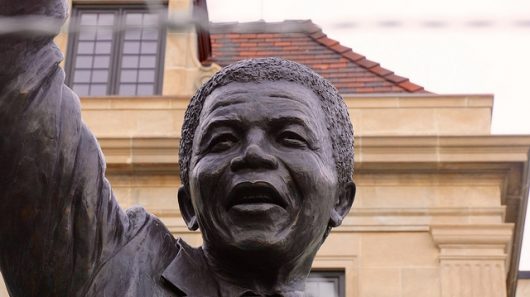
facts about Nelson Mandela's childhoodNelson Mandela is a widely respected and acknowledged figure. His work and sacrifices in ending apartheid in South Africa earned him both a Nobel Peace Prize and the South African presidency. However, many people do not know much about Mandela’s childhood.

Top 10 Facts about Nelson Mandela’s Childhood

  1. Mandela was born into the Xhosa culture
    The Xhosa culture is the second-largest cultural group in South Africa. They are smaller only than the Zulu, who are their long-term rivals despite numerous cultural similarities. The Xhosa are known for being a peaceful people and live mainly in the southern part of the country.
  2. He was a member of a royal family and was next in line to be chief
    Mandela was born in 1918 to the Madiba clan, part of the Xhosa people, as a member of the tribe’s royal family. His father served as chief of the village he grew up in, and when he died, Mandela was groomed by a tribal regent to take a leadership position at a later age.
  3. He had a very large family growing up
    Nelson Mandela’s mother was the third of his father’s four wives. The chief is expected to take multiple wives from different families within the tribe. Through them, Mandela had nine sisters and three brothers.
  4. Nelson was not his real name
    One of the more surprising facts about Nelson Mandela’s childhood is that Mandela’s given name at birth was Rolihlahla. In Xhosa, this means “pulling the branch off the tree” or “troublemaker”. The English name Nelson was given to Mandela by a schoolteacher. This was a common practice among black South Africans.
  5. He was the first in his family to get a formal education
    Although born into a family of importance, Mandela was the first to gain a formal education. He received this as part of his grooming for future leadership.
  6. He attended missionary and Methodist schools
    Nelson Mandela’s childhood was filled with training and education. He attended a local missionary school, a boarding school and then a Methodist secondary school.
  7. Mandela was an athlete in school
    While attending a Methodist secondary school, Mandela was a multi-sport athlete. He was involved in boxing as well as track and excelled at both.
  8. He attended the University of Fort Hare
    Mandela went on to college at the University of Fort Hare. This was an elite South African school that was the only “Western-style” higher education available to black citizens in the country.
  9. He left school more than once while in college
    While at Fort Hare, Mandela and other students were sent home for boycotting certain university policies. He also later left school to avoid an arranged marriage and completed his bachelor’s degree by correspondence in Johannesburg.
  10. He studied law at the University of Witwatersrand
    Mandela studied law at the University of Witwatersrand, where he earned a degree and became involved in the fight against racial discrimination that made him famous.

Nelson Mandela may seem like a larger than life figure, but he was still just a man. His experiences influenced who he would become and how he would come to view the world. These facts about Nelson Mandela’s childhood help us to understand who he was as both a leader and a man.

– Megan Burtis

Photo: Flickr
we are the world michael jackson

In 1985, Michael Jackson and Lionel Richie joined forces to write a song titled, “We are the World.” The hope was for the song to highlight the poverty crisis in Africa and generate much needed aid. The song brought many artists together for a cause and actually created a legacy for other artists to follow.

Michael Jackson and Lionel Richie jumped all in when it came to creating, “We are the world.” The duo handled long nights and experienced emotions of sadness and empathy during the process.

The idea behind the song came from Harry Belafonte and Ken Kragen. Belafonte a long time human rights activist wanted deeply to help the starving people of Africa, more specifically Ethiopia. At the time, Ethiopia lost over 1 million people to famine from 1983 – 1985.

Belafonte’s dream was to not only help poverty stricken Africa, but to help end hunger in the U.S. as well. The long time activists had heard of a charity song created in the UK that had great success in generating aid for Africa, thus sparking the idea for the project.

The sales for the album were shocking. Less than a week after the release the entire 800,000 copies available were sold.

The single also remained number 1 on many billboard charts for weeks and received multi-platinum status. It is said that “We are the world” is the bestselling single of all time. Over 50 musicians and artists worked on the song. Some artists include Stevie Wonder, Diana Ross, Bob Dylan, Tina Turner, Willie Nelson, and many others.

In total, over 63 million dollars through album and merchandise sales were made. It was agreed that 90 percent of these sales would go toward relief for Africa and 10 percent would stay in the U.S. Half of the money allocated for Africa went to emergency aid relief, such as ready-made food. The remainder went toward funding programs that would create lasting change for the country.

Thus far over 70 projects have been created in 7 countries around Africa. These projects help in areas of agriculture, fishing, water management, manufacturing and reforestation. The 10 percent set aside for the U.S. helped with hunger relief and homelessness.

Michael Jackson and the many other involved with the production of We are the World, sparked a legacy for other artists to maintain. In 2010, artists gathered to create another song for charity to raise funds for Haiti after a devastating earthquake left thousands dead and injured. The song was called “We are the World 25 for Haiti.”

The song’s lyrics from the original, “We are the World,” were revised and a rap section highlighting Haiti’s tragedy was added. Artists were able to raise money for the thousands of wounded and displaced citizens.

We are the World will continue to represent the coming together of humanity to create change for a better world. The continuation of humanitarian efforts such as this will ensure that countries faced with tragedy, whether it is disease, famine, or destruction will continue to be supported.

Amy Robinson

Sources: YouTube , The History Channel, Song Facts

Women's Rights in TunisiaIn the context of a tumultuous post-revolutionary transition, Tunisia struggles with walking a moral and political tightrope when balancing women’s rights. The revolution that began in 2011 toppled a violent dictatorship and produced a constitution ruling Tunisia a civil state; yet, the impact of Islam on many laws – particularly those governing women’s rights – has made implementing the constitution a steep goal.

Tunisia has long been the leader in regard to women’s rights in the region – particularly among Muslim-majority countries. Although women’s rights organizations have campaigned for decades, their first recognized achievement was persuading legislators to make Tunisia the first country to eliminate a law protecting rapists from punishment if they marry their victims.

Experts worry that Tunisia faces an “identity crisis” as it struggles to enact its 2014 constitution without a functioning constitutional court for checks and balances. The constitution promises full gender equality as a vague concept and specifies international treaties outweighing domestic law, but does not consider the weight of current family law.

Amid this identity crisis, gender equality in the feminist sense has yet to be agreed upon as it stands in opposition to many beliefs of Islam. A recent review of inheritance law – which states that a man should receive a share of inheritance equal to the portions of two women – has been under debate, as some women have strongly supported the review but many oppose it, citing their religion as a defense of the law. True integration of the sexes in Tunisia may be out of reach until the dust of the revolution settles, but they have made significant strides in the past decade. The most recent events of women’s rights in Tunisia include:

  1. In July 2017, the “Marry the Rapist” article was repealed.
  2. In July 2017, a new domestic violence law was approved by Tunisian Parliament that criminalizes public sexual harassment, employment of children as domestic workers and domestic violence committed within the family. It fines employers who discriminate in pay and directs the Health Ministry to train medical staff in detecting and preventing violence against women and in schools. It allows women to seek restraining orders without filing criminal cases or divorce. It also outlines requirements to provide legal, medical and mental support to victims of domestic violence.
  3. In August 2017, President Essebsi announced the review of inheritance law.
  4. In September 2017, a law barring Muslim women from marrying non-Muslim men was repealed.

These legal strides are minimally effective without a full court to enforce them – even government officials have admitted that laws themselves are not enough. To combat the problems fully, certain organizations have been founded to actively fight for women’s rights in Tunisia. These include the National Union for Tunisian Women, Union of Tunisian Workers ‘Women’s Commission’, The Nissa Group and Tunisian Association of Women Democrats.

In addition to the various organizations formed, two women have joined forces to encourage victims of abuse to stand up for themselves and to talk about their experiences. Amal Khleef and Amal Amrawy started an online forum called “Chaml,” which means, “coming together,” as a place for victims of domestic violence to speak up about their challenges.

The percentage of Tunisian women reported as victims of domestic violence has fortunately been reduced from 70 percent in 2016 to 47 percent in 2017 – a significant decline that should be celebrated. Although integrating policy change with social change in a fluctuating democracy may prove difficult, the results of efforts to improve women’s rights in Tunisia thus far can already be seen.

Rebekah Korn

Photo: Flickr

Philanthropists in American Professional SportsThere are many American athletes who are not only known for their athletic abilities but also their philanthropic efforts. Here are four of the most impactful:
Roger Federer
Inducted into the International Tennis Hall of Fame in 2017, Roger Federer has seen a career in professional tennis filled with success. His remarkable performance on the court was closely rivaled by his humanitarian efforts over the years. The Roger Federer Foundation works in six countries in Sub-Saharan Africa, as well as in Switzerland, to improve struggling educational systems. In 2016, the foundation spent over $6 million to improve access to and quality of early education for impoverished children. Federer serves as a shining example of how charity and sports can successfully go hand-in-hand.

Madieu Williams
Madieu Williams is a former NFL safety who played for multiple teams, including the Cincinnati Bengals and the Minnesota Vikings. Williams grew up in Sierra Leone in West Africa and moved to the U.S. when he was nine years old. He created the Madieu Williams Foundation in 2006 and returns to Sierra Leone every year to help improve education and build schools. The Madieu Williams Foundation also focuses on improving the health of children living in poverty in both Sierra Leone and in the U.S. Williams has also donated $2 million to build the Madieu Williams Center for Global Health Initiatives at the University of Maryland.

Dirk Nowitzki
Dirk Nowitzki is the highest-scoring foreign-born basketball player in NBA history. Born in Germany, Nowitzki came to America to play professional basketball as a young adult and has since been named an all-star 13 times. Nowitzki was the first European player to play in an NBA all-star game in 2007, and as his career took off, so did his philanthropic efforts. In 2013, Nowitzki was named the German ambassador for UNICEF, with a focus on eliminating child hunger and malnutrition around the world. He also started the Dirk Nowitzki Foundation, which works to fight poverty and hunger in Africa.

David Ortiz
Born in the Dominican Republic, David Ortiz came to America and saw a long, prosperous baseball career, winning two World Series titles with the Boston Red Sox. One of the greatest to play the game of baseball, Ortiz is also one of the most dedicated philanthropists in American professional sports. Ortiz has always prioritized improving the quality of – and the ease of access to – healthcare for children. The David Ortiz Children’s Fund works in the Dominican Republic and in the U.S. and has a focus on providing adequate healthcare to impoverished children with congenital heart defects.

Regardless of team affiliation, these athletes are using their fame and their platforms to make a real and tangible difference in the fight against global poverty. In addition to these efforts, the awareness they raise surrounding these issues has surely inspired – and will continue to inspire – others to contribute to the fight against poverty and make a difference.

Tyler Troped

Photo: Flickr

Social media is changing lives around the world, helping old friends reconnect and allowing people to share dancing cat videos with millions. People spend hours each day on social media platforms, using them to stay informed, share opinions, post photos, sign petitions, link articles and much more. There is potential to build incredible momentum for a movement and truly engage people by using social media platforms for advocacy efforts.
Your personal sharing, liking, retweeting and posting may seem like they aren’t creating enormous ripples of change, but research has found that content shared by individuals is shared 25 times more and receives eight times more engagement than content shared by organizations themselves. Social media has the ability to amplify a message, allowing great organizations to be introduced to new people and mobilizing communities to give to or advocate for a certain cause. So how can individuals focus social media attention on advocacy efforts and better the world through their news feeds?

Sharing is caring
The community of people you’re friends with or who follow you are those who care about you and are interested in what you have to say. If you show them that you care by sharing and posting about certain causes, they are more likely to engage with that content than if it was posted by an organization on their feed. Since people actually know who you are, things you share and post come off as more trustworthy and real. To this effect, find articles and organizations that matter to you and highlight their efforts. You are the most relatable person for people engaging with your social media, and that can powerfully increase mobilization.

#UseThatHashtag
While they may not always seem effective, intentionally using hashtags can really increase how many people interact with posts. Hashtags create networks of posts, linking them together into a common thread, and this is a great way to reach diverse groups on social media platforms for advocacy. Creating a specific hashtag that a person or organization always uses can help people learn about causes you’re passionate about, and adding information about an issue to a trending hashtag can help spread your message locally and globally.

Turn some heads
A visual appeal can really catch and keep people’s attention. One study found that seeing photos and infographics greatly influenced members of Congress, and others interacting with your postings and shares are equally as interested in nice visuals. By adding photos or cool graphics, your content will better capture people’s attention and enable you to use social media platforms for advocacy. Attaching images can create a 150 percent increase in retweets on Twitter and bring in an 87 percent engagement rate on Facebook, which is great news for mobilizing efforts!

Take that social media work offline
Social media is great for connecting people, but gathering your community offline is powerful, too. Use social media platforms for advocacy by creating events, gathering donations, sharing information and planning meetings, then take that advocacy into the physical world. Online calls to action such as signing petitions and contacting Congressional representatives can transform into in-person meetings with government officials either individually or at town halls, and mobilizing people for your cause can mean sharing through word of mouth or posting physical copies of an infographic around town. Building online engagement into a tangible movement can have an immense impact.

Rather than aimlessly scrolling through Twitter, Instagram, Reddit, Facebook, Tumblr and other social media platforms, infuse some world-improving efforts into your feed and use those social media platforms for advocacy. With such amazing tools available, it is important to increase the intentionality of our scrolling and harness social media platforms for advocacy.

Irena Huang

Photo: Flickr

Hong Kong Poverty RateIn Hong Kong, 1.34 million residents live in poverty. With a poverty rate of 19.7 percent, the region’s people are in need of an economic reform. Fortunately, more entities are discovering the necessity for decreasing the poverty rate in Hong Kong and making plans to alleviate the problem.

In 2014, Hong Kong’s chief executive, Leung Chun-ying, proposed the Low-Income Working Family Allowance program. If a family’s income is at or below 50 percent of Hong Kong’s median income, and the family has at least one employed person, the family can receive up to $130 monthly or more, depending on the number of hours worked. The program is intended to reach 710,000 impoverished residents.

Since 2015, Hong Kong’s government implemented a second poverty alleviation plan. The plan provides Hong Kong’s government with a better understanding of the region’s impoverished areas and their specific situations. Hong Kong’s most impoverished groups and key strategies that could alleviate the poverty rate in Hong Kong are also being studied.

Hong Kong’s government also plans to enhance education and training opportunities, specifically jobs that facilitate mobility for the region’s youth. More financial, and other, assistance will be provided to Hong Kong’s poor families. The educational expenses for children within those families will also be considered.

The Old Age Living Allowance (OALA) is another program intended to alleviate poverty–specifically among Hong Kong’s elderly and impoverished communities. The OALA alleviated more than 43 million elderly Hong Kong residents in poverty in August 2016. Seeing this result has given Hong Kong’s government the goal to make similar programs that could help reduce the poverty rate in Hong Kong.

Groups and individuals outside of the government have also been doing their part to reduce the poverty rate in Hong Kong. Ho Hei-wah is a social activist who spent decades helping Hong Kong’s poor and continues to do so. Presently the director of the nonprofit Society for Community Organization (SCO), Hei-wah provides services to Hong Kong’s poor and other neglected communities. To Hong Kong’s people, Hei-wah is considered a champion and he plans to tackle future challenges facing the region’s poor.

In 2016, Habitat for Humanity found that many impoverished Hong Kong residents are forced to live in hazardous industrial homes, typically called “urban slums.” The organization is urging the government, charities and the public to work together in tackling Hong Kong’s housing problems. Habitat for Humanity plans for 15 million Hong Kong residents to have safe housing by 2020.

Decreasing the poverty rate in Hong Kong has become a main goal for many people. While some plans are still in progress, the mission to better the lives of Hong Kong’s impoverished communities remains an important priority. For now, Hong Kong’s poor are given hope that a better quality of life is soon to come.

Rhondjé Singh Tanwar

GiveDirectly
GiveDirectly, a U.S. nonprofit organization, is seeking to change the way aid is given to impoverished communities around the world. Where most nonprofit organizations seek to fight global poverty through advocacy programs, research studies, services and volunteers, GiveDirectly bypasses traditional nongovernmental organization structures to allow donors to see exactly where and who their money is going to. By doing so, GiveDirectly is able to send money directly to people in poverty.

Modern payment through technology has become a prominent cost-effective way to transfer sums of money over thousands of miles. GiveDirectly uses such technology to take and use money from donors and transfer it directly to people in impoverished communities. After opening to the public in 2011, the nonprofit exclusively makes payments to people in extreme poverty through online transferable cash grants.

The next step is to study the impact of direct aid to poverty-stricken communities. Over the next 12 years, every adult in 40 villages throughout Kenya will receive $0.75 per day through GiveDirectly donors. The wage, while below the poverty line, will ensure a source of income on top of day-to-day jobs.

Residents of another 80 villages will receive that amount over just two years and residents of yet another 80 villages will receive that amount in a lump sum. Since GiveDirectly sends money directly to people in poverty, all community members will receive the donations despite income levels, as a form of universal income. More than 26,000 people will receive a donation transfer, where 6,000 will receive a sustained universal income.

According to the GiveDirectly website, the group has received 81% of the funds required to pay for the study throughout all 12 years. The research team includes Abhijit Banerjee, co-founder of J-PAL and a professor at Massachusetts Institute of Technology; Alan Krueger, a former Chairman of President Obama’s Council of Economic Advisers and a professor at Princeton and Tavneet Suri, Scientific Director for J-PAL Africa, also at Massachusetts Institute of Technology.

Stephene, a 27-year-old laborer in Kenya, enrolled as a recipient of cash-grants from GiveDirectly four months ago. Two months in, he received his first payment over the phone of $97. He spent his first sum of money plastering his house and on necessities for his wife who is expecting a child.

When asked what he would spend the donated money on, Stephene said he would use it to buy his own boat, to make his life as a fisherman easier. He recently received his second payment of $481. The funds went to buying iron sheets and finally, his own fishing boat. In an interview with GiveDirectly, Stephene said, “This has improved my source of income [and] thus improved my living standards.”

Recipients of donations receive an SMS text message when their payments are ready for collection. On average, it takes 32 minutes for individuals to walk to the closest agent and collect their cash transfers.

In addition to the efficiency of the aid program, recipients can spend their payments on necessities that are unique to their lives and families. By sending money directly to people in poverty, the organization breaks down some of the difficulties of traditional foreign aid.

Riley Bunch

Photo: Flickr

U.S. Must Reverse President Trump's Refugee BanIn the continuing fight for the rights of refugees, The Borgen Project is committed to working to reverse President Trump’s refugee ban. The executive order signed on Friday afternoon barred all refugees from entering the U.S. for 120 days, barred nationals from Iran, Iraq, Libya, Somalia, Sudan, Syria and Yemen for 90 days, and put a permanent ban on Syrian refugees.
President Trump’s refugee ban came as a surprise to diplomatic and airport staff in the U.S. and overseas, and many scrambled to respond with various interpretations. The executive order has caused protests and lawsuits and has drawn condemnation from dozens of diplomats and former President Barack Obama.

The current refugee crisis is unprecedented. The number of people displaced by conflict in 2016 was the highest since the end of the Second World War, at almost 60 million. Only joint solutions will credibly and effectively lessen the increasing suffering and social and political turmoil.

Therefore, labeling refugees fleeing conflict zones like Syria and other countries as terrorists has only made matters worse for these vulnerable individuals. A refugee is a person seeking shelter, a life of dignity, freedom and safety for themselves and their families. There is no excuse for treating other human beings who have come to the U.S. seeking these things with hostility, suspicion and intolerance.

About 30,000 Syrians have been evacuated from Aleppo, and 100,000 more are still fleeing violence in the area. Children continue to be massacred every day while the U.S., under this executive ban, is slamming its doors.

For all of the world’s refugees, do not look away. You can help change lives, not just for people in Syria, but for those in more than 90 countries who are fighting to overcome hunger, poverty and violence.

It is un-American to turn away those seeking safety and to discriminate against groups of people because of nationality and religion. Let us stand with refugees and not against them, in their hour of need. Remember that every refugee is someone’s mother, father, son, daughter, sister, brother or newborn baby.

You can call Congress and take action on this serious issue. Please stand with leaders from both parties to reverse President Trump’s refugee ban and welcome those in need of our help.


Photo: Geoff Livingston via photopin (license).

Hunger in Nicaragua
With about 29 percent of households living in poverty and 8.3 percent in extreme poverty on less than $1.25 a day, Nicaragua is considered one of the poorest countries in Latin America. Hunger in Nicaragua is just one of the major problems the country faces. Fortunately, organizations such as North Country Mission of Hope, World Food Program and Action Against Hunger have acted out of generosity, providing support and food assistance for areas suffering from chronic malnutrition.

  1. North Country Mission of Hope/Stop Hunger Now
    North Country Mission of Hope is a humanitarian organization specifically committed to aiding and building relationships with the people of Nicaragua, with 97 percent of profits going directly to services in the country. Likewise, Stop Hunger Now works to end world hunger by distributing meals through feeding programs operated by partner organizations in developing countries. Earlier this year, Stop Hunger Now teamed up with North Country Mission of Hope to ship 22,660 pounds of medical equipment, school supplies and food to Nicaragua.
  2. World Food Program (WFP)
    WFP has been fighting hunger in Nicaragua since 1971. The organization supports the government of Nicaragua’s Zero Hunger Program by working to prevent chronic malnutrition and improving the food security of smallholder farmers. Focusing on nutrition, WFP reaches out to vulnerable groups, including mothers and children, in communities like Madriz, which has a 30 percent rate of chronic malnutrition, and Nueva Segovia, which has a 28 percent rate. WFP’s school meals program also provides daily meals to needy children in preschools and primary schools.
  3. Action Against Hunger
    Action Against Hunger has been working in Nicaragua since 1996. In 2015, the organization provided nutritional support to 1,294 individuals, helped 6,181 gain access to safe water and assisted 21,193 in total. The organization emphasizes four main action steps that go into its aid process.

First, Action Against Hunger predicts where and when to expect malnutrition in order to target it effectively. Secondly, it recognizes that global hunger is preventable and encourages members to find ways to ensure that children stay healthy. Next, the organization utilizes available resources, particularly therapeutic ready-to-use foods. Finally, it maintains that anyone can get involved and make a difference. Just $45 can provide a child with life-saving treatment, adequate supplies and food for survival.

Though Nicaragua has encountered many struggles, the work of these global humanitarian groups is bringing hope to the country and its people.

Mikaela Frigillana
Photo: Flickr

Millennium Villages Project
Bollywood printed silks garnished with sequins are exchanged at a West African shop in the Potou market. Shop owner Thiama Diaw is the president of Bokk Jamm, one of 25 women’s business associations in Potou. The village associations collectively pool their profits, so group members can obtain loans. Participants have used the money to cultivate hibiscus, invest in sustainable cookstoves, relinquish owed school fees or make home improvements. These women associations provide training sessions in farming techniques, nutrition and money management.

Throughout the Tibias Canal, members in Mali grow melons for their fund contribution. While Rwandan basket weavers used their loan share for roof replacement and school supplies for their children, a woman in Malawi ran a cassava bakery to pay for her loan cooperative share.

From 1990 to 2001, Sub-Saharan Africans who lived on less than $1 a day increased by 86 million. The poverty rate jumped from 45% to 46%. One-third of the region’s population is below the minimum nourishment level, making it the most undernourished area. Inhabitants are disease-stricken, living in a drought-prone climate that lacks proper irrigation and safe infrastructure.

The Millennium Villages Project (MVP) launched in 2004 as a holistic, science-based approach to global poverty and empowerment for Sub-Saharan Africans. The program has benefited more than 500,000 people. Their development efforts have received generous donations from actress Angelina Jolie and the U.N.’s Secretary General Ban Ki-moon.

Safe drinking water and firewood require people to travel every day for several miles. The Millennium Villages Project aims to reinvent empowerment for Sub-Saharan Africans through sustainable development of healthcare, education and employment. The project operates with limited aid support and integrates science and technology.

For example, their services have decreased malaria in villages by 72%, access to clean water has tripled and maize productivity has doubled. The budget allots $60 per person for services, according to MVP. “The project’s approach has potential, but little can be said for sure yet about its true impact,” Nature stated.

Researchers of Millennium Villages Project started measuring the villages’ success rate, who had access to full intervention services. They compared the results to villages who didn’t receive aid, but data collection challenges prevented statistically sound results.

While children are dying of malaria in Sub-Saharan Africa every 30 seconds and one in 16 women die during childbirth, the Millennium Villages Project teaches valuable skills to members. They stimulate empowerment for Sub-Saharan Africans, who learn alongside each other in improving their community’s infrastructure, health and economy.

Rachel Williams

Photo: Flickr