• Link to X
  • Link to Facebook
  • Link to Instagram
  • Link to TikTok
  • Link to Youtube
  • About
    • About Us
      • President
      • Board of Directors
      • Board of Advisors
      • Financials
      • Our Methodology
      • Success Tracker
      • Contact
  • Act Now
    • 30 Ways to Help
      • Email Congress
      • Call Congress
      • Volunteer
      • Courses & Certificates
      • Be a Donor
    • Internships
      • In-Office Internships
      • Remote Internships
    • Legislation
      • Politics 101
  • The Blog
  • The Podcast
  • Magazine
  • Donate
  • Click to open the search input field Click to open the search input field Search
  • Menu Menu

Archive for category: Refugees and Displaced Persons

Information and news on Energy and Electricity

Global Poverty, Refugees and Displaced Persons

6 Ways to Help Refugees Survive the Crisis

help Refugees

According to the International Rescue Committee, Syrian refugees account for between a quarter and a third of Lebanon’s population. Jordan has about 630,000 Syrian refugees—proportionally, that is the same as the United States taking in all 64 million residents of the United Kingdom.

Those who would like to extend a helpful hand are often unsure of where to begin. Here are six ways to help refugees:

    1. With the Syrian crisis alone resulting in over 4 million refugees, many agencies doing valuable work are stretched thin. A New York Times story on the refugee crisis includes links to several well-ranked charities that are seeking donations to help refugees.
    2. For those interested in more hands-on work, the Office of the United Nations High Commissioner for Refugees (UNHCR) connects volunteers to refugee programs worldwide, though this initiative is geared towards highly skilled professionals.
    3. There are several other ways the average person can volunteer, however. The International Rescue Committee has local offices across the United States offering volunteering opportunities, such as working with refugee children or helping adults with their job search.
  1. The White House has a portal for volunteering to help refugees. If you enter your location, it provides a map and list of locations in your area that help refugees. For example, if you enter Washington, D.C., one of the results is the local Ethiopian Community Development Council, which helps African refugees resettle and build new, fruitful lives.
  2. You can also donate items. While many organizations do not accept physical donations like clothing on an international level, many local offices do. The International Refugee Council, for example, says local offices are often in need of items such as clothing and children’s items.
  3. Contact your senators and contact your representative. There are a variety of things you can encourage them to do, such as make pathways to accept refugees, increase funding for foreign aid or give more support to U.N. programs working with refugees.

This list is a good starting point for those interesting in aiding refugees to overcome global crises.

– Emily Milakovic

Photo: Flickr

June 4, 2016
https://borgenproject.org/wp-content/uploads/borgen-project-logo.svg 0 0 Borgen Project https://borgenproject.org/wp-content/uploads/borgen-project-logo.svg Borgen Project2016-06-04 01:30:132024-12-13 18:06:076 Ways to Help Refugees Survive the Crisis
Global Poverty, Refugees and Displaced Persons, Technology

Surprising Ways Smartphones are Helping Refugees

Aid_refugees

Smartphones can go a long way in helping refugees to stay safe, connected and assimilate into new communities.

According to research conducted by Penn State University, about 86 percent of young Syrian refugees at Zaatari Camp of Jordan own cell phones and more than half access the Internet daily.

During dangerous and long journeys, the luxury of smartphones helps ensure safety by keeping refugees connected with their family members. In addition, something as simple as taking and sharing photos helps to maintain a sense of community.

Navigation applications like Google Maps have also drastically changed the scene by helping refugees to travel without a heavy dependence on guides. When they do need to hire guides, information and reviews on social networking services including Facebook and WhatsApp ensure quality of service and prevent trafficking related crimes.

Some applications specifically target refugees and their needs. Google’s Crisis Info Hub lists travel information for those entering Europe through the island of Lesbos, with hotline Red Cross contacts and lodgings.

Gherbtna (“exile” or “loneliness” in Arabic), developed by Mojahed Akil who is himself a Syrian refugee, provides resettlement advice and guidelines. On the other side of the border, countries accommodating refugees have established similar information services such as Germany’s Refugee Welcome.

Another way that smartphone use is helping refugees is through increased accessibility to educational tools. In a situation where access to a formal education is near impossible, the Internet provides ubiquitous access to educational material.

The Guardian notes that there are “more than 80,000 education apps in Apple’s App Store, ranging from phonics to physics.”

The nonprofit organization Aiim develops education apps for refugees between the ages of 12 and 16 that are available offline, even in areas without Internet connection. The organization hopes to reach 10,000 Syrian refugees  by the end of next year through pilot programs in Jordan and Lebanon.

– Haena Chu

Photo: Flickr

June 1, 2016
https://borgenproject.org/wp-content/uploads/borgen-project-logo.svg 0 0 Borgen Project https://borgenproject.org/wp-content/uploads/borgen-project-logo.svg Borgen Project2016-06-01 01:30:232024-12-13 17:54:23Surprising Ways Smartphones are Helping Refugees
Global Poverty, Refugees and Displaced Persons

10 Facts About Forced Migration

Forced_Migration

The subject of forced migration, especially related to refugees, is a major topic in current news and politics across the world. Columbia University defines forced migration as “the movements of refugees and internally displaced people (those displaced by conflicts within their country of origin) as well as people displaced by natural or environmental disasters, chemical or nuclear disasters, famine, or development projects.” Below are 10 facts about forced migration:

  1. Columbia University states that the three most common causes of displacement are conflict, development and disaster.
  2. Refugees are defined as individuals forced out of their home country due to persecution or armed conflict. Refugees are those recognized by the United Nations High Commissioner for Refugees (UNHCR).
  3. The most recent UNHCR report, published in 2014, stated there are 19.5 million refugees worldwide. The majority of refugees in 2014 were children. The U.N. reports 51 percent of refugees to be under the age of 18.
  4. Internally displaced persons (IDPs) are individuals who are forcibly
    migrated within their own countries. The UNHCR reports there are over 38 million people classified as IDPs.
  5. The 2014 Global Trends Report estimated 42,500 people being displaced daily within and outside of their home countries.
  6. Asylum-seeking individuals are those who have migrated across borders for protection but are not yet recognized as refugees. The U.N. reported 1.66 million people as asylum-seekers in 2014. 159,000 new asylum-seekers were reported halfway through 2015.
  7. The UNHCR Global Trends Report for 2015 is expected to show record breaking numbers related to forced migration. Mid-2015 data estimated the number of refugees to be 20.2 million. For the full year, the total number of individuals who have experienced forced displacement is expected to exceed 60 million for the first time in history.
  8. As of 2014, 86 percent of refugees are hosted by developing countries. Turkey hosted the largest amount of refugees (1.6 million) worldwide during this year.
  9. Syria became the largest source of refugees since 2014 due to the current conflict between the government and rebel forces.
  10. The UNHCR states that the ability for refugees to return safely to their homes has decreased to an estimate of 84,000 as of mid-2015. The report states, “if you become a refugee today your chances of going home are lower than at any time in more than 30 years.”

Forced migration has been a major issue for quite some time now. Although countries around the world have stepped in to help refugees and other displaced individuals, these facts further prove that it will take much more to reduce these numbers.

— Saroja Koneru

Photo: U.N. Multimedia

May 30, 2016
https://borgenproject.org/wp-content/uploads/borgen-project-logo.svg 0 0 Borgen Project https://borgenproject.org/wp-content/uploads/borgen-project-logo.svg Borgen Project2016-05-30 01:30:582024-12-13 18:06:0510 Facts About Forced Migration
Global Poverty, Human Rights, Refugees and Displaced Persons, Volunteer

How to Help Refugees and Displaced Populations

Help_Aid_Refugees
The surge of refugees fleeing conflict across the globe reached record numbers and drew widespread attention in 2015. The UNHCR reports that forcibly displaced populations are estimated to have reached nearly 60 million — up 15 million from 2012. Conflicts in Syria, Afghanistan and more than a dozen other regions have all contributed to the climbing numbers.

Forced displacement is rarely short-lived. In the same report, the UNHCR states that on average, refugees will remain displaced for 17 years. For some it will be shorter, others much longer, and for all it will be life-changing. Addressing what the UNHCR calls “A World At War” and what is repeatedly called a “refugee crisis” by the media will also not be short-lived.

Even as articles become dated and tales of flight and hardship are told and retold, the need for aid and compassion has not diminished. For those farther away from the conflict and displacement, here are five ways to help displaced populations and refugees:

1. Contribute to educational opportunities for refugees, displaced populations and populations affected by conflict.

  • Save the Children supports rebuilding and maintaining schools in Syria and neighboring countries. In addition to providing education and health services, the organization strives to create spaces for children to experience a sense of normalcy and achieve their full potential despite the conflict.
  • The Karam Foundation focuses on innovative education projects for Syrian children in Syria and Turkey. Dedicated to “help people help themselves,” the U.S.-based nonprofit allows donors to contribute to specific education projects through its website.

2. Support an organization that is providing aid on the ground.

  • Hand in Hand for Syria is working on the ground to provide emergency aid for Syria. The organization hopes this strategy will prevent people from fleeing and fill the void created by shattered infrastructure, especially health services.
  • The International Rescue Committee is responding to the climbing numbers of refugees on multiple fronts from the Middle East to the Mediterranean and even with resettlement programs in the United States.

3. Help to improve refugee living situations.

  • Shelter Box provides emergency shelter and essential supplies to help displaced populations. The organization is currently active in Syria, Lebanon and Iraqi Kurdistan to name a few.
  • Oxfam America provides clean water, sanitation and other vital supplies to combat poverty, hunger and social injustice. Active in Syria, Jordan and Lebanon, the organization also helps connect refugee families with medical and legal services.

4. Support medical services for displaced populations.

  • Medical Teams International sends teams of volunteer medical professionals and provides medical supplies to people in need. Long term, the organization supports health initiatives and collaborates to ensure its impact is sustainable.
  • Doctors Without Borders is a well-regarded organization that provides medical care to populations who need it most, including those fleeing their homes. Doctors Without Borders sets up hospitals for refugees and provides essential maternal and pediatric care for displaced populations.

5. Volunteer locally as part of a global effort.

  • You could become an online volunteer for UNHCR. The program connects volunteers online with organizations seeking to maximize the impact of their development work. Volunteers can connect with organizations based on their skills, preferred development topics or regions of interest.
  • Consider volunteering through an International Rescue Committee local office. The IRC operates 26 offices throughout the United States supported by volunteers who mentor refugees and assist them with their transition.

– Cara Kuhlman

Sources: Doctors Without Borders, Hand in Hand for Syria, The International Rescue Committee, Karam Foundation, Medical Teams International, NY Times 1, NY Times 2, Public Radio International (PRI), Save the Children, United Nations High Commissioner of Refugees (UNHCR), United Nations Volunteers (UNV)

Photo: Flickr

March 7, 2016
https://borgenproject.org/wp-content/uploads/borgen-project-logo.svg 0 0 Kim Thelwell https://borgenproject.org/wp-content/uploads/borgen-project-logo.svg Kim Thelwell2016-03-07 01:30:372024-12-13 18:05:41How to Help Refugees and Displaced Populations
Charity, Global Poverty, Refugees and Displaced Persons

Helping Refugees Settle in the United States

Helping Refugees Settle
For the 500 refugees that arrive in San Antonio each year, the transition can be difficult. After fleeing violence and persecution at home, refugees face a new set of challenges when trying to settle in the United States, including language barriers, unfamiliar cultures, discrimination and unemployment. Programs helping refugees settle in the U.S. are central to facilitating a successful, new start for refugees.

Catholic Charities of the Archdiocese of San Antonio (CCOASA) offers a comprehensive program helping refugees settle and achieve economic self-sufficiency and cultural integration in San Antonio. When refugees arrive at San Antonio International Airport in central Texas, Catholic Charities volunteers are there to help.

The program begins as soon as refugees touch down. After their reception at the airport, volunteers assist refugees with housing, food, clothing and supplemental financial assistance. From there, they can receive a number of orientation courses covering topics such as American culture and laws, safety, healthcare, childcare, banking and employment.

The majority of CCOASA’s work, however, continues long after arrival. In addition to offering ESL and other courses through its Refugee Services Education Program, the organization provides ongoing case management services to identify and address each refugee’s unique obstacles to employment, community integration and cultural adjustment.

CCOASA’s Refugee Employment Services Program helps refugees join the workforce by linking them with potential employers based on specialized skills and level of employability. The organization also works to help refugees adjust to American work culture once they are employed.

For the children of refugees, the organization offers after-school tutoring and family services to help children acclimate to the American public school system. CCOASA’s School Impact Program helps 200 children per year integrate into educational life.

With support from the Department of Health and Human Services’ Office of Refugee Resettlement (ORR), CCOASA is just one of the hundreds of organizations helping refugees settle in the U.S. The office partners with private organizations in major cities across the country to take on this work.

Through ORR, refugees can also take advantage of numerous federal grants in order to buy homes, start businesses, go to college and develop careers. The office even provides opportunities for refugees to take part in sustainable community farming programs.

Helping refugees settle into a new life in the United States is challenging but, luckily, there are support systems in place to make the process easier. You can find opportunities to help in your own community here.

– Ron Minard

Sources: HHS, Borgen Project, CCAOSA, Immigration Policy
Photo: Washington Post

February 28, 2016
https://borgenproject.org/wp-content/uploads/borgen-project-logo.svg 0 0 Borgen Project https://borgenproject.org/wp-content/uploads/borgen-project-logo.svg Borgen Project2016-02-28 01:30:312024-12-13 18:05:36Helping Refugees Settle in the United States
Charity, Global Poverty, Refugees and Displaced Persons

Alan Rickman’s Last Role: Raising Funds for Refugees

British film star Alan Rickman narrated a charity video relating to the aid of refugees shortly before his cancer-related death on Jan. 14.

The 30-second video was created in collaboration with nonprofit OneClickGiving and features a tortoise eating a strawberry.

Throughout the video, Rickman explained that by watching and sharing, viewers have an opportunity to make a difference.

“The more viewers the video gets, the more advertising revenue YouTube will give us,” he said within the voiceover. “All you need to do is watch and share.”

The video, titled “This Tortoise Could Save a Life,” has received well over three million views on YouTube since it was uploaded, with the money raised from each view going to the Refugee Council and Save the Children charities.

Save the Children works worldwide to improve the lives of child refugees through aid and support, and the Refugee Council works to help refugees seek safety and rebuild their lives within the United Kingdom.

“It is an innovative project for an extremely important cause,” OneClickCharity founder Oliver Phillips said in a press release. “Our charities are two of the most effective at helping refugees, who desperately need your support.”

The refugee crisis has become a growing global concern as the number of displaced individuals worldwide continues to grow. According to the UN Refugee Agency, there were 19.5 million refugees worldwide at the end of 2014. That’s 2.9 million more than in 2013. Just over half of those refugees, or 51 percent, were under 18 years old, the highest amount of child refugees in more than a decade.

Phillips recently told the BBC that the charity believes it was one of the last recordings the late actor made.

“I’m so grateful that with all this going on he still agreed to give us his time, it’s really amazing,” he said. “It would not have been the same without him. All the views we’ve got are accountable to him.”

Alan Rickman, best known for his roles in Harry Potter and Die Hard, worked with a variety of charities throughout his lifetime. According to BBC Radio, the well-known actor was the president of the International Performer’s Aid Trust, which focuses on poverty alleviation throughout the world’s toughest conditions.

The link to the YouTube video is as follows, titled This Tortoise Could Save a Life — Ft. Alan Rickman: https://www.youtube.com/watch?v=HkiMz-e2ZcE

– Lauren Lewis

Sources: Youtube, TFN, Look to the Stars, Arts.Mic, Mashable, ABC, BBC, Save the Children, Refugee Council, BBC Radio, One Click Giving
Photo: Flickr

January 23, 2016
https://borgenproject.org/wp-content/uploads/borgen-project-logo.svg 0 0 Borgen Project https://borgenproject.org/wp-content/uploads/borgen-project-logo.svg Borgen Project2016-01-23 01:30:162024-12-13 17:54:10Alan Rickman’s Last Role: Raising Funds for Refugees
Activism, Development, Global Poverty, Refugees and Displaced Persons

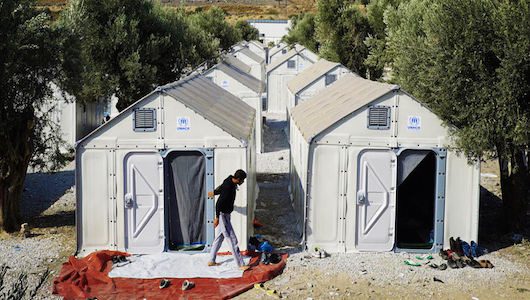
Ikea Builds 10,000 Shelters for Syrian Refugees

syrian_refugeesShowing no signs of stopping, the surge of Syrian refugees poses many issues for European and Middle Eastern countries, mainly housing, as the Northern hemisphere gears up for winter.

According to the International Organization for Migration (IOM), since the start of 2015 more than 750,000 migrants have arrived by sea to Europe. The large amount of refugees has not only sparked international interest but also a crisis as many European countries struggle to cope with the influx of refugees fleeing to Europe for a better life.

The IKEA Foundation, in collaboration with Better Shelter, has partnered to create safer, more reliable housing options for the thousands of Syrian refugees fleeing to Europe.

Focusing on cost-effectiveness, IKEA developed a tent that costs approximately $1,000. The tent can comfortably house a family of five and only takes four to eight hours to assemble. The structures come in two sizes: 57 square feet or 188 square feet of living space and will last up to three years. Comparatively, the United Nations (UN) shelters only last three months.

“This is just a tiny part of humanitarian aid. But it’s an important one when it comes to allowing displaced people to live with dignity,” said Johan Karlsson, the main Swedish Industrial designer.

Additionally, the shelters are equipped with solar panels that are durable against extreme temperatures. The solar panels were developed in response to the cited lack of electricity among refugee shelters.

A woman by the name of Mayada, one of many refugees seeking asylum, came to a camp in Jordan ten months ago. She said she never imagined having to live without the most basic necessities, particularly electricity.

“Nowadays electricity is life, and without it even the most simple things become a struggle,” she told visitors from the UN Refugee Agency.

The absence of light and power makes everyday living activities difficult, as well as dangerous, particularly for women. Mayada’s daughter is too scared to go to the bathroom at night and has to wake her parents to accompany her. The solar panels will help to quell their fears.

With the arrival of winter and light disappearing earlier in the day, basic daily functions, as well as communication among refugees, become more difficult.

“You can’t visit friends, the kids can’t do their homework. By nine or 10 o’clock most of the camp is in bed,” Mayada said.

In addition to the solar panels, the tents will also have mosquito nets, windows and a door that locks. The lock option for doors is a simple solution to help prevent sexual assault among refugee women traveling across the Middle East and Europe.

“People tell us it will make a huge difference to them just to be able to switch a light on again, making them feel more at home,” UN Refugee Agency Energy Advisor Paul Quigley said.

The UN has ordered 10,000 of the units to help reduce the Syrian housing crisis. Europe will receive 755 units and 2,600 homes will go to Iraq.

Mayada said when electricity is made more available to the refugee camps, she will no longer have to put on a brave face for the sake of her kids, particularly her daughter.

“I wish I could give [IKEA] all a big kiss between their eyes! It will mean everything to us!” Mayada said.

– Alyson Atondo

Sources: PBS, UNHCR, Business Insider, BBC
Photo: Google Images

January 16, 2016
https://borgenproject.org/wp-content/uploads/borgen-project-logo.svg 0 0 Borgen Project https://borgenproject.org/wp-content/uploads/borgen-project-logo.svg Borgen Project2016-01-16 01:30:122024-12-13 18:05:29Ikea Builds 10,000 Shelters for Syrian Refugees
Activism, Advocacy, Refugees and Displaced Persons

5 Tips on How to Host Refugees at Your Home

How_to_Host_Refugees_at_Your_HomeWith recent global events, there are many refugees seeking a place to live and support from United States citizens. Here are five tips on how to host refugees at your home.

5 Tips on How to Host Refugees at Your Home

  1. Offer to host your home. There are many different charities and organizations that work to provide refugees a home such as VolunteerMatch, Integrated Refugee and Immigrant Services and World Relief. Through these organizations, you can fill out a form and get matched up with a refugee or refugees who need a place to call home. Some of the matches are temporary and only last a few months while others can be long-term and last a few years. The organizations also provide information on how to host refugees at your home.
  2. Share your knowledge. Once you have offered up your home, it is important that you teach refugees all they need to know about their new home. For example, teach them how to use household appliances, instruct them on basic housekeeping skills and introduce them to the community. They will need to know where the grocery store, the post office and other important places are located.
  3. Support them throughout the process. Make sure there is professional help available for the refugees such as counseling or a coordinator who can check in on them and see how they are doing as most have been through traumatizing experiences.
  4. Keep your boundaries. It is important to respect refugees and not force them to do things they may not feel comfortable with. Always give them the option to participate in an event or outing; never force them or make them feel like they have to take part.
  5. Think it through; don’t just go for it. Don’t offer up your home just for the sake of doing it. Make sure to think it through. As a host, you must understand that there are many challenges you may face and it might not go smoothly at first. Be sure you are prepared for all possible outcomes.

Hosting refugees can be a very rewarding experience and can make a huge difference in their lives.

– Jordan Connell

Sources: AOL, The Guardian, World Relief
Photo: Flickr

January 12, 2016
https://borgenproject.org/wp-content/uploads/borgen-project-logo.svg 0 0 Borgen Project https://borgenproject.org/wp-content/uploads/borgen-project-logo.svg Borgen Project2016-01-12 01:30:222020-06-23 13:22:225 Tips on How to Host Refugees at Your Home
Education, Refugees and Displaced Persons

Pope Francis Supports Global Education for Refugee Children

refugee_children
Pope Francis announced his support for global education for refugee children at the Jesuit Refugee Service’s 35th anniversary ceremony.

The ceremony included 15 refugees along with friends and staff of the Jesuit Refugee Service (JRS). Pope Francis stressed the importance of education for refugee children and youth in order to build peace and improve societies. “To give a child a seat at school is the finest gift you can give,” said the Pope.

Pope Francis has formally recognized and pledged support for the JRS Global Education Initiative to increase the number of refugees served by JRS’s educational program by 100,000 by the year 2020.

“Your initiative of ‘Global Education’ with its motto ‘Mercy in Motion,’ will help you reach many other students who urgently need education which can keep them safe,” Pope Francis said.

Today there are more than 60 million people who have had to flee their homes.

The Initiative helps refugees overcome barriers to education such as overcrowding in schools and being accepted into host communities. Education can keep children safe from gender-based violence, child labor and early marriage. It can also prevent them from joining armed groups.

Only 36 percent of refugee children attend secondary school and less than 1 percent have the opportunity to pursue higher education.

“For children forced to emigrate, schools are places of freedom… Education affords young refugees a way to discover their true calling and to develop their potential,” said the Pope.

JRS works in 45 countries and 10 different regions across all faiths and nationalities to help the most vulnerable in the hardest to reach areas.

According to Independent Catholic News, JRS was founded in 1980 by the Superior General of the Society of Jesus to meet both the human and spiritual needs of refugees. JRS is currently focused on helping refugees from Syria, Afghanistan, the Central African Republic and the Eastern part of the Democratic Republic of Congo.

JRS is continuing to grow and expand in order to accommodate for refugee children and their need for education.

– Jordan Connell

Sources: Independent Catholic News, Jesuit Refugee Service, Vatican Radio
Photo: Flickr

December 4, 2015
https://borgenproject.org/wp-content/uploads/borgen-project-logo.svg 0 0 Borgen Project https://borgenproject.org/wp-content/uploads/borgen-project-logo.svg Borgen Project2015-12-04 01:30:522024-05-27 09:28:24Pope Francis Supports Global Education for Refugee Children
Disease, Global Poverty, Refugees and Displaced Persons, United Nations

Syrian Conflict: Typhoid Outbreak Among Palestinian Refugees

typhoid_outbreak
The United Nations (U.N.) is calling for access to Yarmouk, a Palestinian refugee camp in the outskirts of Damascus, due to the increasing evidence of a typhoid outbreak. As of Sept. 20, a total of 90 cases has been reported.

The UN Relief and Works Agency (UNRWA) discovered the outbreak in August among Palestinian refugees outside Syria’s capital after conducting more than 500 medical exams.

The agency was able to gain access to one of the areas affected and established a mobile health point, which provides limited health care, water, sanitation and hygiene supplies, according to a UNRWA spokesperson.

Before the Syrian war began in 2011, there were 160,000 Palestinians in the Yarmouk camp, many of which were employed.

In late March of 2015 when the Islamic State entered the camp, there were 18,000 refugees. Since then, several thousand have fled and the U.N. has no access to the camp. ISIL left days later, but they still have a heavy presence on the al-Nursa Front.

Access has been blocked by the government as a result of clashes with rebels in December 2012. In addition, the government controls the entrance to the camp and sets limits on food, medicine and other humanitarian supplies that enter, claims the Jafra Foundation.

The organization adds that people are trapped inside with very little resources and estimates that there are about 5,000 to 8,000 people left within Yarmouk.

Other affected areas of the typhoid outbreak are Yalda, Babila and Beit Saham.

UNRWA’s $15 million Syria Crisis Program has only gotten 30.8 percent of the fund it needs for this year. The current situation is so dire that 95 percent of Palestinian refugees depend on UNRWA for their daily need of water, food and health care.

Additional help in priority intervention includes cash assistance, which can help up to 470,000 Palestinian refugees. There is still additional funding needed for critical non-food items such as blankets, mattresses and hygiene kits.

Typhoid is a life-threatening illness caused by bacteria in Salmonella typhi and spread by eating contaminated food and drinking contaminated water, according to the U.S. Centers for Disease Control and Prevention.

The disease can be treated with antibiotics but can be fatal in some cases. UNRWA is administering antibiotics, giving out water purifying tablets and educating the population.

– Paula Acevedo

Sources: Aljazeera, Associated Press, U.N. News Centre
Photo: Wikimedia

October 17, 2015
https://borgenproject.org/wp-content/uploads/borgen-project-logo.svg 0 0 Borgen Project https://borgenproject.org/wp-content/uploads/borgen-project-logo.svg Borgen Project2015-10-17 01:30:472024-06-11 02:48:16Syrian Conflict: Typhoid Outbreak Among Palestinian Refugees
Page 18 of 29«‹1617181920›»

Get Smarter

  • Global Poverty 101
  • Global Poverty… The Good News
  • Global Poverty & U.S. Jobs
  • Global Poverty and National Security
  • Innovative Solutions to Poverty
  • Global Poverty & Aid FAQ’s
Search Search

Take Action

  • Call Congress
  • Email Congress
  • Donate
  • 30 Ways to Help
  • Volunteer Ops
  • Internships
  • Courses & Certificates
  • The Podcast
Borgen Project

“The Borgen Project is an incredible nonprofit organization that is addressing poverty and hunger and working towards ending them.”

-The Huffington Post

Inside The Borgen Project

  • Contact
  • About
  • Financials
  • President
  • Board of Directors
  • Board of Advisors

International Links

  • UK Email Parliament
  • UK Donate
  • Canada Email Parliament

Get Smarter

  • Global Poverty 101
  • Global Poverty… The Good News
  • Global Poverty & U.S. Jobs
  • Global Poverty and National Security
  • Innovative Solutions to Poverty
  • Global Poverty & Aid FAQ’s

Ways to Help

  • Call Congress
  • Email Congress
  • Donate
  • 30 Ways to Help
  • Volunteer Ops
  • Internships
  • Courses & Certificates
  • The Podcast
Scroll to top Scroll to top Scroll to top