• Link to X
  • Link to Facebook
  • Link to Instagram
  • Link to TikTok
  • Link to Youtube
  • About
    • About Us
      • President
      • Board of Directors
      • Board of Advisors
      • Financials
      • Our Methodology
      • Success Tracker
      • Contact
  • Act Now
    • 30 Ways to Help
      • Email Congress
      • Call Congress
      • Volunteer
      • Courses & Certificates
      • Be a Donor
    • Internships
      • In-Office Internships
      • Remote Internships
    • Legislation
      • Politics 101
  • The Blog
  • The Podcast
  • Magazine
  • Donate
  • Click to open the search input field Click to open the search input field Search
  • Menu Menu

Archive for category: Poverty Reduction

Information and stories about poverty reduction.

Advocacy, Children, Education, Gender Equality, Global Poverty, Philanthropy, Poverty Reduction, United Nations, Women and Female Empowerment

Africa’s Philanthropic Billionaires

When it comes to international aid programs, everyone has heard of the Bill and Melinda Gates Foundation, as well as Warren Buffett’s astronomical donation track record, with last year’s donations reaching $1.87 billion. However, outside of the American audience, African billionaires are also stepping up and contributing to causes they care about. Here is a list of African philanthropic billionaires that lead programs in their own countries.

The wealthiest African, Aliko Dangote, worth an estimated $20.2 billion, donates millions of his wealth to education, health and social causes. Last year Dangote took part in the first ever Forbes 400 Summit on Philanthropy, where he discussed the benefits of donating, listing Gates and Buffett as inspirations.

Nathan Kirsh, a South African native, earned his $3.6 billion wealth by monopolizing the small goods market in New York City. According to Forbes, his philanthropic efforts focus on Swaziland, where he supplied approximately 10,000 people with starter capital for small businesses. Kirsh states that 70 percent of his recipients are women with a 70 percent success rate for his program overall. He also hopes to make Swazi schools the first in Africa to boast guaranteed computer literacy for all graduates.

Folorunsho Alakija hails from Lagos, Nigeria and is Africa’s richest woman thanks to her very profitable ownership of an oil block in the 1990’s. Since then, Alakija has expanded her $7.3 billion enterprise to real estate around the world, notably $200 million worth in the United Kingdom alone. With her money, Alakija founded the Rose of Sharon Foundation in 2008 which aids orphans and widows in her native country of Nigeria.

Mohamed Mansour has an estimated $2.3 billion fortune from his investment company the Mansour Group, which owns Egypt’s largest grocery store Metro and Egypt’s McDonald’s franchises, among other businesses. Mansour founded the Lead Foundation, a nonprofit that has provided over 1.3 million loans to small business endeavors and under-privileged women in Egypt. Mansour also chairs the Mansour Foundation for Development, which strives to eliminate illiteracy, poverty, and disease in order to expedite the development of Egyptian society.

– Emily Bajet

Sources: Daily Mail, Forbes, Rose of Sharon Foundation, Mansour Foundation For Development

December 16, 2013
https://borgenproject.org/wp-content/uploads/borgen-project-logo.svg 0 0 Borgen Project https://borgenproject.org/wp-content/uploads/borgen-project-logo.svg Borgen Project2013-12-16 04:00:062024-05-25 00:52:28Africa’s Philanthropic Billionaires
Global Poverty, Poverty Reduction, Women & Children

The Impact of Poverty on Life Expectancy

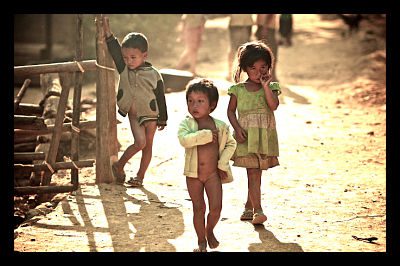
Laotian_Kids_in_Village_Poverty_Inequality_Poor_opt
The numbers on poverty are stunning.

One in three people do not have access to electricity. One in three children and one in seven adults suffer from malnutrition. One in five people do not have access to safe drinking water.

The experience of inequality and poverty based suffering is reported again and again in reports issued by international organizations ranging from the UN to the World Bank to the FAO. Poverty robs people of dignity and health to the point that life expectancy falls along with security and quality of life. When the basic rights and needs of people are not met and they are trapped in the cycle of poverty there is an accrued toll on human life. Poverty is so threatening and destabilizing to individual safety and health that it robs people of years of life because the cost and cumulative damage is so great.

The numbers of life lessened by poverty add up each and every day. Every five seconds a child dies of hunger; Every five minutes 19 children under five years of age die of pneumonia; Due to inadequate and substandard medical care, 500,000 mothers every year die in childbirth; five million children every year do not survive to celebrate their fifth birthday.

These numbers imply that there is an inherent cost of life for those who are not privileged and wealthy. In our globalized society, access and participation – which are fundamental aspects of human rights – are not truly guaranteed and protected. One in five, or almost 20 percent of the global population, face barriers to access to food and are unable to participate in the global economy.  Just over 300 million people worldwide have a life expectancy of less than 60 years, partially due to nutrient deficient and incomplete diets as well as the array of maladies and disease that stem from malnutrition and systemic poverty.

Thirty- five percent of the world population does not receive enough protein, and therefore not enough physical energy to function and work normally. Globally, there are 2 billion people who are anemic, including 5.5 million people who reside in countries of wealthy western capitalism.

In the United States, poverty is concentrated along the southern poverty belt stretching from New Mexico, across the deep south and Tennessee and Kentucky, to the Carolinas and Georgia.

A new CDC study recently revealed that states where more than 1 in 3 people live in high poverty areas reported the lowest life expectancy. In regions of poverty like this, burdens such as limited health care, higher crime rates, and poor schools and housing can keep people trapped in poverty and rob them of potential years of life.

Not just being poor, but living in areas blighted by poverty can mean a shorter life span and a stolen future for many people. Underperforming schools, few job opportunities, higher crime rates, poor nutrition and food access, lack of health care and housing all add up to shorter, unhealthier, impoverished lives.

This is no longer an issue of individual security, but larger issues of development, human rights, and economic stability. In order to truly tackle poverty we have to tackle the root causes of inequality, conflict and government corruption. Only when equal access to food and equal enjoyment are obtained can we reach the level of global security where poverty and malnutrition no longer threaten entire countries and limit chances for development and justice.

– Nina Verfaillie
Feature Writer

Sources: Mission Allende, Pravda

December 6, 2013
https://borgenproject.org/wp-content/uploads/borgen-project-logo.svg 0 0 Borgen Project https://borgenproject.org/wp-content/uploads/borgen-project-logo.svg Borgen Project2013-12-06 17:33:172015-01-27 10:09:30The Impact of Poverty on Life Expectancy
Advocacy, Developing Countries, Development, Extreme Poverty, Global Poverty, Inequality, Nonprofit Organizations and NGOs, Poverty Reduction, United Nations

International Day for the Eradication of Poverty

On October 17, International Day for the Eradication of Poverty was celebrated in honor of the goal to end world poverty by 2030. Declared by the UN General Assembly, this annual day serves as a reminder to promote the need to end poverty and destitution in all countries, specifically the developing nations.

In celebration of the International Day for the Eradication of Poverty, Interaction, the NGO alliance, highlighted global programs that are already making an impact. One of these programs, A World Vision program in Zambia, has made health care, education, and psycho-social support accessible for more than a quarter million children. The program has also trained nearly 40,000 volunteers to assist people living with HIV across the country. It is programs like these, indeed, that are helping us reach our goal.

In hope to get to zero percent by our lifetime, NGOs, like Interaction, are essential parts of the solution. “We cannot let over a billion people suffer in extreme poverty when we have the tools and the research to change their lives for the better. … We can do better. We have to do better,” said World Bank president Jim Yong Kim.

So far, the world has made significant progress in working toward this goal. While it is bold, it is undoubtedly achievable. Already, extreme poverty rates are half of what they were two decades ago. In 1990, nearly one in two people in the developing world lived in “extreme poverty” or on less than $1.25 a day. Today, this number is about one in five. Because of the help of many institutions, government and nongovernment organizations alike, we have been able to make immense developments. Still, it is not enough. The International Day for the Eradication of Poverty recognizes these groups that have made all the difference through these years and even further, motivates people to help take those next few steps forward.

– Sonia Aviv

Sources: UN, Global Dimension, Devex
Photo: Times Square

October 26, 2013
https://borgenproject.org/wp-content/uploads/borgen-project-logo.svg 0 0 Borgen Project https://borgenproject.org/wp-content/uploads/borgen-project-logo.svg Borgen Project2013-10-26 04:00:382024-05-25 00:30:06International Day for the Eradication of Poverty
Development, Global Poverty, Poverty Reduction, Technology

How Technology can Alleviate Poverty

Technology can Alleviate Poverty
Politicians everywhere are starting to learn the relation between technology and poverty. They are starting to realize that in the growing demand for new innovations in technology plays a part in the solution to poverty. Technology makes not only global communication and information access easier, it also creates infrastructure and development in developing nations, helps discover and get access to alternative resources, and along with all this, helps create many jobs and stimulates the economy.


In Practice: Technology Eradicating Poverty


Chile’s president, Sebastian Pinera, sees the importance of technology and how it can alleviate poverty. The Chilean government has almost doubled their investment in technology. Pinera hopes this will help Chile rise out of poverty by the end of the decade. Various programs in Chile encourage innovation and development of technology. From organizations that give grants to entrepreneurs to organizations that support travel abroad (such as Silicon Valley in California) to see and learn how the hub of technology works, there is a lot of encouragement of creativity and innovation in Chile. Such dedication to eliminating poverty helps not just those living in poverty, but also the national economy, and the world with the possible technological innovations.

Organizations like Practical Action focus on helping those living in extreme poverty with the help of technology. Their concept of technology justice, that technology should be aimed at helping humanity rather than just focused on pleasing the consumers who can afford technology, is something that will greatly benefit those in need. By bringing those living in poverty access to technologies such as electricity, technology that ensures clean water, technology that improves agricultural yield, and preparation for natural disasters, Practical Action gives them opportunities that bring not only financial stability and good health, but also the opportunity to rise out of poverty.

– Aalekhya Malladi

Sources: Bloomberg, Practical Action
Photo: Twisted Sifter

October 23, 2013
https://borgenproject.org/wp-content/uploads/borgen-project-logo.svg 0 0 Borgen Project https://borgenproject.org/wp-content/uploads/borgen-project-logo.svg Borgen Project2013-10-23 18:58:442024-12-13 17:49:45How Technology can Alleviate Poverty
Advocacy, Developing Countries, Education, Global Poverty, Health, Nonprofit Organizations and NGOs, Poverty Reduction

5 Books about Global Health and Development

three_cups_of_tea_book
No matter what your political leanings may be, these books cannot help but convince readers of the importance of global development. As you read the anecdotes and arguments presented in these books, remember that only 1 percent of the U.S. budget goes to foreign aid – and change begins with you.

1. Three Cups of Tea by Greg Mortenson

After traveling and mountain-climbing in the Himalayas, Mortenson launched a mission to bring schools and education to children living in remote regions of central Asia. His moving book outlines the importance of local development projects targeted at education, capacity building and sustainability. Through Mortenson’s activism and writing, the Taliban’s hold has been reduced over previously unprotected and disempowered communities.

2. Partner to the Poor by Dr. Paul Farmer

World-renowned doctor, anthropologist and humanitarian Paul Farmer defines the term “structural violence” and explains its connection to global health in this gripping book. Farmer writes about the structural elements of political and social life that systematically undermine access to healthcare in rural Haitian, Rwandan and Peruvian communities. His arguments on political instability’s effect on population compel readers to see the vast impact of foreign policy and aid.

3. The Practice of International Health by Ananya Roy and Daniel Perlman

This book offers a series of personal accounts from physicians and humanitarians providing healthcare around the world. More so than other anecdotes, these stories provide a detailed picture of the logistical and cultural challenges international development projects face. However, rather than discouraging such projects, “The Practice of International Health” demonstrates how such barriers can be overcome in order to achieve remarkable success.

4. Half the Sky by Nicholas Kristof and Sheryl WuDunn

Journalists Kristoff and WuDunn cover a lot of ground in this entertaining and heartbreaking collection of stories. Similar to Mortenson’s work, “Half the Sky” emphasizes the importance of grassroots organizations, illuminating the tireless efforts of individuals in India, China, Afghanistan and Ethiopia on the behalf of women. In the book’s epilogue, Kristoff and WuDunn also provide an extensive list of nonprofits doing amazing work around the world, as well as easy steps for getting involved in female empowerment and global development.

5. Banker to the Poor by Muhammad Yunus

Microfinance has both supporters and critics, but after reading this autobiography by the founder of the Grameen Bank, Muhammad Yunus, readers might find that their opinion has changed. Yunus was awarded the Nobel Peace Prize in 2006 for his work in providing small-value loans to women in rural areas in order to promote economic growth among families and villages.

– Shelly Grimaldi

Sources: GoodReads, Banker to the Poor
Photo: Wishes 4 Life

October 21, 2013
https://borgenproject.org/wp-content/uploads/borgen-project-logo.svg 0 0 Borgen Project https://borgenproject.org/wp-content/uploads/borgen-project-logo.svg Borgen Project2013-10-21 15:54:572020-07-09 20:52:165 Books about Global Health and Development
Developing Countries, Development, Global Poverty, Poverty Reduction

World Bank Risk Management Helps Reduce Poverty

Risk Management World Bank Development Strategy
In its annual World Development Report on October 7, the World Bank stated that successful risk management can be an essential tool for development.

Risk management in development involves policies that can help improve the negative effects of natural disasters, economic shocks or health crises. The World Development Report suggests that poor risk management has resulted in a staggering child mortality rate from injury and illness in low-income countries, one that is nearly 20 times higher than that in high-income countries. These slacking policies have also led to more deaths during droughts in Africa than from any other natural disaster. However, if governments and decision-makers can create more durable environments for managing risks, these trends can indeed be reversed.

“Risk management can save lives, avert economic damages, and can provide resilience and prosperity by allowing people to undertake new endeavors,” said Norman Loayza, director of the 2014 World Development Report.

The World Development Report has been released annual since 1978 and is the World Bank’s most comprehensive publication. As inferred, this year’s report looked at how managing risks can end poverty and increase equity.

As of now, many societies and individuals fail to tackle risk successfully because of lack of resources and information, missing markets and public goods and even more, social exclusion. “We’re advocating a sea change in the way risk is managed,” World Bank President Jim Yong Kim said. “Our new approach calls for individuals and institutions to shift from being ‘crisis fighters’ to proactive and systematic risk managers.”

The report tells us that because most individuals remain ill-equipped to confront many shocks and disasters, they must instead depend on shared action and responsibility. Without coherence from the international community, individuals, states and nations will continually be unable to handle problematic events on their own terms.

– Sonia Aviv

Sources: Global Issues, World Bank, Topix
Photo: World Bank

October 15, 2013
https://borgenproject.org/wp-content/uploads/borgen-project-logo.svg 0 0 Borgen Project https://borgenproject.org/wp-content/uploads/borgen-project-logo.svg Borgen Project2013-10-15 15:08:142014-03-24 12:22:06World Bank Risk Management Helps Reduce Poverty
Global Poverty, Poverty Reduction

What Is the Poverty Trap?

Poverty_Trap_Vicious_Cycle_Poor_Unable
In biology, there are two feedback loops – positive and negative. A negative feedback loop works by Effects which disrupt the Cause; for example, cold temperatures prompt the thermostat to activate heating, which raises the temperature and therefore requires the heat to be shut back off. A positive feedback loop works in exactly the opposite way – more Effect produces more Cause which produces more Effect, ad infinitum; this regulates the production of Oxytocin in a woman’s body during pregnancy, and is only ended by the expulsion of the fetus from the mother’s body. The mechanism commonly called the poverty trap is a social positive feedback loop. And this is why it is so difficult to eradicate.

Unlike pregnancy, there is no terminal event which can tell social institutions and infrastructure, “Enough!” Poverty can endure forever; it is a stable state. Many conditions of deprivation can be tolerated once a person is familiar with the new sensation, and poverty is one of these. Furthermore, the system of poverty is complemented by a system of affluence, which also operates by a positive feedback loop. The richer an individual becomes, the more opportunities there are to increase that affluence. This is not to suggest that rich cannot become poor and vice-versa; merely that in capitalist systems, wealth has a tendency to accumulate, like gravity pulling particles in a vacuum slowly toward one another.

If no forethought is given to this positive feedback loop, as has been the case in America over the last decades, it can become nearly impossible for those at the bottom of the socioeconomic pyramid to reach the top. School is the exemplary case of needing money to make money – without a college education, and increasingly, graduate-level education, many job opportunities are simply out of reach. Loans exist, but conditions are becoming less favorable, and the standard repayment plan on a Stafford Unsubsidized Loan adds nearly 50 percent of the principal in interest over the course of repayment.

A favorite ideology of Americans is that popularized in the 1980s: pull yourself up by your bootstraps. Indeed, this is a critical piece of the solution; a capacity and willingness to commit oneself to improvement is a prerequisite to improvement. However, it also turns a blind eye to the fact that institutions are, by design, resilient to the whims of individuals. An institution which is dysfunctional for one individual is often functional for another. Those for whom institutions function well are understandably reluctant to see them evolve into something less favorable.

That said, in theory, an institution does not answer to those in the ruling party, but operates under mechanisms which dictate it serve the greatest number of people in the best possible way. The  legislation pushed by Franklin Delano Roosevelt during the Great Depression (the New Deal) and by Harry Truman after World War II (the Marshall Plan, the attempt to temporarily nationalize steel and coal businesses in Europe) was responsible for putting millions to work.

Simply put, the poverty trap is human in operation and institutional in design. Both must evolve if the trap is to be disarmed.

– Alex Pusateri

Sources: A Better World, Prospect
Photo: Zionadventures

October 10, 2013
https://borgenproject.org/wp-content/uploads/borgen-project-logo.svg 0 0 Borgen Project https://borgenproject.org/wp-content/uploads/borgen-project-logo.svg Borgen Project2013-10-10 19:33:242024-06-04 01:17:32What Is the Poverty Trap?
Activism, Advocacy, Global Poverty, Philanthropy, Poverty Reduction

State Street Foundation: Providing Sustainability in Poor Communities

State_Street_Foundation
The State Street Foundation is a unique organization that focuses on providing grants to deserving groups that offer services to the poor. By “actively engaging in our global communities,” State Street is able to empower impoverished people through education, affordable housing and small business programs. The company also assists businesses by offering financial guidance in investment, research and trading.

State Street mainly operates 25 countries; most of its programs are in Australia, China, Hong Kong, India, Japan, Singapore, South Korea and Taiwan. The organization’s vast number of volunteers and supporters work in low-income communities to create sustainable poverty alleviation projects. These volunteers worked 78,000 hours and completed 4,900 projects in 2010. Since its formation in 2001, State Street employees and alumni have contributed 430,000 hours and 15,600 service projects.

These projects vary based on the needs of local communities, but all have the goal of improving quality of life in these areas. State Street’s Supplier Diversity Program works with businesses owned by minorities and women to ensure that these small businesses have the same opportunities as other larger companies. Providing grants to these businesses helps them financially thrive, thus creating jobs and increasing economic growth for the entire community.

In addition to distributing local grants, State Street Foundation sponsors community fundraising events for charities the organization supports. In 2010, State Street donated $3.2 million to these charities. For these reasons, the company has won copious awards for its philanthropy, including the Custody Risk’s Mutual Fund Administrator of the Year and Transfer Agent of the Year (2013), Best Securities Financing House in Asia Asset Management’s Best of the Best Awards (2013), European Transfer Agent of the Year (with IFDS) in the 2012 Funds Europe Awards (November 2012) and numerous other awards since its founding.

State Street is a foundation devoted to helping impoverished businesses and communities and hopes to contribute to poverty alleviation, one region at a time.

– Mary Penn

Sources: State Street, AVPN
Photo: Time

October 2, 2013
https://borgenproject.org/wp-content/uploads/borgen-project-logo.svg 0 0 Borgen Project https://borgenproject.org/wp-content/uploads/borgen-project-logo.svg Borgen Project2013-10-02 21:07:012024-06-04 01:17:32State Street Foundation: Providing Sustainability in Poor Communities
Advocacy, Global Poverty, Poverty Reduction, Women and Female Empowerment

Why Female Education Fights Poverty

Female_Education_Fights_Poverty_Afghan_Girl_In_School
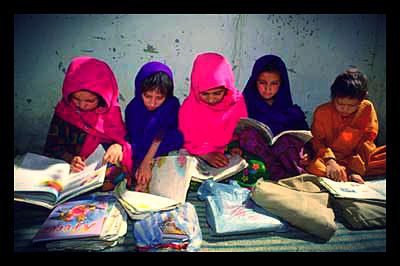
While providing equal education to girls is necessary from a moral standpoint, it is also essential for a more peaceful and poverty-free world.

Education affects the age at which women marry and have children. Therefore, until girls have equal access to quality education, maternal mortality, overpopulation, and other factors contributing to poverty will continue to terrorize our world.

In sub-Saharan Africa, and South and West Asia, child marriage affects 1 in 8 girls. By the age of 17, 1 in 7 females will have their first child. Since girls in these areas are not given access to education or job opportunities, they are often locked into these marriages, and forced to become mothers far before they are ready.

In the long run, these women can’t afford to take care of their children or even attain proper health services during labor. The line of poverty continues as children are born into impoverished families that are unable to help their offspring escape this cycle.

Providing women with a secondary education brings enormous benefits to both women and to the world. Educated women are empowered women. They can make their own choices and follow their own dreams. If girls receive a secondary education, 64 percent of them won’t get married while still attending school. By giving girls a chance to pursue their own future and making them aware of the risks associated with consecutive childbearing, the vicious cycle will finally reach its end.

The advantages in investing in female education are endless – for individuals, for the fight against poverty, and for lowering child mortality rates. The rise in female education between 1970 and 2009 prevented more than 4 million child deaths. With the Millennium Development Goals still met, perhaps this is an essential place for the U.N. to make a change.

– Sonia Aviv

Sources: Global Post, TIME, Huffington Post
Photo: The Guardian

October 2, 2013
https://borgenproject.org/wp-content/uploads/borgen-project-logo.svg 0 0 Borgen Project https://borgenproject.org/wp-content/uploads/borgen-project-logo.svg Borgen Project2013-10-02 21:05:432018-02-05 15:14:31Why Female Education Fights Poverty
Developing Countries, Food & Hunger, Food Aid, Food Security, Global Poverty, Inequality, Poverty Reduction

Could GMO’s Help Prevent Food Shortages?

Genetically_Modified_Crops_Prevent_Food_Shortages
With the world population expected to double by 2050, food security will continue to be an increasingly complicated and important issue. More food will be needed to feed more people and, to preserve vital biodiversity sites, we’ll need to produce this additional food using land already devoted to agriculture. While there are many factors that could improve agricultural efficiency, genetically modified crops hold the most potential. Many scientists now believe that transgenic plants could help prevent or minimize future food shortages.

Transgenic plants are those that possess an inserted portion of DNA either from a different member of their own species or from an entirely different species. The inserted DNA serves some special purpose, such as allowing the plant to produce natural insecticides. Once the genes are transferred, they can be passed on to offspring through simple fertilization, allowing farmers to breed advantageous traits in their plants. Transgenic plants have proven extremely profitable in the developed world, accounting for a 5% to 10% increase in productivity, and reducing the cost of herbicides and insecticides.

Such methods could effectively increase productivity in the developing world, where a surge in food production is sorely needed. Developing countries, especially those in the tropics and subtropics, suffer severe crop losses due to pests, diseases, and poor soil conditions. In addition, a lack of financial capital often prevents farmers from investing in high quality seeds, insecticides, and fertilizers. Poor post-harvest conditions such as inadequate storage facilities and thriving fungi and insect populations also fuel crop loss. Currently, pests destroy over half the world’s crop production. Transgenic plants could provide an innovative solution.

Fortunately, bioengineering solutions can be easily adapted from one species to another, allowing one advancement in plant biotechnology to quickly produce many more. For example, insect-resistant strains of several important plant species have been produced using one specific endotoxin. Commercial production of insect-resistant maize, potato, and cotton has already begun. Plant bioengineers hope to use similar technology to create fruits that ripen more slowly, allowing for longer shelf lives and less post-harvest crop loss.

It is important to note that this technology has mostly been established with the developed world in mind. Therefore, adapting it for use in the developing world must be done carefully. For instance, many crops grown in the developing world are local varieties and have not been extensively tested thus far by plant bioengineers. Blindly replacing local crops with bioengineered varieties from the developed world could disturb deep social or religious traditions that are represented in the widely varied cultures in the developing world. Additionally, societies are more likely to embrace a familiar crop than a foreign one. Research and development in bioengineering must, therefore, adapt to include the crops of the developing world.

Although the globe produces enough food for everyone, people everywhere continue to die of starvation. With this unequal distribution in mind, it is imperative that, moving forward, small farmers in the developing world receive the same access to plant biotechnology given to large agribusinesses in the developed world. First-world corporations cannot be granted even more unfair advantages over small landholders in poorer nations, especially as global populations grow and food security becomes ever more scarce and important. As this technology is developed, it is up to us to share it with the developing world in order to minimize severe food shortages in the years to come.

– Katie Fullerton

Sources: Plant Physiology, Colorado State University
Photo: Tree Hugger

August 31, 2013
https://borgenproject.org/wp-content/uploads/borgen-project-logo.svg 0 0 Borgen Project https://borgenproject.org/wp-content/uploads/borgen-project-logo.svg Borgen Project2013-08-31 08:18:222024-06-05 01:53:37Could GMO’s Help Prevent Food Shortages?
Page 56 of 63«‹5455565758›»

Get Smarter

  • Global Poverty 101
  • Global Poverty… The Good News
  • Global Poverty & U.S. Jobs
  • Global Poverty and National Security
  • Innovative Solutions to Poverty
  • Global Poverty & Aid FAQ’s
Search Search

Take Action

  • Call Congress
  • Email Congress
  • Donate
  • 30 Ways to Help
  • Volunteer Ops
  • Internships
  • Courses & Certificates
  • The Podcast
Borgen Project

“The Borgen Project is an incredible nonprofit organization that is addressing poverty and hunger and working towards ending them.”

-The Huffington Post

Inside The Borgen Project

  • Contact
  • About
  • Financials
  • President
  • Board of Directors
  • Board of Advisors

International Links

  • UK Email Parliament
  • UK Donate
  • Canada Email Parliament

Get Smarter

  • Global Poverty 101
  • Global Poverty… The Good News
  • Global Poverty & U.S. Jobs
  • Global Poverty and National Security
  • Innovative Solutions to Poverty
  • Global Poverty & Aid FAQ’s

Ways to Help

  • Call Congress
  • Email Congress
  • Donate
  • 30 Ways to Help
  • Volunteer Ops
  • Internships
  • Courses & Certificates
  • The Podcast
Scroll to top Scroll to top Scroll to top