• Link to X
  • Link to Facebook
  • Link to Instagram
  • Link to TikTok
  • Link to Youtube
  • About
    • About Us
      • President
      • Board of Directors
      • Board of Advisors
      • Financials
      • Our Methodology
      • Success Tracker
      • Contact
  • Act Now
    • 30 Ways to Help
      • Email Congress
      • Call Congress
      • Volunteer
      • Courses & Certificates
      • Be a Donor
    • Internships
      • In-Office Internships
      • Remote Internships
    • Legislation
      • Politics 101
  • The Blog
  • The Podcast
  • Magazine
  • Donate
  • Click to open the search input field Click to open the search input field Search
  • Menu Menu

Archive for category: Poverty Reduction

Information and stories about poverty reduction.

Developing Countries, Food & Hunger, Global Poverty, Poverty Reduction

Tax on Carbon Dioxide Emissions to Potentially Help South Africa’s Poor

Tax on South Africa Emissions
This year, South Africa has launched a new tax on carbon dioxide emissions in an effort to create a lower carbon future and a greener economy.

Finance Minister Pravin Gordhan has announced a Carbon Tax Policy White Paper that will describe the placement of taxes based on pounds of carbon dioxide emissions. Currently, South Africans already pay some unofficial carbon emission taxes, such as taxes on automobile emissions and electricity. However, the new carbon tax policy would introduce a new tax of 120 rands, or about 12 dollars, per ton of carbon dioxide equivalent.

The tax will be effective in 2015 and increase 10 percent between 2015 and 2020.

South Africa is one of the 20 nations that produce the most carbon emissions into the atmosphere. Increasing use of fossil fuels in recent years has led to rapid climate change. For developing or poor nations, the warming climate means that people are losing the ability to grow enough food.

In other places, environmental disasters bring ruin to land. Drying water sources means that women and children will have to walk farther and farther to find water. As carbon emissions increase, inequality and poverty only grow. Thus, it is imperative for nations such as South Africa to make a difference by reducing their carbon footprint.

The creation of a stricter carbon emissions tax means that the government, businesses, civil society and other stakeholders must have the same understanding of carbon emissions: it is something that needs to be eliminated progressively.

By enforcing taxes, the government of South Africa provides an incentive for companies and organizations to take up greener technologies. This would help to shift production from a high emissions approach to a new standard of a green technology.

Though the carbon tax sounds like a good way to fight environmental degradation, the tax could still negatively affect poorer households. The poor of South Africa spend significantly more of their income on food and energy. In some instances, these poor will eventually spend up to 40 percent more of their income on such basic necessities.

Furthermore rising coal-based electricity prices have increased more and more in recent years. This has put enormous pressure on low-income households. For these households that don’t have the luxury of spending freely on energy, a tax on carbon dioxide producing energy sources could be a great burden.

Moreover, there is also a worry that the carbon tax won’t be strict enough due to the possibility of exemptions. The proposed carbon tax provides a tax-free exemption threshold of 60 percent. When such exemptions exist, it is easy for carbon emissions to simply be ignored as groups or companies vie for exemptions. Exemptions mean that the people may be tempted to prioritize money over truly reducing the carbon footprint.

Perhaps the best way to think about this potential carbon dioxide tax is to consider poverty first. While the tax helps to reduce emissions, it can also generate billions of rands in revenue.

Additionally, it is important to note that greener technology can provide thousands of new employment opportunities for South Africa’s jobless.

– Grace Zhao

Sources: Mail and Guardian, BD Live, Times Live
Photo: The Guardian

August 23, 2013
https://borgenproject.org/wp-content/uploads/borgen-project-logo.svg 0 0 Borgen Project https://borgenproject.org/wp-content/uploads/borgen-project-logo.svg Borgen Project2013-08-23 05:18:552024-05-25 00:19:15Tax on Carbon Dioxide Emissions to Potentially Help South Africa’s Poor
Developing Countries, Development, Food & Hunger, Food Aid, Foreign Aid, Global Poverty, Poverty Reduction, USAID

US Foreign Aid to Africa: What We Give and Why

us_foreign_aid

In 2012, the United States provided nearly $12 billion in official development assistance (“ODA”) to African nations. The ODA is allocated to education, health, infrastructure and economic development programs in recipient countries. Currently, the United States allocates foreign aid to 47 African nations and USAID operates 27 missions on the continent.

US Foreign aid to Africa began in the 1960s as many African nations gained independence and the United States sought strategic alliances to counter the influence of the Soviet Union. With the exception of disaster and famine relief, most foreign aid to Africa began to decrease with the collapse of the Soviet Union.

In the 2000s, President Bush more than tripled aid to Africa by establishing programs such as the Child Survival and Health Programs Fund as well as the Global HIV/AIDS Initiative.

Though foreign aid programs are designed to assist recipient nations with development, they also benefit the United States in a number of ways.

First, these programs help build strategic alliances and foster support for democratic transitions. It also stimulates Africa’s growth and development, which provides opportunities for increased trade and direct investment in the continent’s emerging markets.

But for all the benefits, foreign aid to Africa has no shortage of detractors. Many critics point out that much of the money allocated to Africa never reaches the people who most need the assistance. “Eighty percent of U.S. aid to Africa is spent right here in America — on American contractors, American suppliers, and so forth,” said George Ayittey, president of the Free Africa Foundation.

In more corrupt nations, politicians and civic leaders are often charged with misappropriating funds designated for the people. Others critics claim that foreign aid to Africa simply does not work—after 50 years of assistance, Africa still confronts the same issues.

But even critics would have to agree on one crucial point: foreign aid is an integral part of U.S. foreign policy. In Africa, aid programs support a large framework of social and economic assistance for developing nations.

Critics are correct that American companies and corrupt politicians siphon a large portion of foreign aid. But aid to Africa has also done much to improve infrastructure, bolster economic development and improve health care conditions for millions of people on the continent.

– Danial Bonasso
Sources: Foreign Policy Initiative, Washington Post, NPR, One.org
Photo: James Bovard

August 21, 2013
https://borgenproject.org/wp-content/uploads/borgen-project-logo.svg 0 0 Borgen Project https://borgenproject.org/wp-content/uploads/borgen-project-logo.svg Borgen Project2013-08-21 11:44:212024-12-13 17:49:39US Foreign Aid to Africa: What We Give and Why
Global Poverty, Poverty Reduction

How to Prevent Poverty

How to Prevent Poverty
Understanding how to prevent poverty has been an issue of great concern both in the United States and across the globe. Countries like the U.S., in a position to prevent poverty in less developed nations, are particularly interested in determining the causes of poverty in order to effectively alleviate poverty at home and abroad. By understanding what it is that leads to impoverishment in specific communities and countries, poverty reduction efforts are more likely to prevent poverty all over the world.

Though poverty and extreme poverty, as terms, have been defined as living under a certain dollar amount per day, what causes poverty is often much more complicated. The World Bank defines global poverty as a pronounced and multidimensional deprivation in wellbeing. That is, what it is to be considered poor or impoverished depends on a number of different conditions and factors that vary from community to community. For example, one family may have the dollar amount sufficient to feed itself but lack adequate access to education or water.

Because poverty represents such a wide variety of conditions, how to prevent poverty is an issue that requires a complex understanding of the circumstances in which one is working. Not only that, effective poverty prevention and reduction strategies will necessarily include either a multidimensional approach or take place in a network of projects that strive to prevent or reduce poverty on various levels. For instance, Plan Canada, a Canadian-based charity organization founded in 1937, takes a five-step approach in its strategy to prevent poverty worldwide.


Plan Canada’s Tools for How to Prevent Poverty


  • Education – Providing a quality education to children will create positive change in a child’s life.
  • Healthcare – Adequate access to healthcare is essential to ensuring health and wellness.
  • Water and Sanitation – Prevention of disease in communities is largely dependent on adequate facilities.
  • Economic Security – Though economic growth is not required, economic security provides families with sufficient stability to count on a consistent family income.
  • Child Participation – Helping children learn their rights and engage in civic duties sets the foundation for a strong community.

The United Nations Population Fund (UNFPA) reports that slower population growth and investments in reproductive health and HIV prevention, as well as women’s empowerment and gender equality are also important steps toward preventing poverty. In fact, the UNFPA considers universal access to reproductive health information and services to be an “essential” condition to achieve the U.N. Millennium Development Goals by 2015.

How to end poverty is a complicated question, but significant research like that taken to synthesize the reports discussed above suggests that it is not an impossible question to answer. Quite the contrary, there are thousands of organizations across the globe working on just that question every day. Collaborative and coordinated efforts, in recognition of the diverse causes of poverty, will no doubt win the day. In the meantime, these strategies continue to develop in scope and sophistication.

– Herman Watson

Sources: The Borgen Project, Plan Canada, United Nations Development Programme, United Nations Population Fund
Photo: Soda Head

August 18, 2013
https://borgenproject.org/wp-content/uploads/borgen-project-logo.svg 0 0 Borgen Project https://borgenproject.org/wp-content/uploads/borgen-project-logo.svg Borgen Project2013-08-18 04:45:572024-05-25 00:17:46How to Prevent Poverty
Global Poverty, Poverty Reduction, Technology

What is Poverty Alleviation?

Poverty Alleviation
Poverty alleviation aims to improve the quality of life for those people currently living in poverty. Another term that is often used is poverty reduction.


Innovation Leads Poverty Alleviation


Rudy De Waele, CEO of Nyota Media, a growth agency for entrepreneurs and start-ups in Africa, recently gave a speech at the Mobile Innovations at the OCE Discovery event in Toronto, Canada. His speech, “How Mobile Technology is Transforming Africa” discussed the WOW Generation, mobile energy solutions and 3D printing, among other successful innovations happening on the continent of Africa. He spoke of how the WOW Generation is a new generation of young, talented and driven social entrepreneurs who are not only in it for the money, but who are taking into account a positive return to society as well. WOWers have already helped thousands by working with local entrepreneurs to solve local problems with low-tech solutions.

De Waele also covered a number of mobile energy solutions currently in effect. Angaza Design is a company based in Palo Alto that is currently working in Tanzania, Kenya and Zambia. Using solar panels, Angaza Design has developed pay-as-you-go technology to provide energy that will charge mobile phones in rural areas.

Another project De Waele mentioned does not necessarily alleviate poverty, but does improve the daily lives of people living with a particularly harsh disease in Kenya. The Happy Feet project uses 3D printing to create customizable shoes in an attempt to solve the jigger problem. A jigger, also known as a sand flea, is a small insect that bites and feeds on humans, cats, dogs and domesticated livestock. Though a single bite is not likely to cause damage, complications can arise when a female jigger burrows into the foot of a person. Due to the pain, victims of the sand flea are unable to walk, which means they are also unable to work. In cases of serious infestation, it is possible to lose a nail, in the best case, or whole digits from the hands and feet in the worst case. The worst cases appear in places of poverty.

By creating and using new and inexpensive mobile technologies, there is potential for increased economic growth in developing countries. Not only is there growth, but the positive changes are impacting those living in the worst conditions. While 3D printed, customized shoes will certainly help with jiggers and their detrimental impact on those living in Kenya, projects like Angaza Design?s mobile phone charger will give independence to those living in poverty.

However, like most things, poverty alleviation is not a simple act. The United Nations Development Programme states that simple economic growth will not reduce or alleviate poverty, improve equality or produce jobs, unless said growth is inclusive of all individuals in the economy.

For example, a recent study by the African Economic Outlook showed that economic growth in Nigeria has not resulted in poverty alleviation or the creation of jobs. Despite policies for inclusive growth and employment generation, the report showed a 3 percent increase in unemployment between 2010 and 2011. The report explained that this was because the oil and gas sectors, the areas increasing economic growth, do not have much potential to create jobs.

Though Nigeria projects a 6.7 percent growth in 2013 and a 7.3 percent growth in 2014, there are potential problems. Security problems arising from religious conflicts in certain states, as well as the continued cost of flooding, all constitute potential drags on projected economic growth. The report also said that current reforms that have resulted in price and exchange rate stability should be increased by the Nigerian government to see continued progress in economic growth, a key component of poverty alleviation.

– Jordan Bradley

Sources: The Next Web, UNDP, Camps International
Photo: OxFam

August 15, 2013
https://borgenproject.org/wp-content/uploads/borgen-project-logo.svg 0 0 Borgen Project https://borgenproject.org/wp-content/uploads/borgen-project-logo.svg Borgen Project2013-08-15 04:15:462024-06-05 01:53:36What is Poverty Alleviation?
Global Poverty, Poverty Reduction, United Nations

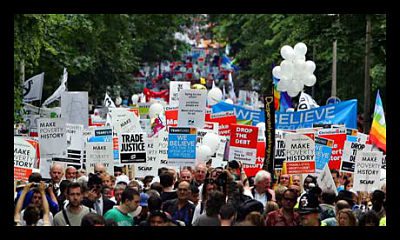
Make Poverty History

Make Poverty History Aims
Make Poverty History (MPH) is staging a worldwide campaign. Its mission statement matches its name as it aims to raise awareness about global poverty and make concrete policy changes in various nations’ governments and in intergovernmental organizations.

The various national Make Poverty History campaigns are part of a larger international campaign called Global Call to Action Against Poverty, a worldwide alliance committed to making world leaders live up to their promises and ending global poverty.


The Admirable Aims of Make Poverty History


In comparison to other aid organizations that may struggle trying to apply single, cure-all strategies on a universal scale, MPH has experienced such widespread success because each participating country can focus its national campaign on different issues within the broader topic of alleviating global poverty.

Despite these slight variations, however, all countries generally focus on issues such as aid, trade, and justice that are relevant to the UN’s eight Millennium Development Goals. Besides alleviating global poverty, MPH also aims to reduce the corruption that plagues many developing countries’ governments and prevents foreign aid from reaching the poorest members of society.

For example, the British MPH campaign is a coalition of charities, religious organizations, trade unions, and celebrities whose campaign slogans include “trade justice,” “drop the debt,” and “more and better aid.”

The call for “trade justice” demands a global trade system that does not allow half of the world’s population to live on less than $2 USD per day. This aspect of the campaign seeks to prevent the wealthiest countries and individuals from reaping all of the trade benefits at the expense of the impoverished.

Meanwhile, the “drop the debt” aspect of the campaign suggests canceling unpayable debt of the world’s poorest countries without cutting these countries off to the prospect of future aid. This includes creating a fair and transparent international process to ensure that human needs take priority over debt repayments .

Finally, the “more and better aid” component notes that increasing the proportion of national budgets allocated to foreign development aid will not make much of a difference unless nations can also change the way in which they deliver their aid. MPH believes that targeting aid specifically to basic health care and education, rather than giving money to governments for further allocation, is the best way to avoid corruption and address the underserved people’s true needs.

Meanwhile, Australia’s MPH campaign focuses on increasing Australia’s effective foreign development aid to 0.7% of its gross national income, tackling global climate change issues, and addressing chronic hunger problems across the globe.

While both the MPG and its parent campaign were originally created as a one-time-only campaign in 2005, the dual campaigns’ continued success have spurred leaders to extend the campaigning alliance until at least 2015. MPH is now considered the biggest, most widespread anti-poverty movement in history.

The leaders of MPH acknowledge that, despite its many successes, the fight against poverty continues on. Through campaigning, fundraising, and fighting to make their voices heard by politicians and policy makers around the globe,  MPH can ensure that the fire it has ignited in the hearts of its followers never dies.

– Alexandra Bruschi

Sources: Make Poverty History, The Guardian, Oxfam Australia, Millennium Development Goals,
Photo: The Guardian

August 11, 2013
https://borgenproject.org/wp-content/uploads/borgen-project-logo.svg 0 0 Borgen Project https://borgenproject.org/wp-content/uploads/borgen-project-logo.svg Borgen Project2013-08-11 05:51:332018-02-01 13:38:01Make Poverty History
Development, Foreign Policy, Global Poverty, Poverty Reduction

5 Military Quotes About Global Poverty

Military_quotes_poverty
Though the United States devotes roughly $660 billion a year to the military to protect the U.S. from its enemies, influential military leaders have spoken out about the efficacy of foreign aid and diplomacy, rather than military action, for improving national security. Military action is unavoidable in some circumstances, but a rising number of high-ranking military officials are beginning to back an increased budget for foreign aid. Listed below are 5 quotes from military and intelligence officials about the power of aid in relieving global poverty.

  1. “In many respects, USAID’s efforts can do as much over the long term to prevent conflict as the deterrent effect of a carrier strike group or a marine expeditionary force.” – Lieutenant General John Allen, Commander of U.S. Forces in Afghanistan
  2. “Development is a lot cheaper than sending soldiers.” – Robert Gates, Former Secretary of Defense
  3. “To truly end the threat from al-Qaeda, military force aimed at killing our enemy alone will never be enough. The United States must stay involved and invested through diplomacy, through development, through education, through trade in those regions of the world where violent extremism has flourished.”- Leon Panetta, Former Secretary of Defense
  4. “Robust resourcing for the State Department’s mission is one of the best investments for reducing the need for military forces to be employed. Together, our military leaders and our diplomats not only represent a symbol of America’s enduring commitment to the region, but they also build trust through partnerships that have an important stabilizing effect when trouble looms.” – General James N. Mattis, Commander, U.S. Central Command
  5. “Our enemies today are not as cut and dry as they were in the Cold War. Conditions in the world such as grinding poverty, pandemic disease and severe food insecurity serve as seeds from which extremism and instability can grow. By addressing these issues, we diffuse many of today’s national security threats and keep our troops out of harm’s way.” – General Michael Hagee, Retired Commandant of U.S. Marine Corps and Admiral James Loy, Retired Commandant of U.S. Coast Guard

– Katie Bandera

Sources: USGLC, The Borgen Project, Politico
Photo: Free republic, Politico, Washington Independent, Algemeiner


Read Humanitarian Quotes.

August 6, 2013
https://borgenproject.org/wp-content/uploads/borgen-project-logo.svg 0 0 Borgen Project https://borgenproject.org/wp-content/uploads/borgen-project-logo.svg Borgen Project2013-08-06 05:43:172016-12-05 16:14:415 Military Quotes About Global Poverty
Children, Global Poverty, Poverty Reduction

Poverty in Kosovo

Kosovo_poverty
Since the end of the war in 1999, the Republic of Kosovo has experienced consistent economic growth. Now a lower-middle-income country, it is one of only four countries in Europe that recorded positive growth rates during the economic crisis between 2008-2012, averaging about 4.5% each year. Despite its rapid growth, Kosovo continues to struggle with high rates of poverty and unemployment.

Joblessness is estimated to be at about 40% and remains a central economic-policy challenge. Youth and women are disproportionately affected by the difficult labor market conditions, creating an environment that undermines the country’s social fabric. Kosovo is one of the poorest countries in Europe with a per-capita gross domestic product (GDP) of about €2,700 and about one-third of the population living below the poverty line and approximately one-eighth living in extreme poverty.

Recent studies by UNICEF Kosovo showed that children are at higher risk of living in poverty in Kosovo compared to the general population. The greatest risk of poverty is for children who live in households with three or more children, children between 0 and 14 years of age, children of unemployed parents, children in households receiving social assistance, and children with low levels of education. Whereas, the risk of poverty is much lower for children in a household with at least one employed parent.

The European Union is mainstreaming an effort to fight child poverty by  recognizing the multi-dimensional nature of the issue. Child poverty and exclusion have high social and individual costs. Children in poverty are at high risks of low educational attainment, poor health, and an inability to find work later in life. Investing in children, therefore, is important not only for the well being of current children living in poverty, but also for the health, productivity, and engagement of future adult citizens.

Kosovo declared independence in 2008, however only 98 of a total 193 UN member states have recognized Kosovo’s independence. The lack of agreement remains a central obstacle to achieving the country’s goals for political integration and socio-economic development.

To help reverse joblessness and build a long-term economic growth plan, the World Bank, along with ten other donors, recently awarded Kosove 61 million Euros, mostly in the form of grant money. The Sustainable Employment Development Policy Program (SEDPP) funds were disbursed from the end of 2011 to the middle of 2012. The funds have supported reforms and improved transparency throughout many sectors in the country.

– Ali Warlich

Sources: World Bank, UNICEF, World Bank
Photo: SOS Children’s Villages

August 6, 2013
https://borgenproject.org/wp-content/uploads/borgen-project-logo.svg 0 0 Borgen Project https://borgenproject.org/wp-content/uploads/borgen-project-logo.svg Borgen Project2013-08-06 04:56:512024-05-25 00:14:33Poverty in Kosovo
Children, Global Poverty, Poverty Reduction

Poverty in Uruguay

Uruguay_Poverty
18.6 % of the population is below the poverty line in Uruguay. Although the majority of this poverty in Uruguay is not extreme, it is still problematic. Like many of other South American countries, Uruguay struggles with alleviating extreme poverty for the poorest sections of its population. The country is also trying to prevent those who are only slightly below the poverty line from plummeting further into the category of the extreme poor.

The small South American nation experienced an economic boom in the early 1990’s followed by a damaging recession in 1995. This recession left a lasting impression on the economy, which to this day continues to suffer. The recession caused a widespread loss of jobs across the country and an increasingly wide income gap. The poverty is not debilitating, but it is significant enough to render notice from the international community. According to the World Bank’s 2001 report on Uruguay, “reduction in poverty is highly dependent on growth, and pockets of poverty and unemployment still exist and in recent years have shown some increase.”

Uruguay also struggles with the high number of children who are born into poverty. The World Bank reports that “children have become a significant portion of the poor with about 40% of Uruguay’s children born into poor families, pointing to a potentially serious problem of inter-generational poverty.” This threat of continuing, irreversible poverty is very concerning. The longer poverty continues to ravage Uruguay, the more entrenched it will become as it roots itself in disenfranchised communities.

The poverty problem in Uruguay is not the most dire in the world, but it requires confrontation. In order for the poverty problem in Uruguay to be eradicated, the economy must be fundamentally changed and social welfare programs must be instituted.

– Josh Forgét

Sources: The CIA World Factbook, The World Bank
Photo: Tico Times

August 6, 2013
https://borgenproject.org/wp-content/uploads/borgen-project-logo.svg 0 0 Borgen Project https://borgenproject.org/wp-content/uploads/borgen-project-logo.svg Borgen Project2013-08-06 04:31:282024-05-25 00:14:46Poverty in Uruguay
Education, Global Poverty, Health, Poverty Reduction, Women and Female Empowerment

Top 5 Poverty Prevention Tactics

Poverty Prevention
Global poverty can seem to many to be an insurmountable task. However, much progress has already been made to lift people out of poverty. According to The Global Citizen organization, global poverty has effected 1.3 billion individuals, a number which is actually 52% lower than statistics in the 1980s.

Development practitioners recognize that global poverty can be minimized by addressing other areas including reproductive health, HIV prevention, education, women’s empowerment, and gender equality. UNFPA states that poverty is a multidimensional issue that deprives people of education, resources, services, opportunities, and economic opportunities. UNFPA states that investments to address global poverty should “…[empower] individual women and men with education, equal opportunities and the means to determine the number, timing and spacing of their children – [which] could create the conditions to allow the poor to break out of the poverty trap.”

Reproductive health and HIV prevention can both act as poverty prevention tactics. Reproductive health education, family planning resources, and widely accessible contraception can decrease fertility rates by providing families with the knowledge and tools to space out pregnancies. Furthermore, improved healthcare can reduce population growth because families recognize that they do not need to have as many children to ensure that at least 2 of them survive to adulthood.


HIV prevention is also an important poverty prevention tool because  helpful for when men and women know the dangers of HIV, they are able to use protection and are able to prevent the spread of the disease not only from partner to partner, but also from partners to undesired pregnancies and children. By learning how to protect oneself from HIV, individuals are able to prevent untimely deaths as well as preventing the disease to spread within a community, states The ONE organization. By lowering fertility rates through an education in reproductive health and by preventing the spread of HIV through an education in HIV prevention, communities will thrive due to a lower healthier population level.

The third poverty prevention tactic is education. Education is a very important factor in preventing global poverty, for providing an education to young boys and girls will help prevent undesired child marriage as well as early teen pregnancies which can lead to maternal death. An education helps boys and girls obtain the proper knowledge to keep themselves safe, healthy, and helps to plant the seeds of inspiration. Once obtaining an education, these individuals can create sustaining businesses which produce and return economic gains into their communities. By providing an education, individuals are able to thrive and break through the barriers of global poverty by creating strong businesses which will help the economy thrive and will lead to a stable community environment.

The fourth and fifth poverty prevention tactics are women empowerment and gender equality. Women empowerment is a positive prevention tactic because women who are encouraged to attend school and receive an education are more likely to defeat child marriage, are able to marry latter in life, and are able to have less children which lowers population rates. Women who have an education are more likely to work after receiving an education, which boosts the economy and provides a sustainable household for a family. Gender equality offers similar benefits, for if women are able to obtain an education and receive equal pay in employment, both the man and women are able to create a sustainable home for their children. By providing a sustainable environment, the child is able to attend school and is able to receive employment opportunities, continuing this positive cycle.

Through these five poverty prevention tactics, developing countries are able to defeat global poverty and are able to create sustainable economies, healthy environments, and equal opportunities.

– Grace Beal

Sources: Global Citizen, UN FPA, ONE Campaign
Photo: Ambergris Today

August 5, 2013
https://borgenproject.org/wp-content/uploads/borgen-project-logo.svg 0 0 Borgen Project https://borgenproject.org/wp-content/uploads/borgen-project-logo.svg Borgen Project2013-08-05 09:17:212017-11-30 10:45:20Top 5 Poverty Prevention Tactics
Education, Global Poverty, Poverty Reduction

3 Key Responsibilities to Fight Poverty

poverty 3
Poverty. Can you define this seven letter word? Many individuals can define it, and most would say that poverty is the state of being extremely poor. Yet, how many of these individuals would know the facts behind global poverty and would know what it took to prevent or fight against such a global epidemic? Many individuals are so focused on their own personal lives that they do not notice what lies beyond their own every day life. Yet, global poverty effects everyone and reducing this epidemic could benefit everyone as well.

A dollar and twenty five cents. This is the amount of money in which 1.3 billion individuals live off of every day and possibly even less than this amount, states The World Bank. This is a staggering amount of people living off of less than a dollar a day! Yet as The Global Citizen organization has stated “ In the last 30 years, the proportion of the world’s population that live below this line has halved-from 52% in 1980, to 25% today. That’s a decline from 1.9 billion people down to 1.3 billion people”. There is a notable difference seen today with this decline in global poverty, yet if individuals do not keep putting their efforts towards this cause, the percentage could once again rise to staggering levels.

So how can an individual make a difference, one may question. There are three key responsibilities to help fight against global poverty. The first is through charitable donations. A single individual can make a large difference on numerous lives through charitable donations, states Columbia University. By donating funds towards global poverty, The Millennium Promise explains, an individual can help numerous others obtain food, clean water and power, a healthy living environment, technology and the seeds for innovation, education, gender equality, the proper health care for women and their children, and finally can help plant the seeds for businesses and entrepreneurship to create future stability. These may seem easy to obtain, but without help from numerous donors, it would not be nearly impossible to accomplish these goals.

The second key responsibility to help prevent global poverty is to follow through on the government’s promise to help aid millions who are suffering from global poverty. By following through on their existing commitments to help aid these struggling individuals, it proves that there are individuals who care about fighting to eliminate global poverty, states The Borgen Project. There are many ways in which to contact your government leaders such as writing to your political leaders, organizing letter writing campaigns, writing to your local newspapers and magazines, by calling your political representatives stating your wish in that they support the fight against global poverty, and finally by joining existing networks such as The Borgen Project, The Millennium Campaign, or The Global Citizens Organization.

Finally the third key responsibility is education. By educating yourself on the subject of Global Poverty, you can also educate others. Educating the public may seen like a difficult task, yet it has proven to be a highly successful global poverty prevention tactic. By educating the public, you can help spread the word of prevention and can help lead the fight against global poverty. By educating others, you can help lead to numerous donations against the spread of global poverty, and can also help spread the word of prevention even further. When you educate an individual on this topic, another individual can continue to spread the word, and it leads to the creation of a chain reaction. By doing so, you can lead numerous individuals to make donations, contact their leaders, and to continue the chain of educating others on this crucial subject.

Overall, by making donations to global poverty prevention organizations, contacting your political leaders, and by educating others, you are helping to end poverty. By taking on these three key responsibilities, an individual has started their own personal fight against global poverty and has joined in the movement with numerous others to end this global epidemic.

– Grace Beal

Sources: World Bank, Global Citizen, Columbia University, The Borgen Project
Photo: The Guardian

August 5, 2013
https://borgenproject.org/wp-content/uploads/borgen-project-logo.svg 0 0 Borgen Project https://borgenproject.org/wp-content/uploads/borgen-project-logo.svg Borgen Project2013-08-05 09:05:402017-03-20 13:04:003 Key Responsibilities to Fight Poverty
Page 57 of 63«‹5556575859›»

Get Smarter

  • Global Poverty 101
  • Global Poverty… The Good News
  • Global Poverty & U.S. Jobs
  • Global Poverty and National Security
  • Innovative Solutions to Poverty
  • Global Poverty & Aid FAQ’s
Search Search

Take Action

  • Call Congress
  • Email Congress
  • Donate
  • 30 Ways to Help
  • Volunteer Ops
  • Internships
  • Courses & Certificates
  • The Podcast
Borgen Project

“The Borgen Project is an incredible nonprofit organization that is addressing poverty and hunger and working towards ending them.”

-The Huffington Post

Inside The Borgen Project

  • Contact
  • About
  • Financials
  • President
  • Board of Directors
  • Board of Advisors

International Links

  • UK Email Parliament
  • UK Donate
  • Canada Email Parliament

Get Smarter

  • Global Poverty 101
  • Global Poverty… The Good News
  • Global Poverty & U.S. Jobs
  • Global Poverty and National Security
  • Innovative Solutions to Poverty
  • Global Poverty & Aid FAQ’s

Ways to Help

  • Call Congress
  • Email Congress
  • Donate
  • 30 Ways to Help
  • Volunteer Ops
  • Internships
  • Courses & Certificates
  • The Podcast
Scroll to top Scroll to top Scroll to top