• Link to X
  • Link to Facebook
  • Link to Instagram
  • Link to TikTok
  • Link to Youtube
  • About
    • About Us
      • President
      • Board of Directors
      • Board of Advisors
      • Financials
      • Our Methodology
      • Success Tracker
      • Contact
  • Act Now
    • 30 Ways to Help
      • Email Congress
      • Call Congress
      • Volunteer
      • Courses & Certificates
      • Be a Donor
    • Internships
      • In-Office Internships
      • Remote Internships
    • Legislation
      • Politics 101
  • The Blog
  • The Podcast
  • Magazine
  • Donate
  • Click to open the search input field Click to open the search input field Search
  • Menu Menu

Archive for category: Nonprofit Organizations and NGOs

Information and stories about nonprofit organizations and NGOs

Health, Nonprofit Organizations and NGOs

Global Links 101

Global Links is a medical relief organization that is committed to promoting both environmental steward shipment and better healthcare in poor communities. Each year, hospitals in the United States wind up with hundreds of tons of “medical surplus” supplies. Usually, these still very useful materials are simply thrown into landfills. Global Links takes the surplus from the U.S. healthcare industry and delivers it to under-served communities that lack the supplies and equipment necessary for proper medical care.

Global Links’ model of recycling and reusing medical equipment connects two social issues: excess waste and lack of resources in developing areas. In linking the two, Global Links is able to convert an environmental burden into a beneficial tool.

The Global Links model breaks down into 5 simple steps:

1.     Global Links Staff assess nine program countries and meet with health authorities, medical staff, and Pan American health organization officials. The organization does this in order to evaluate and ensure medical donations would be useful to that location.

2.     Global Links trucks visit hospitals that have been saving surplus medical supplies and equipment for the organization.

3.     At a sorting facility, the donated material is sorted and shelved. Volunteers organize supplies and check for expiration dates. Materials are also cleaned and re-vamped if necessary.

4.     Volunteers pack supplies into boxes and staff members load them onto a 40-foot shipping container.

5.     The shipping containers are sent to communities that need the supplies.

Since its founding in 1989, the organization has shipped over 410 tractor-trailer sized loads of medical material to developing countries. These containers have contained over 6 million pounds of equipment and material that otherwise would have been dumped into landfills. The value of the materials exceeds $173 million.

– Grace Zhao

Sources: Global Links, Charity Navigator
Photo: Global Links

July 20, 2013
https://borgenproject.org/wp-content/uploads/borgen-project-logo.svg 0 0 Borgen Project https://borgenproject.org/wp-content/uploads/borgen-project-logo.svg Borgen Project2013-07-20 06:23:032024-05-25 00:03:02Global Links 101
Food Aid, Nonprofit Organizations and NGOs

What is Mercy USA?

mercy-usa
As nearly 1 billion people in the world live on less than $1 a day, Mercy-USA for Aid and Development (Mercy-USA) is a non-profit organization dedicated to improving health and nutrition, as well as pushing for educational and economic development internationally. With a motto of, “Helping people help themselves,” Mercy-USA has been providing aid and helping individuals and their communities become more self-sufficient since 1988, thereby alleviating human suffering worldwide.

Headquartered in Plymouth, Michigan, with overseas offices in countries including Albania, Indonesia, and Lebanon, Mercy-USA is registered with the United States Agency for International Development (USAID). As a result, Mercy-USA receives grants from the United States government for international development. For example, in 2010, Mercy-USA received a grant worth over 1.26 million dollars to help provide freshwater and improve health, sanitation, and nutrition to 118,000 individuals in need in Somalia. This money has gone to support many feedings centers, water wells, and sanitary latrines. Most recently, USAID has provided more than $290,000 to Mercy-USA to combat waterborne diseases by improving hygiene practices in Garissa County, Kenya.

Supported by USAID, agencies of the United Nations, and other partner organizations dedicated to international humanitarian affairs, Mercy-USA works in countries like Bangladesh, Kenya, Bosnia, and many others. Mercy-USA has improved the nutrition of many by providing daily lunches to school children in Gaza and by distributing monthly food baskets to internally displaced and vulnerable families in northern Syria.

In addition to distributing food and supplies to aid in sanitation and hunger relief, Mercy-USA trains individuals to become self-sufficient so that development becomes sustainable, a necessity in effectively battling world poverty and disaster. Mercy-USA has been training farmers in countries like Indonesia and providing computer training to youth in Bosnia. Mercy-USA is an important player in international humanitarian endeavors, having improved the lives of hundreds of thousands of people, from helping to improve nutrition and sanitation to providing agricultural and vocational training.

– Rahul Shah

Source: Mercy USA, USAID
Photo: Mercy USA

July 20, 2013
https://borgenproject.org/wp-content/uploads/borgen-project-logo.svg 0 0 Borgen Project https://borgenproject.org/wp-content/uploads/borgen-project-logo.svg Borgen Project2013-07-20 05:43:202018-08-14 12:18:38What is Mercy USA?
Foreign Aid, Nonprofit Organizations and NGOs

3 Rules of Smart Giving

smart-giving-borgen-project_opt
Can someone really be wrong when he or she decides to give to charity? There is no concrete answer, but sometimes certain types of giving can do more overall good than others.

Eric Friedman, an actuary and philanthropist, argues that there is a right and wrong way to give, and many people are doing it wrong. Today’s generation of givers prefers to become more deeply involved in their philanthropy, for example, by mentoring young people, creating a foundation, or asking to learn exactly what good their money did when they donated to an organization. While this philanthropic trend is positive, Friedman claims that people still need to be smarter when it comes to giving by focusing on these three areas:

  1. Consider global problems and weigh them against your personal priorities. Maybe you feel drawn to give your income to a group that is close to your heart, such as your college or a sports team. First, though, consider how far your money will go with those organizations compared to how many homeless or hungry people you could help with that same money. It’s certainly not that personal causes don’t matter, but your donation may not make as much of an impact as it would for other global causes.
  2. Do some research to find out which charities have the most effective philanthropic programs. Friedman suggests using websites such as givewell.org and givewhatwecan.org, both of which help donors find the charities that give you the most bang for your buck, enabling you to help the most people possible.
  3. Investigate the organization to which you’re giving before donating. Only 35% of donors do any research about the charity to which they give their money, and just 9% do more than two hours of research about the organization. Donating money is an investment that people should not take lightly, and knowing exactly what the charity stands for and how they plan to solve problems is half the battle.

If Friedman is correct, this type of smart giving could make a much more significant impact when it comes to issues like global poverty and world hunger.

– Katie Brockman

Sources: TIME, Give Well, Giving What We Can
Photo: WPFD

July 19, 2013
https://borgenproject.org/wp-content/uploads/borgen-project-logo.svg 0 0 Borgen Project https://borgenproject.org/wp-content/uploads/borgen-project-logo.svg Borgen Project2013-07-19 04:14:332018-03-07 13:33:163 Rules of Smart Giving
Activism, Advocacy, Nonprofit Organizations and NGOs, War and Violence

Center for Civilians in Conflict

Center_for_Civilians_in_conflict
The Center for Civilians in Conflict is a non-profit organization that advocates for civilians threatened by armed conflicts around the world. The organization was founded in 2003 by Marla Ruzicka, an American political activist and aid worker who was concerned about the wellbeing of civilians who were indirectly harmed by U.S. bombs in the War on Terror.

Originally titled the Campaign for Innocent Victims in Conflict (CIVIC), Ruzicka’s startup received funding from the U.S. government to conduct aid operations specifically targeting hurting civilians in Iraq and Afghanistan. Ruzicka’s life tragically came to an end in April 2005 when she was killed by the blast from a suicide bomb in Baghdad. Since Ruzicka’s death, the Center for Civilians in Conflict (the new name of the organization as of 2012) has broadened its horizons to countries outside of Afghanistan and Iraq to further the legacy of an extraordinary humanitarian.

Today, the Center for Civilians in Conflict operates in Mali, Libya, Pakistan, Syria, and Somalia, in addition to Iraq and Afghanistan. The main areas of the Center’s work are these parts of the world that can be characterized as “conflict zones.”  Civilians who are threatened by a conflict are interviewed by CCC volunteers and the grievances of these civilians are documented and brought to the attention of the warring parties or military groups involved.

In January 2013 the Center assembled a roundtable of experts to analyze the outcome of U.S. military involvement in the Syrian civil war. The specialists utilized data collected from interviews from CCC field missions in Syria, Lebanon, Turkey, and Jordan in 2012. The interviewers obtained information from a large number of sources including “leaders of the political and armed opposition, Syrian army defectors, UN agencies, local and international NGO staff, government and military officials, lawmakers, diplomats, doctors and nurses, journalists, civil society activists, and religious leaders.”

The panel concluded that a five-point plan of action must be instituted by the US military if they chose to become involved in Syria. This is only one example of the thorough way in which the Center for Civilians in Conflict contributes to the protection of innocent civilians in conflict zones.

According to the organization’s website, the Center for Civilians in Conflict identifies themselves as “advocates and advisers creating policies and practices to make warring parties more responsible to civilians before, during, and after combat operations.”  This expectation of “responsibility” on the part of the perpetrators is one of the hallmarks of CCC, making it an effective and singular champion for noncombatant victims of war.

– Josh Forget

Source: Foreign Affairs, Civilians in Conflict

July 18, 2013
https://borgenproject.org/wp-content/uploads/borgen-project-logo.svg 0 0 Borgen Project https://borgenproject.org/wp-content/uploads/borgen-project-logo.svg Borgen Project2013-07-18 08:40:352024-05-25 00:00:42Center for Civilians in Conflict
Nonprofit Organizations and NGOs, Technology

What Can sub-Saharan Energy Learn from Avon Cosmetics?

avon
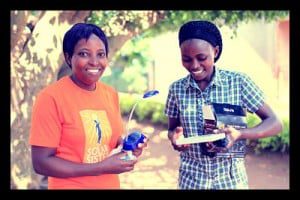
Approximately 5% of the rural population in sub-Saharan Africa enjoys access to electricity. In an area where sunlight is abundant, solar power is an excellent alternative energy selection. Solar Sister, a registered nonprofit organization dedicated to empowering women through solar power, chose to develop the solar-tech industry in sub-Saharan Africa and is taking a unique approach in doing so.

Inspired by Avon cosmetics’ style of distribution system where one woman distributes products by contacting her network of family and friends, the Solar Sister program provides a unique, single-investment approach to social entrepreneurship in sub-Saharan Africa. Because the network is built on connections between women, the program can extend to rural communities, places traditionally untouched by energy companies.

The startup kit — the “business in a bag” — that each new entrepreneur receives includes everything each woman needs to start her own business in solar-powered innovation technology. The capital provided by Solar Sister gives each member of the community the funds to get started at only $500 a bag. Micro-financing from individual donors combined with corporate investments make up the organization’s capital for these investments and are eventually paid back by the women involved.

Being a part of the Solar Sister team provides much needed income to women and their families by investing in women on a micro-financing level. As indicated on the Solar Sister website, $1 invested generates $46 for the solar sister and her customers in the first year alone. And not only does the organization’s investment empower women to build both family and community, it also falls in line with the global green movement to move away from traditional energy sources, such as kerosene.

The Solar Sister program addresses two major issues in sub-Saharan Africa in their alternative energy-based solution to poverty. To support the initiative, help the environment, and invest in women’s empowerment, click here.

– Herman Watson

Source: Avon, Solar Sister
Photo: Kiva

July 18, 2013
https://borgenproject.org/wp-content/uploads/borgen-project-logo.svg 0 0 Borgen Project https://borgenproject.org/wp-content/uploads/borgen-project-logo.svg Borgen Project2013-07-18 06:09:252014-02-11 12:31:51What Can sub-Saharan Energy Learn from Avon Cosmetics?
Development, Education, Nonprofit Organizations and NGOs

Immersion: World Learning

Cultures, developed and developing, unite through immersion and connection. Dr. Donald Watt, a Syracuse University Professor, first came upon this idea during the Great Depression. It was his belief that the cultures and the people on Earth would thrive with a better understanding of each other, eradicating preconceived judgments and categorical placement of social status.

Watt knew this goal could only be achieved through cultural integration of young students. That is why he formed World Learning. A non-profit organization, WL focuses on the development of connections between cultures through three types of programs.

1.    Education

Offering study abroad programs to high school and college students, WL emphasizes full immersion into foreign cultures. WL offers summer programs that allow students to do field research abroad, while taking in foreign languages and all that the countries have to offer. An example of one of these educational programs is the SIT Study Abroad program. Students enrolled in this program often are assigned a critical issue of a culture, one that they must study to fully understand. They then address the issue through community projects and global service. SIT Study Abroad hosts over 70 programs in Asia, Africa, Latin America and the Middle East.

2.    Exchange

WL has developed connections with leaders across the globe, bringing them to the United States to communicate with young students. The insight and experiences of these leaders are beneficial to students in the program.

3.    Development

The programs WL have to offer to young students focus on the critical issues our world faces today. These include poverty, government accountability, the spread of disease and the malnutrition of women and children. Once the needs of cultures are identified, WL expects students to immerse themselves and help make a difference through the leadership skills they are taught.

World Learning has made a difference in 60 countries and changed the lives of over 100,000 people. This difference has been due to the engagement of the youth, whose immersion into developing countries has created important lifelong international bonds.

–  William Norris

Sources: World Learning, SIT Study Abroad
Photo: Flikr

July 16, 2013
https://borgenproject.org/wp-content/uploads/borgen-project-logo.svg 0 0 Borgen Project https://borgenproject.org/wp-content/uploads/borgen-project-logo.svg Borgen Project2013-07-16 09:00:052024-05-25 00:02:31Immersion: World Learning
Nonprofit Organizations and NGOs, Sanitation, Water

WaterAid America

WaterAid America
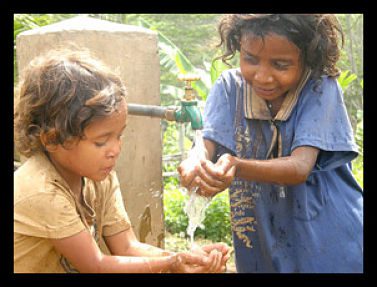
Water sanitation is an issue in development that receives minimal coverage when compared to its impact. Only recently the importance of access to clean water has gained international attention.

A lack of clean water not only makes basic tasks like washing, cooking, and drinking more difficult but also leads to widespread disease. Healthy members of the family are then burdened by taking care of the ill. Livelihoods are often impacted, with women often having to travel long distances to carry water back to their homes, missing out on education or economic opportunities and forcing children to take on responsibility roles in the household.

Established in 1981, WaterAid America works exclusively to provide safe water to at-risk communities globally. It currently works in 27 countries which are among the poorest countries in the world. A country must be on the lower end of the UNDP’s Human Development Index is a criteria for Wateraid to begin work.

The organization works with governments and other international NGOs, receiving funding from the U.S. and U.K. governments to carry out their work. They offer training to foreign departments which lack the resources or background to adequately handle their countries’ crises, thereby creating a sustainable solution rather than a short term intervention.

WaterAid’s impact was documented in Pulitzer Prize winning author Tina Rosenburg’s essay “The Burden of Thirst.” In it, she describes the immense difference made by having access to clean water. Hours previously spent gathering water are instead spent on gathering food or raising animals, diseases plummet and as such, families are no longer forced to care for sick relatives. Girls who previously bore the burden of fetching water are now free to spend their time getting an education.

The problem of unsafe water remains prevalent throughout the world. According to their website, today, 768 million people lack access to clean water and even more, 2.5 billion, lack sanitation.

– Farahnaz Mohammed

Sources: The Burden of Thirst

July 16, 2013
https://borgenproject.org/wp-content/uploads/borgen-project-logo.svg 0 0 Borgen Project https://borgenproject.org/wp-content/uploads/borgen-project-logo.svg Borgen Project2013-07-16 06:50:362024-05-25 00:01:53WaterAid America
Foreign Aid, Nonprofit Organizations and NGOs

10 Mil Volunteers Revolutionizing Disaster Relief

Tzu Chi Organization
The Buddhist Tzu Chi Foundation is an international non-profit humanitarian organization with four main tenets: charity, medicine, education, and humanitarian culture. So far, with the help of 10 million volunteers and donors, the Buddhist Tzu Chi Foundation has provided millions of dollars of relief and aid in over 70 countries.

Tzu Chi was among the first organizations to provide relief to families that were victims of the World Trade Center attacks, Hurricanes Sandy and Katrina, and the earthquake in Haiti. Tzu Chi is unique in its approach to disaster relief in that it hands sums of cash directly into the hands of survivors. This is part of Tzu Chi’s philosophy: allowing survivors to use charity money on their own terms.

The Buddhist Tzu Chi Foundation started in 1966 when a group of women began to save two cents from grocery money every day to donate to charity. The organization registered as a non-profit 501(c)(3) in California in 1984, and over the years, it has become an international group of over 10 million volunteers.

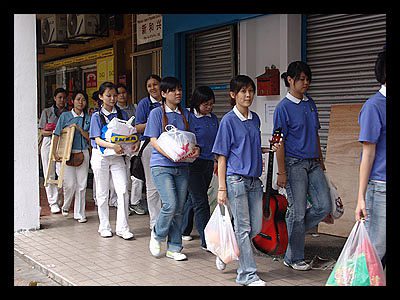
Literally meaning “compassionate relief,” Tzu Chi has expanded its program beyond just charity by building schools and hospitals around the world. With deep roots in Asia, Tzu Chi has become one of the most influential charity organizations in that region. Tzu Chi volunteers are easily recognized by their blue and white uniforms, and have frequently been called “blue angels.”

A factor that distinguishes Tzu Chi from many other Buddhist organizations is that it is first and foremost not evangelical. Volunteers are made to feel at home and are encouraged to practice whatever religion they affiliate with. All members are encouraged to improve their behavior and mindset, regardless of the underlying Buddhist ethics.

Tzu Chi is strictly non-political and non-governmental, and does not discriminate based on race, religion, nationality, gender, or ethnicity. For this, it has come under some scrutiny in the past, as many Taiwanese were upset with Tzu Chi for offering relief to mainland China. That criticism passed when Tzu Chi became one of the most coordinated organizations to provide relief to Taiwan during the 921 earthquake.

The organization has expanded to involve university students worldwide. The Tzu Chi Collegiate Association is a worldwide network that was officially established in Taiwan in 1992. The volunteers are often given opportunities to attend international NGO conferences. Tzu Shao is also a branch of Tzu Chi that allows youth 18 and under to get involved.

Tzu Chi is progressive in the idea that human growth is rooted in charity and giving, not just internal meditation. Not only does Tzu Chi help survivors of disasters and tragedies, but it also helps its volunteers. Many people are involved with the organization to help their communities and also for their own personal development.

– Lindsey Rubinstein

Sources: Tzu Chi, NY Daily News

July 16, 2013
https://borgenproject.org/wp-content/uploads/borgen-project-logo.svg 0 0 Borgen Project https://borgenproject.org/wp-content/uploads/borgen-project-logo.svg Borgen Project2013-07-16 05:32:472024-06-04 02:43:5610 Mil Volunteers Revolutionizing Disaster Relief
Activism, Nonprofit Organizations and NGOs

10 Facts About Operation USA

Operation USA
Operation USA is an international relief agency that focuses on working with grass-roots groups to help alleviate the effects of natural and man-made disasters worldwide. The Los Angeles-based group was a co-recipient of the 1997 Nobel Peace Prize for its work on the “International Campaign to Ban Landmines.”

These are ten important facts about it:

  1. Since it was founded in 1979, the Operation has delivered over $350 million for relief and development projects.
  2. Operation USA was the first Western aid agency to become active in Phnom Penh after Pol Pot’s Khmer Rouge regime lost power.
  3. Through its innovative use of 747 cargo jets, it revolutionized aid delivery to Ethiopia during the 1984 famine.
  4. Operation USA was the first American non-governmental organization licensed to work in Cambodia and Vietnam after the Vietnam War ended.
  5. In June 2013, Operation USA, through its partnership with Honeywell Hometown Solutions, opened the Honeywell Ibasho House in Ofunato, Japan. Ibasho roughly translates as “a place where one feels at home.” The house will serve as a gathering place for the local community devastated by the 2011 earthquake and tsunami.
  6. Operation USA is completely privately funded.
  7. In 2008, the Operation began working with L’Athletique d’Haiti, a Haitian NGO focused on after-school sports programs for children living in the slums of Part-au-Prince. After the 2010 earthquake, the program’s soccer fields were turned into make-shift camps, housing around 500 families. It continues to work with the evolving needs of the people of Port-au-Prince through food aid and expanded organized sport opportunities for children.
  8. During its 33 years, it has worked in 99 different countries.
  9. Through multiple partner organizations, Operations USA is supporting education, livelihood, and health programs in Sri Lanka as the country’s population tries to rebuild from its recent civil war.
  10. 10. Operation USA has a stated focus on education, believing it to be the most cost-effective aid. Accordingly, the group has education projects in China, New Orleans, Nicaragua, and Haiti.

Bonus Fact: Julie Andrews is a founding Board Member, and Rosario Dawson also currently serves on the Board of Directors.

– Lauren Brown

Sources: ICBL, Operation USA
Photo: Food For The Poor

July 16, 2013
https://borgenproject.org/wp-content/uploads/borgen-project-logo.svg 0 0 Borgen Project https://borgenproject.org/wp-content/uploads/borgen-project-logo.svg Borgen Project2013-07-16 05:29:472024-12-13 17:49:2810 Facts About Operation USA
Food & Hunger, Nonprofit Organizations and NGOs

Righting the Wrongs of Malnutrition

Think of one child. This child could be your brother, sister, son, or daughter. This person is someone you love and care for dearly. Now imagine watching this child go through the stages of acute malnutrition. As lack of food and nutrients wear on their body, their metabolism begins to slow. Their body slowly eats away at their muscle tissue and their kidneys begin to fail. The suffering of this loved one is something you can’t stop, as there is no food to give them. Their body is just shutting down.

This may sound like a foreign scenario to those able to provide daily meals to their loved ones, but 55 million children in the world today suffer from these serious consequences of malnutrition. These children are susceptible to disease, mental and physical impairments, and possibly death.

For 30 years, Action Against Hunger/ACF International has fought to help these children. An international non-profit organization, ACF has 4,600 health professionals in over 40 countries working to provide nourishment, clean drinking water, and sustainable living conditions to those suffering from malnutrition.

ACF International works to provide both an immediate and long-term impact. Children suffering from malnutrition need assistance now; however, ACF strives to not only get these children healthy but to keep them healthy for good. Accordingly, ACF accepts donations and sends supplies to affected areas, while working to create a long-term presence in international communities through programs and leadership.

The support for this cause remains strong. Sponsor partners, such as Weight Watchers, Pentair, and North American Power, offer unique and relevant ways in which they contribute to eradicating malnutrition. For example, Weight Watchers and Pentair have dedicated over two million dollars each to the cause, while North American Power donates a dollar for every electric bill paid.

With help from these partners and others, Action Against Hunger/ACF International continues to change the world. In 2012, 157,000 children were saved from deadly hunger. Additionally, 550,000 farmers were equipped with the tools necessary to provide their communities with food and economic growth. Progress is being made, but too many children remain hungry.

For more information on how you can become involved with Action Against Hunger and ACF International, visit www.actionagainsthunger.org. Put yourself in their shoes. Make a difference.

– William Norris

Sources: Action against Hunger, World Food Programme
Photo: African Starving Children

July 15, 2013
https://borgenproject.org/wp-content/uploads/borgen-project-logo.svg 0 0 Borgen Project https://borgenproject.org/wp-content/uploads/borgen-project-logo.svg Borgen Project2013-07-15 09:50:492024-05-25 00:02:45Righting the Wrongs of Malnutrition
Page 57 of 60«‹5556575859›»

Get Smarter

  • Global Poverty 101
  • Global Poverty… The Good News
  • Global Poverty & U.S. Jobs
  • Global Poverty and National Security
  • Innovative Solutions to Poverty
  • Global Poverty & Aid FAQ’s
Search Search

Take Action

  • Call Congress
  • Email Congress
  • Donate
  • 30 Ways to Help
  • Volunteer Ops
  • Internships
  • Courses & Certificates
  • The Podcast
Borgen Project

“The Borgen Project is an incredible nonprofit organization that is addressing poverty and hunger and working towards ending them.”

-The Huffington Post

Inside The Borgen Project

  • Contact
  • About
  • Financials
  • President
  • Board of Directors
  • Board of Advisors

International Links

  • UK Email Parliament
  • UK Donate
  • Canada Email Parliament

Get Smarter

  • Global Poverty 101
  • Global Poverty… The Good News
  • Global Poverty & U.S. Jobs
  • Global Poverty and National Security
  • Innovative Solutions to Poverty
  • Global Poverty & Aid FAQ’s

Ways to Help

  • Call Congress
  • Email Congress
  • Donate
  • 30 Ways to Help
  • Volunteer Ops
  • Internships
  • Courses & Certificates
  • The Podcast
Scroll to top Scroll to top Scroll to top