• Link to X
  • Link to Facebook
  • Link to Instagram
  • Link to TikTok
  • Link to Youtube
  • About
    • About Us
      • President
      • Board of Directors
      • Board of Advisors
      • Financials
      • Our Methodology
      • Success Tracker
      • Contact
  • Act Now
    • 30 Ways to Help
      • Email Congress
      • Call Congress
      • Volunteer
      • Courses & Certificates
      • Be a Donor
    • Internships
      • In-Office Internships
      • Remote Internships
    • Legislation
      • Politics 101
  • The Blog
  • The Podcast
  • Magazine
  • Donate
  • Click to open the search input field Click to open the search input field Search
  • Menu Menu

Archive for category: Nonprofit Organizations and NGOs

Information and stories about nonprofit organizations and NGOs

Advocacy, Global Poverty, Nonprofit Organizations and NGOs

10 Things You Should Know About Oxfam America

Oxfam AmericaFounded in 1970, Oxfam America works with people in more than 90 countries to create effective and lasting solutions to end poverty and campaign for social change. Here are 8 things you should know about the organization.
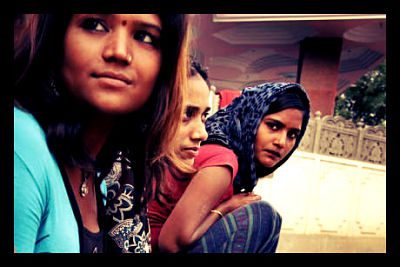
1. Oxfam America works on a global level to reduce poverty, hunger and injustice.

Oxfam America operates on the belief that poverty is wrong. They work on long-term solutions that address the underlying causes of poverty, and campaign for social change. Current Oxfam America projects include GROW, a movement that aims to build a better and more sustainable food system, and Aid Reform, which works to increase the U.S. government’s commitment to poverty-reducing foreign aid.

2. They are trustworthy.

Oxfam America is highly rated by several independent charity evaluators. The American Institute of Philanthropy and Charity Navigator have both given the organization high ratings.

3. They partner with local and national organizations.

Oxfam America aims to help local partners become self-sufficient by building alliances, networks and effective organizations. They create reciprocal relationships, learn about solutions to poverty from their partners, and providing them with funding and collaboration opportunities. Oxfam America works with their partners to provide communities with finance options, disaster and conflict relief, food security, and safe water sources, among many other things. Along with 17 other organizations, Oxfam America is united in the global effort to fight poverty; they work with 3,000 local partners in more than 90 countries and invest more than $1.1 billion annually to poverty-related causes.

4. They act on the belief that fighting poverty is about fighting injustice.

Oxfam America holds the strong belief that poverty usually arises from the violation of people’s basic rights. Acting on this belief, Oxfam America promotes the idea that knowledge is power. By educating individuals on their basic human rights, the organization helps create communities that keep their governments and government officials in check. Accountable governments change the systems that keep people trapped in poverty.

5. The projects they fund are community-driven.

By using solutions that are unique to the location and context of the problem, Oxfam America is developing the most sustainable and appropriate methods to combat global poverty.

6. Poverty puts people in harm’s way.

Oxfam America believes that poverty leaves people and communities in vulnerable conditions. They believe that poverty forces people to live in dangerous areas or build unstable houses in areas prone to natural disasters. Oxfam reports that the impacts of climate change will result in unprecedented pressure on global food prices, which will be a huge burden on the world’s poorest people who already have to spend up to 75% of their income on food.

7. They believe that laws, policies, and institutions have an enormous impact on poverty.

Much like the Borgen Project, Oxfam America works with decision-makers to encourage them to respect the views of the poor communities and to implement foreign aid programs that will be most effective in reducing poverty. By opening dialogues with the people who are directly affected by poverty, Oxfam America is giving a voice to those who need one the most.

8. Everyone can join in with Oxfam’s effort to fight against poverty and injustice.

Oxfam America believes that everyone has a part to play in the fight against poverty; by encouraging individuals to work together, the organization aims to raise awareness and inspire action on the world’s most urgent issues.

– Chloe Isacke

Sources: Oxfam America, The Guardian
Photo: Flickr

June 29, 2013
https://borgenproject.org/wp-content/uploads/borgen-project-logo.svg 0 0 Borgen Project https://borgenproject.org/wp-content/uploads/borgen-project-logo.svg Borgen Project2013-06-29 05:00:082020-08-21 11:41:2610 Things You Should Know About Oxfam America
Nonprofit Organizations and NGOs

It Takes Two: Why Family Planning is Imperative for Gender Equality

It_takes_twoGlobal Citizen has recently launched a new initiative called It Takes Two – its goal is to spread awareness of the necessity of contraceptives and family planning for millions of women around the world that currently have no access to these programs. In developing countries, complications from pregnancy and childbirth are some of the leading causes of death for women. Early and frequent pregnancies also prevent women from advancing their opportunities for education and economic self-sufficiency.


At the London Family Planning Summit in July 2012, NGOs and donors came together to pledge money to halve the number of women without access to modern family planning by 2020. According to Global Citizen, however, “without proving there is demand for increased access to family planning services and information, there is a high risk these pledges won’t be honored”. If funded as promised, these pledges would provide around 120 million women with the information and services they need to plan their own lives. Further benefits could be seen in a dramatically reduced number of unintended pregnancies, as well as a reduced number of maternal and newborn deaths caused by complications with pregnancy and childbirth.

With these modern family planning services accessible to more women in the developing world, more women will have more time available to them. This means that less time will be spent with unwanted pregnancies and raising children, and more girls and women will be able to gain an education as well as enter the workforce and increase productivity as well as economic stability. Access to contraception and information about family planning is imperative for gender equality. It Takes Two encourages support for improved family planning from both men and women around the world in order to make gender inequalities a thing of the past. The first step the initiative has taken to gauge support from the public is to circulate a petition calling for government and organizations to make access to family planning a priority in developing nations.

In order to achieve equality, It Takes Two wants to fight not only for contraceptive provision, but also for the eradication of early and forced marriage, to keep girls in school, and to end gender-based violence. Matti Navellou, the campaign manager for It Takes Two, encourages the use of social media and the Internet to spread information and support for the project saying “It’s time to unlock the potential of technology for social good.”

The site also gives the opportunity to design and share personalized condoms, and the top ten designers will receive a few condoms of their own designs for free. The act of designing a condom wrapper itself also enters the creator into a drawing for a chance to win tickets to a concert from over 70 artists. Design and share for your chance to win, but more importantly for the chance for millions of women to receive the care they need to do greater things in life, and for a step closer to gender equality.

– Sarah Rybak
Sources: Take Part, Global Citizen
Photo: Take Part

June 29, 2013
https://borgenproject.org/wp-content/uploads/borgen-project-logo.svg 0 0 Borgen Project https://borgenproject.org/wp-content/uploads/borgen-project-logo.svg Borgen Project2013-06-29 04:00:462024-05-24 23:59:07It Takes Two: Why Family Planning is Imperative for Gender Equality
Health, Human Rights, Nonprofit Organizations and NGOs, Refugees and Displaced Persons

What is Handicap International?

handicap_opt
Handicap International is an “independent and impartial organization working in situations of poverty and exclusion, conflict and disaster.” Founded in 1982 to help 6,000 Cambodian amputees living in refugee camps along the Thai border, it evolved from being mainly focused towards improving the living conditions of the disabled to implementing prevention programs through “weapons and landmine clearance, risk education activities, stockpile management, and advocacy to ban landmines and cluster bombs.” This comprehensive approach comprises a series of preventive and effective actions to ensure that disabled people all over the world enjoy basic human rights and respect.

One billion people across the globe -15 percent of the world’s population- live with a disability. Today, the issue of access for the disabled is sorely under-treated in developing countries, and there are still many places with no facilities for the disabled at all. The story of Hodan, suffering from multiple disabilities including hearing, physical and intellectual impairments, is a heartbreaking illustration of this problem.

Hodan had to stay home all day long and had no friends because her school made no adjustments for disabled children. It was not until she turned 17 that she was finally able to go to school as a first grader because Handicap International set up a series of training programs to compensate for the lack of accessibility. Unfortunately, her story is just one among many. In Ethiopia alone, of the 4.8 million children living with disabilities, only 3 percent go to school according to Handicap International.

In 2011, Handicap International helped 768,050 disabled people through Health and Prevention; 424,600 through the management and distribution of aid; 332,320 through demining campaigns and 118,550 people through rehabilitation. In the past, Handicap International has intervened in crisis situations such as the Balkan wars (1993), the Rwanda Genocide (1994), the Sierra Leone civil war (1996) and the 2001 earthquake in India, to name a few examples. In total, Handicap International has operated in more than 60 countries, providing equipment and training to better the conditions of the forgotten and the ostracized.

Today, Handicap International centers its actions around the Syrian refugee crisis and condemns international inaction in the face of the atrocities committed. Thanks to its prevention and training programs, Handicap International will have helped almost 37,000 Syrians by June 2013 while teaching 9,000 others how to spot and avoid weapons and explosive war remnants.

It also launched an International Campaign to Ban Landmines which has saved thousands of lives and for which it was awarded the Nobel Peace Prize after the 1997 Mine Ban treaty was passed. It is now actively fighting to make this treaty a reality across the globe.

– Lauren Yeh

Sources: Handicap International, ICBL
Photo: Monsoon Adventure

June 28, 2013
https://borgenproject.org/wp-content/uploads/borgen-project-logo.svg 0 0 Borgen Project https://borgenproject.org/wp-content/uploads/borgen-project-logo.svg Borgen Project2013-06-28 14:32:522024-05-24 23:52:03What is Handicap International?
Nonprofit Organizations and NGOs

The Sherwood Foundation 101

The Sherwood Foundation 101
The Sherwood Foundation is a nonprofit organization that invests in organizations and initiatives dedicated to making an impact in Nebraskan local communities. To assist in this process, The Sherwood foundation provides grants for applicable organizations and initiatives.

The Sherwood Foundation’s vision statement is created around ideals of social justice and proactive reinforcement. It believes that social justice can only be achieved through the “establishment and maintenance of policies, practices, attitudes and actions that provide equitable power, access, opportunities, treatment, impact, and outcomes for all”.

Limiting assistance to non-profit organizations predominantly serving Nebraska, the Sherwood Foundation only funds tax-exempt organizations (under section 501(c)(3)), government entities, schools and churches of Nebraska.

The Sherwood Foundation limits grants to organizations addressing one of their focus- categories. Four categories constitute the foundation involvement: Urban Community Partnerships, Omaha Public Schools, Rural Community Partnerships, and Early Childhood Education.  If an organization addresses one of the four categories and is in good standing with the Internal Revenue Service, they are applicable to apply for a Sherman Foundation grant.

Displayed on their website, The Sherwood Project gladly supports programs and practices that bridge the opportunity gap for families and promote student success, promote resources to education, health and societal contribution and encourage sustainable systems.

Some examples of programs funded by the Sherwood Project are discussed in a Youth Transition Funder Group (YTFG) interview with Sherwood Foundation’s Jerry Bexten.

According to Bexten, the foundation has organized many education and poverty programs. Bexten’s work with the organization is targeted towards 5-12 education and funded by early childhood education programs of the Buffet Early Childhood Fund. Represented through their education grants, the Sherwood Foundation supports the development of education and “strengthens focus on science maths and literacy”, Bexten tells TYFG.

In addition to their investment in early childhood education programs, this last school year, the foundation directed aid to school drop-outs and at-risk-youth. Opening a re-engagement center (the D2 (Directions and Diploma) Center), the foundation provided personalized education assistance and graduate programs for individuals aged 16 to 20.

Similarly, the Sherwood Foundation held a Multiple Pathways to Graduation summit last November. Bexten states that during this conference, through determining the locality of educational gaps, stakeholders assessed the development of future programs.

Sources: YTFG, Sherwood Foundation
Sources: Sherwood Foundation

June 27, 2013
https://borgenproject.org/wp-content/uploads/borgen-project-logo.svg 0 0 Borgen Project https://borgenproject.org/wp-content/uploads/borgen-project-logo.svg Borgen Project2013-06-27 07:06:222024-06-10 02:22:32The Sherwood Foundation 101
Advocacy, Development, Nonprofit Organizations and NGOs

Harvard Grads Rewarded for Taking Nonprofit Jobs

Harvard Grads Rewarded for Taking Nonprofit Jobs
This week, as some of the best and brightest students in the country graduated from Harvard, a select few received an additional bonus: $50,000 to use their degree to make the world a better place.

The 19 graduates who received the bonus have been part of the Harvard Business Leadership Fellow Program, which sets students up with one-year fellowships in nonprofit and public-sector organizations. Harvard subsidizes the fellowships, with each student receiving $50,000 in addition to the $45,000 paid by the organizations.

Since its inception in 2001, 106 students have been recipients of the grant and, after successful completion of the one-year programs, 90% of the students have been asked to stay on. According to the university, one-third of these students still work at the organization that hired them, and one-third have moved to a different job within the same sector.

This year, graduates will work at a variety of organizations including Oxfam America and Endeavor Global, a non-profit that helps emerging countries through its High-Impact Entrepreneurs program.

Since 1993, the Harvard Business School Social Enterprise Initiative has worked with students to create sustainable, high-impact social change. Thanks to Harvard Business School, these graduates will have the financial stability to work in the nonprofit industry, a sector that on average pays 30% less than for-profit organizations. “This program is a great opportunity for our graduating students to work in the nonprofit and public sectors,” said Harvard Business School professor Allen Grossman. “The program continues to grow as our students continue to give overwhelmingly positive feedback about working with partner organizations.”

– Chloe Isacke

Source: Impact,Harvard Business School
Photo: Bloomberg

June 22, 2013
https://borgenproject.org/wp-content/uploads/borgen-project-logo.svg 0 0 Borgen Project https://borgenproject.org/wp-content/uploads/borgen-project-logo.svg Borgen Project2013-06-22 05:48:312020-07-03 00:40:26Harvard Grads Rewarded for Taking Nonprofit Jobs
Nonprofit Organizations and NGOs

Global Communities Are Partners For Good

Global Communities Are Partners For Good
Global Communities is an international non-profit that works to bring about sustainable changes to the lives of vulnerable people. They work with community members to determine the needs to the community. They utilize a multi-faceted approach by mobilizing the communities, governments, the private sector and NGOs to work together. They bring together complementary strengths and shared responsibilities of given organizations to work toward a common goal.

Global Communities was previously named CHF International. Founded in 1952, they currently work in 20 countries in Africa, Asia, Europe & the Caucasus, Latin America & the Caribbean and the Middle East. Their mission is “to be a catalyst for long-lasting positive change in low- and moderate-income communities around the world helping them to improve their social, economic, and environmental conditions.” They strive to be genuine, committed, connected and purposeful in every project they pursue.

Their funding comes from governments, foundations, local groups and the private sector in order to maximize impact and effectiveness. They try to create self-sustaining organizations that can withstand crises and work well and efficiently on their own.

Global Communities implements innovative housing techniques to help the most vulnerable of populations. They work to make living conditions more stable and desirable in the developing world. One such population is the Nairobi community in Kenya. The slums there feature some of the most-at-risk populations in Kenya with high unemployment, cramped living spaces, and marginalization from mainstream society. There are also ethnic, religious, and political tensions present.

Global Communities’ project in Nairobi is funded through USAID and is called the Kenya Tuna Uwezo program. This program aims to reduce politically motivated conflict in the area. Global Communities is strengthening social networks of community members and civil society groups. They are working with PeaceNet and Kituo Cha Sheria, partner organizations, to engage young people with the goal of reducing resistance within and between identity groups. They are also fostering communication between ethnic lines while also ensuring technical and organizational capacity of partners to ensure the program can be sustained.

Global Communities has projects all over the world focusing on a range of topics including economic development, micro, SME and Housing Finance, infrastructure and construction, governance and urban development, civil society and municipal development, global health, and emergency response. Global Communities is an important ally in providing development assistance to countries in need, and one that can provide an important link between USAID funding and actual on the ground development and progress.

– Caitlin Zusy 
Source: Global Communities

June 7, 2013
https://borgenproject.org/wp-content/uploads/borgen-project-logo.svg 0 0 Borgen Project https://borgenproject.org/wp-content/uploads/borgen-project-logo.svg Borgen Project2013-06-07 04:00:422020-06-27 03:18:46Global Communities Are Partners For Good
Nonprofit Organizations and NGOs

The Akaa Project: Grassroots Done Right

the-akaa-project
The Akaa Project was started by then college student Lauren Grimanis in 2008. She took the idea of affecting change in rural Africa and created a campus-wide movement. The movement then spread to a full-fledged and funded non-profit organization.

The Project works within the Akaa region of eastern Ghana, working directly with poverty-stricken families in Ghana to alleviate poverty and promote self-reliance. The Project team works to improve the health, education and financial well-being of the village families. Their on-the-ground efforts create concrete change in the community’s day-to-day life.

Major projects have included building a school, enabling access to healthcare, and enhancing the community’s access to finance through micro-loans and small business initiatives. The Akaa Project involves the community in all decisions, projects, and initiatives, and works to ensure the community is involved and empowered through the organization.

Akaa’s founder Lauren Grimanis graduated from The College of Wooster in 2012. She majored in Global Development and Management. She was able to travel to South Asia to learn from social entrepreneurs and NGOs to best understand the most practical practices for rural development.

During her time at Wooster, Lauren and a group of dedicated students developed a strategy to engage the small liberal arts community at the college. They sold handmade village jewelry in the bookstore, organized dodge ball tournaments and dances, and made customized sunglasses to help fundraise. Several College of Wooster students were also able to travel to Ghana to volunteer in the community. They were able to not only spread the word about their organization throughout the college, but also spread knowledge of global poverty and development needs in Ghana and the developing world as a whole.

Lauren’s efforts translated into a school with six classrooms, six teachers, and an educational advisor. Seventy-five children are able to attend on a daily basis. The organization has plans for future expansion. Lauren was also able to install two borehole water wells, placing women at the center of the decision making process. Additionally, the Akaa Project sponsors child and infant nutrition awareness clinics, sexual health education, and condom distribution, among other services. The Akaa Project has also been able to provide eleven micro-loans to women in Akaa, helping to empower women in the community.

For an organization of their size, the Akaa Project is taking substantial leaps forward in providing real development to a marginalized and vulnerable community. They are looking to expand their future operations to bordering communities to help as many people as they can.

– Caitlin Zusy 
Source: The Akaa Project

June 6, 2013
https://borgenproject.org/wp-content/uploads/borgen-project-logo.svg 0 0 Borgen Project https://borgenproject.org/wp-content/uploads/borgen-project-logo.svg Borgen Project2013-06-06 05:00:372020-06-27 03:21:43The Akaa Project: Grassroots Done Right
Education, Nonprofit Organizations and NGOs

Room to Read: Helping Educate Children

Room-to-Read
Room to Read is a non-profit organization started by John J. Wood in 1999. He got the idea for the organization when he visited a school in Nepal one year during a vacation. There were 450 students at the school, yet there were no children’s books. The library only a had a few books that were inaccessible to the students. The following year, Wood quit his job at Microsoft and returned to Nepal with 3,000 books to build a functioning library for the children. This was how Room to Read began.

Wood believes that simply coming into a country, building a library or school, and then leaving does not completely fix the problem. Instead, he says that prolonged community involvement is key. Finding local librarians and teachers to encourage students to read and learn will create a ripple effect. It creates jobs for native citizens and gives kids an education. Everyone is more invested in the outcome that way because they are actively involved in the solution, and results will last longer than if they simply received a gift from someone in a foreign country.

He also encourages more affluent students and families to participate in raising money for Room to Read through ‘sponsored silence’ programs and Read-a-thons. So far, Room to Read is established in 10 countries and will have helped 10 million kids by 2015. Other accomplishments include building 15,000 libraries and 1,600 schools, publishing 850 original children’s books, and enrolling 20,000 girls in a special girl’s education program.

– Katie Brockman
Source New York Times
Photo: Room to Read

May 6, 2013
https://borgenproject.org/wp-content/uploads/borgen-project-logo.svg 0 0 Borgen Project https://borgenproject.org/wp-content/uploads/borgen-project-logo.svg Borgen Project2013-05-06 10:00:182020-05-26 08:29:51Room to Read: Helping Educate Children
Activism, Nonprofit Organizations and NGOs

3 Ways That Slacktivism Promotes Social Change

3 Ways That Slacktivism Promotes Social Change
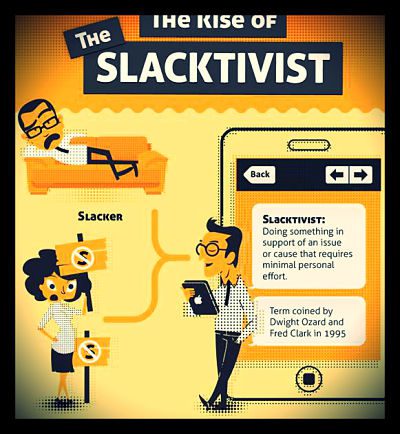
The cynicism implied in the word slacktivism, which describes a lazy form of activism requiring little commitment of the participant and having almost no effect on policy and social issues, has been pushed to the forefront of public discourse lately. A recent phenomenon, this social-media led, tech-savy means of expressing one’s support for causes such as gay rights or ending modern slavery has been felt through the relatively safe confines of Facebook, Twitter, and university assembly quads. But does the slacktivist form of activism work better than the more traditional methods involving protests, writing congressional leaders, and fundraising? Yes and no, as the following describes three ways that slacktivism promotes social change.

1. It raises awareness – One of the more obvious ways that slacktivism promotes social change is through its exposure to social issues to huge audiences that were once limited by geographic location and means of communication. For those Facebook and Twitter users that have vast amounts of friends and followers, the switching of one’s profile picture to a red equal sign, for example, will no doubt generate questions by others who are curious as to why so many of their friends are changing their profiles on a given day. Through the vehicle of social media, a single individual is able to reach huge numbers of people with simply the click of a mouse and can raise awareness of a social issue almost instantaneously.

2. It allows everyone to participate – Unlike the traditional forms of activism that require a certain amount of interpersonal skills and economic commitments, slacktivism promotes social change by allowing everyone to participate in the movement. The current economic situation non-withstanding; most university students eager to participate have – at best – meager financial resources available to help fund an organization. By limiting the barriers of entry and participation in causes committed to social change, everyone who simply marks their hand with a red x feels that they are helping to fight slavery worldwide.

3. It leads to high-risk activism – Street protests, donor fundraising, and political volunteerism referred to as “high-risk” forms of activism are still instrumental tools of effecting social change. However, for those individuals who have had little to no experience in the traditional forms of activism, slacktivism helps people take the first steps towards larger civic engagement and global awareness. Individuals changing their profile picture on Facebook today may be serving as a board member for multi-national non-profits tomorrow, as slacktivism promotes social change in its ability to allow everyone to get their feet wet as a social media activist. And by combining the huge influence of social media along with good old fashioned congressional letter writing and fundraising, The Borgen Project has positioned itself to utilize the best of both worlds.

– Brian Turner

Source: CNN
Photo: Trendhunter

April 26, 2013
https://borgenproject.org/wp-content/uploads/borgen-project-logo.svg 0 0 Borgen Project https://borgenproject.org/wp-content/uploads/borgen-project-logo.svg Borgen Project2013-04-26 09:03:252020-06-16 01:43:023 Ways That Slacktivism Promotes Social Change
Aid Effectiveness & Reform, Developing Countries, Extreme Poverty, Global Poverty, Nonprofit Organizations and NGOs, Poverty Reduction

$500 Million ‘Rescue Mission’ Initiative Launched

$500 Million 'Rescue Mission' Initiative LaunchedWith cuts to foreign aid looming and some already in place, humanitarian organizations are going to become even more important in the fight against global poverty. Evangelical organization World Vision launched a $500 million ‘Rescue Mission’ initiative to help 10 million children living in poverty.  The ‘Rescue Mission’ initiative will focus on clean water, access to health care, and child protection.

Under the budget cuts that went into effect as of January 1, 2013, non-profits are predicting that there will be 1.1 million fewer mosquito nets distributed, 300,000 fewer people with access to clean water, and 2 million people with reduced or zero access to food aid.  This is cause for serious concern as we look at being less than 1,000 from the end date for the Millenium Development Goals (MDG).

World Vision launched the $500 million ‘rescue mission’ dubbed “For Every Child” which seeks to raise $500 million by 2015.  It is the farthest-reaching endeavor World Vision has ever taken on.  The initiative will focus on clean water, fighting communicable diseases, providing small loans to families, and protecting children from human trafficking.

When the government cuts budgets, it can be difficult for non-profit organizations to get the start-up capital they need to start new ventures. This campaign is important to continue the life-saving work World Vision is already doing around the world.  It will hopefully fill the gap from government funds and continue to promote the MDGs as we near the final stretch.  We have halved poverty in the last decade and it is very possible to continue the downward trend, but it is going to take a lot of hard work.

While the needs are great and the costs seem high, the alternative to pushing forward is not an option. As Richard Sterns, Executive Director of World Vision put it, “We’ve taken a hard look at the needs that exist today. They are great, but we refuse to believe that poverty is too big, too expensive, or too difficult to overcome-because for the millions of children living in poverty, the stakes couldn’t be higher.”

– Amanda Kloeppel

Source: Christian Post

April 24, 2013
https://borgenproject.org/wp-content/uploads/borgen-project-logo.svg 0 0 Borgen Project https://borgenproject.org/wp-content/uploads/borgen-project-logo.svg Borgen Project2013-04-24 09:00:522020-06-12 23:12:22$500 Million ‘Rescue Mission’ Initiative Launched
Page 59 of 60«‹57585960›

Get Smarter

  • Global Poverty 101
  • Global Poverty… The Good News
  • Global Poverty & U.S. Jobs
  • Global Poverty and National Security
  • Innovative Solutions to Poverty
  • Global Poverty & Aid FAQ’s
Search Search

Take Action

  • Call Congress
  • Email Congress
  • Donate
  • 30 Ways to Help
  • Volunteer Ops
  • Internships
  • Courses & Certificates
  • The Podcast
Borgen Project

“The Borgen Project is an incredible nonprofit organization that is addressing poverty and hunger and working towards ending them.”

-The Huffington Post

Inside The Borgen Project

  • Contact
  • About
  • Financials
  • President
  • Board of Directors
  • Board of Advisors

International Links

  • UK Email Parliament
  • UK Donate
  • Canada Email Parliament

Get Smarter

  • Global Poverty 101
  • Global Poverty… The Good News
  • Global Poverty & U.S. Jobs
  • Global Poverty and National Security
  • Innovative Solutions to Poverty
  • Global Poverty & Aid FAQ’s

Ways to Help

  • Call Congress
  • Email Congress
  • Donate
  • 30 Ways to Help
  • Volunteer Ops
  • Internships
  • Courses & Certificates
  • The Podcast
Scroll to top Scroll to top Scroll to top