• Link to X
  • Link to Facebook
  • Link to Instagram
  • Link to TikTok
  • Link to Youtube
  • About
    • About Us
      • President
      • Board of Directors
      • Board of Advisors
      • Financials
      • Our Methodology
      • Success Tracker
      • Contact
  • Act Now
    • 30 Ways to Help
      • Email Congress
      • Call Congress
      • Volunteer
      • Courses & Certificates
      • Be a Donor
    • Internships
      • In-Office Internships
      • Remote Internships
    • Legislation
      • Politics 101
  • The Blog
  • The Podcast
  • Magazine
  • Donate
  • Click to open the search input field Click to open the search input field Search
  • Menu Menu

Archive for category: Nonprofit Organizations and NGOs

Information and stories about nonprofit organizations and NGOs

Nonprofit Organizations and NGOs, Women and Female Empowerment

What is Dining for Women?

Dining_for_Women
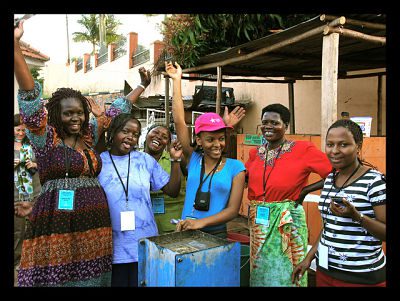
That is what Dining for Women is an organization that hopes to end poverty and empower the women of the world simply by getting together once a month in each other’s homes. It is just as easy as baking a pie, literally.

In 2002 Marsha Wallace, a former nurse from Greenville, SC, saw an episode of Oprah where an Iraqi woman was interviewed about her experience as the daughter of Saddam Hussein’s personal pilot. The woman, Zainab Salbi, went on to start the Women for Women International organization with the goal of helping women on a global scale.

Marsha knew that she wanted to help women, but was not sure how she would go about doing this. The idea came to her suddenly after reading an article about hosting a potluck birthday dinner to raise money for charity. She said in an interview with Philanthropy journal, “I was meditating one day when the idea hit me like a thunderbolt. I had a birthday coming up and I decided to give this a try to raise money for Women to Women.”

The potluck dinner was a huge success and her friends wanted to continue the practice of getting together and helping people. After formally making Dining for Women in a 501(c)3, a non-profit organization, Marsha was ready to roll with her idea. There are now over 400 chapters throughout the world, including Canada, the United Kingdom and Germany as well as over 9,000 current active members. Once a month women from all walks of life in all parts of the globe get together with their chapter and bring fresh food to share with the group. The money they save from dining in as opposed to going out that night is then collected and sent to various good will groups who focus on the well-being and empowerment of women.

In the last 10 years DFW has raised an astounding $2.6 million for their supported causes and has helped to lift numerous women and their families out of the grip of poverty. With their donations Dining for Women has supported the launch of 60 female-led businesses, boosting the incomes and livelihoods of 300 women and about 1,500 children in Kenya, and sent 75 women in India to school for a literacy education with books and supplies. And that is just the beginning of it. Every year since 2007 members of the organization have taken part in trips to various places around the world to meet with the groups they have helped fund and see the impact they made in person.

What started out as a simple birthday dinner gathering has turned into a multi-national campaign to empower, educate, assist, and change women. Now women are flocking to join the organization and Marsha Wallace was even included in Women for Women International’s cookbook. Their mission is to provide women around the world with better lives by funding programs that promote health, education, and economic self-sufficiency for women and girls living in extreme poverty.

– Chelsea Evans 

Sources: Dining for Women, Philanthropy Journal
Photo: Dining for Women

July 30, 2013
https://borgenproject.org/wp-content/uploads/borgen-project-logo.svg 0 0 Borgen Project https://borgenproject.org/wp-content/uploads/borgen-project-logo.svg Borgen Project2013-07-30 06:33:502024-05-25 00:09:26What is Dining for Women?
Advocacy, Food & Hunger, Nonprofit Organizations and NGOs

Fighting Hunger With Hunger: The Fast-a-Thon

fighting_hunger
Hundreds of organizations around the world work to raise awareness of world hunger. “Nearly 870 million people, or one in eight people in the world, were suffering from chronic undernourishment in 2010-2012.” Statistics such as this, along with photographs and true stories of the world’s hungry have found their way to people who can help. But what these figures and images cannot do to a person is allow them to know what hunger really is—to move one beyond sympathy and allow them to possess real comprehension of what hunger feels like. This is the premise upon which the “Fast-a-Thon” was laid.

For years, college campuses across the U.S. and Canada have held annual “Fast-a-Thons” in an effort to fight hunger, both locally and internationally. The idea was coined by the Muslim Students Association (MSA) at University of Tennessee, Knoxville, and has since been taken on by hundreds of college campuses, charity organizations, and businesses across continental America.

Here’s how it works: a group of students, community members, co-workers, etc. pledge to fast for a day (some for 24 hours, some from morning to evening). For each pledge, a business sponsor donates a certain amount of money to a charity of the group’s choosing. At the end of the day, Fast-a-Thon participants come together to share a meal to break their fast. In solidarity with those in hunger and in support of alleviating their pain, Fast-a-Thon participants have raised hundreds to thousands of dollars to feed the hungry.

Interested in hosting a Fast-a-Thon in your community? Follow this easy step-by-step guide:

1. Find the beneficiary to whom all donations will go towards. This could be a local soup kitchen or an umbrella organization fighting hunger.

2. Find businesses that will sponsor your Fast-a-Thon or, in other words, agree to donate a certain amount of money to your chosen beneficiary for every Fast-a-Thon pledge made.

3. Spread the word and encourage everyone to pledge and participate!

4. Host a dinner where participants can break their fasts together.

– Lina Saud

Sources: World Hunger, MSA Texas
Photo: Stephen Leahy

July 29, 2013
https://borgenproject.org/wp-content/uploads/borgen-project-logo.svg 0 0 Borgen Project https://borgenproject.org/wp-content/uploads/borgen-project-logo.svg Borgen Project2013-07-29 04:38:472017-03-20 13:03:37Fighting Hunger With Hunger: The Fast-a-Thon
Developing Countries, Development, Nonprofit Organizations and NGOs

Helping Hand for Relief and Development

Helping_Hand_Relief_Development
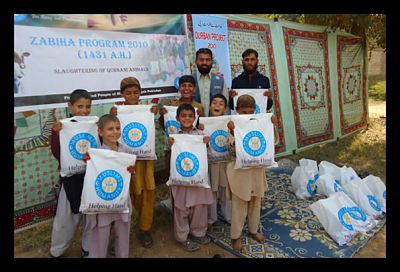
There are few organizations with as many different programs dedicated to helping impoverished people around the world as Helping Hand for Relief and Development (HHRD). Although this group is relatively young (founded in 2005), its staff and volunteers have wasted no time making a huge impact on the world. This Islamic organization sticks to its vision of “strengthening the bond of humanity” by providing humanitarian relief and development assistance to all types of people, no matter their ethnicity or background.

One of the ways HHRD provides aid is through its program “Islamic Interest Free Microfinance,” a microenterprise development concept, which is an interest-free loan that helps alleviate poverty. Someone participating in this program could use it to purchase something like seeds or fertilizer.

Other ways HHRD provides sustainable growth in poverty-ridden communities is through programs like Orphan Support Program (sponsor a child for $1 a day), Education Support (student scholarships), Health Care, Infrastructure Development (rebuilding homes and schools), Physical Rehabilitation (provides new limbs for those hurt in disasters), Skill Development (focuses on empowering women), Youth Empowerment (internships) and Public Advocacy and Social Justice (raising awareness of global issues, like climate change and social injustices).

Water for Life and Emergency Appeals are two other important programs the Helping Hand for Relief and Development organizations provides. Water sanitation is a major issue for many people in developing countries. HHRD sets up wells, hand pumps and devices for filtering water so that people can finally have access to clean drinking water. The Emergency Appeals program works is also vital for those in the third world who do not have access to basic medicines, food, mosquito nets, tools for rebuilding shelters or even clothes. This program provides these necessities and more for those living in disaster areas.

Different areas of the world have different needs and Helping Hand for Relief and Development has a program for each of these issues. By focuses on a wide range of problems, HHRD is able to reach out and help more and more impoverished people.

– Mary Penn

Sources: Helping Hand Relief and Development Charity Navigator Rating
Photo: Blogspot

July 29, 2013
https://borgenproject.org/wp-content/uploads/borgen-project-logo.svg 0 0 Borgen Project https://borgenproject.org/wp-content/uploads/borgen-project-logo.svg Borgen Project2013-07-29 04:28:212014-03-24 12:40:07Helping Hand for Relief and Development
Health, Human Rights, Nonprofit Organizations and NGOs

3 Incredible Accomplishments of the Carter Center

Jimmy and Rosalynn Carter in Ambassador's Circle
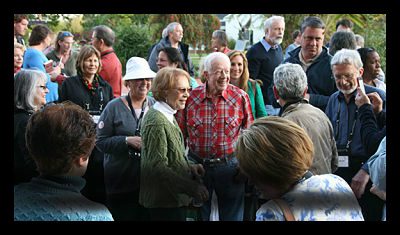
“We can choose to alleviate suffering. We can choose to work together for peace. We can make these changes—and we must.” These words of our remarkable former President Jimmy Carter form the foundation of a center striving for a better world. In 1982, former President Carter and wife, Rosalynn founded a non-profit organization “committed to advancing human rights” named, “The Carter Center.” In partnership with Emory University, the Atlanta-based organization has made great strides in improving the human condition worldwide. Here are three noteworthy initiatives of the Carter Center:

  1. In promoting global health, the Carter Center led a coalition poised to bring an end to Guinea Worm Disease. Also known as dracunculiasis, this disease was found in 3.5 million people in 1986. In that year, the Carter Center came to the fore and led a campaign to prevent this preventable infection in countries throughout Africa. In the years that followed, the Carter Center has been able to drastically reduce the prevalence of the disease through water filtration programs, water treatment programs, and programs educating the public about dracunculiasis. Today, Guinea Worm Disease is on the brink of eradication, with only 542 reported cases in 2012.
  2. In promoting democracy, the Carter Center has played an extensive role in overseeing elections in countries globally. Since its founding, the center has monitored over 90 elections in some 37 countries. In each election, the center plays a role in evaluating a given country’s electoral laws, overseeing voter registration, and assessing the fairness of campaigns. In 2005, the center became involved in drafting a document outlining the standards for election observers in countries around the world. Known as the Declaration of Principles for International Observation, this document has been embraced by organizations internationally
  3. Among the Carter Center’s most innovative programs is its Conflict Resolution Program. The center aims to improve dialogue and negotiations as a means of producing real solutions tailored to each given nation. In Liberia, for example, a country that endured lawlessness for years, the center is working to “reestablish the rule of law.” The center spearheaded a campaign promoting and strengthening legal institutions in the country, as well as creating constructive partnerships between citizens and their government.

Learn more at https://www.cartercenter.org/index.html.

– Lina Saud

Sources: Carter Center, CDC

July 27, 2013
https://borgenproject.org/wp-content/uploads/borgen-project-logo.svg 0 0 Borgen Project https://borgenproject.org/wp-content/uploads/borgen-project-logo.svg Borgen Project2013-07-27 10:06:512024-05-25 00:13:043 Incredible Accomplishments of the Carter Center
Health, Nonprofit Organizations and NGOs

What is Rotary International?

african_farmer_farming_infrastructure_world_hunger_global_poverty_usaid_international-aid_opt (1)
With more than 34,000 clubs and 1.2 million members in over 200 countries, Rotary International is one of the largest service organizations in the world. Rotary International assembles business and professional leaders to build peace and goodwill. Members of local Rotary clubs, called Rotarians, engage in service both at home and abroad to alleviate poverty and promote health and education.

Having the primary motto of “Service above Self,” Rotary has been successful in transmitting its humanitarian fervor to young people. Rotary’s service club for young people ages 12 to 18, called Interact, is one of the fastest growing philanthropic programs in the world. It currently has over 300,000 teens involved. Similarly, Rotaract is the subset of Rotary International that caters to college-age people ages 18 to 30. Rotaract clubs boast a membership of over 200,000.

An important facet of Rotary, Interact, and Rotaract clubs is that despite being affiliated with Rotary International, the individual chartered clubs are self-governing – free to engage in service projects in their own communities as well as serve international initiatives. This leads to clubs becoming strong grassroots vehicles for the promotion of service.

There have been many noteworthy Rotarians throughout history, ranging from politicians like former president Warren G. Harding to accomplished entrepreneurs like Sam Walton, founder of Walmart.

One of Rotary’s flagship missions has been to eradicate polio, a goal this organization has been working on for over 25 years. The Gates Foundation has helped, providing Rotary with hundreds of millions of dollars over many years to assist in the eradication of polio. Most recently, in 2013, Rotary International and the Gates Foundation began a joint effort called “End Polio Now – Make History Today,” determined to prevent polio from making a resurgence. This endeavor has been successful, with the annual polio diagnosis rate being reduced by over 99%.

In addition to fighting polio, the Rotary Foundation has been instrumental in effecting change in world communities by establishing many innovative initiatives designed to create a healthier and more educated world. For example, Rotary clubs worldwide have taken a firm stance aimed at promoting literacy by creating a Rotary Literacy Month, establishing book donation drives, and holding reading events for schoolchildren.

Rotary has also worked with U.S. federal agencies such as USAID, thus creating a great partnership between an organization with strong grassroots ties and an agency with technical expertise. For example, in 2009, USAID and Rotary joined efforts to bring clean drinking water and sanitation to countries in the developing world.

Rotary International is an organization that seeks to transcend cultural, ethnic, and language boundaries in order to serve humanity, and it is impossible to overstate the impact this organization has had on the world.

– Rahul Shah

Sources:

July 27, 2013
https://borgenproject.org/wp-content/uploads/borgen-project-logo.svg 0 0 Borgen Project https://borgenproject.org/wp-content/uploads/borgen-project-logo.svg Borgen Project2013-07-27 04:30:422015-01-29 11:05:26What is Rotary International?
Nonprofit Organizations and NGOs

Save the Children and Merlin Join Forces

The international NGO, Save the Children, and U.K.-based global health nonprofit Merlin, have joined together to create one organization.

As of July 16, Merlin’s board of trustees stepped down, and Merlin officially became a part of Save the Children, under a new board. Merlin’s CEO Carolyn Miller claimed that the new organization would be a “global humanitarian health force” that would benefit from Merlin’s expertise and Save the Children’s heritage and reach.

The hope, according to Save the Children’s CEO Justin Forsyth, is that the two will become a stronger entity with each other’s help. While the transition is occurring, Merlin will remain a separate legal entity and a transition team has already been put in place to help phase Merlin’s oversees overseas program and head office into Save the Children. The process is expected to be complete in 18 months.

Some are concerned that with the combination, programs will have to be cut in order to focus on the overall goal of the new organization. However, one nonprofit partnered with Save the Children, the Zone One Tondo Organization (ZOTO), which gives aid to children in the Philippines, says it sees promise in the joining of the two organizations. In addition to giving aid to children, ZOTO also focuses on disaster relief, an area that new resources from Merlin will be able to provide help.

While the news of Save the Children and Merlin teaming up has attracted much attention due to the size of the organizations (Save the Children works in 125 countries, and Merlin has over 5,000 employees) this is certainly not the first time NGOs have partnered up in order to make more of an impact. Save the Children’s press release called the new team an effort for a sustainable future in light of the “tough external environment for NGOs.” The economy is picking up after the latest recession, but it is still tough for nonprofits to survive.

NGO’s are also in competition with each other as they start up and grow in popularity. As a result, many of the smaller ones are being engulfed by the larger ones. The larger ones will also subcontract to the smaller ones, leaving them only doing part of their work, rather than directly helping those they’re trying to help.

However, while this has happened in several cases, Oxfam International’s Chief Executive Winnie Byanyima, is hesitant to call NGO mergers a “trend.” According to Byanyima, nonprofits have been coming together for decades in the form of partnerships and NGO coalitions to work together in order to maximize their voice. Most NGOs are looking to do the same basic thing – to help people – and sometimes the best way to do that is to join forces.

– Emma McKay

Sources: Devex, The Guardian, World Crunch

July 26, 2013
https://borgenproject.org/wp-content/uploads/borgen-project-logo.svg 0 0 Borgen Project https://borgenproject.org/wp-content/uploads/borgen-project-logo.svg Borgen Project2013-07-26 06:21:212017-03-20 13:03:38Save the Children and Merlin Join Forces
Health, Nonprofit Organizations and NGOs, Water

What is the Millennium Water Alliance?

Formed in 2003, the Millennium Water Alliance is a collaboration of U.S. based non-governmental organizations working in water and sanitation. The organization is designed to offer sustainable solutions to water access through knowledge, advocacy and collaborative programming. The work of the organization aims to reach the Millennium Development Goal (MDG) of halving the proportion of people without safe access to water and sanitation.

The MWA creates field programs that are a coordinated effort between member NGOs to strategically address water, sanitation and hygiene (WASH) in vulnerable countries. Major programs by the MWA include operations in Africa and Central America. These collaborative programs allow separate NGOs to provide their own distinct strengths and ideas into one mission that is designed for maximum efficiency and long-term effectiveness.

The MWA program in Kenya, for instance, improves WASH to reduce negative impacts that come from the severe droughts and floods in the target areas. It builds the water supply in vulnerable areas of the country using low-cost, resilient technologies like rainwater harvesting facilities and improved simple water storage tanks. The program also focuses on promoting better household water treatment and safe storage techniques.

Until 2009 the MWA was run by member organizations, but the expansion of the organization’s consortium programs led to the hiring of a full time program director. Since then, the MWA’s staff has increased to a total of four full-time employees, two part-time employees, and several consultants in the U.S. and abroad.

Thanks in part to the MWA, the world met the MDG target of halving the proportion of people without access to improved sources of water by 2010, five years ahead of schedule. According to the U.N. MDG website, “between 1990 and 2010 more than two billion people gained access to improved drinking water sources.”

But the global WASH crisis continues to be an issue. Based on UNICEF’s 2013 statistics, 2.5 billion people lack improved sanitation facilities, and 768 million people still use unsafe drinking water sources. Lack of access to WASH leads to decreased productivity due to illness and labor wasted with hours spent carrying water from place to place. The work of the MWA needs to continue for the furthering of global sustainable development.

– Kirsten Harris

Source: Millennium Water Alliance, United Nations, UNICEF

July 24, 2013
https://borgenproject.org/wp-content/uploads/borgen-project-logo.svg 0 0 Borgen Project https://borgenproject.org/wp-content/uploads/borgen-project-logo.svg Borgen Project2013-07-24 10:15:342024-12-13 17:49:30What is the Millennium Water Alliance?
Nonprofit Organizations and NGOs

Presbyterian Disaster Assistance and Hunger Program

Presbyterian Disaster Assistance and Hunger Program
Whenever and wherever there is a tragedy, the Presbyterian Disaster Assistance (PDA) and Hunger Program (PHP) are there to help. These groups are part of the Compassion, Peace and Justice Ministry of the Presbyterian Church and serve all people, regardless of ethnicity, religion or political belief.

The Presbyterian Church remains neutral with its financial backing. The organization does not support its programs with federal funding. Rather, the Disaster Assistance and Hunger Program are funded mainly by a yearly congregation offering the “One Great Hour of Sharing.” Although the PDA and PHP are run by the same organization, they each serve different functions for those in need.

The Presbyterian Disaster Assistance program focuses on bringing emergency and refugee services to communities impacted by catastrophe. If resettlement is deemed necessary, the PDA ensures that these people find homes in the United States. Staff members and volunteers work with the Action by Churches Together (ACT Alliance) and these communities to implement training and preparation strategies for future disasters and assist in-home repairs and other forms of sustainable development.

The other half of this important organization, the Presbyterian Hunger Program, works to distribute healthy and “culturally appropriate” foods to people all over the world who are food insecure. PHP raises awareness about how our everyday actions can have a global impact. According to the Hunger Program, once Americans feel connected with impoverished communities, they will begin to comprehend the causes of hunger and malnutrition.

Although the Presbyterian Disaster Assistance and Hunger Program are part of a religious organization, the group maintains that it will help all types of people. By working with other organizations like United Nations, National Voluntary Agencies Active in Disaster, World Food Program, Red Cross and the Federal Emergency Management Agency to ensure that those affected by catastrophe or hunger are reached.

– Mary Penn
Sources: InterAction, Presbyterian Mission Agency
Photo: Wired

July 24, 2013
https://borgenproject.org/wp-content/uploads/borgen-project-logo.svg 0 0 Borgen Project https://borgenproject.org/wp-content/uploads/borgen-project-logo.svg Borgen Project2013-07-24 07:28:152024-12-13 17:49:31Presbyterian Disaster Assistance and Hunger Program
Activism, Advocacy, Nonprofit Organizations and NGOs, Philanthropy

Top 5 Apps to Satisfy your Philanthropic Urges

1. Charity Miles

Often the biggest obstacles in overcoming the challenge of getting off the couch and going for a run is the question “why now and not later?” We all know the importance of exercise, but the inability to find motivation to work out is what keeps us on that couch. Similarly, we all know the importance of giving and helping those in most need of help. The issue we often face regarding charity is the fact that we are often without extra cash.

Charity Miles has the answer to both of these problems. Founded in April 2012, the folks at Charity Miles developed a charity app where, with each mile you bike, run, or walk, a percentage of a dollar will be donated to the charity of your choice. And the best part is that the app is entirely free.

With a limit of one million dollars, each user can garner 10 cents per mile and walkers and runners will earn 25 cents per mile. With this app, users can get themselves into shape and put food on another person’s table. Charity Miles provides users with more motivated than ever to hit the road and feeling great about about themselves in mind, body, and soul.

2. Donate a Photo

It doesn’t get much easier than this. The developers at Johnson & Johnson have unraveled an excellent app that allows users to fight for the world’s underprivileged. For each original photo donated to Johnson & Johnson (up to one a day), they will donate $1 to a service of your choice. The beauty of the app is that users can donate a photo every single day and raise $365 a year for their cause without any cost to them. So far, Johnson and Johnson have declared 25,730 photos donated.

3. Volunteer Match

Volunteer Match is a free service that allows users to connect with volunteer opportunities both in their area and beyond. Users just need to download the app, decide what area they want volunteer in and hit connect! The service provides users with reviews of different organizations and allows them to build a repertoire to share with friends.

4. One Today

Google has entered the charitable arena with their new One Today app. The idea behind the app is to allow users to “Do a little. Change a lot.” The app allows users to donate $1 at a time to a cause of their choice, whether it be saving cheetahs or providing clean water to a village. This app has no fee for nonprofits so 98.9% of all donations go to their intended cause. For the users, the app tracks each and every dollar donated and provides updates on how that dollar was spent and the impact it causes.

5. TabForACause.org

While this is a website and not an app, the premise is very effective at fundraising. This Google Chrome and Firefox extension signals the nonprofit’s sponsors to donate a fraction of a penny to a charity for each tab a user opens. Through conducting daily business, useres, with no cost to them, can help fund Water.org and provide developing countries with clean drinking water.

– Thomas van der List

Sources: Donate A Photo, Volunteer Match, Android Police, Tab For A Cause, Charity Miles
Photo: The Guardian

July 23, 2013
https://borgenproject.org/wp-content/uploads/borgen-project-logo.svg 0 0 Borgen Project https://borgenproject.org/wp-content/uploads/borgen-project-logo.svg Borgen Project2013-07-23 05:11:262018-01-30 13:13:06Top 5 Apps to Satisfy your Philanthropic Urges
Food & Hunger, Nonprofit Organizations and NGOs

Australian Foodbank Increases Efforts

Australian Foodbank Increases Efforts
Food charities around the world, particularly those in Australia, are struggling to meet the increasing demands of their recipient base.

In supplying 90% of Australia’s food welfare, the organization Foodbank provides welfare recipients with over 25 million kg of food each year. Foodbank general manager Greg Warren claims that his fleet of 20 trucks that supply the equivalent of 32 million meals a year is less than half of what Australia needs to fully address its food security problems.

Food charity organizations formerly relied on collecting leftovers from restaurants and just-expired foods from grocery stores as their main source of supplies. However, these organizations are now finding that the yields from these resources are inadequate for meeting the ever-increasing demand of the world’s poor and homeless.

Nearly 25% of people that collect from welfare agencies around the world are neither homeless nor living in developing countries. Rather, they are newly unemployed people trying to make ends meet, or those accepting pay cuts at work as the cost of living climbs. These people begin struggling to support a family and turn to food charities like Foodbank for help acquiring certain staples like milk and bread on a consistent basis.

Warren insists, however, that Foodbank’s foremost concern is with not sacrificing quality as the group seeks to increase quantity and welfare access points. Warren claims that the utmost goal is for food to be “safe and delivered in a safe manner.”

Foodbank currently accepts supplies from the Australian Red Cross’s Good Start Breakfast Club, Kellogg’s, Arnotts-Campbells, and Kraft, among others. Foodbank has also begun to expand to working directly with farmers and wholesalers for increased access to fresh fruits and vegetables. This initiative corresponds with Warren’s stipulation about maintaining high quality.

According to Warren, it’s all a matter of logistics, in transporting food from areas of surplus to areas of scarcity. Food charities around the world should seek to mimic the Australian Foodbank in their efforts to end chronic hunger across socioeconomic lines through careful planning and practical connections.

– Alexandra Bruschi

Sources: The Daily Telegraph, Foodbank
Photo: American Aid Foundation

July 22, 2013
https://borgenproject.org/wp-content/uploads/borgen-project-logo.svg 0 0 Borgen Project https://borgenproject.org/wp-content/uploads/borgen-project-logo.svg Borgen Project2013-07-22 10:07:122024-12-13 17:49:30Australian Foodbank Increases Efforts
Page 55 of 60«‹5354555657›»

Get Smarter

  • Global Poverty 101
  • Global Poverty… The Good News
  • Global Poverty & U.S. Jobs
  • Global Poverty and National Security
  • Innovative Solutions to Poverty
  • Global Poverty & Aid FAQ’s
Search Search

Take Action

  • Call Congress
  • Email Congress
  • Donate
  • 30 Ways to Help
  • Volunteer Ops
  • Internships
  • Courses & Certificates
  • The Podcast
Borgen Project

“The Borgen Project is an incredible nonprofit organization that is addressing poverty and hunger and working towards ending them.”

-The Huffington Post

Inside The Borgen Project

  • Contact
  • About
  • Financials
  • President
  • Board of Directors
  • Board of Advisors

International Links

  • UK Email Parliament
  • UK Donate
  • Canada Email Parliament

Get Smarter

  • Global Poverty 101
  • Global Poverty… The Good News
  • Global Poverty & U.S. Jobs
  • Global Poverty and National Security
  • Innovative Solutions to Poverty
  • Global Poverty & Aid FAQ’s

Ways to Help

  • Call Congress
  • Email Congress
  • Donate
  • 30 Ways to Help
  • Volunteer Ops
  • Internships
  • Courses & Certificates
  • The Podcast
Scroll to top Scroll to top Scroll to top